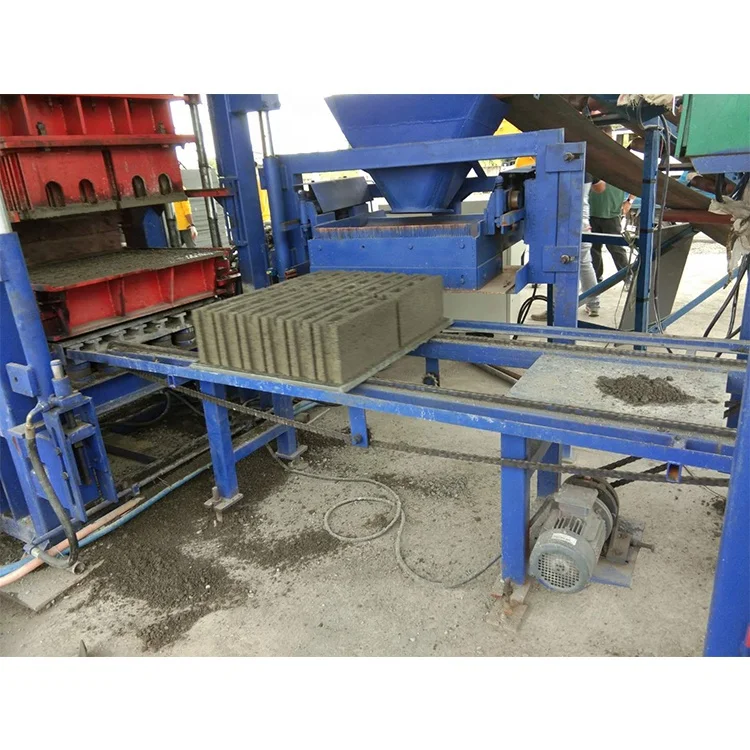

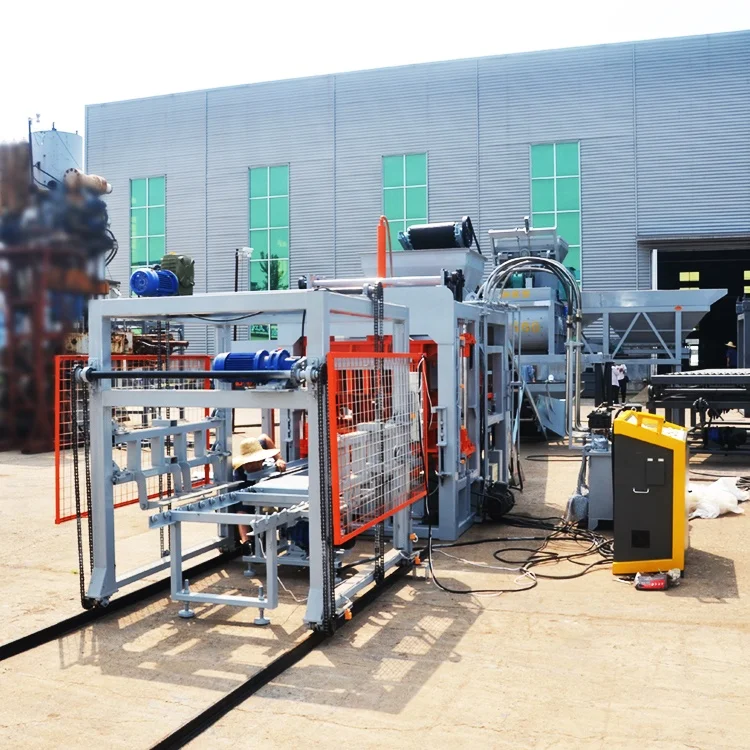

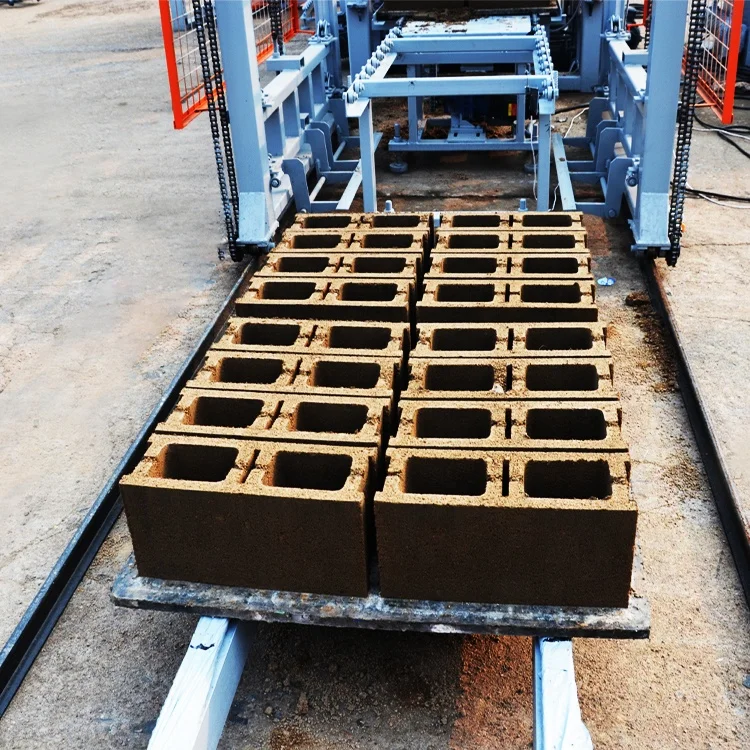
Description
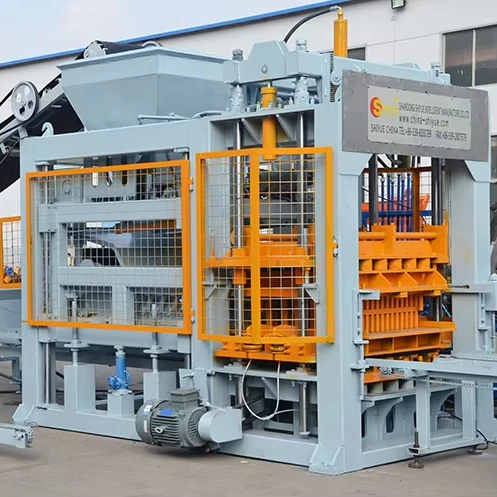
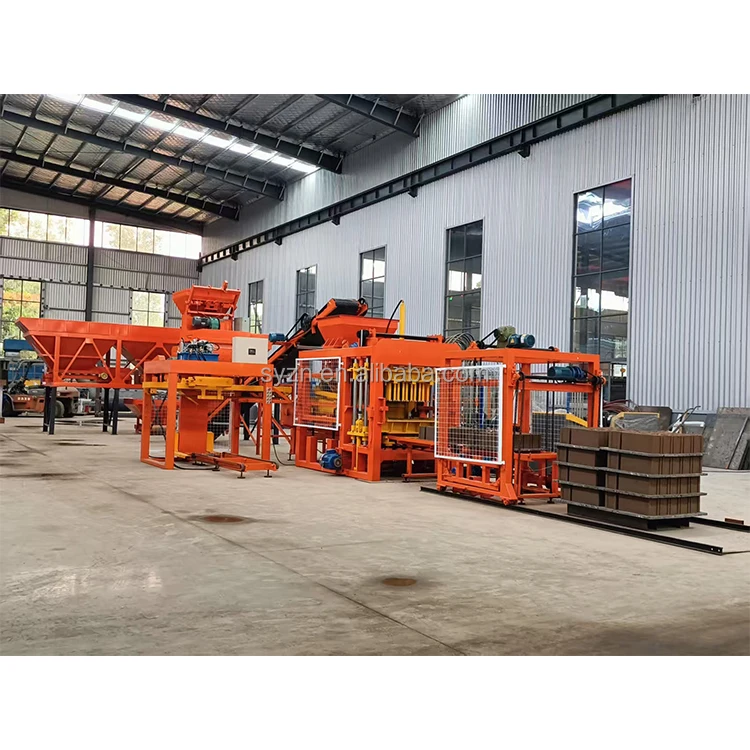
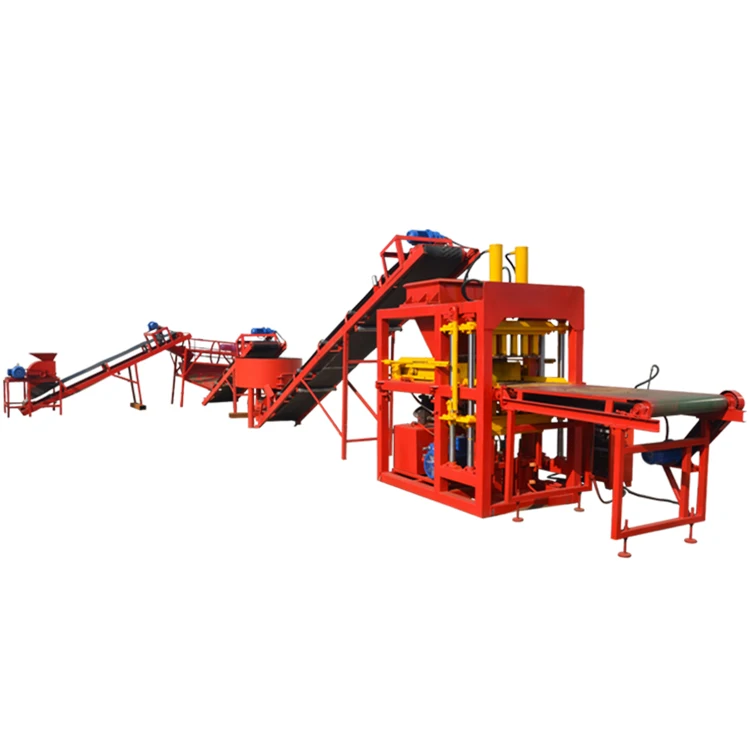
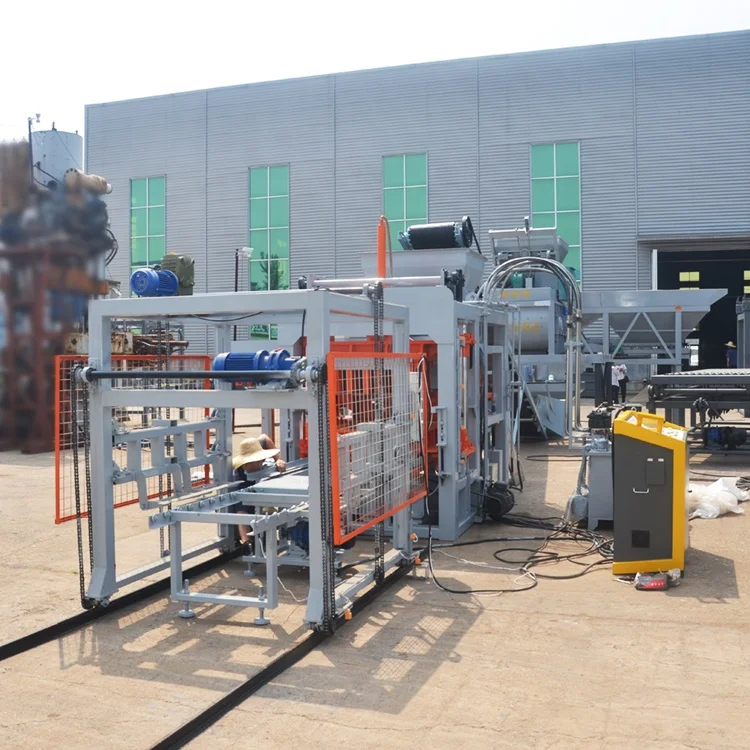
Specified by block format — The QT6-15 concrete block machine specifications include output capacity stated per block type and cycle time, so your daily production target is based on the masonry units you actually sell, not a generic catalogue figure.
Technical Specifications
| Parameter | Value |
|---|---|
| Model | QT6-15 |
| Product Type | Concrete Hollow Block Making Machine |
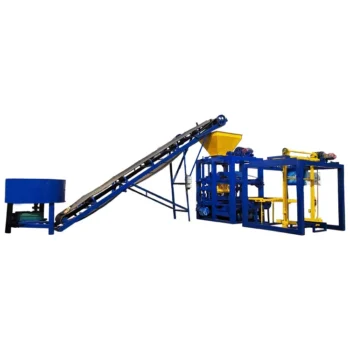
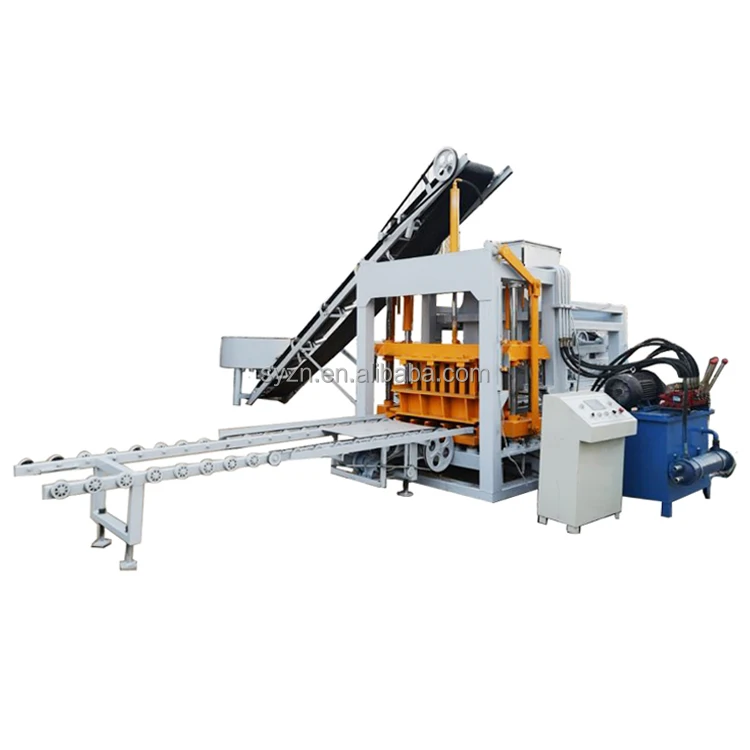
| Overall Dimension | 8200 × 1700 × 2950 mm |
| Total Mass | 7 T |
| Vibration Force | 45 KN |
| Vibration Form | Platform Vibration |
| Vibration Frequency | 0–60 Hz |
| Moulding Mode | Load automatically, vibration moulding |
| Demolding Method | Hydraulic |
| Hydraulic System | Independent integrated type hydraulic station |
| Pallet Size | 880 × 850 mm |
| Molding Cycle | 15–20 s (hollow blocks, solid bricks); 20–25 s (pavers) |
| Overall Power | 37 kW |
| Control System | PLC (Programmable Controller) with touch screen interface |
| Output Capacity (Hollow Block 400×200×200 mm) | 1080–1440 pcs/hour, 8640–11520 pcs/8hr (basis: 6 pcs/mould, 15–20s cycle) |
| Output Capacity (Hollow Block 400×150×200 mm) | 1440–1920 pcs/hour, 11520–15360 pcs/8hr (basis: 8 pcs/mould, 15–20s cycle) |
| Output Capacity (Solid Brick 240×115×53 mm) | 5760–7680 pcs/hour, 46080–61440 pcs/8hr (basis: 32 pcs/mould, 15–20s cycle) |
| Output Capacity (Rectangular Brick 200×100×60 mm) | 2160–2880 pcs/hour, 17280–23040 pcs/8hr (basis: 21 pcs/mould, 20–25s cycle) |
| Output Capacity (Zigzag Brick 225×112.5×60 mm) | 2160–2880 pcs/hour, 17280–23040 pcs/8hr (basis: 15 pcs/mould, 20–25s cycle) |
| Block Compressive Strength | More than 15 MPa |
| Factory Area Required | 1200 m² |
| Raw Material Adaptability | Waste ash, slag, and various aggregates; adjustable cement dosage |
| Warranty | 1 year for the whole machine (excluding spare parts) |
| Certification | CE |
Application Suitability
| Application | Material or Output |
|---|---|
| Hollow block production for residential and commercial walls | Crushed stone, sand, cement, and waste ash blends |
| Solid brick manufacturing for load-bearing masonry | Local aggregates with adjustable cement dosage |
| Rectangular and zigzag paving brick production | Slag, fine aggregate, and cement mixes |
| Kerbstone and interlocking brick for infrastructure projects | Coarse aggregate with hydraulic compaction |
| On-site block production for housing development contractors | Site-sourced aggregate matched to local conditions |
What "Pieces per Hour" Leaves Out About the QT6-15 Concrete Block Machine Specifications
Capacity figures are only meaningful when tied to a specific block format and cycle time.
Many quotations in this industry quote a single hourly number without disclosing which block size it assumes. A buyer comparing two machines on that basis may discover after commissioning that the daily output for their actual product — say, 400×150×200 mm hollow blocks — falls well below the promised rate. The QT6-15 concrete block machine specifications list output per format: 6 pcs/mould for 400×200×200 mm hollow blocks at a 15–20 s cycle, 8 pcs/mould for the 150 mm width variant, and different counts and cycle ranges for pavers and solid bricks. Without that breakdown, a capacity number is marketing, not engineering. I have watched plant owners shut down a newly installed line because the single headline figure on the purchase order never matched the format their market actually bought [NEED_CITE: capacity claims without format assumptions in block machinery quotations].
Mould Selection and Format-Specific Cycle Data
The QT6-15 is configured to run multiple block formats on a single press, but each format carries its own moulding cycle and pcs/mould count. Hollow blocks at 400×200×200 mm cycle at 15–20 s with 6 cavities, while rectangular paving bricks at 200×100×60 mm run at 20–25 s with 21 cavities. The QT6-15 concrete block machine specifications make these distinctions explicit, which matters when you are sizing a plant around a primary product and a secondary paver line.
Pallet Size and Curing Area Compatibility
The 880×850 mm pallet is the interface between the press and your curing area. If your existing forklift, rack system, or yard layout was designed around a different pallet dimension, every cured batch becomes a manual handling problem. Confirming pallet size against your curing infrastructure before the machine ships avoids costly rework after arrival [NEED_CITE: pallet standardisation in concrete block plant logistics].
Vibration and Hydraulic Pressure Matching
The 45 KN vibration force delivered through platform vibration, combined with the independent integrated hydraulic station, determines the density and compressive strength of each block. However, vibration and pressure must be matched to the buyer’s specific mix design and local aggregate. A machine tuned for standard quartz sand will produce weak blocks if the buyer’s raw material is laterite or crushed coral. The PLC touch screen interface allows parameter adjustment, but the baseline configuration must start from an actual sample of the buyer’s aggregate.
The Hidden Cost of a Misconfigured Mould and Vibration Profile
When vibration force and hydraulic pressure do not match the buyer’s aggregate, the consequence is not a minor quality dip — it is a production halt. Blocks leave the press with inconsistent density, fail compressive strength tests at the yard, and the entire day’s output is scrapped. I once shipped a unit to a West African site where the buyer’s red soil aggregate behaved completely differently from our test sand; the vibration profile needed a full recalibration, and the plant sat idle while we flew out to resolve it. That kind of downtime erases any delivery time advantage the initial order seemed to offer [NEED_CITE: aggregate variability and block compressive strength failures in field conditions].
Why Sourcing This Machine Through a Format-Driven Process Matters
Every QT6-15 configuration starts from the buyer’s target block format, local aggregate sample, and daily output goal — not from a catalogue default. Mould design covers the specific formats the buyer’s market demands, including custom drawings when standard cavity layouts do not fit. The pallet specification is confirmed against the buyer’s existing curing racks and forklift capacity before production begins. Factory testing runs the actual block format the buyer will produce, with cycle time and compressive strength recorded and documented. Voltage, frequency, and PLC display language are confirmed so commissioning is not delayed by an electrical mismatch on arrival.
Documentation & Verification
- Line layout with capacity calculation stating the block format assumed for each output figure
- Mould drawing and format list showing cavity count and dimensions for every brick type
- Pallet specification confirming 880×850 mm size and material compatibility with curing setup
- Factory test record demonstrating actual cycle times and block strength on buyer’s target format
- Hydraulic and electrical schematic with voltage and control language confirmed before dispatch
Installation, Commissioning & Support
- Foundation plan based on the QT6-15 footprint of 8200×1700 mm and 7 T operating mass
- Dedicated 37 kW power circuit with voltage and frequency matched to local grid supply
- Machine dismantled for container loading and reassembled on-site with alignment checks
- First-run parameter tuning using buyer’s actual aggregate sample and mix design
- Operator training on PLC touch screen interface, mould changeover, and fault diagnosis
- Wear parts list and mould maintenance schedule provided at handover
Before You Request a Quotation
To size the QT6-15 to your operation, share the block formats your market buys most, the daily volume you need for each, and a sample or description of your local aggregate. Confirm your site voltage, frequency, and preferred PLC language, along with the pallet size your curing area currently handles.
Frequently Asked Questions
Q: How is the capacity calculated for each block format, and what cycle time does it assume?
A: Each output figure in the QT6-15 concrete block machine specifications is tied to a stated mould cavity count and a cycle time range. For example, 400×200×200 mm hollow blocks run at 6 pcs/mould with a 15–20 s cycle, yielding 1080–1440 pcs/hour. Pavers use a longer 20–25 s cycle. No single headline number is quoted without the format it applies to.
Q: What pallet size does the QT6-15 require, and how does it affect my curing area layout?
A: The machine uses 880×850 mm pallets. Your curing racks, forklift fork spacing, and yard aisle width must accommodate this dimension. If your existing setup uses a different pallet size, racking modifications will be needed before the press arrives to avoid manual handling bottlenecks.
Q: Can the mould be changed to produce different block formats, and what is the changeover time?
A: The QT6-15 supports mould changes across hollow blocks, solid bricks, and pavers. The hydraulic demolding system and PLC interface simplify the swap, but changeover duration depends on operator familiarity and whether quick-release mould clamps are specified. Confirm your expected change frequency during the configuration stage.
Q: How do I verify that the vibration force and hydraulic pressure match my local aggregate?
A: Provide a representative sample of your aggregate before the machine is configured. The 45 KN vibration force and hydraulic pressure are then tuned against that material during factory testing. The test record, including compressive strength results above 15 MPa, is shared before shipment so you can verify performance on your actual mix.
Q: What documentation confirms the actual output capacity for my specific block format before shipment?
A: The factory test record documents real cycle times and block counts for the buyer’s target format, run on the configured mould. This is accompanied by the mould drawing, format list, and capacity calculation sheet, each stating the block dimensions and cycle assumptions behind every output figure.