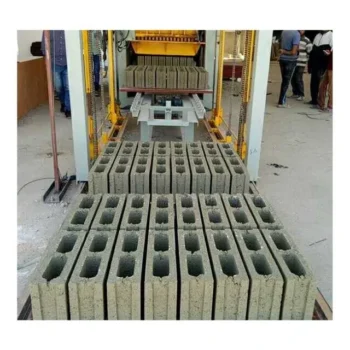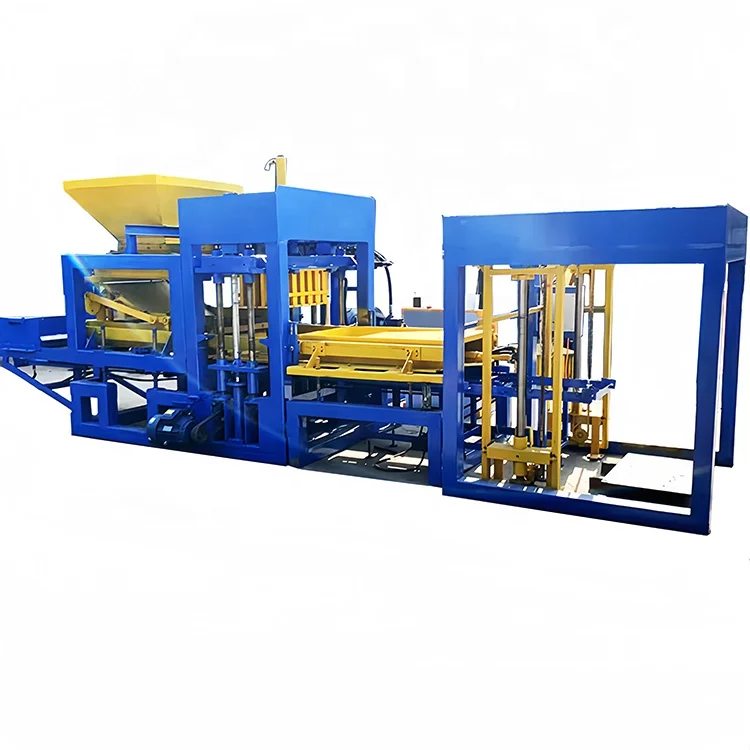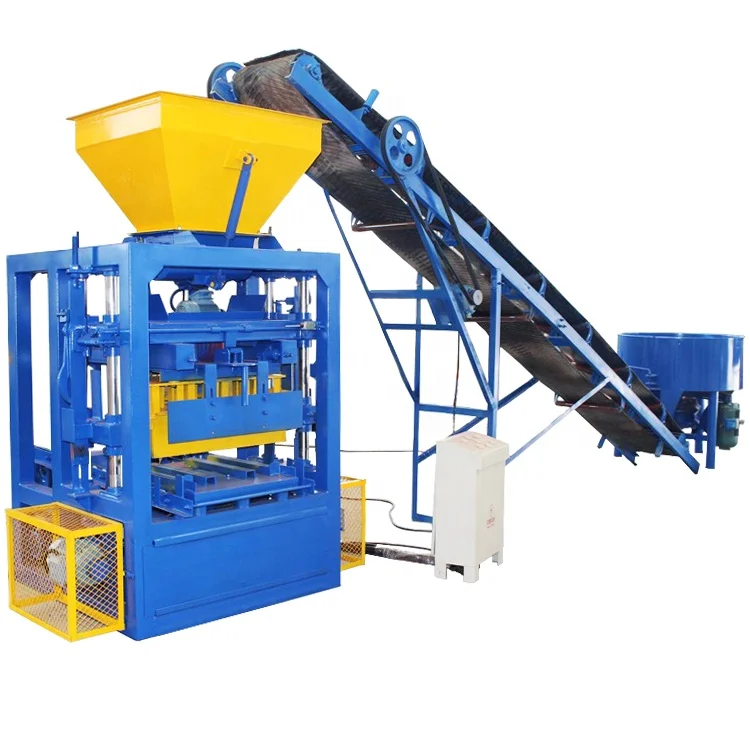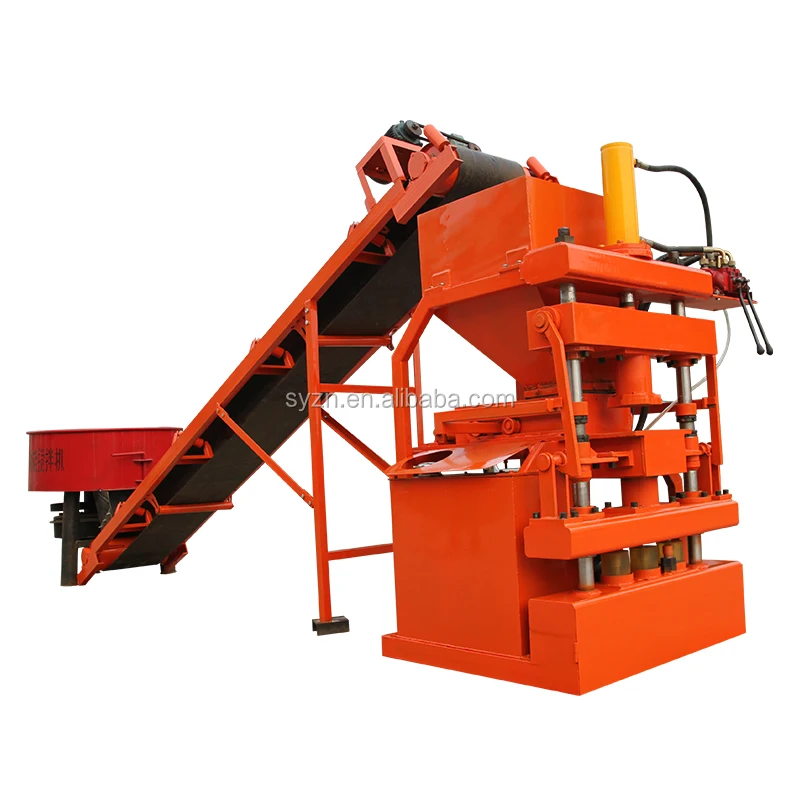



Description
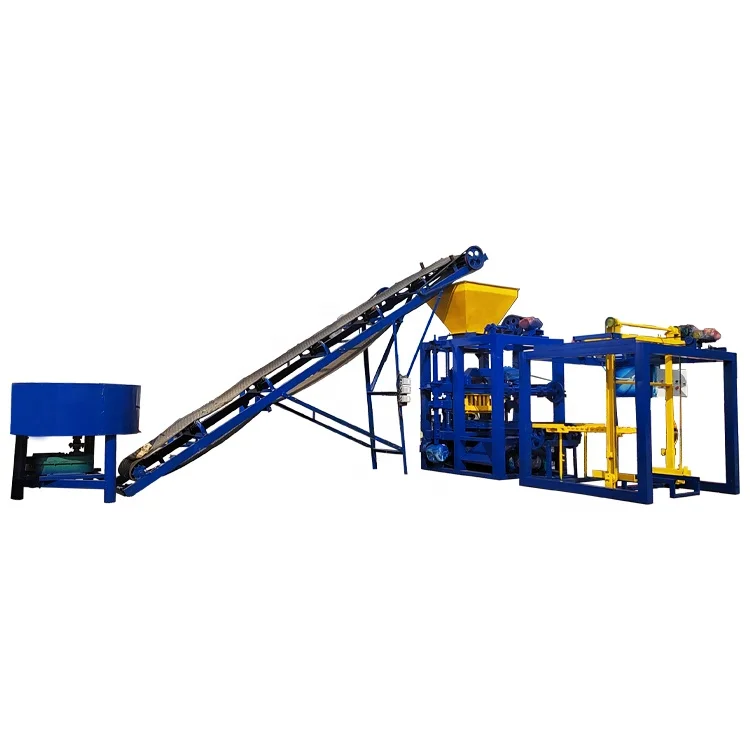
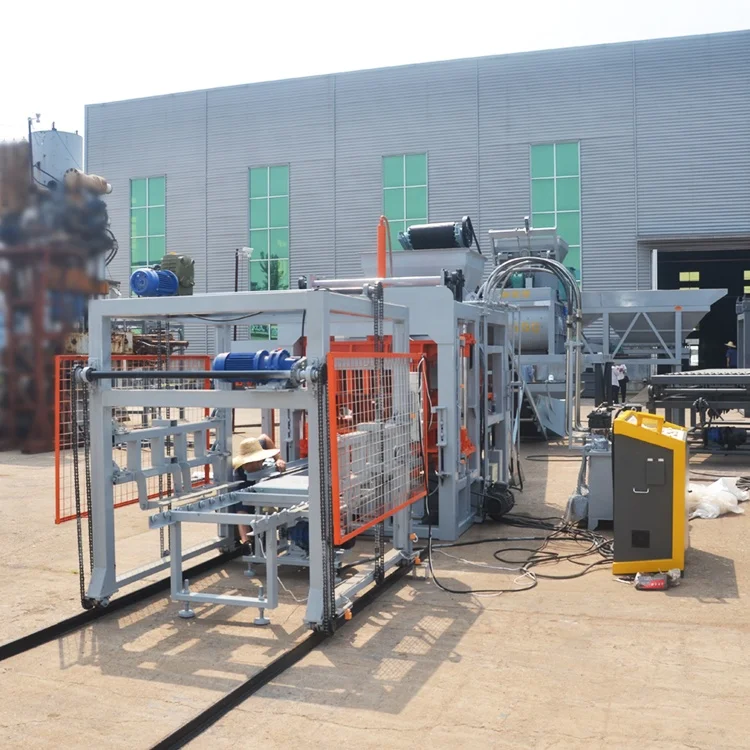
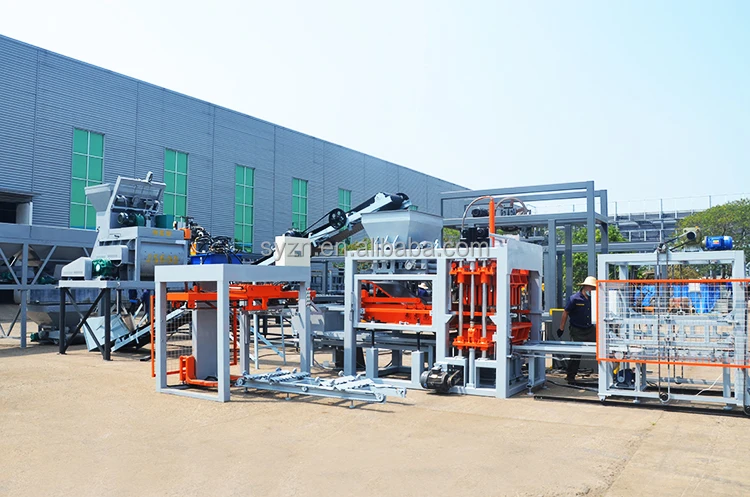
Block Machinery as a Single Focus — the QT6-15 is specified as a matched system of machine, mould, pallet, and handling, not assembled from separate catalog pages, so your output format and daily volume align with what your market actually buys.
Technical Specifications
| Parameter | Value |
|---|---|
| Model | QT6-15 |
| Product Type | Automatic Hydraulic Concrete Block Making Machine |
| Overall Dimensions (L×W×H) | 8200 × 1700 × 2950 mm |
| Vibration Frequency | 0–60 Hz |
| Vibration Form | Platform Vibration |
| Moulding Mode | Automatic loading, vibration moulding |
| Pallet Size | 880 × 850 mm |
| Molding Cycle | 15–20 s (basis not stated in source — confirm block format / material / thickness) |
| Overall Power | 37 kW |
| Vibration Force | 45 kN |
| Total Mass | 7 T |
| Demolding Method | Hydraulic |
| Recommended Factory Area | 1200 m² |
| Control System | PLC with touch screen interface |
| Block Compressive Strength | ≥15 MPa (verify against local mix design) |
| Hydraulic System | Independent integrated station, isolated from dust and vibration |
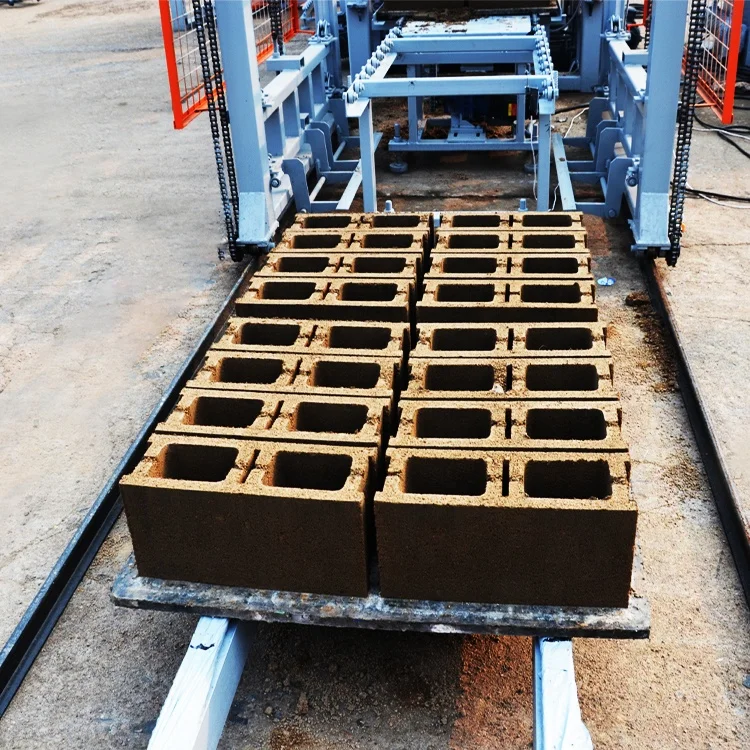
| Output — Hollow Block 400×200×200 mm | 1080–1440 pcs/h (6 pcs/mould, 15–20 s cycle) |
| Output — Hollow Block 400×150×200 mm | 1440–1920 pcs/h (8 pcs/mould, 15–20 s cycle) |
| Output — Solid Brick 240×115×53 mm | 5760–7680 pcs/h (32 pcs/mould, 15–20 s cycle) |
| Output — Rectangular Paver 200×100×60 mm | 2160–2880 pcs/h (21 pcs/mould, 20–25 s cycle) |
| Output — Zigzag Paver 225×112.5×60 mm | 2160–2880 pcs/h (15 pcs/mould, 20–25 s cycle) |
| Voltage & Frequency | To be confirmed before order |
| PLC Display Language | To be confirmed before order |
| Warranty | 1 year on whole machine (excluding spare parts) |
Application Suitability
| Application | Material or Output |
|---|---|
| Hollow block production for masonry walls | Crushed stone, sand, cement, fly ash blends |
| Solid brick manufacturing for load-bearing structures | Dense aggregate mixes with standard cement ratios |
| Rectangular paving brick for driveways and walkways | Fine aggregate surface layer with coarse base |
| Zigzag interlock paver for heavy-traffic areas | High-strength mix designs with reduced water-cement ratio |
| On-site block production for housing projects | Locally sourced aggregates adapted to regional supply |
Why "Cycles per Hour" Without a Block Format Is Misleading
Every QT6-15 block machine specifications figure on this page names the block size, mould cavity count, and cycle time it depends on.
Capacity numbers quoted without context cause more buyer disappointment than almost any other issue I encounter on site. A plant owner receives a machine rated at a headline output, installs it, and then discovers the daily volume falls far short because the quoted figure assumed a small solid brick — not the hollow block the local market actually buys. When I configured a line in a Southeast Asian market where the standard wall block was heavier and thicker than the supplier’s default test format, the cycle time stretched noticeably and the real throughput settled well below the brochure number. Honest sizing starts with the format you sell, not the format that produces the largest headline. [NEED_CITE: realistic block production capacity by format and cycle time]
Matching the QT6-15 to Your Actual Product Mix
The QT6-15 block machine specifications change meaning depending on which mould sits on the platform. With a six-cavity hollow block mould producing 400×200×200 mm units, the press delivers between 1080 and 1440 pieces per hour at a 15–20 second cycle. Swap to a 32-cavity solid brick mould and the same machine reaches 5760 to 7680 pieces per hour — a very different operational reality. A technical buyer evaluating the QT6-15 should start with the format that represents the highest volume in their market, confirm the mould cavity count, and then calculate the daily output on that basis rather than comparing headline numbers across different block sizes.
How Platform Vibration and Mix Design Interact
Vibration force alone does not determine block strength. The 45 kN platform vibration on the QT6-15 must be paired with hydraulic pressure and a mix design that suits the local aggregate available to you. I have seen machines produce excellent blocks in one region and crumble in another because the aggregate gradation shifted, and the vibration parameters were never adjusted. On a job where the local sand carried high clay content, we had to retune both the vibration frequency and hydraulic pressure to hold compressive strength at target levels. The independent hydraulic station, isolated from dust and main machine vibration, helps maintain consistent pressure delivery over long production shifts [NEED_CITE: hydraulic station isolation and pressure consistency in block machines].
What the Specs Mean for Your Daily Operation
Pallet size is one of the most overlooked dimensions in block machine procurement. The QT6-15 runs on 880×850 mm pallets, which directly determines how your curing racks must be spaced, what forklift tine width you need, and how many pallets fit in a standard curing zone. If your existing curing area was laid out for a different pallet dimension, you face either a costly rack rebuild or daily handling friction. The PLC control system with touch screen interface and fault diagnosis reduces the operator’s dependency on memorised button sequences, keeping batch-to-batch consistency even when crew experience varies. The recommended 1200 m² factory area covers pressing, raw material staging, and initial curing — a useful baseline when planning site layout before the machine arrives.
The Cost of Skipping Configuration Details Before Order
I once arrived at a site where the voltage and frequency had never been confirmed with the buyer’s local supply, and the control cabinet was wired for a standard that did not match the plant transformer. Commissioning stalled for days while a replacement transformer was sourced locally. When pallet size and mould change time are left unspecified, the buyer discovers the format flexibility they paid for is cancelled out by slow changeovers or incompatible handling equipment. These are not manufacturing defects — they are gaps in the pre-order conversation. Confirming voltage, PLC display language, and pallet compatibility before production begins removes most of the delays I see between container arrival and first good block [NEED_CITE: pre-shipment configuration verification for industrial machinery exports].
Why Buyers Specify With Shiyue
Block machinery is our single focus, which means the QT6-15 is never quoted as a standalone press with pallets and handling treated as an afterthought. The machine, mould, pallet, and supporting equipment are specified as one matched system. Configuration is set against your actual mix design and target block format, not pulled from a catalogue default. We design and supply moulds for the formats your market sells, including custom drawings when standard sizes do not match. Automation level is selectable — you can begin with semi-automatic operation and add stacking or cubing later as volume grows. Installation includes on-site commissioning with operator training so your crew runs the line confidently from the first shift.
Documentation & Verification
- Line layout and capacity calculation stating the exact block format assumed for each QT6-15 output figure
- Mould drawing and format list confirming cavity count and block dimensions for every quoted mould
- Pallet specification sheet matched to your curing rack spacing and forklift tine capacity
- Voltage, frequency, and PLC display language confirmation document signed before production
- Factory test record on your target block format with cycle time and compressive strength data
- Hydraulic and electrical schematic for your maintenance team’s reference after commissioning
Installation, Commissioning & Support
- Foundation plan sized to the QT6-15’s 8200×1700 mm footprint and 7 T operating mass
- Dedicated 37 kW power circuit confirmed to match your local voltage and frequency before shipment
- Machine dismantled for container loading with reassembly sequence documented for your site crew
- First-run commissioning with vibration frequency and hydraulic pressure tuned to your mix design
- Operator training on PLC touch screen controls including fault diagnosis system navigation
- Wear parts and mould inventory list provided for your first replacement order planning
What to Share With Your Next Inquiry
To size the QT6-15 accurately for your plant, tell us the block format your market buys most, the target daily volume for that format, and the local aggregate you plan to use. Share your existing curing area dimensions and forklift specifications so we can confirm pallet compatibility. If your site runs on a specific voltage and frequency, state that early so the control cabinet is built to match from day one.
Frequently Asked Questions
Q: How is QT6-15 capacity calculated per block format, and what cycle time does each format assume?
A: Every output figure on this page states the block dimensions, mould cavity count, and cycle time range it depends on. For example, hollow block 400×200×200 mm uses a six-cavity mould at a 15–20 second cycle to reach 1080–1440 pieces per hour. Paver formats run at a slightly longer 20–25 second cycle. We provide a written capacity calculation document naming the exact format assumed so your daily planning starts from a verified number.
Q: Which mould formats are available for the QT6-15, and how long does a mould change take on site?
A: Standard moulds cover hollow blocks, solid bricks, rectangular pavers, and zigzag interlock pavers in the dimensions listed on this page. Custom moulds can be designed to your drawings for formats your local market requires. Mould change time is not stated in the source specifications, so we confirm this figure with your production team during the proposal stage and include it in the operation manual.
Q: How should the machine be configured for my local aggregate and mix design?
A: We start by reviewing your aggregate source, gradation, and any supplementary materials like fly ash or slag. The vibration frequency, hydraulic pressure, and cycle parameters are then matched to that specific mix. On sites where local sand carries higher clay content or where aggregate sizing differs from standard assumptions, we retune these settings during commissioning to hold the target compressive strength consistently across production batches.
Q: What pallet size does the QT6-15 use, and how does it affect my curing area layout?
A: The QT6-15 runs on 880×850 mm pallets. This dimension determines your curing rack spacing, forklift tine width requirement, and how many pallets fit in a single curing zone. We provide a pallet specification sheet so you can verify compatibility with your existing equipment before the machine ships, avoiding costly rack modifications or handling delays after installation.
Q: What voltage, frequency, and PLC language options are confirmed before shipment?
A: These three items are confirmed in writing before production begins. The electrical cabinet is built to your local voltage and frequency standard, and the PLC touch screen is set to your preferred display language. This prevents the commissioning delays I have seen when these details were left open until the machine arrived on site.