


Description
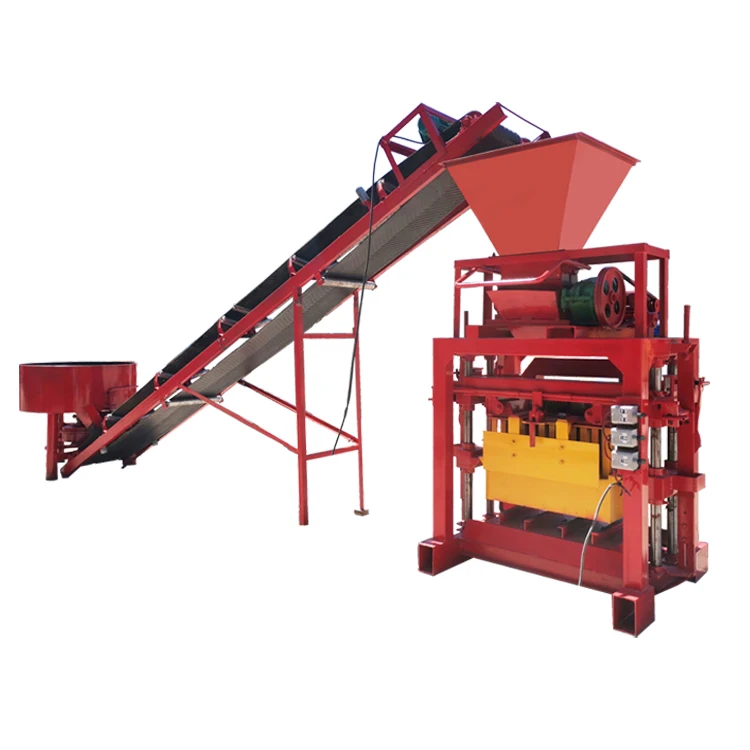
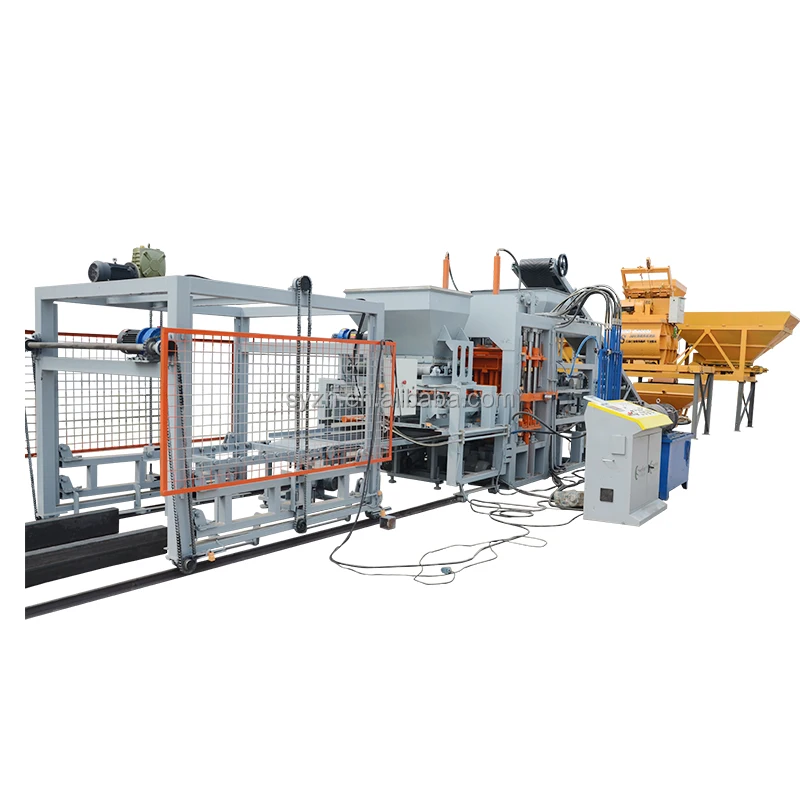
Mould-First Engineering — the QT5-15 block machine is sized to the buyer’s exact block format, with every cycle time and output figure traced back to a named mould and a stated pallet dimension.
Technical Specifications
| Parameter | Value |
|---|---|
| Model | QT5-15 |
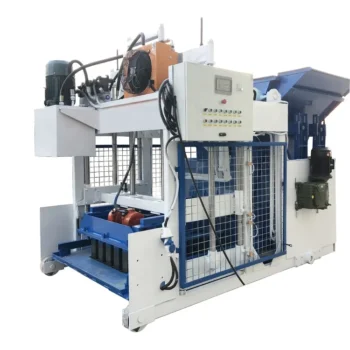
| Product Type | Fully Automatic Hydraulic Concrete Block Making Machine |
| Overall Dimensions (L×W×H) | 7400×1950×2800 mm |
| Total Mass | 5000 kg |
| Vibration Frequency | 0-60 Hz |
| Vibration Force | 80 kN |
| Vibration Form | Platform Vibration |
| Moulding Mode | Automatic load, vibration moulding |
| Pallet Size | 1100×550 mm |
| Molding Cycle | 15-20 s (basis not stated in source — confirm block format and material) |
| Overall Power | 32 kW |
| Demolding Method | Hydraulic |
| Control System | PLC with touch screen interface |
| Hydraulic System | Independent integrated hydraulic station |
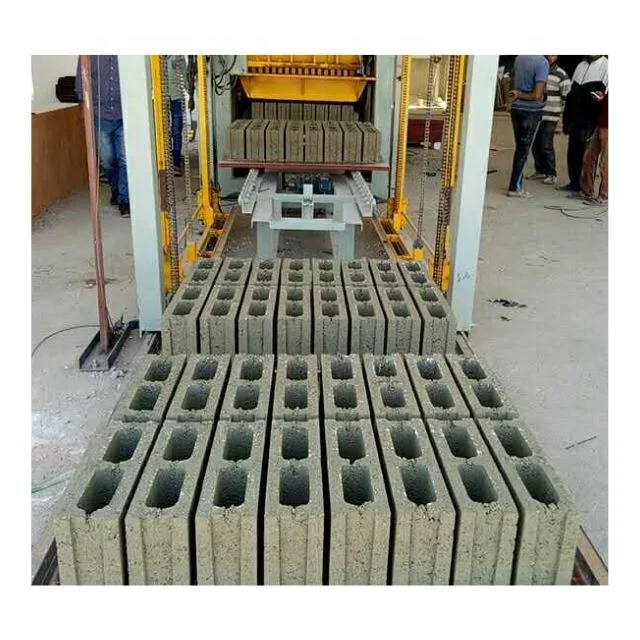
| Output (Hollow 400×200×200 mm) | 900-1200 pcs/h, 7200-9600 pcs/8hr (5 pcs/mould, 15-20s cycle) |
| Output (Hollow 400×150×200 mm) | 1080-1440 pcs/h, 8640-11520 pcs/8hr (6 pcs/mould, 15-20s cycle) |
| Output (Solid 240×115×53 mm) | 5760-7680 pcs/h, 46080-61440 pcs/8hr (32 pcs/mould, 15-20s cycle) |
| Output (Paver 200×100×60 mm) | 3600-4500 pcs/h, 28800-36000 pcs/8hr (25 pcs/mould, 20-25s cycle) |
| Output (Zigzag 225×112.5×60 mm) | 2304-2880 pcs/h, 18432-23040 pcs/8hr (16 pcs/mould, 20-25s cycle) |
| Raw Material Compatibility | Fly ash (up to 70%), slag, gangue, sand, crushed stone, cement, water |
| Block Compressive Strength | >15 MPa |
| Recommended Factory Area | 1000 m² |
| Warranty | 1 year (excluding spare parts) |
Application Suitability
| Application | Material or Output |
|---|---|
| Hollow block wall construction | Crushed stone, sand, cement, fly ash blends up to 70% ash content |
| Solid brick manufacturing | Standard concrete mixes targeting compressive strength above 15 MPa |
| Rectangular paving projects | Coarse aggregate and cement mixes for 60 mm thickness pavers |
| Interlocking zigzag paving | High-density vibration moulding for 60 mm interlocking brick |
| On-site contractor production | Mobile or fixed-plant setups using locally sourced aggregate |
| Fly ash residue utilization | Industrial by-product mixes with up to 70% fly ash substitution |
What "7200 Pieces per Day" Actually Means When Formats Change
Capacity is meaningless without naming the block size, the pieces per mould, and the cycle time that produced the number.
I watched a plant owner in Java argue with his line manager over a shortfall that never should have surprised either of them. The quote said the machine could push 9600 hollow blocks in an eight-hour shift. Nobody asked which hollow block. When they switched from 200 mm to 150 mm cavity walls, the mould changed, the cycle shifted, and the daily count moved with it. The QT5-15 block machine specifications only hold their ground when tied to a specific format — 5 pieces per mould for a 400×200×200 mm hollow block at 15-20 seconds, or 6 pieces per mould for a 400×150×200 mm unit at the same interval. Swap the mould and the arithmetic follows. [NEED_CITE: block format impact on daily output planning]
Format-by-Format Output for the Concrete Brick Machine Mould Capacity
Every number in the output table above traces back to a defined block dimension, a fixed pallet area of 1100×550 mm, and a stated pieces-per-mould count. A technical buyer sizing a line for hollow blocks sold in a specific local market can pull the exact row that matches their product. No averaging across formats, no catalogue headline that dissolves when the mould changes.
Where Cycle Time Diverges Between Block Types
Hollow blocks and solid bricks share a 15-20 second cycle window on this press. Pavers and interlocking bricks move to 20-25 seconds because the higher density requirement demands longer vibration exposure and more hydraulic dwell. The difference is small per cycle but compounds across a shift, and it changes the pallet return rate and the curing rack throughput downstream. [NEED_CITE: vibration dwell time and block density relationship]
Vibration Force, Hydraulic Pressure, and the 1100×550 mm Pallet
The 80 kN platform vibration sits beneath the mould table, isolated from the independent hydraulic station so that high-frequency oscillation does not travel through valve blocks and hose fittings. That separation matters for component life in a plant running three shifts. The pallet dimension of 1100×550 mm is fixed for this model — before confirming an order, the buyer must check that their existing curing racks, forklift tines, and stacking area accept that exact footprint. A mismatch here means pallets sit on the floor or racks go half-empty.
The Cost of Skipping the Aggregate Question Before Purchase
Standard sand behaves nothing like volcanic ash, crushed coral, or the washed river gravel available in parts of Sumatra and the Visayas. When a machine arrives configured for a mix the buyer cannot source, the plant either imports material at unsustainable cost or retunes vibration force and feed timing on-site — which takes the line offline and burns through the commissioning window. I have seen two full weeks lost because the press was set for a textbook aggregate that did not exist within 300 kilometres of the job site. [NEED_CITE: local aggregate variability in block production]
Why Procurement Decisions Land Better Here
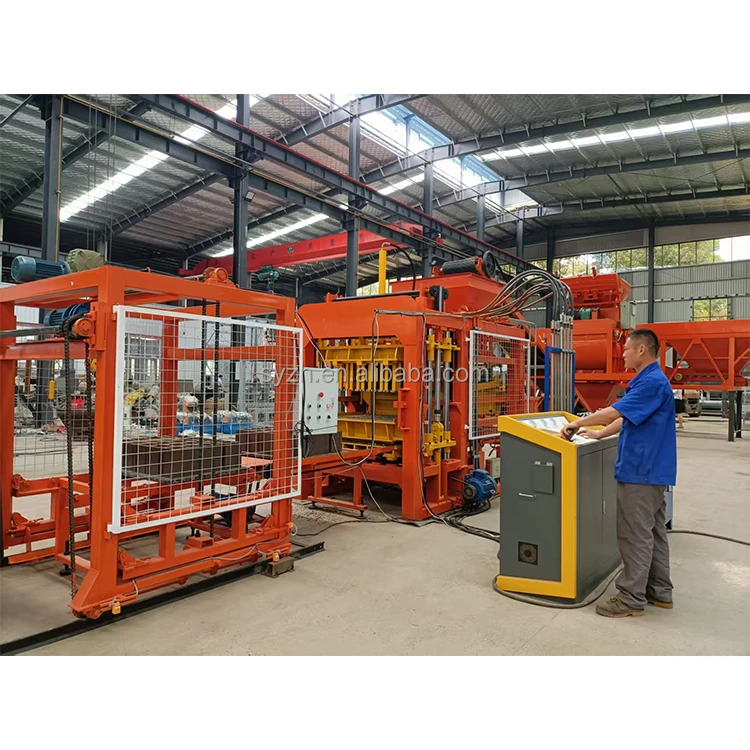
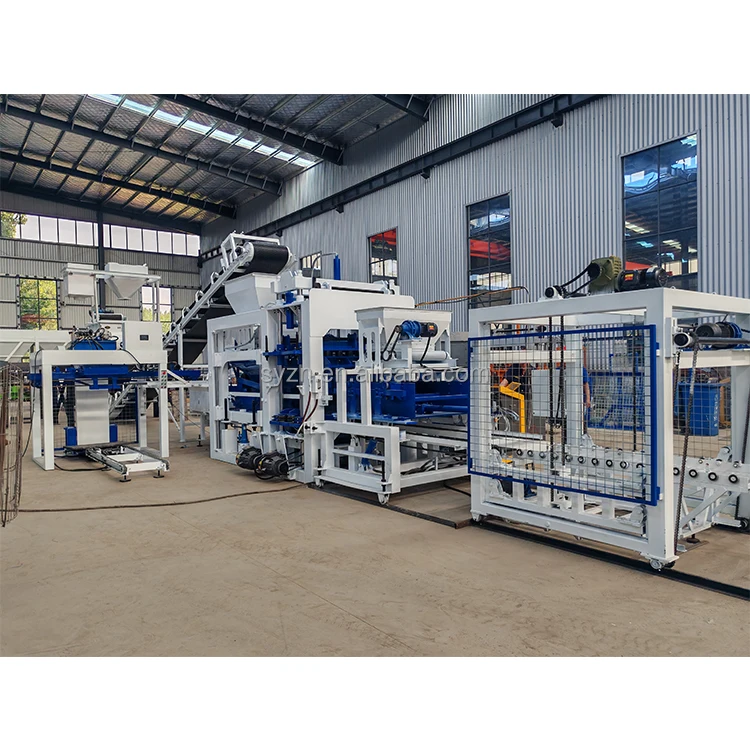
Block machinery is the single production focus, which means the press, mould, pallet, and handling stations arrive as one matched set rather than a collection of separate purchases. Configuration starts from the buyer’s actual mix design and target format, not a catalogue default row. Mould design covers the formats the local market actually buys, with custom drawings available. Automation level is selectable, so a semi-automatic start can grow into full stacking and cubing later.
Documentation & Verification
- Line layout showing capacity per named block format for the QT5-15
- Mould drawing and format list with change procedure and timing
- Pallet specification cross-referenced to buyer curing rack dimensions
- Voltage, frequency, and PLC language confirmation before production
- Factory test record on buyer’s specified block type before dispatch
Installation, Commissioning & Support
- Foundation plan matched to 7400×1950 mm footprint and 5000 kg static load
- Dedicated 32 kW circuit with voltage and frequency confirmed for local grid
- Machine shipped in dismantled state with reassembly sequence documented
- First-run parameter tuning against buyer’s actual aggregate and mix ratio
- PLC touch screen language set to operator preference before arrival
- Hydraulic and vibration wear parts list with reorder codes included
Before You Send the Inquiry
Share the block format your market actually sells — dimensions, target compressive strength, and whether fly ash or slag is part of the local supply. State the daily output you need per format, not an average across types. Confirm your available voltage, frequency, and the language your operators read on a screen. If you already have curing racks and a forklift, send the pallet footprint they accept.
Frequently Asked Questions
Q: How is the QT5-15 capacity calculated per block format?
A: Each output row names a specific block size, pieces per mould, and cycle time. The 7200-9600 pieces per 8-hour shift applies to a 400×200×200 mm hollow block at 5 pieces per mould and a 15-20 second cycle. Switch to pavers and the cycle extends, changing the total accordingly.
Q: Which mould formats come standard and how long does a change take?
A: The standard range covers hollow block, solid brick, rectangular paver, and zigzag interlocking brick. Mould change time depends on the quick-release system specified at order — confirm the procedure and timing in the mould drawing package before production starts.
Q: How is the machine tuned to local aggregate rather than a default mix?
A: Configuration begins with the buyer’s material sample and target block strength. Vibration frequency, hydraulic pressure, and feed timing are set against that mix. The PLC stores parameters per mould, so switching formats restores the correct settings automatically.
Q: What pallet size does the QT5-15 use and why does it matter?
A: The pallet measures 1100×550 mm. This dimension must match the buyer’s curing racks, stacking area, and forklift tine spacing. A mismatch causes pallets to pile on the floor or racks to run below capacity, creating a bottleneck downstream of the press.
Q: How are voltage and PLC language confirmed before production?
A: Both are signed off in writing after inquiry and before the machine enters the build stage. The buyer states local voltage, frequency, and preferred display language. These are recorded in the specification sheet and verified during the factory test.