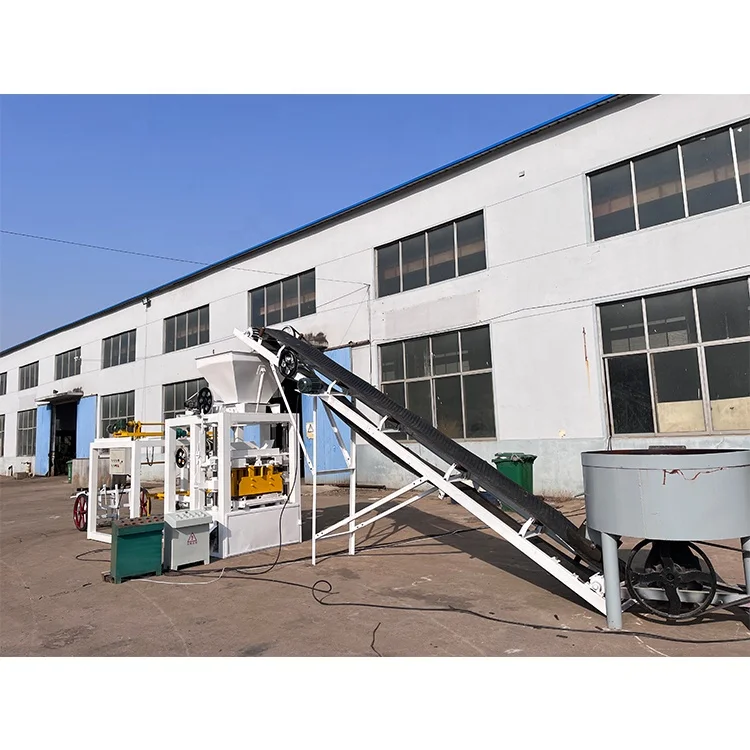
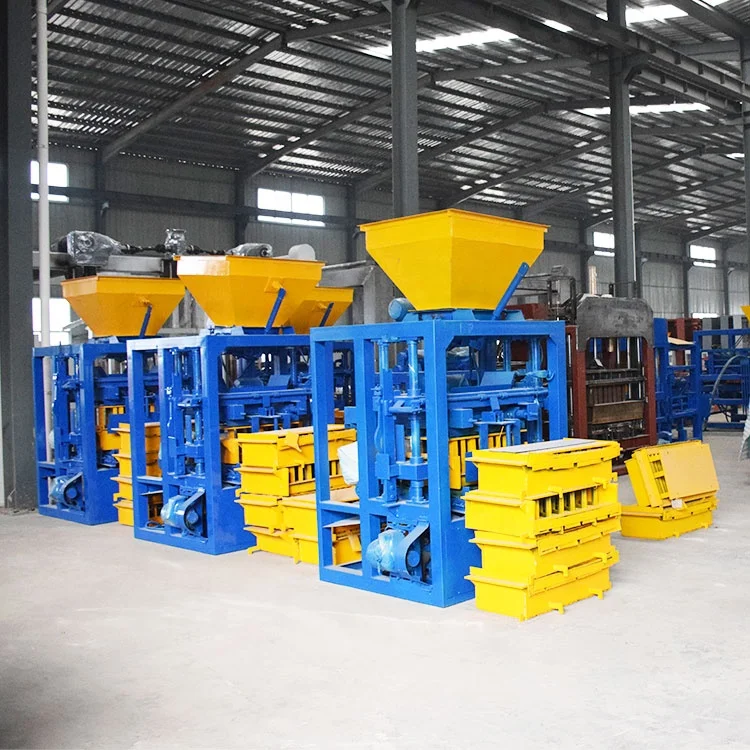
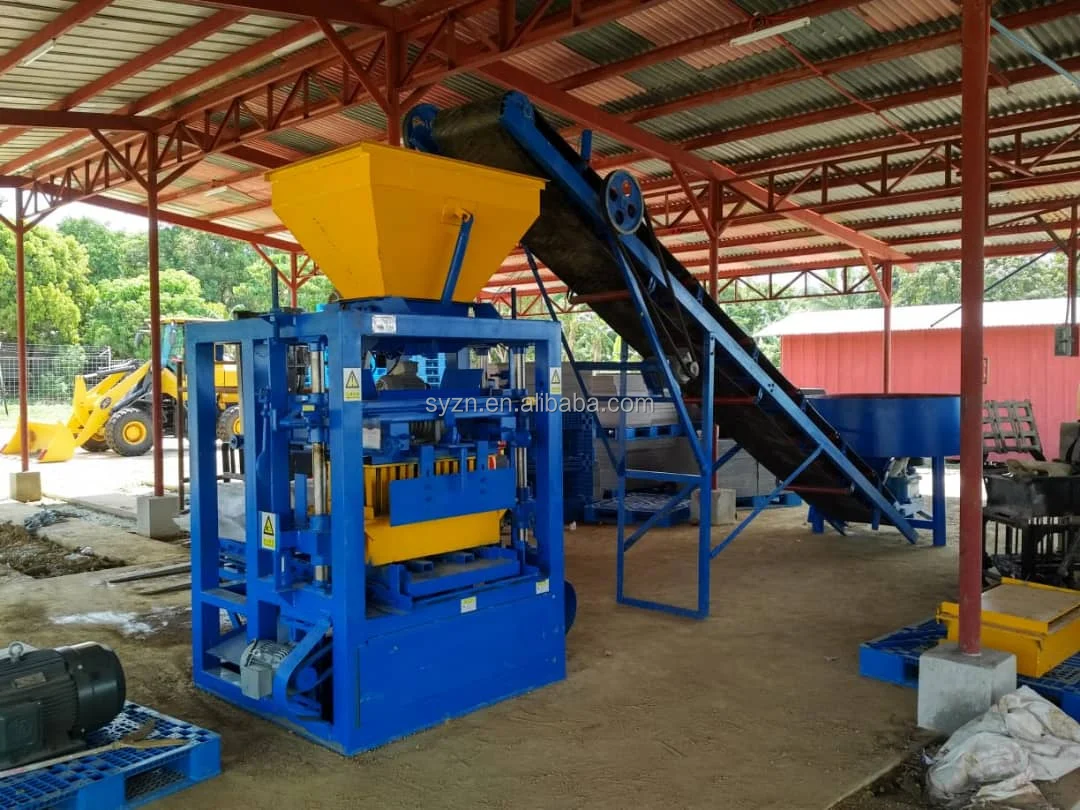
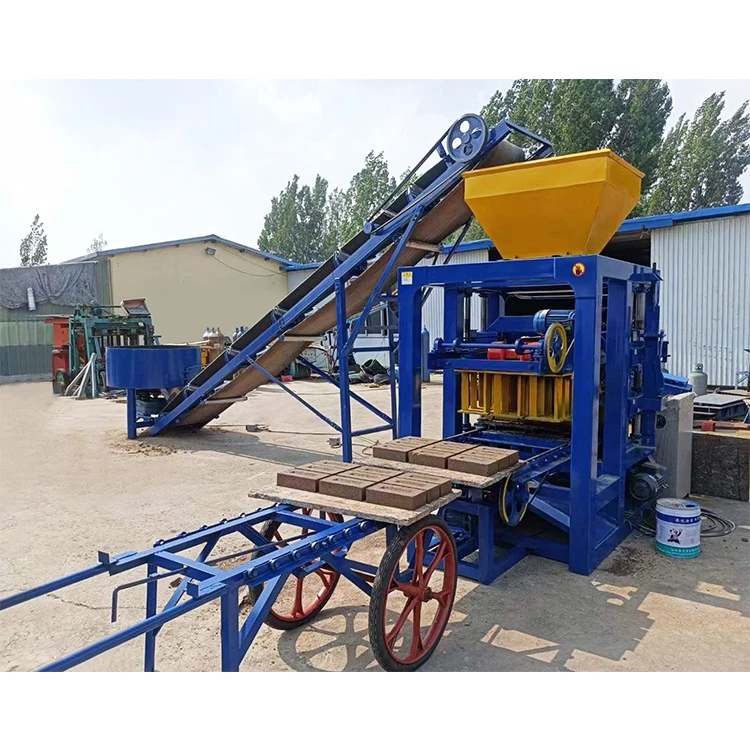
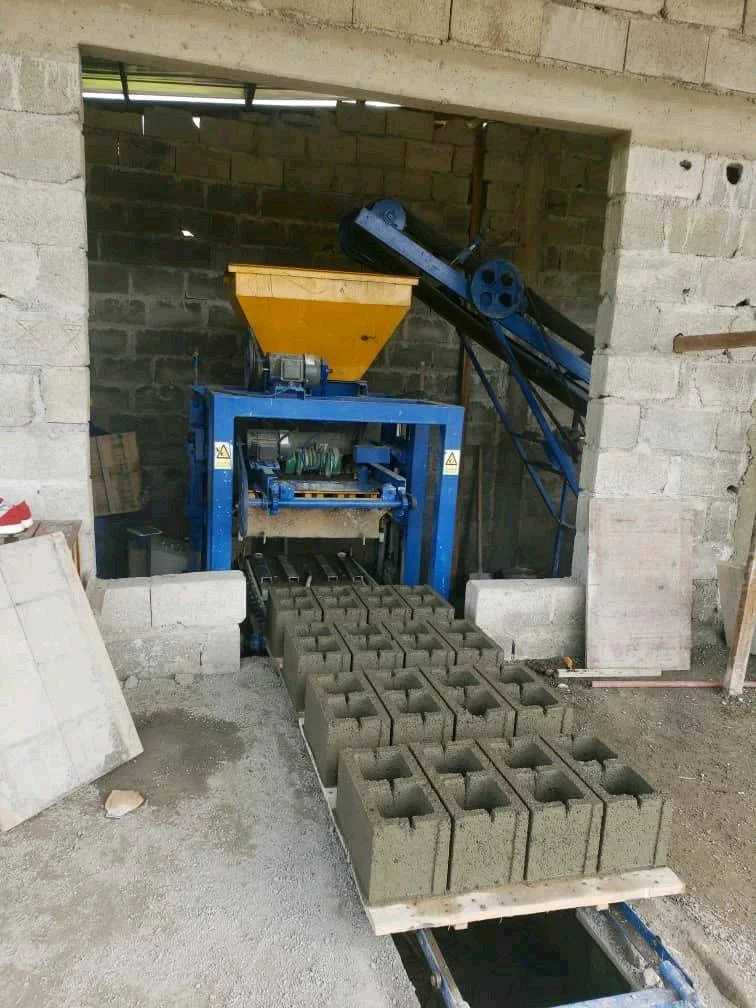
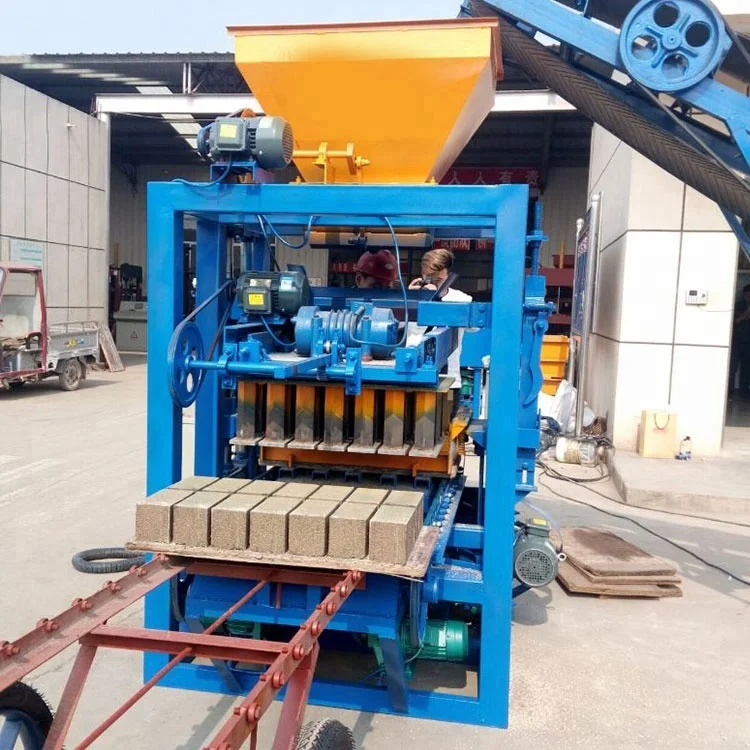
Description
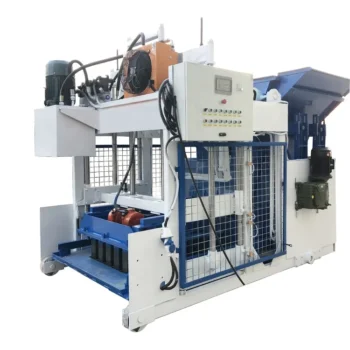
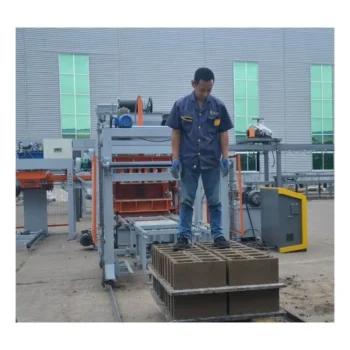
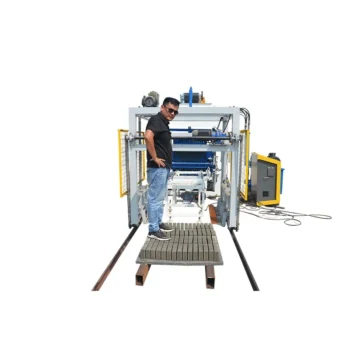
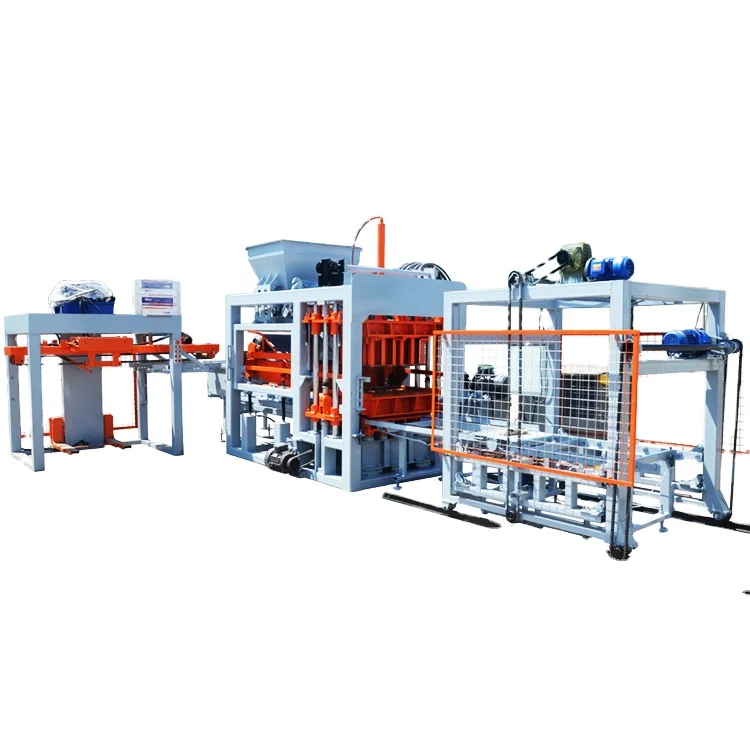
Mould-to-market matching — the QTJ4-26 is configured around the block format the buyer actually sells, with every output figure tied to a stated dimension so daily shift targets can be planned honestly.
Technical Specifications
| Parameter | Value |
|---|---|
| Model | QTJ4-26 |
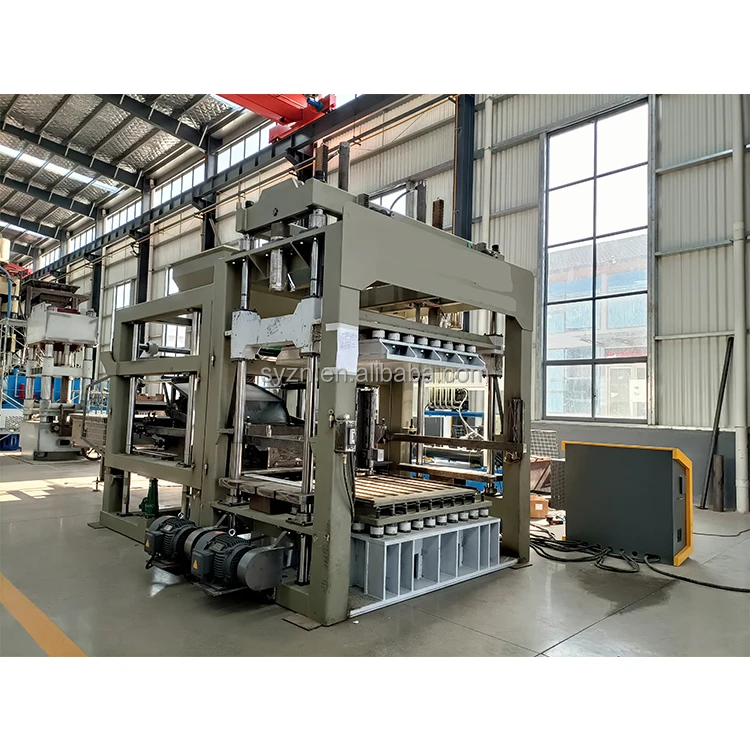
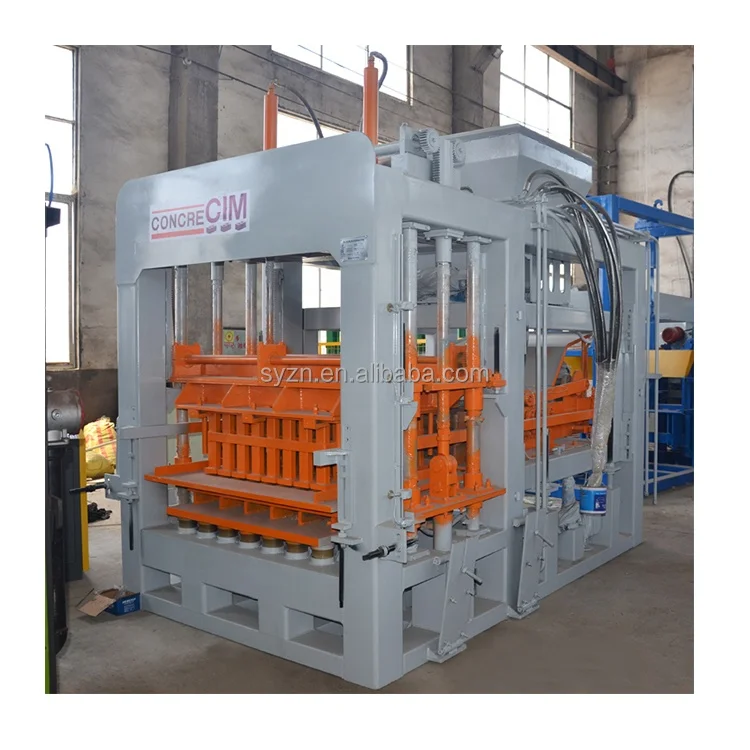
| Product Type | Semi-Automatic Concrete Block Making Machine |
| Overall Dimensions (L×W×H) | 2060 × 1730 × 2580 mm |
| Molding Cycle | 26 seconds |
| Vibration Frequency | 4200 r/min |
| Vibration Force (Exciting Power) | 35.5 kN |
| Total Power | 14.25 kW |
| Mixer Model | JQ350 |
| Pallet Size | 850 × 450 × 20 mm |
| Net Weight | 1800 kg |
| Automation Level | Semi-automatic (four guide pillars, automatic mould movement) |
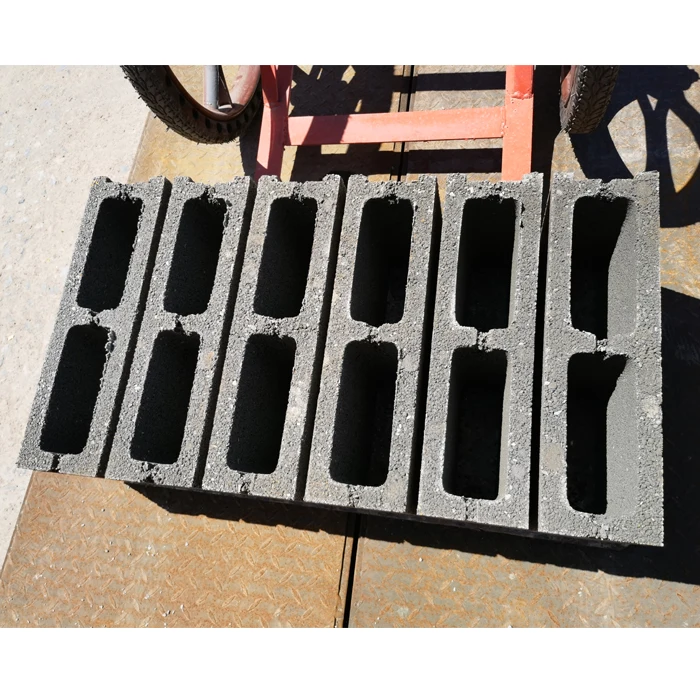
| Output — 390×190×190 mm hollow block | 4 pcs/mould, 480 pcs/hr, 3800 pcs/8hr |
| Output — 400×150×200 mm hollow block | 5 pcs/mould, 600 pcs/hr, 4800 pcs/8hr |
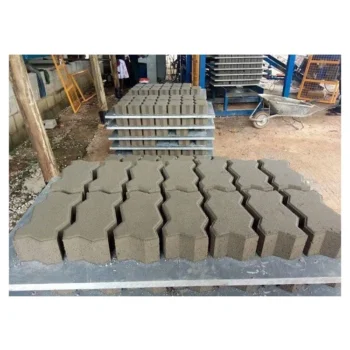
| Output — 240×115×53 mm solid brick | 18 pcs/mould, 2100 pcs/hr, 17000 pcs/8hr |
| Applied Products | Concrete hollow blocks (8 inch, 6 inch), solid bricks |
| Raw Materials | Crushed stone, sand, cement, fly ash, dust |
| Hydraulic Pressure | Not stated (basis to be confirmed) |
| Mould Change Time | Not stated (basis to be confirmed) |
| Voltage & Frequency | Not stated (basis to be confirmed) |
| Control System | Not stated (basis to be confirmed) |
| Stacking Method | Manual pallet handling |
| Standards | CE (basis to be confirmed for this model) |
Application Suitability
| Application | Material or Output |
|---|---|
| Small to medium block plant startup | 8 inch and 6 inch hollow blocks from crushed stone and cement |
| On-site construction block production | Solid bricks (240×115×53 mm) for building contractors using local sand and fly ash |
| Product range expansion for existing manufacturers | Hollow block and solid brick formats added to current semi-automatic line |
| Entrepreneur first block plant | Standard hollow blocks (390×190×190 mm or 400×150×200 mm) for local building material markets |
What "Cycles Per Hour" Leaves Out About Semi-Automatic Block Machine Specifications
Capacity only becomes meaningful when every number is anchored to a specific block format.
Semi-automatic block machine specifications how to choose is a question buyers often ask only after the machine arrives and the first shift produces less than expected. A machine rated at 600 pieces per hour sounds productive until you learn that figure assumes a 400×150×200 mm hollow block and drops significantly for other formats. [NEED_CITE: common discrepancies between quoted and actual block output in semi-automatic lines]. I have walked through plants where the buyer quoted the cycle count to justify the purchase, then spent the next three months trying to figure out why the pallets were not filling the curing area fast enough. The reality is that a 26-second cycle on a QTJ4-26 produces different daily volumes depending on whether you are running 4-piece or 18-piece moulds.
Format-Specific Capacity Over Generic Cycle Claims
When sizing a semi-automatic block machine specifications how to choose comes down to matching the machine’s mould cavity count to the block format that dominates your local market. The QTJ4-26 presses four 390×190×190 mm hollow blocks per mould at a 26-second cycle, yielding a calculated 480 pieces per hour or 3800 pieces over an eight-hour shift. Switch to the smaller 240×115×53 mm solid brick mould and the same cycle produces 18 pieces per mould — a fundamentally different daily output of 17000 bricks. This format-by-format breakdown is what a buyer needs to plan curing rack space, pallet inventory and shift scheduling.
Pallet Sizing and Curing Area Alignment
The pallet dimension is one of the most overlooked items in a semi-automatic purchase. The QTJ4-26 uses an 850×450×20 mm pallet, and this size must be checked against two things already on the buyer’s site: the spacing between curing rack rails and the fork width of the forklift that will move stacks from press to curing area. A pallet that is even a few centimetres off from the rack spacing means either rebuilding the racks or sourcing a different pallet batch. [NEED_CITE: pallet dimension mismatches causing curing area rework in new block plants]. I have seen this delay a first production run by several weeks because the oversight was discovered after the machine was bolted to the floor.
Vibration Force and Local Aggregate Compatibility
The vibration system on the QTJ4-26 delivers 35.5 kN of exciting power at 4200 r/min through direct vertical vibration under the mould. Whether that force is sufficient depends entirely on the buyer’s mix design and the local aggregate available. Crushed granite requires different vibration energy than river sand or fly ash blends, and a force mismatch shows up as inconsistent block density across the pallet surface. Before confirming the machine, the mix should be tested with the vibration profile the press will deliver so that block strength meets local building code requirements without reformulating the entire raw material supply chain.
The Hidden Cost of Overlooking Electrical Specifications
Voltage, frequency and control language sit at the bottom of most quotation sheets, yet they cause some of the longest commissioning delays. A machine built for 380V/50Hz arriving at a 440V/60Hz site will not simply underperform — the motor will overheat and the vibration frequency will shift, altering block density. [NEED_CITE: motor and vibration frequency drift from voltage mismatch in exported machinery]. Control display language is another friction point: operators troubleshooting a fault at two in the morning need to read the alarm in a language they understand. These specifications must be locked in writing before the machine enters production, not discovered during uncrating.
Why Buyers Choose This Configuration Path
The QTJ4-26 is specified as a matched system — press, mould, pallet and mixer — rather than assembled from disconnected component suppliers. The JQ350 mixer, 14.25 kW total power draw and 850×450 mm pallet are selected together so that mixing batch size aligns with mould capacity and pallet surface area. [NEED_CITE: block line component mismatch causing cycle bottlenecks]. Every output figure provided with the quotation states which block format it assumes, eliminating the guesswork between cycle rate and daily pallet count. Mould drawings and format lists are issued at the proposal stage so the buyer can verify that the cavity layout produces the block dimensions their market actually demands. The four guide pillars with automatic mould movement reduce format change effort compared to fully manual machines, though changeover time should be confirmed before assuming quick-release performance. First-time buyers can start at this semi-automatic tier and plan an automation upgrade path once daily volumes justify the investment.
Documentation & Verification
- Line layout with capacity calculation stated per block format for QTJ4-26
- Mould drawing and format list issued before production begins
- Pallet specification cross-referenced with buyer curing rack dimensions
- Voltage, frequency and control language confirmation sheet before dispatch
- Factory test record on buyer’s target block format
- Wear parts and mould replacement list included with quotation
Installation, Commissioning & Support
- Foundation pad sized for 2060×1730 mm footprint and 1800 kg static weight
- Dedicated electrical circuit confirmed for 14.25 kW total power draw before arrival
- JQ350 mixer positioned to feed raw material within operator reach of the press
- Vibration frequency verified at 4200 r/min during first-run commissioning on site
- Manual pallet handling workflow trained with curing area and forklift layout in mind
- Mould wear parts list reviewed so first replacement order is placed before stockout
What to Share Before Requesting a Quotation
To size the QTJ4-26 accurately, share the block format and daily output target you need, the raw materials available locally including aggregate type and cement grade, your site voltage and frequency, and the curing rack dimensions and forklift specifications already in place. If you plan to run multiple formats, list each one with the expected production split so the mould set can be scoped correctly.
Frequently Asked Questions
Q: How is the 3800 to 17000 pieces per 8-hour shift range calculated?
A: Each figure is tied to a specific block format. The 3800 count assumes 390×190×190 mm hollow blocks at 4 pieces per mould, while 17000 assumes 240×115×53 mm solid bricks at 18 pieces per mould. The 26-second cycle remains constant; the variation comes from mould cavity count. Buyers should plan shift output against the format they will actually run most days.
Q: Is 35.5 kN vibration force enough for my local aggregate and target block strength?
A: Sufficiency depends on the mix design and aggregate hardness. Crushed granite needs more vibration energy than fine sand or fly ash blends. The 4200 r/min frequency should be tested with your specific raw material sample to confirm that block density and compressive strength meet your local building code before the machine is ordered.
Q: Will the 850×450 mm pallet fit my existing curing racks and forklift?
A: This must be verified before ordering. Measure the rail spacing on your curing racks and the fork width of the forklift that will handle pallet stacks. A mismatch in either dimension means rack modification or pallet replacement, both of which delay the first production run unnecessarily.
Q: Voltage and control language are not listed — how are they confirmed?
A: These are confirmed in writing during the proposal stage before production begins. The buyer provides site voltage, frequency and the preferred control display language. This lock-in prevents motor overheating, vibration frequency drift and operator confusion during fault troubleshooting after the machine arrives on site.