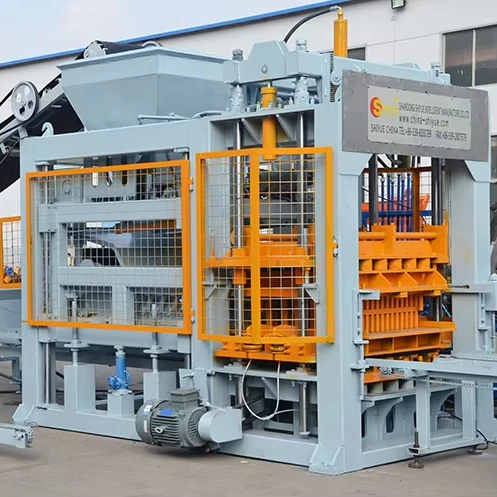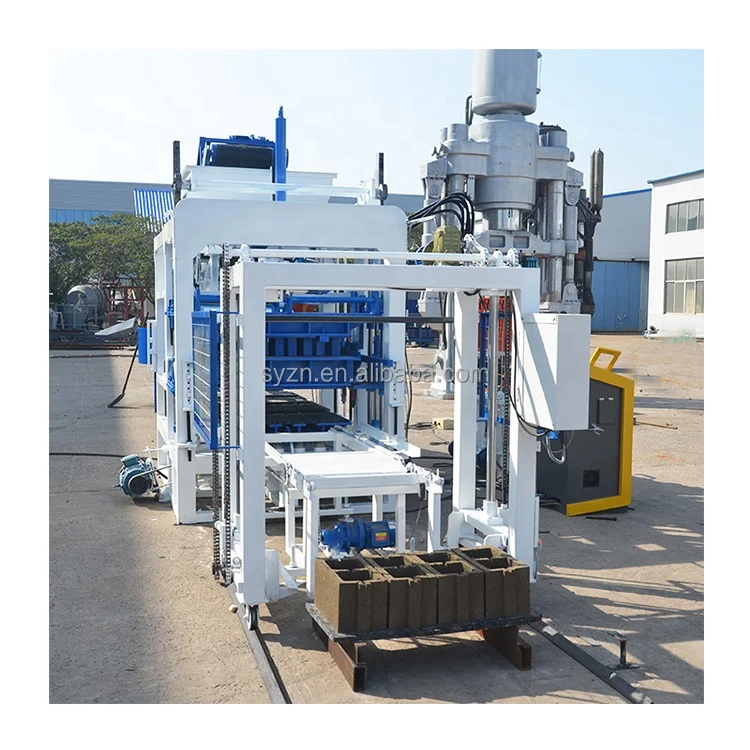
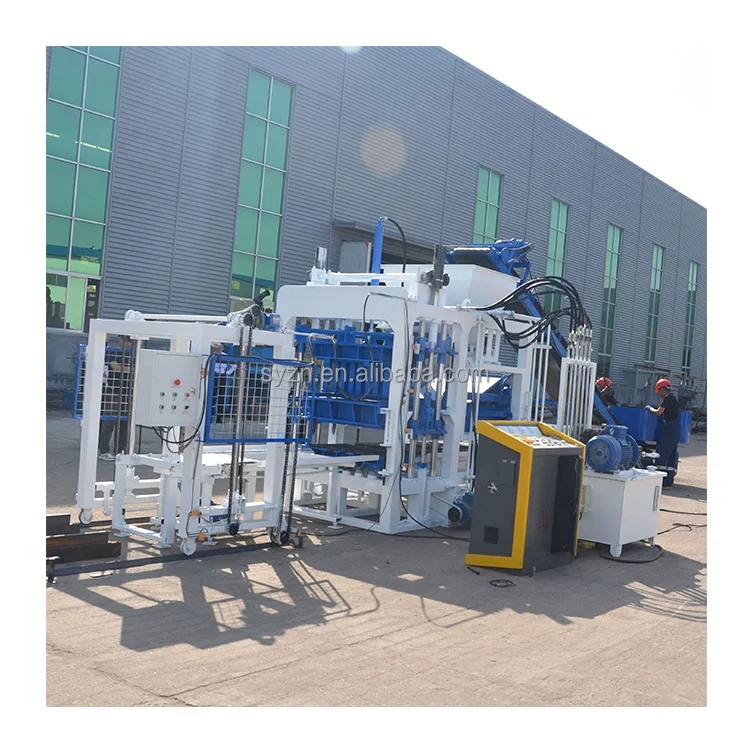
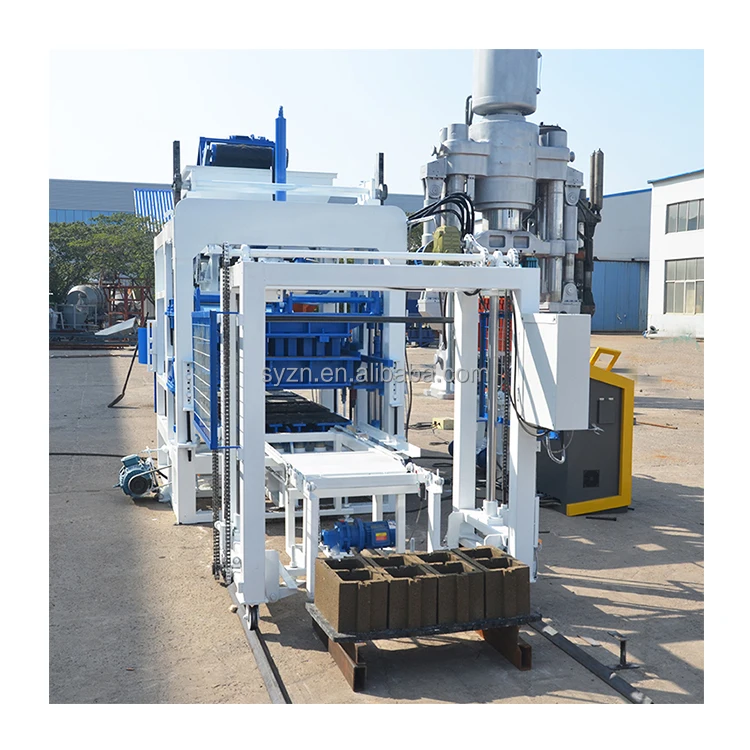
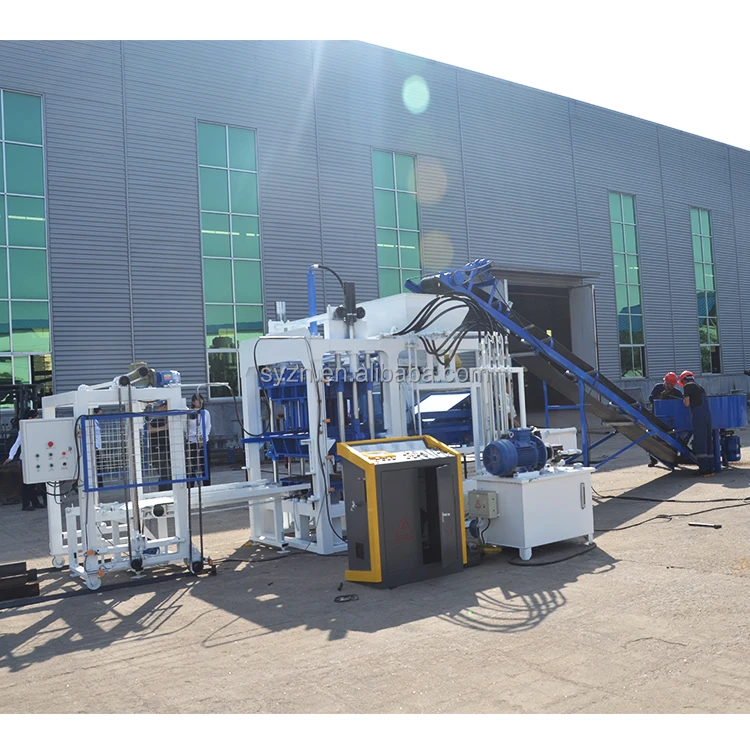
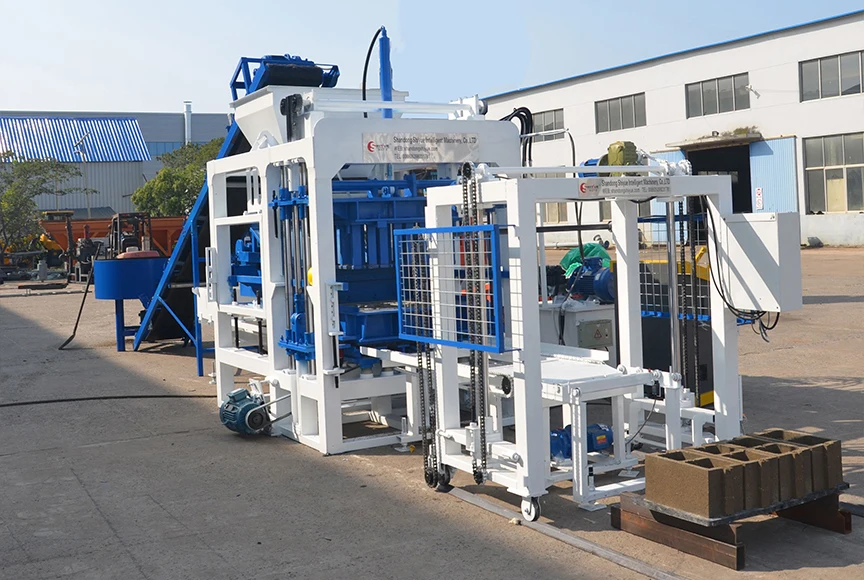
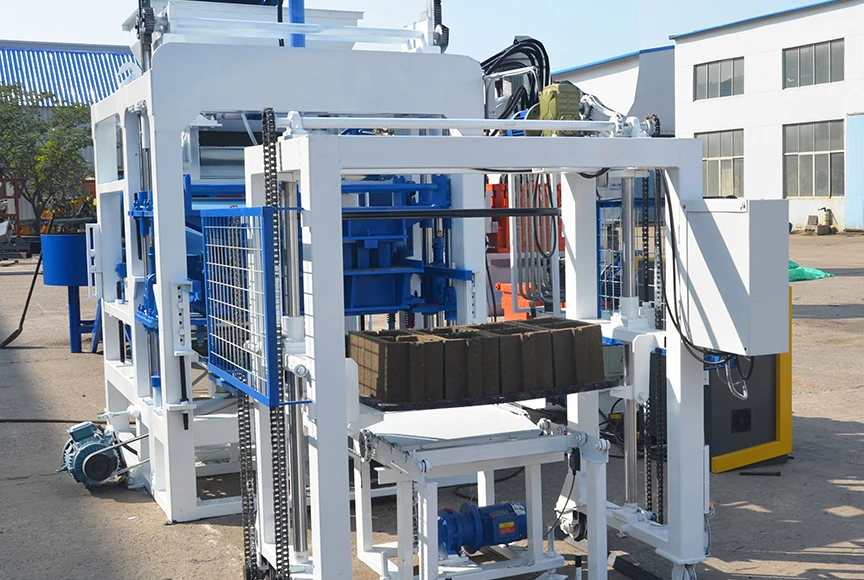
Description
Honest Capacity by Format — every output figure for the QT4-18 is tied to the exact block format, cycle time, and pallet size you will run, not a catalogue peak number that disappears on the factory floor.
Technical Specifications
| Parameter | Value |
|---|---|
| Model | QT4-18 |
| Product Type | Concrete Block Making Machine |
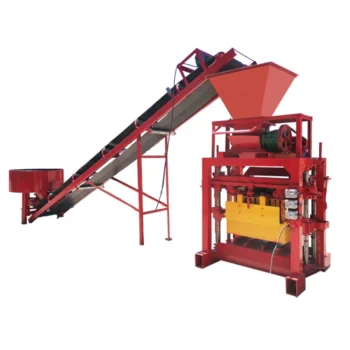
| Overall Dimensions (L×W×H) | 3900×1600×2300 mm |
| Molding Cycle | 15-25s depending on block format and mix design |
| Vibration Force (Exciting Power) | 40-50 kN |
| Total Power | 24 kW |
| Mixer Model | JQ350 |
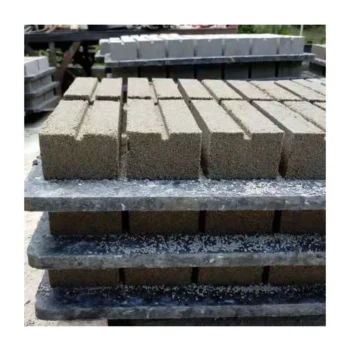
| Pallet Size | 850×550×25 mm |
| Net Weight | 3 T |
| Control System | PLC control system |
| Hydraulic Station | Included, high-pressure configuration for stable operation |
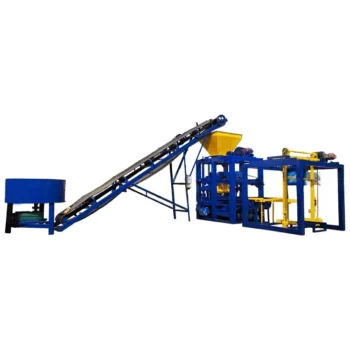
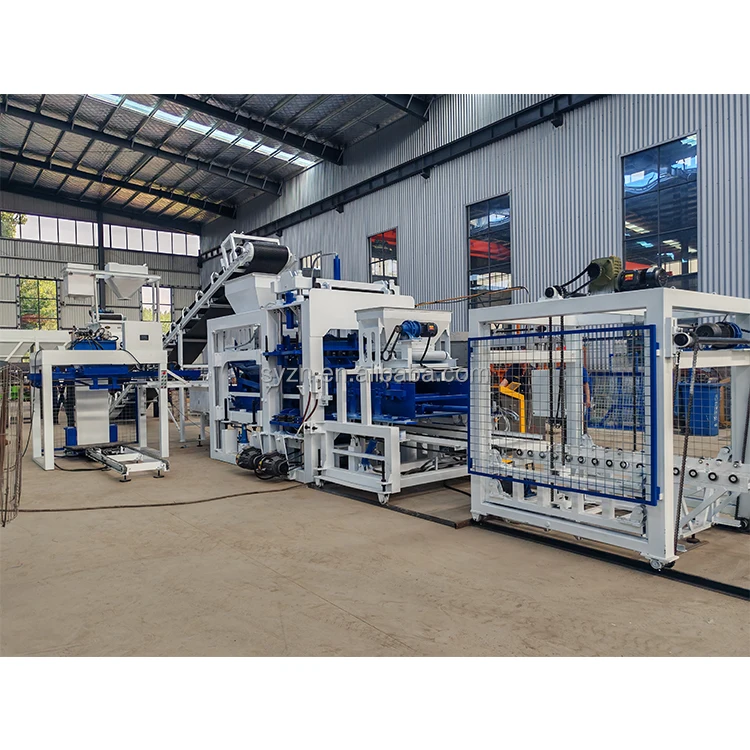
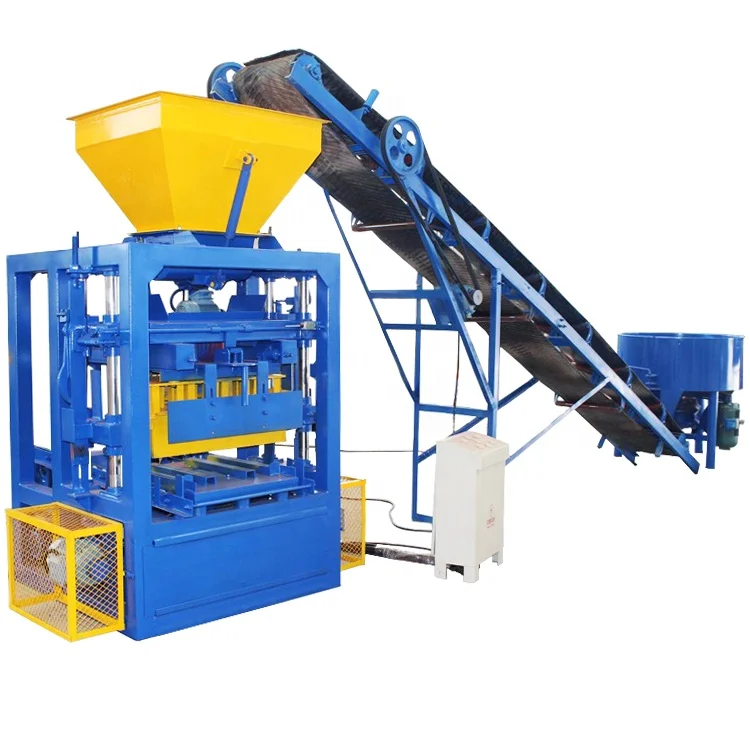
| Included Equipment | Block making machine, hydraulic station, PLC control system, pallet feeder, brick conveyor, block sweeper |
| Free Accessories | Manual hydraulic trolley, spare parts and tools |
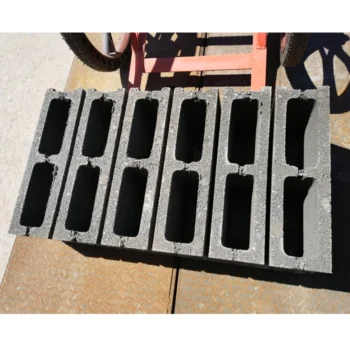
| Output Capacity (Hollow Block 400×200×200mm) | 1200-1680 pcs/hr based on 15-20s cycle |
| Output Capacity (Hollow Block 400×150×200mm) | 1800-2400 pcs/hr based on 15-20s cycle |
| Output Capacity (Solid Brick 240×115×53mm) | 3240 pcs/hr based on 15-20s cycle |
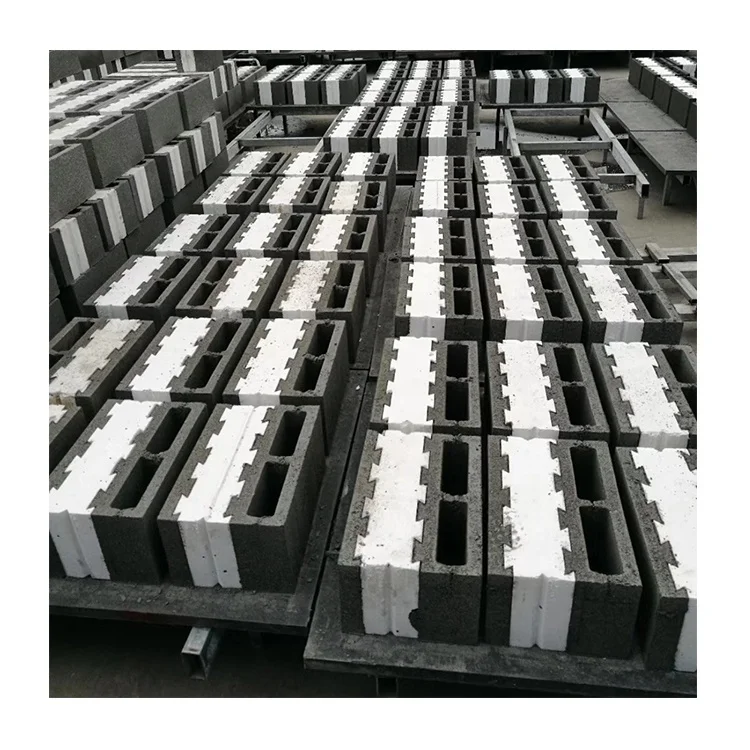
| Applied Products | Paver, solid block, hollow block, curbstone |
| Raw Materials | Crushed stones, sand, cement, dust, fly ash |
| Assembly State | Fully assembled line with pallet feeder, conveyor, and sweeper |
Application Suitability
| Application | Material or Output |
|---|---|
| Hollow block production for load-bearing and partition walls | Crushed stone, sand, cement, and fly ash mixes at 400×200×200mm or 400×150×200mm formats |
| Solid brick manufacturing for masonry and infill | Cement-bound aggregate blends at 240×115×53mm standard brick format |
| Paver and interlocking block production for walkways and driveways | Fine aggregate and cement mixes with surface finish requirements |
| Curbstone forming for road and pavement edging | High-strength concrete mixes with coarse aggregate content |
| On-site block production for construction contractors | Local sand, crushed stone, and cement with mobile plant setup |
What "1200 Pieces per Hour" Leaves Out About the QT4-18 Concrete Block Making Machine Specifications
Capacity only means something when you know which block format, which cycle time, and which mix produced it.
I have walked onto job sites in the Gulf where a brand-new block machine sat idle because the local sand carried high clay content, and the vibration force that worked perfectly at the factory test could not consolidate the mix into a saleable block. The supplier had quoted a peak cycle rate on an ideal material the buyer could not source within five hundred kilometres. With the QT4-18 concrete block making machine specifications, every capacity figure above is tied to a stated block format and a 15-20 second cycle, so you can calculate your actual daily output before the machine ships rather than discovering the gap during commissioning [NEED_CITE: aggregate grading and clay content impact on block compaction].
Matching the Mould to the Format Your Market Actually Buys
A block machine is only as versatile as the moulds it can accept and the time it takes to swap between them. The QT4-18 handles hollow block, solid brick, paver, and curbstone formats on one press frame, which means a small-to-medium plant can respond to shifting local demand without investing in a second machine. Mould change procedure and tooling requirements should be confirmed against your production schedule so that format flexibility does not get lost to changeover downtime.
Why Pallet Size Must Be Decided Before the Machine Ships
The 850×550×25 mm pallet dimension on the QT4-18 is not arbitrary — it governs how many blocks fit per cycle, how the pallets stack in your curing area, and whether your existing forklift can handle a loaded rack. Buyers who confirm pallet specifications after the machine is built often discover that their curing racks need re-spacing or that a different pallet material is required for the local humidity conditions [NEED_CITE: pallet material selection for block curing in arid and humid climates]. Locking this dimension during the proposal stage prevents costly rework once the line is installed.
Reading the Numbers That Actually Matter on Site
The 40-50 kN vibration force combined with the hydraulic station determines whether your specific mix — with its local aggregate shape, moisture content, and cement ratio — will consolidate into a block that meets the compressive strength your market requires. Total installed power of 24 kW across the press, mixer, and conveyor tells you the electrical supply specification you need to arrange before arrival. The JQ350 mixer capacity must match the press cycle so that the hopper never starves and the press never waits, which is where many small lines lose their rated output. PLC control with configurable display language removes the commissioning delay that happens when operators cannot read the fault codes on day one.
The Cost of Skipping the Format Conversation
When a buyer orders on price alone and leaves block format, pallet size, and electrical specification to assumption, the machine arrives and the problems begin. Voltage mismatch delays commissioning by weeks while a transformer is sourced locally. Pallets that do not fit existing curing racks force the plant to hand-stack output, cancelling the automation the buyer paid for. Moulds that produce a format the local market does not buy sit on a shelf while the buyer pays to have the correct ones manufactured and shipped [NEED_CITE: common commissioning delays in exported block making equipment].
Why Sourcing This Press Through a Format-First Process Differs
Block machinery as a single focus means the QT4-18 press, mould, pallet, and handling equipment are specified as one matched system rather than assembled from separate suppliers who each optimise for their own component. Configuration is set against your actual mix design, local aggregate, and target block format instead of a catalogue default that may not apply to your region. Mould design covers the formats your market actually sells, with custom drawings available when standard options do not match. Automation level is selectable, so you can start with the included pallet feeder and conveyor and add stacking or cubing later as volume grows. Installation support includes operator training on the specific PLC interface and mould change procedure for your format list.
Documentation & Verification
- Line layout and capacity calculation stating the block format assumed for each output figure
- Mould drawing and format list confirming the exact products included in your quotation
- Pallet specification sheet matched to your curing area dimensions and forklift capacity
- Voltage, frequency, and PLC display language confirmation document signed before production
- Factory test record on your specified block format and mix design before dispatch
- Operation and maintenance manual with wear parts and mould replacement schedule
Installation, Commissioning & Support
- Foundation pad sized to the 3900×1600 mm footprint with allowance for the JQ350 mixer and pallet feeder
- Electrical supply confirmed to match the 24 kW total load with dedicated circuit for the hydraulic station
- Machine arrives as a fully assembled line with pallet feeder, conveyor, and sweeper already connected
- PLC display language and fault code library confirmed to operator language before the machine leaves the factory
- First production run supervised on your local aggregate and mix design to verify block density and cycle time
- Wear parts and mould list provided with part numbers for reorder without returning to the original supplier
What to Include in Your First Enquiry
To size the QT4-18 correctly for your plant, the conversation needs to start with the block format your market buys most, the daily volume you need to sustain, and the raw materials you can actually source locally. Share your available voltage and frequency, the PLC display language your operators read, and the dimensions of your existing curing area so that pallet and rack compatibility can be verified before the quotation is issued.
Frequently Asked Questions
Q: How is the QT4-18 output capacity calculated per block format, and what cycle time does each assume?
A: Each capacity figure is based on a specific block format and a 15-20 second molding cycle. Hollow blocks at 400×200×200mm yield 1200-1680 pieces per hour, while solid bricks at 240×115×53mm reach 3240 pieces per hour under the same cycle assumption. Actual output depends on your mix design, operator pace, and pallet handling speed.
Q: Which mould formats are available, and how long does a mould change take on this machine?
A: The QT4-18 accepts moulds for hollow block, solid brick, paver, and curbstone formats. Mould change time depends on the specific mould set and whether quick-release tooling is included in your configuration. Confirm your format list and required changeover frequency during the proposal stage so the correct mounting system is supplied.
Q: How should pallet size and material be chosen to match my existing curing racks and forklift?
A: The standard pallet dimension is 850×550×25 mm. Before ordering, verify that this size fits your curing rack spacing and that your forklift capacity can handle a loaded rack at full height. Pallet material should be selected based on local humidity and the expected curing cycle duration in your climate.
Q: What raw material mix design and local aggregate does the QT4-18 require for target block strength?
A: The machine processes crushed stone, sand, cement, dust, and fly ash. Block strength depends on matching the 40-50 kN vibration force and hydraulic pressure to your specific aggregate grading, moisture content, and cement ratio. A trial run on your local material before shipment confirms whether the configuration produces saleable blocks.
Q: What voltage, frequency, and PLC language options are confirmed before shipment?
A: Voltage and frequency must match your site supply to avoid commissioning delays. PLC display language is confirmed during the proposal stage so that operators can read fault codes and cycle parameters on day one. These specifications are documented and signed off before production begins.