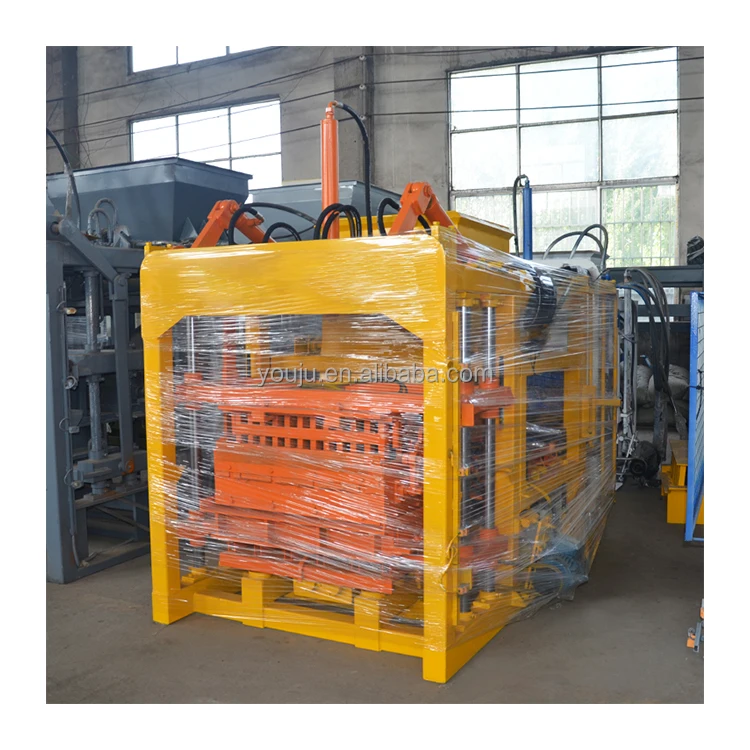
Description
Pallet Matched To Block Format — we confirm curing area and forklift capacity against the 1020 × 570 mm pallet before the QT4-15 ships, so your yard layout dictates the spec, not our catalogue default.
Technical Specifications
| Parameter | Value |
|---|---|
| Model | QT4-15 |
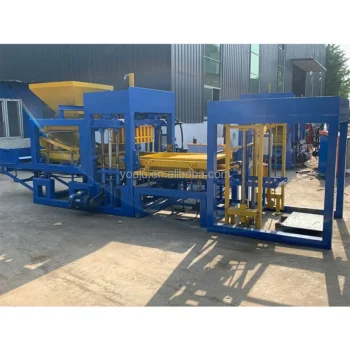
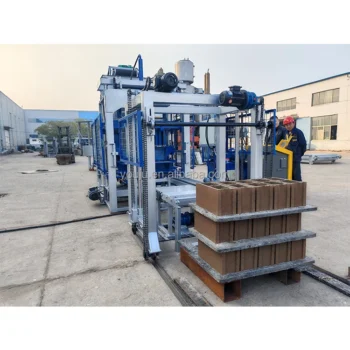
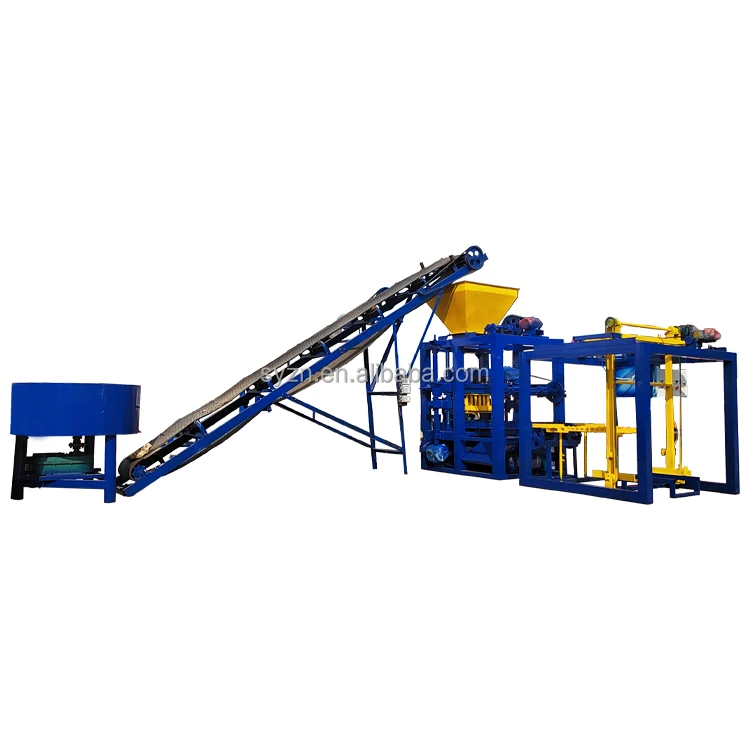
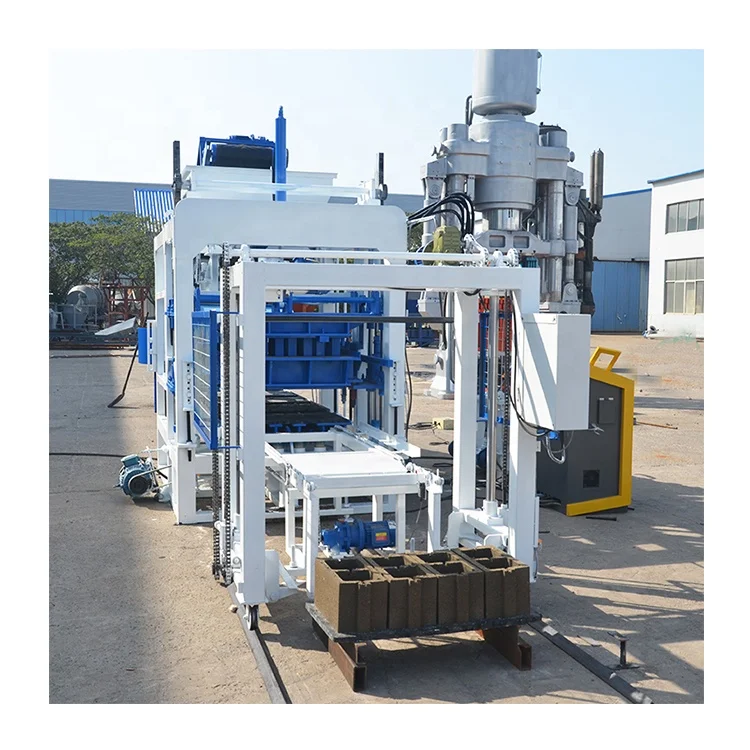
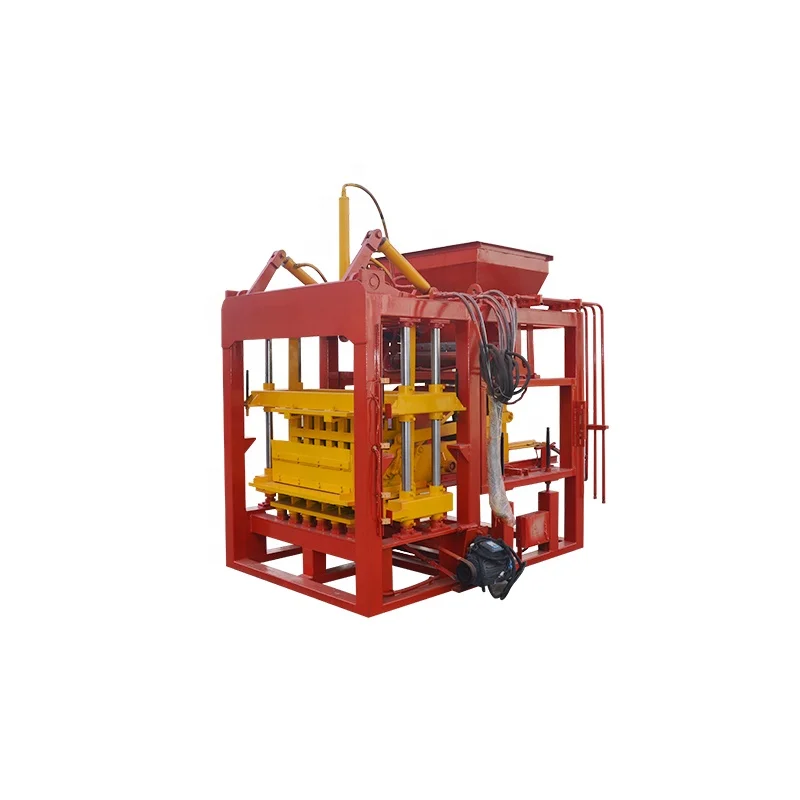
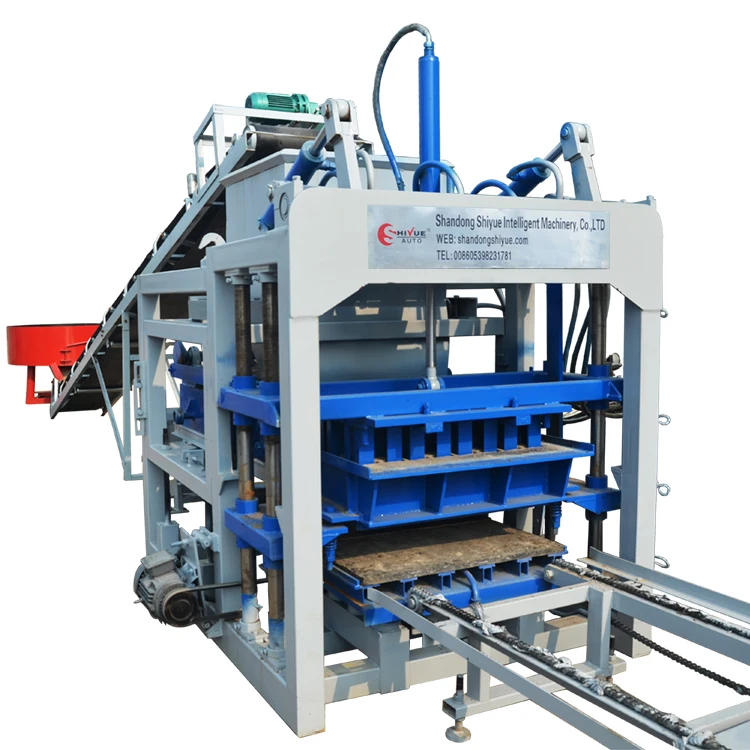
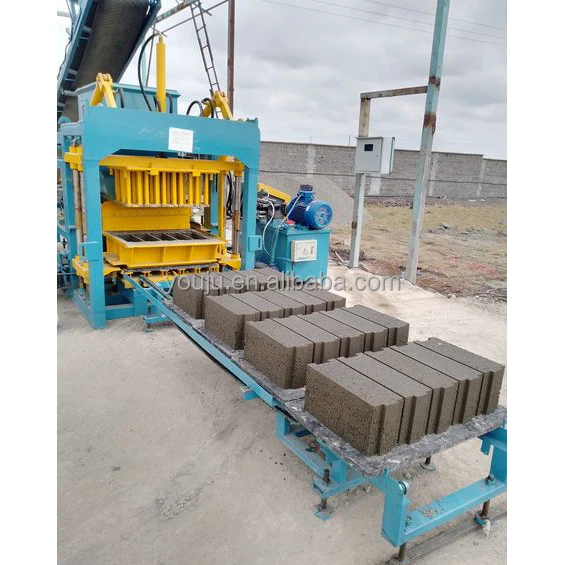
| Product Type | Stationary Concrete Block Making Machine |
| Host Machine Power | 27.5 kW |
| Moulding Cycle | 15 s (basis to be confirmed per block format and mix) |
| Overall Dimensions (L×W×H) | 7100 × 1600 × 2610 mm |
| Pallet Size | 1020 × 570 mm |
| Net Weight | 5 T |
| Vibration Force | 40 kN |
| Mixer Model | JS500 |
| Voltage | 380 V (frequency and phase to confirm per market) |
| General Water Consumption | 4 T/day |
| Workers Required | 3–4 |
| Workshop Area | 150 m² |
| Motor | Siemens Motor |
| Control System | Computer controlled directional vibration with frequency and brake |
| Feeding System | Hopper with swing-type cutting device |
| Vibration Method | Table and mould vibrating together; low-frequency feeding, high-frequency vibrating |
| Automation Level | Automatic |
| Theoretical Productivity | (basis not stated in source — confirm block format, material and thickness) |
| Hydraulic Pressure | (not stated in source) |
| Warranty | 1 year |
Application Suitability
| Application | Material or Output |
|---|---|
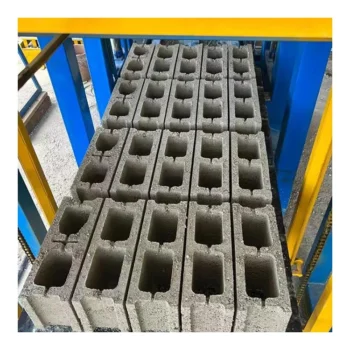
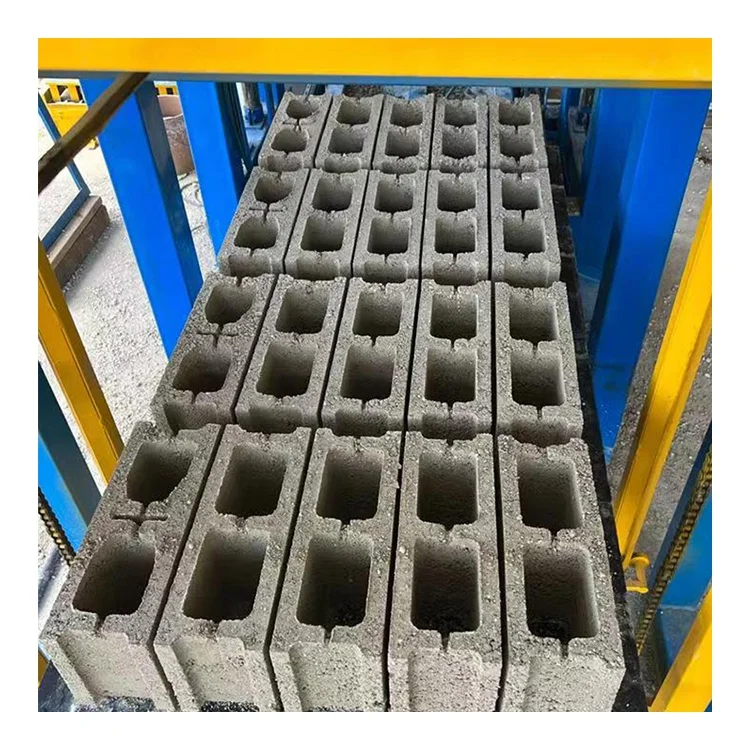
| Hollow block production | Cement, crushed stone, sand and fly ash blends for structural walling |
| Multi-cellular brick production | Lightweight aggregate and cement mixes for partition walls |
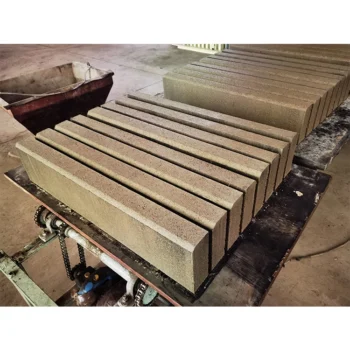
| Paving brick production | Dense aggregate and cement for driveways, walkways and municipal surfaces |
| Standard solid brick production | High-density aggregate blends for load-bearing masonry |
What the "15-Second Cycle" Actually Means for Your Daily Output
The moulding cycle is measured on one specific block format — real daily throughput shifts every time you change the mould.
The QT4-15 stationary block machine specifications list a 15-second cycle, but that number assumes a particular block size, mix consistency and pallet fill. When a buyer switches from a 400×200×200 mm hollow block to a thinner paving format, the feed time, vibration duration and demould behaviour all shift. I once watched a Central American plant lose an entire shift because the cycle figure on paper never matched the coarse local aggregate they were actually running [NEED_CITE: effect of aggregate particle size on block machine cycle time]. Without a format-by-format capacity sheet, you are guessing at your own revenue.
Matching the QT4-15 to the Block Your Market Actually Buys
The pallet size of 1020 × 570 mm determines which mould formats can physically fit and how many cavities each mould carries. A hollow block mould might fill most of that pallet with four or six cavities, while a paving brick mould packs dozens of smaller units across the same surface. Before confirming the QT4-15 stationary block machine for your line, we map every block format you sell against this pallet boundary so you know the exact pieces-per-pallet count before production starts.
How Vibration Force and Mix Design Interact on This Press
The 40 kN vibration force, combined with computer-controlled directional vibration and brake, is a fixed mechanical capability — but the block strength you achieve depends on how well that force couples with your specific aggregate grading and cement ratio. Coarse gravel absorbs vibration differently than fine sand or fly ash blends. When we receive your material sample, we adjust the low-frequency feeding and high-frequency vibrating phases to match, reducing density variation across the pallet and keeping block-to-block strength consistent [NEED_CITE: vibration force calibration for local aggregate in concrete block production].
Reading the Specifications Beyond the Brochure Numbers
The hopper with swing-type cutting device feeds material into the mould cavity with a sweeping motion rather than a simple gravity drop. This matters because uneven fill creates density gradients — blocks on one side of the pallet cure harder than those on the other, and buyers notice the inconsistency when they break-test samples. The 27.5 kW host machine power drives both the hydraulic pack and vibration motors; if your site voltage fluctuates, that power delivery becomes unreliable and the directional vibration loses its braking precision. The JS500 mixer paired with this press handles the throughput needed for continuous cycling, but its water-to-cement ratio must match the 4 T/day water consumption figure so the mix arrives at the hopper at the right slump. Workshop area of 150 m² covers the press, mixer and pallet return — it does not include curing yard space, which depends entirely on your pallet circulation rate and local climate.
When the Wrong Configuration Costs More Than the Machine
A buyer who orders without confirming pallet size against their existing curing racks and forklift tines ends up stacking blocks by hand or rebuilding the yard from scratch. The voltage and frequency question, if left to the last minute, can strand a fully shipped QT4-15 at the dock while transformers are sourced locally [NEED_CITE: voltage and frequency standards by export market]. Mould change time is another silent cost — if the changeover takes most of a shift, the format flexibility you paid for disappears, and you end up running one block type all week whether the market wants it or not.
Why Buyers Source the QT4-15 Through This Configuration Process
We treat the QT4-15 as one element in a matched system: the mould, the pallet, the mixer and the handling equipment are all specified together against your actual block format and site conditions. Our configuration starts with your local aggregate sample, not a catalogue default, so the vibration and hydraulic settings are adjusted before the machine leaves the factory. Every mould we supply is drawn to fit the 1020 × 570 mm pallet and the formats your downstream customers order. Automation level is selectable — if you begin with manual pallet handling and want to add stacking later, the upgrade path is built into the frame. We provide installation and commissioning support with operator training so the first production run is supervised, not experimental.
Documentation & Verification
- Line layout and capacity calculation stating the block format assumed for the 15 s cycle
- Mould drawing and format list confirming which block types fit the 1020 × 570 mm pallet
- Voltage, frequency and PLC display language confirmation before shipment
- Hydraulic and electrical schematic for on-site maintenance reference
- Wear parts and mould list so first replacements are ordered before commissioning
- Factory test record on your block format before dispatch
Installation, Commissioning & Support
- Foundation must support the 5 T net weight across the 7100 × 1600 mm footprint with level tolerance
- Dedicated 380 V circuit with confirmed frequency and phase matching the Siemens motor rating
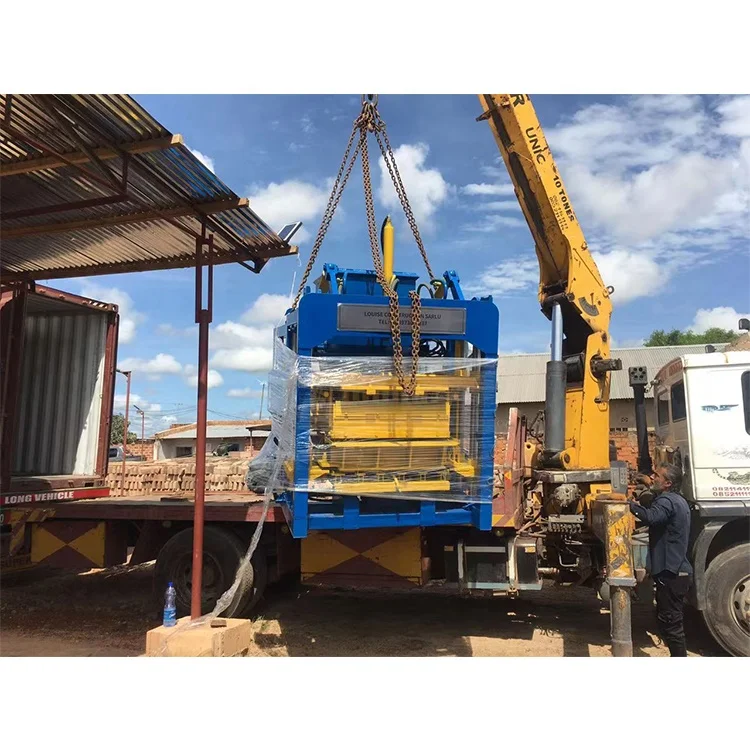
- Machine arrives dismantled for container loading; reassembly supervised on site
- First-run commissioning includes cycle timing verification on your specific block format
- Operator training covers mould change procedure, hopper feed adjustment and daily maintenance
- Wear parts list provided so hydraulic seals and mould liners are stocked before first replacement
Before You Request a Quotation
Send us the block formats your market currently orders, including dimensions and target compressive strength. We also need a sample of your local aggregate — sand, crushed stone or fly ash — so the vibration settings can be calibrated before the QT4-15 ships. Confirm your site voltage, frequency and preferred PLC display language, and let us know whether your curing yard already has racking sized for the 1020 × 570 mm pallet or if we need to factor yard planning into the line layout.
Frequently Asked Questions
Q: What is the real daily output of the QT4-15, and which block format is that based on?
A: The 15-second cycle is measured on one reference format. Daily output changes with every mould swap because feed time, vibration duration and demould behaviour differ between hollow blocks, pavers and solid bricks. We provide a format-by-format capacity sheet based on your specific block dimensions and local aggregate before you place an order.
Q: Which mould formats fit the 1020 × 570 mm pallet, and how long does a change take?
A: The pallet accepts hollow block, multi-cellular, paving and standard solid brick moulds within its boundary. Mould change time depends on the clamping system and operator familiarity — we specify the changeover procedure in the manual and train your team during commissioning so format swaps do not consume a full shift.
Q: How should vibration force and hydraulic pressure be matched to my local aggregate?
A: Coarse aggregate absorbs vibration energy differently from fine sand or fly ash blends. The 40 kN vibration force is fixed, but the low-frequency feed and high-frequency vibration phases are adjustable. Send us your aggregate sample and mix proportions so we calibrate these settings before dispatch.
Q: What voltage, frequency and PLC language options are confirmed before shipment?
A: The standard voltage is 380 V, but frequency and phase must match your local grid. PLC display language is confirmed during the order process so operators can read diagnostics and cycle counters on day one. We lock these details in writing before the machine enters production.
Q: Which wear parts should I stock for the first year of QT4-15 operation?
A: Hydraulic seals, vibration motor bearings, hopper cutting device liners and mould wear plates are the items that typically need replacement within the first year. We provide a complete wear parts list with part numbers so you can order spares before your first scheduled maintenance stop.