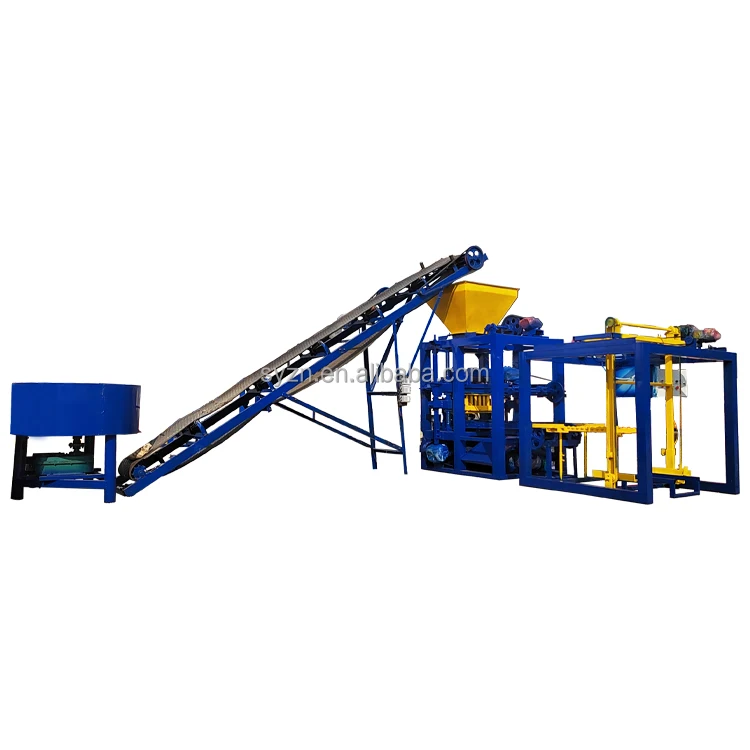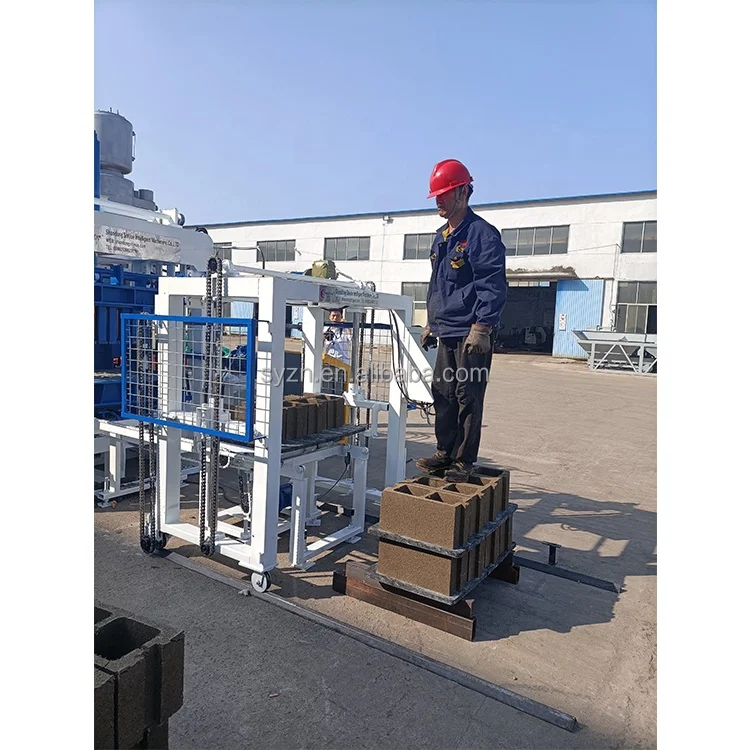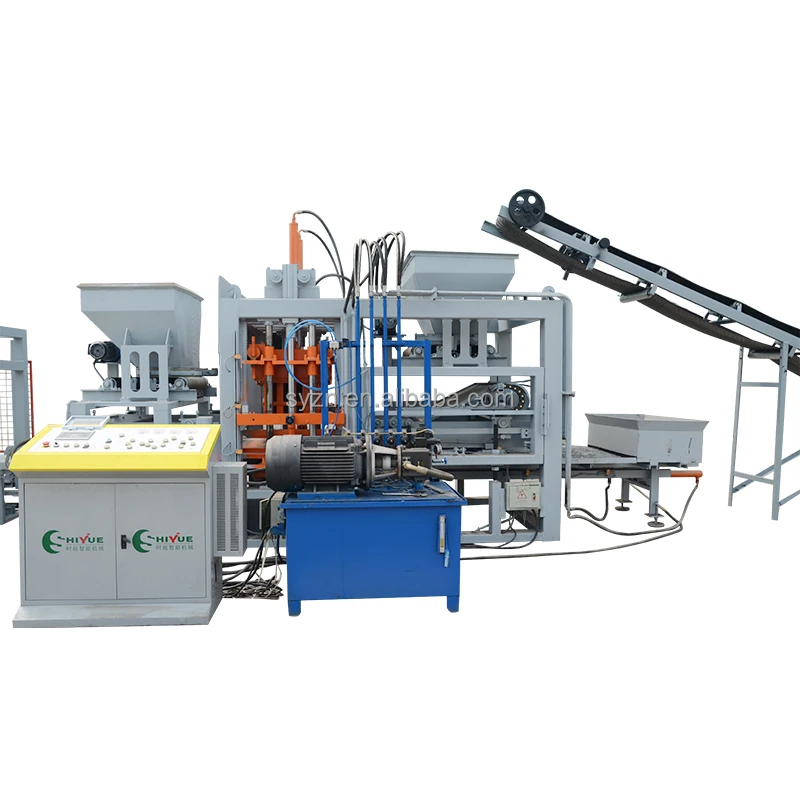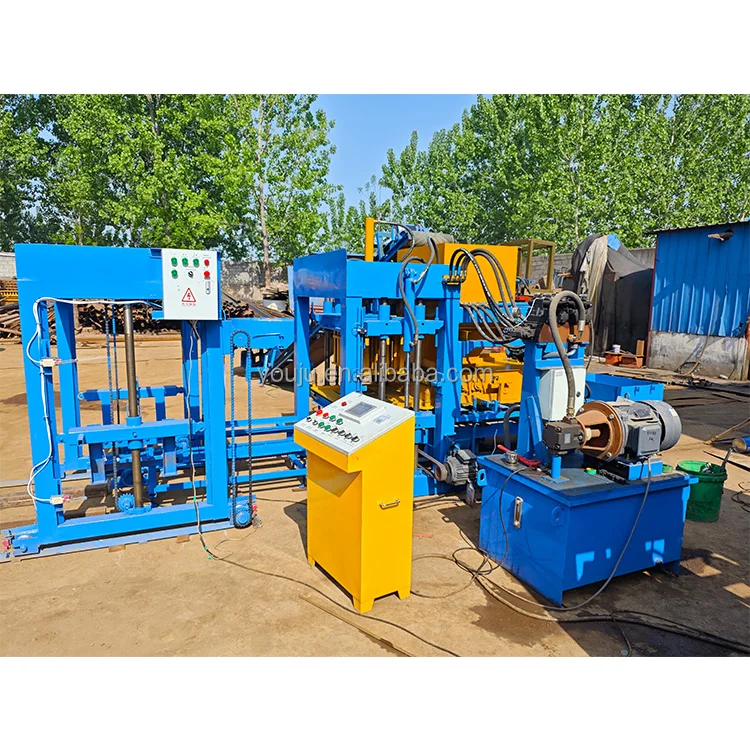

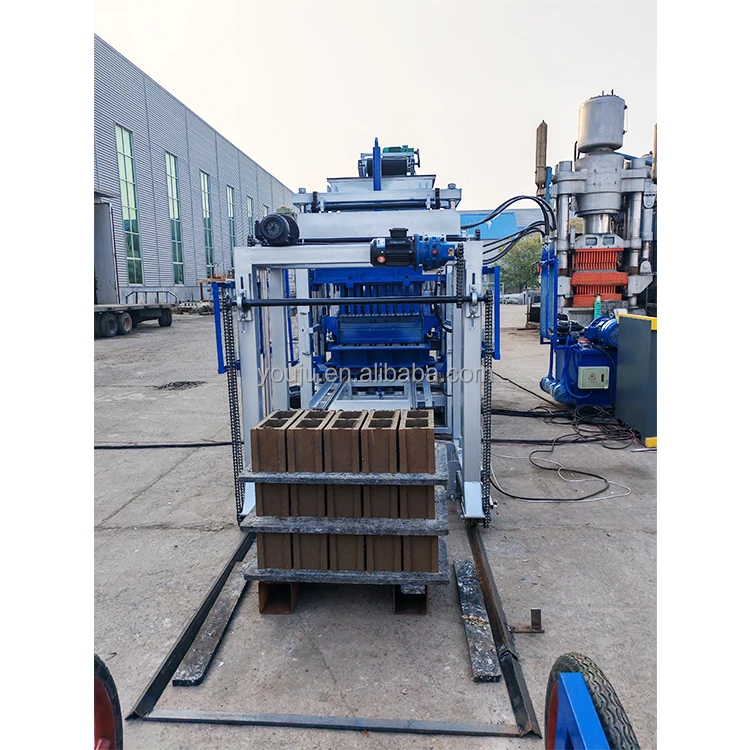
Description
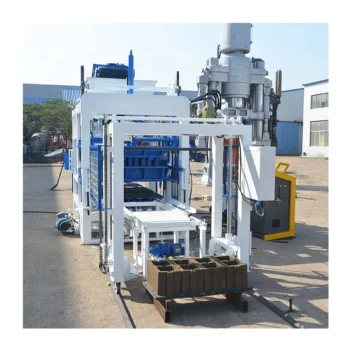
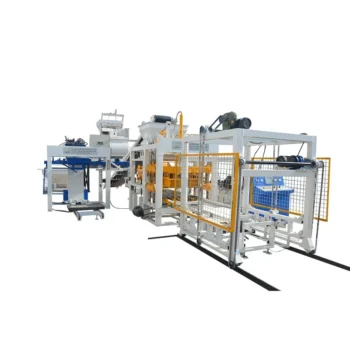
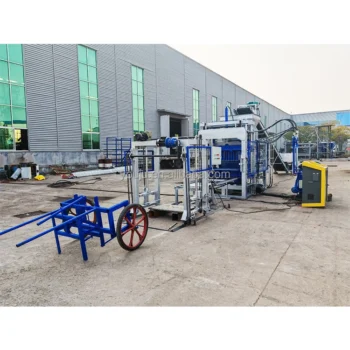
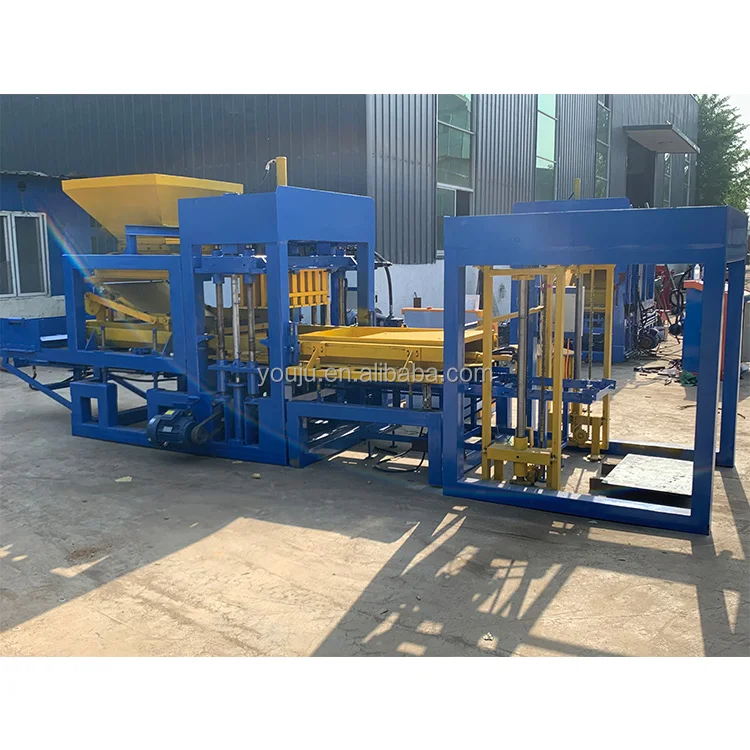
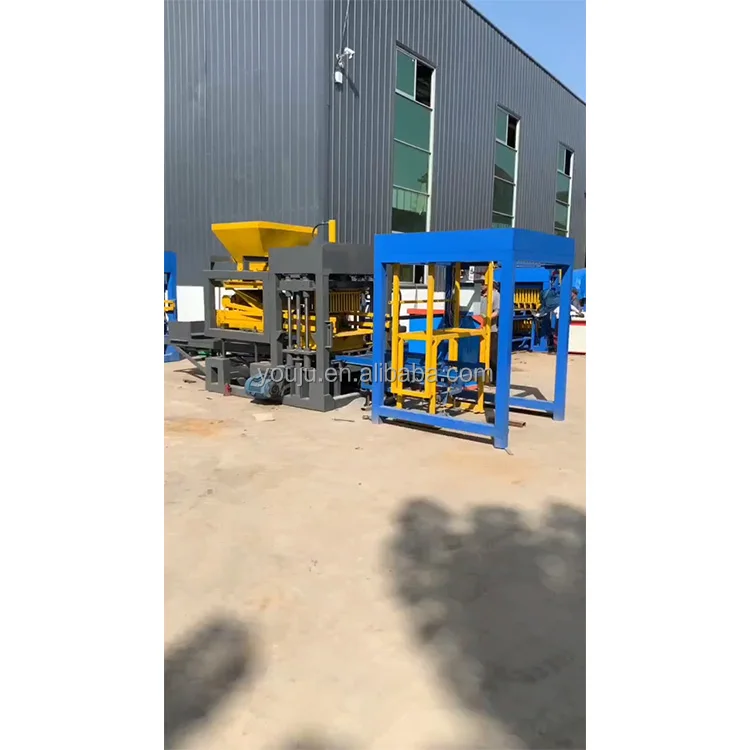
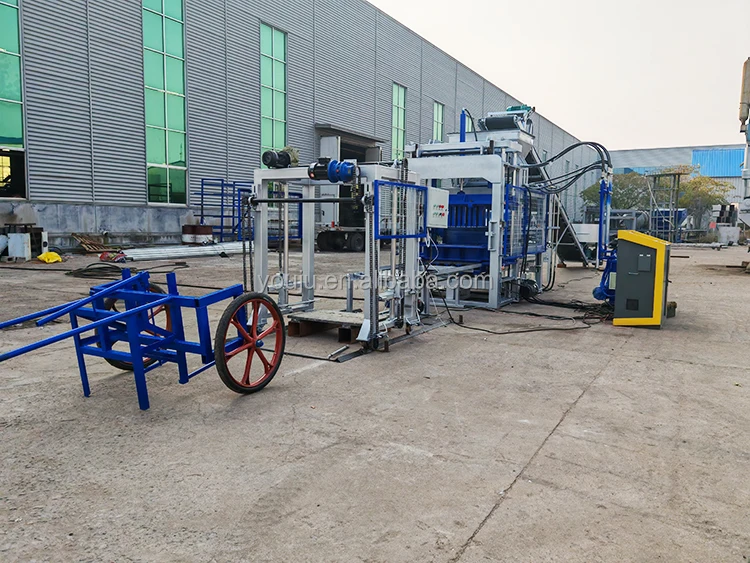
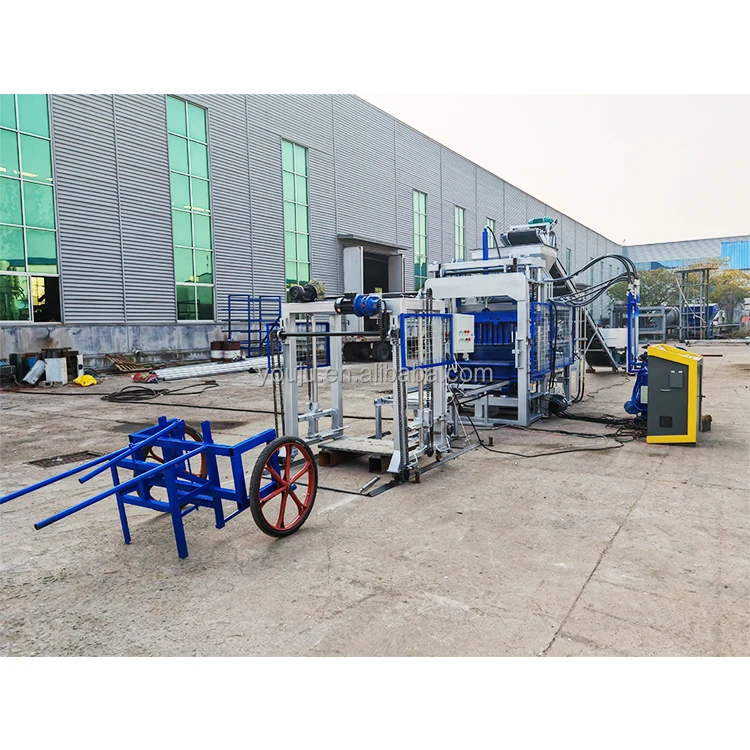
Format-driven output — every QT4-15 interlocking brick making machine specification is checked against the buyer’s target block, local mix and curing setup, not quoted from a catalogue default.
Technical Specifications
| Parameter | Value |
|---|---|
| Model | QT4-15 |
| Product Type | Hydraulic Interlocking Brick Making Machine |
| Control System | PLC controlled |
| Molding Cycle | 15-30 s |
| Pallet Size | 900 × 500 mm |
| Vibration Type | Platform vibration |
| Vibration Frequency | 50-70 Hz |
| Product Height Range | 50-220 mm |
| Overall Power | 24.5 kW |
| Demolding Method | Hydraulic |
| Automation Level | Automatic (pallet feeding, material feeding, vibrating, demoulding) |
| Block Compressive Strength | > 15 MPa |
| Capacity (400×200×200 mm hollow block) | 900-1200 pcs/h (basis: 4 pcs/mould, 15-20 s cycle) |
| Capacity (400×150×200 mm hollow block) | 1080-1440 pcs/h (basis: 5 pcs/mould, 15-20 s cycle) |
| Capacity (400×100×200 mm hollow block) | 1440-1920 pcs/h (basis: 8 pcs/mould, 15-20 s cycle) |
| Capacity (200×100×60 mm paver) | 2880-3840 pcs/h (basis: 16 pcs/mould, 15-20 s cycle) |
| Capacity (240×115×53 mm solid brick) | 5930-6720 pcs/h (basis: 28 pcs/mould, 15-20 s cycle) |
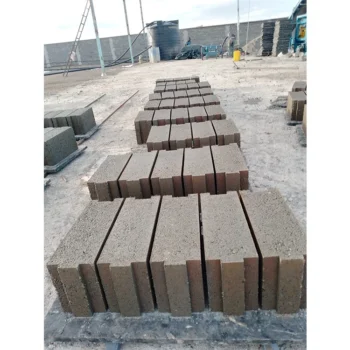
| Mould Formats Supported | Hollow block, paver, solid brick, interlocking brick |
Application Suitability
| Application | Material or Output |
|---|---|
| Mid-to-small hollow block plant | Fly ash, slag, crushed stone, sand, cement and water |
| Interlocking brick production for housing projects | Local aggregate blended with cement, shaped via interlocking mould |
| Paver and kerbstone runs for municipal contracts | Fine aggregate and cement with platform-vibrated densification |
| Solid brick format for masonry walls | Sand or gangue mixed with cement, 28-cavity mould |
Why "Pieces per Hour" Means Nothing Without the Block Format
A quoted capacity figure only matters when the block size and cycle time behind it are named.
Many buyers compare machines on a single headline number, then discover after commissioning that the figure assumed a thin paver they never intend to sell. On a QT4-15 interlocking brick making machine, the cycle and cavity count shift significantly between a 400 mm hollow block and a 240 mm solid brick, so the hourly output can vary by a factor of several times depending on the format actually running [NEED_CITE: block format impact on real cycle time]. The only honest way to size this press is to state the block dimensions, pieces per mould and assumed cycle for every figure in the proposal.
Matching the Mould to the Block Your Market Actually Buys
The QT4-15 interlocking brick making machine accepts moulds for hollow blocks, pavers, solid bricks and interlocking bricks across a product height range of 50-220 mm. Rather than shipping a default mould and leaving the buyer to adapt, the correct approach is to confirm which format moves in the buyer’s region before the order is placed. Mould drawings are reviewed against the buyer’s target dimensions so that the first production run meets local masonry or paving standards without re-tooling.
Cycle Time Reality Versus Brochure Optimism
A 15-20 second cycle is achievable on open-cavity hollow blocks with a free-flowing aggregate mix, but interlocking bricks with deeper cores and tighter tolerances typically need longer vibration to fill the profile completely. The PLC on the QT4-15 interlocking brick making machine allows the operator to store different vibration and press routines per mould, so switching from hollow block to paver does not mean running the slower format at the faster format’s settings. This per-mould recipe approach keeps block density consistent across format changes [NEED_CITE: PLC recipe management in hydraulic block presses].
Reading the Specs That Actually Shape Your Daily Output
Platform vibration at 50-70 Hz, combined with hydraulic demoulding, determines how densely the mix is compacted before the block leaves the mould. If vibration force is too low for a stiff, low-slump mix, the block emerges with weak corners and fails compressive strength testing; if hydraulic pressure is not matched to the same mix, the block may crack during ejection. The 900 × 500 mm pallet size fixes the curing rack spacing and the forklift tine width the buyer needs on site, so confirming pallet dimensions against existing infrastructure avoids a situation where newly pressed blocks have nowhere to cure. Automatic pallet and material feeding remove the two most labour-intensive steps from the cycle, letting a small crew sustain continuous production without bottlenecks at the press.
The Cost of Skipping the Format Conversation
Buyers who order on headline capacity alone often find the machine configured for a mix their local suppliers cannot provide, forcing a material change that delays production and adds cost. When pallet size is chosen without checking the curing yard, the buyer ends up double-handling every pallet with a forklift that does not fit the rack spacing. Unconfirmed voltage and PLC language mean the machine sits idle while an electrician rewires the panel and a translator re-labels the interface [NEED_CITE: export machinery voltage and frequency mismatches]. Each of these oversights turns a straightforward commissioning into a multi-week delay.
Why Buyers Source This Machine Here
Block machinery is the single focus of the supply operation, so the press, mould, pallet and handling equipment are specified as one matched system rather than assembled from unrelated vendors. Configuration is set against the buyer’s actual mix design and local aggregate, not a catalogue default, which keeps block strength above 15 MPa when the correct parameters are applied. Mould design covers the formats the buyer’s market sells, with custom drawings accepted for non-standard interlocking profiles. Automation level is selectable, allowing a buyer to start with the standard automatic cycle and add stacking or cubing modules later. Installation support includes operator training on the PLC recipes for each mould, reducing the learning curve at first start-up.
Documentation & Verification
- Line layout and capacity calculation stating the block format behind each output figure
- Mould drawing and format list confirming included and optional block types
- Pallet specification sheet matched to curing rack and forklift dimensions
- Voltage, frequency and PLC display language confirmation before production
- Factory test record on buyer’s target block format before dispatch
Installation, Commissioning & Support
- Foundation must bear the 24.5 kW total load with dedicated circuit for vibration motor
- Pallet feeder aligned to 900 × 500 mm pallets, verified against curing rack spacing
- PLC recipes loaded per mould format during commissioning, operator trained on each
- Hydraulic pressure and vibration frequency tuned to buyer’s confirmed mix on site
- Wear parts list and mould maintenance schedule provided at handover
Before You Send an Inquiry
Share the exact block dimensions your market demands, the aggregate sources available within hauling distance of your site, and the daily volume you need per format. Include your local voltage and frequency, preferred PLC language, and the curing area you can allocate so that pallet and rack planning starts with real numbers. If you already operate a mixer or batching plant, state its capacity so the upstream feed is matched to the press cycle.
Frequently Asked Questions
Q: How is capacity calculated per block format on the QT4-15?
A: Each capacity line pairs a specific block size, pieces per mould and a 15-20 second cycle assumption. For example, 400×200×200 mm hollow blocks run four cavities at that cycle, yielding 900-1200 pieces per hour. Different formats change both cavity count and cycle, so every figure is restated rather than averaged into one misleading number.
Q: What mould formats are available and how does a change work?
A: Hollow block, paver, solid brick and interlocking brick moulds are available for the 900 × 500 mm pallet, with product heights from 50 to 220 mm. The PLC stores separate vibration and press routines per mould, so after a physical swap the operator loads the matching recipe to maintain block density.
Q: How do I match vibration and pressure to my local mix?
A: Share your aggregate type, gradation and cement ratio before production so vibration frequency and hydraulic pressure are adjusted at the factory test. On site, fine-tuning is done during commissioning using your actual materials to reach the target compressive strength consistently.
Q: What pallet size does the QT4-15 use and why does it matter?
A: The machine runs 900 × 500 mm pallets, which sets the spacing of curing racks and the fork width of the handling equipment. Confirming these dimensions before shipment avoids double-handling blocks between the press and the curing yard.
Q: What documentation confirms the specs before shipment?
A: You receive a capacity calculation per block format, mould drawings, pallet specification, voltage and PLC language confirmation, and a factory test record run on your target block — all reviewed before the machine is packed.