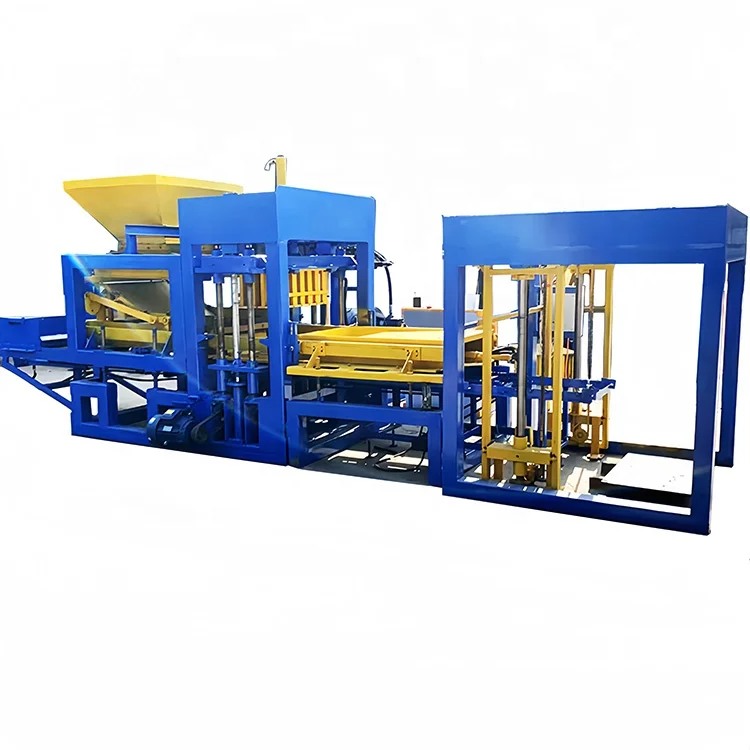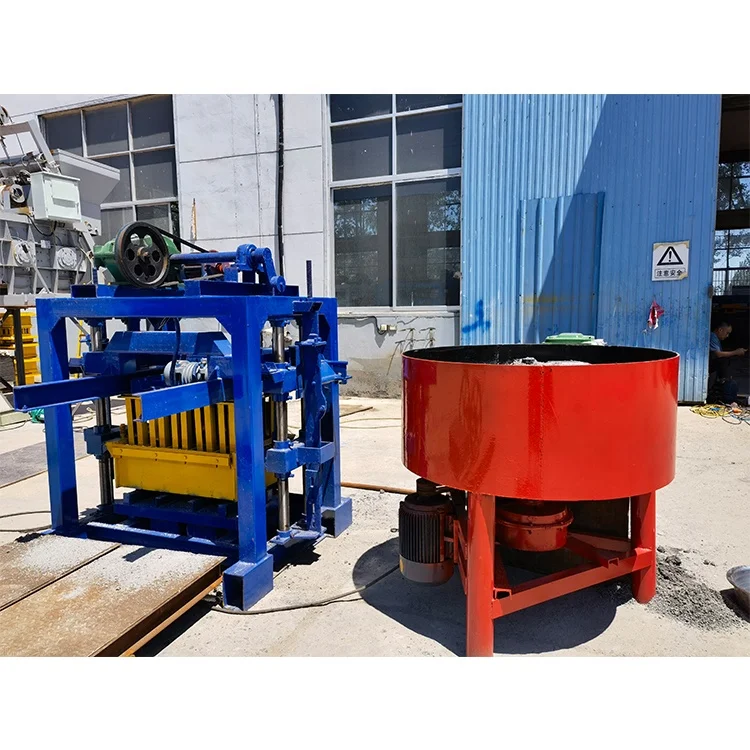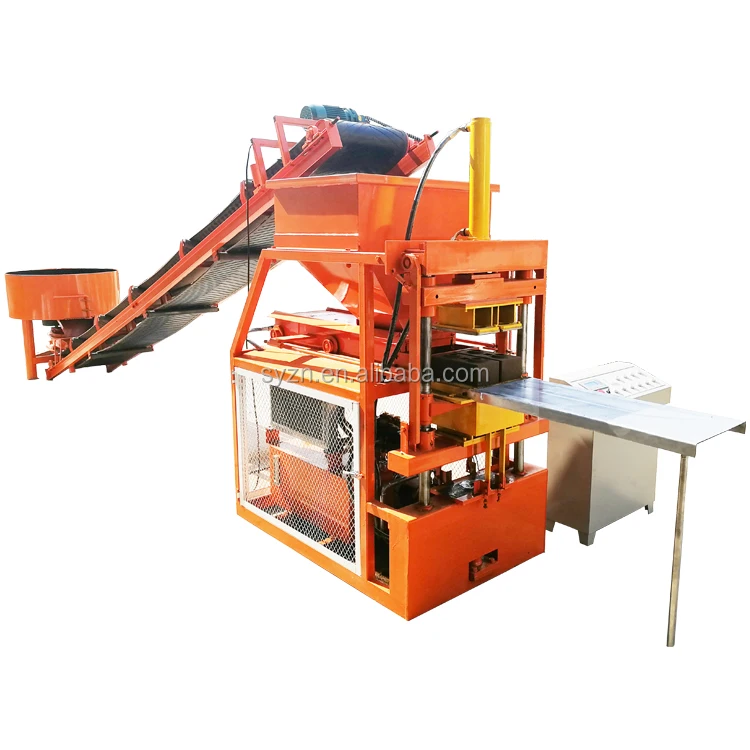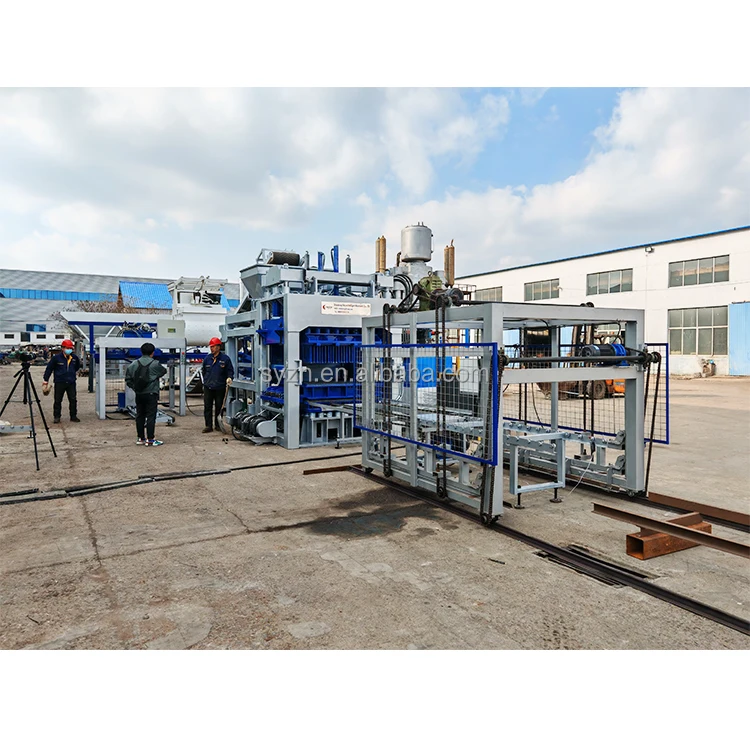


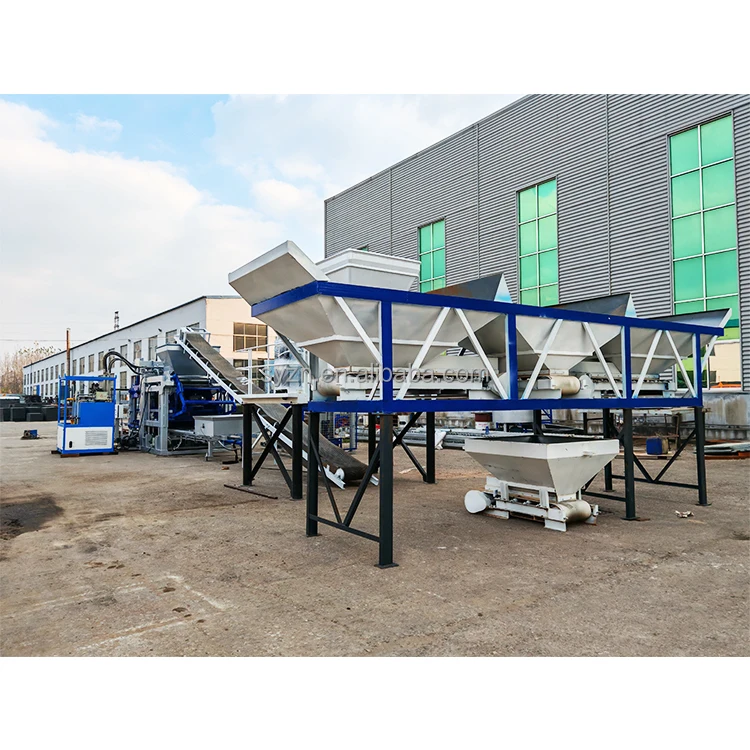
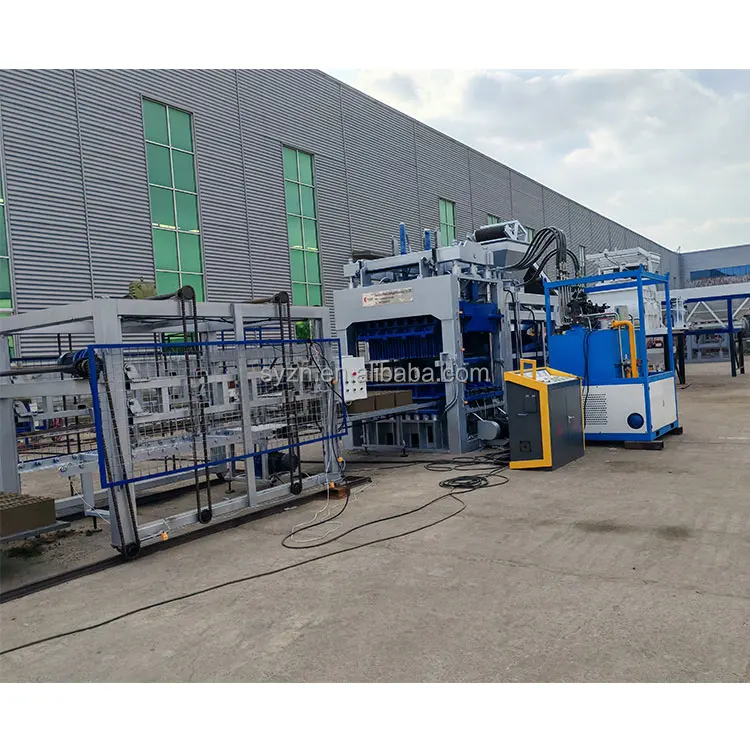
Description
Format-Matched Output — every cycle time and pallet count on this page is tied to a specific block dimension, so your daily plan reflects what the press actually delivers rather than a catalogue maximum.
Technical Specifications
| Parameter | Value |
|---|---|
| Model | QT18-15 |
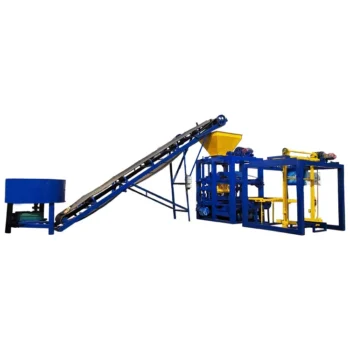
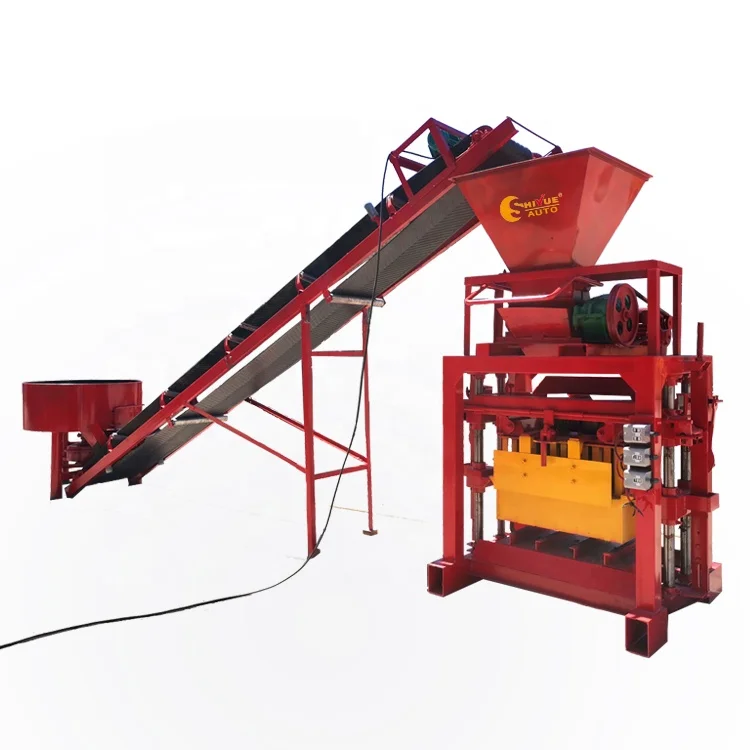
| Product Type | Hydraulic Automatic Concrete Block Making Machine |
| Overall Dimensions (L×W×H) | 9350×2520×2950 mm |
| Net Weight | 18 T |
| Rated Power | 90 kW |
| Voltage & Frequency | 380V or customized (frequency to be confirmed) |
| Control System | PLC (brand and language to be confirmed) |
| Demoulding Method | Hydraulic |
| Pallet Size | 1350×1350×30 mm |
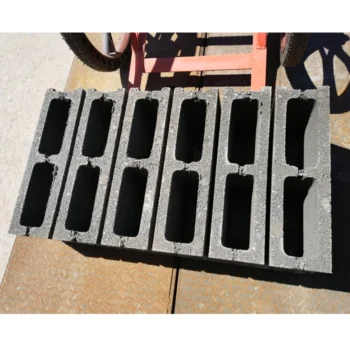
| Output Capacity (Hollow Block 400×200×200 mm) | 18 pcs/mould, 4320 pcs/hour, 34560 pcs/day (basis: 8-hour shift assumed — confirm shift length) |
| Output Capacity (Hollow Block 400×150×200 mm) | 24 pcs/mould, 5760 pcs/hour, 46080 pcs/day (basis: 8-hour shift assumed — confirm shift length) |
| Vibration System | Four external vibration motors, airbag-assisted vibration damping |
| Upper Mold Synchronization | Dual-side synchronous gear, four-point stabilization |
| Material Feeder | European design with turning arm cylinder |
| Automation Level | Automatic (stacking and cubing inclusion to be confirmed) |
| Certification | ISO9001:2008, CE |
| Warranty | 1 year |
Application Suitability
| Application | Material or Output |
|---|---|
| Hollow concrete block production | Crushed stone, cement, sand, and fly ash blends for structural and non-load-bearing walls |
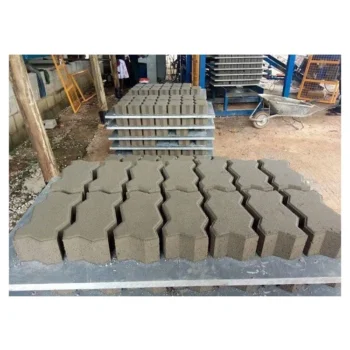
| Interlocking brick production | Laterite, crusher dust, and cement mixes for paving and retaining structures |
| Paver brick production | Fine aggregate and pigment layers for pedestrian and vehicular surfaces |
| On-site block manufacturing | Project-specific aggregates sourced locally by housing or infrastructure contractors |
| Format expansion for existing plants | Additional mould profiles added to a current block machine range |
What "4320 Pieces per Hour" Actually Means for Your Shift Plan
The hourly number only holds if the block format, mix design, and shift length all match the calculation basis.
When a supplier quotes output for a QT18-15 hydraulic block machine without naming the exact block size behind that figure, the number is essentially meaningless for production planning. A buyer expecting 34,560 blocks per day may discover that their primary product — perhaps a 150 mm hollow block rather than a 200 mm one — changes the mould cavity count and cycle rhythm entirely. Over a week, that gap compounds into missed delivery windows and idle curing racks waiting for product that never arrived. I have seen project timelines slip because the capacity assumption was never traced back to a named format before the contract was signed [NEED_CITE: block format and cycle time relationship in hydraulic press production].
Capacity Anchored to Block Format, Not a Brochure Maximum
Every output figure tied to the QT18-15 hydraulic block machine specifications must reference the block profile it assumes. Eighteen pieces per mould at 400×200×200 mm and twenty-four pieces per mould at 400×150×200 mm represent two distinct production realities, each with its own pallet rhythm and curing area demand. When a buyer’s market predominantly sells one of these formats, the matching number becomes the only one worth planning against.
Matching the Press to Local Aggregate Behaviour
The vibration force and hydraulic pressure settings influence how well the QT18-15 compacts a given mix. Aggregates with high clay content absorb vibration energy differently than clean crushed stone, often requiring longer cycle times to reach target block density. Without a sample mix test before configuration, the stated cycle time may not hold in actual production [NEED_CITE: effect of aggregate clay content on vibration compaction].
Reading the Specification Table Beyond the Headline Numbers
The 90 kW rated power reflects the combined draw of the hydraulic pump, four external vibration motors, and the material feeder motor running in sequence. In workshops where existing transformer capacity is limited, confirming the total connected load against available supply prevents commissioning delays after arrival. The 1350×1350×30 mm pallet size must also align with the buyer’s existing curing rack spacing and forklift tine width, otherwise the blocks cannot move from press to curing area without manual re-handling.
The dual-side synchronous gear on the upper mold distributes pressing force across all four corners of the mould cavity simultaneously. This matters because uneven pressure creates density variation across the pallet — blocks at the edges cure weaker than those at the centre, leading to breakage during stacking. The airbag-assisted vibration damping system allows the operator to adjust air pressure for different brick types, which directly affects surface finish and noise levels on the shop floor.
The Hidden Cost of Ignoring Pallet and Voltage Details
A pallet size mismatched to the curing area means every pallet must be manually repositioned before the forklift can stack it — labour that was never budgeted. Voltage and frequency confirmed too late can leave the machine sitting in a container yard while a transformer is sourced locally. These are not theoretical problems; they appear regularly on installations where the pre-order checklist stopped at cycle time and price [NEED_CITE: common commissioning delays in exported block machinery].
Why Sourcing From a Single-System Supplier Matters Here
Block machinery is the sole focus at our facility, which means the QT18-15 press, its moulds, pallets, and handling equipment are specified as one matched set rather than assembled from unrelated vendors. Configuration starts with the buyer’s actual mix design and target block format, not a default catalogue entry. Moulds are designed for the specific profiles the buyer’s market demands, including custom drawings when standard formats do not apply. Automation level can be selected so that a plant can begin semi-automatic and expand later. Installation support includes on-site commissioning and operator training so the crew knows mould change procedure and daily maintenance before the first production run.
Documentation & Verification
- Line layout drawing naming the block format behind each capacity figure
- Mould drawing and format list showing included and custom-available profiles
- Pallet specification sheet matched to buyer’s curing rack dimensions
- Voltage, frequency, and PLC display language confirmation before production
- Factory test record run on buyer’s target block format prior to dispatch
Installation, Commissioning & Support
- Foundation plan reflecting the 9350 mm machine length and 18 T operating weight
- Electrical schedule confirming 380V or custom voltage and dedicated 90 kW circuit requirement
- Assembly state confirmed before shipment for container loading method
- Commissioning includes PLC language verification and cycle time calibration per format
- Operator training covers mould change procedure, hydraulic pressure adjustment, and daily greasing points
- Wear parts list supplied with recommended reorder intervals for hydraulic seals and vibration motor brushes
What We Need Before Quoting Your Line
To size the QT18-15 to your project, share the block formats your market sells most, your target daily output per format, and the local aggregate you plan to use. We also need your workshop dimensions, available voltage and frequency, and whether your existing forklift and curing racks will be reused. This information lets us return a capacity calculation tied to your actual conditions rather than a generic number.
Frequently Asked Questions
Q: How is the QT18-15 capacity calculated per block format, and what shift length is assumed?
A: The published figures assume an 8-hour shift and reference a specific block dimension — 400×200×200 mm or 400×150×200 mm. Each format has a different mould cavity count, so hourly and daily outputs differ. We state which format is behind every number in the proposal, and shift length can be adjusted to match your actual working hours before the line layout is finalised.
Q: Which mould formats are available, and can custom moulds be designed to my dimensions?
A: Standard hollow block, interlocking, and paver moulds are available for the 1350×1350 mm pallet. Custom moulds can be designed to buyer drawings for non-standard block profiles. Each custom mould goes through a compatibility check against the vibration force and hydraulic pressure range of the press to ensure the target block density is achievable before tooling is committed.
Q: How does the vibration force and hydraulic pressure need to be matched to my local aggregate?
A: High-clay or high-fines aggregates absorb vibration differently than clean crushed stone, often requiring longer cycles or adjusted pressure to reach target density. We request a sample mix and target block strength before finalising settings. Without this step, the cycle time assumed in the capacity calculation may not hold under actual production conditions.
Q: What pallet size does the QT18-15 require, and how does it fit my existing curing setup?
A: The machine uses 1350×1350×30 mm pallets. Before order confirmation, we cross-check this dimension against your curing rack spacing and forklift tine width to confirm compatibility. If a mismatch exists, we adjust the pallet specification or advise on rack modification options so blocks move from press to curing without manual re-handling.
Q: What is the mould change procedure and time, and what automation is included?
A: Mould change involves releasing the clamping bolts, lifting the old mould with an overhead crane, and seating the new one on the locating pins before recalibrating the feed box travel. The exact time depends on crane availability and operator familiarity. The quoted automation level — from basic PLC control through to automatic stacking and cubing — is confirmed during the proposal stage to match your labour plan.