
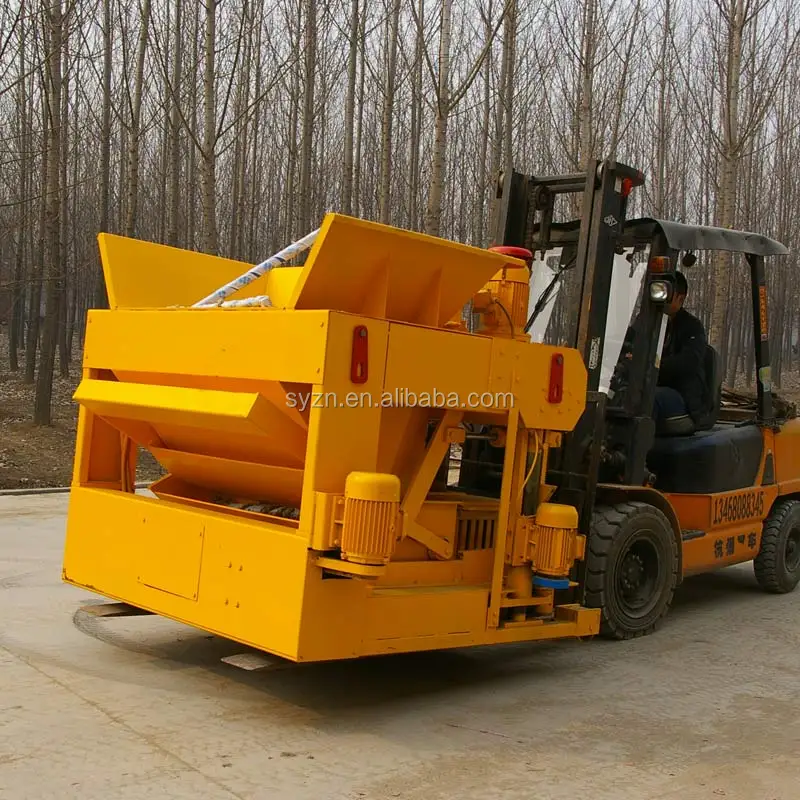
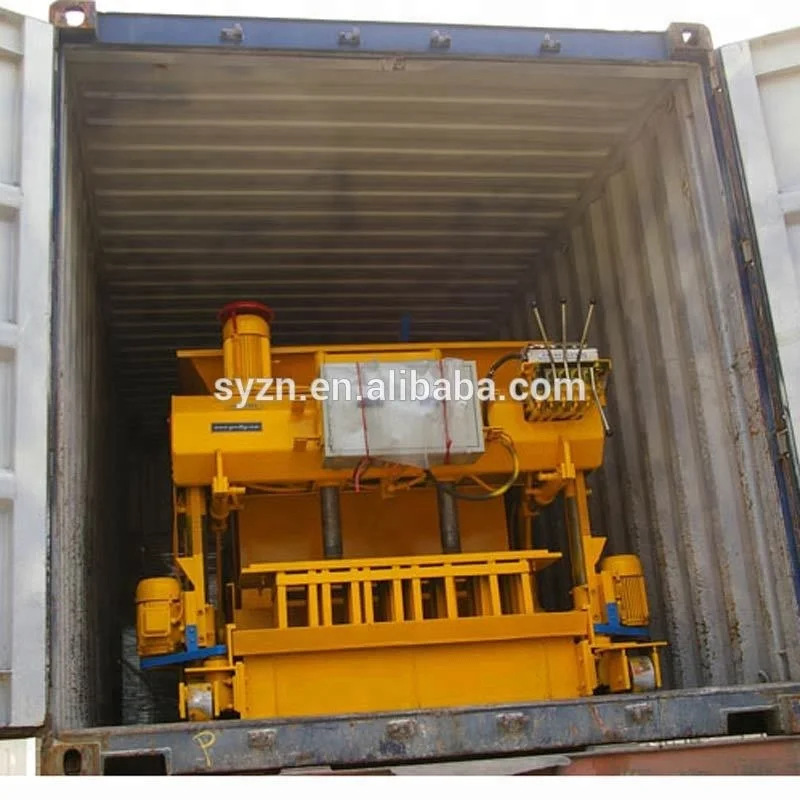
Description
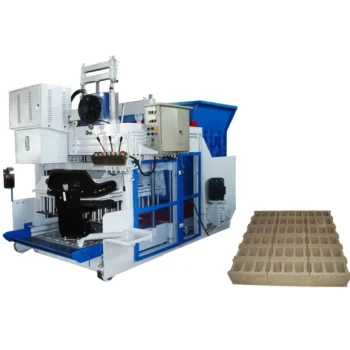
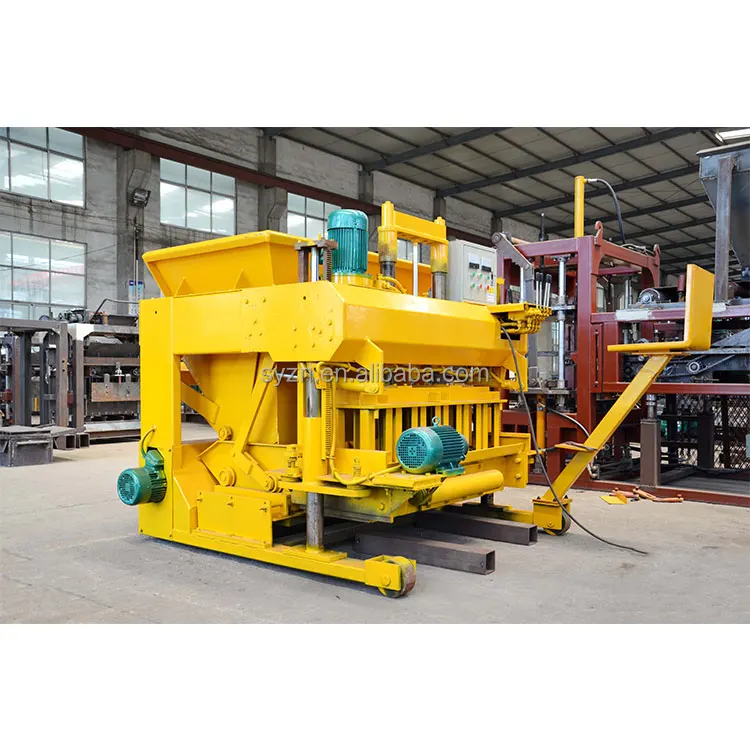
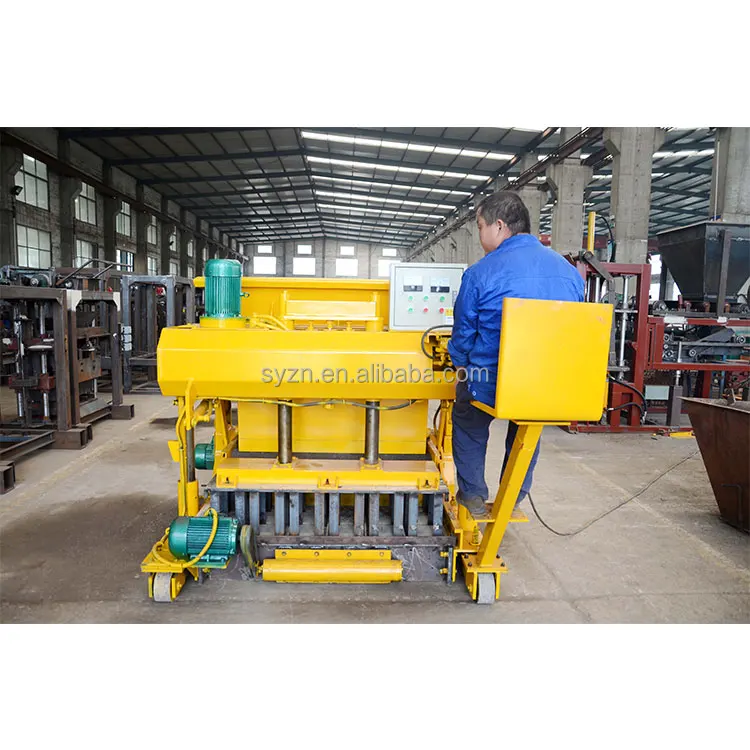
Block machinery as a single focus — QMY6-25 specifications are configured against the buyer’s actual mix design, local aggregate, and target block format rather than pulled from a catalogue default.
Technical Specifications
| Parameter | Value |
|---|---|
| Model | QMY6-25 |
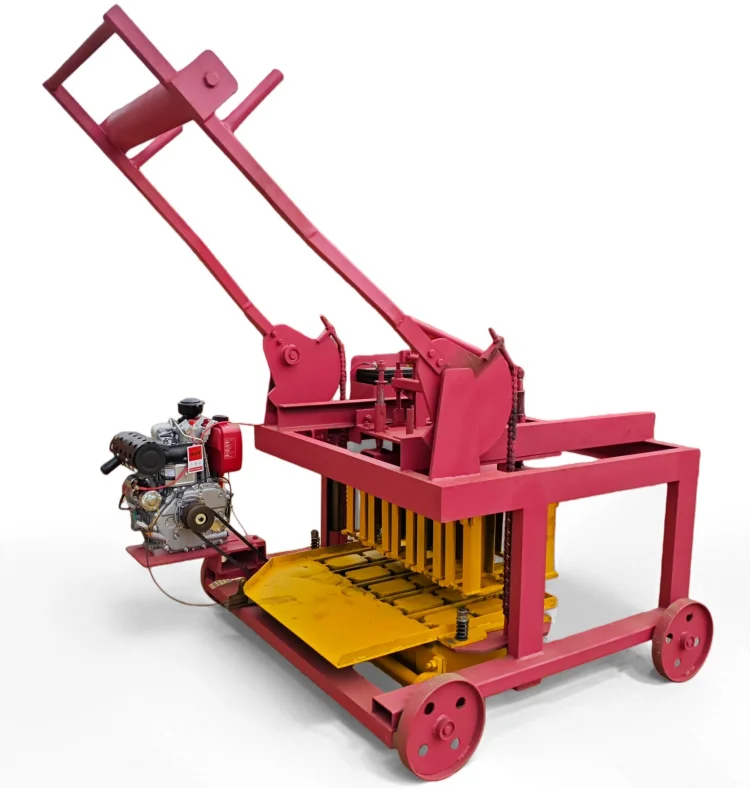
| Product Type | Mobile Hydraulic Block Making Machine |
| Main Vibration Form | Three-dimensional excitation |
| Overall Power | 9.6 kW |
| Moving Method | Automatic movement with hydraulic steering |
| Overall Dimensions (L×W×H) | 2000 × 2100 × 1650 mm |
| Moulding Cycle | 25–30 s |
| Vibration Frequency | 3200 Hz |
| Automation Level | Semi-automatic (one-person operation) |
| Pallet Requirement | No pallet required (egg-laying type) |
| Output: 400×200×200 mm hollow block | 6 pcs/mould, 1080 pcs/h, 8600 pcs/8h shift (basis stated in source) |
| Output: 400×150×200 mm hollow block | 7 pcs/mould, 1260 pcs/h, 10000 pcs/8h shift (basis stated in source) |
| Output: 400×120×200 mm solid block | 9 pcs/mould, 1620 pcs/h, 12960 pcs/8h shift (basis stated in source) |
| Output: 400×100×200 mm solid block | 12 pcs/mould, 1800 pcs/h, 14400 pcs/8h shift (basis stated in source) |
| Block Formats Supported | Hollow blocks, solid blocks |
| Warranty | 1 year for the whole machine (excluding spare parts) |
Application Suitability
| Application | Material or Output |
|---|---|
| On-site hollow block production for housing projects | Crushed stone, sand, cement, water — no fixed plant needed |
| Contractor-produced solid blocks at job sites | Local aggregate and cement mixed on location |
| First block plant with low initial investment | Standard concrete mix designs for regional masonry markets |
| Supplementary mobile production alongside a fixed line | Same raw materials as the stationary plant, redeployed as needed |
| Remote or rural construction sites | Locally sourced sand and gravel with portable mixing |
What "1080 Pieces per Hour" Actually Means on a Job Site
The number on the nameplate only matters when tied to the block format you sell and the aggregate you source.
Capacity figures for mobile block machines are frequently quoted as a single hourly total, but that figure assumes a specific block size and ideal mix conditions. I have visited sites in West Africa where a QMY6-25 was purchased expecting the highest catalogue output, only to find the local laterite soil contained more clay than the standard mix design accounted for. The vibration parameters had to be adjusted on site, cycle times extended, and daily output settled well below the brochure number. Honest sizing starts by matching the machine to your actual block format and raw material, not the best-case scenario [NEED_CITE: field-adjusted vibration parameters for high-clay aggregates].
Moulding Cycle and Format-Specific Output
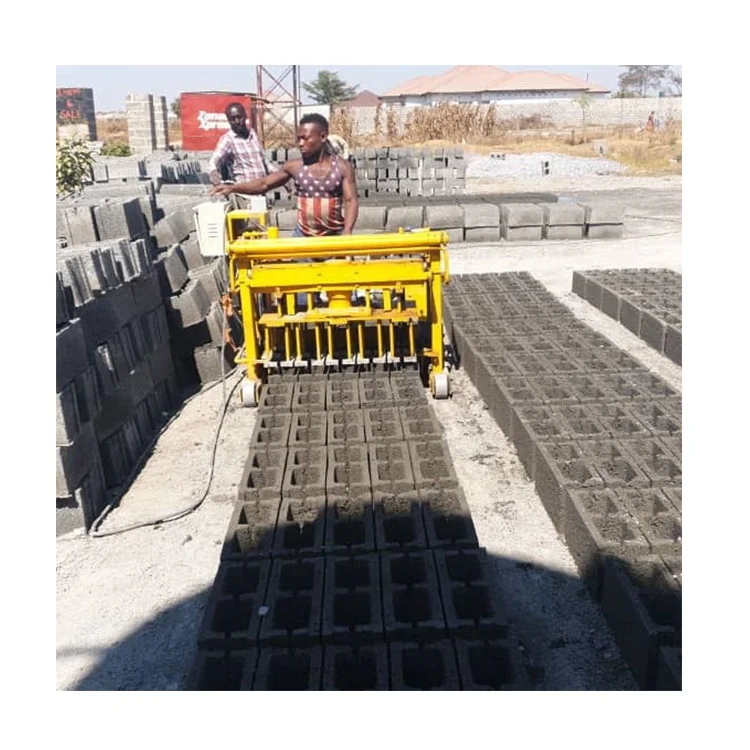
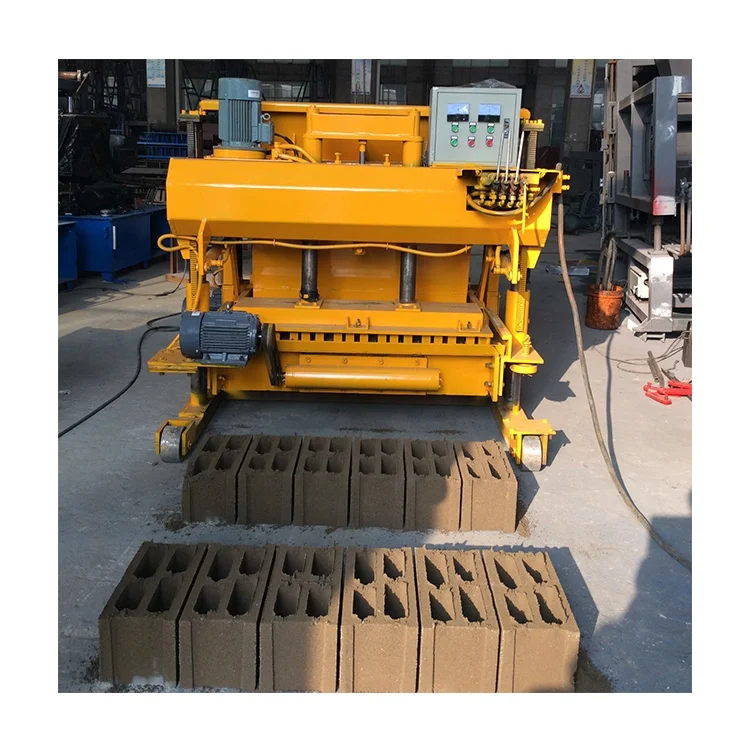
The QMY6-25 runs a moulding cycle of 25–30 seconds, but that cycle time produces different quantities depending on the block size in the mould. A 400×200×200 mm hollow block yields six pieces per cycle, while a 400×100×200 mm solid block yields twelve. This mobile block machine delivers output that scales with the cavity count of the installed mould, making format selection the first decision that determines real daily volume.
Egg-Laying Operation Without Pallet Cost
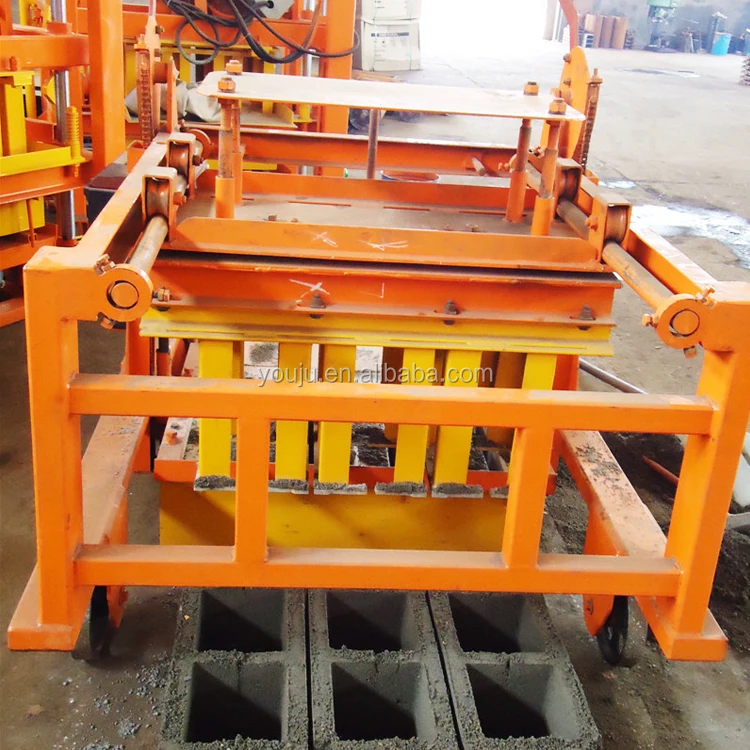
Pallet-free production removes two cost lines that catch first-time plant operators by surprise: the pallet inventory itself and the curing-area space that pallets demand. The QMY6-25 lays blocks directly onto a flat concrete floor, moving forward hydraulically after each press cycle. This egg-laying method means the curing area only needs to be as large as the block footprint, and there are no pallets to rotate, clean, or replace [NEED_CITE: pallet cost as a percentage of total mobile block plant investment].
Matching Vibration to Local Aggregate
The three-dimensional excitation system vibrates at 3200 Hz to consolidate the concrete mix within the mould. On clean, graded crushed stone this frequency compacts efficiently within the 25–30 second cycle. When the local aggregate carries higher fines or clay content, the vibration duration and amplitude may need field adjustment to maintain block density and edge definition. That is why we confirm the buyer’s aggregate source and mix design before finalizing machine settings, ensuring the vibration force suits the material actually available on site.
What Happens When the Aggregate Is Wrong
I have seen mobile block machines shipped to South Asia with standard vibration settings calibrated for river sand, only to arrive where the only available fine aggregate was manufactured sand with a different particle shape and moisture absorption. The blocks demoulded with chipped corners and low compressive strength because the vibration energy was not matched to the material. Correcting this after arrival meant sourcing new wear components and losing production weeks. Confirming aggregate properties before the machine leaves the factory avoids this entirely [NEED_CITE: compressive strength variation from ungraded manufactured sand in block production].
Why Buyers Source This Machine Here
The QMY6-25 is specified as part of a matched system — machine, mould, and supporting equipment are sized together rather than assembled from separate suppliers. Configuration is set against the buyer’s actual block format and local raw material, not a catalogue default. Mould design covers the formats the buyer’s market demands, including custom drawings when standard sizes do not match regional masonry practice. Automation level is selectable, so operators can begin with semi-automatic single-person operation and add handling equipment later. Installation support includes on-site commissioning and operator training so the crew understands mould change procedures and cycle-time expectations from the first production day.
Documentation & Verification
- Capacity calculation sheet stating the exact block format assumed for each output figure
- Mould drawing and format list confirming dimensions match your regional masonry standards
- Voltage and frequency confirmation recorded before production begins
- Factory test record with photographs of blocks produced during pre-shipment run
- Operation and maintenance manual covering hydraulic steering and vibration system servicing
Installation, Commissioning & Support
- Flat concrete floor required for egg-laying operation, minimum area sized to daily output
- 9.6 kW total power draw requires a dedicated circuit at confirmed voltage and frequency
- Machine ships assembled at 2000 × 2100 × 1650 mm, moved on site by hydraulic steering
- First-day commissioning verifies cycle time and block density against your local aggregate
- Operator training covers mould change, mix consistency checks, and hydraulic system maintenance
- Wear parts list provided with recommended replacement intervals for vibration components
Before You Send the Inquiry
To size the QMY6-25 correctly for your project, share the block formats your market sells most, the daily volume you need for each format, and a sample or description of the aggregate available locally. Confirm your site voltage and frequency, and let us know the language your operators need on the control interface. If you already run a fixed plant and want mobile capability alongside it, tell us which line layout you have so the mobile unit complements rather than duplicates your existing output.
Frequently Asked Questions
Q: How is daily output calculated for the QMY6-25 and which block format does each number assume?
A: Output figures are based on the moulding cycle of 25–30 seconds multiplied across an eight-hour shift, with each figure tied to a specific block dimension. For example, 8600 pieces per shift assumes 400×200×200 mm hollow blocks at six pieces per mould. Different block sizes change the pieces-per-cycle count, so daily output must be recalculated for the format you actually produce.
Q: Which block formats can the QMY6-25 produce and how are moulds selected?
A: The machine supports hollow blocks and solid blocks, with standard sizes covering 400×200×200 mm down to 400×100×200 mm. Moulds are matched to the formats your local construction market demands. Custom mould drawings are available when regional masonry standards require non-standard dimensions, and each mould is confirmed against your target block before production.
Q: How should the machine be set up for local aggregate that differs from standard mix designs?
A: Before the machine is built, we confirm your aggregate type, gradation, and clay content. The vibration frequency and cycle parameters are then matched to that material. If your local sand carries higher fines than a standard river sand, the three-dimensional excitation settings are adjusted at the factory so the machine arrives ready for your actual raw material.
Q: What electrical and control specifications are confirmed before the machine ships?
A: Voltage, frequency, and control interface language are confirmed with the buyer before production begins. This prevents commissioning delays caused by incompatible power supply or unreadable displays on arrival. The QMY6-25 overall power requirement is 9.6 kW, and the site must provide a dedicated circuit at the agreed voltage and frequency.
Q: What is the realistic daily output if my block format is not listed in the standard table?
A: Any block format outside the four standard sizes requires a new mould, and the pieces-per-cycle count will differ. We calculate the expected daily output by taking the new cavity count, applying the 25–30 second moulding cycle, and factoring in realistic shift time for mould changes and material feeding. That calculated figure is stated in the proposal before you commit.