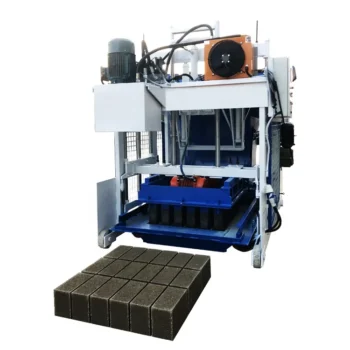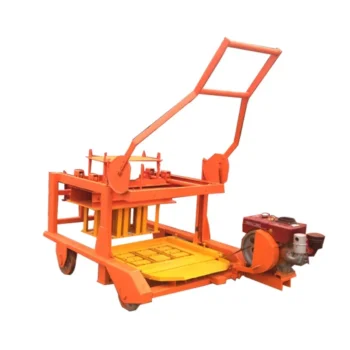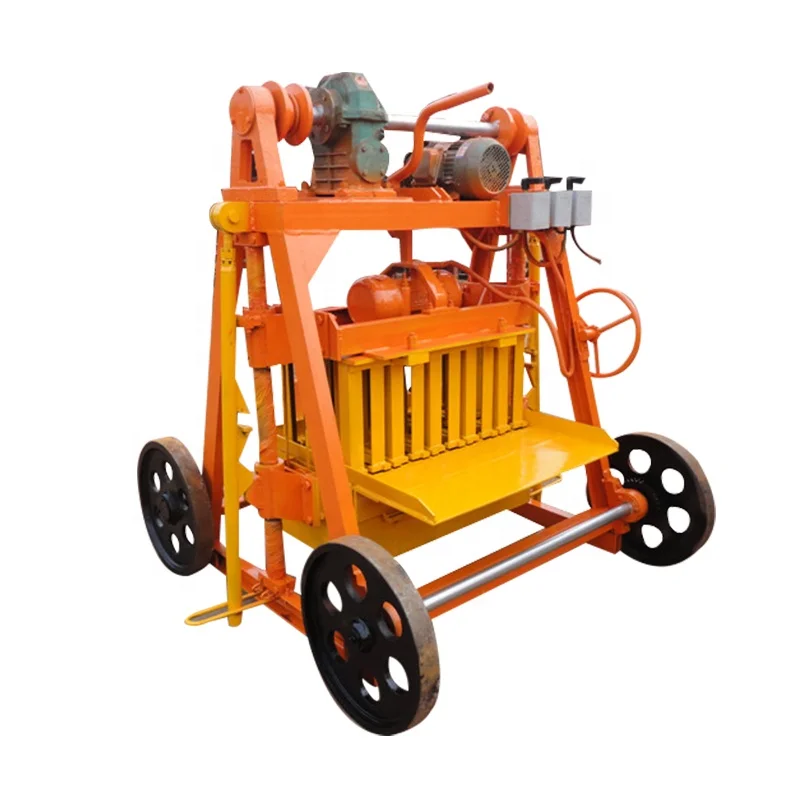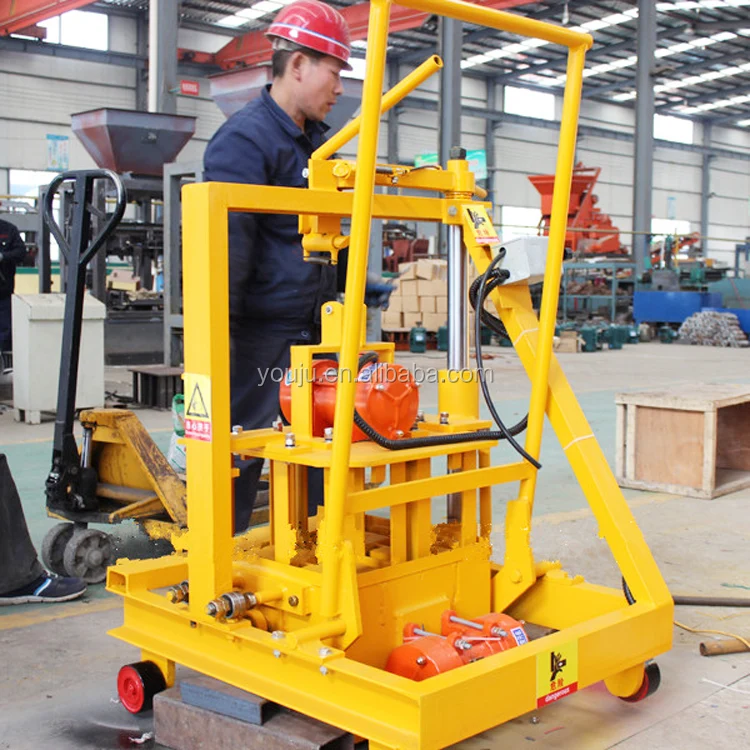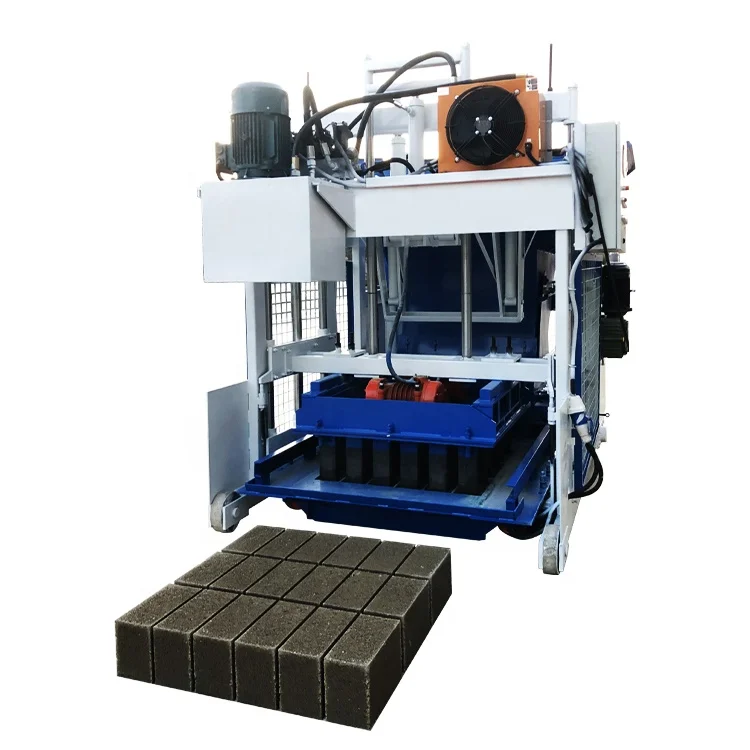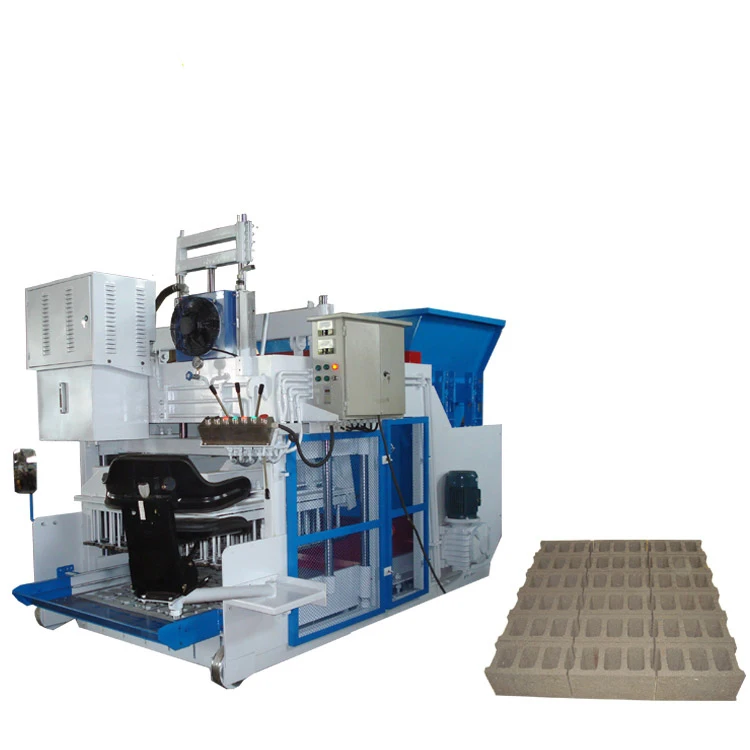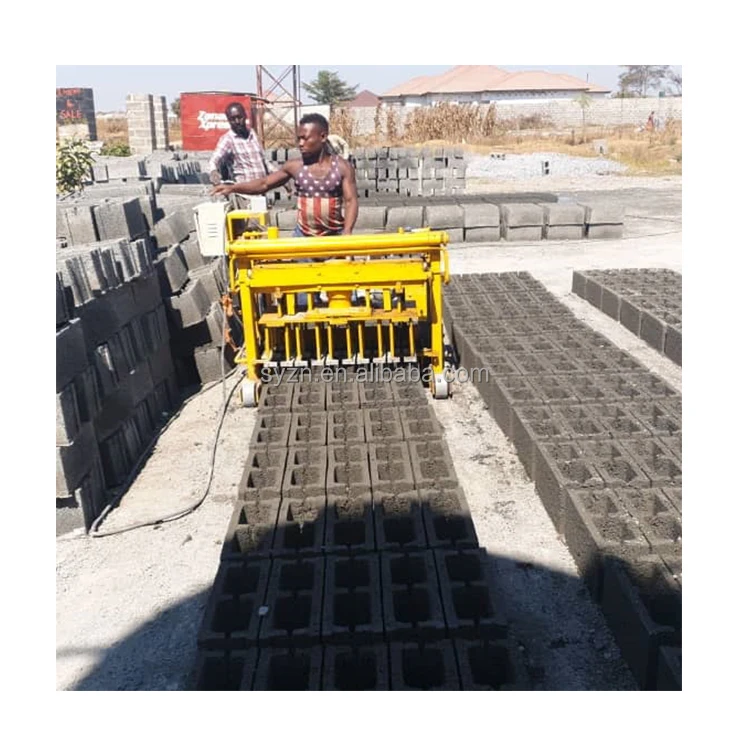
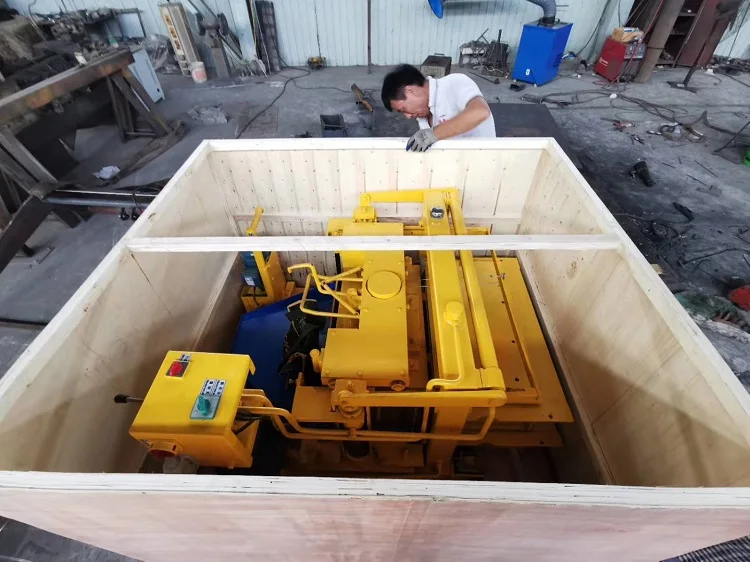
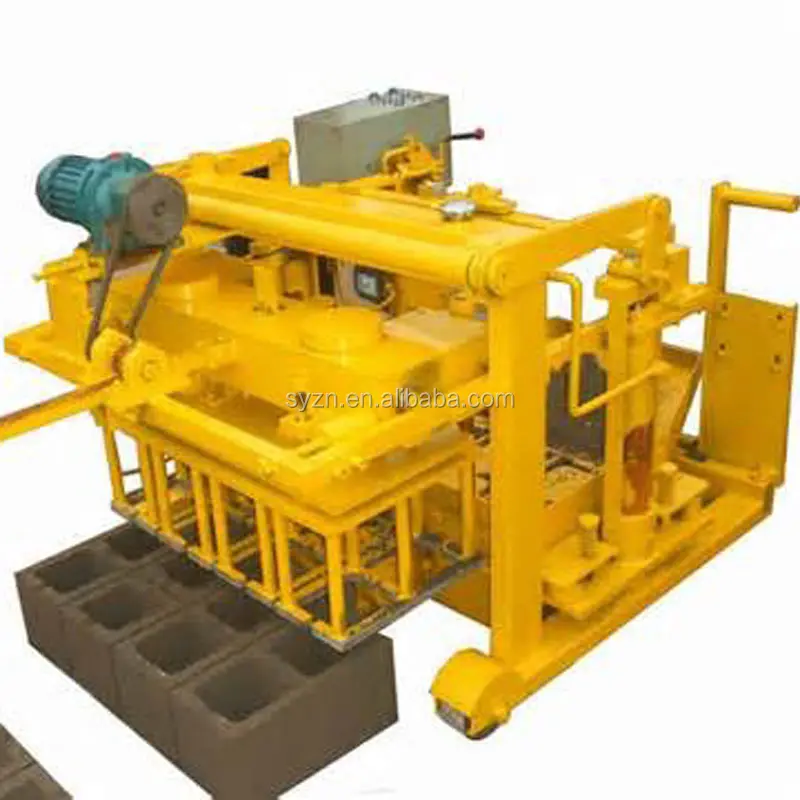
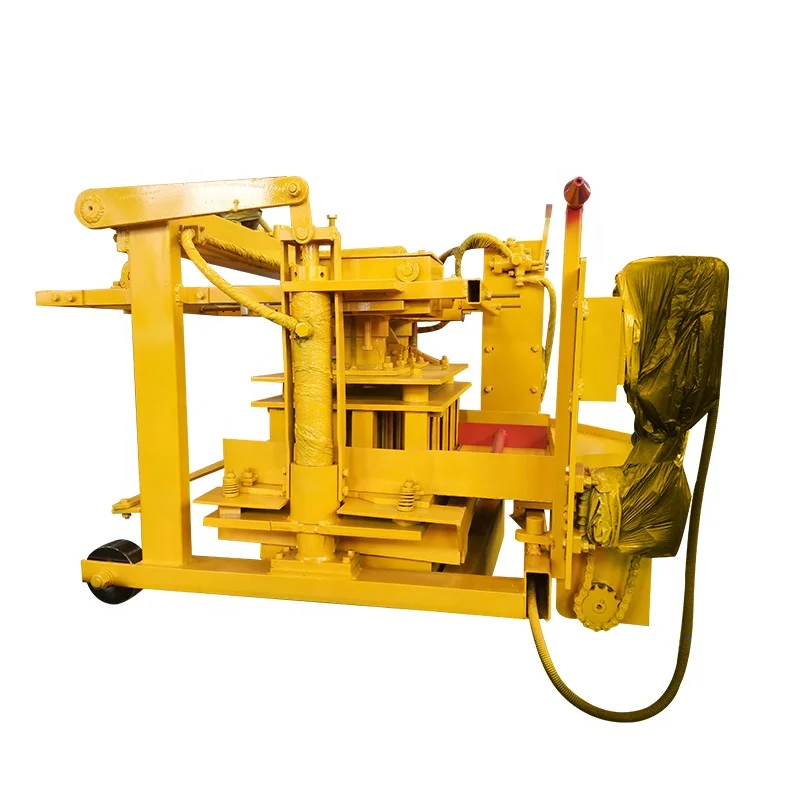
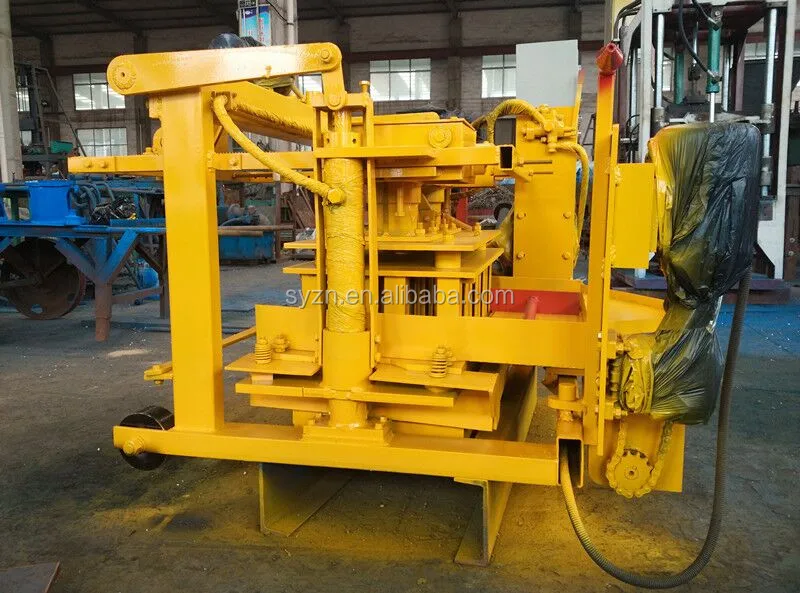
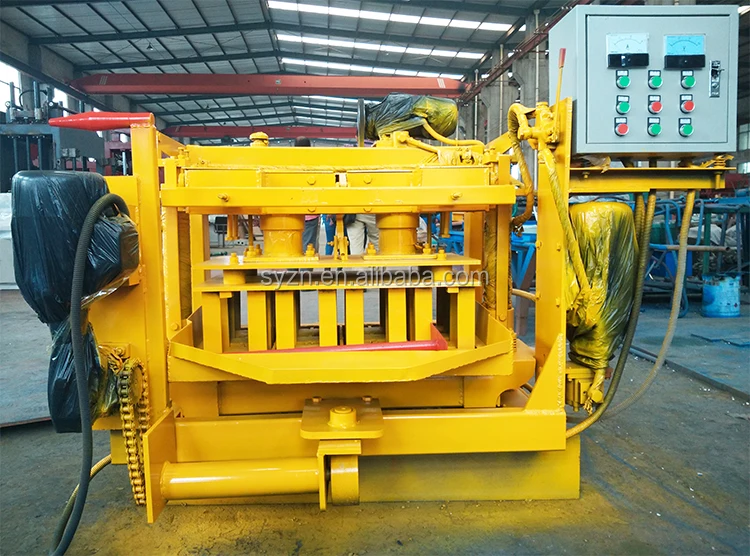
Description
Honest capacity by block format — the QMY4-30 output is listed per hollow block width (200 / 150 / 100 mm), not as a single headline number, so your daily planning starts from real figures.
Technical Specifications
| Parameter | Value |
|---|---|
| Model | QMY4-30 |
| Product Type | Mobile Hydraulic Block Making Machine |
| Molding Method | Hydraulic with mould vibration (mould box excitation) |
| Demold Method | Hydraulic |
| Molding Cycle | 25–30 seconds |
| Total Power | 5.95 kW |
| Pallet Requirement | Palletless (egg-laying / mobile on ground) |
| Output Capacity | 480 pcs/h (basis: 400×200×200 mm hollow block, 4 pcs/mould) |
| Output Capacity | 600 pcs/h (basis: 400×150×200 mm hollow block, 5 pcs/mould) |
| Output Capacity | 840 pcs/h (basis: 400×100×200 mm hollow block, 7 pcs/mould) |
| Daily Output (8 hr) | 3,840 / 4,800 / 6,720 pcs (basis: 200 / 150 / 100 mm widths respectively) |
| Mobility | Wheeled mobile frame, on-site production without fixed plant |
| Mould Format Supported | Hollow block in multiple widths, solid block |
| Automation Level | Manual / semi-automatic (palletless mobile operation) |
| Stacking Method | Blocks laid directly on ground, natural curing |
| Standards | ISO 9001:2000, CE (certificate number to be confirmed) |
| Voltage & Frequency | To be confirmed with buyer’s site supply |
| Control System | To be confirmed (PLC or manual panel) |
Application Suitability
| Application | Material or Output |
|---|---|
| Housing project on-site production | 400×200×200 mm hollow blocks from local sand, cement and aggregate |
| Remote development site with no fixed plant | 400×150×200 mm hollow blocks, palletless curing on compacted ground |
| Small contractor block yard | 400×100×200 mm hollow blocks and solid blocks from crushed stone |
| Entrepreneur first plant with limited capital | Multiple hollow block widths from a single mobile unit, no pallet cost |
| Mountainous or coastal terrain project | On-site egg-laying production where pallet transport is impractical |
Why "480 Pieces per Hour" Tells Only Part of the Story
Capacity means nothing without the block format behind it.
When mobile block machine specifications how to choose becomes your research focus, you quickly notice most suppliers quote a single cycle-based hourly number. That figure almost always assumes the smallest block in the mould range. The QMY4-30 runs at 480 pcs/h for 200 mm hollow blocks, 600 pcs/h for 150 mm and 840 pcs/h for 100 mm — the same machine, three very different daily outputs. A buyer producing mainly 200 mm blocks and planning around the 840 number will end the first week wondering where the missing bricks went [NEED_CITE: common mismatch between quoted and actual block plant output].
Matching Mould Count to Your Local Sales Mix
The QMY4-30 mould box holds 4 cavities for 200 mm blocks, 5 for 150 mm and 7 for 100 mm. In many African and Southeast Asian markets the 200 mm hollow block is the volume seller, while 100 mm partitions move in smaller batches. When you calculate mobile block machine specifications how to choose, multiply the per-mould piece count by realistic cycles per hour — allowing for concrete feeding pauses and ground levelling — before committing to a daily target. This prevents the common mistake of sizing your curing area for an output the machine never reaches in your actual format mix.
Mould Box Excitation Meets Hydraulic Pressure
Vibration alone does not guarantee block strength. The QMY4-30 pairs mould box excitation with hydraulic transmission, so compaction force and vibration amplitude can be adjusted together to match your aggregate gradation and cement ratio. In one West African project the local river sand carried high clay content, and blocks cracked during demoulding until the vibration duration was shortened and hydraulic dwell extended [NEED_CITE: effect of clay content on concrete block compaction]. That kind of tuning is only possible when the hydraulic circuit and vibration motor are specified as one system rather than sourced separately.
Reading the Power and Cycle Numbers Together
At 5.95 kW total power, the QMY4-30 sits within the range a small diesel generator can support on a remote site, which matters when grid supply is unreliable. The 25–30 second molding cycle applies across all three hollow block widths, meaning format change does not slow production — only the per-mould piece count shifts. Palletless egg-laying removes pallet purchase and handling labour, but it also means ground preparation becomes part of your cycle: uneven soil increases block breakage at the demould stage. Factor ground levelling into your effective output, not just the press cycle.
The Hidden Cost of Ignoring Mix Design
Buyers who select a palletless mobile machine on price alone often discover that the generic mix design in the manual does not work with their local aggregate. Blocks laid directly on the ground without pallets absorb moisture from soil, and a mix that was not adjusted for this will lose strength before curing completes. In extreme cases, an entire day’s output can crumble when moved to the stacking area, turning a low-investment machine into a high-waste operation [NEED_CITE: on-site concrete block curing conditions and strength development]. Sending a sample of your local sand and aggregate for a trial run before shipment eliminates this risk entirely.
Why Technical Buyers Source the QMY4-30 Here
Block machinery is our single focus, which means the machine, mould and ground preparation guidance arrive as a matched package. Capacity calculations are provided per block format — not a catalogue default — so your purchase order reflects the hollow block width your market actually buys. Mould drawings are confirmed against your target dimensions before production, including custom widths if your project specifies non-standard partitions. Voltage, frequency and control language are documented in writing before the machine enters assembly, avoiding the commissioning delays that plague unconfirmed shipments. Every QMY4-30 leaves the factory with a test record run on the buyer’s specified mix where sample material has been provided.
Documentation & Verification
- Line layout drawing with capacity stated per block format (200 / 150 / 100 mm)
- Mould drawing and format list confirming included widths before production
- Factory test record using buyer’s aggregate sample when supplied
- Voltage and control language confirmation sheet signed before assembly
- Hydraulic and electrical schematic for on-site troubleshooting
- Operation manual with palletless ground preparation checklist
Installation, Commissioning & Support
- Compact wheeled frame requires only levelled compacted ground, no concrete foundation
- 5.95 kW total draw allows connection to a portable diesel generator on remote sites
- Machine shipped assembled; wheels and mould box reattached on arrival within one shift
- First-run cycle tuned to buyer’s mix design and target block strength
- Mould change between 100 / 150 / 200 mm widths demonstrated during commissioning
- Wear parts list covering vibration motor mounts and hydraulic seals provided at shipment
What We Need to Quote Accurately
Send us the hollow block width and length your market purchases most, plus your daily target in that format. Include a description of your local sand or aggregate source — river sand, crusher dust, laterite — so we can advise on mix adjustments before the machine ships. Confirm your site voltage, frequency and preferred control language so the electrical panel matches your electrician’s expectations on day one.
Frequently Asked Questions
Q: How is daily output calculated, and which block format does each figure assume?
A: Daily output is based on an 8-hour shift at the stated per-mould piece count and a 25–30 second cycle. For 400×200×200 mm hollow blocks (4 pcs/mould) it is 3,840 pcs; for 400×150×200 mm (5 pcs/mould) 4,800 pcs; for 400×100×200 mm (7 pcs/mould) 6,720 pcs. Real output depends on feeding rhythm and ground conditions.
Q: Can I order custom mould sizes beyond the standard 100, 150 and 200 mm widths?
A: Yes. We design and manufacture moulds from buyer drawings, so if your project specifies a non-standard partition width or a solid block dimension outside the catalogue range, we can produce a matching mould box. Provide target dimensions and required block strength for confirmation.
Q: How does local aggregate affect block strength on a palletless mobile machine?
A: High-clay sand reduces compaction density and slows curing, especially when blocks are laid on bare ground. We recommend sending a sample of your aggregate before shipment so we can adjust vibration duration and hydraulic dwell, then run a factory test on your actual mix to verify strength.
Q: What is the realistic mould change time on site between different block widths?
A: The QMY4-30 mould box is bolted to the vibration table and can be swapped with basic hand tools. For operators trained during commissioning, a change between 100 mm and 200 mm moulds typically takes less than one full shift including alignment check, preserving most of the day’s production schedule.
Q: Which voltage and control options are available for my market?
A: Voltage and frequency are configured to match your site supply, and the control system is confirmed as either PLC or manual panel before production. Control language is documented in writing so operators can read the interface on day one without translation delays.