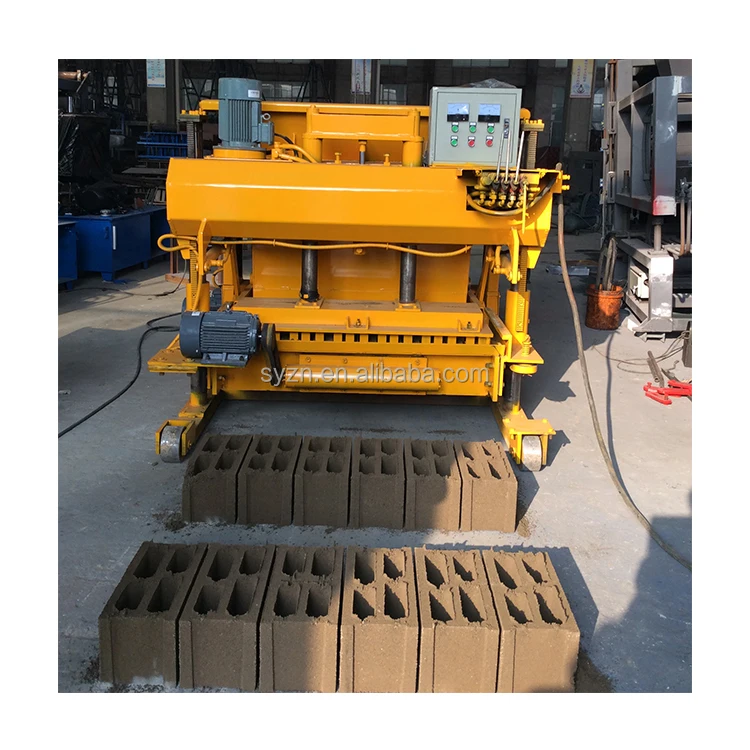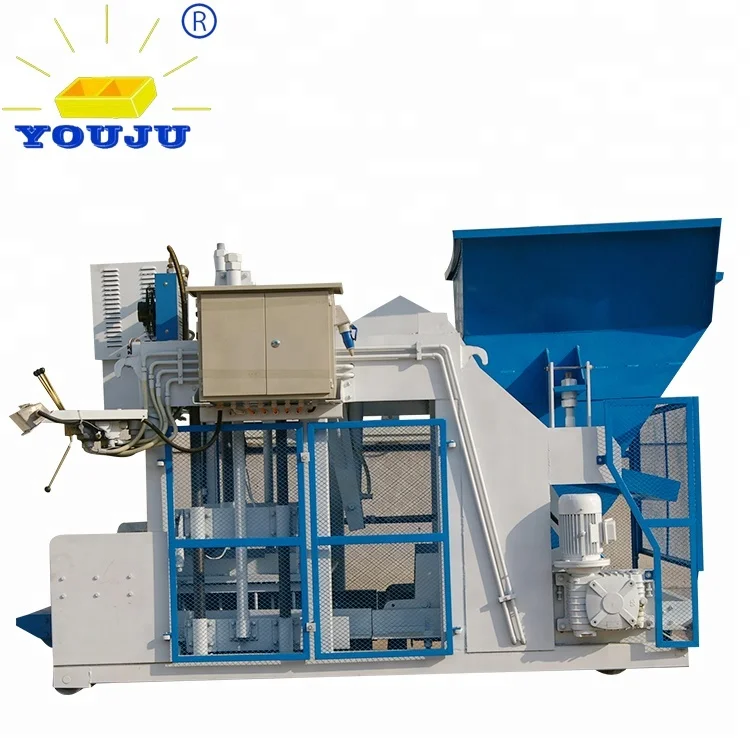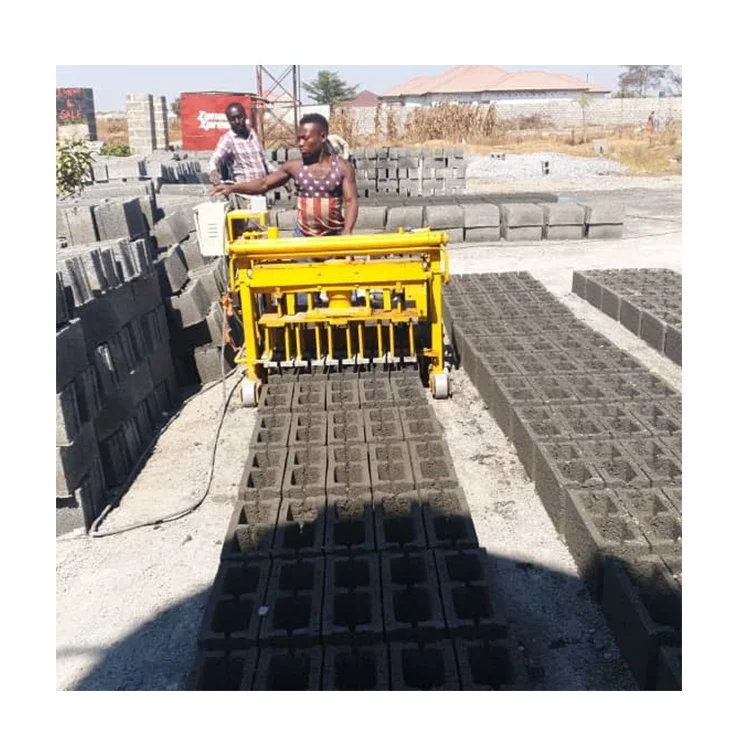
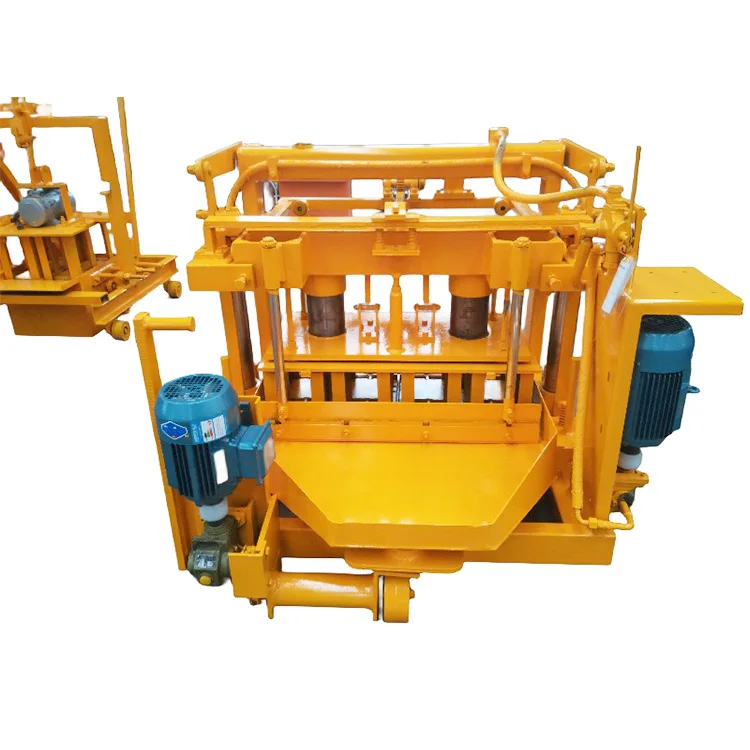


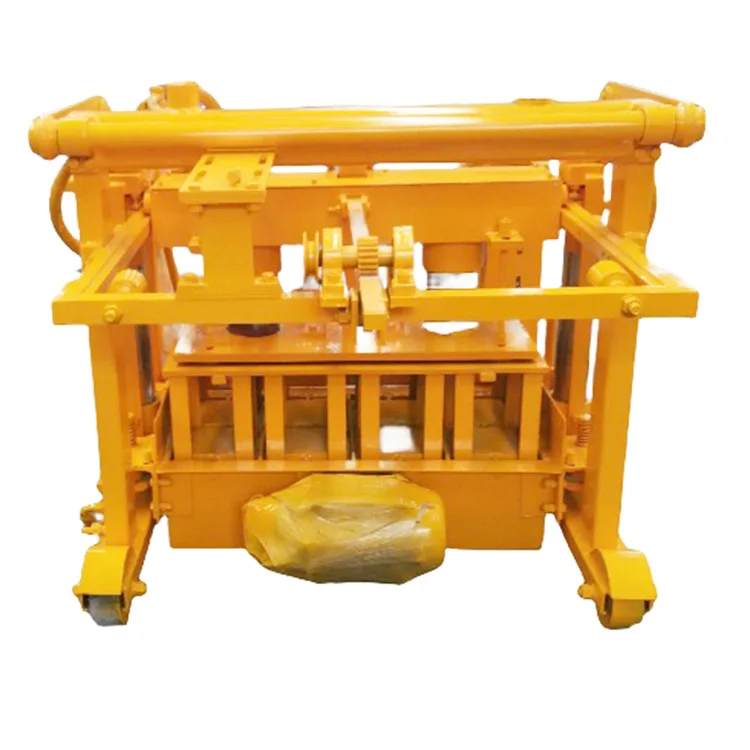

Description
Honest Capacity per Mould — Every output figure for the QMY4-30 is tied to a specific block size and pieces-per-mould count, not a single inflated number.
Technical Specifications
| Parameter | Value |
|---|---|
| Model | QMY4-30 |
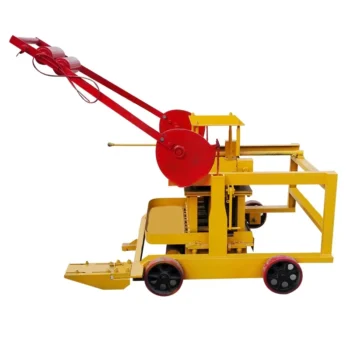
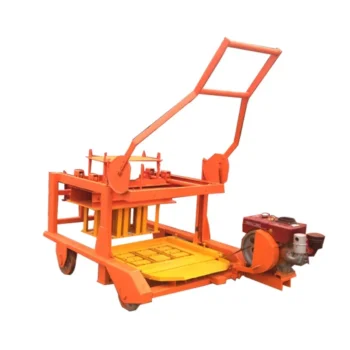
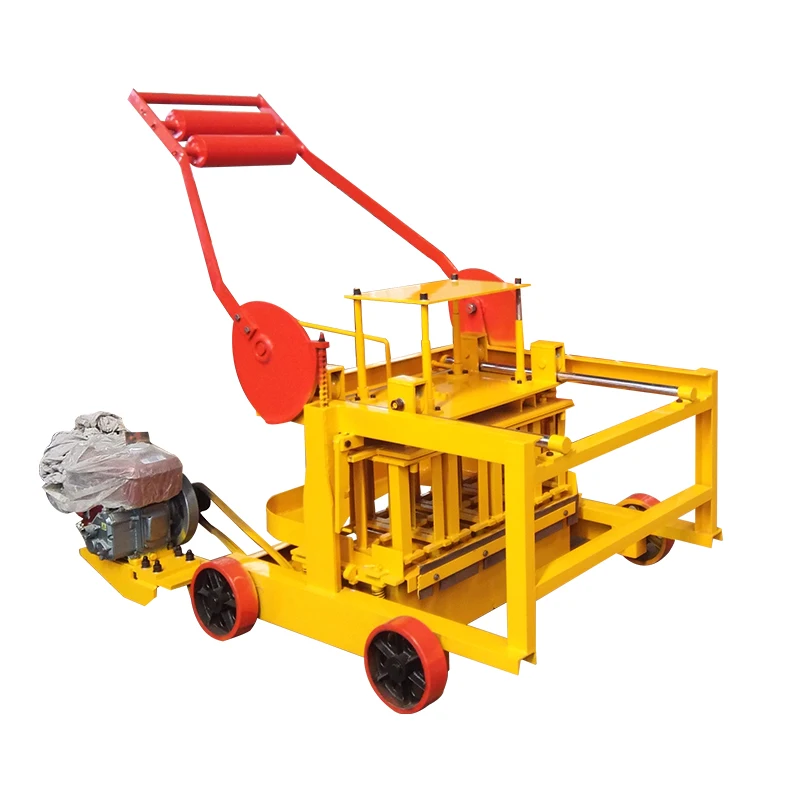
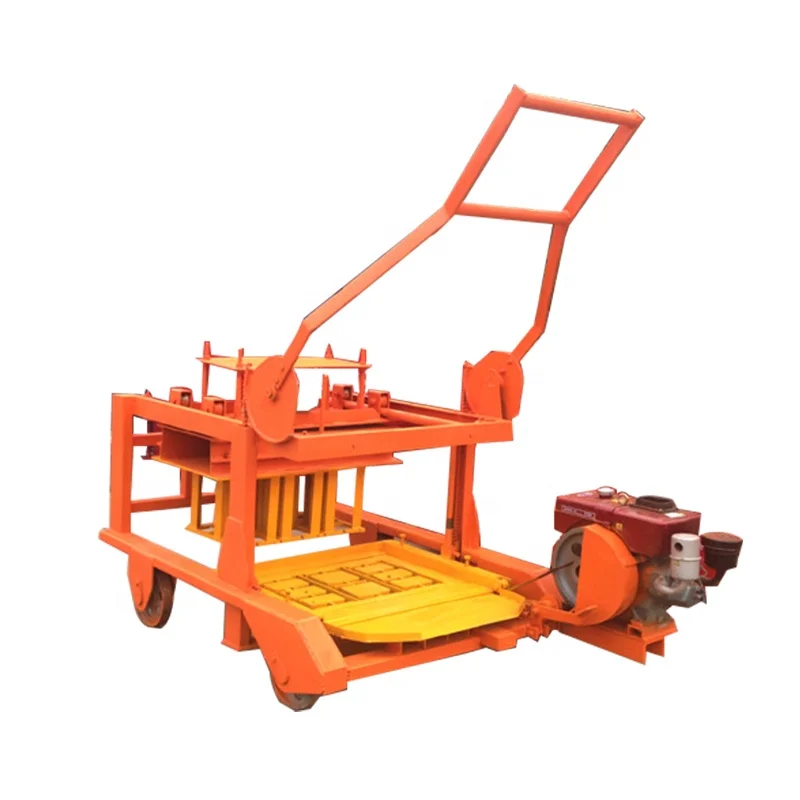
| Product Type | Mobile Concrete Block Making Machine |
| Machine Type | Mobile (egg-laying) |
| Rated Power | 5 kW |
| Molding Cycle Time | 30 seconds |
| Overall Dimensions | 1200 × 1200 × 1100 mm |
| Net Weight | 950 kg |
| Automation Level | Manual / entry-level |
| Mould Format | Changeable for hollow block and solid brick |
| Raw Materials | Cement, sand, crushed stones, slag |
| Hourly Output | 480 pcs/hour (based on 400×200×200mm hollow block, 4 pcs/mould) |
| Hourly Output | 600 pcs/hour (based on 400×150×200mm hollow block, 5 pcs/mould) |
| Hourly Output | 840 pcs/hour (based on 400×100×200mm hollow block, 7 pcs/mould) |
| Daily Output (8 hours) | 3,840 pcs (based on 400×200×200mm hollow block) |
| Daily Output (8 hours) | 4,800 pcs (based on 400×150×200mm hollow block) |
| Daily Output (8 hours) | 6,720 pcs (based on 400×100×200mm hollow block) |
| Vibration Force | (basis to be confirmed) |
| Hydraulic Pressure | Not applicable (mobile egg-laying type) |
| Voltage & Frequency | (basis to be confirmed) |
Application Suitability
| Application | Material or Output |
|---|---|
| On-site housing project production | Hollow blocks from cement, sand, and crushed stone |
| First-plant entrepreneur start-up | Solid bricks and hollow blocks from locally sourced aggregate |
| Secondary mobile unit for existing plants | On-demand format production using slag or sand mixes |
| Construction contractor self-supply | Blocks produced directly on project ground without pallets |
What "Pieces per Hour" Actually Means for a Mobile Block Machine
Capacity only matters when the block format and pieces-per-mould are stated alongside it.
Most quotations list a single output number without saying which block size it assumes. A buyer expecting 840 pieces per hour on large hollow blocks will be disappointed when the machine only delivers 480 on that format. I saw this first-hand when a customer in southern Africa ordered based on a sample capacity figure, only to find the local aggregate required a different mix that changed the cycle behaviour entirely. When evaluating mobile block machine specifications, the capacity must be read together with the mould layout. [NEED_CITE: common disputes arising from unstated capacity assumptions in block machinery quotations]
Mould Versatility Across Block Formats
The QMY4-30 accepts changeable moulds for three standard hollow block sizes: 400×200×200mm at 4 pieces per cycle, 400×150×200mm at 5 pieces per cycle, and 400×100×200mm at 7 pieces per cycle. This lets a single machine serve different market demands without buying separate equipment. Custom mould design to buyer drawings is available for formats outside this standard range, which matters when your local market sells a size that does not match catalogue defaults.
Ground-Level Production Without Pallets
The egg-laying design means the QMY4-30 lays blocks directly on a prepared ground surface and moves forward after each cycle. No pallets are needed, and no fixed curing racks or pallet return systems are required. For a construction contractor producing blocks at a housing project, this removes the cost and logistics of pallet handling entirely. The trade-off is that ground flatness and preparation become critical to block dimensional consistency. [NEED_CITE: ground preparation standards for mobile egg-laying block production]
Reading the Cycle Time Against Your Mix Design
The stated 30-second molding cycle is measured under controlled conditions. In practice, the actual cycle depends on how quickly the operator feeds material and how the local aggregate behaves under vibration. A mix with high clay content from unwashed sand will not consolidate the same way as clean crushed stone, which can extend the effective cycle and reduce block strength. This is why confirming your raw material sample before ordering matters more than comparing cycle times across catalogues.
The Cost of Ignoring Local Aggregate in Your Specification
When a mobile block machine is configured for a standard mix that you cannot source locally, the result is either weak blocks or a costly material substitution. I once supplied a machine where the buyer’s local sand had high silt content, and the standard vibration setting could not produce consistent strength. The buyer ended up importing washed aggregate at significant expense. Specifying the machine against your actual available materials — and testing a sample mix before the order is finalized — avoids this situation entirely. [NEED_CITE: aggregate quality impact on concrete block compressive strength]
Why Sourcing the QMY4-30 Through a Format-Matched Approach Matters
Block machinery is our single focus, so the machine, mould, and handling requirements are specified as one matched system rather than assembled from separate suppliers. Configuration is set against your actual mix design, local aggregate, and target block format — not a catalogue default. Mould design covers the formats your market sells, including custom drawings when standard sizes do not fit. The automation level is selectable, meaning you can start with manual operation on the QMY4-30 and move to a more automated line later. Installation support includes operator training so your team understands cycle management and mould change procedures from the first day.
Documentation & Verification
- Line layout and capacity calculation stating the block format assumed for each output figure
- Mould drawing and format list confirming dimensions match your local market requirements
- Machine specification sheet with rated power, cycle time, and overall dimensions
- Voltage and control language confirmation document before production begins
- Factory test record run on your specified block format before dispatch
- Operation and maintenance manual covering mould change and daily servicing
Installation, Commissioning & Support
- Ground surface must be level and cured concrete; the 1200×1200mm footprint requires a flat working area
- Confirm voltage and frequency in writing before production to match your site electrical supply
- Machine arrives assembled; 950 kg net weight requires suitable lifting equipment for positioning
- First-run commissioning includes cycle timing verification on your target block format
- Operator training covers material feeding rhythm and 30-second cycle management
- Mould change procedure and spare wear parts list provided at handover
What to Include in Your Inquiry
To receive a configuration proposal that matches your actual production needs, provide the target block format and daily output you require, along with your local raw material type and any available aggregate sample. Confirm your site voltage, frequency, and preferred control display language so these are locked in before production starts. If you have an existing curing area or handling equipment, share those dimensions so the overall line layout accounts for them.
Frequently Asked Questions
Q: How is daily output calculated for each block format on the QMY4-30?
A: Each output figure is based on a specific block size and pieces-per-mould count at a 30-second molding cycle. For example, the 3,840 pieces per day figure assumes 400×200×200mm hollow blocks at 4 pieces per mould over an 8-hour shift. Different block sizes change the pieces-per-mould count, which is why the daily output ranges from 3,840 to 6,720 depending on the format selected.
Q: Which mould sizes are available, and can I order a custom format?
A: Standard moulds cover 400×200×200mm, 400×150×200mm, and 400×100×200mm hollow blocks. Custom mould design to your drawings is available for formats outside this range. Provide the exact block dimensions your market requires, and a mould drawing will be prepared for your approval before production.
Q: What raw materials does this machine use, and how is the mix adjusted?
A: The QMY4-30 processes cement, sand, crushed stones, and slag. Configuration is based on your local aggregate sample and mix design rather than a generic formula. Providing a material sample before ordering ensures the vibration and cycle settings match what you can actually source in your area.
Q: What electrical specifications must I confirm before shipment?
A: Voltage, frequency, and control display language must all be confirmed in writing before production begins. Different markets use different electrical standards, and arriving with the wrong configuration delays commissioning. Specify these details during the inquiry stage so they are built into the machine from the start.