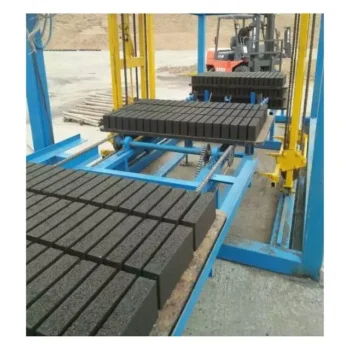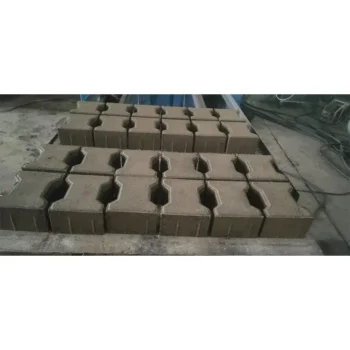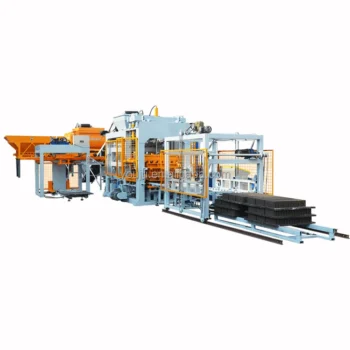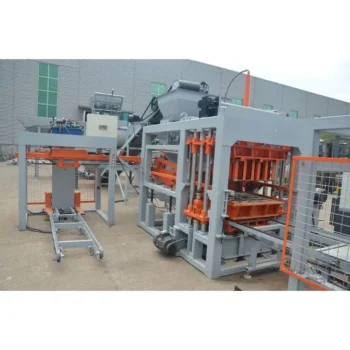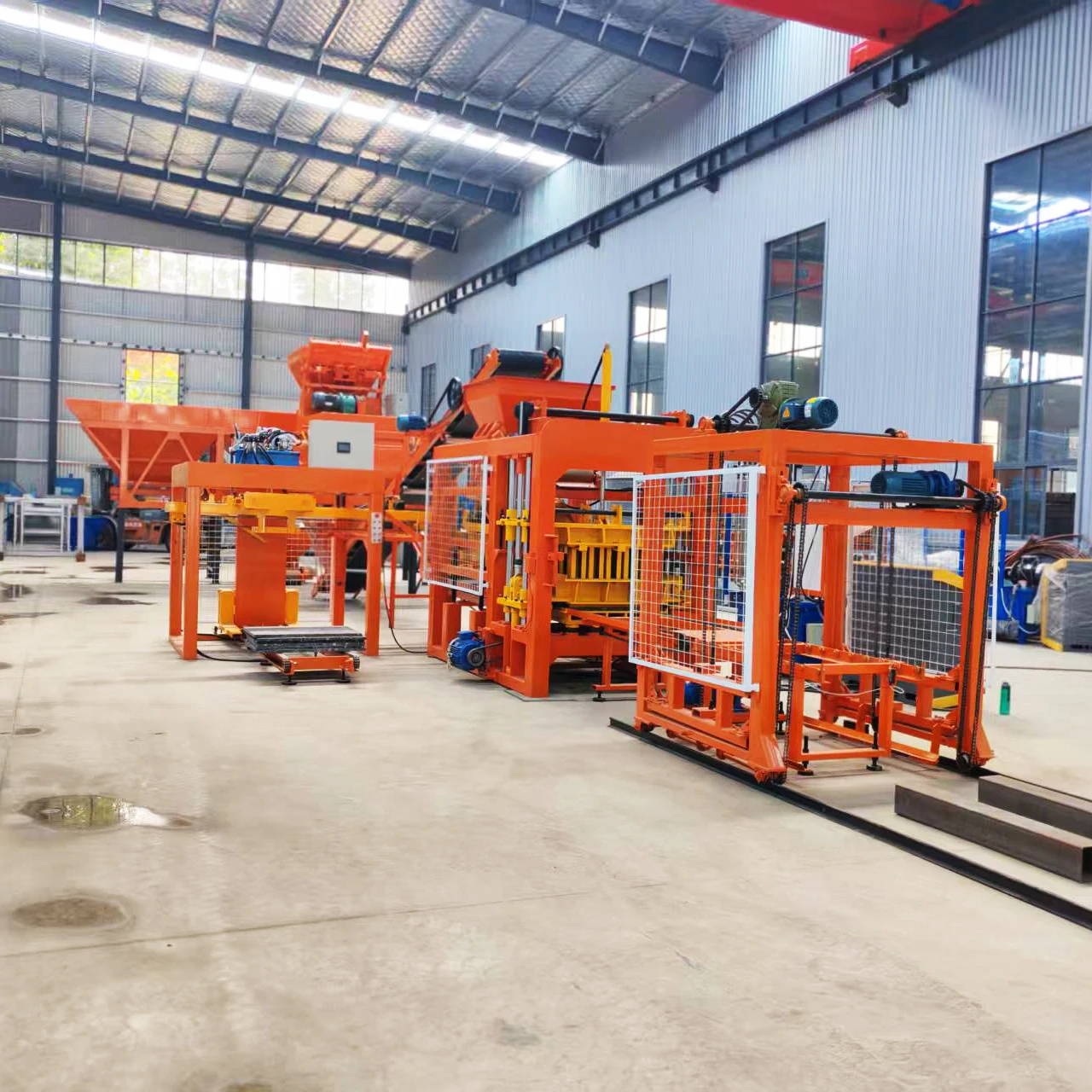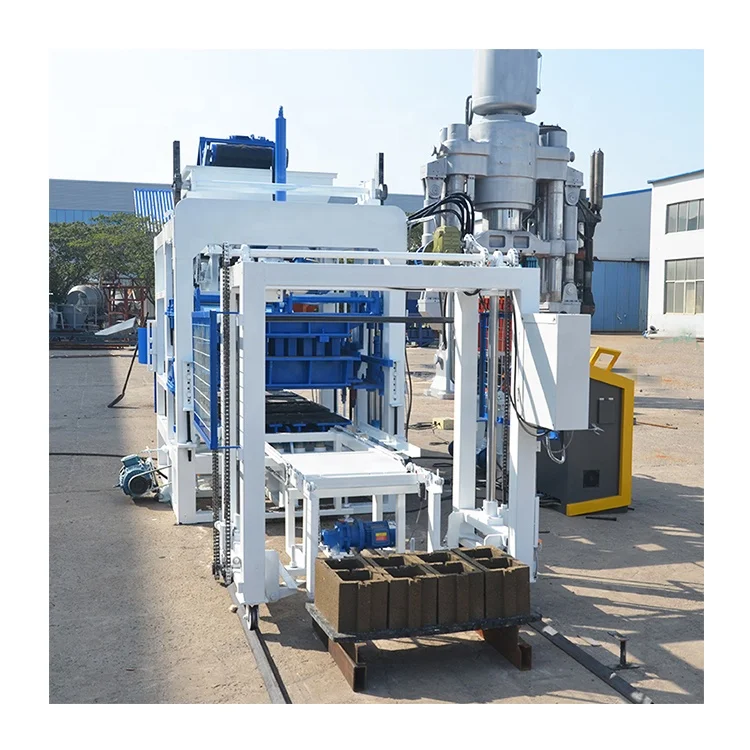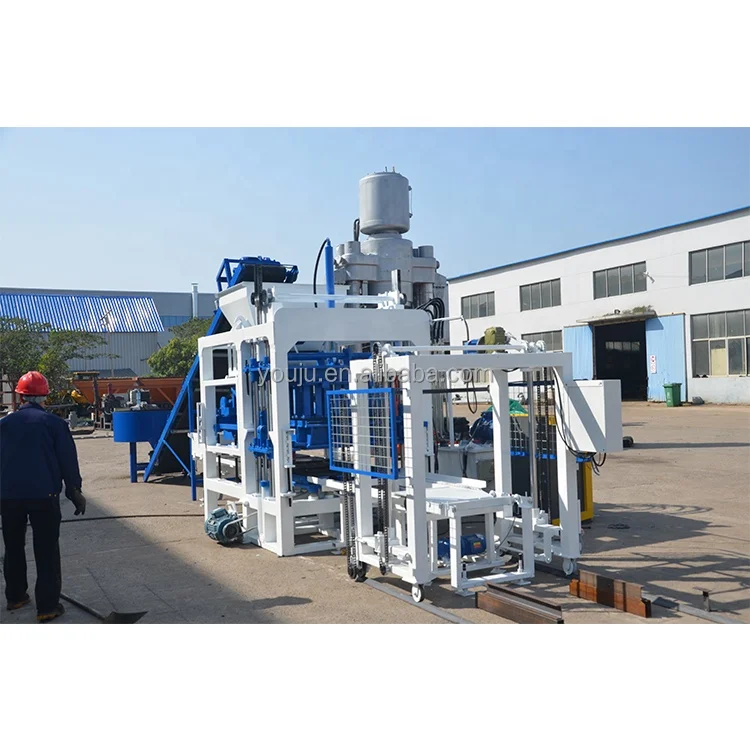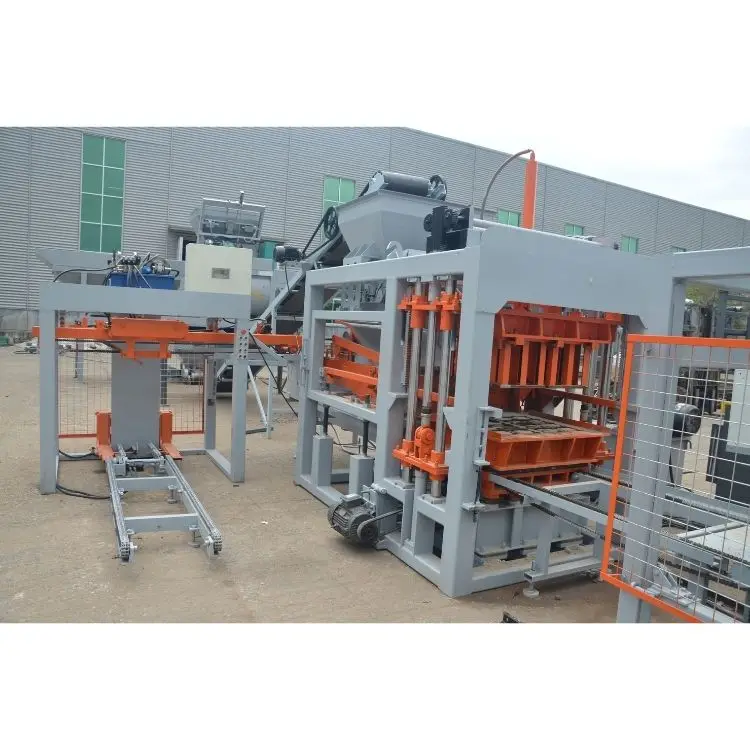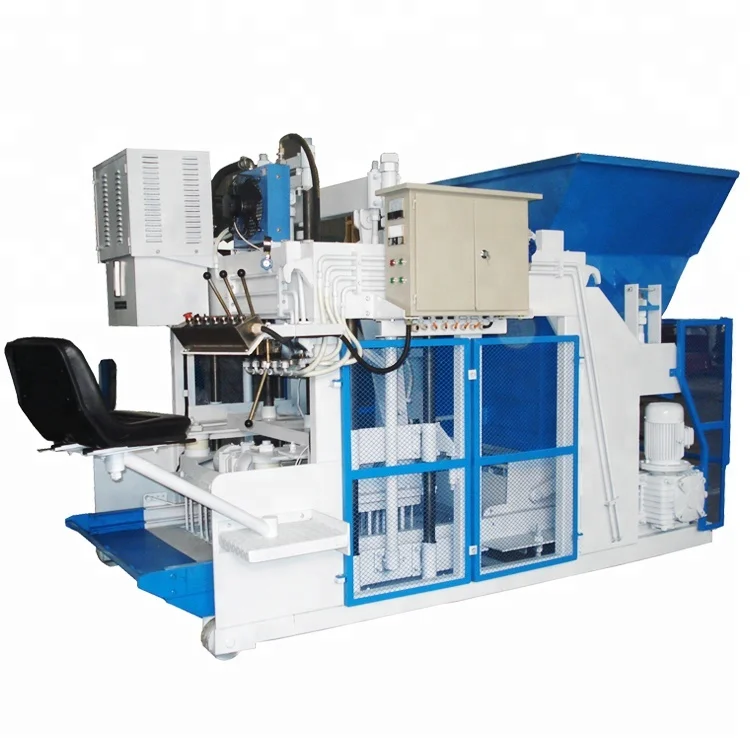
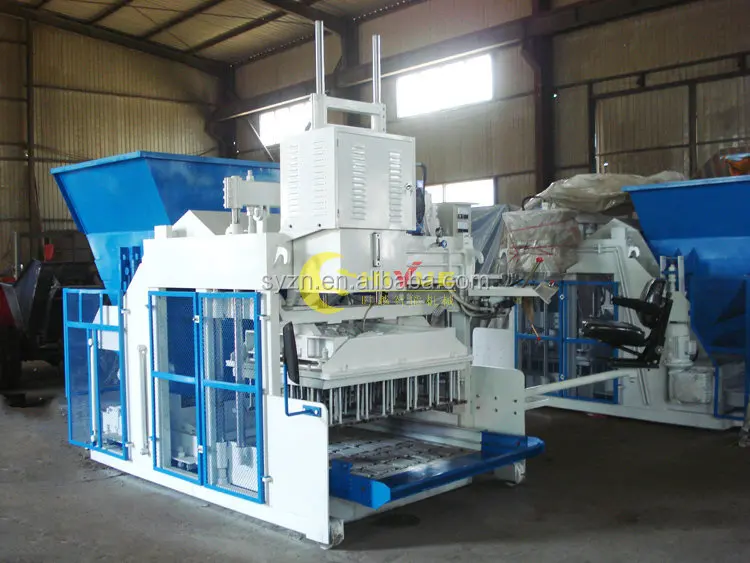
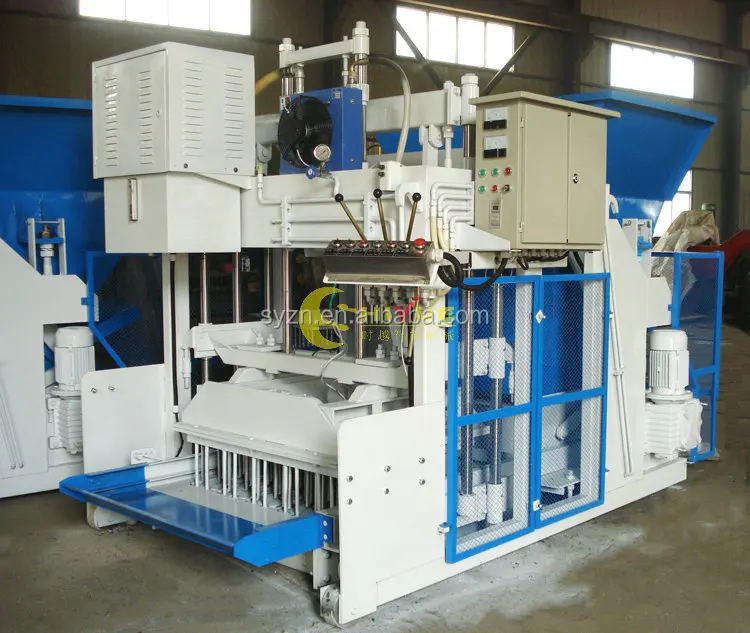
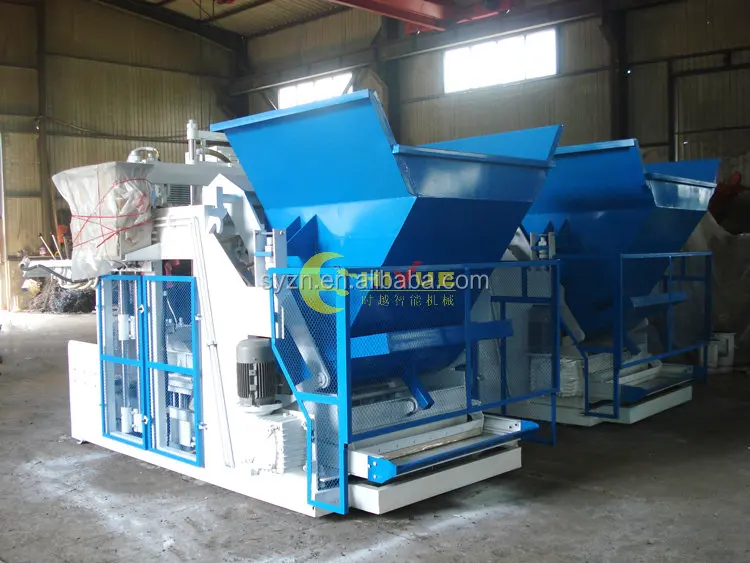
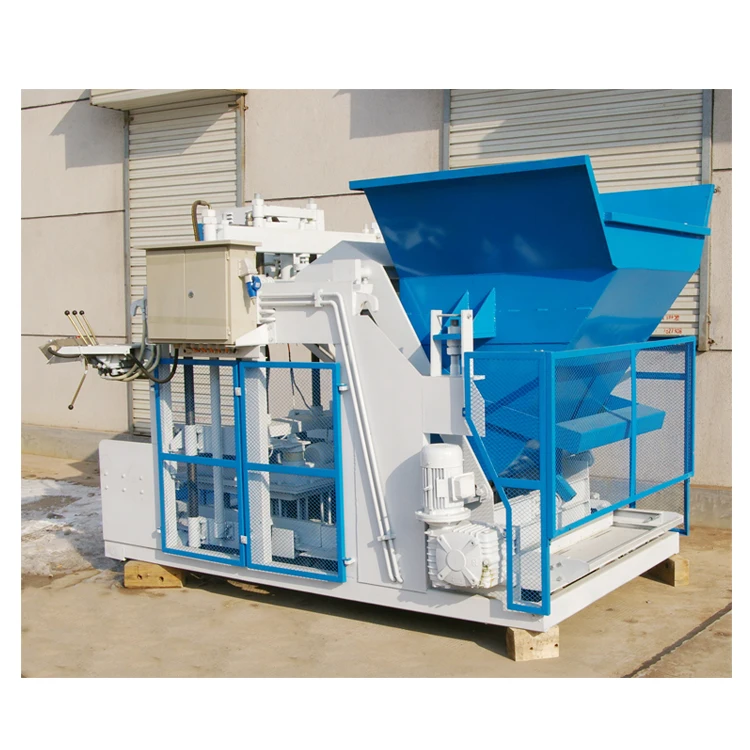
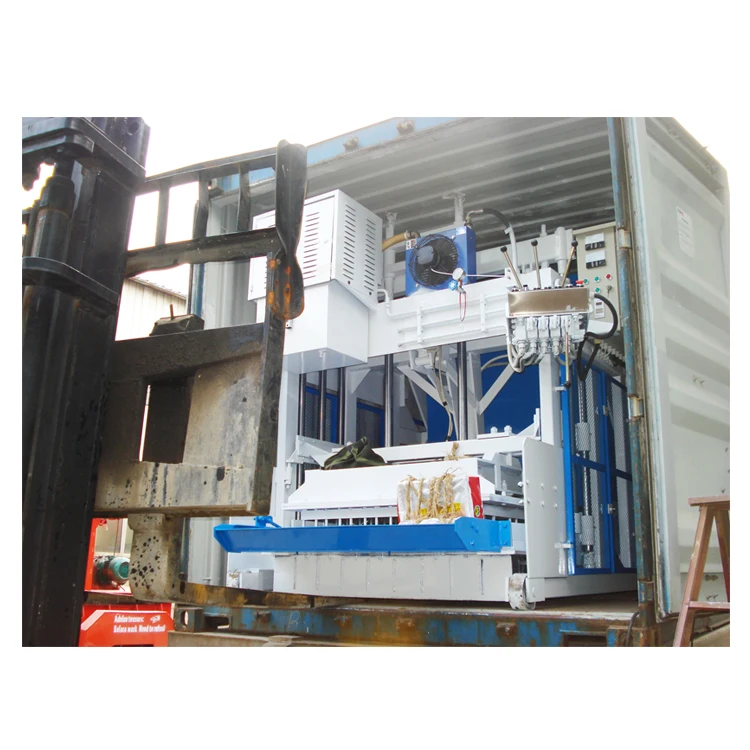
Description
Capacity honesty — every output figure for the QMY10-15 is quoted with the exact block dimension and molding cycle it assumes, so your daily plan matches the machine you receive.
Technical Specifications
| Parameter | Value |
|---|---|
| Model | QMY10-15 |
| Product Type | Mobile Automatic Cement Block Making Machine |
| Overall Dimensions (L×W×H) | 3150 × 1800 × 2400 mm |
| Total Mass | 4500 kg |
| Hydraulic Pressure | 21 MPa |
| Vibration Method | Mould vibration |
| Excitation Frequency | 4500 r/min |
| Demould Method | Hydraulic |
| Total Power | 16 kW |
| Voltage & Frequency | 380 V, 3-phase, 50 Hz (configurable to local supply) |
| Molding Cycle | 15 s |
| Mould Capacity | 10 pcs/mould (based on 400×200×200 mm hollow block) |
| Output Capacity | 2400 pcs/h (based on 400×200×200 mm block, 10 pcs/mould) |
| Output Capacity | 3360 pcs/h (based on 400×150×200 mm block, 12 pcs/mould) |
| Output Capacity | 3840 pcs/h (based on 400×120×200 mm block, 16 pcs/mould) |
| Output Capacity | 4320 pcs/h (based on 400×100×200 mm block, 18 pcs/mould) |
| Daily Output (8 h) | 19200 pcs (based on 400×200×200 mm block) |
| Daily Output (8 h) | 26800 pcs (based on 400×150×200 mm block) |
| Daily Output (8 h) | 30720 pcs (based on 400×120×200 mm block) |
| Daily Output (8 h) | 34560 pcs (based on 400×100×200 mm block) |
| Compatible Block Formats | 390×240×190 / 390×150×190 / 390×115×190 / 400×200×200 / 400×150×200 / 400×120×200 / 400×100×200 / Customized |
| Raw Materials | Crushed stone, sand, cement, fly ash, cinder, slag, gangue, gravel, perlite, and other industrial wastes |
| Mobility | Mobile / egg-laying type (no fixed pallet required) |
| Warranty | 1 year (excluding quick-wear parts) |
Application Suitability
| Application | Material or Output |
|---|---|
| On-site hollow block production for housing projects | Crushed stone, sand, cement mixes laid directly on the ground without pallets |
| Small-to-medium block yards adding format variety | Fly ash, slag, or cinder blends with mould swaps across 400×200×200 to 400×100×200 mm |
| Construction contractors producing at remote sites | Local aggregate and cement with mobile egg-laying operation |
| Entrepreneurs starting a first block plant | Standard sand and gravel mixes targeting regional hollow block demand |
What "2400 Pieces per Hour" Actually Means for the QMY10-15
Output only becomes meaningful when tied to the exact block dimension and cycle time your market requires.
When a mobile block machine specifications sheet lists a single headline capacity, buyers often discover their real daily tally falls well short of what they planned. The QMY10-15 addresses this by stating capacity per format: 2400 pcs/h is based on a 400×200×200 mm hollow block at 10 pcs per mould with a 15-second cycle, while switching to a 400×100×200 mm solid block raises the figure to 4320 pcs/h at 18 pcs per mould. How to choose QMY10-15 block machine sizing therefore starts with the format your customers actually buy, not the largest number on the page [NEED_CITE: block format demand by regional market].
Matching Block Format to Mould Selection
The QMY10-15 accepts moulds for seven standard hollow and solid block dimensions, from 390×240×190 mm down to 400×100×200 mm, and can be fitted with custom moulds built to buyer drawings. Each format change involves unbolting the current mould, lifting it clear with the machine’s own hydraulic system, and lowering the replacement into position. Because vibration force and hydraulic pressure remain constant at 4500 r/min and 21 MPa respectively, the density profile stays consistent across formats as long as the mix design is adjusted for the new cavity volume. Mobile block machine specifications become reliable only when the buyer confirms which formats represent the bulk of local orders before the mould set is finalized.
Cycle Time, Mould Count, and Honest Daily Output
A 15-second molding cycle governs every format the QMY10-15 produces, so output differences come entirely from how many cavities each mould holds. A 400×200×200 mm hollow block mould carries 10 cavities, yielding 2400 pieces per hour or roughly 19200 pieces in an 8-hour shift. The same machine running a 400×120×200 mm mould carries 16 cavities, reaching 3840 pieces per hour and about 30720 pieces per shift. Understanding how to choose QMY10-15 block machine capacity means multiplying the stated per-format figure by your actual working hours, subtracting time for mould changes, mixer loading pauses, and operator breaks [NEED_CITE: realistic shift utilization rates in block production].
Reading the Spec Sheet Against Your Production Reality
Hydraulic pressure at 21 MPa combined with mould vibration at 4500 r/min determines how densely the mix is compacted inside each cavity. Higher compaction means the block leaves the mould with enough green strength to hold its shape on the ground, which is critical for egg-laying machines that have no pallet to support the block during early curing. Total power of 16 kW covers the hydraulic pump, vibration motor, and travel drive simultaneously, so the machine can operate on a standard 380 V three-phase supply common across most industrial and construction sites. The 4500 kg total mass gives the frame enough inertia to resist walking during vibration, yet remains light enough to be towed between project locations.
The Hidden Cost of Choosing the Wrong Mould Set
Ordering a QMY10-15 with only a single mould size seems cost-effective at first, but when the buyer’s market shifts demand to a different block dimension, the machine sits idle while a replacement mould is shipped internationally. Similarly, specifying a mould whose cavity count assumes a faster cycle than the machine can physically deliver leads to production shortfalls that only appear after the first week on site. Voltage mismatches between the ordered 380 V 50 Hz configuration and a local 415 V 60 Hz supply can cause the hydraulic pump motor to overheat within the first shift, shutting down production until a replacement motor arrives [NEED_CITE: motor burnout from voltage and frequency mismatch]. Selecting the right configuration up front avoids weeks of lost output.
Why Sizing Through This Range Matters
Block machinery is our single focus, which means the QMY10-15 is specified as a matched system of machine, mould, and handling rather than assembled from unrelated sources. Configuration is set against your actual mix design and local aggregate, not a catalogue default, so vibration frequency and hydraulic pressure are adjusted before the machine ships. Mould design covers the formats your market sells, including custom drawings for non-standard dimensions. Automation level is selectable, allowing a buyer to start with basic mobile operation and add pallet feeding or stacking later. Installation support includes on-site commissioning and operator training so the first production run meets strength requirements from day one.
Documentation & Verification
- Line layout showing QMY10-15 footprint and material flow for your site conditions
- Capacity calculation table listing output per block format with stated cycle time
- Mould drawing and format list confirming cavity dimensions before fabrication
- Voltage and control language confirmation sheet signed before wiring begins
- Factory test record on your chosen block format before dispatch
- Wear parts and mould availability list with first-replacement schedule
Installation, Commissioning & Support
- Flat concrete ground or compacted gravel bed sized to the 3150 × 1800 mm machine footprint
- Dedicated 3-phase circuit matching confirmed voltage, with 16 kW spare capacity for start-up surge
- Machine arrives fully assembled; only hydraulic hoses and power cable need connection on site
- First-run parameter tuning of vibration frequency and hydraulic pressure to match your local mix
- Operator training covering mould changeover, daily greasing points, and hydraulic fluid checks
- Quick-wear mould liner and vibration spring spares supplied with recommended replacement intervals
What to Include in Your Inquiry
Send the block dimensions your market buys most, along with the daily output you need to hit on an 8-hour shift. Include a sample or description of your local aggregate — sand source, maximum stone size, and whether fly ash or slag is available — so the mix can be matched before the machine is built. Confirm your site voltage and frequency, the language your operators read, and whether you plan to run a single format or swap moulds regularly.
Frequently Asked Questions
Q: How is output capacity calculated for each block format?
A: Every capacity figure for the QMY10-15 is derived from the mould cavity count multiplied by the number of cycles per hour, based on a 15-second molding cycle. The 2400 pcs/h figure assumes a 400×200×200 mm hollow block at 10 cavities. Switching to a smaller format with more cavities raises the hourly count proportionally.
Q: Can I order custom moulds for non-standard block sizes?
A: Yes. The QMY10-15 accepts moulds built to buyer-provided drawings, provided the overall mould envelope fits within the machine’s clamping area. Custom formats go through a drawing approval stage before fabrication, and cycle time is verified at the factory to confirm achievable output.
Q: How do I verify voltage and control language before shipment?
A: A voltage and control language confirmation sheet is sent for your signature during the production stage. This document locks in the exact supply specification and PLC display language so the QMY10-15 can be commissioned immediately upon arrival without rewiring or software changes.
Q: What does a mould change involve on site?
A: A format changeover on the QMY10-15 requires unbolting the current mould, using the machine’s hydraulic system to lift it clear, and lowering the new mould into position. The procedure takes a portion of a shift when performed by a trained operator and requires no specialized lifting equipment beyond the machine itself.
Q: Which raw materials work with this machine?
A: The QMY10-15 processes crushed stone, sand, cement, fly ash, cinder, slag, gangue, gravel, and perlite blends. Vibration force and hydraulic pressure are tuned to the buyer’s specific mix design and local aggregate so that block density and green strength meet requirements without forcing a material change.