
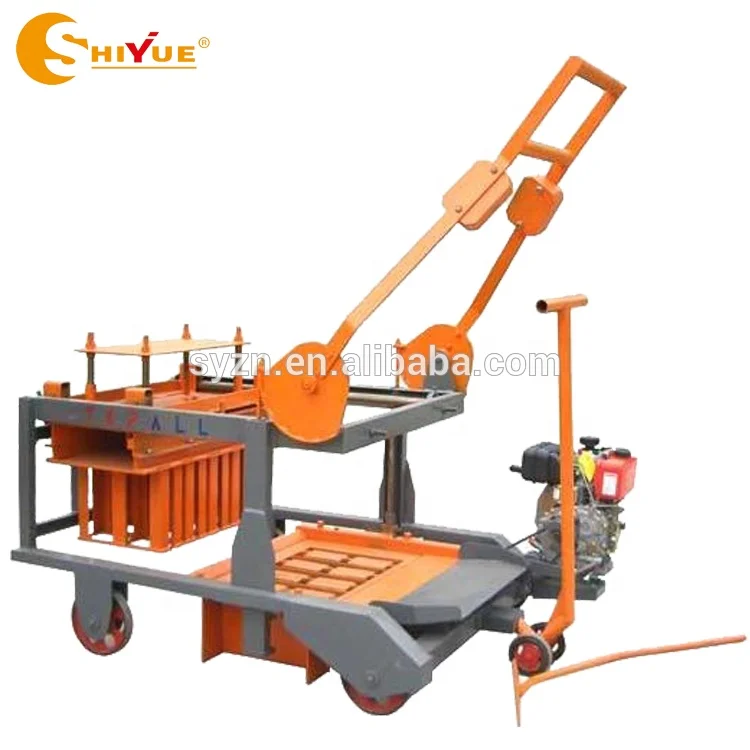


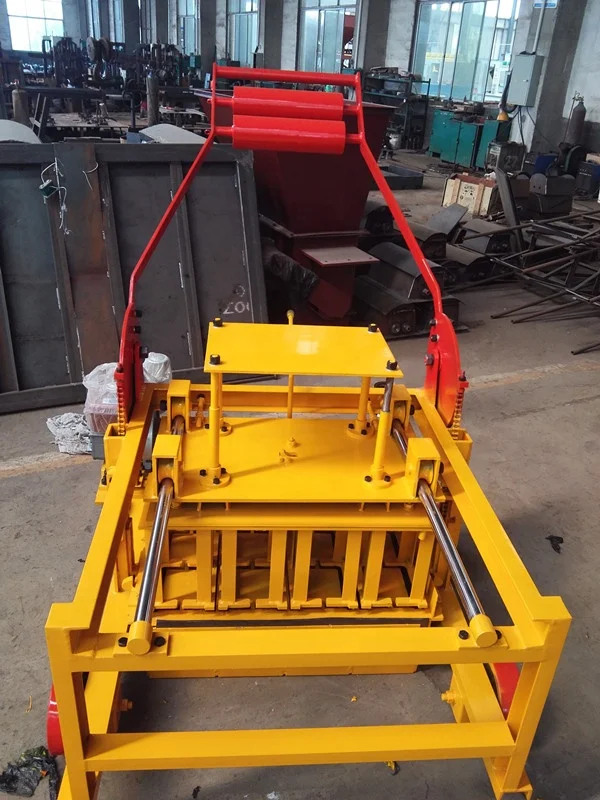
Description
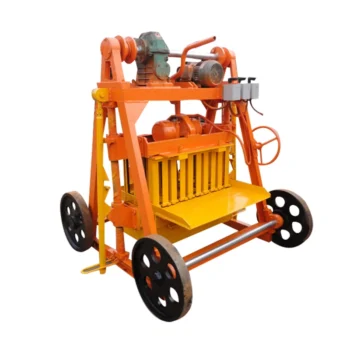
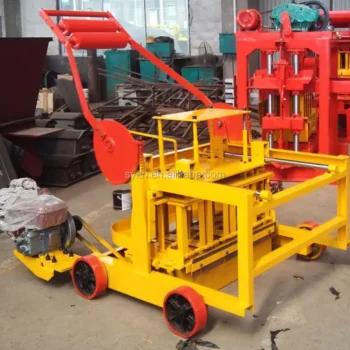
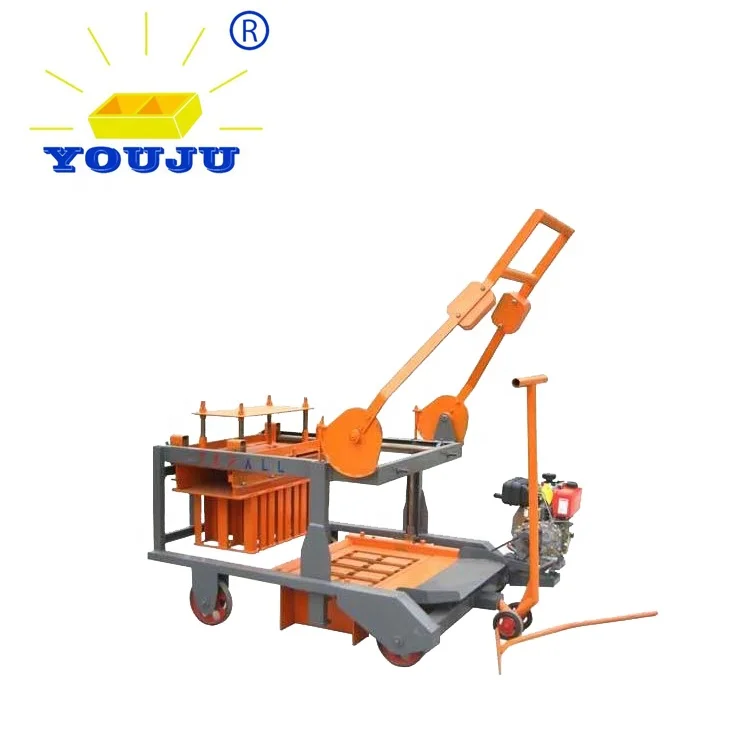
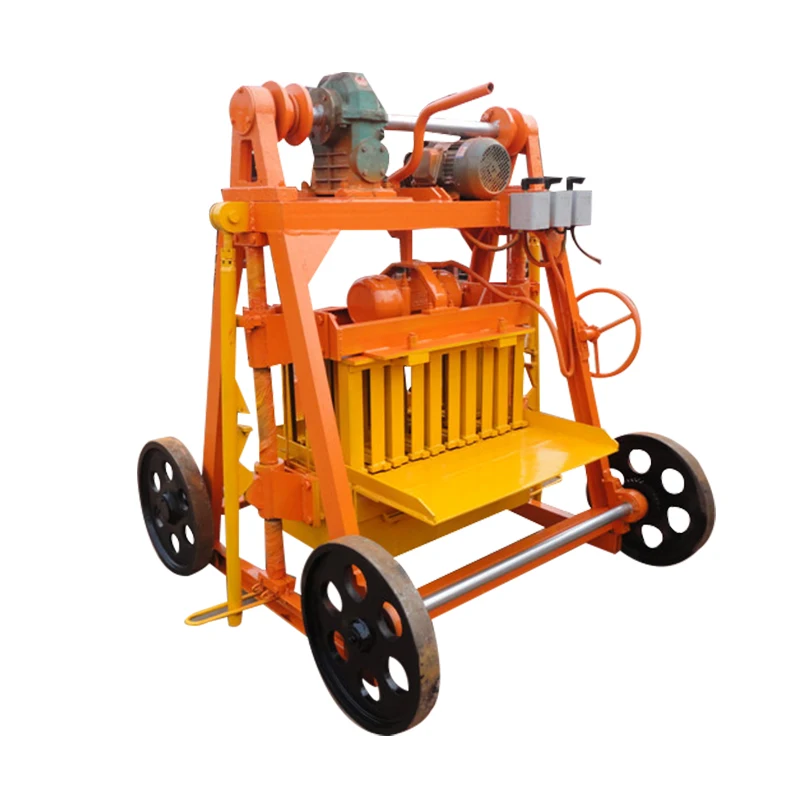
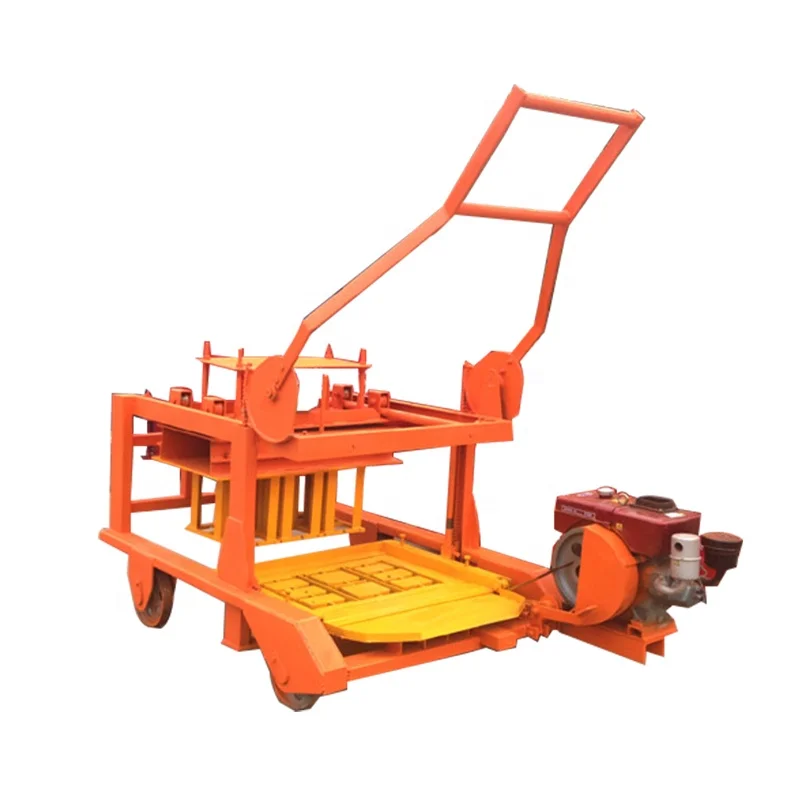
Block machinery as a single focus — Machine, mould, pallet and handling are specified as one matched system rather than assembled from separate suppliers, ensuring the QMR4-45 mobile block making machine is configured against your actual mix design and local aggregate rather than a catalogue default.
Technical Specifications
| Parameter | Value |
|---|---|
| Model | QMR4-45 |
| Product Type | Mobile Block Making Machine |
| Overall Dimensions (L×W×H) | 1100 x 950 x 2100 mm |
| Net Weight | 810 kgs |
| Molding Cycle | 30-45 s |
| Output Capacity | 2560 pcs/day (basis not stated in source — confirm block format / material / thickness) |
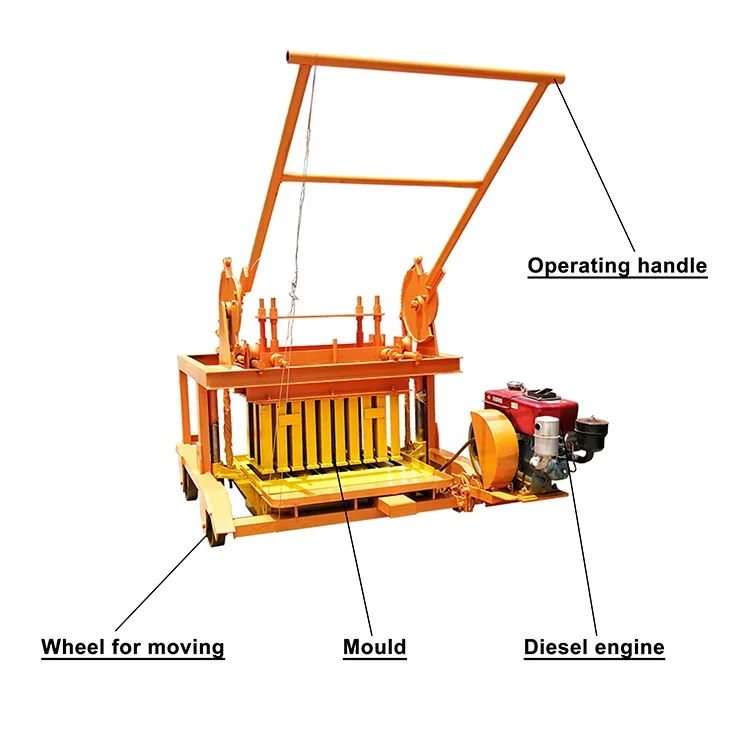
| Power Source | Diesel / Petrol Engine / Electric |
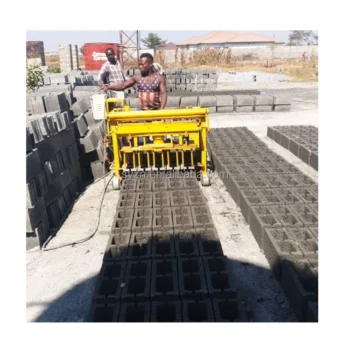
| Pallet Requirement | No need pallet |
| Mobility | Movable / mobile on-site operation |
| Compatible Products | Paver brick, hollow block, concrete block, solid brick, fly ash brick |
| Basic Equipment Included | JZC350 Diesel Concrete Mixer or JQ350 Diesel Concrete Mixer (Electric Generating Unit); Trolley |
| Automation Level | Manual / low investment operation |
| Warranty | 1 Year |
Application Suitability
| Application | Material or Output |
|---|---|
| On-site block production | Construction contractors producing blocks directly on their own job site without building a fixed plant |
| Small-scale brick manufacturing | Entrepreneurs setting up a first block plant with low initial investment and simple operation |
| Housing project contractors | Producing specific block formats locally to match regional demand for paver bricks, hollow blocks, solid bricks, and fly ash bricks |
What "2,560 Pieces per Day" Actually Means for the QMR4-45
Capacity quoted in cycles per hour without stating which block format that figure assumes means real daily output falls far short of expectation.
The QMR4-45 mobile block making machine specifications often list a single daily output number, but that number is meaningless unless you know the block format. A 400×200×200mm hollow block takes longer to cure and handle than a 200×100×60mm paver. When a buyer sees "2560 pcs/day" without the format assumption, they expect that output for whatever block their market sells. The reality is that cycle time varies between 30 and 45 seconds depending on the mould, the mix design, and the vibration force applied. I have seen buyers order a machine based on a sample sheet number, only to find their actual daily production is significantly lower because the capacity was calculated for a format they do not even produce [NEED_CITE: block format impact on cycle time and daily output].
Mould Format Versatility and Cycle Time Variation
The QMR4-45 is compatible with paver brick, hollow block, solid brick, concrete block, and fly ash brick formats from a single machine frame. This versatility means a buyer can start with one block type and add formats as market demand shifts. However, the molding cycle range of 30–45 seconds reflects real-world variation across these formats. A hollow block requires more vibration time to consolidate the core voids, while a solid paver brick can cycle faster. The mobile block making machine specifications must be read with this range in mind, not as a fixed number.
Pallet-Free Operation and Its Limits
Pallet-free operation eliminates pallet cost, pallet handling labour, and curing-area pallet logistics for smaller sites. The QMR4-45 lays blocks directly on the ground, which works well for on-site production where a fixed curing rack system is impractical. However, this also means the ground must be level, firm, and protected from rain during the initial curing period. The machine’s mobility allows it to move along a prepared surface, but the output is only as strong as the ground it sits on [NEED_CITE: ground preparation requirements for mobile block production].
Reading the Specs: Power, Weight, and Dimensions
The QMR4-45 weighs 810 kgs and measures 1100 x 950 x 2100 mm, making it compact enough to transport on a flatbed truck or tow to a job site. The power source is configurable as diesel, petrol engine, or electric, which is critical for remote sites without stable grid supply. A diesel-powered unit with the included JZC350 or JQ350 mixer ensures continuous operation where electricity is unreliable. However, the vibration force and hydraulic pressure are not stated in the source, which means these values must be confirmed before purchase to ensure they match the buyer’s local aggregate and mix design. The 1-year warranty covers the machine frame and core components, but wear parts like mould liners and vibration springs are consumables that must be budgeted separately.
The Cost of Ignoring Local Aggregate
When a machine is configured for a mix the buyer cannot source locally, the result is either a costly material change or blocks that fail strength tests. The QMR4-45’s vibration force and hydraulic pressure must be matched to the buyer’s specific aggregate—whether river sand, crushed stone, or fly ash. I once worked with a buyer whose river sand had high clay content, and the blocks cracked during curing because the vibration was too aggressive for that mix. The machine was not at fault; the configuration was [NEED_CITE: effect of local aggregate on block strength and machine settings].
Why Buyers Choose This Machine and This Supplier
Block machinery is our single focus, so the QMR4-45 is specified as part of a matched system that includes the mould, the mixer, and the trolley. We configure the machine against the buyer’s actual mix design and target block format, not a catalogue default. Mould design and supply cover the formats the buyer’s market actually sells, including custom drawings. The automation level is selectable, so a buyer can start with manual operation and add handling equipment later. Installation and commissioning support includes operator training, and mould and wear parts support continues after the machine is running.
Documentation & Verification
- Line layout and capacity calculation stating the exact block format assumed for the QMR4-45
- Machine specification sheet with confirmed power source and vibration parameters
- Mould drawing and format list matching the buyer’s local block standard
- Factory test record on the buyer’s actual mix design before dispatch
- Operation and maintenance manual with wear parts and mould replacement schedule
Installation, Commissioning & Support
- Ground preparation and leveling requirements for the 1100 x 950 mm machine footprint
- Power source confirmation: diesel, petrol, or electric with voltage and frequency matched to site
- Mould installation and cycle time adjustment for the buyer’s specific block format
- Operator training on manual pallet-free operation and trolley handling
- Wear parts list and mould liner replacement schedule for the first year of operation
What to Include in Your Inquiry
To receive an accurate configuration for the QMR4-45 mobile block making machine, provide the target block format and dimensions, the daily output you need for that specific format, and a sample of your local raw material or aggregate report. Specify whether your site has stable grid electricity or requires a diesel-powered unit, and confirm the voltage and frequency if electric. Include the curing area conditions and whether the ground is prepared for direct block laying.
Frequently Asked Questions
Q: How is the 2,560 pcs/day capacity calculated, and which block format does it assume?
A: The 2,560 pcs/day figure is listed in the source without stating the block format, material, or thickness assumed. To get a realistic capacity for your production, request a calculation that specifies the exact block format—such as a 400×200×200mm hollow block—and the cycle time for that format on the QMR4-45.
Q: What mould formats are available, and how long does a mould change take?
A: The QMR4-45 is compatible with paver brick, hollow block, solid brick, concrete block, and fly ash brick formats. Mould change time is not stated in the source, so request a demonstration or specification sheet that shows the procedure and time required for your target formats.
Q: Diesel vs. electric power source — how do I choose based on my site?
A: Diesel or petrol engines suit sites without stable grid supply, while electric motors work for established yards with confirmed voltage and frequency. The QMR4-45 includes a JZC350 or JQ350 diesel mixer as basic equipment, but electric variants are available if your grid can support the machine’s power requirements.
Q: What mix design and local aggregate considerations affect block strength?
A: The vibration force and hydraulic pressure must be matched to your specific aggregate, whether river sand, crushed stone, or fly ash. High clay content in sand, for example, may require adjusted vibration settings to prevent cracking. Request configuration based on your local material report, not a default setting.
Q: How does pallet-free operation affect the curing and stacking workflow?
A: Pallet-free operation means blocks are laid directly on prepared ground, eliminating pallet cost and handling labour. However, the ground must be level and protected during initial curing, and stacking is done manually after the blocks gain sufficient strength. This workflow suits on-site production but limits output speed compared to pallet-based systems.