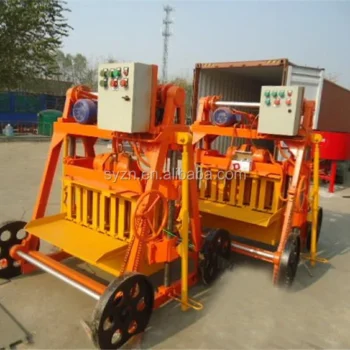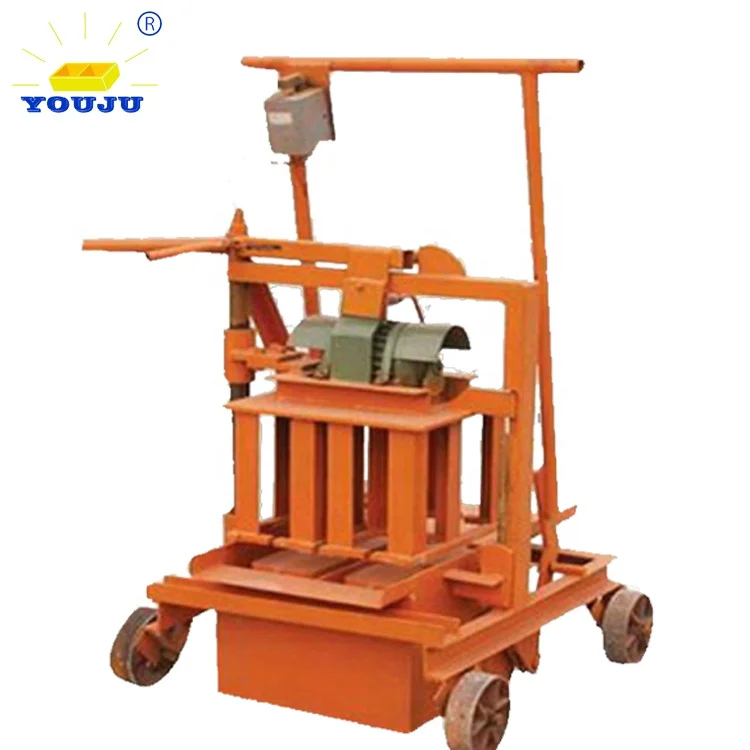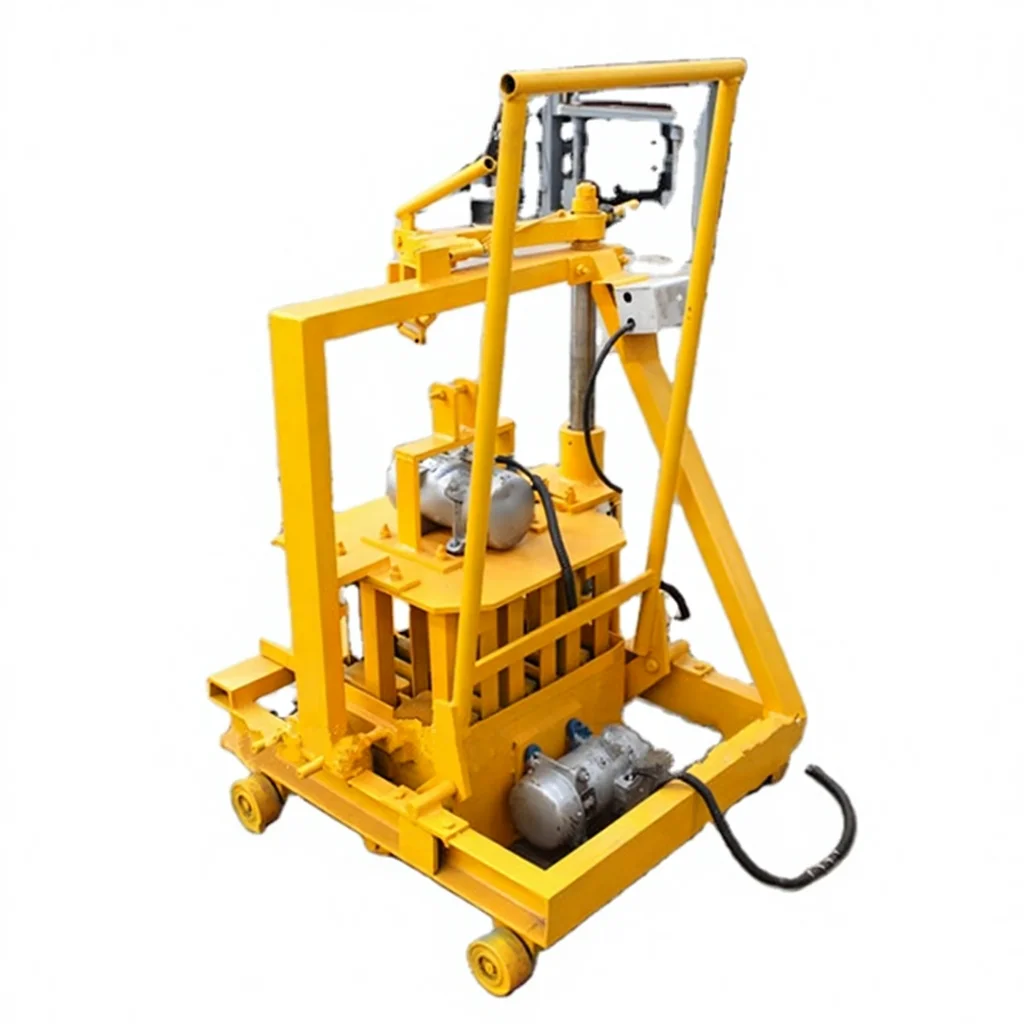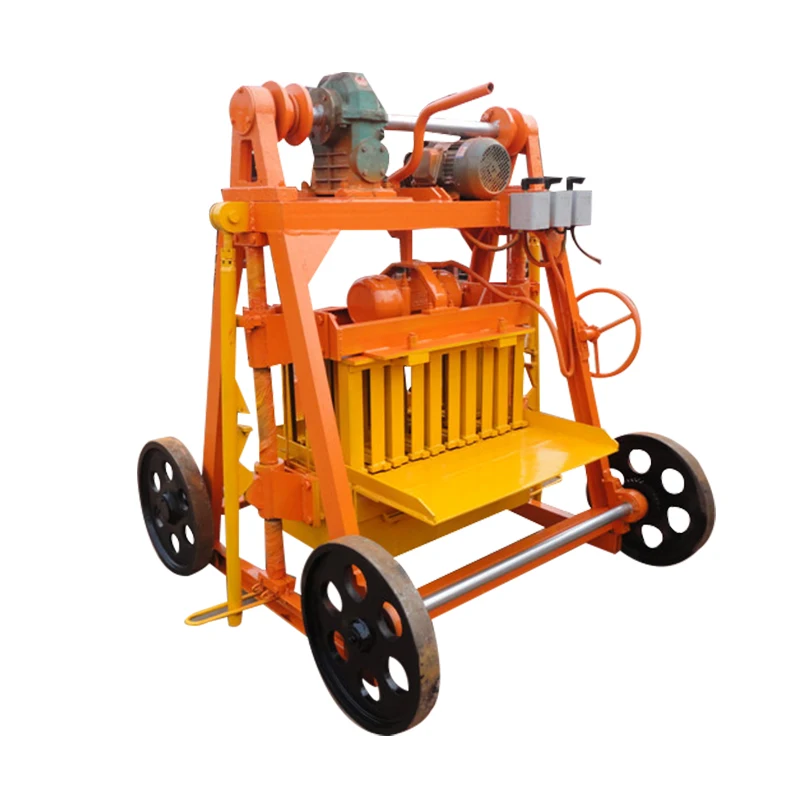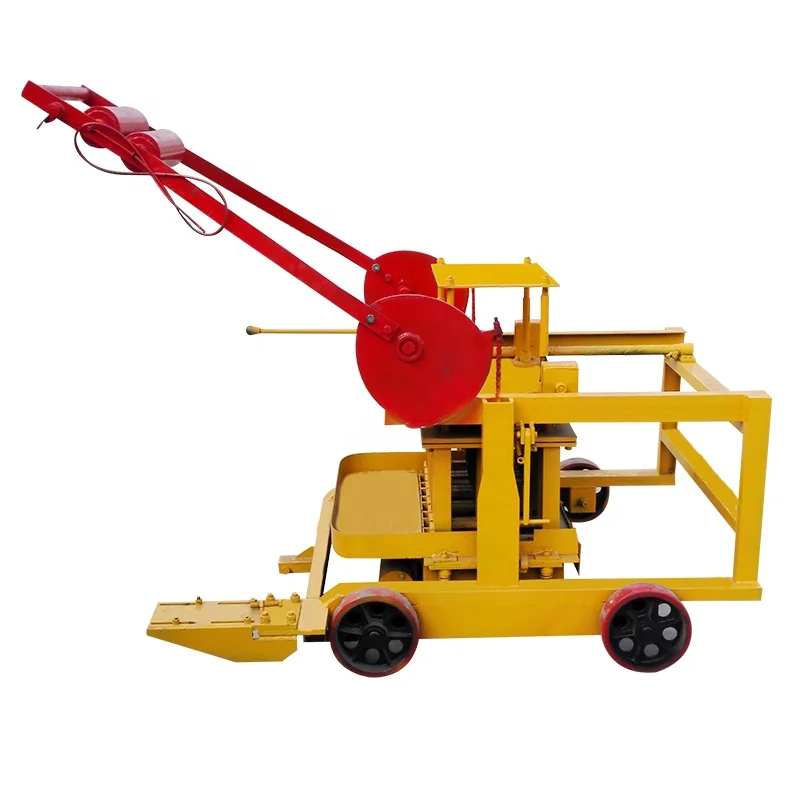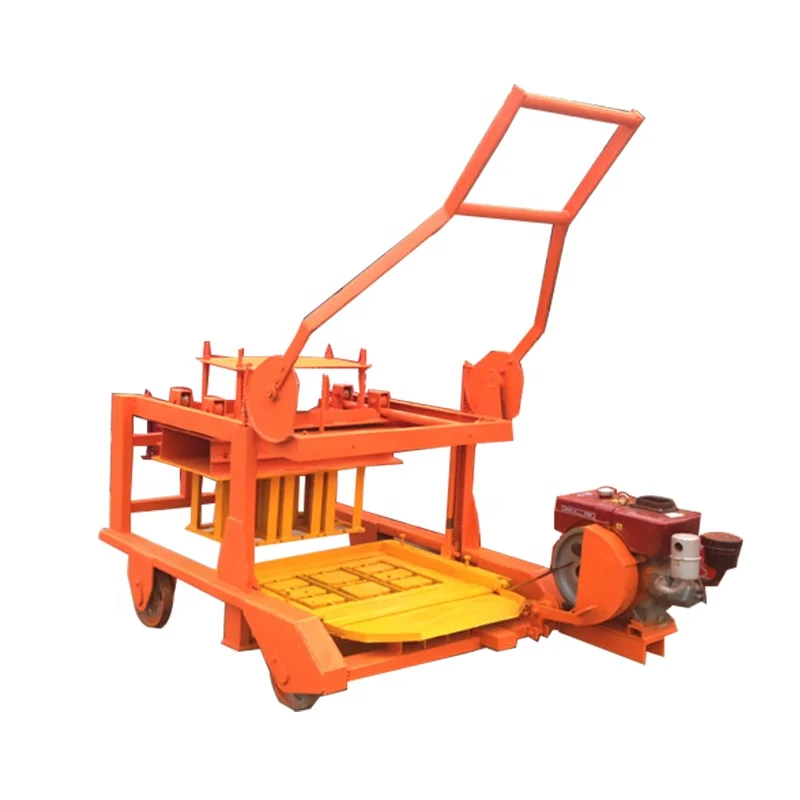

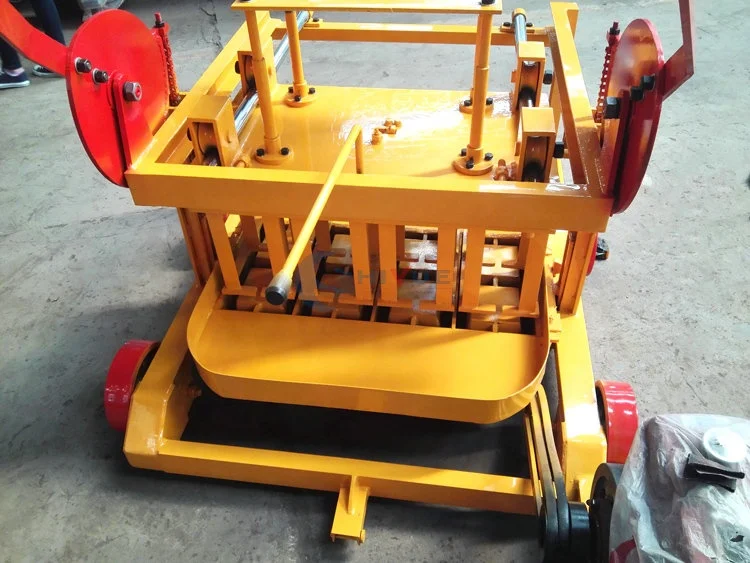

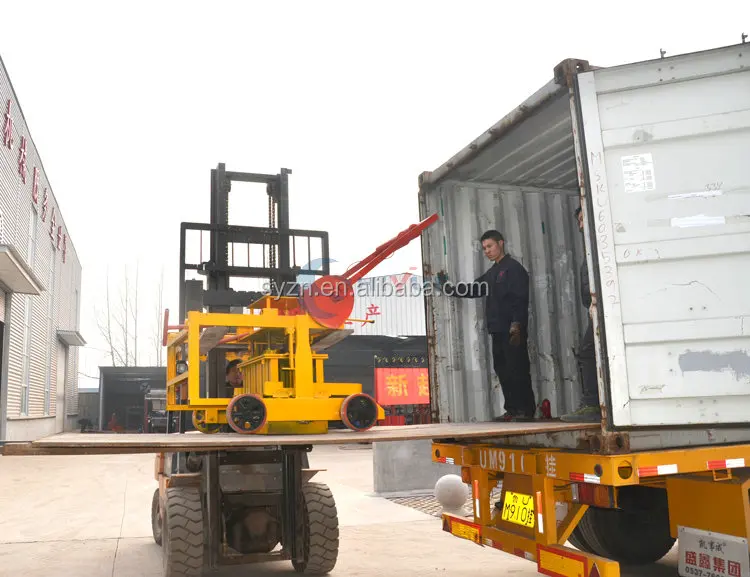
Description
Mould design and supply — Every QMR4-45 we ship leaves the factory with moulds chosen for the buyer’s actual market, not a default set pulled from a catalogue shelf.
Technical Specifications
| Parameter | Value |
|---|---|
| Model | QMR4-45 |
| Product Type | Mobile Concrete Block Making Machine |
| Molding Cycle | 45s (basis not stated in source — confirm block format / material / thickness) |
| Power Source | Diesel |
| Rated Power | 8 hp |
| Molding Form | Vibration and Pressure |
| Vibration Force | 60 KN |
| Total Weight | 800 kg |
| Overall Dimensions | 2420 × 1320 × 1650 mm |
| Pallet Requirement | No pallet needed |
| Mobility | Movable on-site operation |
| Compatible Mixer | JZC350 Diesel Concrete Mixer or JQ350 Diesel Concrete Mixer with Electric Generating Unit |
| Supporting Equipment | Trolley |
| Automation Level | Manual operation |
Application Suitability
| Application | Material or Output |
|---|---|
| On-site hollow block production | Crushed stone, sand, cement, and water blends |
| Paver brick manufacturing on project ground | Fine aggregate with cement binder |
| Solid brick runs for housing developments | Local sand or fly ash mixed with cement |
| Interlocking brick for retaining walls | Coarse aggregate with cementitious binder |
| Remote site block production | Diesel-powered operation independent of grid electricity |
What "45-Second Cycle" Actually Means for Your Daily Count
A cycle time without a named block format is not a capacity figure — it is a stopwatch reading.
I spent weeks on a site in West Africa where a contractor had purchased a mobile egg-laying machine based on a quoted cycles-per-hour number. When we arrived, the first thing we noticed was that the quoted cycle assumed a small solid brick, but the contractor needed 200 mm hollow blocks. The actual cycle stretched well beyond what the brochure suggested, and daily output fell short of the project schedule. With the QMR4-45 mobile block machine, we always ask which format you intend to run before we confirm any throughput expectation. The vibration force, pressure setting, and mix design all shift depending on the block geometry. [NEED_CITE: block format impact on cycle time in mobile egg-laying machines]
Mould Selection Decides What Your Market Buys
The QMR4-45 accepts moulds for hollow block, solid block, paving block, and interlocking brick formats. Each mould changes the footprint of the machine’s output and the curing area you need on the ground. We supply mould drawings before production so the buyer can confirm dimensions match local building codes. A paving block mould produces units that interlock for driveways and walkways, while a hollow block mould delivers the structural units used in load-bearing walls. The mould change is manual, and the time it takes depends on operator familiarity and the tools kept nearby on site.
Diesel Independence on Sites Without Grid Power
The 8 hp diesel engine drives both vibration and hydraulic pressure without requiring a grid connection. This matters for housing projects in areas where electricity is unreliable or simply unavailable. The compatible JZC350 diesel mixer pairs directly with the QMR4-45 mobile block machine specifications, keeping the entire production loop fuel-based. Where a buyer prefers an electric mixer, the JQ350 variant requires a separate generating unit — a detail we confirm before the order is finalised so there are no surprises when the machine arrives on a remote site.
Vibration Force, Mix Design, and Block Strength
The 60 KN vibration force works in combination with hydraulic pressure to compact the concrete mix into the mould cavity. How well this compaction holds depends on the aggregate grading and cement content the buyer sources locally. I have seen the same vibration setting produce dense, strong blocks in one region and crumbly output in another, simply because the sand particle size distribution changed. We ask for a sample of the buyer’s aggregate before we confirm the vibration frequency and pressure curve. The 800 kg machine weight contributes to ground stability during vibration, reducing energy lost to machine movement rather than transferred into the block. [NEED_CITE: vibration force and aggregate grading relationship in concrete block compaction]
Pallet-Free Operation and What It Eliminates
The egg-laying design means the QMR4-45 deposits blocks directly onto the ground and moves forward along the production line. No pallets are needed, which removes the capital outlay for pallets and the logistics of moving, stacking, and storing them. For a contractor producing blocks on a housing site, this simplifies the operation considerably. The trade-off is that the ground must be level, firm, and cleared of debris. Curing happens in place, so the production path needs enough linear space for a full day’s output before blocks are ready to move.
When the Wrong Mix Reaches the Hopper
A mobile block machine is only as consistent as the concrete fed into it. If the mix is too dry, the 60 KN vibration force cannot compact it fully, and blocks crack during curing. If the mix is too wet, blocks slump after demoulding and lose dimensional accuracy. On one project, the contractor was using laterite soil as aggregate without adjusting the water ratio, and every block we pulled from the mould had hairline fractures along the edges. We spent days adjusting the mix before the output met the project’s compressive strength requirement. [NEED_CITE: mix design adjustment for local laterite aggregate in block production]
Why Buyers Source This Machine Through Us
Block machinery is our single focus — the QMR4-45 is specified as a matched system with its mixer, trolley, and mould set rather than assembled from disconnected suppliers. Configuration is set against the buyer’s actual mix design and target block format, not a catalogue default. Mould design and supply covers the formats the buyer’s local market actually purchases, including custom drawings when standard formats do not match local building practice. We confirm voltage and control language for any electric-start or generating-unit variant before production begins. Installation support includes on-site commissioning where the machine is run with the buyer’s own aggregate and mix, not just a factory-standard test material.
Documentation & Verification
- Line layout with capacity calculation stating the block format assumed for the 45-second cycle
- Mould drawing and format list confirming included block types and change procedure
- Factory test record showing cycle time and block strength with the buyer’s specified mix
- Operation and maintenance manual covering diesel engine servicing and vibration assembly care
- Wear parts and mould list identifying consumables for the first reorder
- Packing photographs and customs documentation support for container loading
Installation, Commissioning & Support
- Ground must be level and compacted to support 800 kg machine weight during vibration cycles
- Diesel engine requires pre-commissioning oil and filter check before first start on site
- Mould alignment verified with the buyer’s chosen block format before production begins
- Operator training covers manual mould change procedure and trolley feed coordination
- Wear parts list provided with recommended first-order quantities for vibration pads and mould liners
- Daily greasing schedule for vibration bearings specified in the maintenance manual
Before You Send an Inquiry
Tell us which block format your local market purchases most — hollow, solid, paving, or interlocking — along with the dimensions your building codes require. Share what aggregate is available near your site: river sand, crushed stone, fly ash, or a local material like laterite. If your site has no grid electricity, confirm whether you already own a generating unit or need the full diesel configuration including mixer and engine.
Frequently Asked Questions
Q: What block format does the 45-second cycle time assume, and what is realistic daily output per format?
A: The 45-second cycle is a baseline figure, and the block format it applies to must be confirmed before we quote daily output. A small solid brick cycles faster than a large hollow block because the mould cavity fills and compacts differently. We provide a capacity calculation tied to your specific format and mix design, not a generic number.
Q: How is vibration force matched to my local aggregate and mix design for consistent block strength?
A: We request details on your locally available aggregate — type, grading, and moisture content — before we set the vibration frequency and pressure parameters. The 60 KN vibration force is then adjusted in combination with your cement ratio to achieve the density your market requires. Factory testing with your actual mix confirms the setting before dispatch.
Q: What mould formats are available for the QMR4-45, and how long does a mould change take?
A: Moulds cover hollow block, solid block, paving block, and interlocking brick formats, with custom designs available to buyer drawings. The change is manual and depends on operator experience and tool readiness. We provide the mould change procedure in the manual and walk operators through it during commissioning on site.
Q: Can the machine run on diesel alone, or do I need an electric generating unit for the mixer?
A: The QMR4-45 itself is diesel-powered at 8 hp. If you pair it with the JZC350 diesel mixer, the entire production loop runs on fuel with no electricity needed. The JQ350 mixer variant requires a separate electric generating unit. We confirm your preference before the order so the correct configuration ships together.
Q: What wear parts and mould spares should I order with the first shipment?
A: We provide a wear parts list that identifies items such as vibration pads, mould liners, and hydraulic seals that see regular wear. For a first order, we recommend enough spares to cover the initial production period before a reorder can be fulfilled, based on your planned daily output and shift schedule.