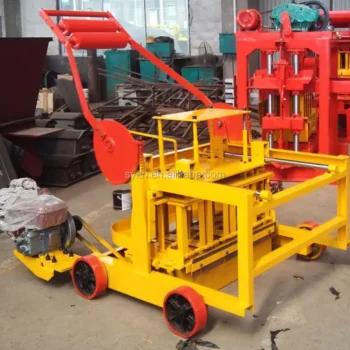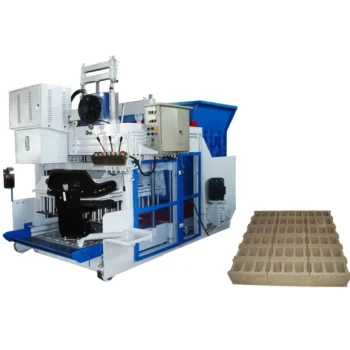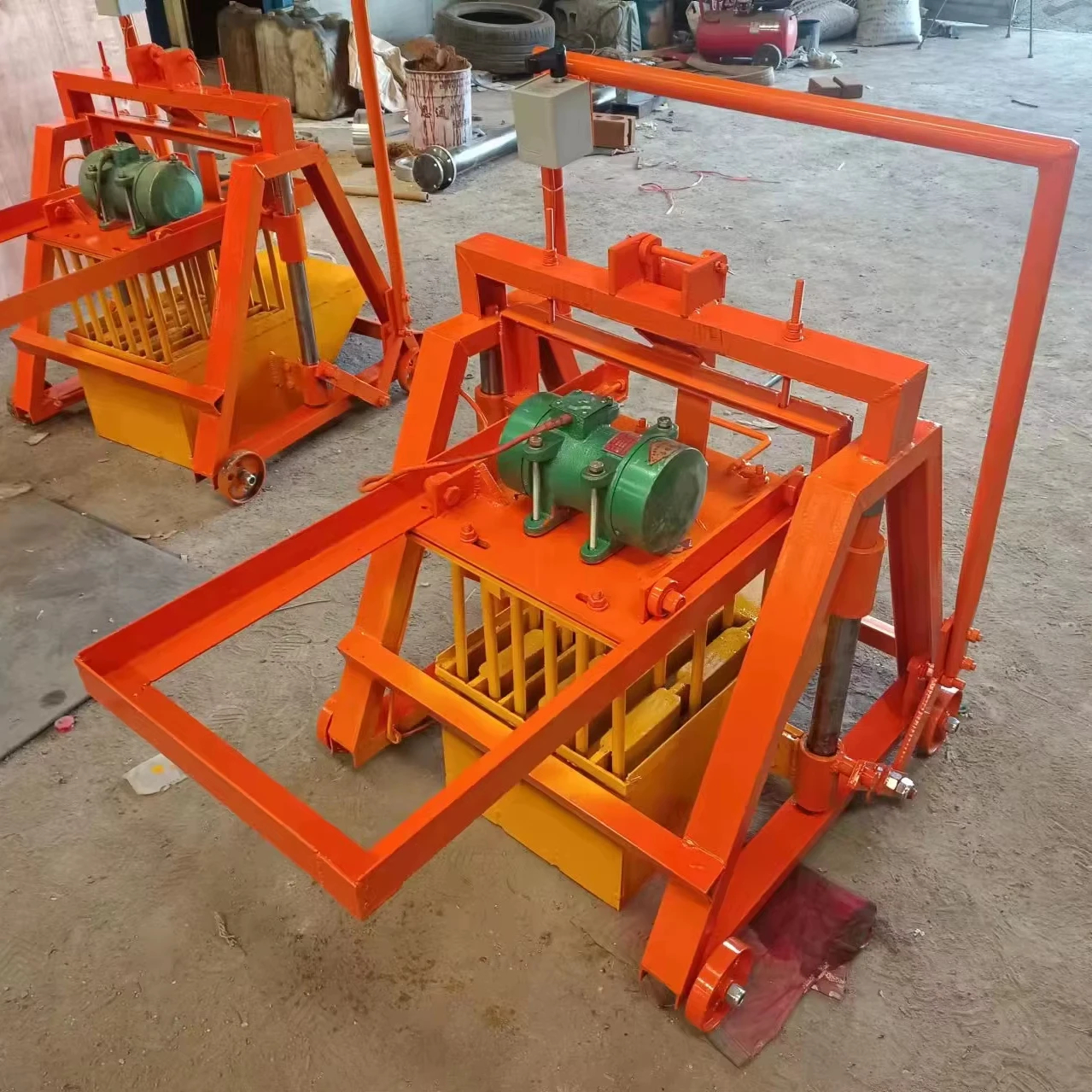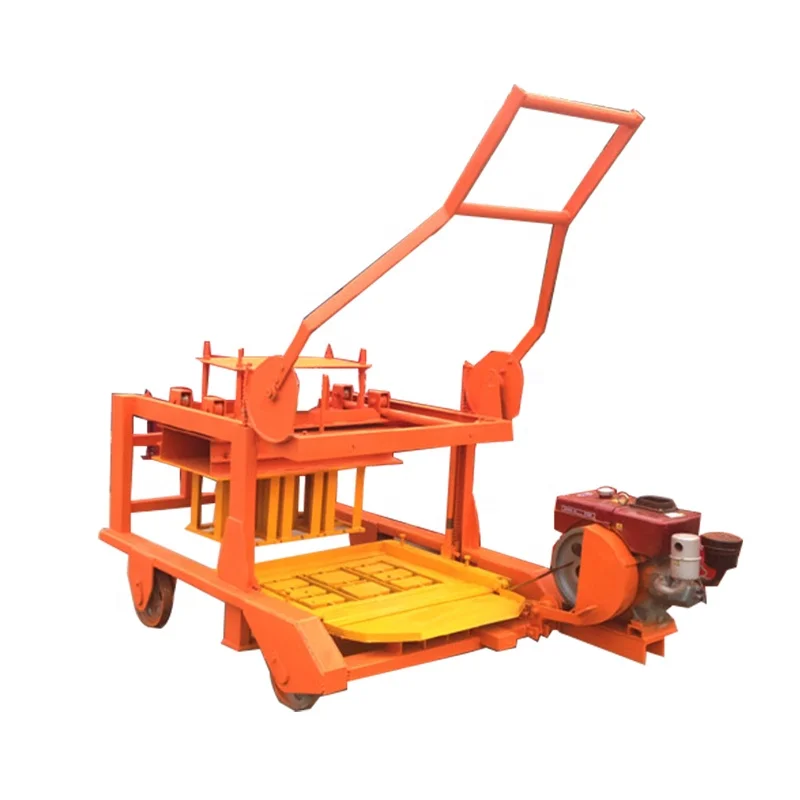




Description
Matched to Your Mix — Vibration force and hydraulic pressure are set after reviewing your local aggregate, not left at catalogue defaults.
Technical Specifications
| Parameter | Value |
|---|---|
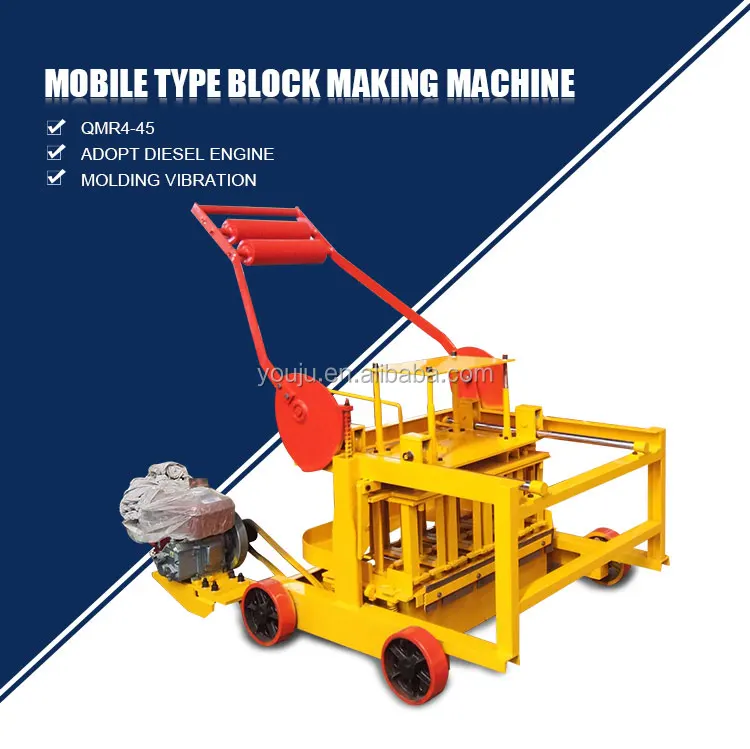
| Model | QMR4-45 |
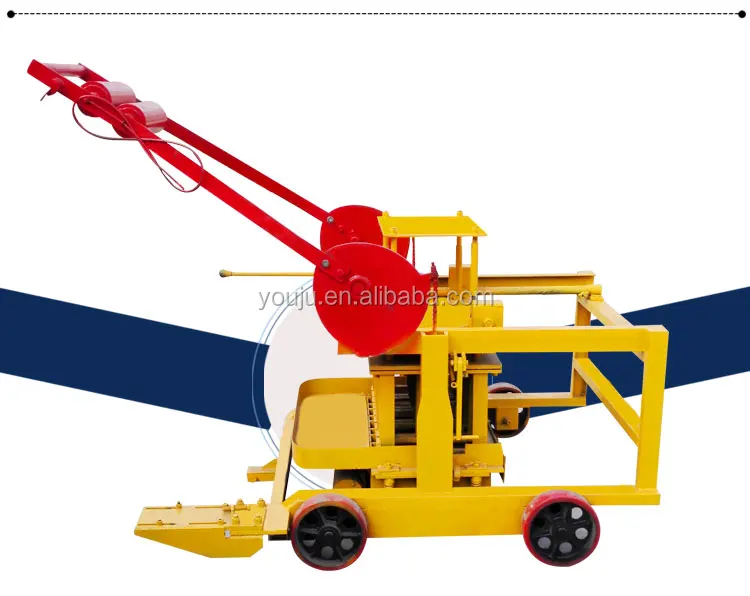
| Product Type | Diesel Engine Egg Laying Block Making Machine |
| Power Source Options | 6-8HP diesel engine or 6kW electric motor |
| Voltage Configuration | 220V or 380V (frequency to be confirmed per site) |
| Overall Dimensions (L×W×H) | 2420 × 1320 × 1650 mm |
| Machine Net Weight | 810 kg |
| Pallet Requirement | None (egg laying design) |
| Moulding Cycle | 40–45s (basis to be confirmed per block format and mix) |
| Output: 400×200×200mm Hollow Block | 3000 pcs/day (4 pcs/mould) |
| Output: 400×150×200mm Hollow Block | 3500 pcs/day (5 pcs/mould) |
| Output: 400×120×200mm Hollow Block | 4500 pcs/day (6 pcs/mould) |
| Control Method | Manual / semi-automatic operation |
| Assembly State | Fully assembled mobile unit |
Application Suitability
| Application Scenario | Typical Material & Output |
|---|---|
| On-site production for housing contractors | Crushed stone and cement hollow blocks laid directly on compacted ground |
| Remote building projects with no grid power | Diesel-powered hollow block production using locally sourced sand and aggregate |
| First block plant for entrepreneurs | Low-investment hollow, solid, or paving block runs via mould change |
| Rural construction supply yards | Multiple block formats produced sequentially on a single machine |
What "3000 Blocks a Day" Actually Means on Your Site
Capacity figures only hold when the block format, mould cavity count, and local material are all named together.
I have watched small contractors in West Africa unpack a mobile block machine and immediately plan their week around a single headline number. The reality is that a 400×200×200mm hollow block drawn from four cavities yields a different daily count than a 400×120×200mm block drawn from six. When the local sand carries a high clay fraction, the mix requires more water, the cycle slows, and that headline number can drop substantially before lunch [NEED_CITE: impact of clay content in sand on concrete block cycle time]. The diesel engine egg laying block machine specifications on this page tie every output claim to a specific block size so you can plan against the format your market actually buys.
Off-Grid Power Without the Compromise
Many building sites in sub-Saharan Africa and parts of South Asia simply do not have reliable three-phase electricity, and running a generator large enough for a standard block press burns fuel all day for a single machine. The QMR4-45 addresses this with a 6-8HP diesel engine option that drives both the vibration and the hydraulic circuit directly. For sites that do have stable power, the 6kW electric motor variant connects to 220V or 380V supplies, with frequency confirmed before the machine leaves the factory so the motor winding matches the local grid.
Ground Conditions That Decide Your Real Output
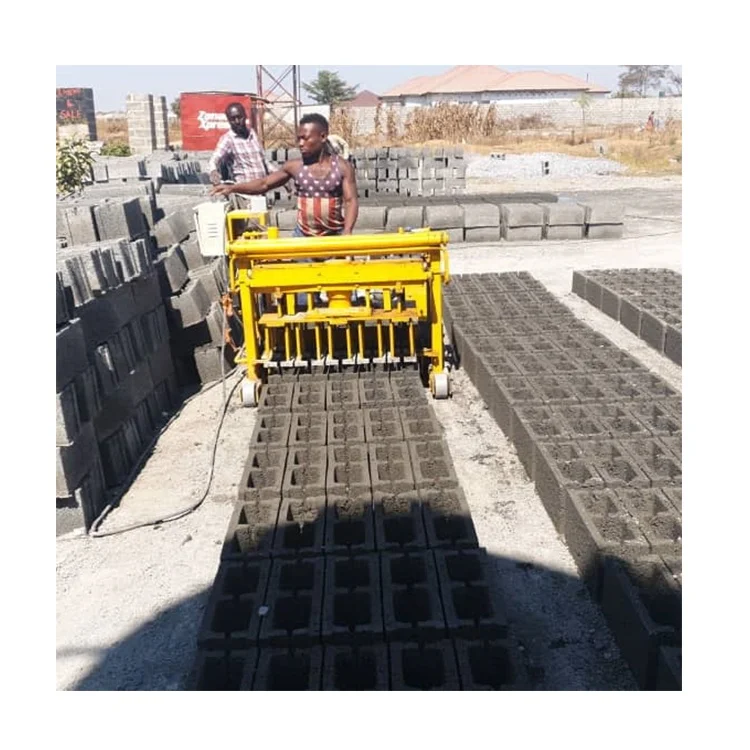
An egg laying machine deposits wet concrete blocks straight onto the floor, which means the ground surface becomes part of your production tooling. A flat, compacted concrete apron gives the cleanest block base and the fastest repositioning between cycles. Soft earth or loose gravel causes the machine to settle unevenly, tilting the mould and producing blocks with one thin wall. Before shipping, we ask buyers to photograph the intended production area so we can advise on surface preparation and confirm that the 810kg machine weight will sit level through every moulding cycle [NEED_CITE: ground preparation standards for mobile egg laying block production].
Reading the Specs That Actually Shape Your Blocks
The moulding cycle of 40–45 seconds is the mechanical baseline, but the real density of your hollow block comes from how vibration force and any applied hydraulic pressure work against your specific mix. A lean mix with coarse crushed stone needs strong vibration to consolidate around the mould walls, while a richer mix with fine sand consolidates faster and may need less vibration to avoid segregation. The QMR4-45 diesel engine egg laying block machine specifications list the cycle range, but matching vibration intensity to your aggregate is what prevents the crumbly corners and thin walls that reject entire batches. Mould change between the three standard hollow block formats involves unbolting one mould box and seating the next, a task that takes one operator a short period once familiar with the fastener pattern. Because no pallets are involved, there is no pallet inventory to manage and no pallet return loop to staff.
The Cost Nobody Quotes Until the Machine Arrives
When voltage and frequency are assumed rather than confirmed, a 380V motor wired for 50Hz arrives at a 60Hz site and runs hot within the first shift. When the control language on the panel does not match the operator’s working language, settings get changed by guesswork and the vibration amplitude drifts away from the value used during factory testing [NEED_CITE: common commissioning delays caused by voltage and frequency mismatch]. These are not warranty issues — they are specification gaps that could have been closed with a two-question checklist before the machine was crated.
Why Buyers Come Back for the Second Machine
Block machinery is our single focus, which means the QMR4-45 is specified as a complete unit — machine, mould, and ground-level handling — rather than assembled from unrelated suppliers. We set the vibration and pressure parameters against your actual mix design and local aggregate sample, not a catalogue default. Moulds are designed for the block formats your market sells, and custom mould drawings are available when your buyers ask for a size outside the standard range. The semi-automatic egg laying layout lets a buyer start with manual repositioning and add handling equipment later without replacing the press. Installation support includes operator training at your site so the crew understands cycle timing, mould change procedure, and daily maintenance before the first production week ends.
Documentation & Verification
- Capacity calculation sheet stating block format and mould cavity count for every output figure
- Machine specification sheet confirming diesel engine rating and vibration force matched to your mix
- Mould drawing and format list showing exact block dimensions your market requires
- Voltage, frequency, and control language confirmation document signed before crating
- Factory test record produced using your target block size before dispatch
- Operation and maintenance manual with wear parts list and mould change procedure
Installation, Commissioning & Support
- Compacted concrete apron required; 2420×1320mm footprint plus operator clearance on three sides
- Electric variant needs dedicated 6kW circuit at confirmed voltage and frequency
- Machine ships fully assembled; diesel engine fluids filled and tested before crating
- On-site commissioning includes vibration tuning to your specific aggregate and mix ratio
- Operator training covers mould change, cycle timing, and daily grease-point maintenance
- Wear parts list and first-year spare mould inventory recommended at order stage
Before You Request a Quote
Send us the block format your customers actually buy, the daily volume you need to hit, and a sample of your local sand or crushed stone so we can run a trial mix. Tell us whether your site runs on diesel only or has stable grid power, and confirm the local voltage and frequency. With those details we return a diesel engine egg laying block machine specifications package that shows realistic output for your exact product, not a number borrowed from a different block size.
Frequently Asked Questions
Q: How is the daily output verified, and which block format does each capacity figure assume?
A: Every output figure on this page is tied to a specific block dimension and mould cavity count — 3000 pieces per day assumes 400×200×200mm hollow blocks from a four-cavity mould, for example. We provide a written capacity calculation with your quotation that names the exact format, cycle time, and shift length used so you can verify against your own production plan.
Q: Can the diesel engine and electric motor options be compared for my site conditions?
A: Yes. We ask for your site’s power availability — whether you have stable grid electricity at a known voltage and frequency, or rely entirely on diesel. The 6-8HP diesel engine suits off-grid locations, while the 6kW electric motor is specified to match your confirmed supply, avoiding overheating or winding damage from a frequency mismatch.
Q: What block formats and mould options are available, and how long does a mould change take?
A: Standard moulds cover 400×200×200mm, 400×150×200mm, and 400×120×200mm hollow blocks. Custom moulds can be designed from buyer drawings for solid blocks, pavers, or non-standard hollow sizes. Mould change involves unbolting and reseating the mould box, a procedure covered in operator training so your crew can switch formats within a single shift.
Q: What ground surface conditions are required for egg laying operation without pallets?
A: The machine deposits blocks directly on the ground, so a flat, compacted concrete surface gives the best results and fastest repositioning. Soft or uneven ground causes the 810kg unit to settle at an angle, producing blocks with uneven wall thickness. We review photos of your production area before shipment to advise on surface preparation.
Q: What spare parts and wear items should I order with the machine for the first year?
A: We provide a wear parts list specific to the QMR4-45 with every quotation, covering hydraulic seals, vibration mounts, and mould liner plates. For remote sites, we recommend ordering a first-year spare kit at the time of purchase so replacements are on hand before your production schedule depends on international shipping.