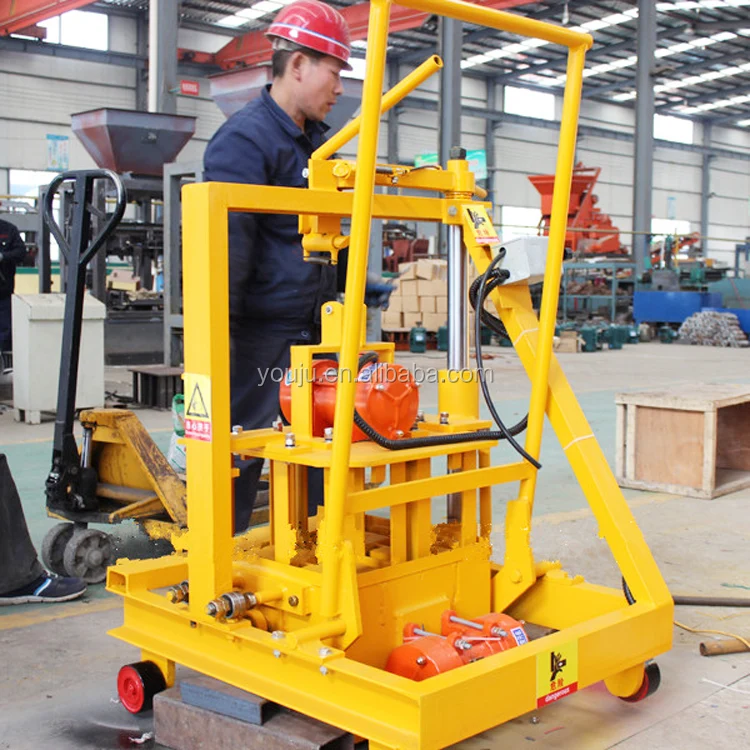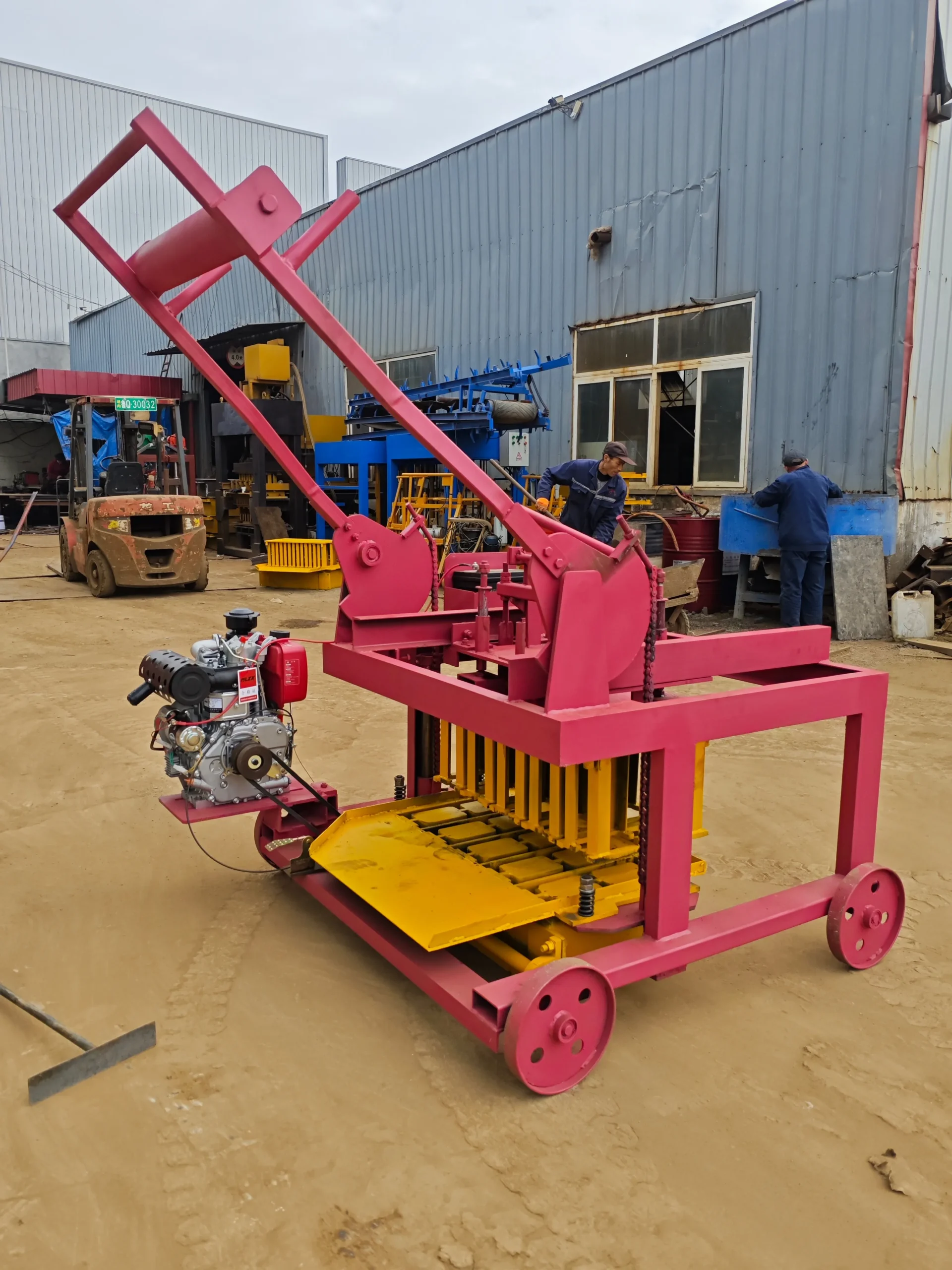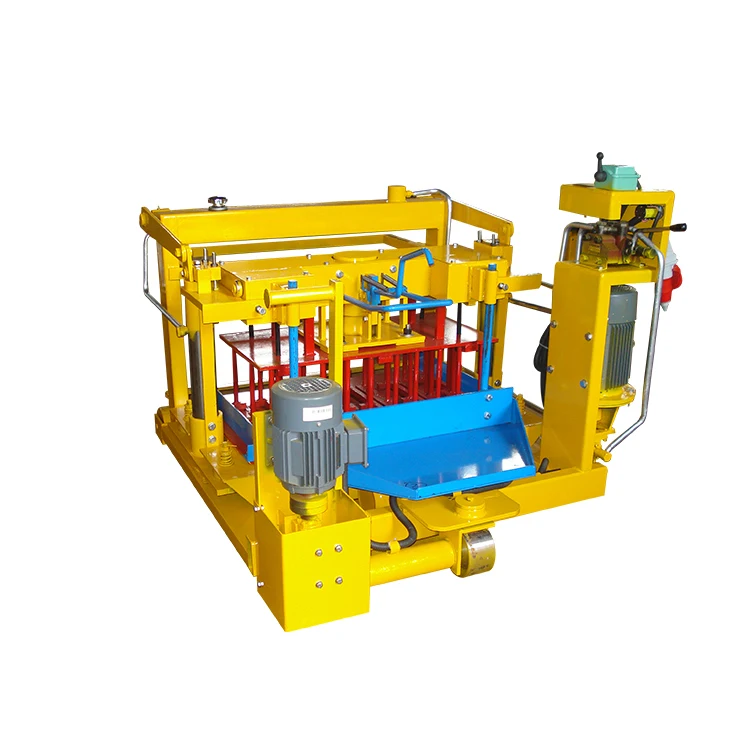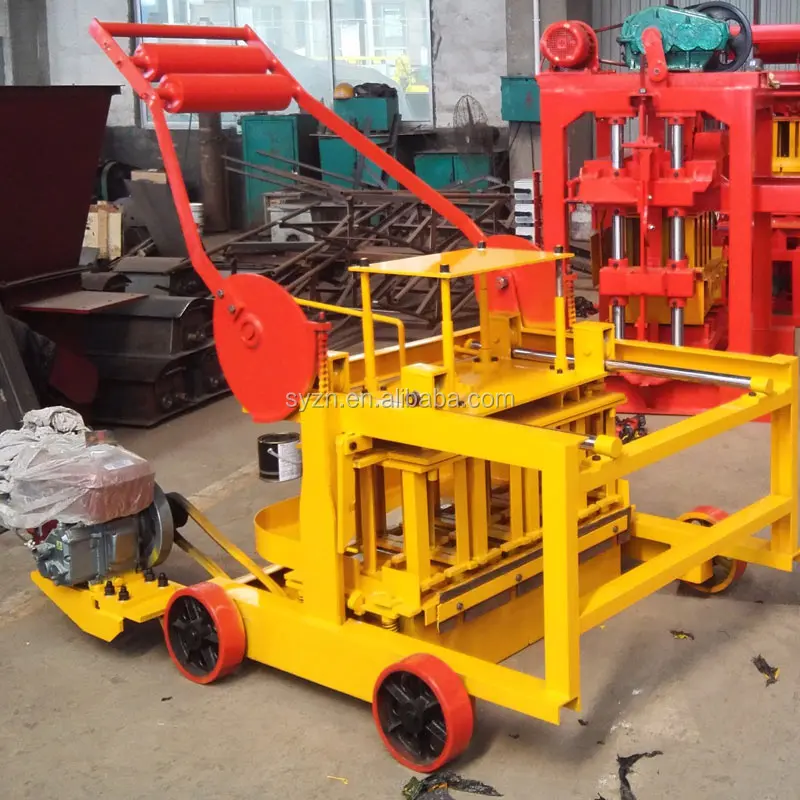
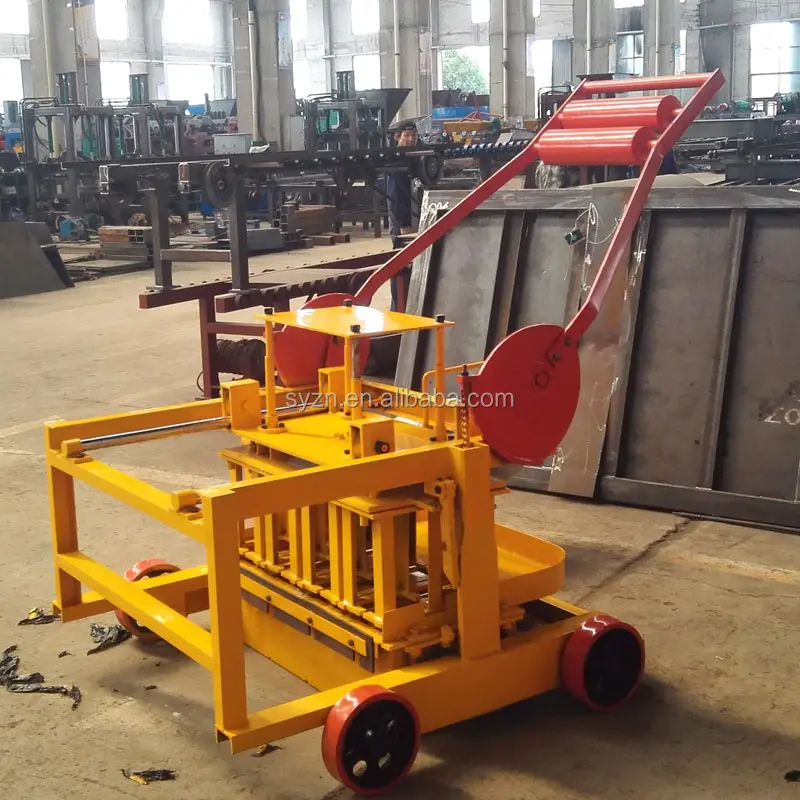


Description
Matched Mould Design — every QMR4-45 ship-out starts from the buyer’s actual block format and local aggregate, not a catalogue default.
Technical Specifications
| Parameter | Value |
|---|---|
| Model | QMR4-45 |
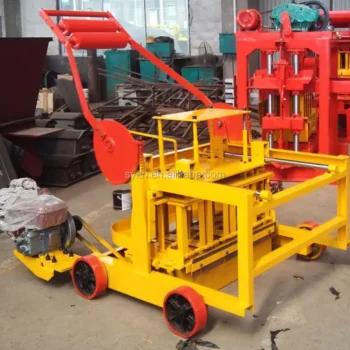
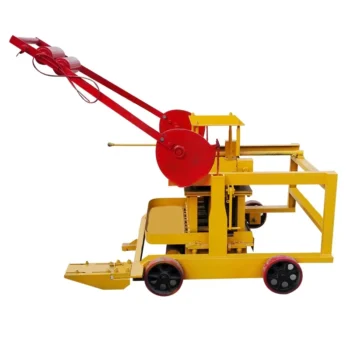
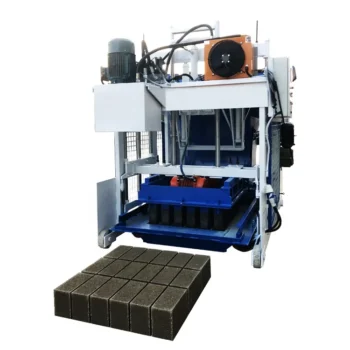
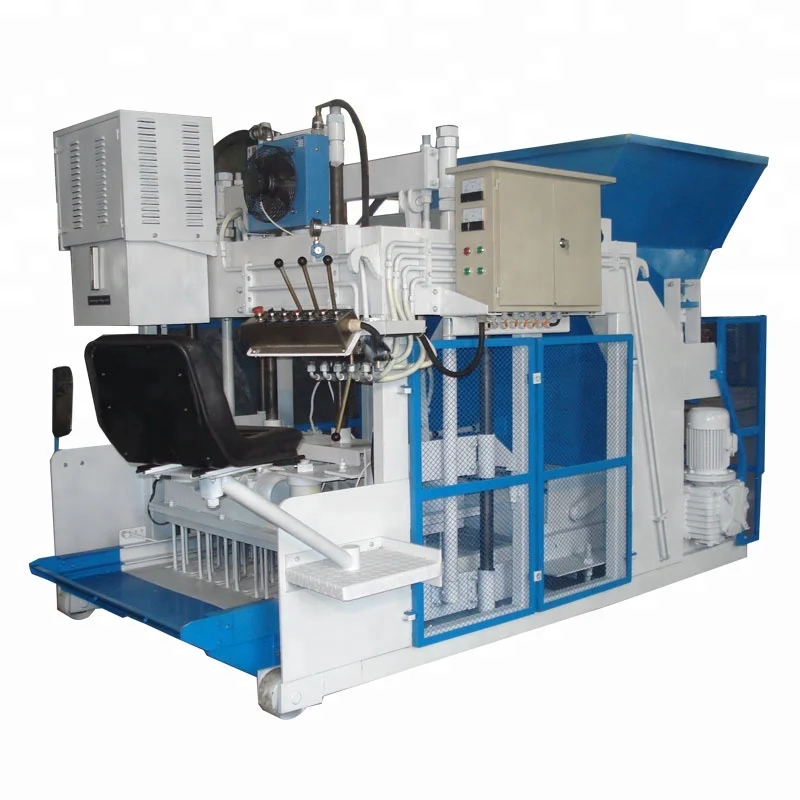
| Product Type | Mobile Egg-Laying Block Making Machine |
| Overall Dimensions (L×W×H) | 1100 x 950 x 2100 mm |
| Net Weight | 810 kg |
| Molding Cycle | 30–45 s |
| Output Capacity | 2560 pcs/day (basis not stated in source — confirm block format / material / thickness) |
| Power Source | Diesel / Petrol Engine / Electric |
| Pallet Requirement | No pallet required (egg-laying type) |
| Mobility | Mobile, wheel-mounted |
| Basic Equipment Included | JZC350 Diesel Concrete Mixer or JQ350 Diesel Concrete Mixer (Electric Generating Unit); Trolley |
| Automation Level | Manual operation with motorized vibration |
| Stacking Method | Manual (egg-laying on ground) |
| Mould Format | Hollow block, solid brick, paver brick, fly ash brick (specific mould dimensions to be confirmed) |
| Warranty | 1 Year |
Application Suitability
| Application | Material or Output |
|---|---|
| On-site block production without a fixed plant | Hollow blocks from crushed stone, sand, and cement |
| Small-scale brick manufacturing for local contractors | Solid bricks from fly ash, lime, and aggregate |
| Remote or off-grid construction projects | Paver bricks from locally sourced coarse sand |
| First-time block plant setup by entrepreneurs | Fly ash bricks where thermal plant residue is available |
What "2560 Pieces per Day" Leaves Out About Mobile Block Machine Specifications
Capacity is only meaningful once the block format, mix design, and cycle time are all stated together.
Many quotations for mobile block machines drop a single daily number without explaining which mould or material thickness it assumes. The buyer then arrives on site, runs a different format, and watches output fall well short. I have seen this gap cause entire project timelines to slip because the contractor planned masonry crews around a number that only applied to a thin paver. [NEED_CITE: common disputes between quoted and actual block machine output]
Mould-to-Format Matching for Honest Capacity
The QMR4-45 mobile block machine is configured around the specific hollow block, solid brick, or paver the buyer’s market actually demands. Mould dimensions and cavity depth are set against the target format before production begins, so the 30–45 second molding cycle translates into a realistic daily count for that exact product. Swapping to a different format later changes the cycle and the output, and that shift is documented up front rather than discovered on the first production morning.
Dual Power Sources and Site Reality
Diesel, petrol, or electric drive options let the QMR4-45 adapt to grid availability at the project location. Remote housing developments often lack stable three-phase power during early phases, so the diesel concrete mixer and generating unit keep the line running while the main grid is still being connected. Once the site is energized, switching to electric drive cuts fuel costs and noise for long-term production runs. [NEED_CITE: voltage and frequency standards by export market]
Reading the Spec Sheet Beyond the Headline Number
Molding cycle, vibration force, and net weight together define what the QMR4-45 can compact into a stable green block. A 30–45 second cycle is fast enough for steady output on standard hollow blocks, but denser paver formats with thicker faces push the cycle toward the upper end. The 810 kg machine weight and wheel-mounted frame mean the unit can be repositioned across a casting yard without a forklift, yet the mass is still low enough that vibration damping relies on ground preparation rather than sheer weight. Buyers comparing mobile block machine specifications should check whether the vibration force rating matches their aggregate gradation; a coarse crush needs more force to achieve the same green strength as a fine sand mix.
The Hidden Cost of Skipping Format Confirmation
When the mould format and local aggregate are not reconciled before shipment, the buyer faces a choice between running an incompatible mix or ordering a new mould set after the machine has already arrived. I have handled calls from job sites where the standard hollow block mould was cutting into high-clay soil, producing blocks that crumbled before curing finished. The rework and material waste on those projects erased any initial savings on the equipment purchase. [NEED_CITE: aggregate compatibility requirements for concrete block production]
Why Procurement Through a Single-Source Block Line Matters
Shiyue Intelligent Machinery keeps block machinery as its only product line, so the QMR4-45, its moulds, the mixer, and the trolley are specified as one matched set. Configuration is tied to the buyer’s mix design and target block format rather than a default catalogue build. Mould design covers the formats the buyer’s market actually sells, including custom drawings when a non-standard hourdis or interlocking profile is needed. The automation level starts at manual egg-laying and can be paired with upgraded handling later if the buyer scales up. Installation support includes operator training on the specific mould set shipped with the unit.
Documentation & Verification
- Capacity calculation sheet stating the exact block format behind the 2560 pcs/day figure
- Mould drawing and format list showing included and optional cavity dimensions
- Voltage and control language confirmation recorded before production release
- Factory test record run on the buyer’s specified block format before crating
- Wear parts and mould list with first replacement cycle notes
Installation, Commissioning & Support
- Level compacted ground required; the 1100 x 950 mm footprint needs a cleared casting lane
- Diesel mixer and generating unit shipped as part of the basic package for off-grid starts
- Wheel-mounted frame allows yard repositioning without heavy lifting equipment
- First-run parameter setting covers vibration duration matched to local aggregate density
- Operator training covers mould change procedure and basic vibration motor maintenance
- Wear parts list identifies high-wear mould liners and vibration springs for initial spares stock
Preparing Your Inquiry
To size the QMR4-45 to your project, share the target block format and dimensions, the daily output you need for that specific format, and the aggregate materials available near the site. Confirm local voltage and frequency so the electric generating unit can be matched before dispatch. If you are running an existing curing yard, note the space and ground conditions so the egg-laying layout can be planned accordingly.
Frequently Asked Questions
Q: How is the 2560 pcs/day capacity calculated for the QMR4-45?
A: That figure is based on a specific block format and cycle time that must be confirmed for each buyer. Different hollow block dimensions, wall thicknesses, and aggregate types shift the molding cycle within the 30–45 second range, which changes daily output. We provide a written capacity calculation tied to your exact mould before order confirmation.
Q: Which mould formats are included with the QMR4-45, and how long does a change take?
A: Standard options cover hollow block, solid brick, paver brick, and fly ash brick. Specific cavity dimensions are confirmed during configuration. Mould change is manual on this class of egg-laying machine and requires basic hand tools; the exact procedure and time are covered during operator training and documented in the manual shipped with the unit.
Q: How do I match vibration force to my local aggregate?
A: Coarse crushed stone requires higher vibration force to achieve full compaction compared to fine sand or fly ash blends. Share your aggregate gradation and mix proportions during inquiry so we can confirm the vibration motor rating suits your material. Running an untested mix on site risks low green strength and block breakage before curing completes.
Q: What power options are available, and how do I choose between diesel and electric?
A: The QMR4-45 can be supplied with a diesel concrete mixer and generating unit for off-grid sites, or configured for electric operation where stable grid power exists. Buyers often start with diesel during early construction phases and switch to electric once the site supply is established. Confirm your voltage and frequency before production so the correct motor is fitted.
Q: What additional equipment do I need beyond the basic package?
A: The basic package includes the block machine, a diesel or electric mixer, and a trolley. Because the QMR4-45 is an egg-laying type, no pallets or curing racks are required — blocks are placed directly on level ground. You will need a cleared casting area, water supply for the mix, and basic hand tools for mould changes and daily maintenance.