

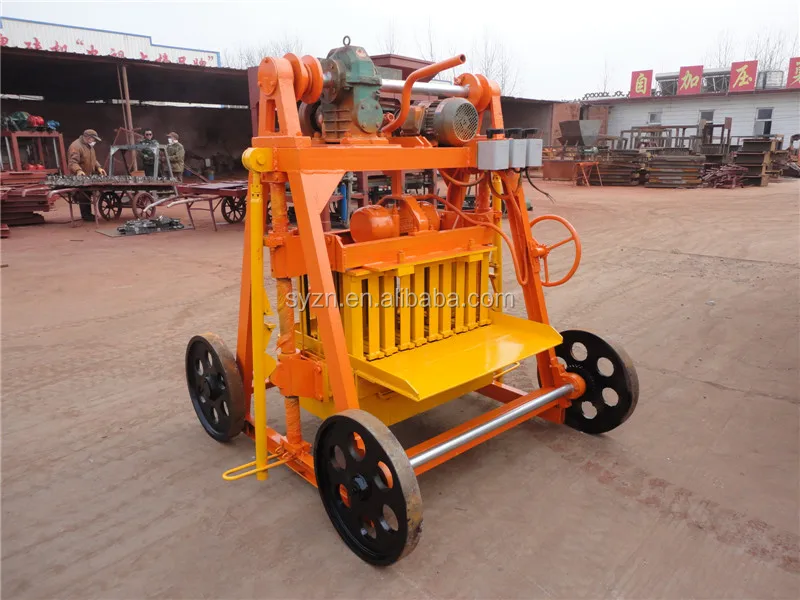

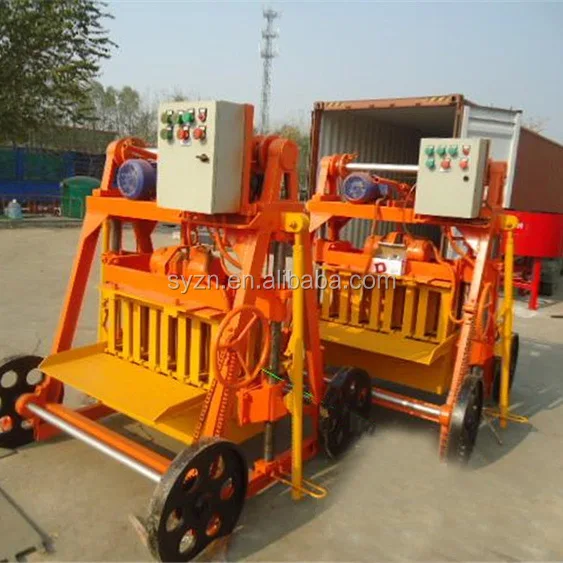
Description
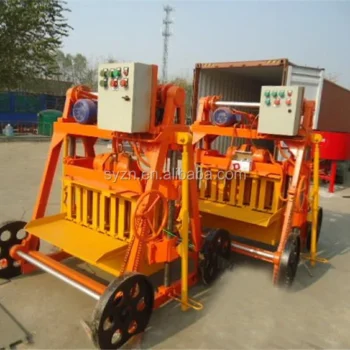
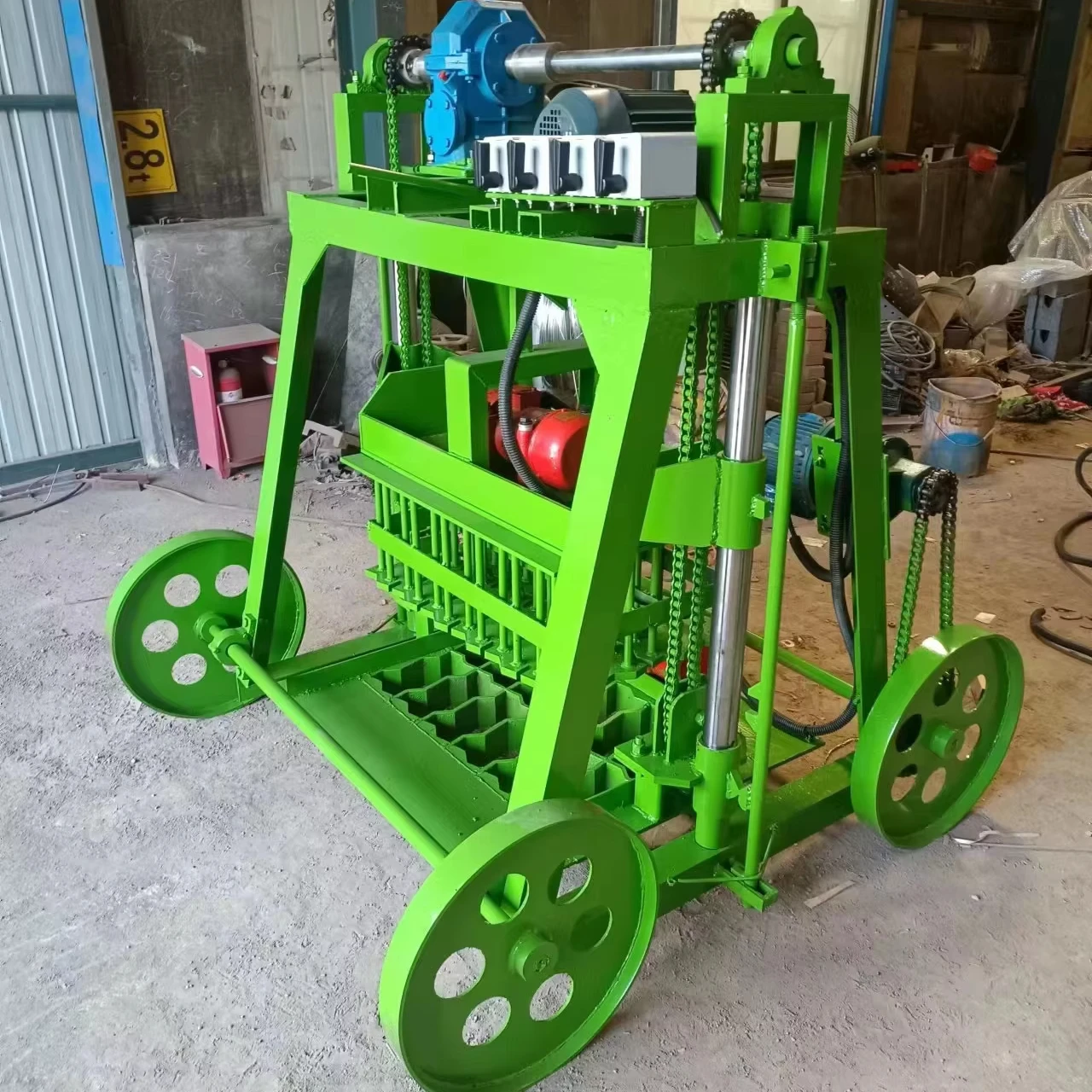
Format-Matched Output — The QMJ4-45 mobile block machine is configured to your actual block format, with capacity quoted per mould type so your daily site output matches the numbers on paper.
Technical Specifications
| Parameter | Value |
|---|---|
| Model | QMJ4-45 |
| Product Type | Mobile Concrete Block Making Machine |
| Rated Power | 7.4 kW |
| Control System | Manual force control and jog control |
| Overall Dimensions | 1550 × 1335 × 1580 mm |
| Net Weight | 1,000 kg |
| Moulding Cycle | 45 seconds |
| Output Capacity | 2,400 pcs / 8h (based on 400×200×200mm hollow block, 4 pcs/mould) |
| Output Capacity | 3,200 pcs / 8h (based on 400×150×200mm hollow block, 5 pcs/mould) |
| Production Rate | 300 pcs/h (based on 400×200×200mm hollow block, 4 pcs/mould) |
| Production Rate | 400 pcs/h (based on 400×150×200mm hollow block, 5 pcs/mould) |
| Raw Materials | Concrete, sand, cement, fly ash, lime, gypsum |
| Pallet Requirement | None required (egg-laying type) |
| Orientation Mechanism | Four-pole guided, ultralong orientation bearing |
| Compatible Formats | Hollow bricks, solid blocks, interlock blocks, pavers, road blocks, curb stones |
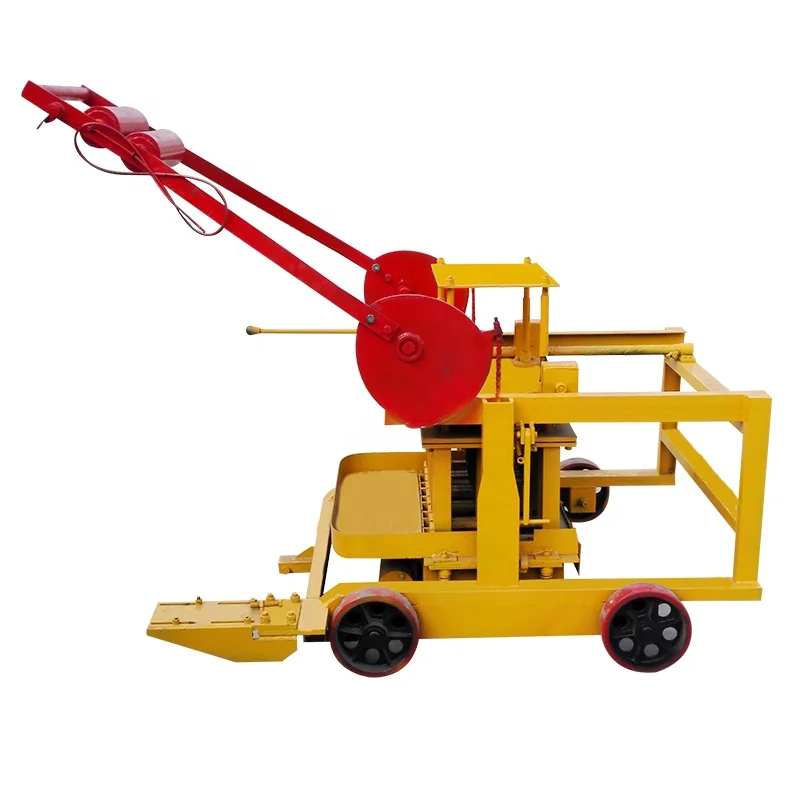
| Assembly State | Skid-mounted, mobile |
| Voltage | Configured to buyer’s local voltage and frequency (basis to be confirmed) |
Application Suitability
| Application | Material or Output |
|---|---|
| On-site hollow block production | Crushed stone, sand and cement mix laid directly on the ground |
| Paving block manufacturing for small contractors | Interlocking concrete pavers from fly ash and aggregate blends |
| First plant setup for entrepreneurs | Solid and hollow blocks from locally sourced sand and gravel |
| Kerbstone and curb production | Dense concrete mixes shaped by format-specific moulds |
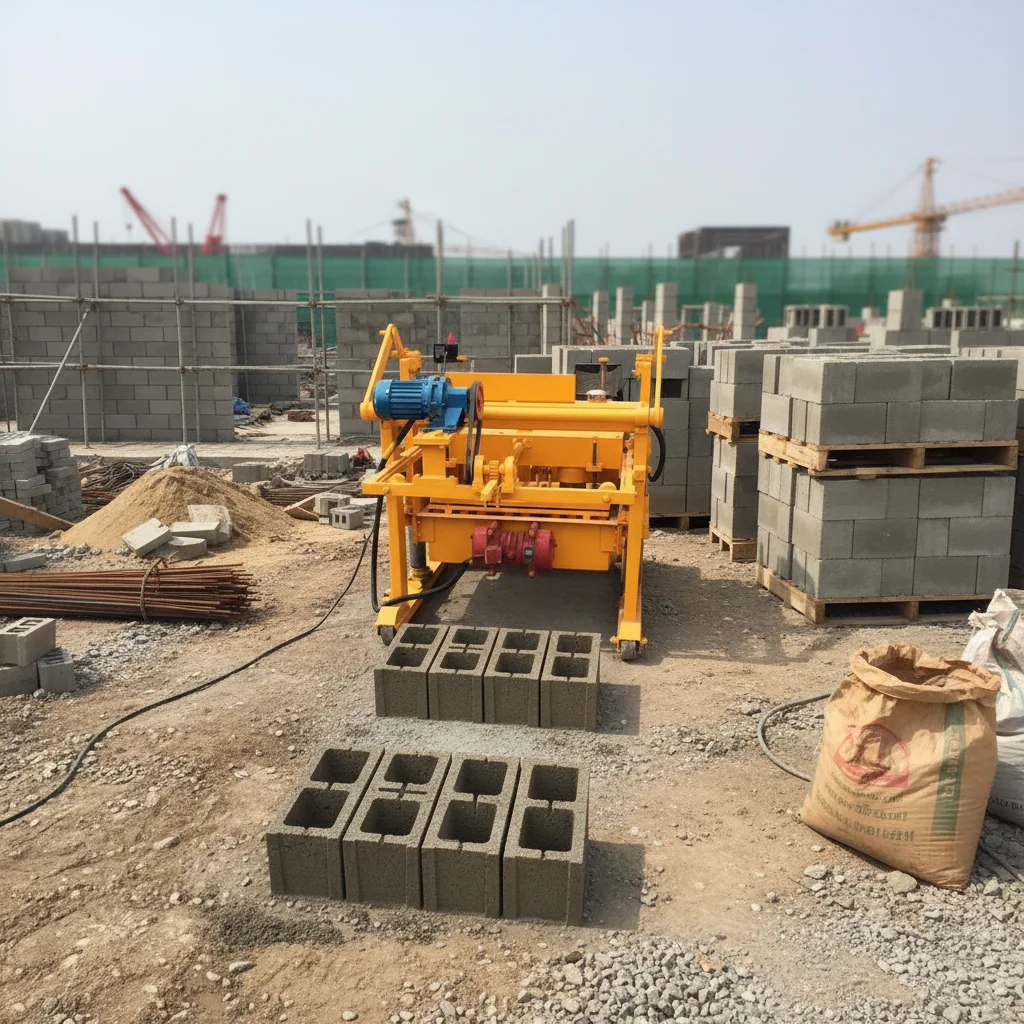
| Remote construction site supply | Blocks produced at the building location without a fixed batching plant |
What "400 Pieces per Hour" Leaves Out About Mobile Block Machine Specifications
A quoted cycle time means nothing unless the block format behind it is stated clearly.
Many mobile block machine specifications list a single output number without telling you which block size was used to calculate it. I have seen buyers take delivery of an egg-laying machine expecting thousands of blocks daily, only to find the figure assumed the smallest solid block — not the 400mm hollow block their market actually buys. The QMJ4-45 runs a 45-second moulding cycle, but the real output shifts depending on whether you are pressing four or five blocks per mould [NEED_CITE: block format assumptions in mobile machine quotations]. When you choose a mobile block machine, the first question to ask is not the hourly number, but the format behind it.
Mould Alignment and Block Dimension Consistency
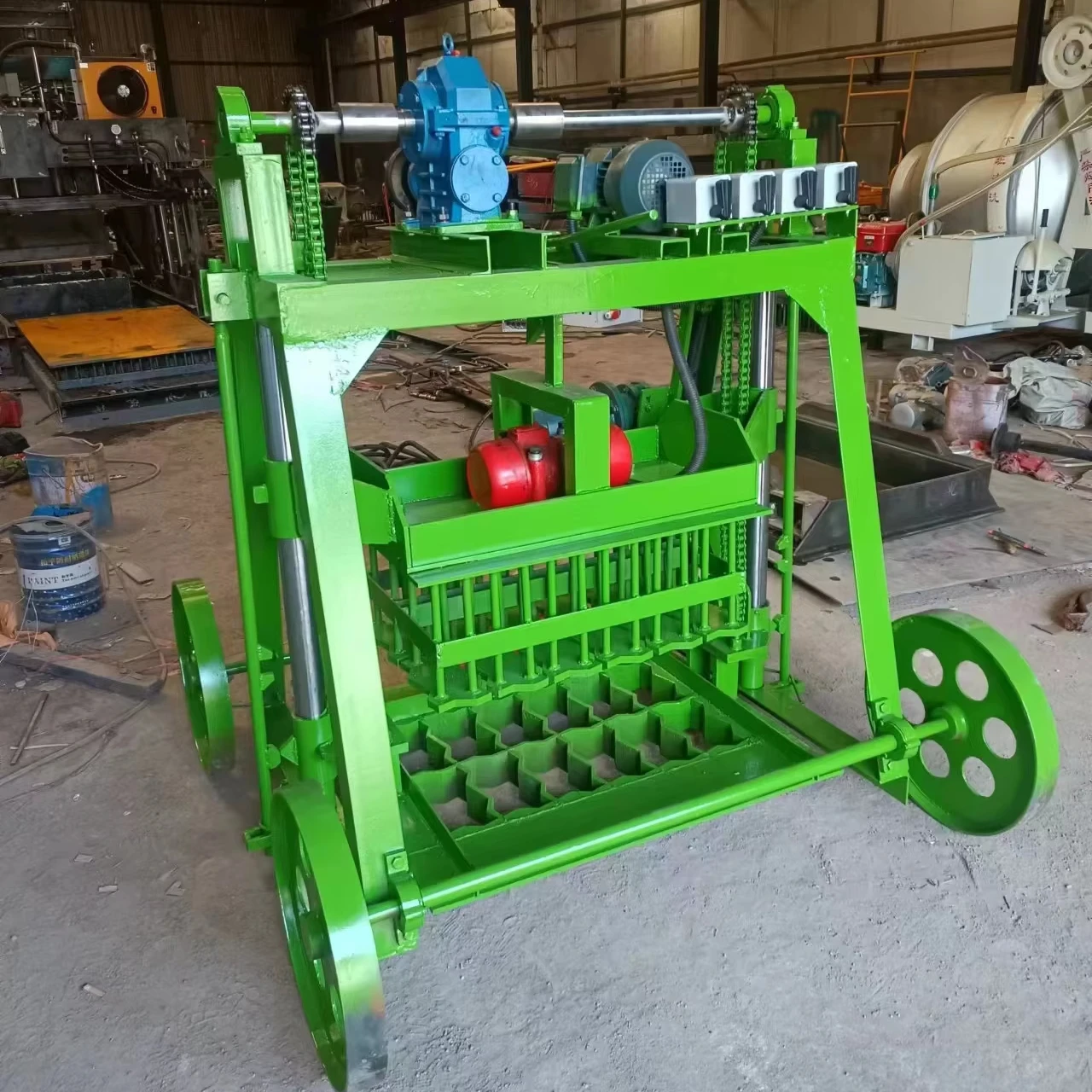
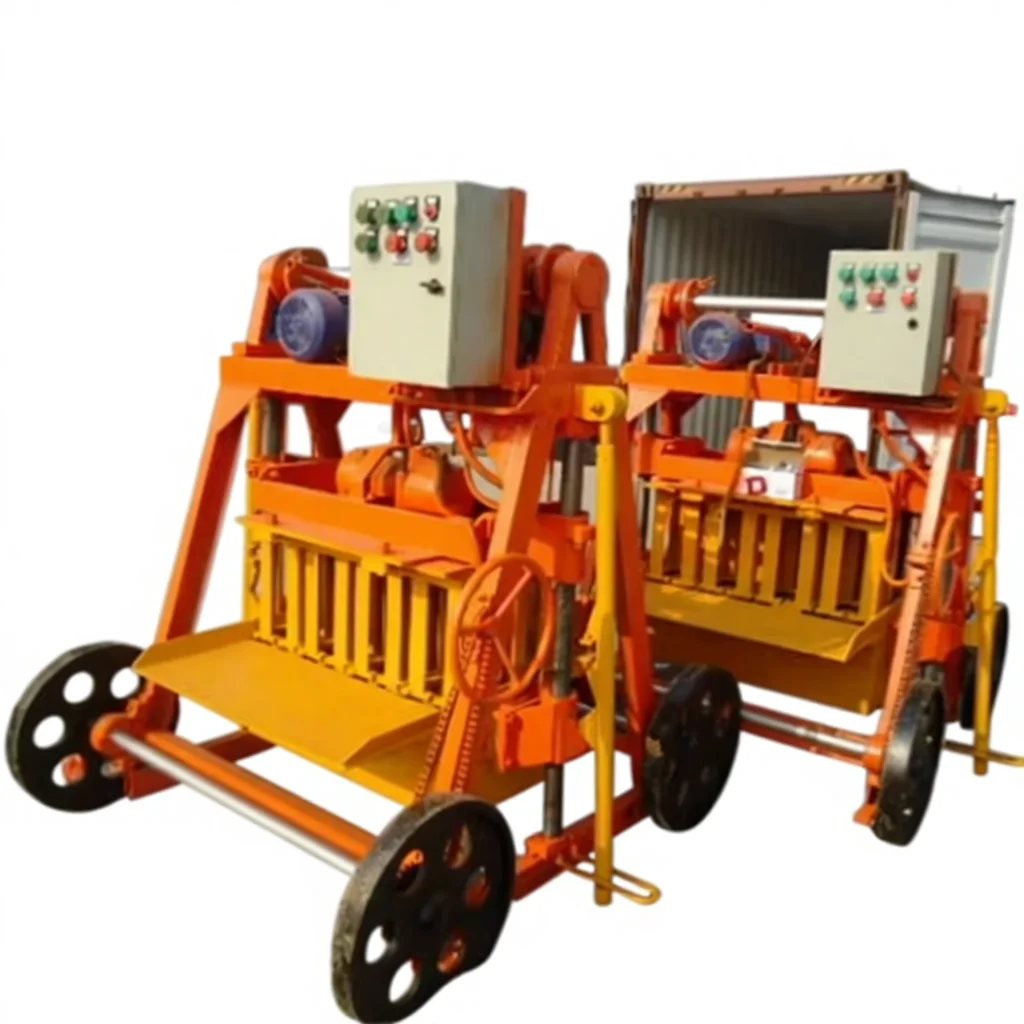
On a pallet-free egg-laying machine, the mould descends directly onto the ground surface. Any lateral play in the guide mechanism shows up immediately as uneven block walls or shifted web patterns. The QMJ4-45 uses a four-pole guided system with ultralong orientation bearings, which keeps the mould head square to the base throughout the pressing stroke. This matters when you are switching between hollow block and interlock paver moulds, because each format has a different weight distribution and compaction path. Consistent alignment reduces the reject rate you would otherwise only discover once the blocks are dry.
Pallet-Free Operation and Curing Area Layout
Eliminating pallets removes an entire layer of cost and logistics from a mobile block operation. You do not buy pallets, you do not store them, and you do not move them from the curing yard back to the machine. The QMJ4-45 lays blocks directly on a level concrete floor, which means your curing area layout depends only on how much flat ground you can prepare. For a contractor producing hollow blocks on a housing project site, this removes the forklift-and-pallet cycle that ties up labour on a stationary line. The trade-off is that the floor surface itself becomes part of your quality control — uneven ground transfers directly into uneven block bases.
Reading the Specs That Actually Affect Your Site
The 7.4 kW rated power on the QMJ4-45 drives both vibration and the mechanical pressing force. On an egg-laying machine, vibration compacts the mix while the mould weight and mechanical force consolidate the block shape. If your local aggregate is lightweight — volcanic ash, for instance, or fine river sand — the standard vibration setting may over-compact and crack the block before it cures. That is why matching the vibration force to your actual mix design matters more than the raw kilowatt figure alone [NEED_CITE: vibration force matching to local aggregate in egg-laying machines]. The 1,000 kg net weight also plays a role: heavier machines resist bounce during vibration, producing denser blocks on softer ground conditions.
The Cost of Skipping Mix-Machine Matching
Sending a mobile block machine to a site without testing the local aggregate against the vibration and pressure settings is a problem I have encountered more than once. The machine arrives, the operator loads the hopper with whatever sand and cement is available, and the blocks crumble on handling. With egg-laying machines the issue is harder to correct on site because you cannot adjust hydraulic pressure the way you would on a stationary press. The real cost is not the machine — it is the weeks of wasted cement, the reputation damage with a building contractor, and the scramble to source a different aggregate blend [NEED_CITE: material mismatch costs in on-site block production].
Why Source the QMJ4-45 Through a Format-Matched Approach
Every quotation we prepare states the block format assumed in the output calculation, so there is no gap between the number on paper and the blocks you count at the end of a shift. Mould options are confirmed against the formats your market actually buys — hollow, solid, interlock, paver, or kerbstone — with drawings supplied before production starts. The voltage and control language are locked in before the machine leaves the factory, preventing the commissioning delays that happen when a 380V machine arrives at a 415V site. Installation support covers operator training on your specific mix, and wear parts and replacement moulds are listed in your documentation package from day one. We treat the machine, mould and ground preparation as one system, not three separate purchases.
Documentation & Verification
- Line layout showing curing area dimensions matched to the QMJ4-45 egg-laying footprint
- Capacity calculation sheet stating the exact block format behind every output figure
- Mould drawing and format list confirming included and optional block types
- Voltage and frequency confirmation record signed before production begins
- Factory test record documenting cycle time and block dimensions per specified format
- Packing photographs and customs documentation support for smooth clearance
Installation, Commissioning & Support
- Level concrete floor required across the full curing area before the 7.4 kW machine arrives
- Dedicated electrical circuit sized for the confirmed local voltage and frequency
- Skid-mounted unit arrives assembled; only the hopper and mould require on-site fitting
- First-run commissioning includes cycle timing verification against your block format
- Operator training covers mould change procedure and jog control operation
- Wear parts list and mould replacement schedule provided with every shipment
Before You Request a Quote
To size the QMJ4-45 correctly for your operation, share the block format you sell most — including dimensions — along with your target daily output. Tell us what aggregate and sand you can source locally, and whether your site has a level concrete floor ready for egg-laying production. Confirm your local voltage and frequency so we can wire the motor and controls before the machine ships. If you are replacing an existing mobile unit, let us know the current mould sizes so we can match or adapt them.
Frequently Asked Questions
Q: How is the output capacity of the QMJ4-45 calculated, and which block format does it assume?
A: Output is stated per format, not as a single number. For 400×200×200mm hollow blocks at 4 pieces per mould, the QMJ4-45 produces 300 pieces per hour on a 45-second cycle. For 400×150×200mm hollow blocks at 5 pieces per mould, the rate is 400 pieces per hour. Always check which format sits behind any quoted figure.
Q: What block formats can the QMJ4-45 produce, and how does a mould change work?
A: The machine accepts moulds for hollow bricks, solid blocks, interlock pavers, road blocks and curb stones. A mould change involves releasing the guide bolts and lifting the current mould from the four-pole frame. We supply format drawings before production so you can confirm every block type your market requires is covered.
Q: Does the QMJ4-45 need pallets, and how does that affect site layout?
A: No pallets are required. The machine lays blocks directly onto a level concrete surface, which removes pallet purchasing, storage and return logistics from your operation. Your curing area layout depends only on available flat ground, though the surface quality directly affects block base flatness.
Q: How do I match the machine to my local aggregate and mix design?
A: Share your aggregate type — sand, fly ash, crushed stone or volcanic material — and we adjust the vibration settings and recommend a mix ratio before shipment. Mismatched vibration force causes either crumbling or over-compacted blocks, so testing against your actual material is essential before the machine leaves the factory.
Q: What voltage and control options are confirmed before the QMJ4-45 ships?
A: Voltage and frequency are configured to your local supply and confirmed in writing before production begins. The jog control panel is set to your preferred language. Locking these details in at the order stage prevents commissioning delays that commonly occur when electrical specifications are left open.