

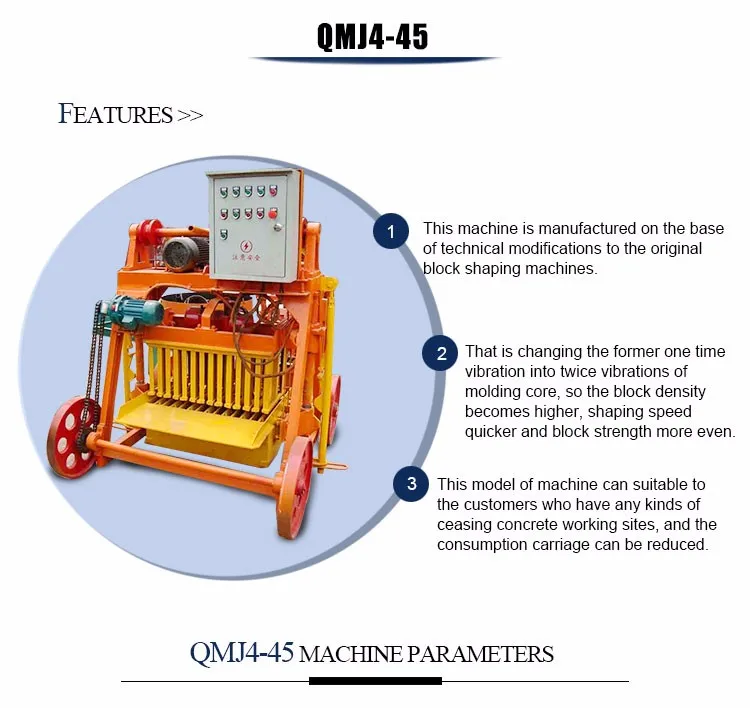
Description
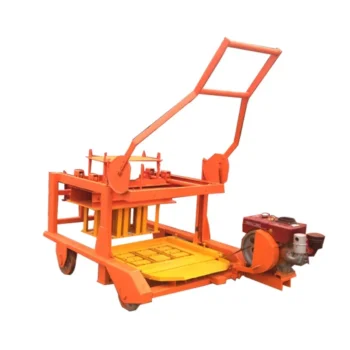
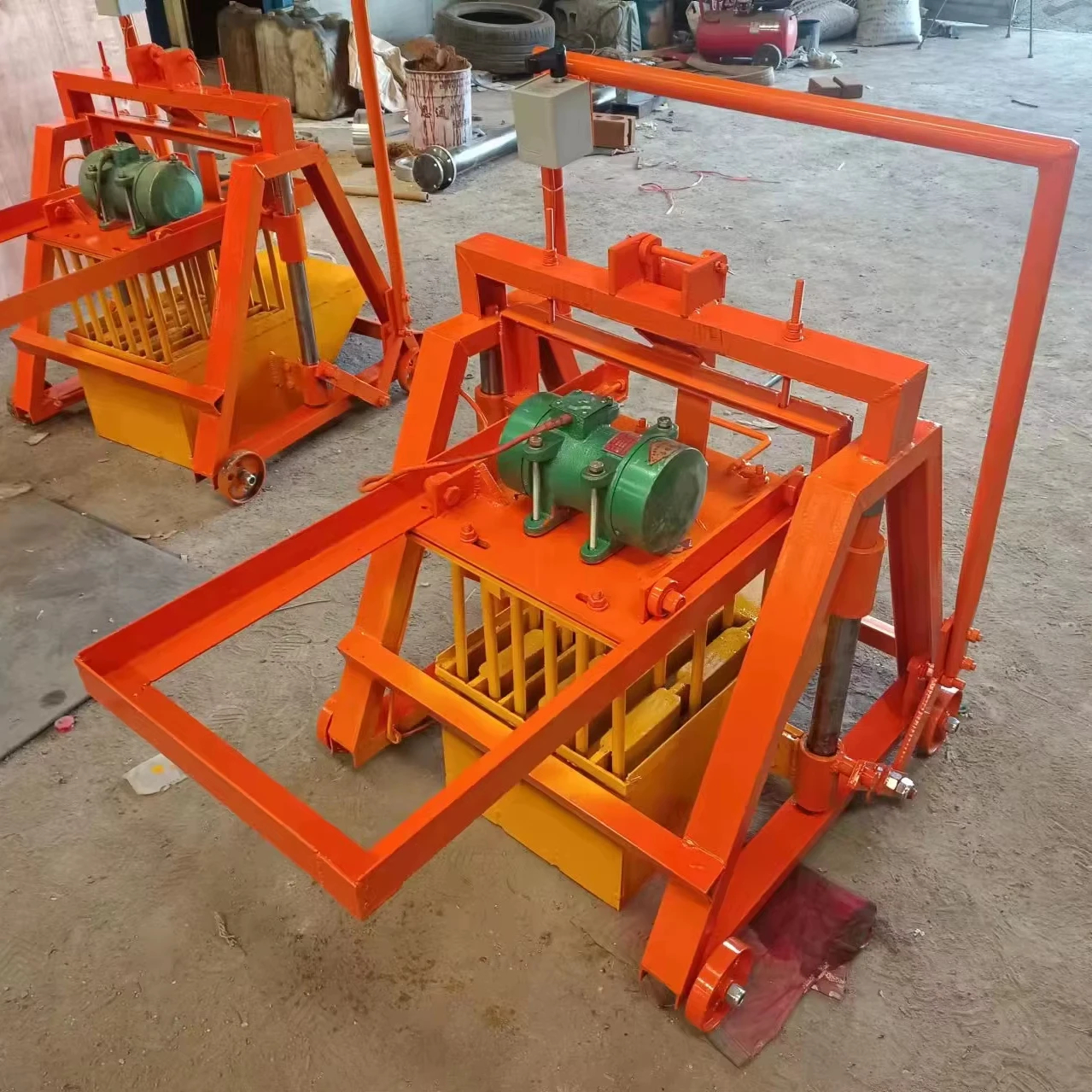
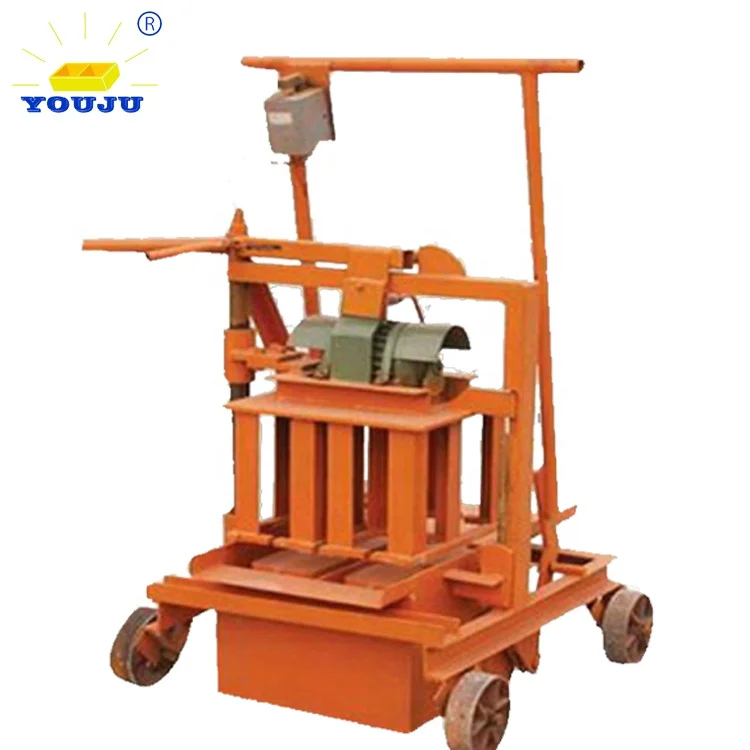
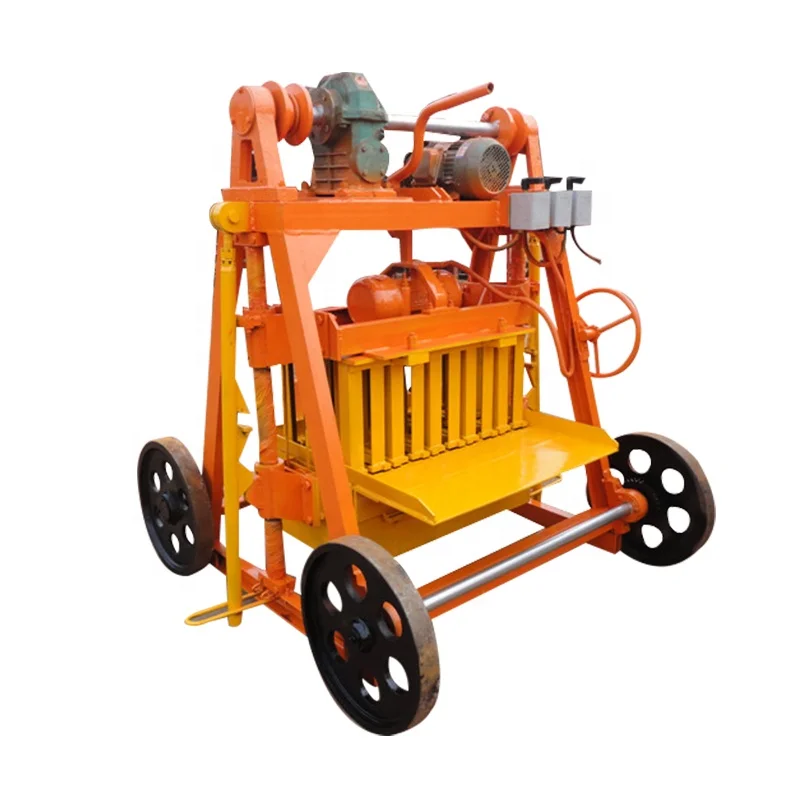
Matched Mould & Machine System — The QMJ4-45 egg laying block machine ships with cycle times calculated per hollow block format and moulds sized to your actual product mix, not a single generic output claim.
Technical Specifications
| Parameter | Value |
|---|---|
| Model | QMJ4-45 |
| Product Type | Mobile Egg Laying Block Making Machine |
| Molding Capacity | 4 pcs/mould (basis not stated in source — confirm block format) |
| Molding Cycle | 45 seconds |
| Vibration Frequency | 2400 r/min |
| Vibration Method | Mold vibration (twice-vibration core) |
| Demold Method | Manual |
| Turning Method | Manual |
| Total Power | 6 kW |
| Power Source | Diesel / Petrol engine |
| Productivity | 2600–4000 pcs/day (basis not stated in source — confirm block format, shift length, and material) |
| Automation Level | Manual |
| Hydraulic Pressure | Not applicable (mechanical vibration system) |
| Voltage & Frequency | Not applicable (engine-driven) |
| Pallet Requirement | None — egg laying directly on ground |
| Warranty | One year guarantee for the whole machine |
Application Suitability
| Application | Material or Output |
|---|---|
| On-site hollow block production at building projects | Cement, sand, crushed stone, gravel |
| Housing development block manufacturing without fixed plant | Local aggregate blended with Portland cement |
| Small-scale paver and solid brick runs for contractors | Cement-based mixes with fine and coarse aggregate |
| Rural or remote site block supply | Engine-driven operation independent of grid power |
What the "2600–4000 Pieces per Day" Figure Leaves Out
Output only becomes meaningful when tied to the exact block format, shift length, and mix design you will actually run.
Every mobile block machine brochure quotes a daily range, yet few state whether that figure assumes 400×200×200 mm hollow blocks or smaller 400×120×200 mm units. The difference in pieces per mould and the curing weight per block change the real throughput substantially. I have watched contractors plan labour around a number that turned out to be based on a format they never intended to sell [NEED_CITE: common block format dimensions and weight standards by region]. When the QMJ4-45 mobile block machine specifications are reviewed against your target format, the 45-second cycle and four-piece mould yield a transparent starting point for daily planning rather than a guess.
Format-by-Format Cycle Reality
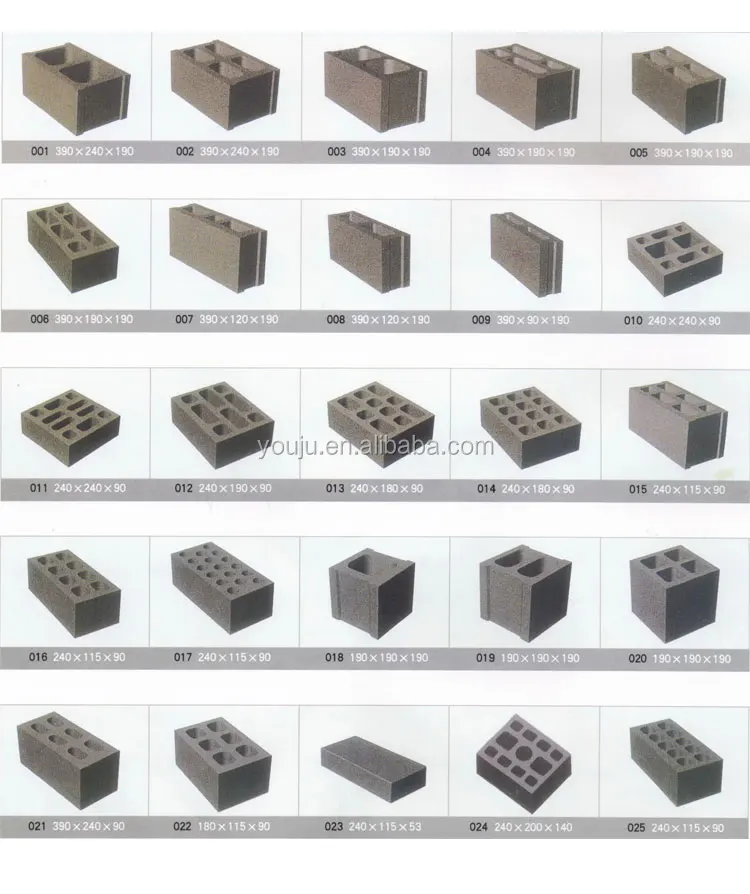
The QMJ4-45 mobile block machine runs a fixed 45-second molding cycle regardless of the block shape loaded into the mould cavity. What changes between formats is the number of pieces per mould, the demolding care required for thin-wall hollow blocks, and the floor space each freshly laid block occupies before curing begins. Operators producing 400×200×200 mm hollow blocks will move the machine at a different rhythm than those laying smaller multicellular bricks, even though the vibration period stays constant.
Twice-Vibration Core and Block Density
The twice-vibration molding system replaces the older single-pulse design, sending two compaction waves through the fresh mix during each 45-second cycle. This produces a denser block wall with more uniform strength across the mould cavity. For contractors working with variable local aggregate — river gravel in one region, crushed limestone in another — the second vibration pass helps close voids that a single pulse would leave open [NEED_CITE: vibration compaction principles for cementitious block forming]. The 2400 r/min frequency is tuned to move cement paste into aggregate gaps without segregating the mix.
Engine Drive and Site Independence
The 6 kW diesel or petrol engine eliminates the need for a three-phase power connection, which is the defining advantage of any egg laying machine on a greenfield building site. Contractors can begin block production the same week earthworks start, rather than waiting for temporary electrical infrastructure. The engine-driven configuration also means the QMJ4-45 mobile block machine specifications stay the same whether the machine is running in a region with 220 V / 50 Hz or 440 V / 60 Hz mains — the grid simply does not matter.
Reading the Specs That Actually Matter on Site
The 45-second molding cycle sets the pace for every other decision on the production floor. Because demolding and turning are manual, operator fatigue becomes the limiting factor before the machine itself reaches a ceiling — plan shift rotations accordingly. The 4-piece mould capacity means each cycle produces a small batch, which suits site-based production where blocks cure on the ground and forklift space is limited. Vibration at 2400 r/min through the mould body requires the operator to hold the machine steady during the cycle; inconsistent hand pressure shows up as uneven block tops. No pallets are consumed, which keeps running costs low but demands a flat, cleared curing area roughly the size of a small room for each day’s output [NEED_CITE: ground curing area requirements for egg laying block production].
When the Wrong Configuration Costs You a Month
A mobile block machine is often bought in a hurry to meet a project deadline, and the rush leads to skipped details. I once saw a contractor arrive on site only to discover the mould supplied was for a block size the local market did not buy, and the replacement mould took weeks to ship. Mould wear parts — springs, vibration liner plates, mould box edges — were not included in the first delivery, so when the original mould showed wear after several thousand cycles the entire line sat idle waiting for spares [NEED_CITE: typical wear part replacement intervals for manual block machines]. The QMJ4-45 mobile block machine is straightforward enough that these gaps are easy to close — but only if the spare parts list is agreed before the machine ships.
Why This Machine Is Specified Differently Here
The QMJ4-45 is configured against the buyer’s actual block format and local aggregate, not pulled from a default catalogue row. Mould drawings are confirmed before production so the machine arrives with the cavity shapes your market requires. A matched wear parts list — springs, vibration liner plates, mould edges — is sized to your daily output estimate so the first replacement cycle does not interrupt production. Engine type and fuel specification are documented upfront to match local supply. Installation guidance covers ground preparation and curing area layout, not just unboxing [NEED_CITE: pre-installation site preparation for mobile block machines].
Documentation & Verification
- Line layout showing curing area sized to your daily output in target block format
- Mould drawing confirming cavity dimensions and compatible block sizes
- Engine specification sheet with fuel type and maintenance intervals
- Factory test record on your specified block format before dispatch
- Operation manual covering manual demold technique and shift planning
- Wear parts list matched to your expected production volume
Installation, Commissioning & Support
- Flat, compacted ground area prepared to receive blocks directly from the mould
- Fuel supply arranged matching the diesel or petrol engine specified at order
- Mould change procedure walked through with operators on site during commissioning
- Spare springs and vibration liner plates handed over with the first delivery
- Manual demold training covering wall thickness preservation on hollow formats
- Curing area layout marked out to match the daily output of your chosen block size
Before You Request a Quote
Share the hollow block dimensions your local market sells, the daily volume your project or business requires, and the aggregate materials available near your site. Confirm whether diesel or petrol fuel is easier to source locally and whether you need moulds for more than one block format. The more specific these details are, the more accurately the QMJ4-45 can be configured before it leaves the factory.
Frequently Asked Questions
Q: How is the daily output of 2600–4000 pieces verified and what does it assume?
A: That range appears in general product data without a stated block format or shift length. Real output depends on whether you are molding 400×200×200 mm hollow blocks or a smaller format, how many hours your crew works, and how quickly operators can reposition the machine between cycles. Ask for a capacity calculation tied to your specific block size before committing.
Q: Which hollow block sizes can the QMJ4-45 produce and what is the cycle per format?
A: The machine accepts interchangeable moulds for hollow blocks, multicellular bricks, and paving formats. The molding cycle remains 45 seconds regardless of the mould loaded, but pieces per mould and handling time between cycles vary with block dimensions. Confirm your target sizes so the correct mould set is included in the delivery.
Q: How does the twice-vibration core affect block strength with local aggregate?
A: The two-pulse vibration sequence compacts the cement paste into aggregate voids more completely than a single pulse. This matters most when local sand or gravel has irregular particle shapes that resist settling. Your mix design still needs to be tested on site, but the vibration system gives a wider tolerance window for aggregate variation.
Q: What spare parts should I stock for the first year of operation?
A: Springs, vibration liner plates, and mould box edges are the items that wear first on a manually operated egg laying machine. The correct quantities depend on your daily cycle count and the abrasiveness of your aggregate. A wear parts list matched to your projected output should be agreed and shipped with the machine to avoid production stops.
Q: Is a pallet system required for the QMJ4-45 egg laying operation?
A: No. The machine lays blocks directly onto a prepared ground surface and moves forward after each cycle, which is the defining feature of an egg laying design. This eliminates pallet purchase and handling costs but requires a flat, cleared curing area large enough to hold one full day’s production.