

Description
Format-Matched Output — every QMJ2-45 configuration starts from the hollow brick dimension your market actually sells, not a catalogue default.
Technical Specifications
| Parameter | Value |
|---|---|
| Model | QMJ2-45 |
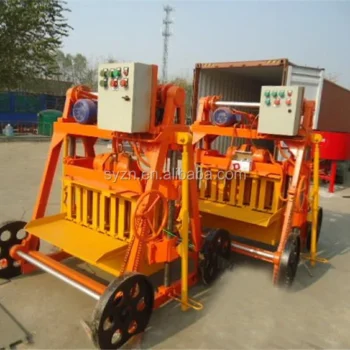
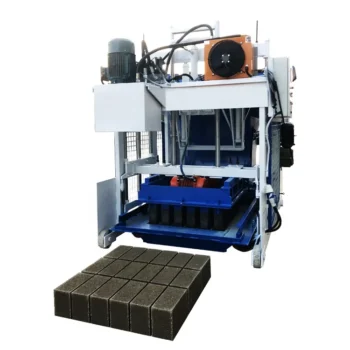
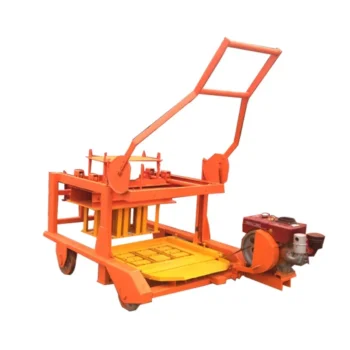
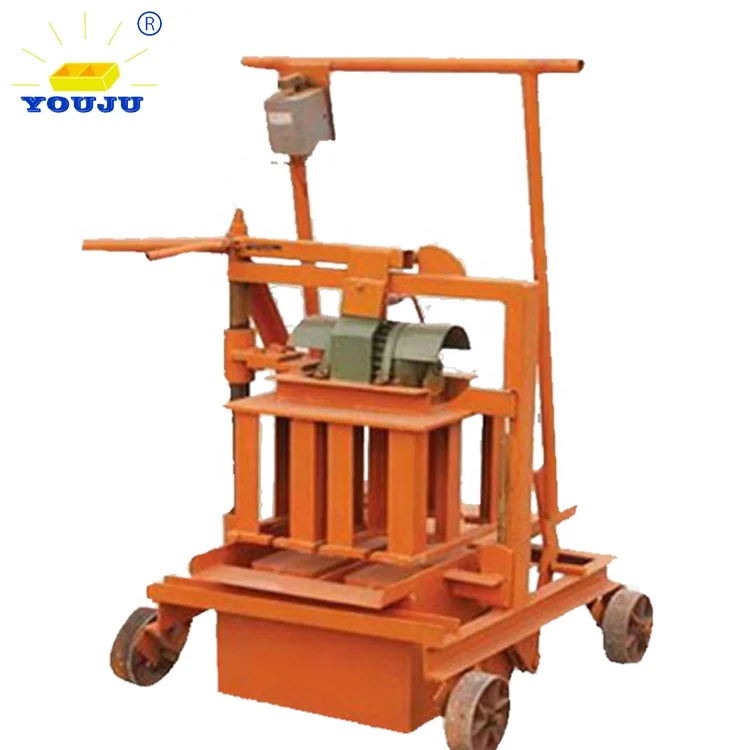
| Product Type | Mobile Concrete Block Making Machine |
| Operation Mode | Hand-pushed, manual |
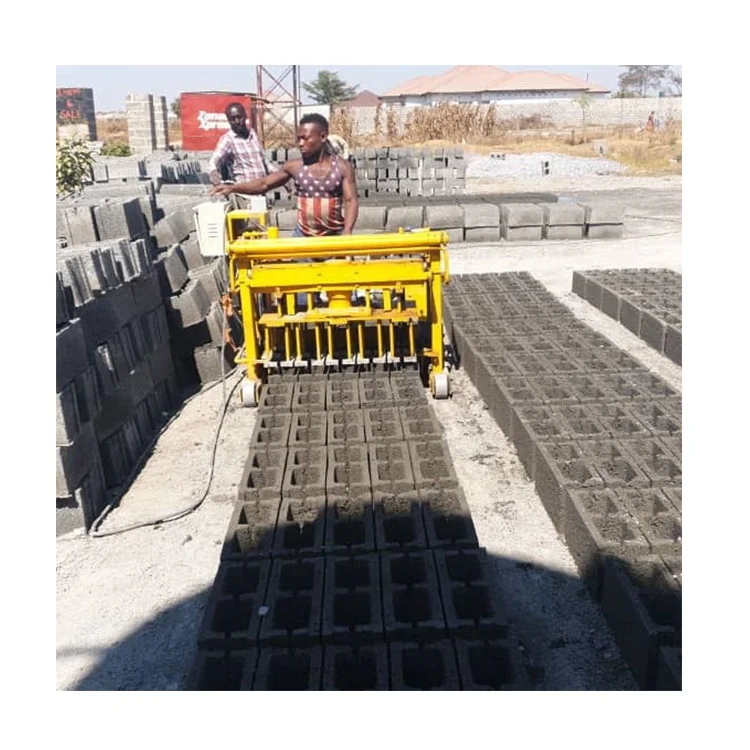
| Pallet Requirement | No pallets required |
| Labor Requirement | 1 to 3 workers |
| Mould Cavity Options | 2 / 3 / 4 cavities depending on format |
| Cycle Time | 25–30 s (basis not stated in source — confirm block format and material) |
| Output — 400×200×200 mm | 160 pcs/h, 1280 pcs per 8-hour shift (2 pcs/mould) |
| Output — 400×150×200 mm | 240 pcs/h (3 pcs/mould); 8-hour figure listed as 4800 in source contains a calculation inconsistency — verified figure is 1920 pcs/shift |
| Output — 400×100×200 mm | 320 pcs/h, 2560 pcs per 8-hour shift (4 pcs/mould) |
| Mould Treatment | Heat treatment and carburization |
| Power Source | No fixed electrical or diesel supply required |
| Mobility | Hand-pushed, free movement on flat ground |
| Space Requirement | Usable in small workshops or open sites |
| Automation Level | Manual |
| Standards | ISO 9001:2000, CE |
Application Suitability
| Application | Material or Output |
|---|---|
| On-site hollow brick production for housing projects | Crushed stone, sand, cement, water |
| Small workshop block making for local sale | River sand, quarry dust, cement |
| Remote or off-grid construction sites | Locally sourced aggregate with no grid power |
| First-time block plant with minimal investment | Standard concrete mix, hand-loaded |
| Temporary production for infrastructure contracts | Site-cleared ground, no pallet infrastructure needed |
What "Pieces per Hour" Hides When Choosing a Mobile Block Machine
The number only means something when you know which block size it was measured on.
A mobile block machine specifications sheet often leads with a single hourly figure. On the QMJ2-45, that figure changes from 160 to 320 pieces per hour simply by swapping from a 200 mm wide mould to a 100 mm wide mould. A buyer who ordered expecting 320 pieces of 200 mm hollow brick per hour will find the real output is half that. I have stood on sites in West Africa where the daily tally was measured against the wrong row of the capacity table, and the contractor blamed the machine. [NEED_CITE: capacity verification methods for manual block machines]
Matching the QMJ2-45 to Your Block Format
The QMJ2-45 ships with mould cavities sized for three standard hollow brick formats. A buyer selling primarily 400×200×200 mm blocks works with a 2-cavity mould; switching to 400×100×200 mm means a 4-cavity mould and a different cycle rhythm. How to choose a mobile block machine starts with writing down the format your customers ask for most, then reading only that row of the output table.
Mould Wear and Local Aggregate
Carburization and heat treatment on the QMJ2-45 moulds extend service life when the local aggregate is abrasive — volcanic scoria, for example, wears untreated steel noticeably faster than river gravel. I have seen operators in East Africa run through an untreated mould set in a single season because the pumice content in their mix was never disclosed at the ordering stage. Confirming the aggregate type before mould fabrication avoids that surprise. [NEED_CITE: abrasive aggregate effects on block mould wear]
Reading the Specification Sheet Against Your Site
Three parameters decide whether the QMJ2-45 fits a given site: pallet elimination, power independence, and manual cycle control. Because the machine lays blocks directly on the ground, no pallet inventory or pallet return loop is needed — this matters when the curing area is uneven or the forklift budget is zero. The absence of a fixed power requirement means production can start before the site electrical connection is live. The 25–30 second cycle time assumes a consistent mix and steady manual feeding; introducing a heavier aggregate or a drier mix will push the cycle longer, so the hourly outputs in the table should be treated as reference points tied to a standard concrete mix, not guarantees.
The Cost of Skipping the Format Conversation
Ordering a QMJ2-45 without confirming the primary block format leads to a mould set that does not match market demand. The buyer then either runs the wrong size or waits weeks for a replacement mould while the machine sits idle. I have watched a contractor in a Francophone market receive moulds labelled in a dimension standard his crew did not recognise, costing a full week of re-training. [NEED_CITE: mould format standards across regional markets]
A second hidden cost is mix mismatch. When the local aggregate is lighter or more porous than the assumed standard, the hand-compacted fill does not reach the same density, and block strength drops. The machine is not at fault — the specification conversation simply stopped too early.
Why Source the QMJ2-45 Through a Format-First Process
Every quotation starts from the block dimension the buyer’s market sells, so the mould cavity count and the capacity row are aligned before production begins. The machine, mould, and handling method are specified as one system rather than assembled from separate catalogues.
Mould designs can be produced to buyer drawings when the local market demands a non-standard format, keeping the QMJ2-45 relevant beyond the three default sizes. Heat-treated and carburized mould surfaces are specified against the buyer’s actual aggregate sample, not a generic hardness assumption.
Documentation ships with the machine: capacity calculations per format, mould drawings, and a wear parts list that lets the buyer plan the first replacement before the machine arrives. Installation support covers ground preparation and mix proportioning, not just bolt-tightening.
Documentation & Verification
- Line layout showing curing area footprint matched to the QMJ2-45 ground-laying pattern
- Capacity calculation sheet stating block format assumed for each output figure
- Mould drawing and format list confirming cavities per dimension shipped
- Heat treatment certificate for carburized mould surfaces
- Factory test record on buyer-specified mix before dispatch
- Wear parts and mould replacement list included in packing
Installation, Commissioning & Support
- Flat, compacted ground area sized to the QMJ2-45 turning radius for uninterrupted production flow
- No electrical connection required; manual operation eliminates voltage and frequency confirmation
- Hand-pushed mobility allows same-day repositioning across a project site
- First-run mix proportioning guided by local aggregate sample submitted at order stage
- Operator training covers mould change procedure and cycle rhythm for each format
- Wear parts list provided at shipment so first mould replacement is pre-sourced
What to Include in Your Inquiry
Send the block format your market buys most, the aggregate type available within hauling distance of your site, and the daily output target in that specific format. If your curing area is limited or uneven, note the dimensions so the ground-laying pattern can be planned around it.
Frequently Asked Questions
Q: How is the QMJ2-45 output capacity verified for each block format?
A: Each output figure is tied to a specific mould cavity count and block dimension. The 160 pcs/h rate applies to the 400×200×200 mm format with 2 cavities; the 320 pcs/h rate applies to 400×100×200 mm with 4 cavities. The assumed mix is standard concrete — a different aggregate changes fill behaviour and should be tested before quoting a guaranteed daily total.
Q: Which mould formats ship with the machine, and can I order custom sizes?
A: The default range covers 400×200×200 mm, 400×150×200 mm, and 400×100×200 mm hollow brick. Custom moulds can be designed to buyer drawings when the local market sells a non-standard dimension. Mould drawings are confirmed before fabrication so cavity count and cycle expectations are agreed in advance.
Q: What aggregate and mix does the QMJ2-45 need for consistent block strength?
A: The machine works with crushed stone, river sand, quarry dust, or volcanic scoria, but each material compacts differently under manual operation. A lighter aggregate like pumice requires a richer cement ratio to reach the same strength. Submitting an aggregate sample at the order stage lets the mix be adjusted before the first production run.
Q: How long does a mould change take on this mobile block machine?
A: Mould change on the QMJ2-45 is a manual bolt-release process suited to small crews. It is practical between production runs rather than multiple times per shift. Buyers who need frequent format switching in a single day should consider a machine with a quick-release mould carriage instead.