
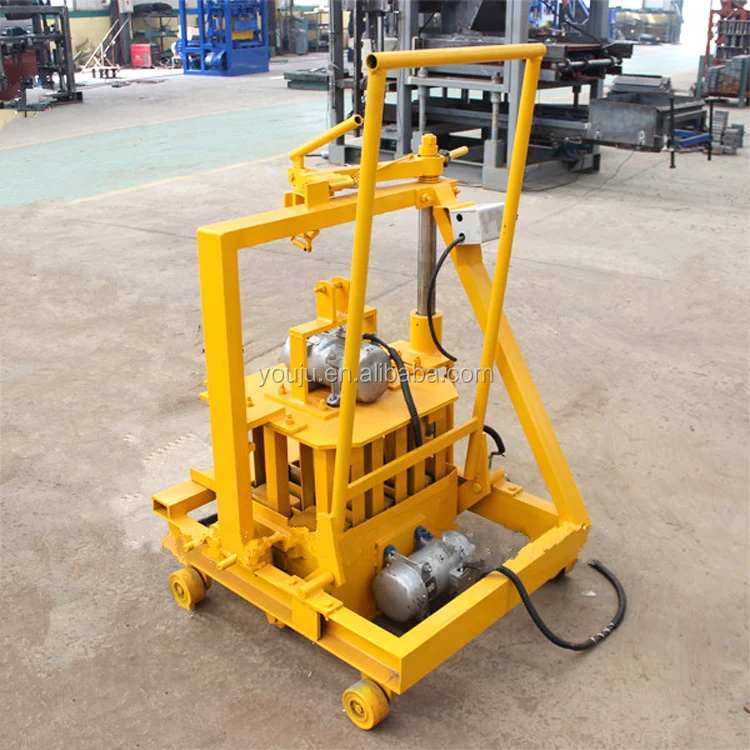
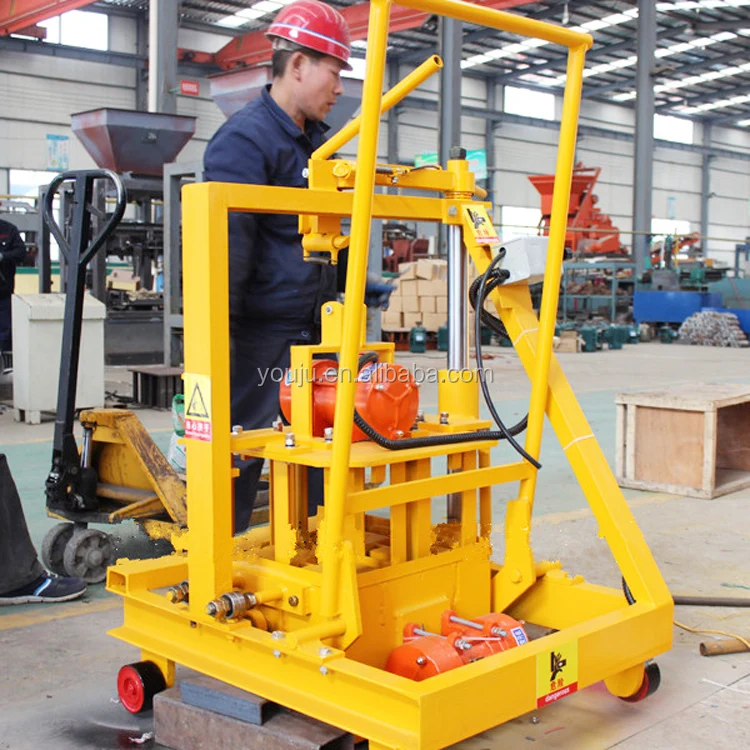
Description
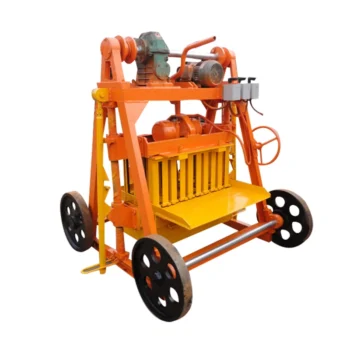
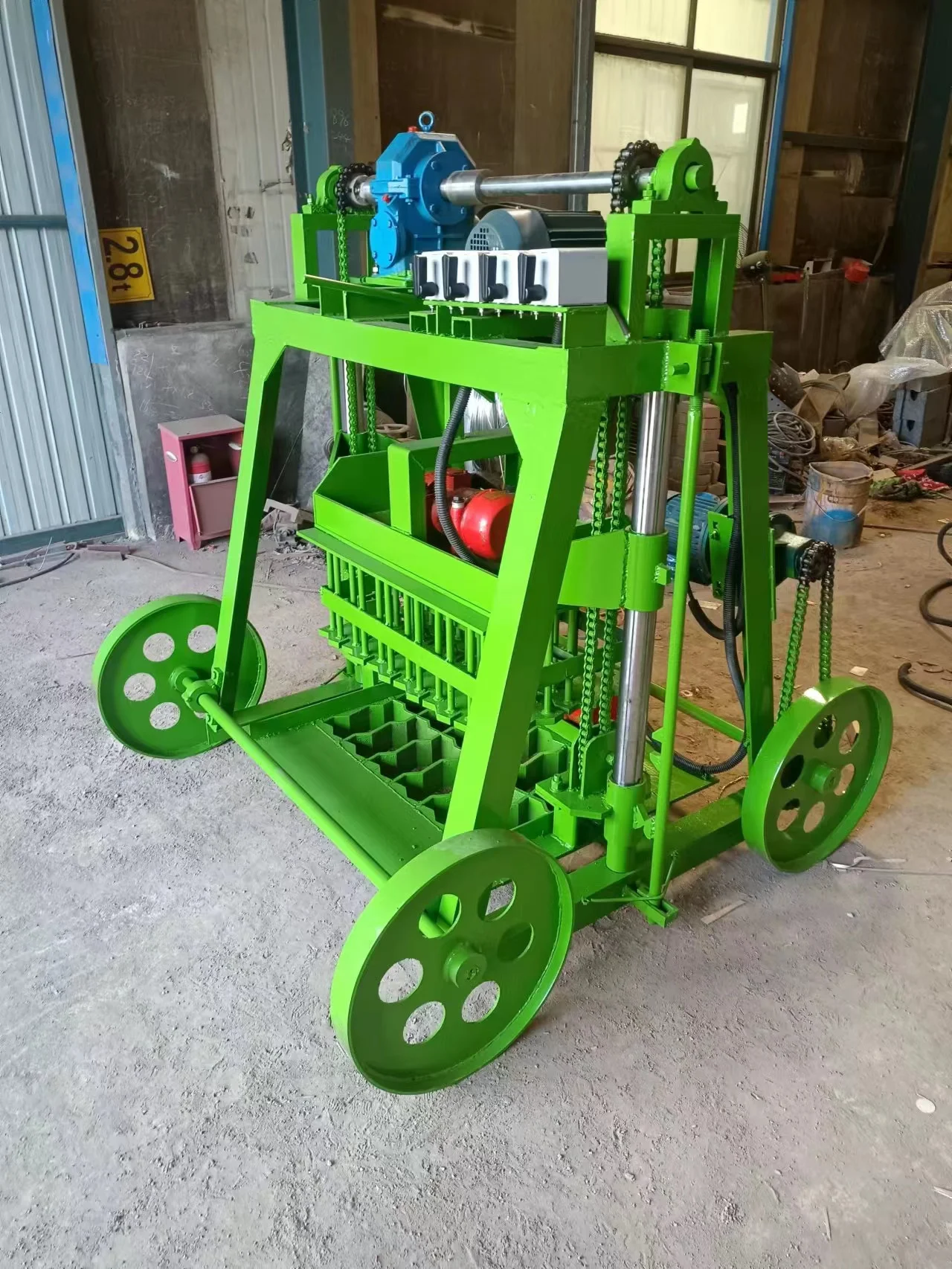
Matched System Supply — the QMJ2-45 mobile block machine, its moulds and ground-curing workflow are specified together so capacity figures reflect the block format you actually sell.
Technical Specifications
| Parameter | Value |
|---|---|
| Model | QMJ2-45 |
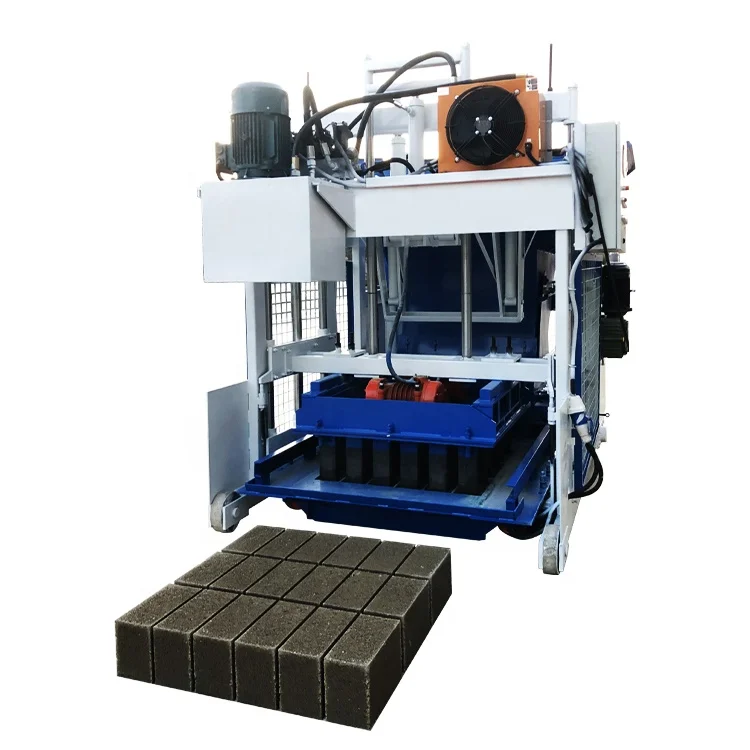
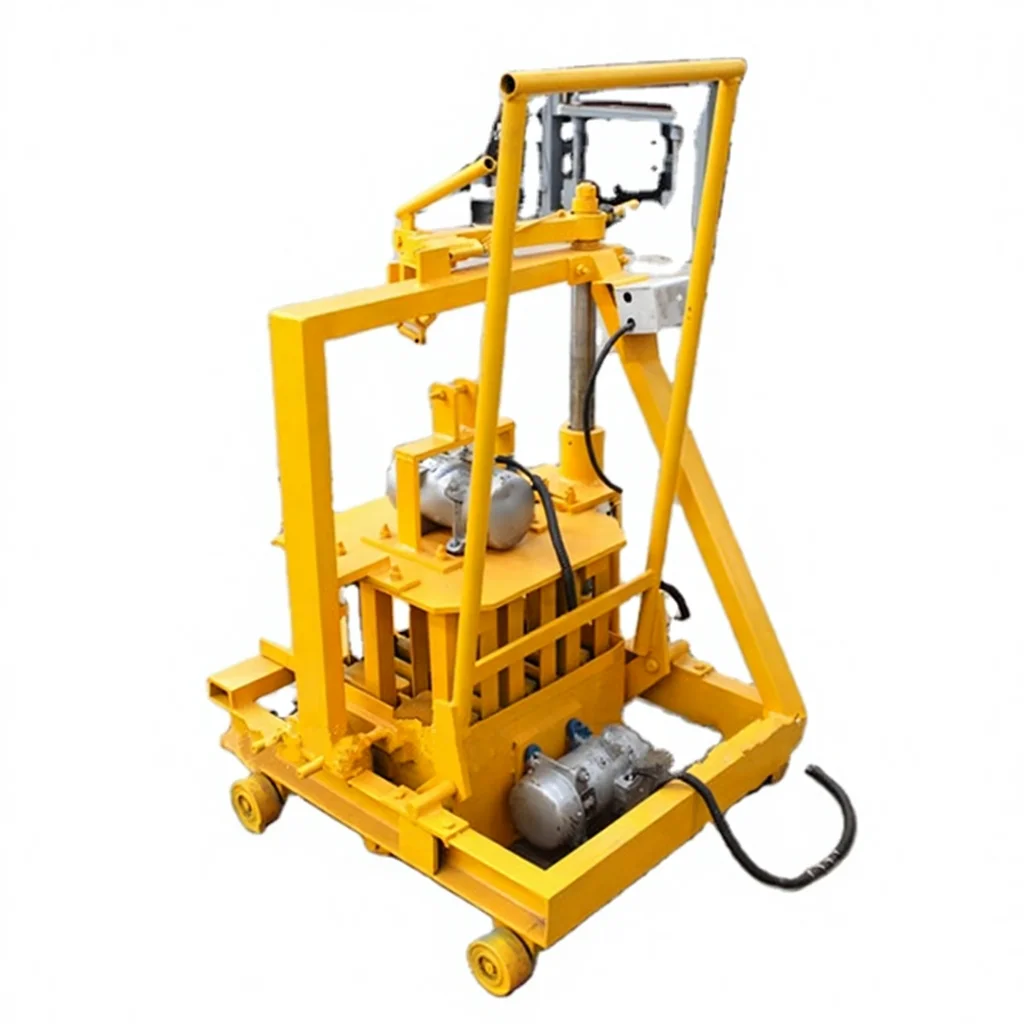
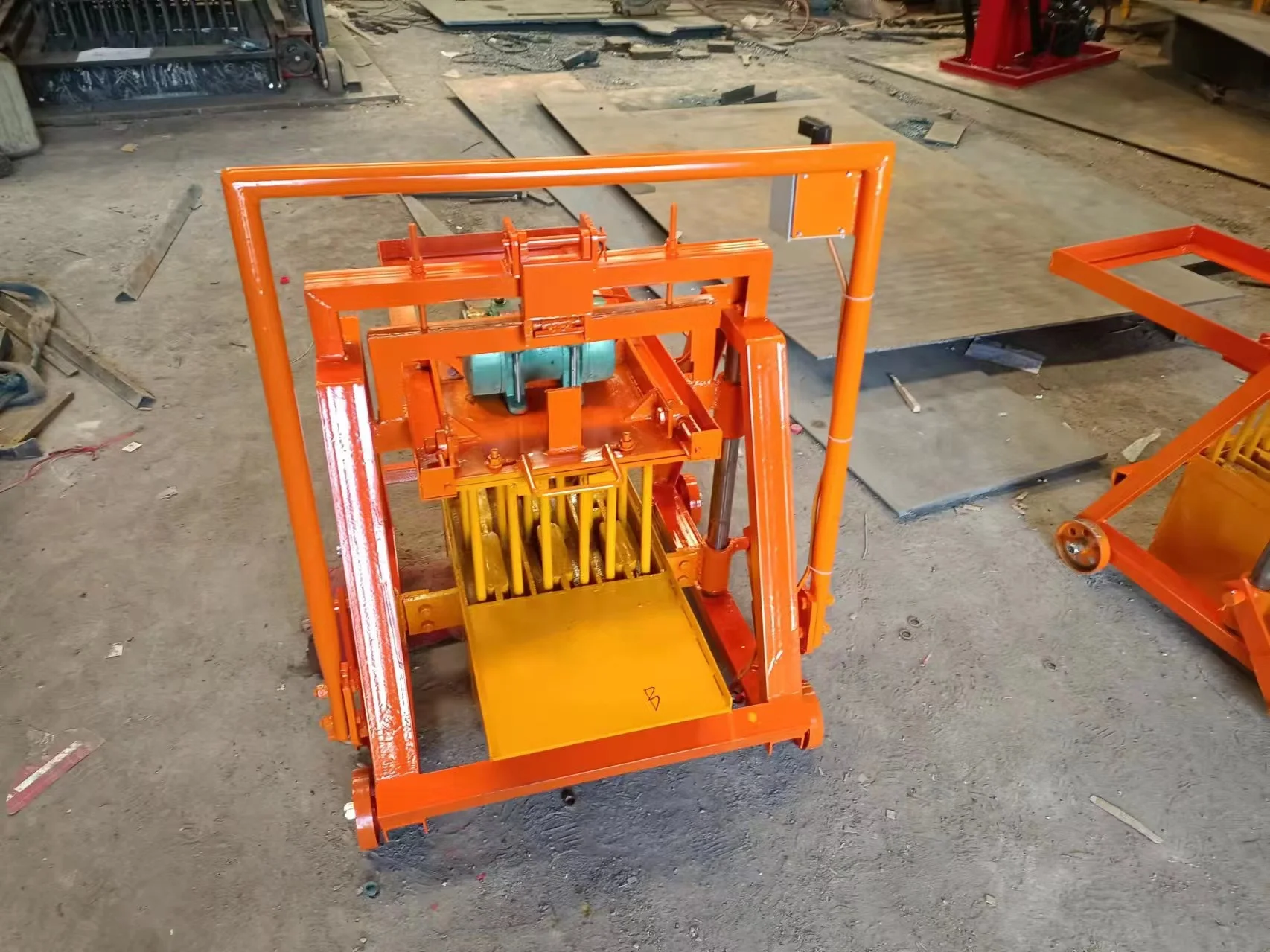
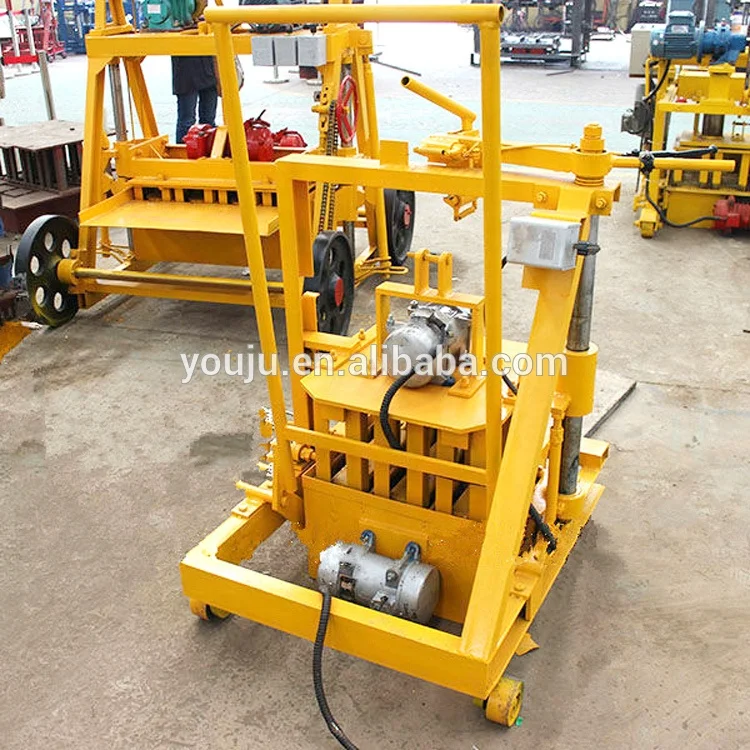
| Product Type | Mobile Egg-laying Concrete Block Making Machine |
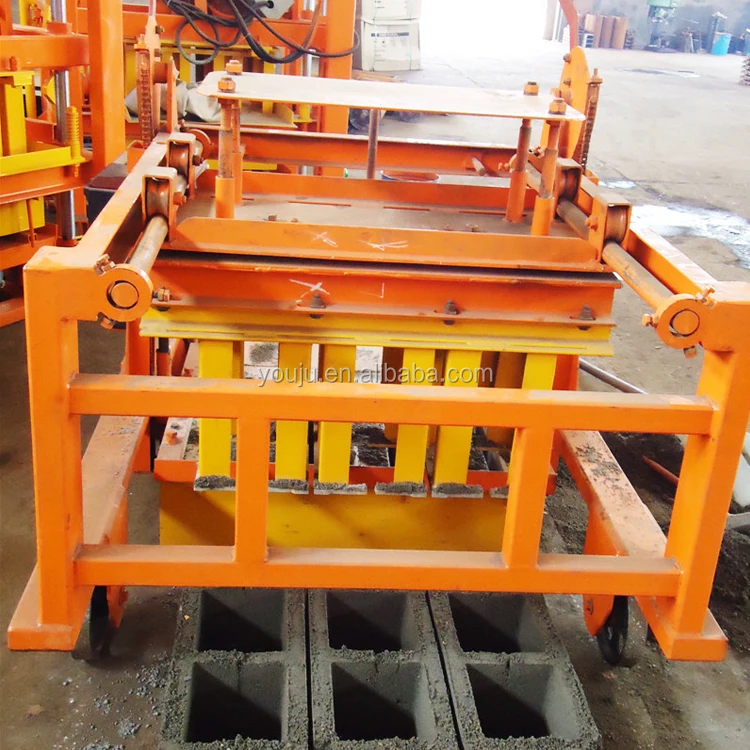
| Machine Type | Mobile / egg-laying (no pallets required) |
| Moulding Cycle | 25–30 s |
| Output Capacity (400×200×200 mm hollow block) | 160 pcs/h, 1280 pcs per 8 hr shift (2 pcs/mould) |
| Output Capacity (400×150×200 mm hollow block) | 240 pcs/h, 4800 pcs per 8 hr shift (3 pcs/mould — basis not stated in source, confirm effective rate) |
| Output Capacity (400×100×200 mm hollow block) | 320 pcs/h, 2560 pcs per 8 hr shift (4 pcs/mould) |
| Mould Change | Interchangeable moulds for different hollow brick formats |
| Power Source | Electric (no diesel dependency) |
| Labour Requirement | 1–3 operators |
| Pallet System | None (egg-laying type, blocks cured on ground) |
| Automation Level | Semi-automatic / manual-assisted |
| Standards | ISO 9001:2000, CE (verify certificate number and scope) |
Application Suitability
| Application | Material or Output |
|---|---|
| On-site hollow block production for housing projects | Concrete mix with local sand, crushed stone and cement |
| Small-scale block yards adding format variety | 4-inch, 6-inch and 8-inch hollow blocks from standard aggregates |
| Contractor-run masonry block supply at construction sites | Egg-laying production directly on compacted ground |
| First-plant entrepreneurs validating local demand | Low-investment hollow block output before committing to stationary lines |
What "1280 Blocks per Shift" Actually Means for Your Site
Capacity numbers without a block format attached are not capacity numbers — they are guesses.
Sellers quote a single hourly figure for the QMJ2-45 mobile block machine and let buyers assume it applies to every hollow block size they plan to produce. In practice, the 160 pcs/h figure holds only when you are running 400×200×200 mm blocks with two cavities per mould. Switch to the narrower 400×100×200 mm format and the same cycle produces four pieces per drop, changing the daily total entirely. I have watched contractors in Latin America plan their entire project timeline around a catalogue number that turned out to assume a block format the local market does not even buy [NEED_CITE: block format demand by regional construction market].
Format-by-Format Cycle Reality
The QMJ2-45 runs a moulding cycle between 25 and 30 seconds regardless of the hollow block format loaded, so the variable that changes your shift output is the number of cavities in each mould. A 400×200×200 mm mould carries two cavities, yielding 160 pieces per hour. The 400×150×200 mm mould adds a third cavity, while the 400×100×200 mm mould fits four. When you request a quotation, the capacity calculation sheet must name the exact format behind every number so you can match it against real orders.
Mould Selection and Changeover
Every QMJ2-45 mobile block machine leaves the factory with moulds chosen for the buyer’s target formats, and custom moulds can be built to buyer-supplied drawings. Mould changeover on an egg-laying machine involves unbolting the existing mould box, lifting it clear, and seating the replacement — a task that requires basic hand tools and a level surface. If your market demands three hollow block sizes and you plan to rotate formats weekly, the time spent on each change must fit inside your production schedule, not consume half a shift.
Reading the Specs That Shape Block Strength
Vibration force and the pressure applied during compaction work together to determine the density and compressive strength of every hollow block the QMJ2-45 produces. If the vibration is too weak for a stiff, low-moisture mix, the concrete will not fully consolidate inside the mould cavity and blocks emerge with voids and weak walls. If the mix is too wet, blocks slump after the mould lifts and lose dimensional accuracy before curing even begins. The electric drive eliminates diesel-related variability in vibration consistency, but the motor must match the local voltage and frequency or the vibration frequency shifts and block quality drifts [NEED_CITE: voltage and frequency standards by export market]. Pallet-free egg-laying production means blocks cure directly on compacted ground, so the site surface must be level and firm enough to support wet blocks without tilting.
The Cost of Skipping the Material Conversation
Ordering a QMJ2-45 mobile block machine without first confirming how your local aggregate behaves under vibration leads to problems that only appear after the machine is on your site. I once spent a full week at a customer’s yard adjusting water content and vibration settings because the local clay-heavy sand caused every block to crack during demoulding — daily output dropped to less than half the expected figure. That situation is preventable when the supplier reviews your actual raw material before finalizing the machine configuration. Buyers who skip this step end up paying twice: once for the machine and again for the material change or rework needed to make it produce sellable blocks [NEED_CITE: aggregate testing standards for concrete block production].
Why This Supply Model Works for Format-Matched Buying
Block machinery is the only product line here, which means the QMJ2-45 is not bundled with unrelated equipment from separate vendors — the machine, mould, and ground-curing workflow are specified as one matched set. Configuration is built around your actual mix design and the hollow block formats your market sells, not pulled from a default catalogue page. Moulds for every format you need, including custom sizes drawn to your specifications, are designed and supplied within the same project. Automation level remains selectable, so a buyer starting with the semi-automatic QMJ2-45 can plan an eventual move to a higher-output line without changing suppliers. Installation support includes on-site commissioning and operator training so your crew can run the machine from the first day.
Documentation & Verification
- Capacity calculation sheet naming the hollow block format behind every output figure
- Mould drawing and format list confirming which sizes are included in the quotation
- Voltage, frequency, and motor specification matched to your local supply before production
- Factory test record run on the block format and mix design you will actually use
- Operation and maintenance manual covering mould change procedure and daily checks
- Packing photographs and customs documentation support for smooth port clearance
Installation, Commissioning & Support
- Ground surface must be level and compacted for pallet-free egg-laying curing of hollow blocks
- Electric power supply confirmed for correct voltage and frequency before the motor is wired
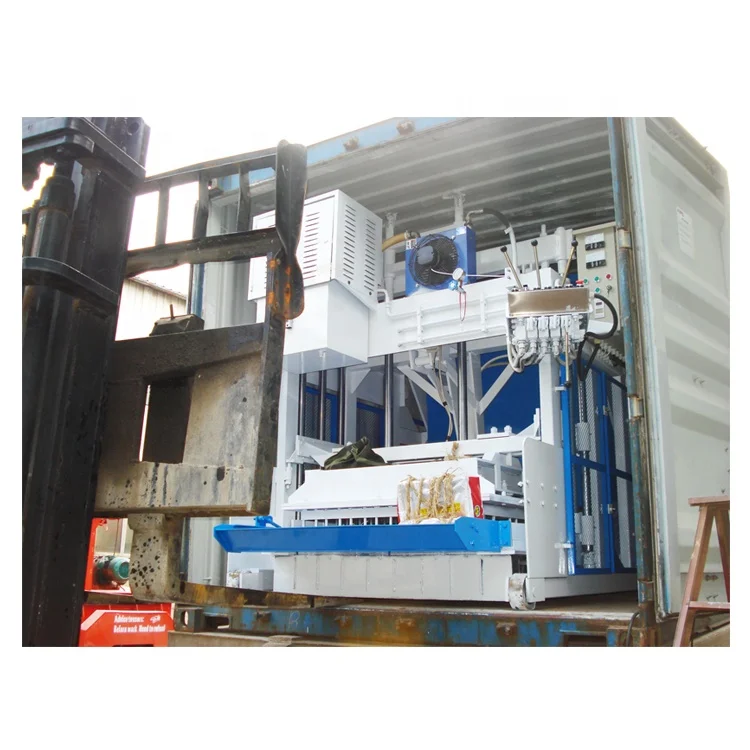
- Machine arrives assembled with mould removed for container loading, re-mounted on site
- First-day commissioning includes vibration tuning to match your local aggregate and mix moisture
- Operator training covers mould changeover, daily mould cleaning, and basic troubleshooting
- Wear parts list with mould liner and vibration pad replacement intervals provided at delivery
Before You Request a Quotation
Send the exact hollow block formats your market demands, including dimensions and wall thickness, along with a sample description of your local sand and aggregate. State your site voltage and frequency so the motor can be matched before production begins. If you already run a mixer or raw material feeder upstream, share those details so the QMJ2-45 mobile block machine can be positioned to receive material at a rate that keeps the cycle moving without idle gaps.
Frequently Asked Questions
Q: How is the 160/240/320 pcs/h figure derived, and which block format does each assume?
A: Each figure assumes a specific hollow block size and cavity count per mould. The 160 pcs/h rate is based on 400×200×200 mm blocks with two cavities per mould at a 25–30 second cycle. The 240 pcs/h and 320 pcs/h rates correspond to the 400×150×200 mm and 400×100×200 mm formats respectively. Always confirm which format your quotation references.
Q: What mould formats are included in the standard quotation, and can I order custom sizes?
A: The quotation lists every mould included, matched to the hollow block formats you specified during inquiry. Custom moulds can be built to your drawings for non-standard dimensions or wall thicknesses. Request the mould drawing and format list before confirming your order to verify coverage.
Q: My local aggregate differs from the supplier’s test mix — how do we confirm block strength?
A: Share a description or test result of your local sand, stone and cement ratio before production. The vibration force and mix moisture guidance are then adjusted to match. A factory test can be run on a comparable mix to verify block density and compressive strength before the QMJ2-45 ships.
Q: What voltage, frequency and motor rating must I confirm before the machine is built?
A: Provide your site voltage, phase and frequency so the electric motor and wiring are matched before assembly. An incorrect motor rating causes vibration frequency drift, which directly affects block density and surface finish. This confirmation is part of the standard pre-production checklist.
Q: How long does a mould change take on the QMJ2-45, and what tools are needed?
A: A trained operator can complete a mould change using standard hand wrenches and a level surface within a reasonable portion of a shift. Exact timing depends on crew familiarity. The operation manual covers the unbolting sequence, mould seating check, and test cycle needed before resuming full production.