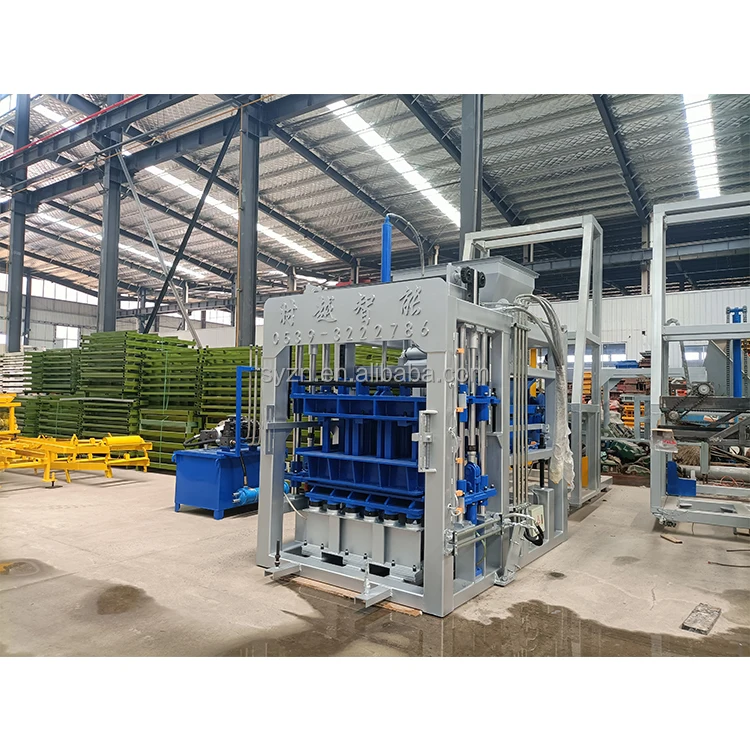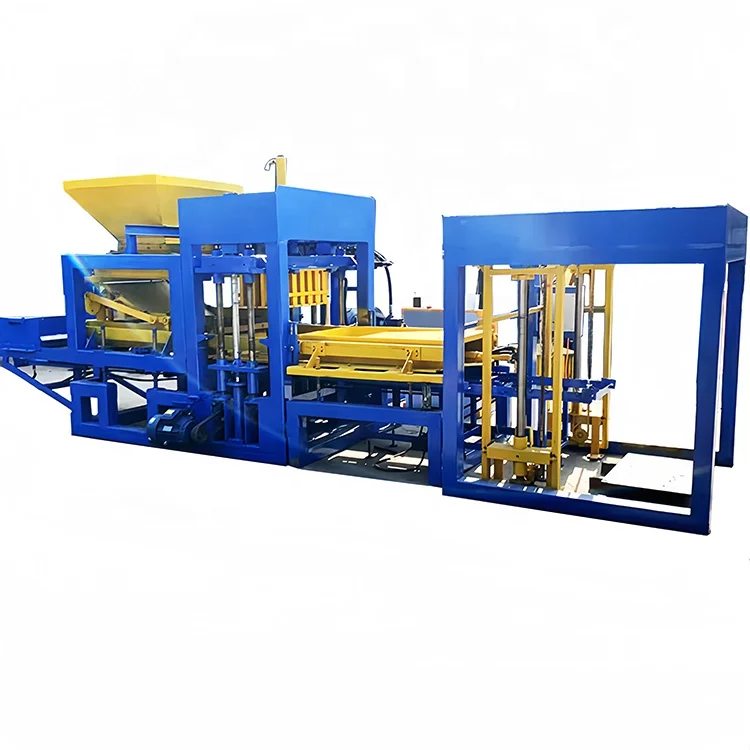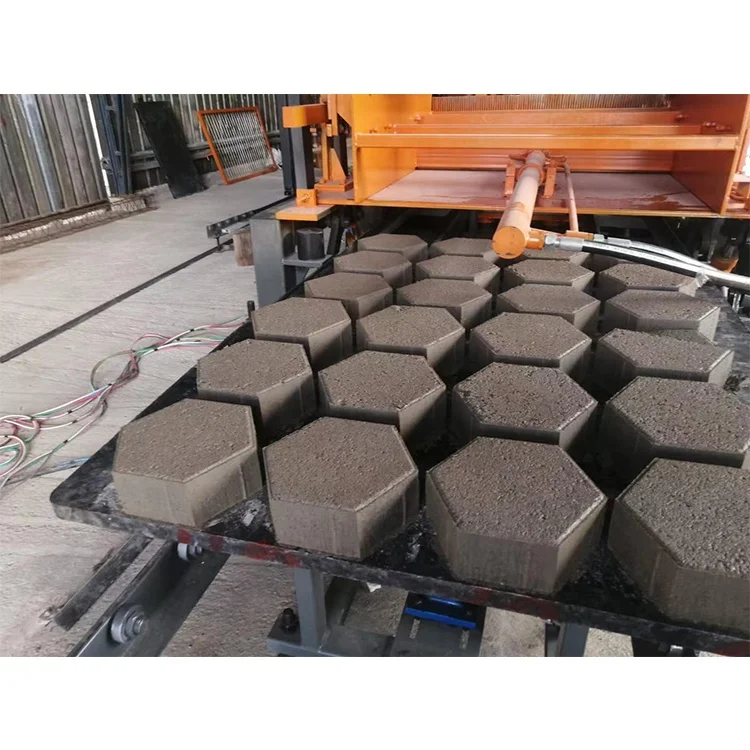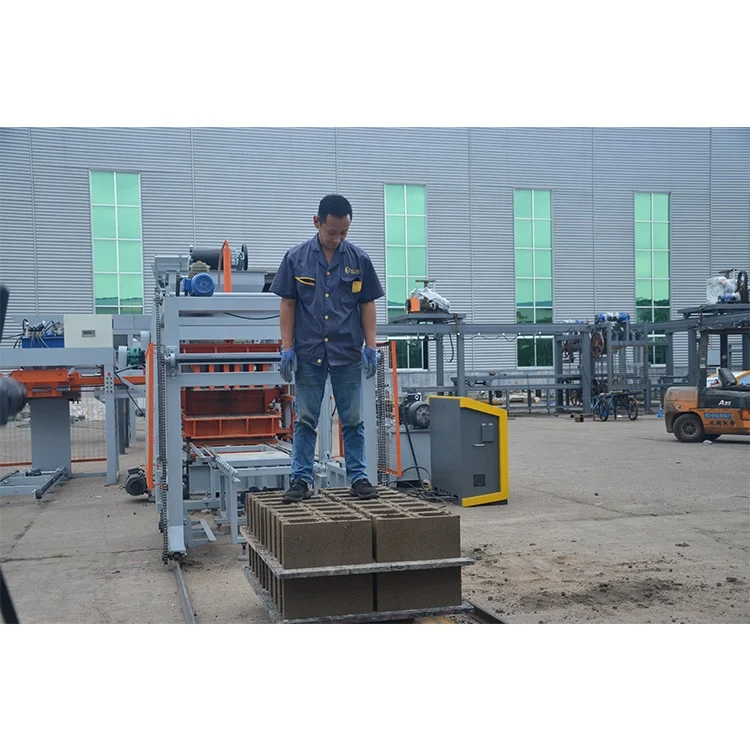
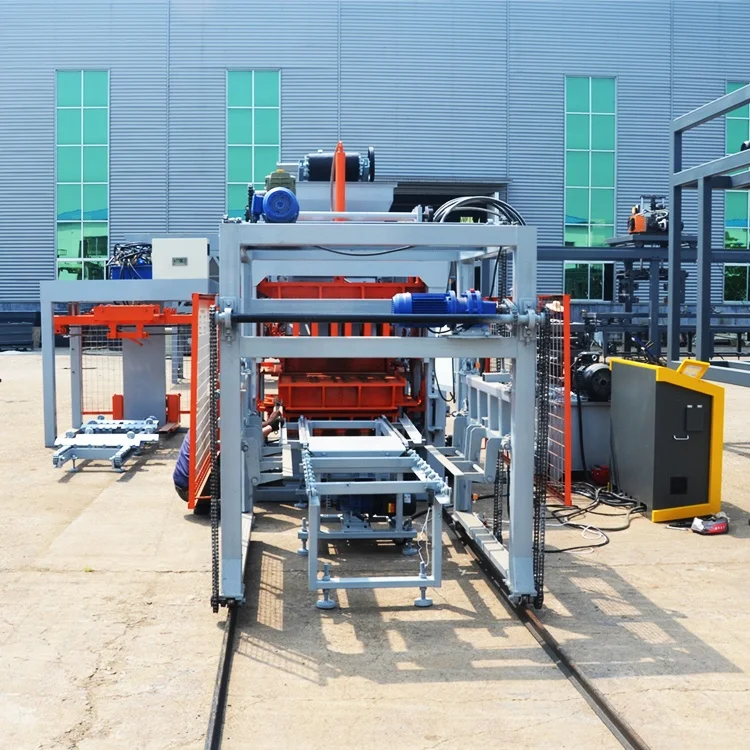


Description
Matched System Engineering — Every QT6-15 configuration is built around your specific block format and local material profile, not pulled from a generic catalog default.
Technical Specifications
| Parameter | Value |
|---|---|
| Model | QT6-15 |
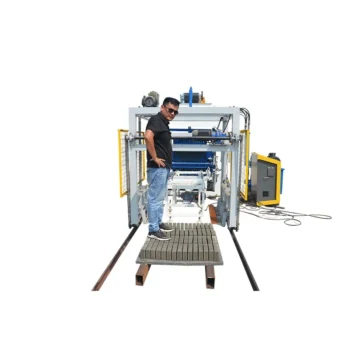
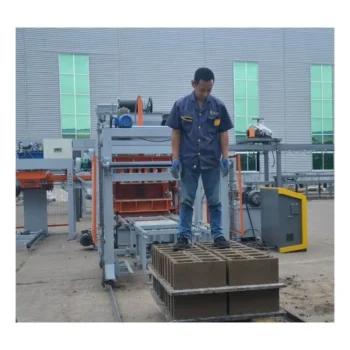
| Product Type | Automatic Hydraulic Block Making Machine |
| Overall Dimensions | 8200×1700×2950 mm |
| Overall Power | 37 kW |
| Total Mass | 7 T |
| Vibration Form | Platform Vibration |
| Vibration Frequency | 0-60 Hz |
| Vibration Force | 45 kN |
| Moulding Mode | Load automatically, vibration moulding |
| Demolding Method | Hydraulic |
| Pallet Size | 880×850 mm |
| Molding Cycle | 15-20 s (hollow block); 20-25 s (paving brick) |
| Control System | PLC with touch screen HMI |
| Recommended Factory Area | 1200 m² |
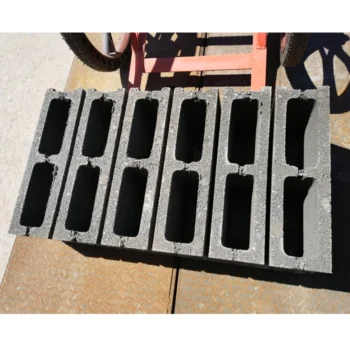
| Output: Hollow Block 400×200×200 mm | 6 pcs/mould, 8640-11520 pcs/8hr |
| Output: Hollow Block 400×150×200 mm | 8 pcs/mould, 11520-15360 pcs/8hr |
| Output: Solid Brick 240×115×53 mm | 32 pcs/mould, 46080-61440 pcs/8hr |
| Output: Rectangular Paver 200×100×60 mm | 21 pcs/mould, 17280-23040 pcs/8hr |
| Output: Zigzag Paver 225×112.5×60 mm | 15 pcs/mould, 17280-23040 pcs/8hr |
| Hydraulic Pressure | (source value — verify against manufacturer catalog) |
| Mould Change Time | (source value — verify against manufacturer catalog) |
| Voltage & Frequency | (basis not stated in source — confirm with supplier) |
| PLC Display Language | (basis not stated in source — confirm with supplier) |
| Stacking Method | (basis not stated in source — confirm pallet handling and stacking scope) |
| Automation Level | Automatic (PLC controlled, intelligent electronic control) |
| Block Compressive Strength | >15 MPa (stated) |
| Certification | CE (basis not stated in source — confirm with supplier) |
Application Suitability
| Application Scenario | Material or Output Target |
|---|---|
| Hollow block production for walling and structural fills | Crushed stone, sand, cement, with waste ash or slag substitution |
| Solid brick production for load-bearing masonry | Standard aggregates with adjustable cement dosage |
| Rectangular and zigzag paving brick for roads and walkways | Fine aggregate blends optimized for surface finish and interlock |
| Infrastructure kerbstone and interlocking formats | Coarse aggregate mixes requiring high vibration force and hydraulic pressure |
What "Pieces per Hour" Leaves Out When Sizing a QT6-15 Automatic Block Making Machine
Cycle time only matters when tied to the exact block format your market demands.
Most quotations list a single hourly number derived from the fastest possible cycle on the smallest block. When that same machine switches to a 400×200×200 mm hollow block, the molding cycle stretches to 15-20 seconds, and daily output drops accordingly. I once saw a Middle East contractor bid a project based on a generic capacity figure, only to find the actual daily run fell well short because the local aggregate had high clay content, which slowed compaction and extended every cycle. [NEED_CITE: impact of aggregate clay content on block compaction cycle time]
That experience changed how I approach every inquiry. Before discussing the QT6-15 automatic block making machine specifications with any buyer, I ask for the raw material report and the target block format first. The output numbers in the table above are each tied to a specific block size and mould cavity count, so you can plan production shifts based on what you will actually manufacture, not what a brochure suggests.
Format-Specific Cycle Time and What It Means for Daily Planning
The QT6-15 automatic block making machine specifications list two distinct molding cycle ranges: 15-20 seconds for hollow blocks and 20-25 seconds for paving bricks. This difference is not arbitrary — paving bricks require a denser finish and tighter dimensional tolerance, so the vibration dwell time extends to consolidate the finer aggregate layers. When you calculate an 8-hour shift output, the machine produces between 8,640 and 11,520 hollow blocks at 400×200×200 mm, but up to 23,040 rectangular pavers in the same window because the mould holds 21 cavities. Understanding this spread is essential before committing to a production schedule or a supply contract.
Matching the Mould Portfolio to Your Market Mix
A block plant rarely sells a single format. The QT6-15 platform supports hollow blocks, solid bricks, rectangular pavers, and zigzag interlocking pavers, each with its own mould cavity layout and pallet footprint. The 880×850 mm pallet size remains constant across formats, which simplifies curing rack design and forklift handling. What changes is the number of pieces per press cycle and the vibration profile the PLC selects for each programme. [NEED_CITE: mould changeover procedures and frequency requirements in multi-format block plants] Buyers who serve both walling and infrastructure markets need to confirm which moulds ship with the machine and which are ordered separately, because lead times for custom mould drawings can add weeks to a project timeline.
Reading the Specs That Actually Shape Block Quality
The 45 kN vibration force working through a platform vibration system determines how thoroughly the aggregate particles settle into the mould cavity. On its own, vibration is not enough — the hydraulic demolding system applies controlled pressure to lock that density in before the block leaves the press. Together, these two forces produce a stated compressive strength above 15 MPa, which meets the structural requirements for most load-bearing wall applications. The 0-60 Hz adjustable vibration frequency lets the operator fine-tune the energy input when switching between a coarse hollow block mix and a fine paving brick blend. The PLC with touch screen HMI stores these parameters per mould programme, so changeovers do not rely on operator memory alone. The 37 kW overall power draw reflects the combined demand of the hydraulic pump, vibration motors, and conveyor feed system running simultaneously through a full shift.
The Hidden Cost of Skipping Pallet and Voltage Confirmation
One of the most common disruptions I have seen after a machine arrives on site is a mismatch between the 880×850 mm pallet and the buyer’s existing curing racks or forklift tines. Pallets that do not seat properly on the rack cause freshly pressed blocks to tilt during the critical first hours of curing, leading to corner damage and scrap. Voltage and frequency are another silent risk — if the local grid supplies a different phase or cycle rate than the motor windings were wound for, the hydraulic pump runs outside its designed torque curve, and the vibration motors lose amplitude. [NEED_CITE: voltage and frequency standards by export market] Both issues are entirely preventable with a confirmation step before production begins, yet they remain among the top reasons for delayed commissioning.
Why Buyers Specifying Block Format Come Here
Every QT6-15 configuration starts with your target block format and local aggregate report, not a stock catalogue page. Mould design covers the formats your market actually sells, with custom drawings available when standard cavity layouts do not match. The pallet, handling equipment, and curing rack dimensions are specified as one matched system around the 880×850 mm pallet footprint. Automation level is selectable, so a plant can begin with semi-automatic pallet handling and add stacking or cubing functions later without replacing the press. Installation support includes operator training on the PLC programmes for each mould, plus a wear parts and mould replacement list so the first changeover does not halt production. [NEED_CITE: CE machinery directive requirements for industrial block making equipment]
Documentation & Verification
- Line layout and capacity calculation stating the exact block format behind each output figure
- Mould drawing and format list confirming included and optional cavity layouts
- Pallet specification matched to your curing rack dimensions and forklift capacity
- Hydraulic and electrical schematic for local maintenance team reference
- Voltage, frequency, and PLC display language confirmation record before production
- Factory test record run on your specified mix design and block format before dispatch
Installation, Commissioning & Support
- Foundation plan sized for the 8200×1700 mm footprint and 7 T operating mass
- Dedicated power circuit rated for 37 kW continuous draw with voltage and frequency confirmed pre-shipment
- Machine shipped in dismantled sections with reassembly guide and bolt torque schedule
- PLC programmes loaded for each ordered mould format with cycle parameters tuned on-site
- Operator training covering mould change procedure, fault diagnosis on the touch screen HMI, and daily lubrication points
- Wear parts list identifying hydraulic seals, vibration springs, and mould liner replacement intervals
Before You Request a Quote
To size the QT6-15 accurately, share your target block formats with dimensions, the local aggregate type and any lab test reports you have, and the daily volume your market requires. Confirm your site voltage, phase, and frequency, as well as the preferred PLC display language for your operators. If you have an existing curing yard or forklift fleet, provide those dimensions so the 880×850 mm pallet system integrates without modification.
Frequently Asked Questions
Q: How is the QT6-15 output capacity verified for each specific block format?
A: Each output figure in the specification table is tied to a named block dimension and mould cavity count. For example, 8,640 to 11,520 pieces per 8-hour shift applies specifically to the 400×200×200 mm hollow block at 6 cavities per mould. We calculate from the confirmed molding cycle for that format, not from a generic maximum.
Q: What mould formats are available, and how does cycle time change between hollow blocks and paving bricks?
A: The platform supports hollow blocks, solid bricks, rectangular pavers, and zigzag pavers, each with its own cavity layout. Hollow blocks run at a 15-20 second cycle while paving bricks require 20-25 seconds due to the denser finish needed for surface durability and interlock precision.
Q: How should the machine be configured to match local aggregate and mix design?
A: We request your raw material report and target mix proportions before finalizing the vibration frequency range and hydraulic pressure settings. The 0-60 Hz adjustable platform vibration and PLC programme library allow the QT6-15 to adapt to coarse crushed stone, fine sand, waste ash, or slag blends without hardware modification.
Q: What voltage, frequency and PLC language options must be confirmed before shipment?
A: These three parameters must be locked before the motor windings and control panel are assembled. Confirming them early prevents commissioning delays caused by rewinding motors or reprogramming the touch screen HMI after the machine arrives at your site.
Q: What is the mould change procedure and expected changeover time between formats?
A: Mould changeover involves releasing the clamp bolts, lifting the current mould with an overhead crane, seating the replacement, and loading the corresponding PLC programme. The exact time depends on operator experience and crane availability; we provide a step-by-step procedure during on-site training.