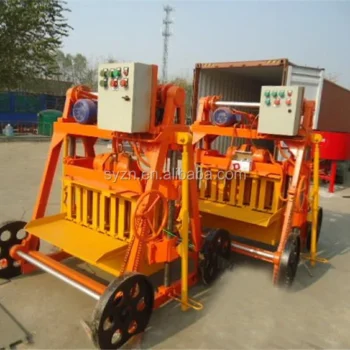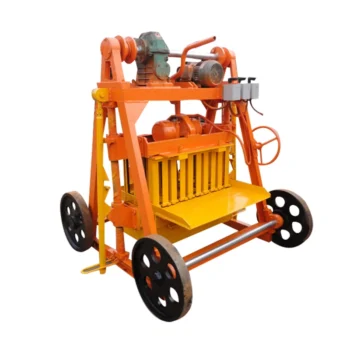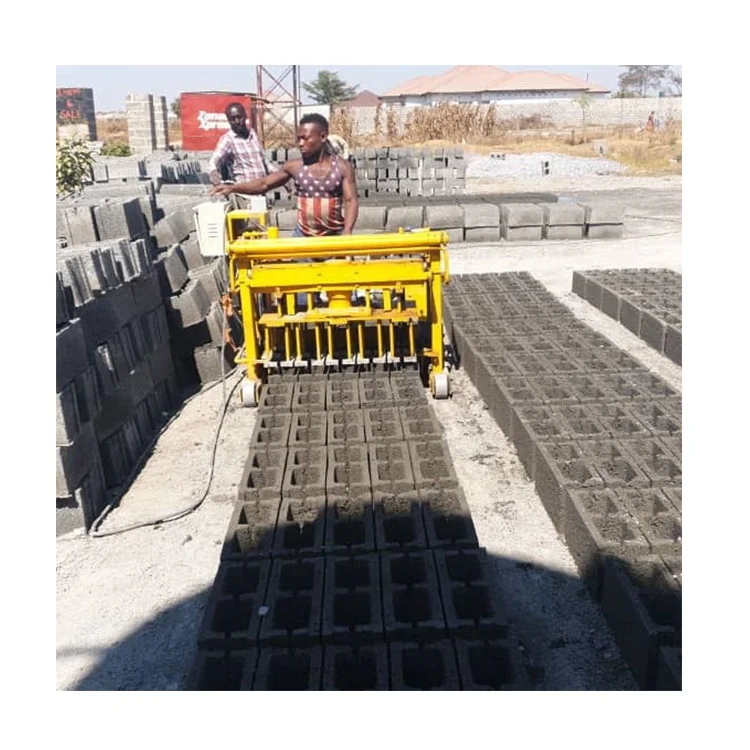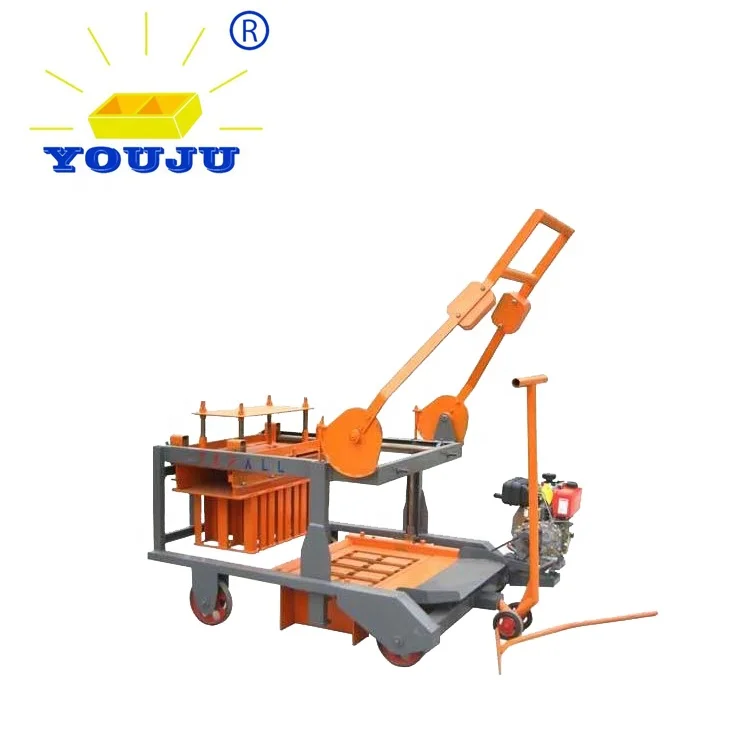

Description
Format-matched configuration — the QMY4-30 mobile block making machine specifications how to choose discussion starts from the block your market actually sells, not a catalogue default number.
Technical Specifications
| Parameter | Value |
|---|---|
| Model | QMY4-30 |
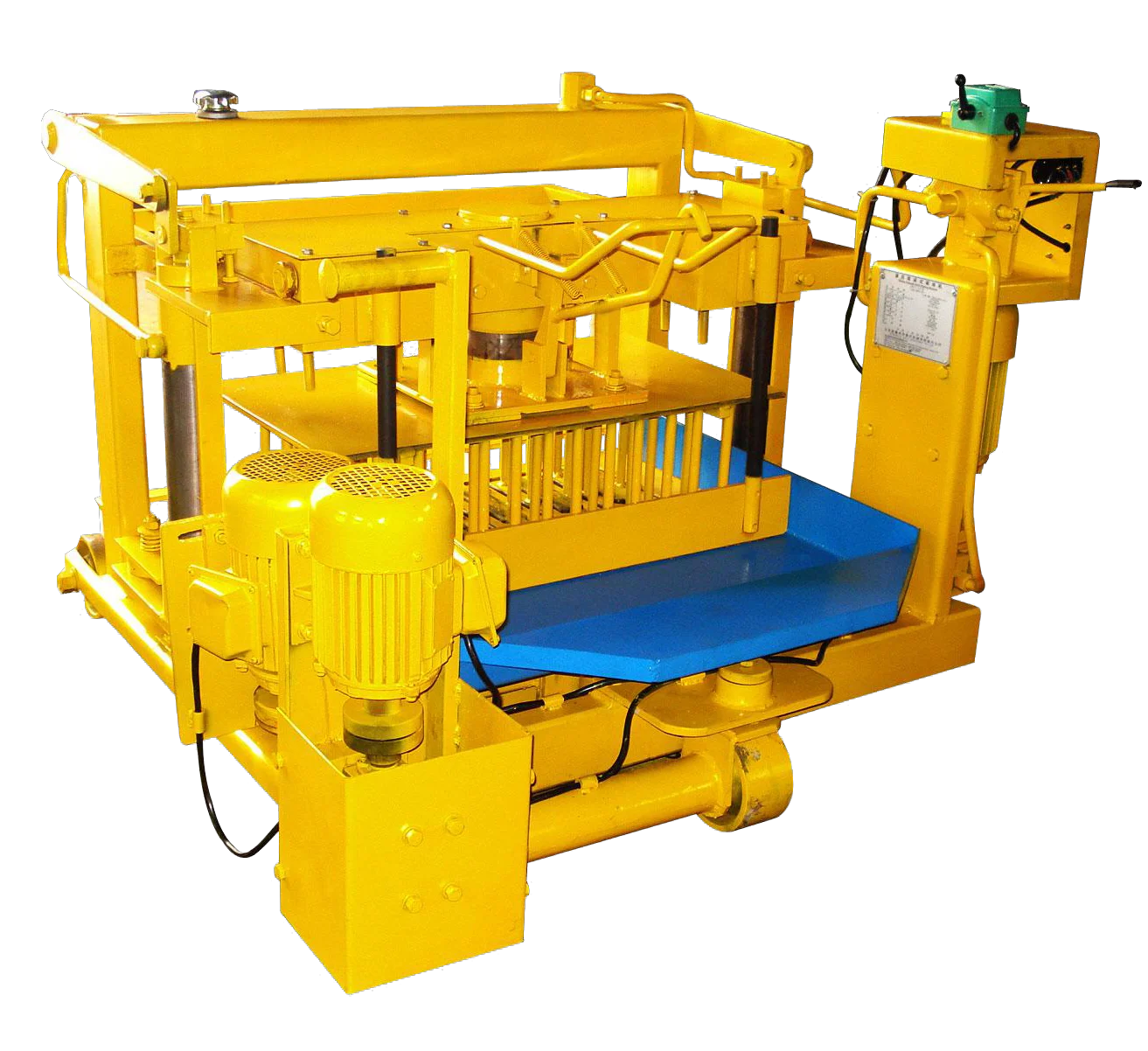
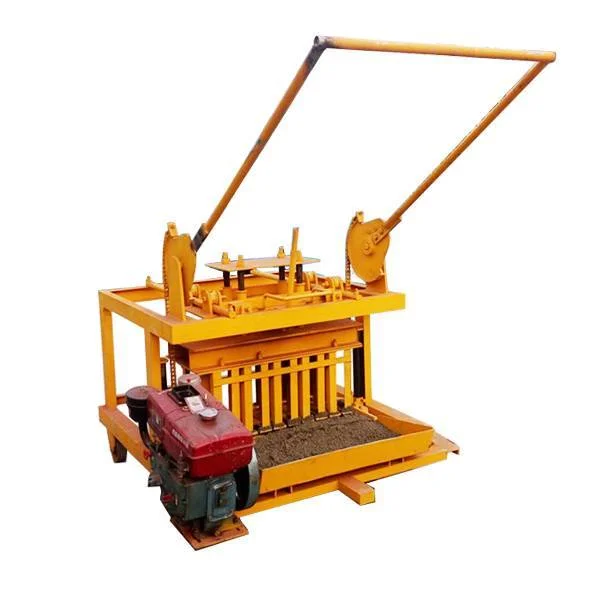
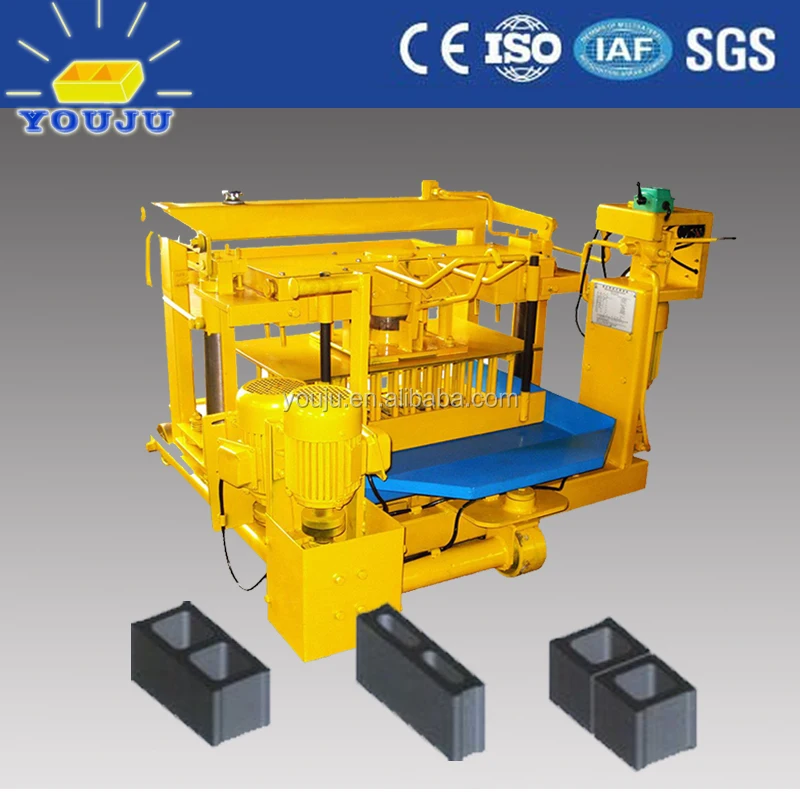
| Product Type | Mobile Concrete Block Making Machine |
| Rated Power | 5 kW |
| Overall Dimensions (L×W×H) | 1200 × 1200 × 1100 mm |
| Net Weight | 950 kg |
| Cycle Time | 30 seconds per mould |
| Output Capacity | 480 pcs/hour (based on 400×200×200mm hollow block, 4 pcs/mould) |
| Output Capacity | 600 pcs/hour (based on 400×150×200mm hollow block, 5 pcs/mould) |
| Output Capacity | 840 pcs/hour (based on 400×100×200mm hollow block, 7 pcs/mould) |
| Daily Output (8 hours) | 3,840 pcs (based on 400×200×200mm hollow block) |
| Daily Output (8 hours) | 4,800 pcs (based on 400×150×200mm hollow block) |
| Daily Output (8 hours) | 6,720 pcs (based on 400×100×200mm hollow block) |
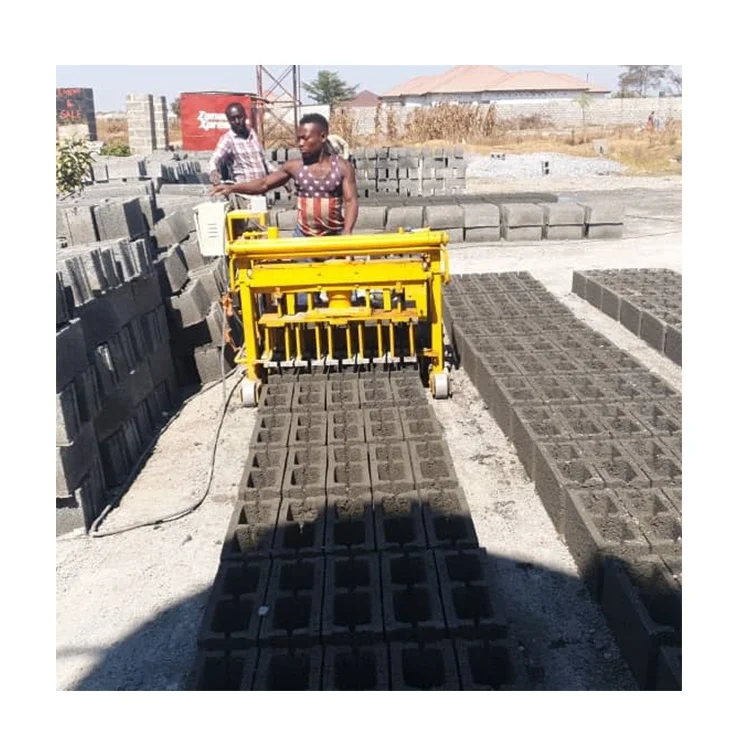
| Pallet Requirement | None — egg-laying type, blocks laid directly on ground |
| Mould Formats | Hollow block, solid brick (changeable moulds) |
| Control System | Manual operation |
| Automation Level | Manual / Mobile egg-laying |
| Raw Materials | Cement, sand, crushed stones, slag |
| Voltage & Frequency | To be confirmed before shipment |
| Hydraulic Pressure | Value not stated in source — confirm with supplier |
| Vibration Force | Value not stated in source — confirm with supplier |
| Warranty | One year |
Application Suitability
| Application | Material or Output |
|---|---|
| On-site hollow block production for building contractors | Cement, sand, and crushed stone mixed locally, blocks cured on prepared ground |
| First production point for entrepreneurs entering block sales | Low-investment start with manual egg-laying operation, no fixed plant required |
| Remote or short-duration project supply | Mobile unit moved between job sites, eliminating transport of purchased blocks |
| Solid brick production for local masonry markets | Changeable mould system producing solid brick formats from the same machine |
Why "Pieces per Hour" Means Nothing Without the Block Format
The QMY4-30 produces 480 pieces per hour only when running 400×200×200mm hollow blocks — switch to 400×100×200mm and the same cycle delivers 840.
Most mobile block machine quotations quote a single headline capacity without naming the block size behind that number. I have watched buyers plan an entire project schedule around a daily output figure, only to discover on site that their market demands a smaller block format and the real throughput is completely different. The mobile block making machine specifications how to choose conversation must begin with the exact dimensions your buyers pay for. [NEED_CITE: common causes of output shortfalls in small-scale block production]
Matching Cycle Time to Your Block Format
The 30-second mould cycle is the constant across every format this machine runs. What changes is how many blocks drop per cycle: four for the 200mm-wide hollow block, five for the 150mm, and seven for the 100mm partition block. When you review mobile block making machine specifications how to choose wisely, the first question is which of those three formats dominates your local demand. A site producing mainly 100mm partition blocks will see nearly double the daily volume of a site running only 200mm load-bearing hollow blocks, even though the machine is identical.
What Egg-Laying Design Removes From Your Budget
Pallets represent a recurring cost that many first-time block producers underestimate. The QMY4-30 lays blocks directly onto a prepared ground surface, so there is no pallet purchase, no pallet return loop, and no pallet storage area to manage. For a contractor producing on a building site where floor space is already crowded with rebar and formwork, eliminating pallets simplifies the entire workflow. The trade-off is that ground preparation becomes critical: the surface must be level, firm, and large enough to hold a full day’s output before blocks are moved to the stacking area. [NEED_CITE: ground preparation standards for egg-laying block machines]
Reading the Specs That Actually Shape Your Output
The 5 kW rated power makes this machine viable on sites with limited electrical infrastructure — a common condition in rural builds and remote project locations. However, power alone does not determine block density. Vibration force and the pressure applied during compaction work together to consolidate the mix; if either is mismatched to your aggregate gradation, blocks will be weak regardless of cycle speed. The net weight of 950 kg provides a stable platform during vibration, but the operator still needs to control feed consistency manually since the control system is manual operation. When reviewing the mobile block making machine specifications how to choose the right configuration, verify that the vibration system suits the coarse or fine nature of your local sand and crushed stone.
The Cost of Ignoring Your Local Aggregate
One buyer sourced a machine rated for fine river sand, then fed it crushed granite dust because that was the only aggregate available within hauling distance of the site. The blocks crumbled at the edges before curing was complete, and the entire first week’s production had to be crushed and reprocessed. When vibration force and mix design are not aligned, the machine runs but the product fails. Always confirm with the supplier that the QMY4-30’s vibration characteristics suit your specific raw material before the machine ships. [NEED_CITE: aggregate compatibility requirements for concrete block production]
What You Gain by Sourcing Through a Block-Machinery Specialist
Every configuration discussion starts with your target block format and local raw material, not a stock list — this means the QMY4-30 mould is matched to the dimensions your market actually purchases. Mould design and supply extend to custom drawings when standard formats do not cover your regional requirements. The machine, mould, and any supporting handling items are specified as one system rather than assembled from unrelated suppliers, reducing the chance of interface problems at commissioning. Factory testing covers the actual block format you will produce, so the test record reflects your product rather than a generic sample. Voltage and control language are confirmed before production begins, preventing the delays that occur when a machine arrives with the wrong electrical configuration.
Documentation & Verification
- Machine specification sheet listing output per block format, not a single headline figure
- Mould drawing and format list confirming exact block dimensions before production
- Factory test record produced using your target block size and mix
- Voltage and frequency confirmation document signed off before dispatch
- Operation and maintenance manual covering mould change and daily servicing
Installation, Commissioning & Support
- Ground must be level and compacted across an area large enough for 3,840 to 6,720 blocks per day depending on format
- Dedicated 5 kW circuit with correct voltage and frequency as confirmed in pre-shipment documentation
- Machine arrives assembled; operator positions and begins production after mould installation and mix trial
- First-day commissioning includes adjusting feed volume and cycle rhythm to match local aggregate behaviour
- Mould change training covers the switch between hollow block and solid brick formats on site
- Wear parts list provided with recommended reorder intervals based on your raw material abrasiveness
What to Include in Your Enquiry
To receive a configuration proposal that reflects your actual production conditions, share the block format and dimensions your market requires, the source and gradation of your local sand and aggregate, and the voltage and frequency standard at your site. If you already have a mixer or a specific curing area layout, mention those so the line can be planned around existing equipment. The more specific your raw material description, the more accurately the vibration and compaction settings can be matched before the QMY4-30 leaves the factory.
Frequently Asked Questions
Q: How is the output capacity calculated, and which block format does each figure assume?
A: Every capacity figure on this page is tied to a specific block dimension and mould cavity count. The 480 pieces per hour assumes 400×200×200mm hollow blocks at four per mould; the 840 pieces per hour assumes 400×100×200mm blocks at seven per mould. Daily figures multiply the hourly rate across an eight-hour shift. No single headline number is used because output varies significantly with format choice.
Q: What block formats and mould sizes can the QMY4-30 produce, and can custom moulds be supplied?
A: Standard moulds cover hollow block and solid brick formats within the machine’s mould frame dimensions. If your local market requires a dimension not in the standard range, custom moulds can be designed and manufactured to your drawings. Confirm the exact block dimensions you need before the order is placed so the mould is ready at commissioning.
Q: What are the site and ground conditions required for mobile egg-laying block production?
A: The ground must be level, firm, and clean — a compacted gravel bed or concrete floor works well. The area must be large enough to hold a full day’s output since blocks cure in place before being moved. Adequate space for the operator to walk the machine along a straight production path is also necessary for consistent block placement.
Q: How do I confirm voltage, frequency, and control language match my country before shipment?
A: Voltage and frequency are confirmed during the quotation stage and recorded in a signed pre-shipment document. Because the QMY4-30 uses manual operation without a PLC, language configuration mainly applies to any warning labels or documentation supplied with the machine. State your local electrical standard clearly in your first enquiry to avoid rewiring on arrival.
Q: What is the mould change procedure, and how long does it take to switch between block formats?
A: Mould change involves releasing the current mould from the frame, lifting it out, positioning the replacement mould, and securing it — a process that can be completed with basic hand tools. The exact duration depends on operator familiarity; a trained operator typically completes the switch within a portion of a single shift, allowing the same machine to produce different formats across the working day.