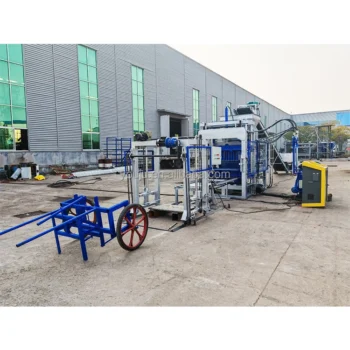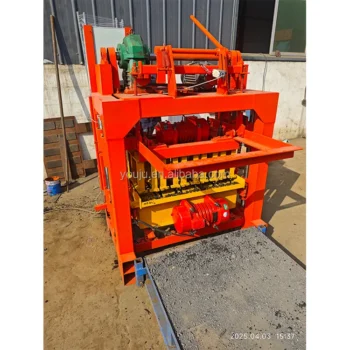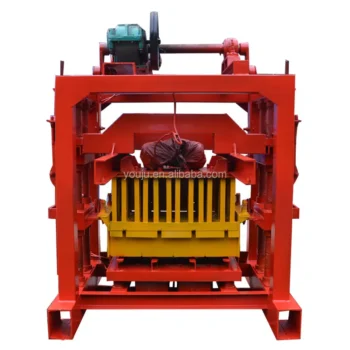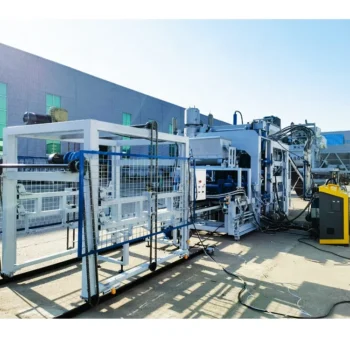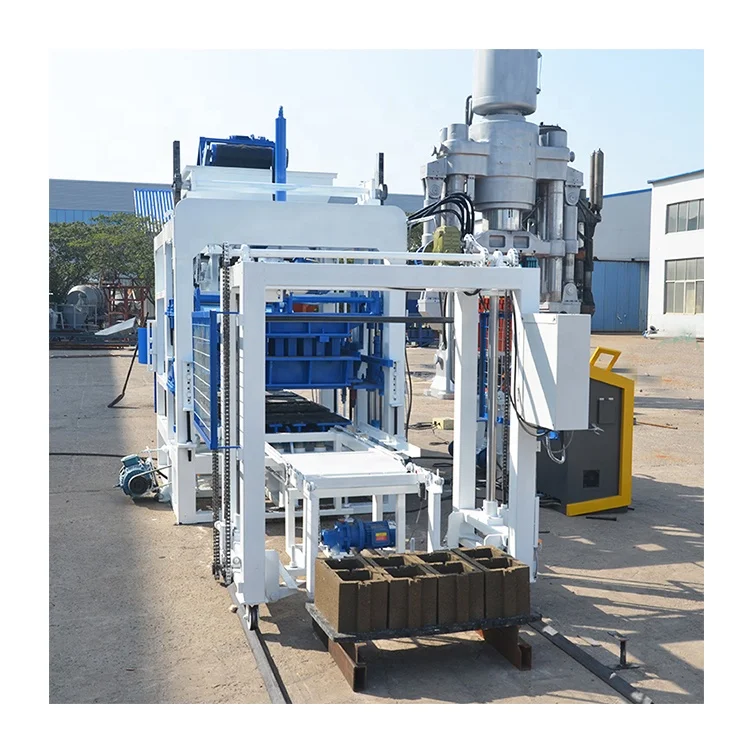
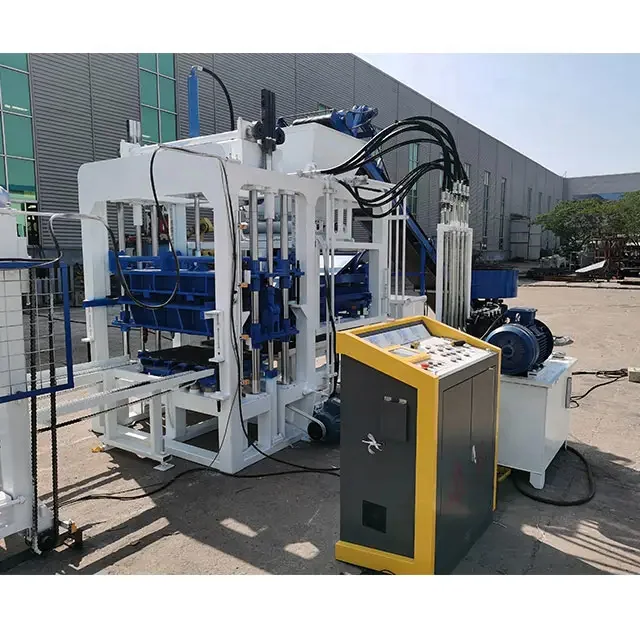
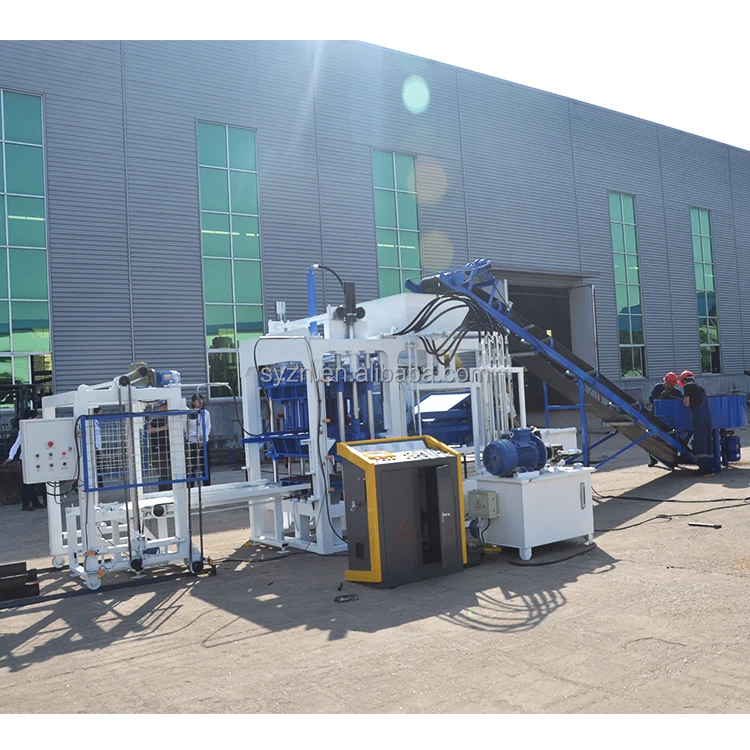
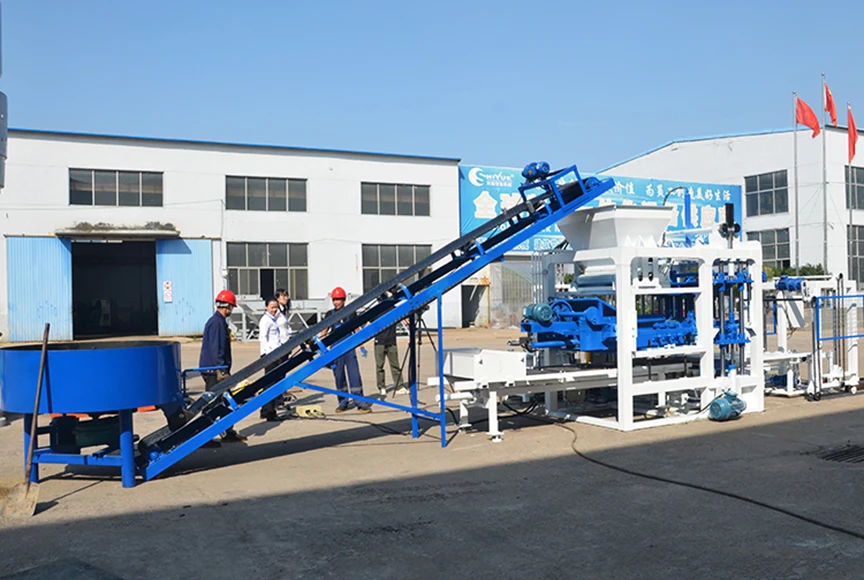
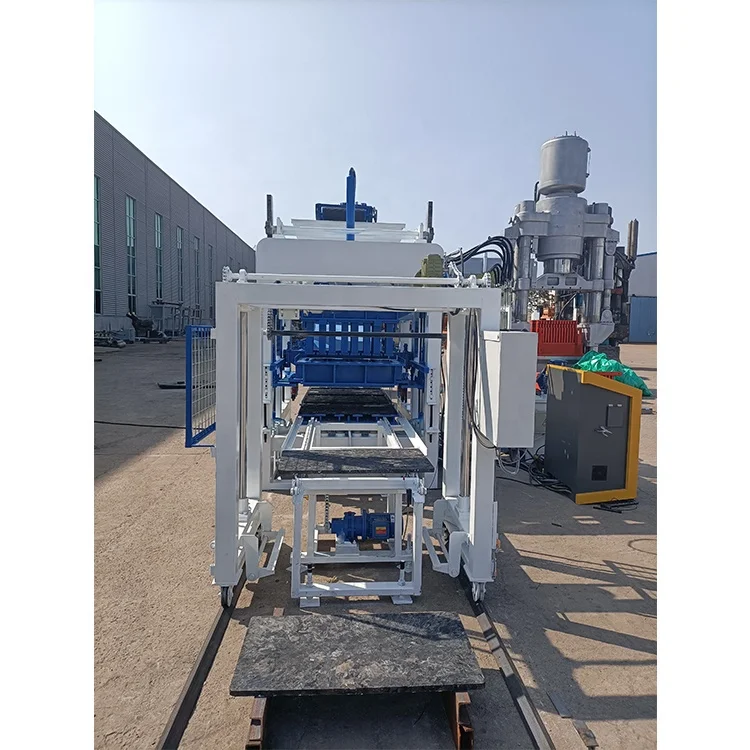
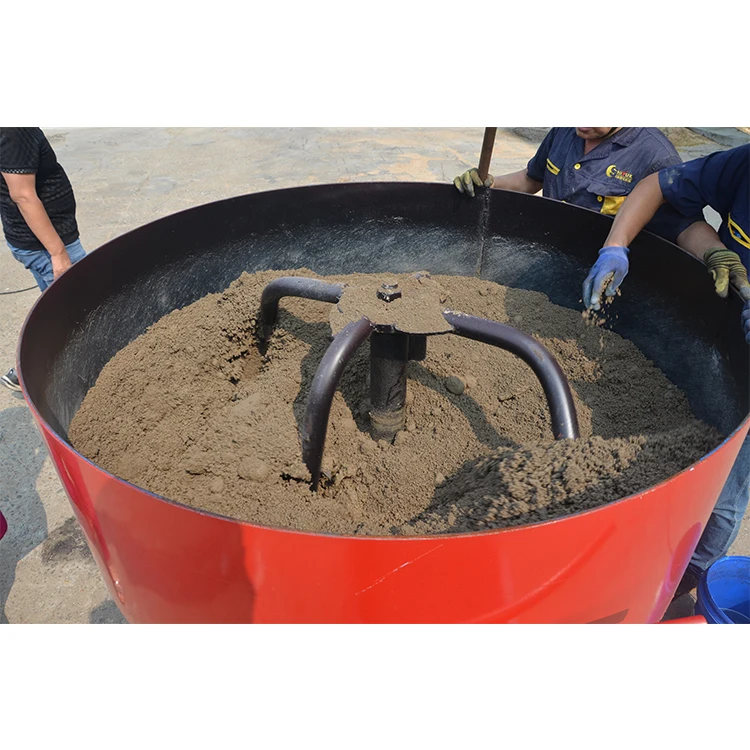
Description
Format-by-Format Capacity — QT4-18 output figures are tied to a named block size, mould count, and cycle range so buyers match machine to market, not a catalogue default.
Technical Specifications
| Parameter | Value |
|---|---|
| Model | QT4-18 |
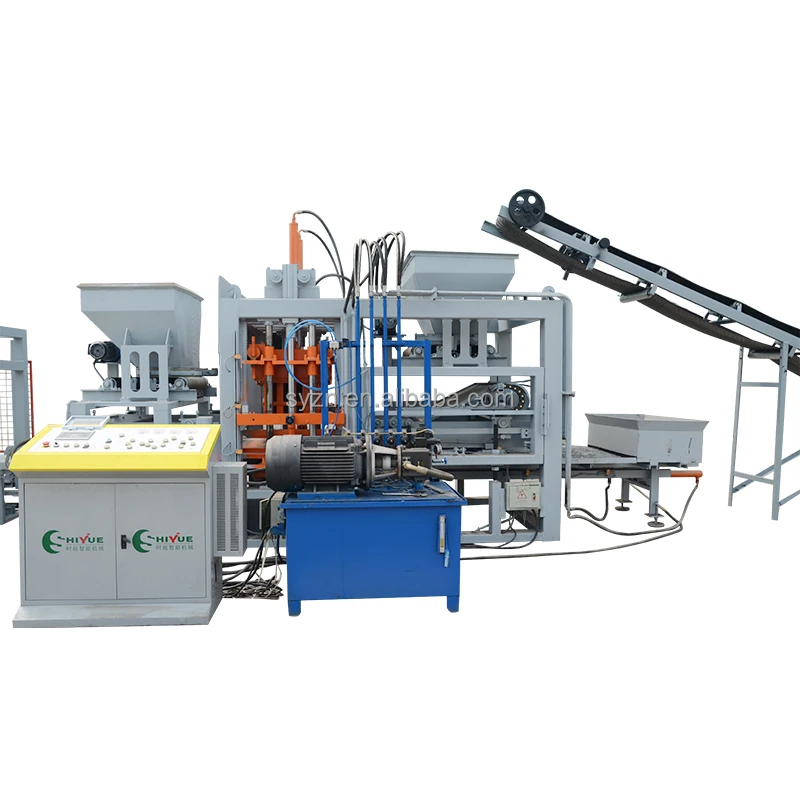
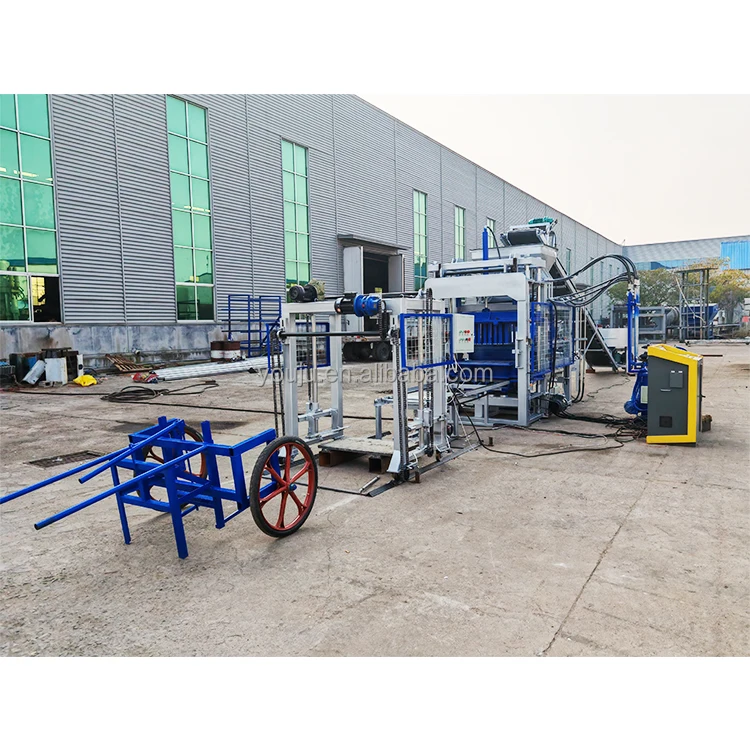
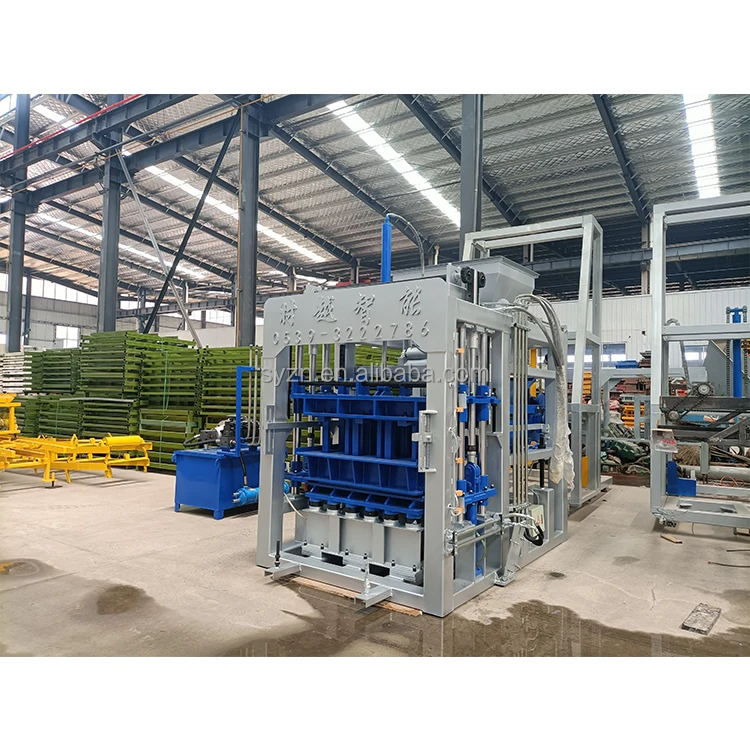
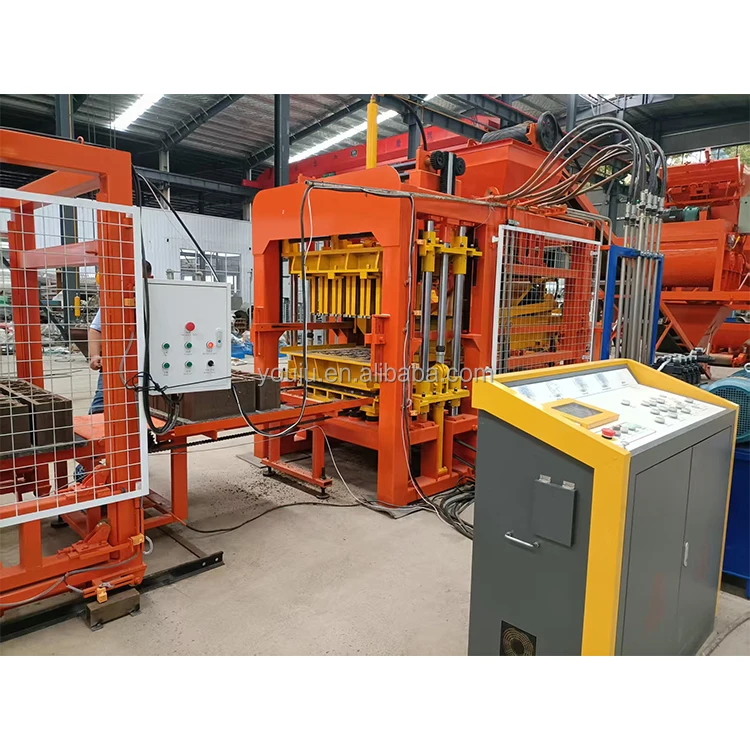
| Product Type | Stationary Full Automatic Concrete Block Making Machine |
| Rated Power | 27.5 kW |
| Hydraulic Pressure | 20 MPa |
| Main Vibration Form | Platform Vibration |
| Molding Cycle | 15–25 seconds (basis to be confirmed) |
| Net Weight | 5800 kg |
| Overall Dimensions (L×W×H) | 7100 × 1600 × 2610 mm |
| Voltage & Frequency | Configurable to buyer’s local supply (basis to be confirmed) |
| Mould Format Options | Hollow block, porous block, standard solid block, color-face brick, interlocking block, road curb brick |
| Automation Level | Full automatic |
| Theoretical Output — 400×200×200 mm Hollow Block | 4 pcs/mould, 15–20 s cycle, 5,760–7,680 pcs/day |
| Theoretical Output — 240×115×90 mm Porous Block | 14 pcs/mould, 15–20 s cycle, 25,200–33,600 pcs/day |
| Theoretical Output — 240×115×53 mm Standard Solid Block | 28 pcs/mould, 15–17 s cycle, 59,300–67,200 pcs/day |
Application Suitability
| Application | Material or Output |
|---|---|
| Hollow concrete block production | Crushed stone, sand, cement, and fly ash blends for load-bearing and partition walls |
| Porous and perforated brick manufacturing | Lightweight aggregate mixes for thermal-insulated masonry |
| Standard solid brick production | Dense sand-cement mixes for structural brickwork |
| Color-face layered bricks | Two-layer feed with pigmented face mix over base concrete |
| Interlocking paver and road curb stone | High-density mixes with fine aggregate for wear-resistant surfaces |
Why "Pieces per Hour" Is Not the Full Story for Stationary Block Machine Specifications QT4-18
Every output figure on this page names the block format, mould count, and cycle time it assumes.
I once saw a buyer in Southeast Asia sign off on a block machine quoted at a single hourly rate. When the line was commissioned, the actual product was a 400×200×200 mm hollow block — four pieces per mould. The daily volume fell well below the plant’s contract commitments because the quoted number had been based on a smaller solid format producing twenty-eight pieces per cycle. That mismatch is more common than equipment failure, and it usually surfaces only after the concrete mixer is already bolted to the floor [NEED_CITE: common causes of block plant underperformance]. The stationary block machine specifications QT4-18 data here ties each output row to a specific block dimension and cycle window so that mismatch does not repeat.
Matching the Machine to the Block Your Market Actually Buys
The stationary block machine specifications QT4-18 sheet lists three reference formats, but real plants often run a fourth or fifth mould. Platform vibration combined with 20 MPa hydraulic pressure gives the press enough forming force to handle both dense structural blocks and lighter porous mixes. The point is to confirm which block your local construction market orders in volume and size the line around that format first, then add secondary moulds once the primary product is running at contract pace.
What Cycle Time Really Depends On
A 15–25 second cycle window is a range, not a promise. Where your actual cycle lands depends on the mix moisture, aggregate gradation, and the thickness of the block being pressed. Thicker hollow blocks require longer vibration to consolidate the concrete fully, while thin solid bricks cycle faster. Before the quotation stage, we review your local aggregate sieve analysis and target block density so the cycle estimate is grounded in material you can actually source [NEED_CITE: effect of aggregate gradation on block press cycle time].
Reading the Core Specifications
The 27.5 kW rated power covers the hydraulic pump, vibration motor, and conveyor drives running simultaneously — a figure that matters when sizing the dedicated transformer at your site. Platform vibration, rather than mould-only vibration, transmits force through the entire pallet surface, producing more uniform density across a four-cavity hollow block mould. The 20 MPa hydraulic pressure works in tandem with that vibration to compact the mix before release, and the balance between the two is what determines whether a block holds its edge or crumbles during demoulding. At 5800 kg net weight, the frame mass absorbs continuous vibration without resonance, which matters for block consistency over a ten-hour shift.
The Hidden Cost of Skipping the Voltage Conversation
I spent two weeks on a jobsite rewiring a control cabinet because the machine arrived rated for 415V three-phase while the workshop supply was 380V. The electrician had no warning, the line sat idle, and the contractor missed a delivery deadline. Voltage, frequency, and PLC display language are specifications that cost nothing to confirm upfront but shut down a plant for weeks if they arrive wrong [NEED_CITE: voltage and frequency standards by export market]. For the QT4-18, we request a photograph of the buyer’s meter panel before the order is finalised so the motor windings, control transformer, and PLC are wound and programmed for the supply that actually exists at the site.
Why Buyers Source the QT4-18 Here
Block machinery is the single product focus, so the press, mould, pallet, and handling equipment are specified as one matched system rather than assembled from separate vendors. The configuration starts from the buyer’s actual mix design and target block format, not a catalogue default row. Mould design covers the formats the buyer’s market sells, including custom drawings when a local housing project specifies a non-standard dimension. Automation level is selectable, allowing a buyer to start semi-automatic and add stacking later. Installation support includes operator training on the specific block formats the line will produce.
Documentation & Verification
- Line layout with capacity calculation stating the exact block format assumed per output row
- Mould drawing and format list confirming which cavities ship with the press
- Voltage, frequency, and PLC display language confirmation sheet signed before production
- Hydraulic and electrical schematic matching the as-built QT4-18 configuration
- Factory test record run on the buyer’s specified block format before dispatch
Installation, Commissioning & Support
- Foundation pad sized for 7100 × 1600 mm footprint and 5800 kg dynamic load
- Dedicated circuit rated for 27.5 kW continuous draw with voltage confirmed against meter panel photo
- Press head and hydraulic station shipped bolted to frame for faster site assembly
- First-run cycle tuning against buyer’s local aggregate and mix moisture content
- Operator training on mould change procedure for all included block formats
- Wear parts list with hydraulic seal and vibration pad reorder references
What to Include in Your Inquiry
Send the block format your market orders most, the daily volume your contract requires, and a photo of your workshop meter panel. If you already have a curing yard and forklift, share the pallet dimensions so the handling system matches what is on site.
Frequently Asked Questions
Q: How is daily output verified for my specific block format and local mix design?
A: We run a factory test on the QT4-18 using the block dimensions and cavity count you specify, then document the actual cycle time and output. Where local aggregate differs from standard sand, we adjust the vibration duration and hydraulic pressure settings and record the results in the test report before shipment.
Q: Which mould formats are included and what is the mould change procedure?
A: The quotation lists every mould by format and drawing number. The QT4-18 accepts hollow, porous, solid, interlocking, and curb moulds on the same platform. Changeover involves releasing the locating bolts and lifting the mould with the plant hoist. Exact change time depends on the operator and hoist capacity at your site.
Q: How are hydraulic pressure and vibration matched to my aggregate and block strength?
A: The 20 MPa hydraulic system and platform vibration are tuned together during commissioning. We review your aggregate sieve analysis and target compressive strength, then adjust the pressure hold time and vibration cycle so the block meets the required density without over-compacting the mix.
Q: What pallet size does the QT4-18 require and how does it match my curing area?
A: Pallet dimensions are selected based on the largest mould in your format list and confirmed against your curing rack spacing and forklift tine width. This avoids a situation where blocks arrive at the yard and cannot be stacked with the equipment already on site.
Q: Are voltage and PLC language confirmed before shipment?
A: Yes. We request a meter panel photograph and confirm supply voltage, frequency, and the PLC display language before the order enters production. This step prevents the commissioning delays that occur when a machine arrives wound for a voltage the workshop does not have [NEED_CITE: common electrical mismatches in exported block machinery].