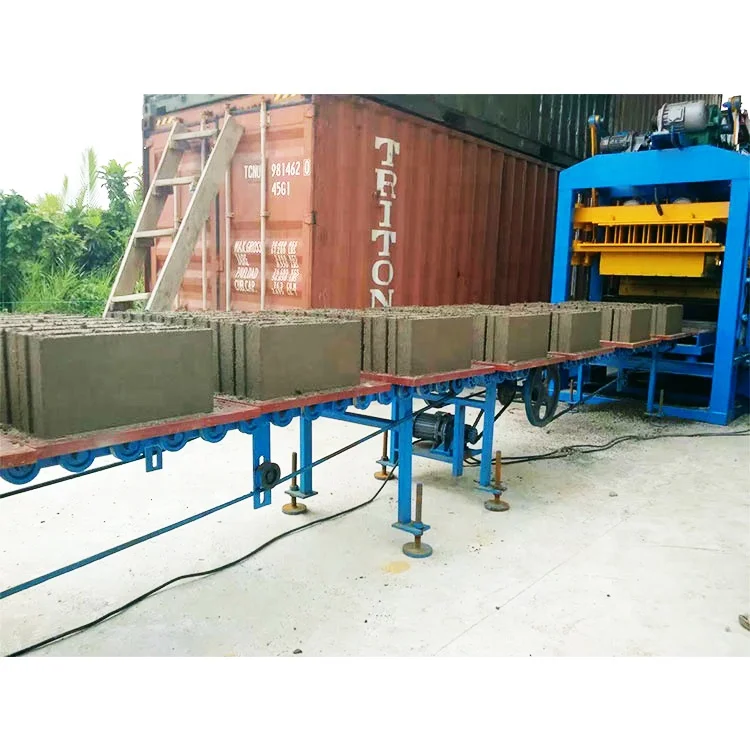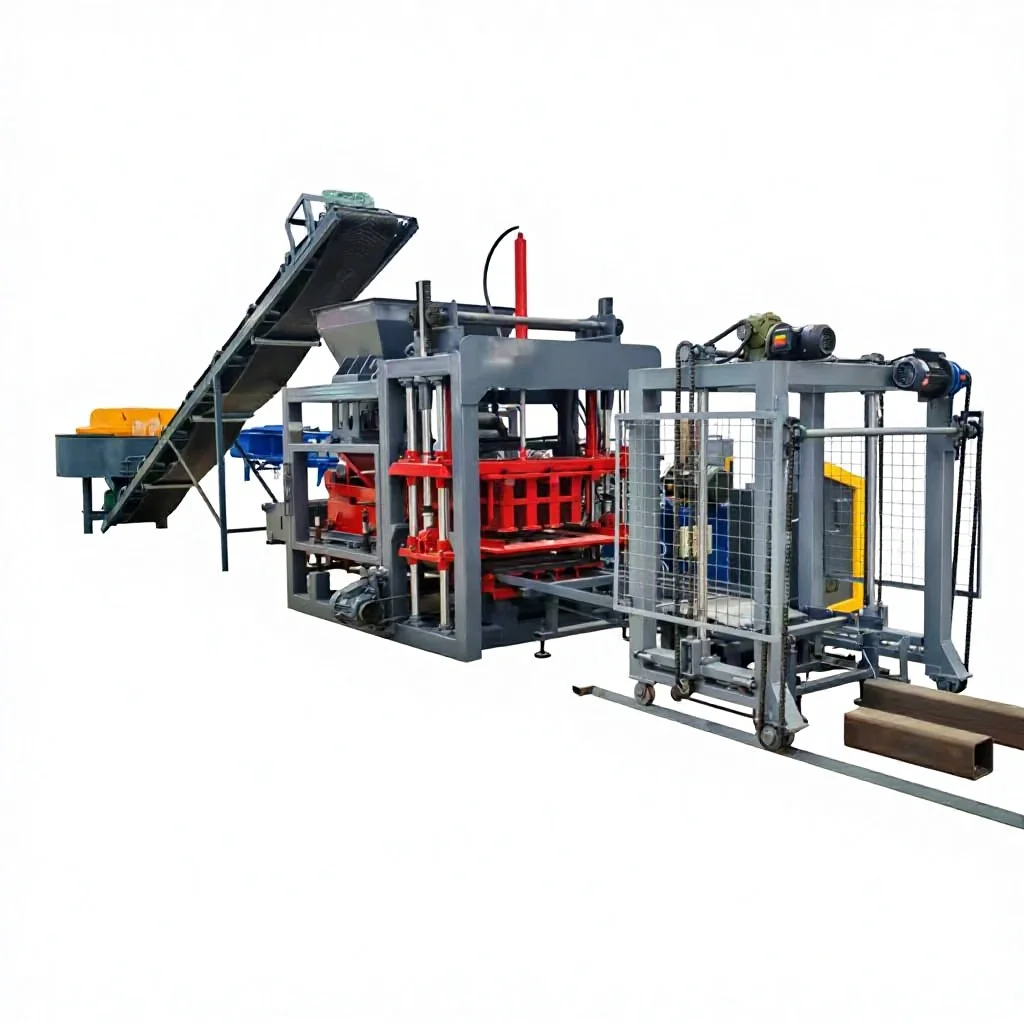
Description
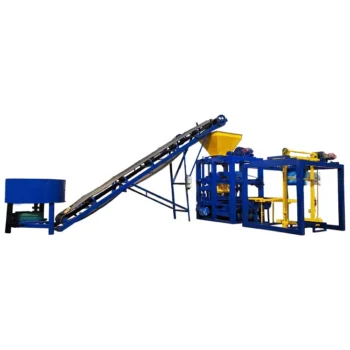
Matched Mould and Pressure System — We configure the QT4-15A vibration force and hydraulic circuit around your actual aggregate gradation and block design, not a catalogue default.
Technical Specifications
| Parameter | Value |
|---|---|
| Model | QT4-15A |
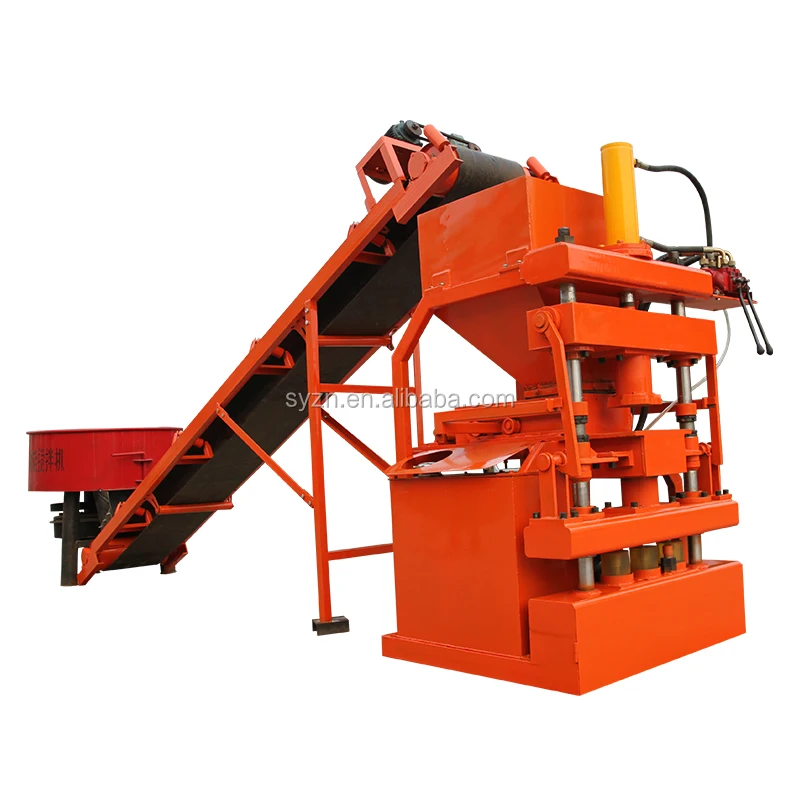
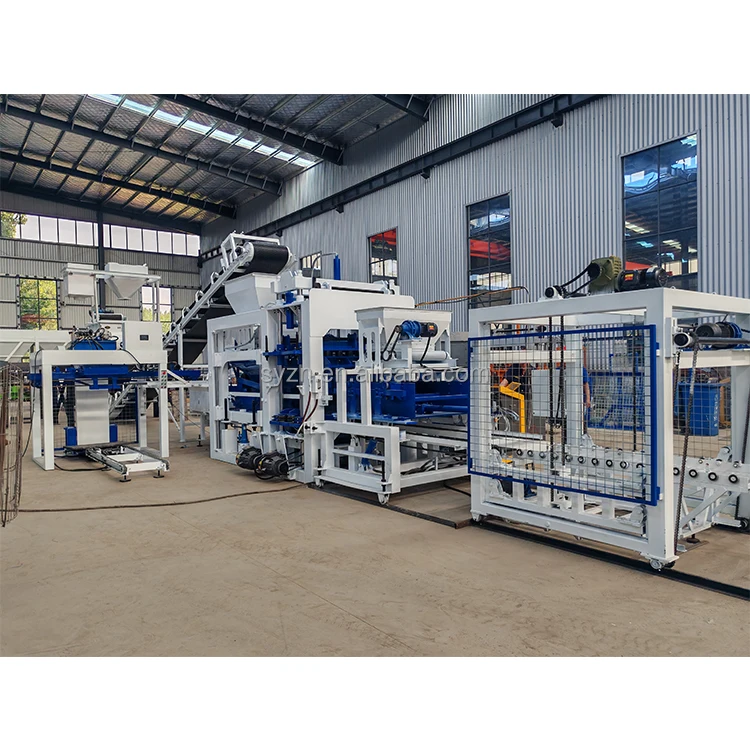
| Product Type | Fully Automatic Hydraulic Concrete Block Making Machine |
| Overall Dimensions (L×W×H) | 4100×1600×2600 mm |
| Rated Pressure | 16–21 MPa |
| Main Vibration Form | Platform Vibration |
| Vibration Frequency | 4200 r/min |
| Vibration Force | 55 kN |
| Pallet Size | 880×550 mm |
| Molding Cycle | 25–30 s (basis not stated in source — confirm block format / material / thickness) |
| Overall Power | 18.45 kW |
| Total Mass | 4 T |
| Demolding Method | Hydraulic |
| Factory Area Required | 300 m² |
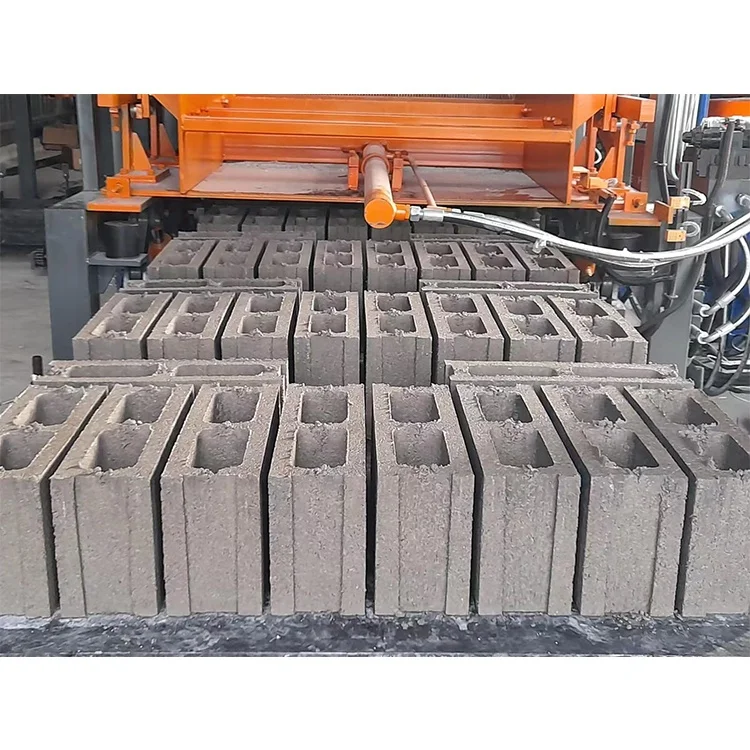
| Applied Products | Hollow blocks, solid blocks, pavers, interlocking blocks, kerbstone, colored pavers |
| Raw Materials | Crushed stone, sand, cement, fly ash, gravel, slag |
| Automation Level | Fully automatic |
| CE Declaration | Available where applicable |
Application Suitability
| Application | Material or Output |
|---|---|
| Hollow block production for residential walls | Crushed stone, sand, cement and fly ash blends |
| Solid block manufacturing for load-bearing structures | Gravel and cement with controlled moisture |
| Interlocking paver production for driveways and walkways | Fine aggregate and colored cement mixes |
| Kerbstone forming for road and pavement edging | Coarse aggregate with higher cement content |
| Colored paver runs for architectural projects | Pigmented cement with selected sand fractions |
Why "Cycles per Hour" Tells Only Part of the Story for the QT4-15A Block Machine
Capacity means nothing until you know which block format it assumes.
Buyers regularly compare machines on a single output number and discover after installation that the figure was measured on a small solid brick, not the 200 mm hollow block their market actually demands. The QT4-15A block machine specifications must be read alongside the specific mould and mix design that will run on your floor. A cycle time of 25–30 seconds on one format can stretch considerably on a thicker, heavier unit, and vibration force that compacts one aggregate blend perfectly may leave another under-densified. [NEED_CITE: common discrepancy between quoted and actual block plant output]
That mismatch is the single largest source of post-delivery disappointment in block machinery procurement, and it is entirely avoidable when the quotation states output per format.
Matching Mould Format to Your Local Market Demand
The QT4-15A block machine specifications cover a wide format range — hollow, solid, interlocking, paver and kerbstone — but the real question is which of those formats your distributors and contractors are ordering this quarter. Every mould change introduces a pause in production, and a plant that swaps formats three times a day needs a quick-change system and pre-staged pallets for each run. We supply the format list and mould drawing up front so you can confirm the exact dimensions match what your market sells before the machine enters production.
Sizing the Pallet to Your Existing Curing Infrastructure
An 880×550 mm pallet only makes sense if your curing racks and forklift are built around that footprint. Buyers who overlook this detail end up rebuilding curing areas or purchasing new handling equipment after the machine arrives. [NEED_CITE: pallet handling mismatches in block plant installations] We confirm pallet size, material and rack spacing against your current setup during the configuration stage, so the QT4-15A slots into your line without forcing ancillary purchases you did not budget for.
Reading the Pressure and Vibration Numbers Together
Rated pressure of 16–21 MPa and platform vibration at 55 kN are not independent figures — they work as a pair to compact your specific aggregate blend into a dense, consistent block. A high vibration force with insufficient hydraulic pressure leaves the top face under-pressed; excessive pressure with low vibration traps air in the mix. The QT4-15A block machine specifications only become meaningful once they are mapped against your local crushed stone gradation and cement ratio, which is why we request a sample mix before finalizing the hydraulic and vibration settings.
The Cost of Skipping Format-Specific Capacity Calculation
When a quotation lists a single daily output number without naming the block format, buyers commit to production targets they cannot meet. Contracts get delayed, penalties accrue, and the machine earns a reputation for underperformance that has nothing to do with its actual capability. [NEED_CITE: contract penalties linked to block plant output shortfalls] A format-by-format capacity table, included with the proposal, removes this risk entirely and gives your project planner a realistic schedule to work from.
Why the QT4-15A Is Configured, Not Just Quoted
Block machinery is our single focus, which means the QT4-15A press, mould, pallet and handling equipment are specified as one matched system rather than sourced from separate vendors and assembled on site. We set the vibration and hydraulic parameters against your actual mix design and target block format, not a generic factory default. Mould design covers the formats your market demands, including custom drawings when standard options do not match. The automation level is selectable, so you can begin with semi-automatic pallet handling and upgrade to fully automatic stacking as volume grows. Installation support includes operator training on your specific block formats, and we supply the wear parts and mould list from day one.
Documentation & Verification
- Line layout and capacity calculation stating the block format assumed for each output figure
- Mould drawing and format list confirming exact dimensions for your market
- Pallet specification aligned with your existing curing racks and forklift capacity
- Hydraulic and electrical schematic with confirmed voltage and frequency
- Factory test record run on your specified block format before dispatch
- Operation and maintenance manual with wear parts and mould replacement schedule
Installation, Commissioning & Support
- Foundation plan sized to the 4100×1600 mm footprint and 4 T operating mass
- Dedicated power circuit for the 18.45 kW total load at your confirmed voltage and frequency
- Machine dismantled for container loading and reassembled on your prepared slab
- First-run commissioning with hydraulic pressure and vibration force tuned to your mix
- Operator training covering mould change procedure and daily maintenance checks
- Wear parts list and first replacement schedule provided at handover
What We Need From You to Size the QT4-15A Correctly
Tell us which block formats your market orders most, the daily volume you need for each, and the aggregate sources available within hauling distance of your plant. Share your existing pallet size and curing rack layout so we can confirm compatibility. Confirm your site voltage, frequency and preferred PLC display language so the QT4-15A block machine specifications are locked before production begins.
Frequently Asked Questions
Q: How is daily output calculated per block format on the QT4-15A, and what cycle time applies to my hollow block?
A: We calculate output by multiplying the confirmed cycle time for your exact block dimensions by the available production hours, then applying a realistic utilization factor. The baseline cycle of 25–30 seconds shifts depending on block thickness, material density and pallet fill pattern. We provide a format-by-format capacity table with every proposal so there is no ambiguity about what the machine will produce on your mix.
Q: Which mould formats are available off-the-shelf, and can you supply custom moulds from my drawings?
A: Standard moulds cover common hollow, solid, interlocking, paver and kerbstone dimensions. When your market requires a non-standard size or surface texture, we design and manufacture custom moulds from your drawings, confirming the cavity count and compaction behavior before the mould enters production alongside the QT4-15A.
Q: How do vibration force and hydraulic pressure adjust to my local aggregate and mix design?
A: The 55 kN vibration force and 16–21 MPa rated pressure are adjusted together based on your aggregate gradation, cement content and target block strength. We request a sample of your local materials, run test compactions, and set the hydraulic and vibration parameters so the QT4-15A produces consistent density across every production batch.
Q: Will the 880×550 mm pallet fit my existing curing area and forklift?
A: We confirm pallet dimensions against your curing rack spacing, stacking height and forklift tine width during the configuration stage. If your existing infrastructure uses a different pallet size, we evaluate whether an adaptation is feasible or recommend the handling adjustments needed before the QT4-15A arrives at your plant.
Q: Which voltage, frequency and PLC language will be configured before the machine ships?
A: We confirm your site voltage, frequency and preferred control display language in writing before production begins. This ensures the electrical panel, motor ratings and PLC interface on the QT4-15A are correct for your country, eliminating commissioning delays that commonly occur when these details are left unspecified. [NEED_CITE: voltage and frequency standards by export market]