Fly Ash Block Machine Component Types: Wholesale Supplier for QT Series
Not all spare parts share the same customs code.
Correctly identifying and classifying block machine components is critical for smooth customs clearance and minimizing production downtime. Buyers must distinguish between structural parts, wear parts, and hydraulic/electrical systems to avoid shipping errors and ensure continuous operation of QT series machines.
I still remember the silence at the Tincan port in Lagos. It wasn’t the quiet of peace; it was the quiet of a stalled supply chain. A container full of QT8-15 spare parts had been held for nine days because the declaration mixed hydraulic seals with structural steel frames under a single, vague HS code. The local customs officer couldn’t verify the duty rate for "machine accessories" when the contents ranged from high-pressure rubber seals to heavy cast iron bases. Meanwhile, back at the client’s plant, the diesel generator hummed away, burning fuel while the block line sat idle. That incident shifted my perspective entirely. I realized that a fly ash block machine component types list is not just a maintenance checklist; it is a legal and operational document. Misclassifying a vibration shaft as a general structural part doesn’t just cause confusion; it triggers inspections that cost more than the parts themselves. [NEED_CITE: common causes of customs delays for industrial machinery imports]

Understanding these distinctions helps procurement managers in emerging markets order accurately. It ensures that when a critical mold liner wears out, the replacement arrives via express courier without being stuck in a customs warehouse due to incorrect paperwork.
Why Component Classification Matters for Importers?
The primary reason to meticulously categorize parts is to align with international trade standards. Many buyers assume that all "spare parts" for a concrete block machine can be shipped under one generic code. This is a costly misconception. Hydraulic components, electrical sensors, and structural steel frames have distinct classifications that affect duty rates and inspection protocols. [NEED_CITE: HS Code guidelines for industrial machinery parts classification]
When I prepare a shipment, I do not group items by convenience. I group them by function and material. For instance, a set of polyurethane seals for a hydraulic cylinder has a different tariff implication than the cast steel frame of the machine itself. If these are mixed in a single line item on the commercial invoice, customs authorities in many African and Latin American ports will flag the shipment for physical inspection. This delay is not merely an administrative hurdle; it translates directly to lost production hours.
Consider the case of a buyer in Southeast Asia who needed urgent replacements for a QT6-15 line. By separating the fly ash block machine component types into clear categories—wear parts versus structural supports—we were able to ship the critical wear items via air freight while the heavier structural components moved by sea. This strategy minimized downtime. The key is recognizing that customs officers look for consistency between the description, the material, and the declared value. A vague description like "machine part" invites scrutiny, whereas "hydraulic piston seal for QT series block machine" provides the clarity needed for rapid release. [NEED_CITE: impact of accurate product description on customs clearance speed]

Key Component Categories in Fly Ash Block Machines
To build an accurate inventory, one must understand the functional lifecycle of each part. Components in a QT series machine fall into four distinct groups: Structural, Wear-resistant, Hydraulic/Pneumatic, and Electrical. Each group has different maintenance intervals and import considerations.
Structural Components
These are the backbone of the machine, including the main frame, base plates, and support columns. They are designed for long-term durability and rarely need replacement unless damaged by accident or severe corrosion. Because they are heavy and made of standard steel, they are often subject to different weight-based shipping calculations.
Wear-Resistant Components
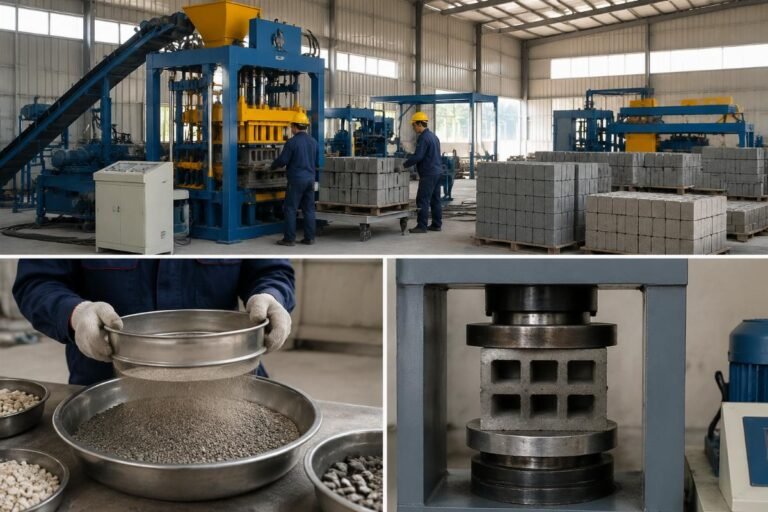
This category includes molds, mold liners, vibration shafts, and feed car wheels. These parts interact directly with the abrasive fly ash and concrete mix. They have a predictable lifespan and require regular replacement. The tolerance here is critical. A mismatch in mold dimensions by even a few millimeters can result in blocks that do not meet size standards. [NEED_CITE: industry standards for concrete block dimensional tolerance]
Hydraulic and Pneumatic Systems
This includes cylinders, valves, pumps, and seals. These components operate under high pressure and are sensitive to contamination. Seals, in particular, are small but vital. A failed seal can halt the entire pressing cycle. These parts often require specific material certifications, such as resistance to hydraulic oil degradation.
Electrical and Control Systems
PLCs, sensors, solenoid valves, and wiring harnesses fall into this category. These are the most sensitive to humidity and voltage fluctuations during shipping. Proper packaging is essential to prevent static damage or moisture ingress.
| Component Category | Typical Examples | Lifespan Expectation | Customs Sensitivity |
|---|---|---|---|
| Structural | Main Frame, Base Plate | Long-term (Years) | Low (Standard Steel) |
| Wear-Resistant | Molds, Liners, Vibration Shafts | Short-term (Months) | High (Precision Parts) |
| Hydraulic/Pneumatic | Seals, Valves, Cylinders | Medium-term | High (Material Specific) |
| Electrical | PLC, Sensors, Solenoids | Medium-term | High (Fragile/Value) |
Understanding these categories helps in creating a fly ash block machine component types inventory that matches actual usage patterns. It also aids in negotiating better shipping rates, as wear parts can be consolidated for faster delivery methods.

Common Mistakes in Spare Parts Procurement
One of the most frequent errors I see is the assumption of interchangeability across different QT models. Buyers often believe that a part from a QT4-15 machine will fit a QT6-15 or QT8-15. This is rarely true. Even within the same series, frame dimensions and mounting points can vary significantly.
I once assisted a client who ordered vibration bases for a QT6-15 machine using the part number from a QT4-15 manual. The parts arrived, but the bolt holes did not align. The difference was subtle, only a few millimeters, but it rendered the parts useless. The machine sat idle for weeks while new parts were manufactured and shipped. This error could have been avoided by cross-referencing the part numbers with the original equipment manufacturer (OEM) drawings specific to the machine’s serial number. [NEED_CITE: importance of OEM drawing verification for spare parts compatibility]
Another common mistake is neglecting the specific requirements of hydraulic seals. Generic rubber seals may seem like a cost-effective alternative, but they often fail under the high pressure and temperature conditions of a block machine. Using non-spec seals can lead to leaks that contaminate the concrete mix, causing quality issues and further downtime. It is crucial to specify the exact material grade and pressure rating when ordering these components.
When sourcing a fly ash block machine component types list, always verify the model compatibility. Do not rely on visual similarity. Request detailed dimensional drawings and compare them with your existing parts. This step takes time but saves significant money and frustration in the long run.

How to Create a Precision Spare Parts List
Creating a precise spare parts list is a strategic exercise. It involves more than just listing names; it requires detailing specifications, quantities, and harmonized system codes. Here is a methodical approach to building this list.
- Audit Existing Inventory: Start by physically inspecting your machine. Note down the part numbers stamped on existing components. Take photos of any worn parts, especially molds and liners, to capture their current state.
- Cross-Reference with OEM Manuals: Use the official manual for your specific machine model and serial number. Verify that the part numbers match those on the physical components. Discrepancies should be clarified with the manufacturer before ordering.
- Categorize by Function: Group the parts into the four categories mentioned earlier: Structural, Wear-resistant, Hydraulic, and Electrical. This helps in planning shipping methods and storage.
- Assign HS Codes: Work with your freight forwarder or customs broker to assign the correct HS code to each category. Do not use a single code for the entire list. Specific codes for hydraulic seals, electrical sensors, and steel structures will streamline clearance. [NEED_CITE: best practices for HS code assignment for machinery spare parts]
- Specify Quantities Based on Usage: Estimate the quantity needed based on your production volume and the known lifespan of each part. Keep a higher stock of fast-wearing items like mold liners and seals.
- Include Technical Drawings: Attach simplified drawings or photos to the purchase order. This provides a visual reference for the supplier and reduces the risk of sending the wrong variant.
By following these steps, you create a robust fly ash block machine component types list that serves as both a procurement tool and a customs document. This precision ensures that when you place an order, the supplier understands exactly what is needed, and the customs authorities can process the shipment without unnecessary delays.

In practice, this level of detail transforms the procurement process from a reactive scramble into a proactive management strategy. It allows for better budgeting, reduced downtime, and smoother international logistics. For suppliers like Shiyue, providing such detailed lists is standard practice, ensuring that every component, from the smallest sensor to the largest mold, is accounted for and correctly classified. This attention to detail is what separates a smooth operation from a logistical nightmare.
Conclusion
Accurate component classification is the foundation of efficient block plant operations.
Distinguishing between structural, wear, hydraulic, and electrical parts prevents customs delays and ensures compatibility. By maintaining a precise, model-specific fly ash block machine component types list, buyers can minimize downtime and avoid costly procurement errors.