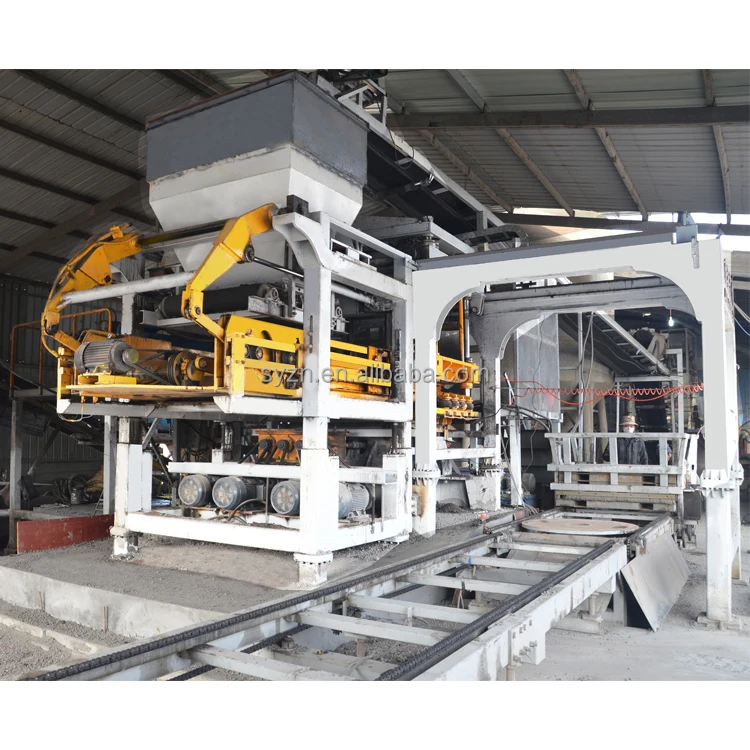
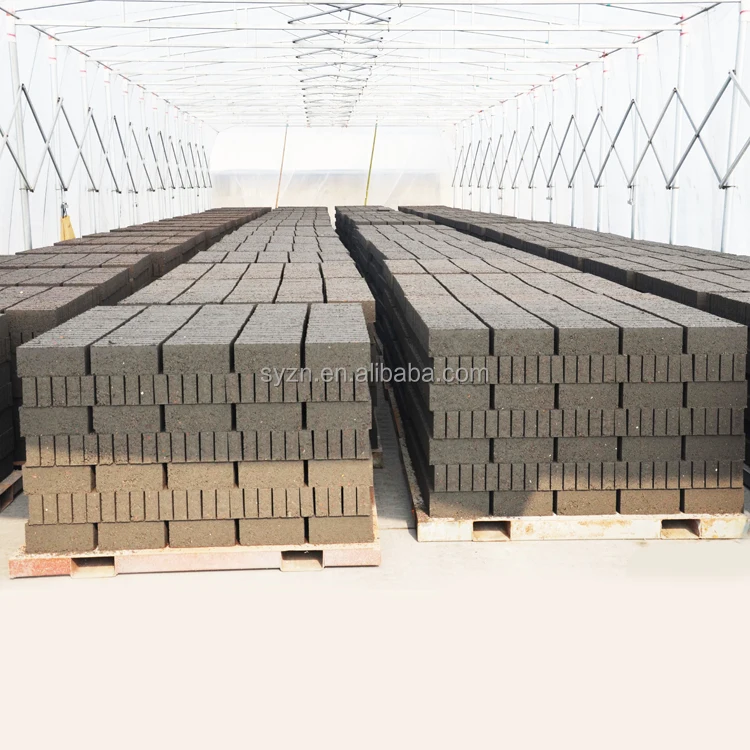
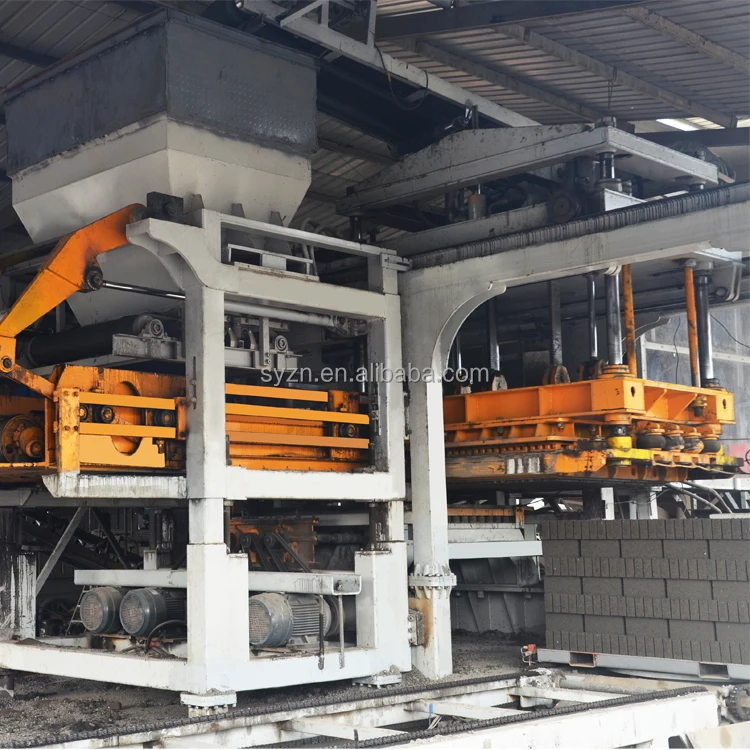
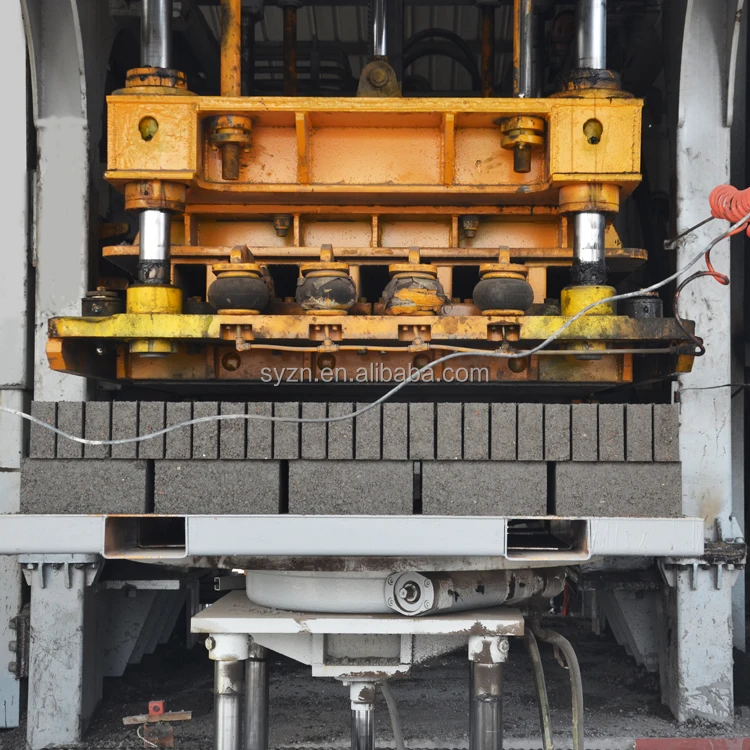
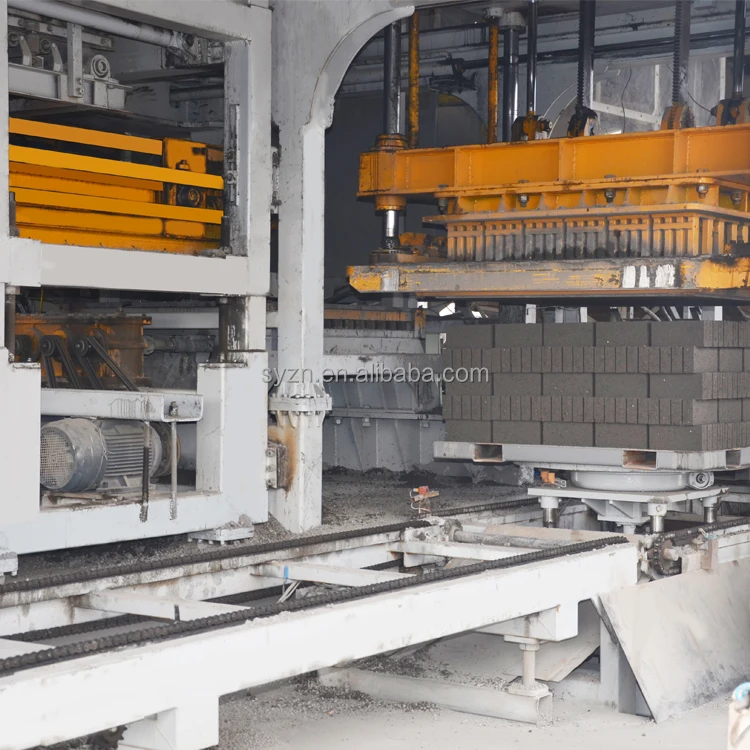
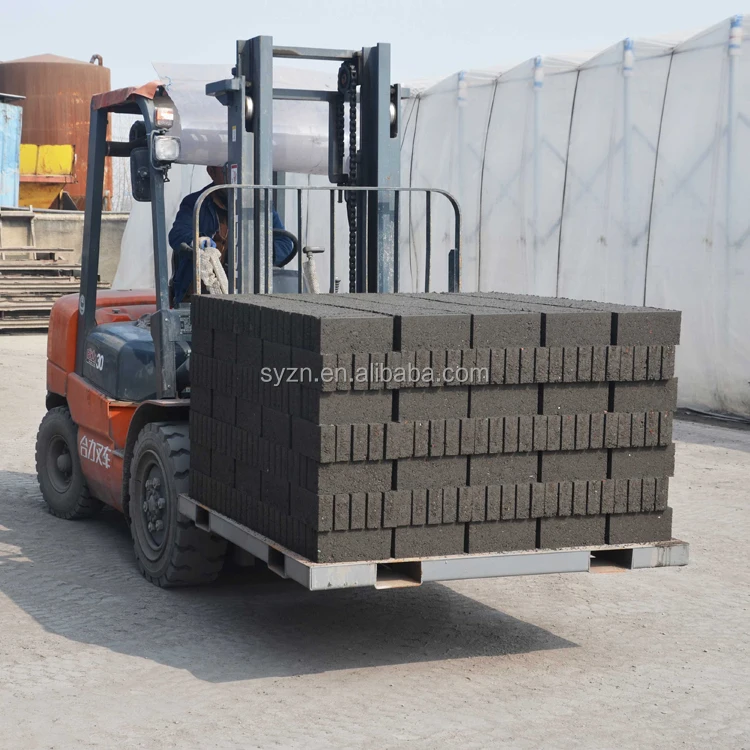
Description
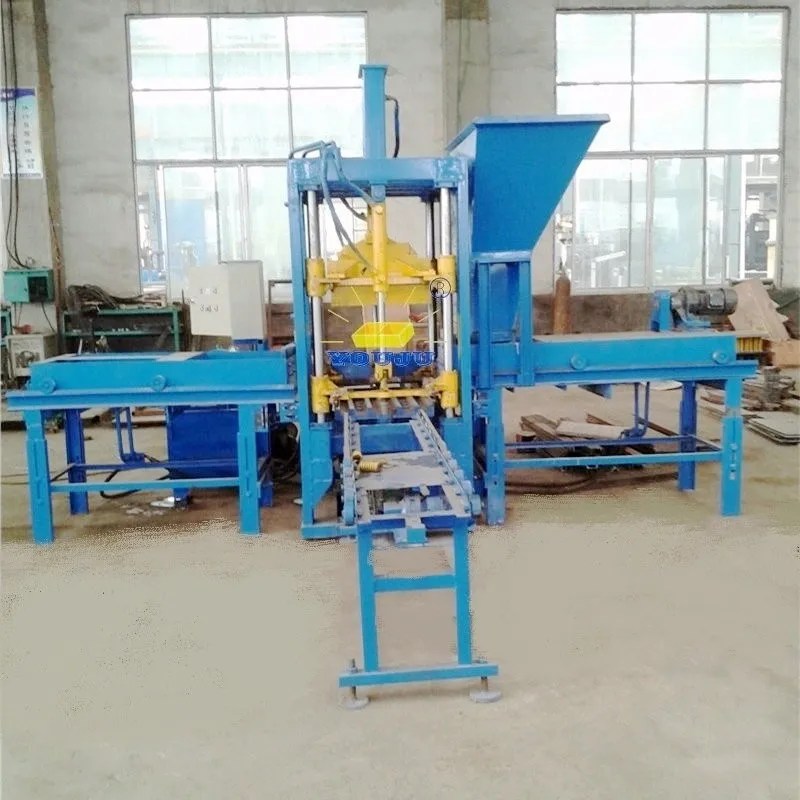
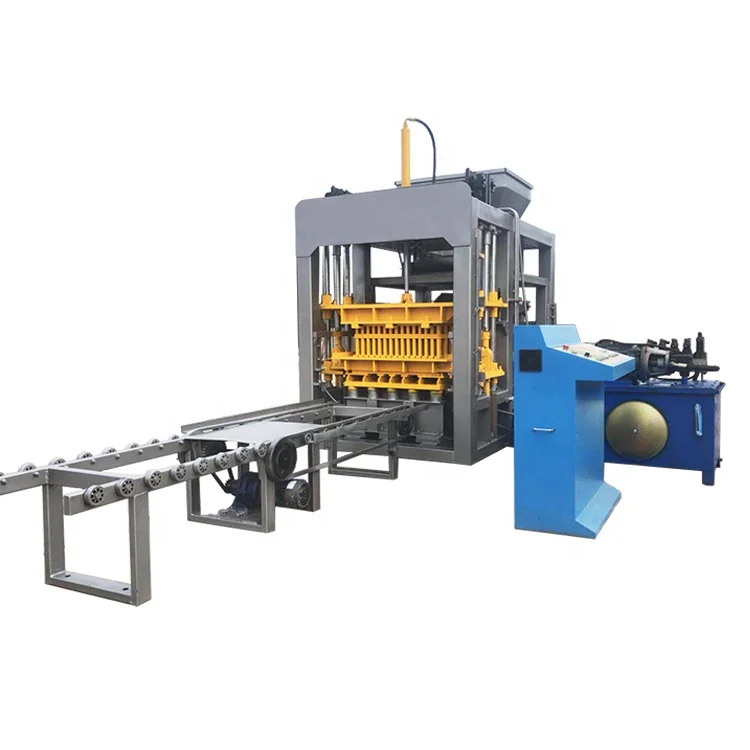
Matched Configuration — QT18-15 vibration and hydraulic parameters set against your local aggregate and target block format, not a catalogue default.
Technical Specifications
| Parameter | Value |
|---|---|
| Model | QT18-15 |
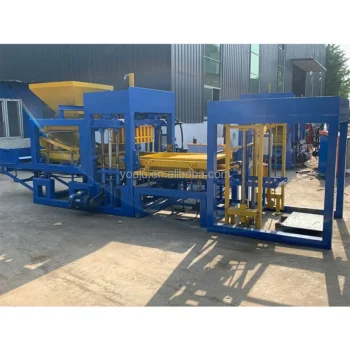
| Product Type | Fully Automatic Block Brick Production Line |
| Category | Stationary block machine |
| Brick Height Range | 50–300 mm |
| Stacking Height | 0–1200 mm |
| Main Vibration Form | Platform Vibration |
| Vibration Frequency | 2800–4500 r/min |
| Vibration Power | 60 kW |
| Hydraulic System Power | 59 kW |
| Driving Method | Hydraulic |
| Demolding Method | Vibration and Hydraulic |
| Pallet Size | 1350 × 1350 × 120 mm |
| Molding Cycle | 15–25 s (basis not stated in source — confirm block format and material) |
| General Water Consumption | 8 T/Day |
| Factory Area Requirement | 2000 m² |
| Control System | PLC with person-machine conversation interface |
| Stacking Method | Automatic stacking directly after moulding |
| Raw Materials | Crushed stone, sand, cement, dust, fly ash, gravel, slag |
Application Suitability
| Application | Material or Output |
|---|---|
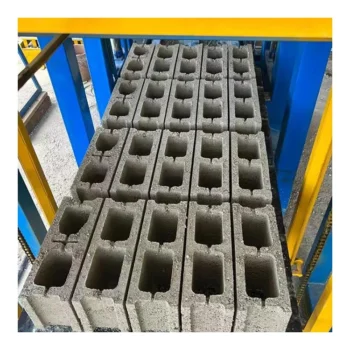
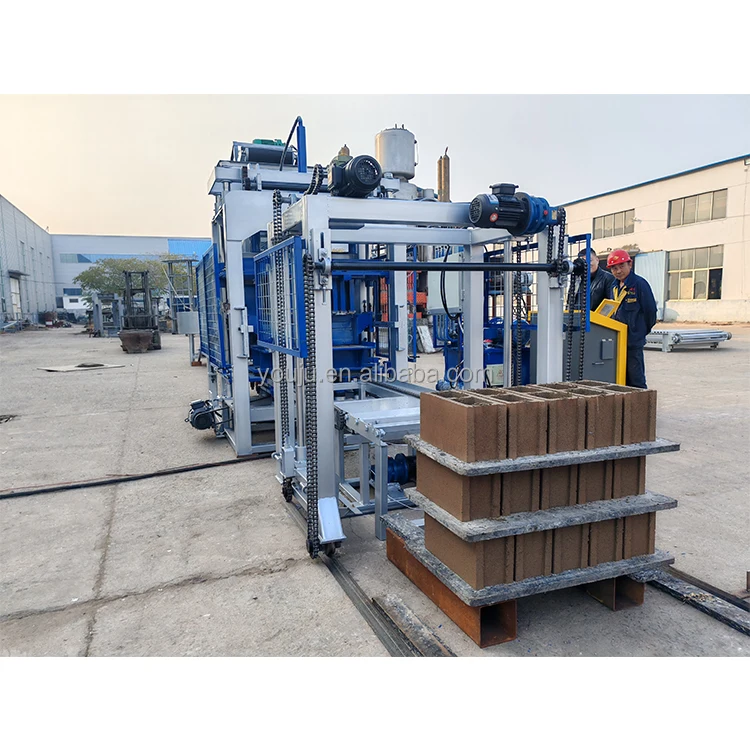
| Hollow block production | Crushed stone, sand, cement blends |
| Solid block manufacturing | Fly ash, gravel, slag mixes |
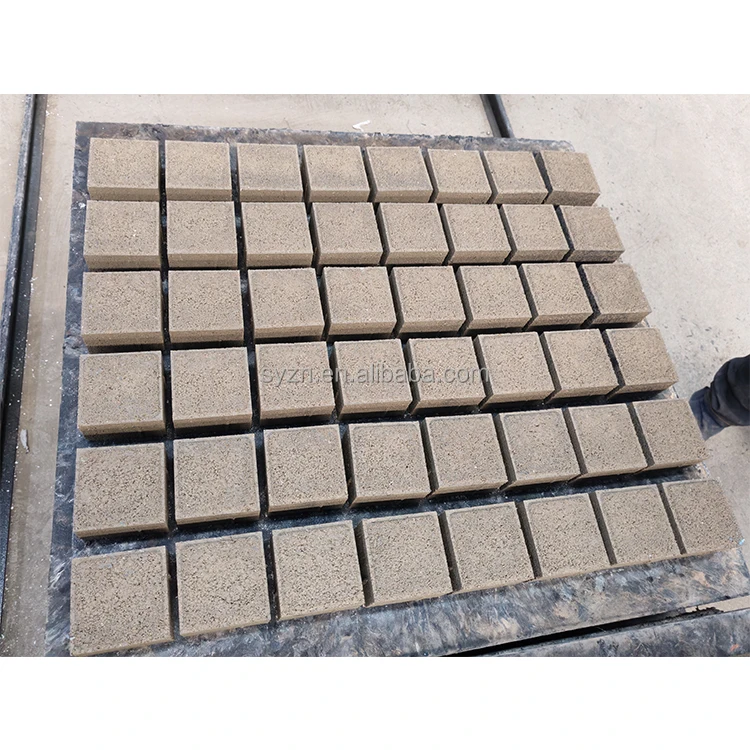
| Interlocking paver production | High-density concrete with fine aggregate |
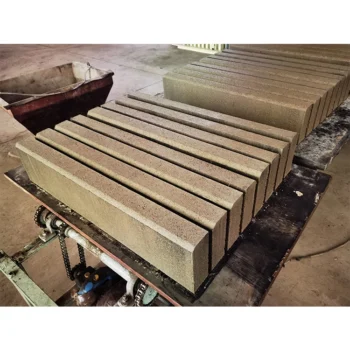
| Kerbstone and curb production | Coarse aggregate with cement binder |
| Colored paver runs | Pigmented concrete with surface layer feed |
| Porous and permeable brick | Open-graded aggregate with controlled cement ratio |
What "15–25 Seconds per Cycle" Actually Means for Your Output
Cycle time is only meaningful when tied to the exact block format you intend to sell.
I have watched project sites stall because a quoted cycle assumed a thin paver while the buyer needed 200 mm hollow blocks. The press completes its stroke, but the vibration dwell and hydraulic hold required for a taller, heavier block extend the real cycle well beyond the brochure figure. With the QT18-15 Fully Automatic Block Making Machine specifications, the 15–25 s range covers thin interlocking pavers at the fast end and dense hollow blocks at the slow end. Until the format and mix design are locked, any daily output number is guesswork. [NEED_CITE: block format impact on cycle time in hydraulic vibration presses]
Vibration and Hydraulic Pressure as a Matched Pair
Platform vibration at 2800–4500 r/min works together with the 59 kW hydraulic system to compact the mix from both directions. The vibration liquefies the concrete so it flows into mould corners, while hydraulic pressure squeezes out trapped air and excess water. On a dense interlocking paver, you need the upper end of both frequency and pressure. On a lightweight hollow block, running full pressure cracks the fresh block before demolding. The QT18-15 block machine capacity depends entirely on where the operator sets these two variables for each format.
Pallet Size and Curing Area Alignment
The 1350 × 1350 mm pallet is among the larger sizes in this output class. A larger pallet means more blocks per cycle, but it also means each loaded pallet weighs considerably more. The forklift at your curing area must handle that loaded weight, and the rack spacing must accept the 120 mm pallet thickness plus the block height. If your existing curing floor is designed for smaller pallets, switching to this size requires re-marking the floor layout and possibly upgrading the forklift. [NEED_CITE: pallet handling requirements for large-format block machines]
Reading the Power and Frequency Specs for Your Mix
The 60 kW vibration motor and 2800–4500 r/min frequency range give the operator room to adjust for local material. Desert sand, common across Middle Eastern sites, has a very different particle shape from crushed gravel. Fine, rounded sand needs higher frequency to achieve interlock between grains, while angular crushed stone consolidates at lower frequency with higher amplitude. The PLC interface stores these profiles so switching from hollow block to paver does not mean starting the tuning from scratch each shift.
Demolding Without Damage
Vibration-assisted hydraulic demolding reduces the lateral drag that cracks fresh block edges during extraction. For tall hollow blocks in the 200–300 mm range, a pure hydraulic push risks sticking if the mix has high cement content. The combined demolding method on the QT18-15 eases the block off the mould core with a short vibration burst while hydraulic cylinders lift the mould box. This matters especially when running coloured face-mix pavers where surface scuffing rejects the piece.
The Cost of Skipping the Mix-Design Conversation
When a machine arrives configured for a standard gravel mix but the site only has access to fly ash and dune sand, the first production run yields blocks that fail compressive strength tests. The plant then sits idle while new vibration profiles and pressure settings are developed from scratch. I have seen this delay stretch into weeks on remote project sites where a materials lab is not available locally. The fix is to send representative samples of your actual aggregate before the machine leaves the factory so the vibration frequency, hydraulic pressure, and cycle dwell are preset for your mix. [NEED_CITE: aggregate gradation effect on block compressive strength]
Why This Machine Gets Specified for Format-Heavy Plants
Block machinery as a single focus means the QT18-15 press, moulds, pallets, and stacking system are specified as one matched set rather than assembled from separate vendors. The mould design covers the formats your market actually buys, including custom drawings when a project calls for a non-standard kerbstone profile. The automation level is selectable — a buyer can begin with semi-automatic pallet handling and add automatic stacking later without replacing the press. Configuration is set against the buyer’s real mix design and target block format, not pulled from a catalogue default. Installation support includes operator training on mould change procedures and PLC parameter adjustment.
Documentation & Verification
- Line layout and capacity calculation stating the exact block format assumed for cycle time
- Machine specification sheet covering vibration power, hydraulic ratings, and pallet dimensions
- Mould drawing and format list for every block type in the initial order
- Pallet specification matched to your curing rack spacing and forklift capacity
- Voltage, frequency, and PLC display language confirmation before production starts
- Factory test record on your specific block format and mix design before dispatch
Installation, Commissioning & Support
- Foundation must support 2000 m² factory area with reinforced slab for the 60 kW vibration platform
- Dedicated power circuit sized for combined 119 kW vibration and hydraulic load plus auxiliary equipment
- Machine shipped in modular sections for container loading, reassembled and aligned on-site
- First-run commissioning includes vibration frequency and hydraulic pressure tuning for your local aggregate
- Operator training covers PLC parameter entry, mould change procedure, and daily maintenance checks
- Wear parts list and mould inventory supplied with initial spare recommendations for hydraulic seals and vibration springs
Before You Request a Quote
Send the exact block formats your market requires, including dimensions and target compressive strength. Provide a sample or gradation report of the aggregate available at your site — whether crushed stone, fly ash, or dune sand. Confirm the voltage and frequency of your local grid and the preferred PLC display language so commissioning starts without electrical delays.
Frequently Asked Questions
Q: How does the 15–25 s cycle time translate to daily output for hollow blocks versus pavers?
A: A thin interlocking paver may complete near the 15 s end, while a 200 mm hollow block with high-density requirements pushes toward 25 s or beyond. Daily output depends on which format dominates your shift plan. Request a capacity sheet that states the assumed format per cycle.
Q: Can the hydraulic system be adjusted for different local aggregate strengths?
A: The 59 kW hydraulic system allows pressure adjustment across the demolding and compaction stages. Combined with the variable vibration frequency, the operator can tune the profile for fly ash, crushed stone, or dune sand mixes after initial commissioning tests.
Q: What is the realistic mould change time between block formats?
A: Mould change duration depends on the size difference between the outgoing and incoming mould and whether the operator uses the quick-release clamps. Training covers the sequence so format switching does not consume a significant portion of the shift.
Q: Does the automatic stacking system require a specific curing surface?
A: The stacking height reaches 1200 mm directly after moulding. The curing floor or rack must be level and able to bear the stacked weight. Pallet-free stacking requires a smooth, hardened surface to prevent bottom-layer deformation during the initial cure.
Q: How do I confirm PLC language and voltage before shipment?
A: Provide your grid voltage, frequency, and preferred operator language during the quotation stage. The factory confirms these in writing and runs a powered test with your settings before the machine is dismantled for container loading.