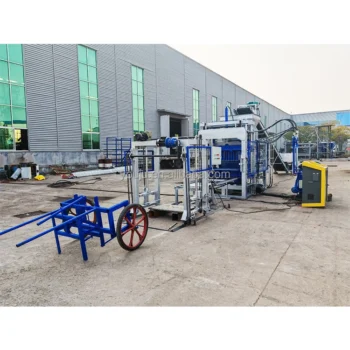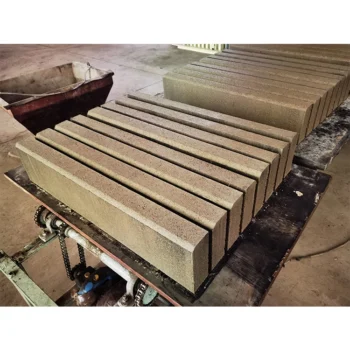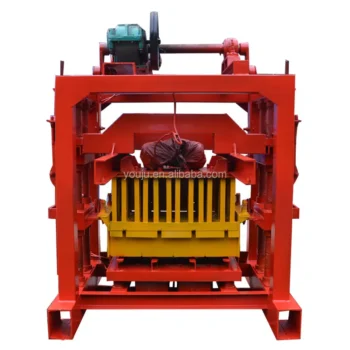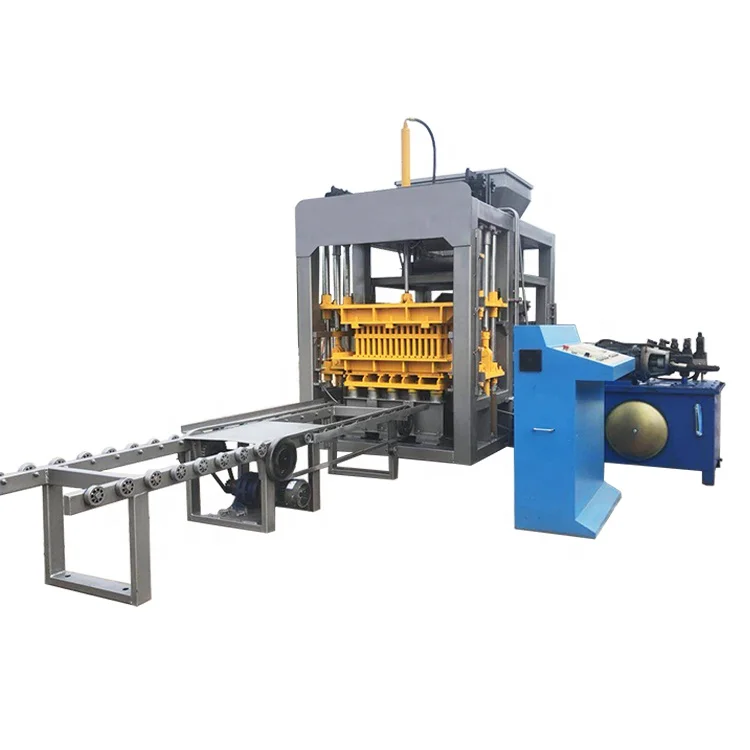
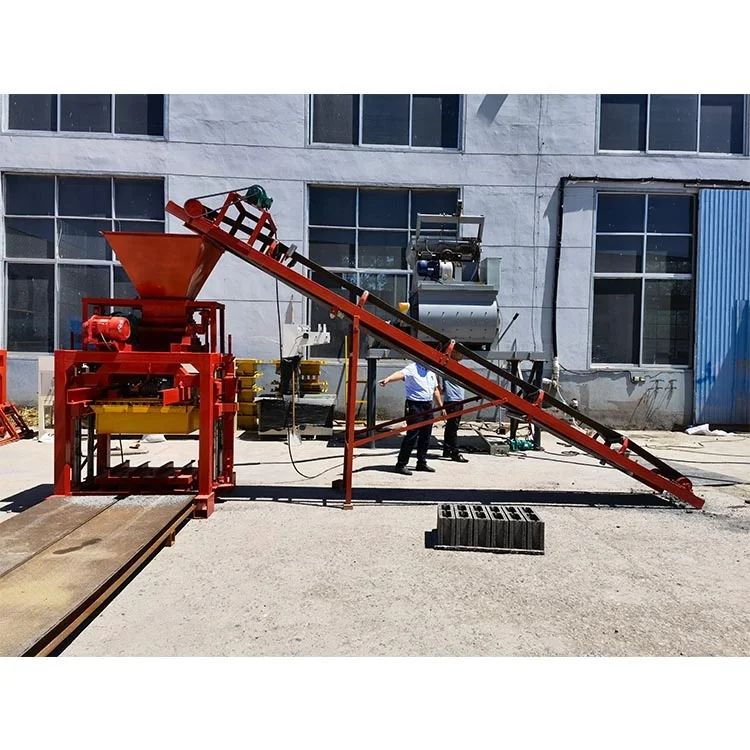
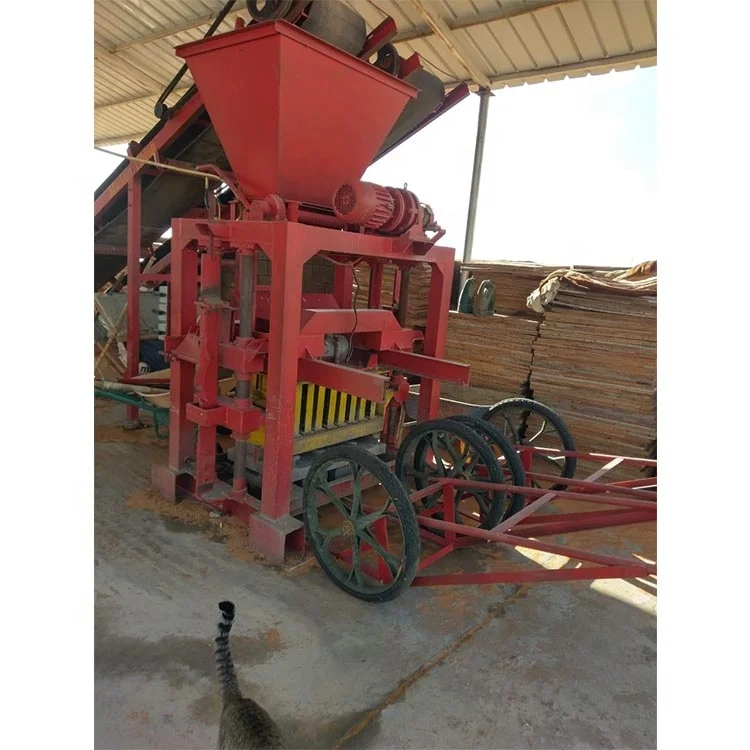
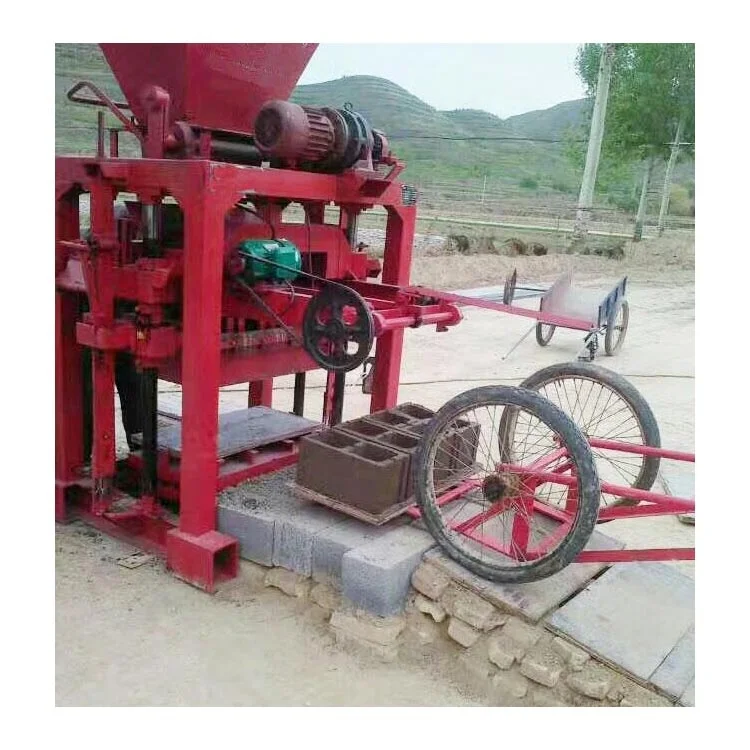
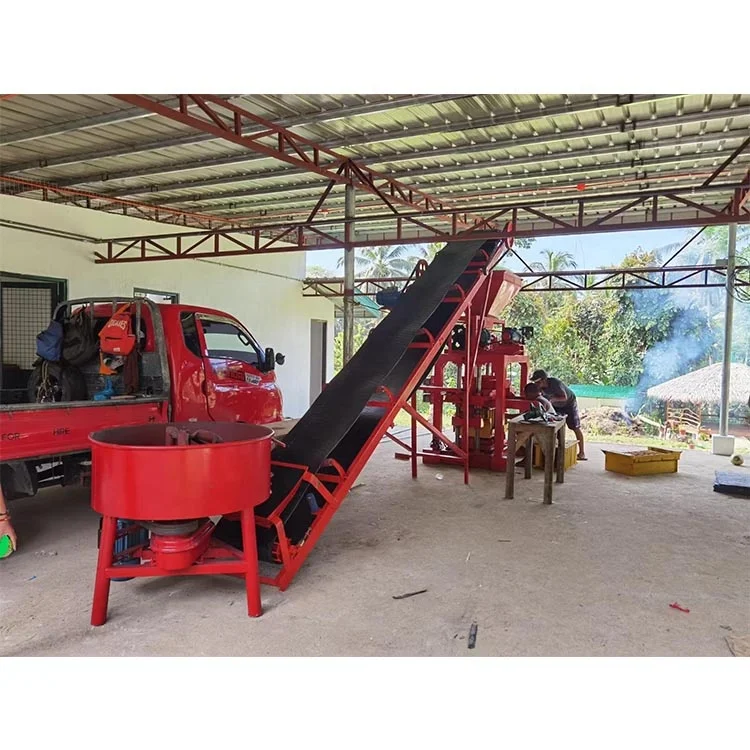
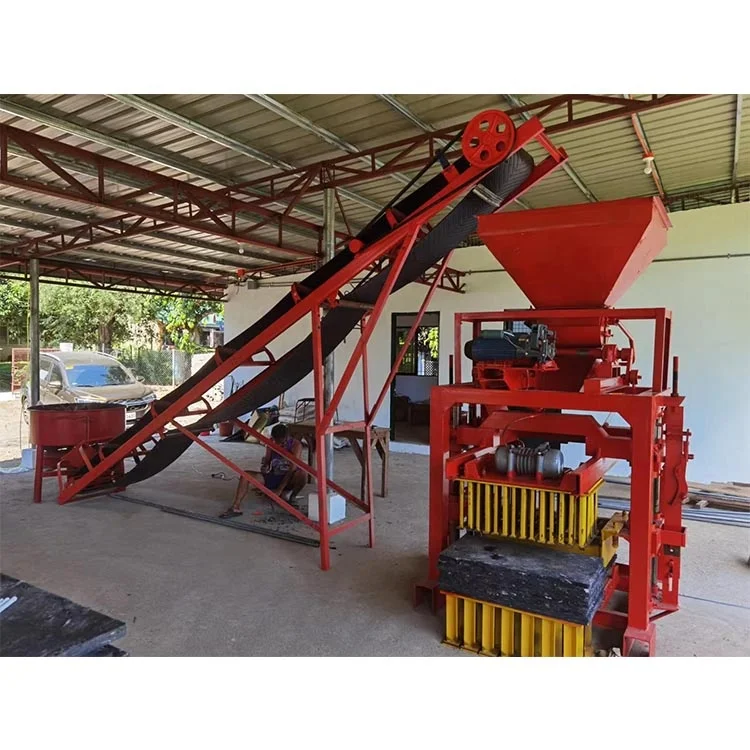
Description
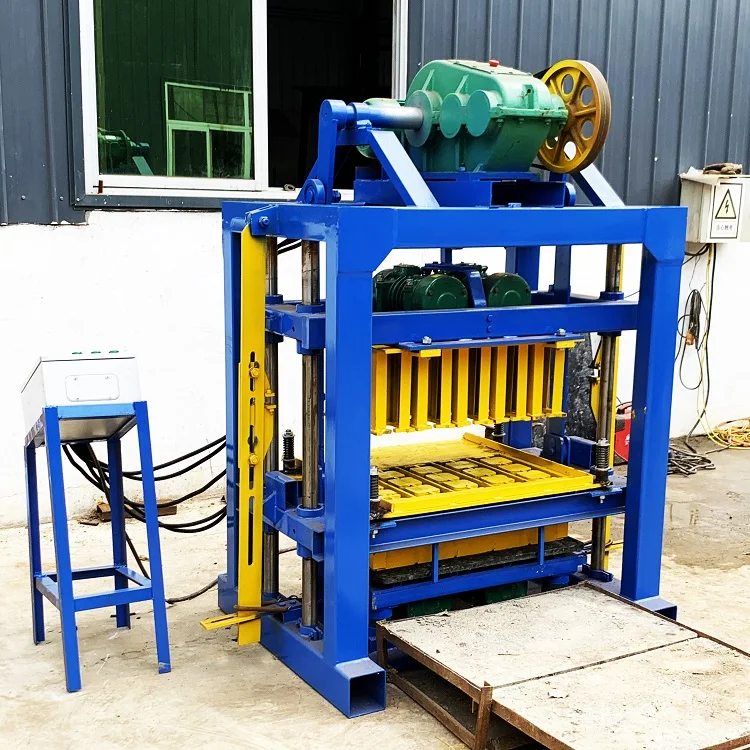
Matched System Sizing — The QTJ4-35 is configured around the buyer’s actual block format and local aggregate, not a catalogue default, so pallet size, vibration force, and cycle time are specified as one coherent production unit.
Technical Specifications
| Parameter | Value |
|---|---|
| Model | QTJ4-35 |
| Product Type | Concrete Block Making Machine |
| Overall Dimensions (L×W×H) | 2050×1660×1900 mm |
| Total Mass | 1500 kg |
| Rated Exiting Force | 35 kN |
| Main Vibration Form | Platform Vibration |
| Vibration Frequency | 2800 r/min |
| Pallet Size | 850×450 mm |
| Molding Cycle | 35 s (basis to be confirmed per block format and wall thickness) |
| Overall Power | 9.7 kW |
| Demolding Method | Vibration |
| Recommended Factory Area | 260 m² |
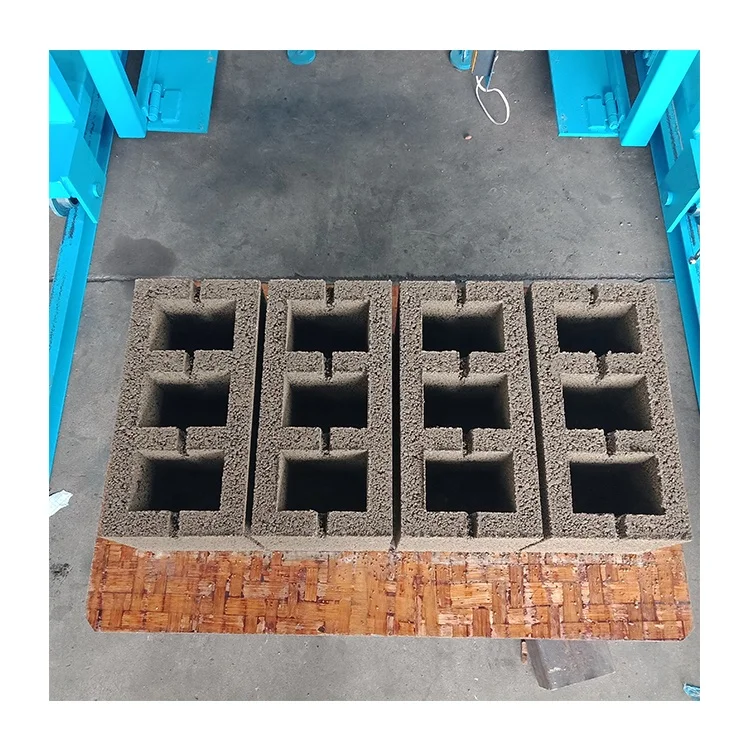
| Applied Products | Concrete blocks, hollow/solid blocks, pavers, interlocking blocks, curbstone, colored pavers |
| Raw Materials | Crushed stone, sand, cement, dust, fly ash, gravel, slag |
| Automation Level | Manual / semi-automatic (configuration dependent) |
| Voltage & Frequency | Configurable — to be confirmed against buyer site supply |
| Control System | PLC or relay — to be confirmed before order |
| Warranty | 1 year (whole machine, excluding spare parts) |
Application Suitability
| Application | Material or Output |
|---|---|
| Hollow block production for residential wall construction | Crushed stone, sand, cement mix with fly ash substitution |
| Solid block manufacturing for load-bearing structures | Gravel, sand, cement at higher density settings |
| Paving block and colored paver runs for walkways and yards | Fine aggregate, cement, pigment blends |
| Interlocking block and curbstone output for road-edge and landscape projects | Coarse aggregate, slag, cement combinations |
| Small-plant batch production for local building material supply | Locally available sand, fly ash, dust, and cement |
What the "35-Second Cycle" Actually Means for Your Daily Output
The molding cycle only translates to daily capacity once the block format, wall thickness, and mix design are locked in.
Many quotations list a cycle time without specifying which block shape or material mix it was measured against. On a site in Iraq, I watched a machine rated for a comparable cycle lose nearly half its expected output because the local river sand carried high clay content, which extended the compaction time considerably. The QTJ4-35 concrete block making machine specifications on this page state the 35-second figure openly, but the daily piece count shifts depending on whether you run hollow blocks, solid blocks, or pavers — and on how your aggregate behaves under vibration [NEED_CITE: aggregate gradation effect on concrete compaction cycle time].
Platform Vibration Force and Aggregate Compatibility
The 35 kN rated exiting force delivered through platform vibration at 2800 r/min sets the compaction baseline for the QTJ4-35 concrete block making machine. This force level works across common crushed stone and sand mixes, but buyers running high-fines or high-clay aggregate need to verify that the vibration frequency still achieves full densification within the stated cycle. When the force and frequency are matched to the actual mix, block strength stays consistent across the shift.
Pallet Size as the Constraint That Defines Everything Downstream
The 850×450 mm pallet determines the maximum block footprint per molding cycle. This dimension must align with the curing rack spacing the buyer already operates and the forklift tine width available on site. A pallet that does not match existing handling infrastructure forces changes in the curing yard layout, which is a cost that rarely appears in the machine quotation [NEED_CITE: pallet handling compatibility in concrete block plant design].
Reading the Specs That Actually Shape Production Reality
The 9.7 kW overall power draw keeps electrical demands within reach for small workshop installations where dedicated high-capacity supply lines are not available. The 35 kN vibration force paired with 2800 r/min frequency governs how tightly aggregate particles compact, which directly determines whether blocks meet the compressive strength standard the local market requires. Molding cycle duration depends on block height and wall thickness — a taller hollow block takes longer to fully consolidate than a flat paver, even on the same machine. The 260 m² recommended factory area accounts for the press, pallet circulation, and a basic curing zone, but buyers producing multiple formats should plan for additional rack space. Voltage and frequency remain open until the buyer confirms site supply, which prevents commissioning delays after the machine arrives [NEED_CITE: voltage and frequency standards by export market].
The Cost of Skipping the Mix Design Conversation
Ordering a block machine without testing local aggregate first leads to one of two outcomes: either the machine runs but blocks crumble at the demolding stage, or the operator extends the vibration time to compensate, cutting actual daily output well below the quoted figure. I have seen entire commissioning weeks consumed by adjusting mix ratios on site because the original configuration assumed a clean, well-graded sand the buyer could not source. The QTJ4-35 performs reliably when the vibration force and cycle time are set against a confirmed mix, not an assumed one.
Why Sourcing from a Single-Focus Block Machinery Supplier Matters
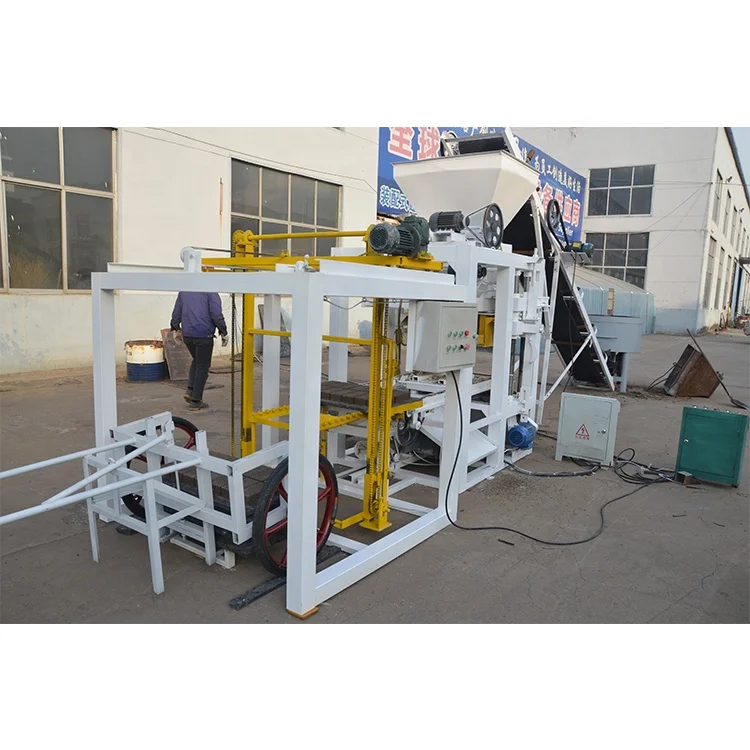
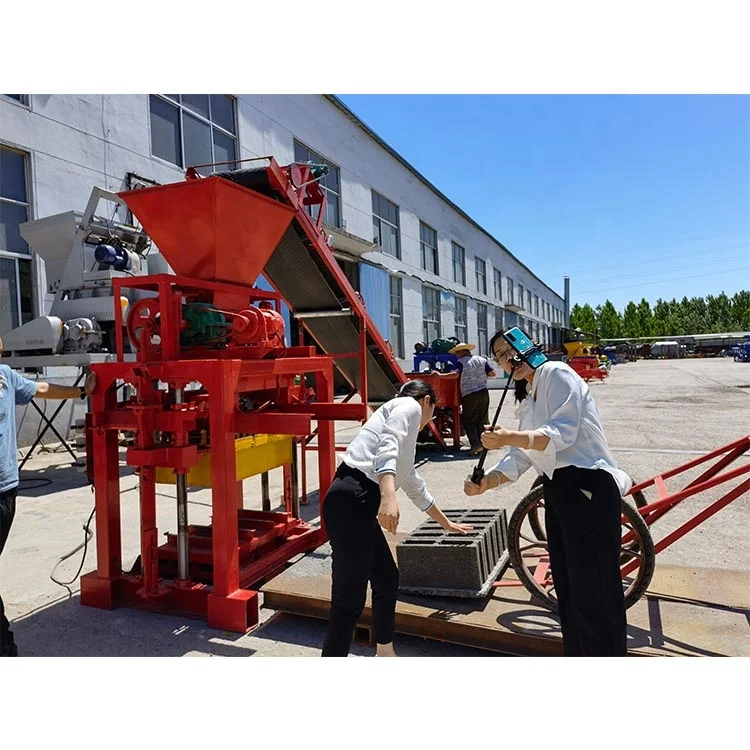
Block machinery is the sole product line here, which means the QTJ4-35 is specified as a matched system — press, pallet, and mould together rather than assembled from separate vendors. Configuration is set against the buyer’s target block format and confirmed aggregate sample, not pulled from a standard catalogue. Mould design covers the formats the buyer’s market actually sells, including custom drawings when standard sizes do not apply. Automation level is selectable, so a buyer can begin with manual pallet handling and add stacking later. Installation support includes operator training on the specific block formats and mix design the plant will run.
Documentation & Verification
- Line layout showing capacity calculation stated per confirmed block format
- Machine specification sheet with pallet size, vibration force, and site voltage locked in
- Mould drawing and format list provided before production begins
- Factory test record and packing photographs shared before shipment
- Hydraulic and electrical schematic matching the delivered configuration
Installation, Commissioning & Support
- Foundation slab prepared to the 260 m² recommended area with level tolerance for the 1500 kg machine mass
- Electrical supply matched to confirmed voltage and frequency with a dedicated circuit for the 9.7 kW load
- Machine shipped in dismantled state and reassembled on site with alignment checks on the vibration platform
- First production run supervised to set cycle parameters against the buyer’s confirmed mix design
- Operator training covers mould change procedure, pallet feeding routine, and daily vibration system inspection
- Wear parts and mould list provided at delivery with recommended reorder intervals
What to Share Before Requesting a Quotation
Provide the exact block format your market demands — dimensions, wall thickness, and whether hollow, solid, or interlocking. Include a sample or lab analysis of the aggregate and sand available locally so the vibration settings can be matched. Confirm the site voltage, frequency, and preferred control language to avoid commissioning hold-ups after delivery.
Frequently Asked Questions
Q: What block format does the 35-second cycle time assume?
A: The 35-second figure is a baseline that shifts depending on block height, wall thickness, and aggregate type. Hollow blocks with thin walls may cycle faster, while tall solid blocks require longer vibration to reach full density. We state the cycle time per format once your target block and mix are confirmed.
Q: Will the 850×450 mm pallet fit my existing curing racks and forklift?
A: This pallet size must be checked against your current rack spacing and forklift tine width before order confirmation. If your infrastructure was built around a different pallet dimension, adjusting racks or handling equipment adds cost that should be factored in early.
Q: Can the QTJ4-35 work with my locally available sand and aggregate?
A: The platform vibration at 35 kN handles a wide range of crushed stone, sand, fly ash, and slag mixes. However, high-clay or high-fines materials may require adjusted vibration time or mix proportions. We test your sample before finalizing the machine configuration.
Q: Which moulds come with the machine and how long does a change take?
A: Mould selection is based on the block formats your market sells. We provide mould drawings and a format list before production. Mould change time on this class of machine depends on the operator’s familiarity with the system and the number of format changes per shift.
Q: What voltage, frequency, and control language will the machine ship with?
A: These are confirmed with the buyer before production begins. The control system can be specified as PLC or relay, and the display language is set to match your operator team. This step prevents delays during on-site commissioning.