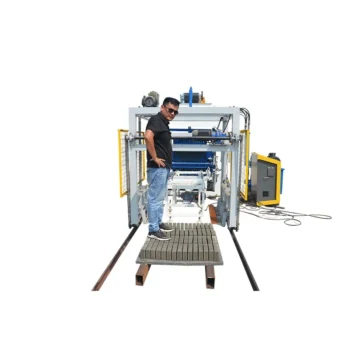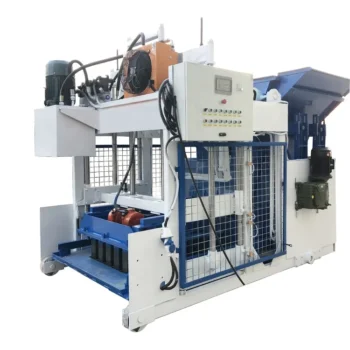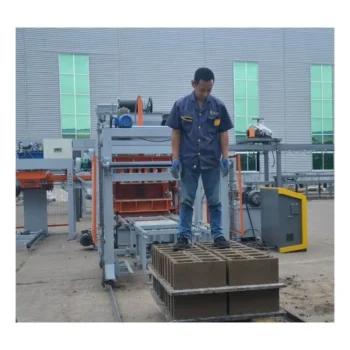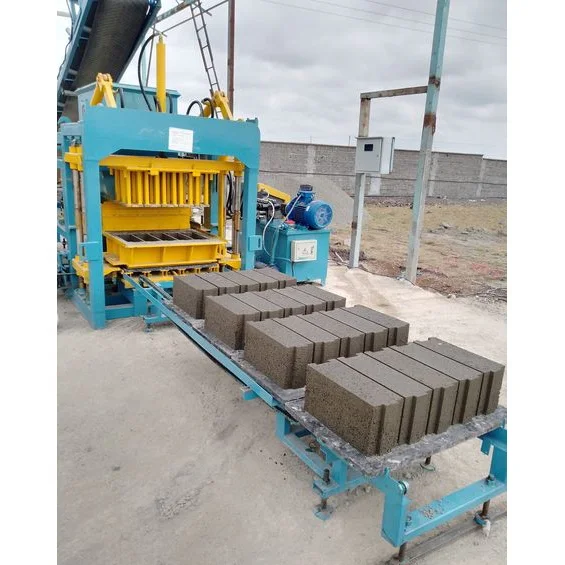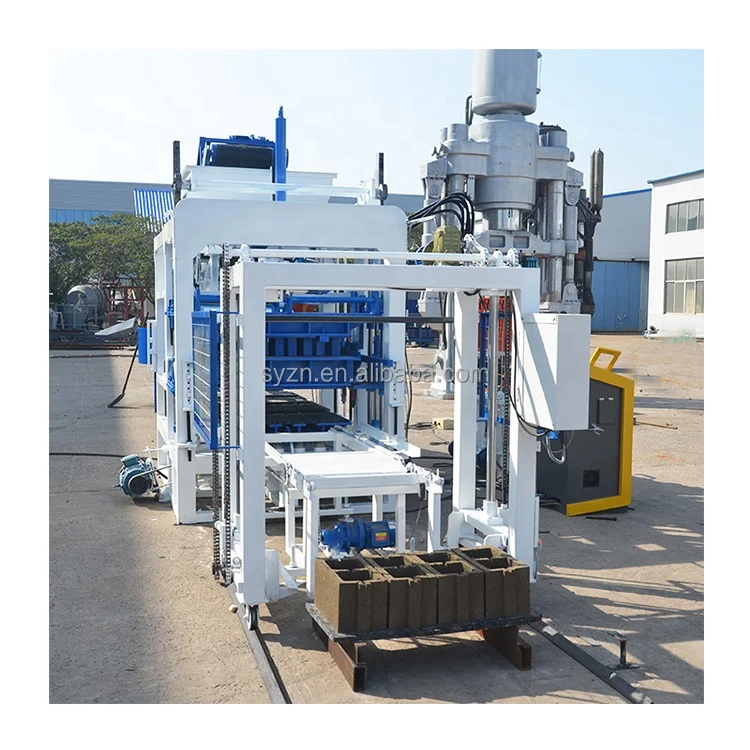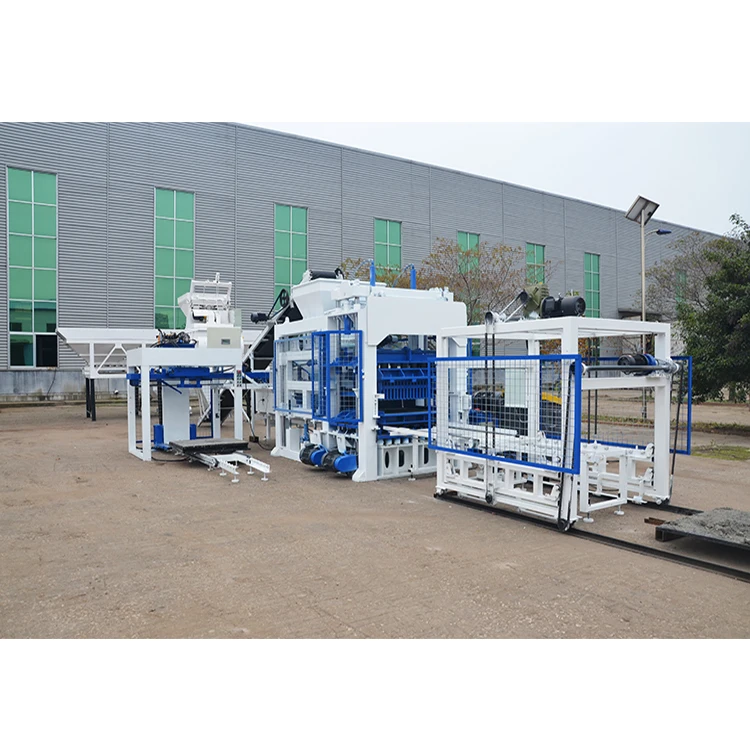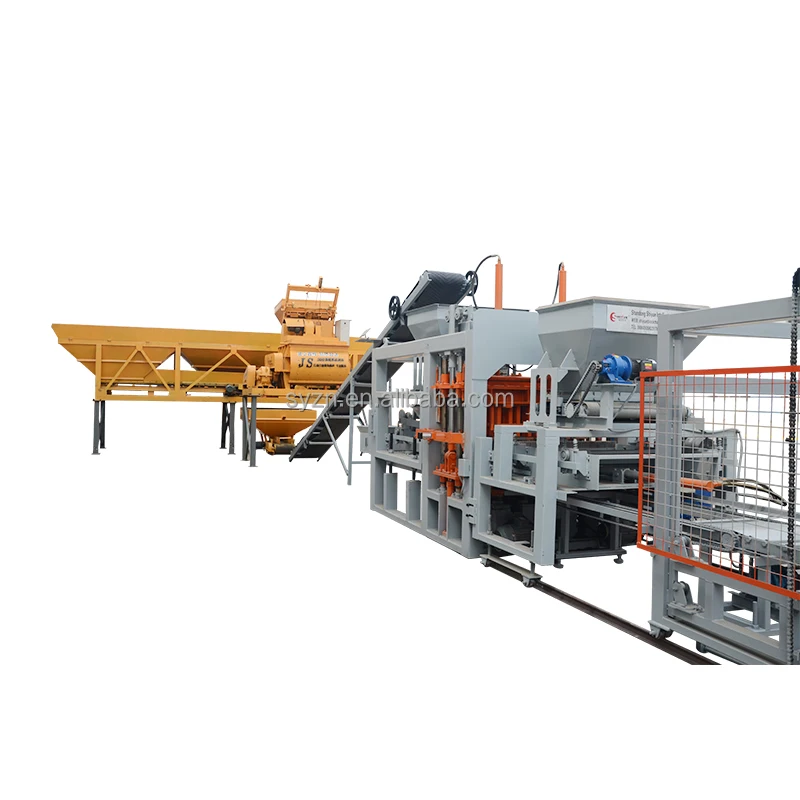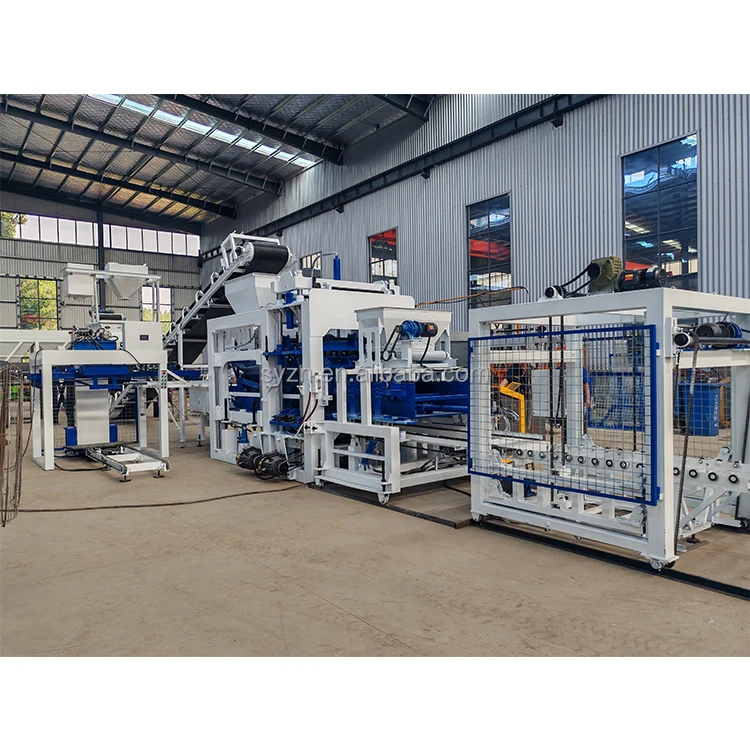


Description
Matched system spec — the QT8-15 is sized against your actual block format, local aggregate and pallet handling setup, not a catalogue default.
Technical Specifications
| Parameter | Value |
|---|---|
| Model | QT8-15 |
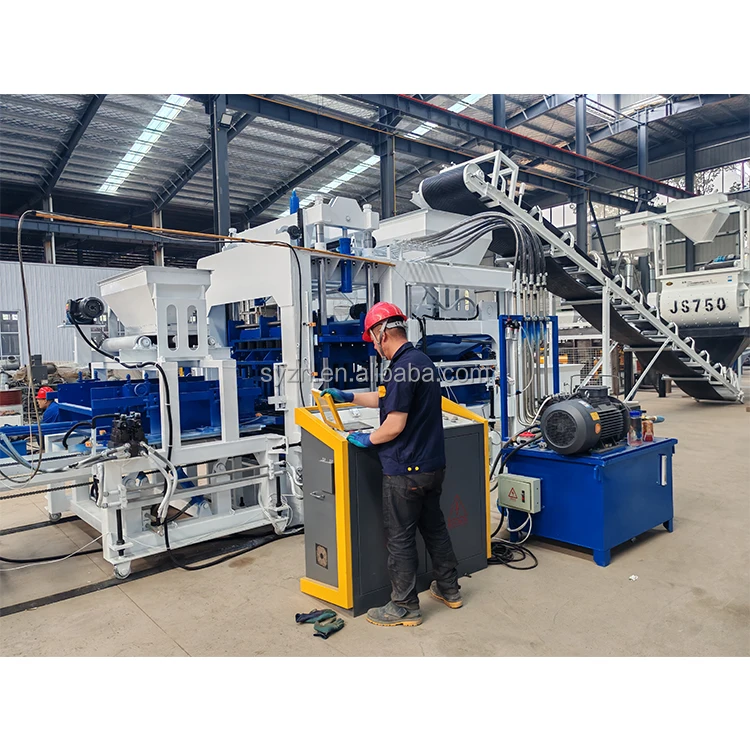
| Product Type | Hydraulic Concrete Block Making Machine |
| Overall Dimensions (L×W×H) | 8300×1860×3000 mm |
| Rated Pressure | 21 MPa |
| Main Vibration Form | Platform Vibration |
| Vibration Frequency | 2800–4500 r/min |
| Vibration Force | 45 kN |
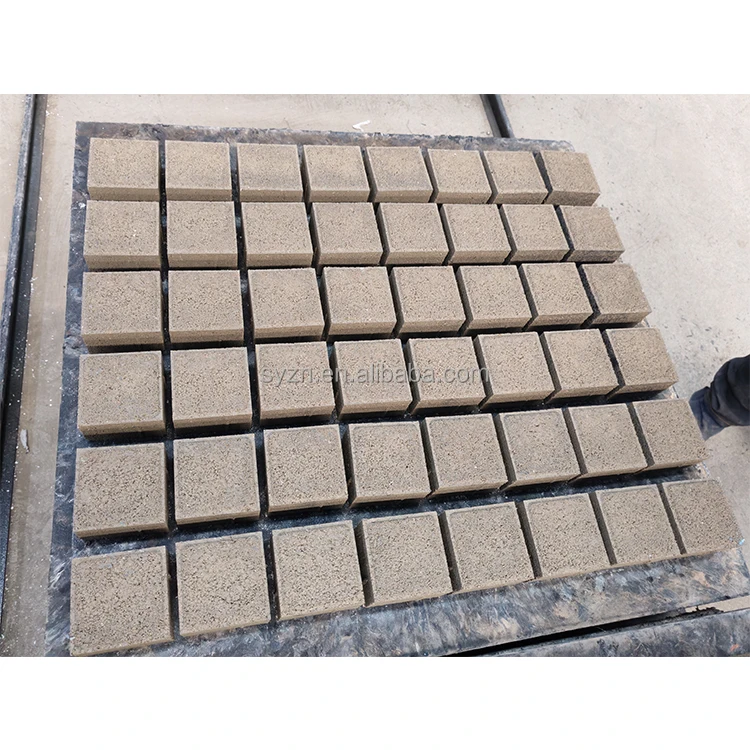
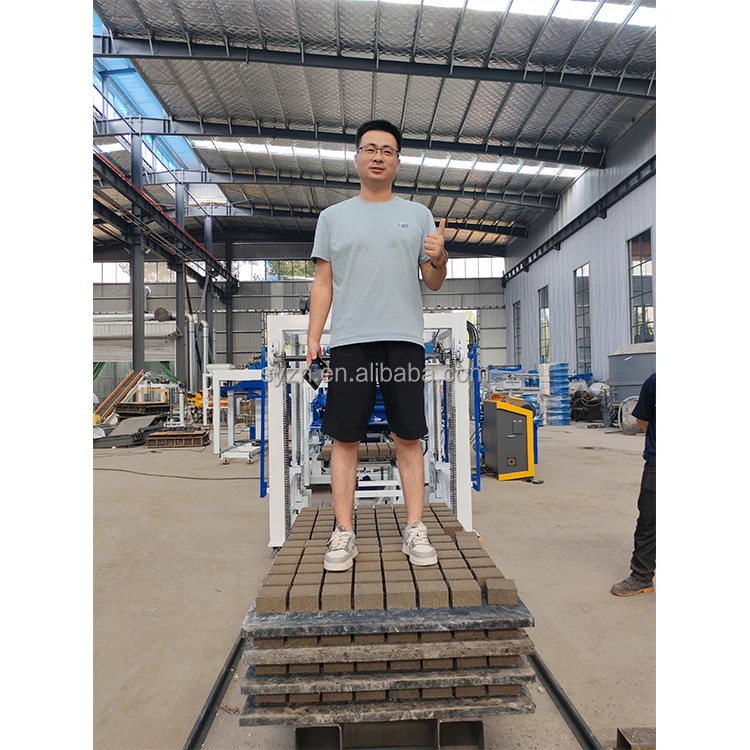
| Pallet Size | 950×900 mm |
| Molding Cycle | 15–20 s (basis not stated in source — confirm block format and wall thickness) |
| Overall Power | 55.5 kW |
| Total Mass | 8 T |
| Demolding Method | Hydraulic |
| Factory Area Required | 300 m² |
| Standards | CE (unit-level certificate to be confirmed) |
Application Suitability
| Application | Material or Output |
|---|---|
| Hollow block production for building walls | Crushed stone, sand, cement, fly ash |
| Solid block manufacturing | Gravel, slag, cement blends |
| Interlocking paver and colored paver runs | Fine aggregate with pigment additives |
| Curbstone and kerbstone for infrastructure | Coarse aggregate with high cement content |
| On-site block production for housing projects | Locally sourced sand, dust and gravel |
Why "15–20 Seconds" Needs a Format Attached
A cycle time without a block format is not a cycle time — it is a guess.
Every block machine datasheet lists a molding cycle range, and the QT8-15 block machine specifications state 15–20 seconds. But that figure means very different things depending on whether you are pressing a 400×200×200 mm hollow block with thin walls or a dense interlocking paver at full cavity depth. I have watched buyers take the fastest number in the range, multiply it by their shift hours, and then wonder why daily output falls short once the machine is running their actual product. [NEED_CITE: common causes of block machine output shortfalls in export markets]
The honest approach is to test your specific mix on your target format, measure the real cycle, and build the capacity calculation from that number — not the other way around.
Matching Vibration to Your Block Geometry
Platform vibration at 2800–4500 r/min with 45 kN force gives the QT8-15 a working range that covers hollow blocks, solid blocks and pavers. The frequency band matters because thinner-walled hollow blocks need higher frequency to consolidate the mix without cracking the shell, while dense pavers need lower frequency with longer dwell to push aggregate into tight corners. When we set up a line, we dial the vibration profile to your specific format and wall thickness rather than leaving the controller on a factory default.
Pallet Size as a Line Constraint, Not an Afterthought
The 950×900 mm pallet is the physical link between the press and your curing area. A pallet that does not match the forklift tines or curing rack spacing already on your site creates a bottleneck the moment blocks leave the machine. We confirm your existing handling equipment before locking the pallet specification, because changing pallet dimensions after the press is built means reordering every pallet in the system and possibly resizing the curing racks.
Reading the QT8-15 Block Machine Specifications Against Your Mix
The 21 MPa rated hydraulic pressure and hydraulic demolding method work together to hold block density consistent across format changes. Higher pressure compresses the mix more tightly, which is necessary for load-bearing solid blocks but can cause surface cracking on hollow blocks if the vibration force is not balanced. The 55.5 kW overall power supports the combined demand of the hydraulic pack, vibration motors and conveyor drives without requiring an oversized transformer on your site. [NEED_CITE: hydraulic pressure and vibration balance in concrete block forming]
When the Wrong Specification Costs You Shifts
Buyers who skip the format-specific cycle test often discover the problem after the machine has been running for a week. Blocks come out under-strength because the vibration force was set for a different aggregate grading, or the hydraulic pressure leaves surface cracks on thin-shell hollow blocks. Mould changes take longer than expected because the tooling was never timed on the shop floor. These are not machine defects — they are specification mismatches that compound every hour the line runs. [NEED_CITE: impact of untested mix design on block strength consistency]
Why This Sourcing Route Works for Format-Matched Lines
We scope the QT8-15 as part of a matched system: press, mould, pallet and handling specified together so the rated capacity survives the move from our test bench to your production floor. Mould design covers the formats your market actually buys, including custom drawings when standard tooling does not fit. Automation level is selectable, so you can start with semi-automatic pallet handling and add automatic stacking later without replacing the press. Voltage, frequency and PLC display language are confirmed in writing before production starts. Installation includes operator training on your specific block formats, not a generic machine walkthrough.
Documentation & Verification
- Line layout with capacity table stating each block format assumed for cycle time figures
- Mould drawing pack listing every format that shares the 950×900 mm pallet
- Hydraulic and electrical schematic matched to your confirmed voltage and frequency
- Factory test record run on your target block format and mix design before dispatch
- Wear parts and mould list with first-order recommendations and lead times
Installation, Commissioning & Support
- 300 m² factory area requirement confirmed against your site plan before shipment
- 55.5 kW total power verified against your local supply capacity and dedicated circuit needs
- Machine dismantled for container loading with reassembly sequence documented per your site access
- First-run commissioning on your local aggregate with cycle time logged per block format
- Operator training covers mould change procedure and vibration frequency adjustment for each product
- Wear parts inventory scoped for your first year of production volume
What We Need to Size Your Line Correctly
To move past a catalogue quote, we need your target block formats with dimensions, the daily output you are committing to, and a sample of your local aggregate so we can run a mix trial. Tell us your site voltage and frequency, the PLC display language your operators read, and the curing rack or forklift specifications already in place. If you have an existing batching or mixing setup upstream, share those details so the QT8-15 feed configuration integrates without a gap.
Frequently Asked Questions
Q: How is the 15–20 s cycle time verified, and which block format does it assume?
A: The 15–20 s range in the QT8-15 block machine specifications is a general envelope. We verify the actual cycle by running your specific block format and mix on our test press, then log the real time per format in the capacity document that ships with the machine.
Q: Which mould formats share the 950×900 mm pallet without a pallet change?
A: Multiple hollow block, solid block and paver formats can run on the same pallet footprint, but the exact list depends on your block dimensions. We provide a format-to-pallet matrix with your quotation so you know which tooling shares pallets and which requires separate sets.
Q: How are vibration force and hydraulic pressure adjusted to my local aggregate?
A: We test your aggregate sample on the press and adjust the vibration frequency within the 2800–4500 r/min range and the hydraulic pressure within the 21 MPa system capacity. The settings that produce target block strength are then saved as presets for each format.
Q: What voltage and PLC language options are confirmed before shipment?
A: Voltage and frequency are confirmed in writing before production starts to match your site supply. PLC display language is agreed at the same stage so operators can read the interface on day one of commissioning without waiting for a software update.
Q: Which spare parts and mould wear items should I order with the machine?
A: We recommend a first-year wear parts package based on your target daily volume. The list covers hydraulic seals, vibration motor bearings and mould wear plates, with lead times stated in the documentation pack so replacements arrive before you need them.