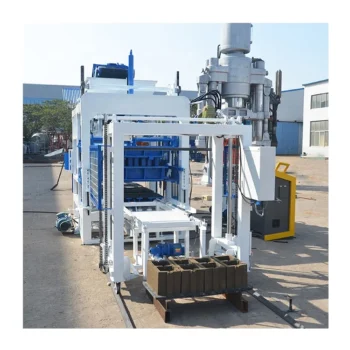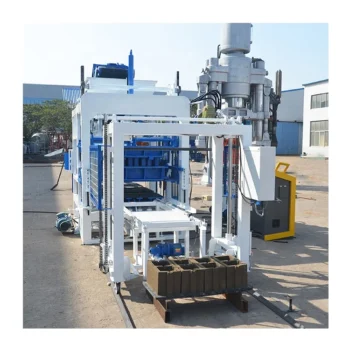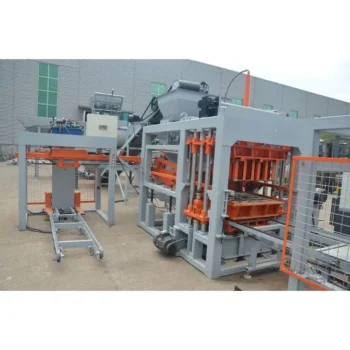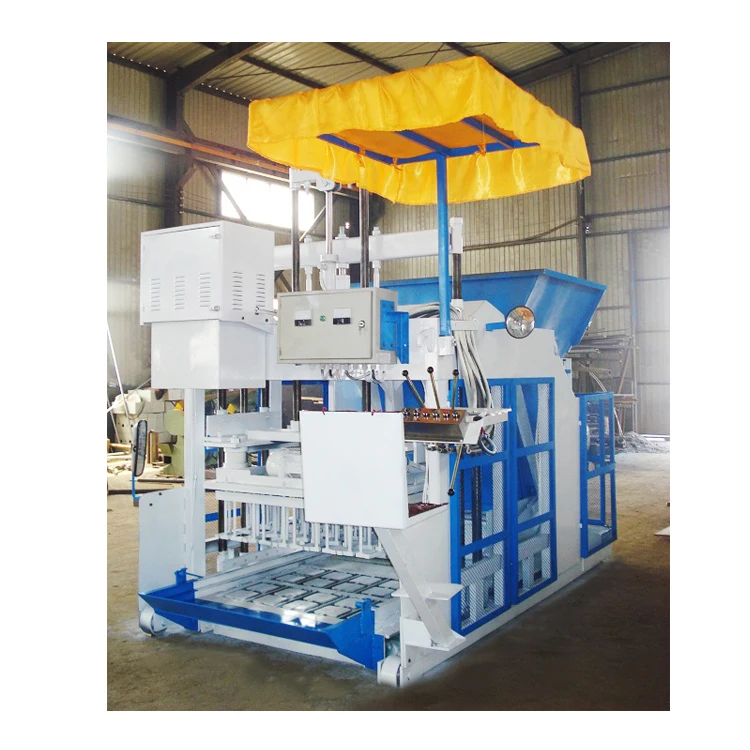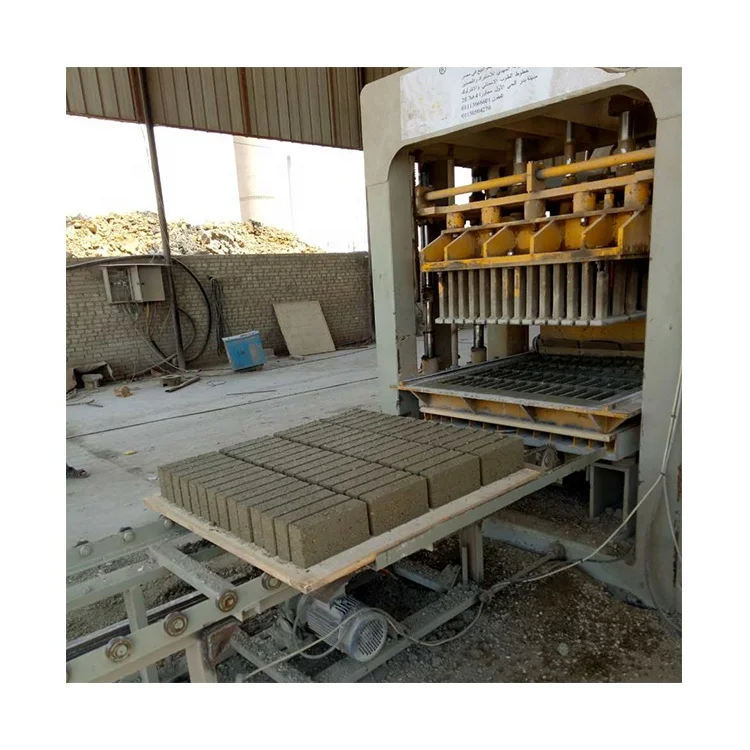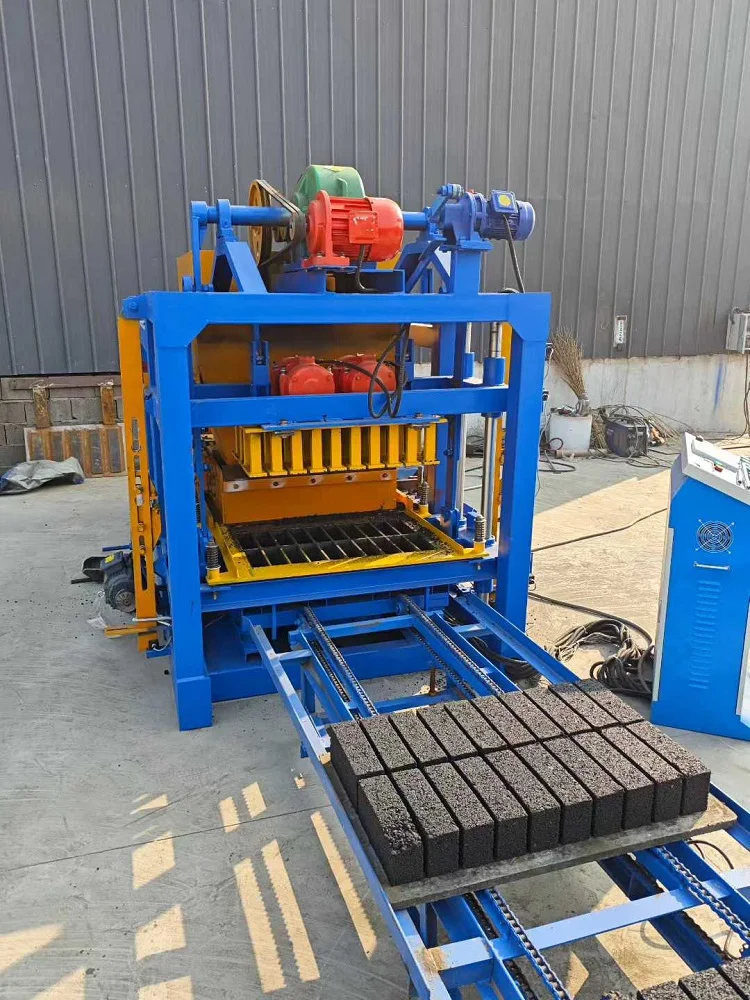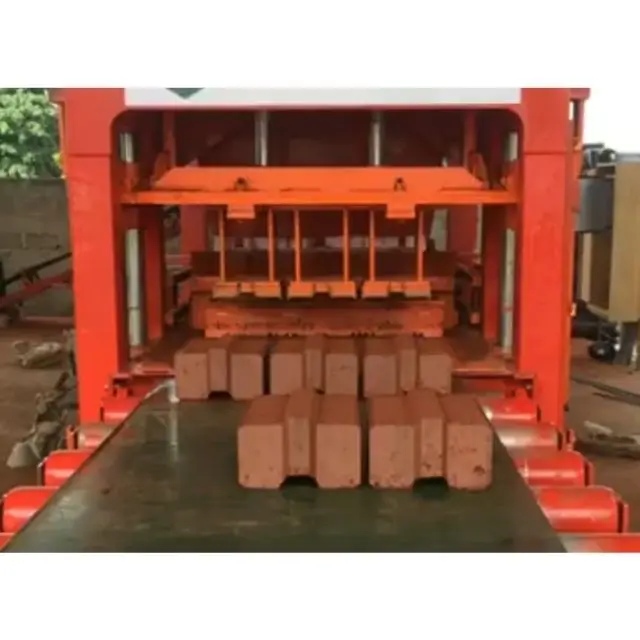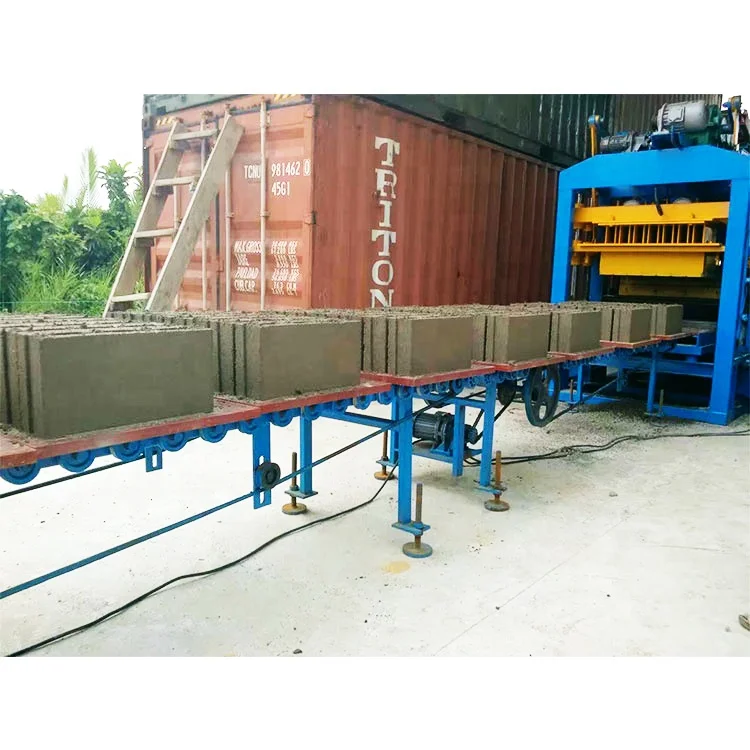
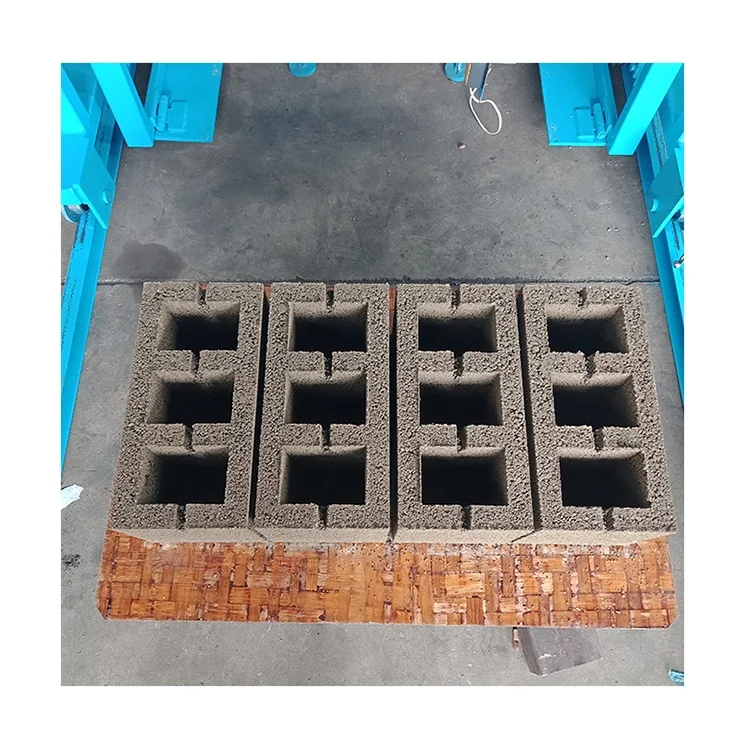
Description
Honest capacity by format — QTJ4-25 block machine specifications are matched to the actual block format and mould you intend to run, with every output figure tied to a specific block size and cavity count rather than a single inflated headline number.
Technical Specifications
| Parameter | Value |
|---|---|
| Product Type | Semi-Automatic Concrete Hollow Block Making Machine |
| Model | QTJ4-25 |
| Overall Dimensions (L×W×H) | 3060 × 1730 × 2580 mm |
| Total Weight | 4 T |
| Pallet Size | 850 × 550 mm |
| Block Height Range | 40 – 280 mm |
| Vibration Force | 45 kN |
| Cycle Time | 25 s |
| Belt Conveyor Length | 8 m |
| Mixer Model | JQ500 |
| Motor Brand | Siemens or ABB (as configured) |
| Voltage & Frequency | 380 V, 3-phase, 50 Hz (configurable to local supply) |
| Control System | Electric control (PLC or relay — confirm before order) |
| Workshop Area Required | 50 – 150 m² |
| Material Storage Area Required | 300 – 500 m² |
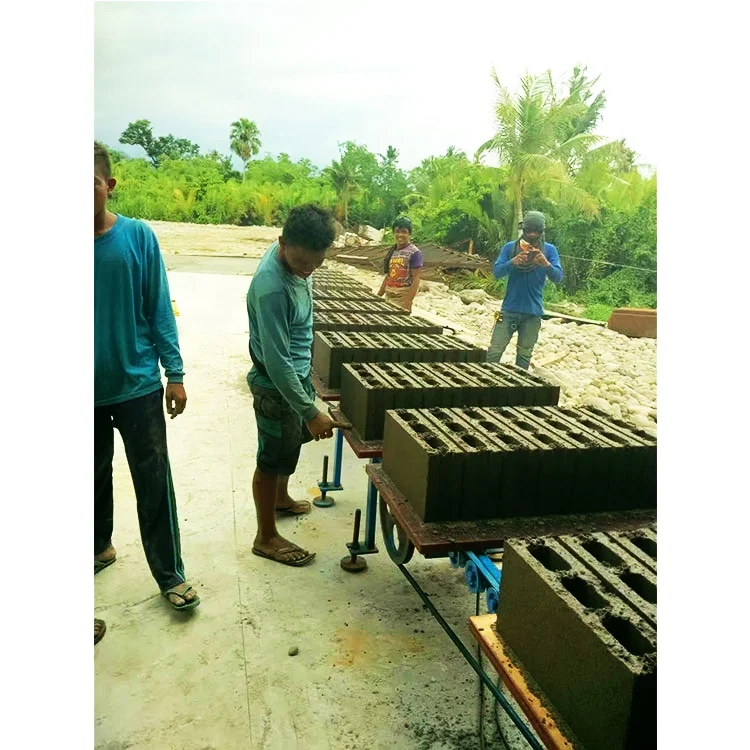
| Output: 400×200×200 mm Hollow Block | 480 pcs/h (4 pcs per mould) |
| Output: 400×150×200 mm Hollow Block | 600 pcs/h (5 pcs per mould) |
| Output: 400×100×200 mm Hollow Block | 840 pcs/h (7 pcs per mould) |
| Output: 240×115×53 mm Solid Brick | 2880 pcs/h (24 pcs per mould) |
| Mould Formats Supported | Hollow, solid, paver, interlocking, curbstone, colored paver, riverside brick, grassed brick, square brick |
| Warranty | 1 year (excluding wearing parts) |
Application Suitability
| Application | Material or Output |
|---|---|
| Small to medium hollow block plant | Crushed stone, river sand, cement blends producing 400×200×200 mm blocks |
| On-site block production for contractors | Local aggregate with portable mixer feeding the QTJ4-25 line |
| Paver and interlocking brick production | Pigmented concrete mixes for driveways, walkways, public spaces |
| Solid brick for masonry walls | Standard cement-sand mixes yielding 240×115×53 mm bricks |
| First-time block plant entrepreneur | Semi-automatic configuration with manageable capital outlay |
What "480 Pieces per Hour" Leaves Out on the QTJ4-25 Block Machine Specifications
Capacity means nothing until the block format, mould cavity count, and local mix design are named together.
I once watched a buyer in the Middle East receive a machine rated at a certain output, only to find daily production falling well below expectation because the local volcanic aggregate required a completely different vibration profile and longer cycle time [NEED_CITE: aggregate grading impact on block cycle time]. That buyer had been quoted a single headline number with no mention of the block format it assumed. With the QTJ4-25, every capacity figure above names the exact block dimensions and mould cavity count — 480 pcs/h assumes a 400×200×200 mm hollow block with four cavities per mould. Switch to a 100 mm partition block and the figure changes to 840 pcs/h because the mould holds seven units. This transparency is the starting point for honest QTJ4-25 block machine specifications.
Mould Selection Defines the Real Output Range
The QTJ4-25 block machine specifications include a mould range covering hollow blocks, solid bricks, pavers, interlocking formats, and curbstones. Each format demands a different mould plate, and the cavity count per plate directly determines hourly throughput. A buyer producing primarily 200 mm hollow blocks will run a four-cavity mould, while the same machine fitted with a 24-cavity solid brick mould produces at a markedly different rate. Custom mould design to buyer drawings is available, meaning the machine can be configured for regional formats that catalogue moulds do not cover [NEED_CITE: regional block format standards by market].
Pallet Size Must Match Your Existing Curing Infrastructure
The 850 × 550 mm pallet dimension is not arbitrary — it governs how many blocks fit per cycle and how those loaded pallets stack in the curing area. Before confirming an order, the buyer needs to verify that existing curing racks, forklifts, and yard space accommodate this pallet footprint. A mismatch here means either rebuilding the curing zone or running the machine below its intended cycle rhythm, and neither outcome is acceptable once production is under way.
Reading the Specs That Matter for Block Quality
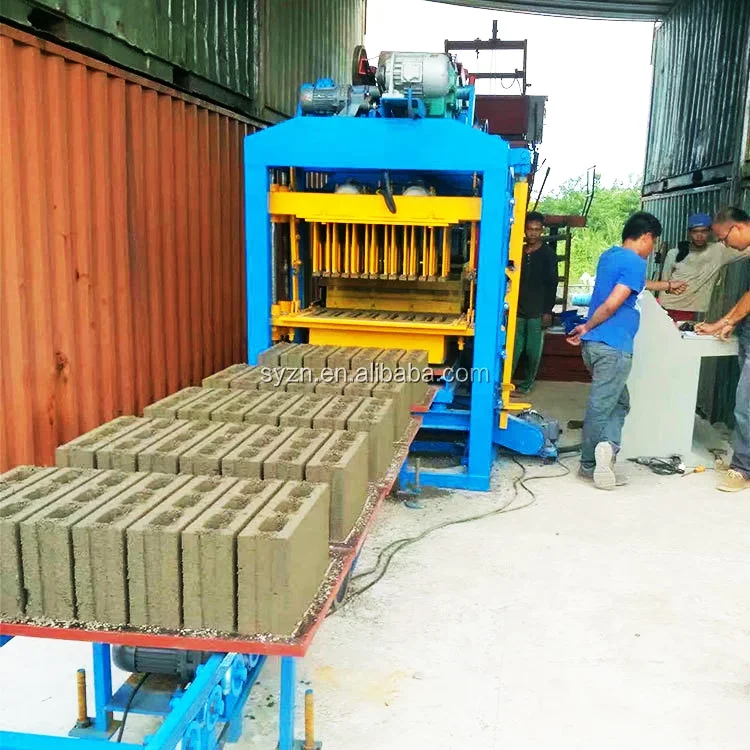
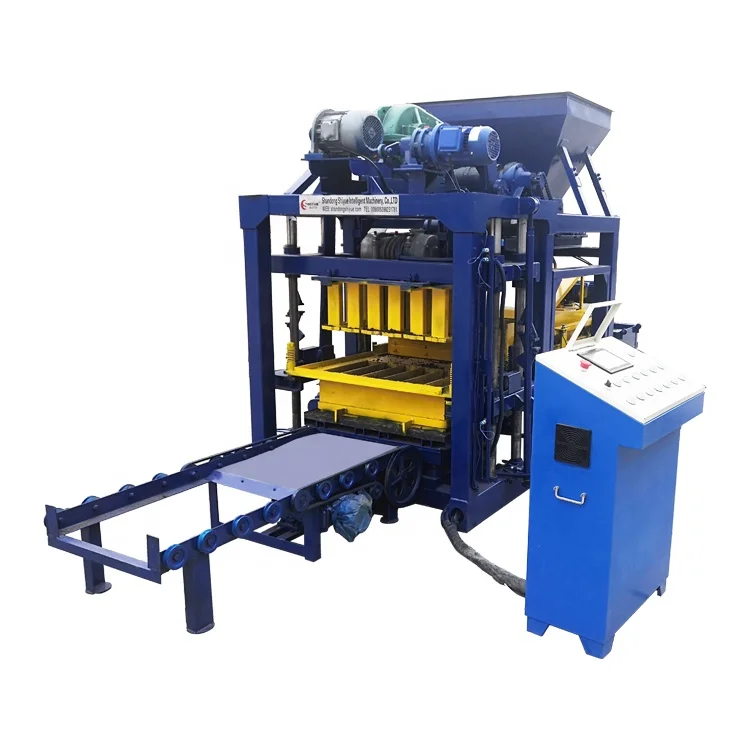
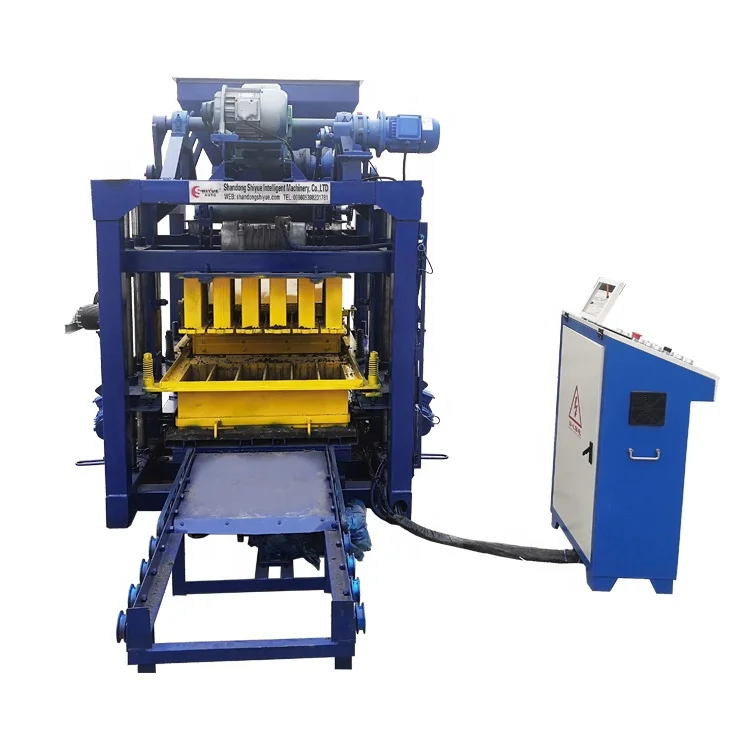
The 45 kN vibration force works in tandem with hydraulic pressure to compact the concrete mix inside the mould cavity. Insufficient vibration leaves voids and reduces compressive strength; excessive force without matched pressure causes the mix to segregate. The 25-second cycle time assumes a standard mix design with well-graded aggregate — if the buyer’s local sand is excessively fine or the coarse aggregate is gap-graded, cycle time must be extended and vibration parameters adjusted. The JQ500 pan mixer upstream of the press must deliver a consistent batch within that cycle window, or the press sits idle between strokes. The 8 m belt conveyor bridges the gap between mixer discharge and press hopper, and its length must align with the physical layout of the workshop [NEED_CITE: concrete block vibration and pressure matching principles].
The Hidden Cost of Skipping Format-Level Planning
Buyers who select a block machine based on a single headline capacity figure often discover that their primary product format was never the basis of that number. Mould changeover then becomes a bottleneck — if the change procedure is not documented and practiced, a shift that should produce two formats ends up producing one. Pallet handling, stacking, and curing logistics are frequently excluded from the initial quotation, leaving wet blocks stacked by hand in the yard [NEED_CITE: block plant pallet handling and curing logistics]. Voltage and control language left unconfirmed can delay commissioning by weeks after the machine arrives on site.
Why Source This Machine Through a Format-Matched Approach
Block machinery is the single focus here, so the QTJ4-25 press, mould, pallet, and handling equipment are specified as one matched system rather than assembled from unrelated suppliers. Configuration is set against the buyer’s actual mix design and local aggregate, not a catalogue default. Mould design covers the formats the buyer’s market actually sells, including custom drawings for regional block shapes. The automation level is selectable — a buyer can begin with the semi-automatic QTJ4-25 and upgrade handling and stacking later as volume grows. Installation and commissioning support includes operator training so the crew understands cycle timing, mould changeover, and daily maintenance from the first week.
Documentation & Verification
- Line layout with capacity calculation stating the exact block format assumed for each output figure
- Machine specification sheet covering vibration force, pallet size, and cycle time per format
- Mould drawing and format list confirming every block type your market requires
- Voltage, frequency, and control display language confirmed in writing before production
- Factory test record demonstrating cycle performance on your specified block format
Installation, Commissioning & Support
- Workshop floor must be level and rated for 4 T static load across the 3060 × 1730 mm footprint
- Dedicated 3-phase circuit matching confirmed voltage — 380 V/50 Hz default, configurable per site
- Machine ships partially dismantled; reassembly covers frame, vibration table, and conveyor alignment
- First-run commissioning includes vibration force calibration against your specific mix design
- Operator training on mould changeover, cycle adjustment, and daily lubrication of vibration motor bearings
- Wear parts list with reorder codes for vibration springs, mould liners, and pallet guides
Prepare Your Inquiry With These Details
To receive a configuration proposal that reflects realistic QTJ4-25 block machine specifications for your project, share the target block format and dimensions, the daily output you need for that format, and a sample of your local raw materials. Confirm your workshop dimensions, existing curing rack pallet size if applicable, and the local voltage and frequency at the installation site.
Frequently Asked Questions
Q: How is the QTJ4-25 output capacity verified for each block format?
A: Every output figure is tied to a specific block dimension and mould cavity count — for example, 480 pcs/h assumes a 400×200×200 mm hollow block with four cavities. Before quotation, a capacity calculation document is prepared showing the output for each format you plan to produce, so there is no single headline number masking format-level differences.
Q: Is the vibration force matched to my local aggregate and mix design?
A: The 45 kN vibration rating is a starting point. Before production, buyers are asked to send a sample of their local aggregate so the mix can be tested and vibration parameters adjusted. If the local material differs significantly from standard river sand — such as volcanic rock or crushed limestone — cycle time and force settings are recalibrated accordingly.
Q: How do I confirm pallet size against my curing area before ordering?
A: The standard pallet size is 850 × 550 mm. Before order confirmation, share the dimensions of your curing racks, yard spacing, and forklift fork width. If your existing infrastructure uses a different pallet size, the pallet specification is reviewed and adjusted so loaded pallets move from press to curing area without manual rehandling.
Q: What voltage and control language will be configured before shipment?
A: The default is 380 V, 3-phase, 50 Hz, but the motor and control panel are configurable to your local supply. The control display language is confirmed in writing before production begins so the operator interface arrives in the correct language, avoiding commissioning delays on site.
Q: What mould formats can the QTJ4-25 run, and is custom mould design available?
A: Standard mould formats include hollow block, solid brick, paver, interlocking block, and curbstone. Custom mould design to buyer drawings is available for regional formats not covered by the catalogue. Each additional mould is supplied with its own cavity plate, and mould changeover procedure is documented in the operation manual.