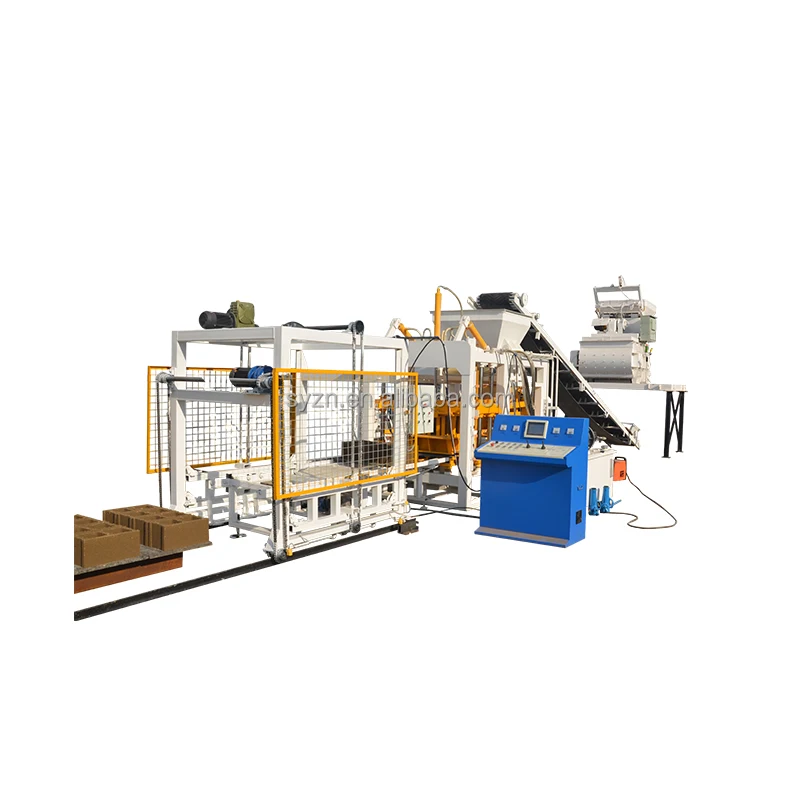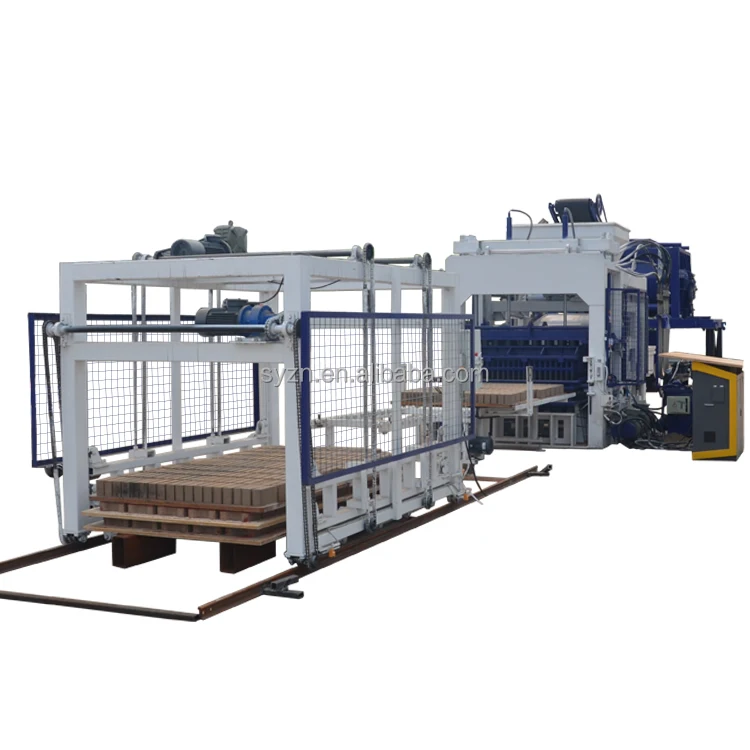
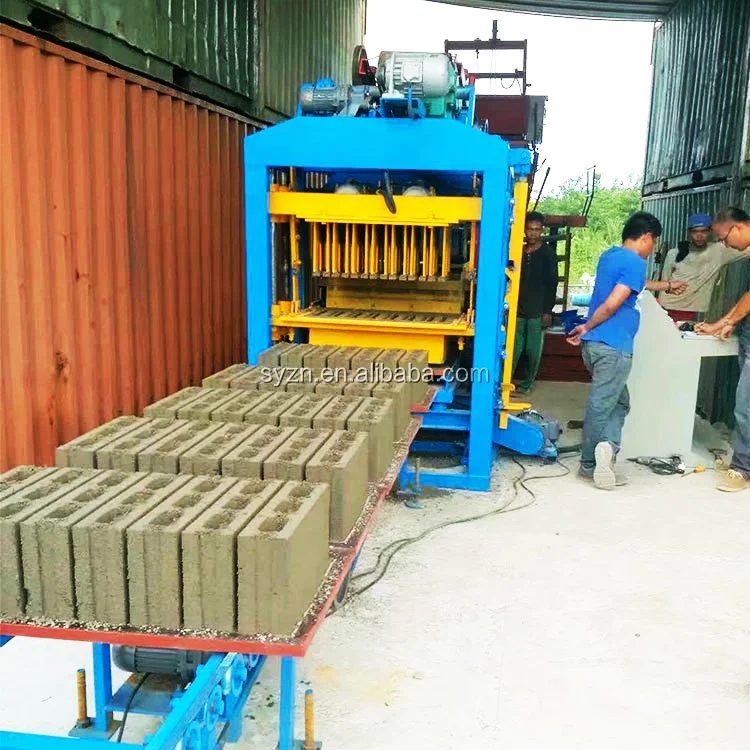
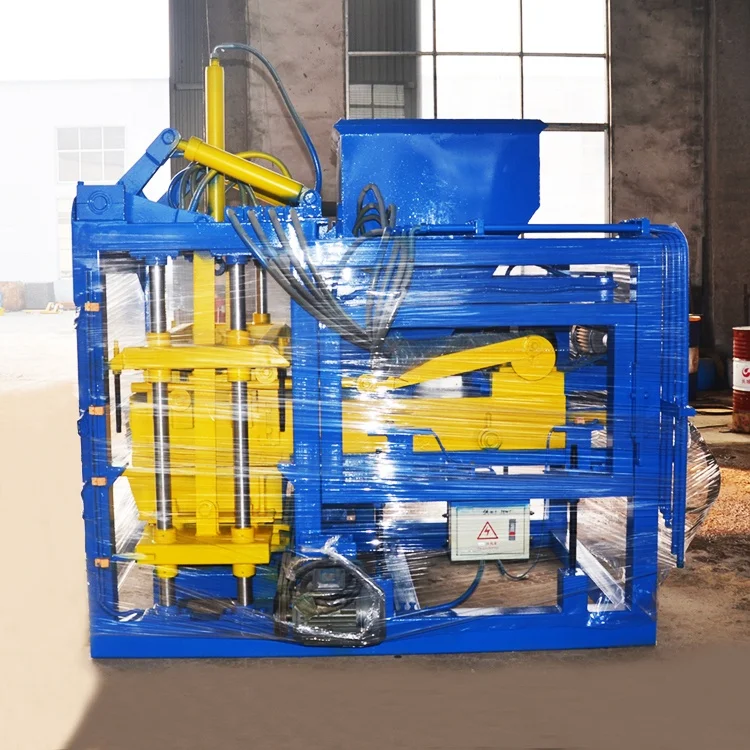


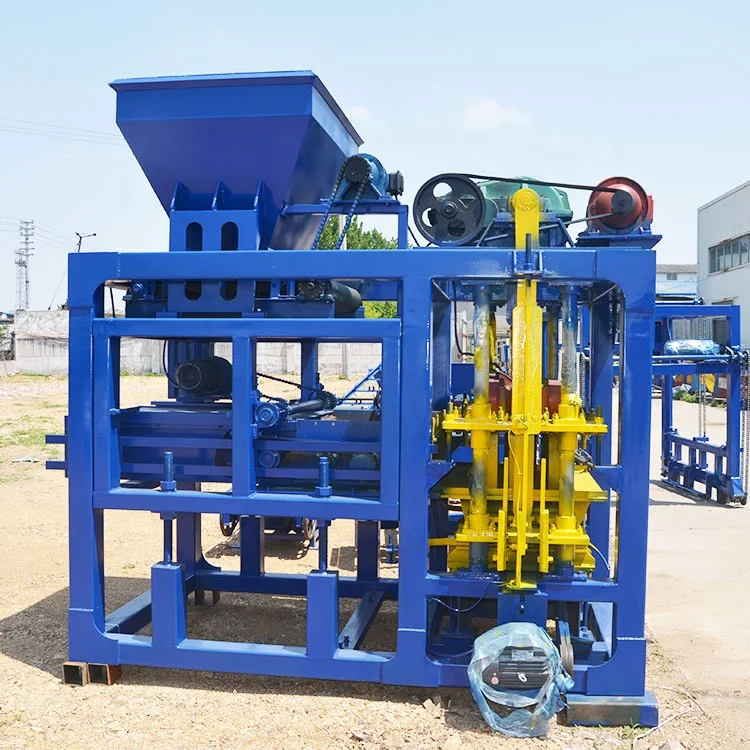

Description
Format-Specific Sizing — Every output figure for the QTJ4-25 names the exact block dimensions, mould cavity count, and cycle time behind it, so buyers size against their market product instead of a catalogue average.
Technical Specifications
| Parameter | Value |
|---|---|
| Model | QTJ4-25 |
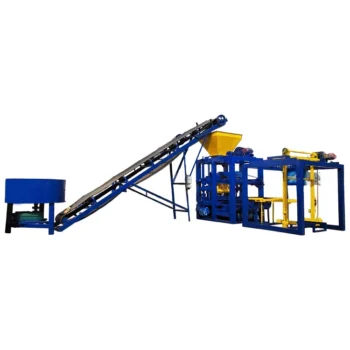
| Product Type | Semi-Automatic Concrete Block Making Machine |
| Overall Dimensions (L×W×H) | 6400×1500×2700 mm |
| Molding Cycle | 25 s |
| Vibration Frequency | 2800–5100 r/min |
| Vibration Force (Exciting Power) | 60 kN |
| Rated Power | 17.9 kW |
| Mixer Model | JQ350 |
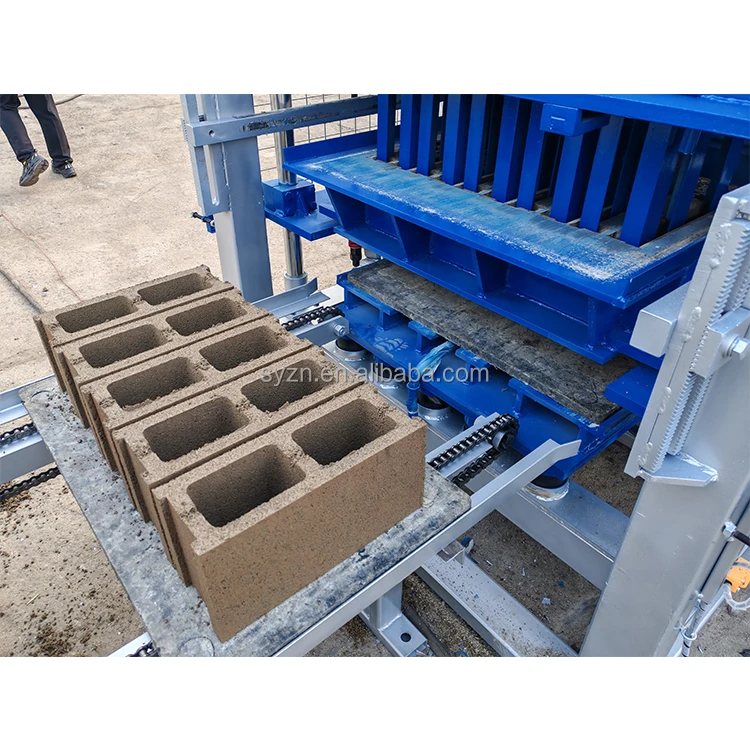
| Pallet Size | 850×550×20 mm |
| Net Weight | 2500 kg |
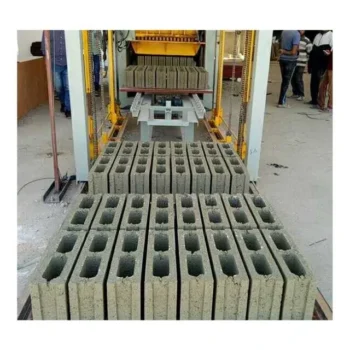
| Applied Products | Hollow block (8 inch, 6 inch), solid brick, paver |
| Raw Materials | Crushed stone, sand, cement, dust, fly ash |
| Output Capacity | 480 pcs/hr (basis: 390×190×190 mm hollow block, 4 pcs/mould) |
| Output Capacity | 600 pcs/hr (basis: 400×150×200 mm hollow block, 5 pcs/mould) |
| Output Capacity | 2100 pcs/hr (basis: 240×115×53 mm solid brick, 18 pcs/mould) |
| 8-Hour Output | 3800 pcs (basis: 390×190×190 mm hollow block) |
| 8-Hour Output | 4800 pcs (basis: 400×150×200 mm hollow block) |
| 8-Hour Output | 17000 pcs (basis: 240×115×53 mm solid brick) |
| Automation Level | Semi-automatic |
| Hydraulic System | Equipped with hydraulic station for high pressure and stable operation |
| Mould Change | Interchangeable moulds for hollow, solid, paver, curbstone formats |
| Voltage & Frequency | Configurable to buyer’s site requirement (basis to be confirmed) |
| Control System / PLC | Configuration to be confirmed with buyer |
Application Suitability
| Application | Material or Output |
|---|---|
| 8-inch and 6-inch hollow block production for local housing markets | Crushed stone, sand, cement, fly ash |
| Solid brick production for masonry and load-bearing walls | Sand, cement, stone dust |
| Paving block production for walkways and yards | Crushed stone, cement, fine aggregate |
| On-site block production for housing and construction projects | Locally sourced aggregates including fly ash and dust |
What "2100 Pieces per Hour" Leaves Out When Choosing a QTJ4-25 Block Machine
A capacity number without its block format is a marketing figure, not a production plan.
When I first visited a small block yard in West Africa, the owner showed me his QTJ4-25 block machine specifications sheet and pointed to the 2100 pcs/hr line. His actual daily output was roughly a third of what he had expected, because that figure assumed an 18-cavity solid brick mould running 240×115×53 mm units — not the 8-inch hollow blocks his market actually bought. The mould he needed held only 4 cavities, which dropped the hourly rate to around 480 pieces. His frustration was not with the machine itself, but with a quotation that had buried the assumption in fine print. [NEED_CITE: common block machine capacity misrepresentation in export quotations]
Format-by-Format Output Reality
The QTJ4-25 semi-automatic block machine runs on a 25-second molding cycle, but what you produce in those 25 seconds depends entirely on the mould fitted. With a 390×190×190 mm hollow block mould holding 4 cavities, the machine delivers approximately 480 pieces per hour, which translates to roughly 3800 units in an 8-hour shift. Switch to a 400×150×200 mm hollow block at 5 cavities per mould and the rate moves to 600 per hour. The 2100 pcs/hr figure applies only when the 18-cavity solid brick mould is mounted. Buyers evaluating QTJ4-25 block machine specifications should work backward from the format they sell most, not the highest number on the sheet.
Mould Selection and Local Aggregate Matching
Block strength depends as much on local raw material as on the press itself. In one South Asian project, the customer’s stone dust carried a high clay content that absorbed water unevenly, producing blocks that crumbled at the edges despite correct vibration settings. The fix was adjusting the mix ratio and lowering the vibration frequency to stay within the 2800–5100 r/min range rather than running at maximum. The QTJ4-25’s adjustable vibration frequency and 60 kN exciting force give enough range to compensate for variable local aggregates, but only if someone tests the actual material before shipping. [NEED_CITE: effect of clay content in aggregate on concrete block compressive strength]
Reading the Specs That Actually Matter
The 17.9 kW rated power covers the press, mixer, and hydraulic station together. The JQ350 pan mixer handles the batching upstream, and its capacity sets the rhythm for how fast fresh mix reaches the hopper — if mixing falls behind, the press idles and cycle time stretches beyond 25 seconds. The 850×550×20 mm pallet size determines curing rack dimensions and forklift compatibility; buyers who already have racks built for a different pallet will face an unplanned rebuild. The hydraulic station delivers the pressing force that works alongside vibration to compact the mix, and its pressure setting must be matched to the mould cavity count and block height to avoid over-pressing thin pavers or under-pressing tall hollow blocks. The 2500 kg net weight reflects a machine that still requires a level concrete pad but does not demand the deep foundation a fully automatic line would.
The Hidden Cost of Ignoring Pallet and Format Alignment
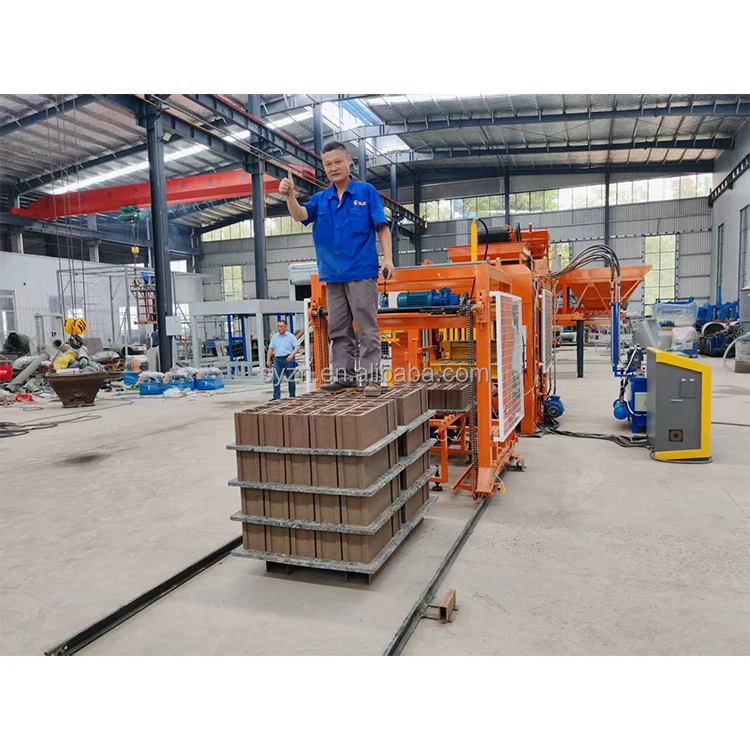
I have walked into block yards where the owner purchased the press but received no pallets suited to their curing area, forcing workers to carry wet blocks by hand across uneven ground. When pallets arrive as an afterthought, their dimensions rarely match the existing rack spacing, and blocks cure in warped stacks. A mismatched pallet also accelerates wear on the feeding mechanism, because the pallet feeder is calibrated to the 850×550×20 mm specification — thicker or wider pallets jam at the transfer point, and operators resort to forcing them through, damaging guide rails. [NEED_CITE: pallet specification mismatches causing block handling damage in small-scale production]
Why Source the QTJ4-25 Here
The machine, mould, pallet, and JQ350 mixer are specified as a single matched system rather than assembled from separate suppliers, so cycle times and material flow are balanced before the line ships. Mould design covers the formats the buyer’s market actually sells, with custom drawings available when local standards call for non-standard block dimensions. Every QTJ4-25 block machine configuration is set against the buyer’s own mix design and local aggregate, not a default catalogue recipe, which means vibration frequency and hydraulic pressure arrive pre-tuned. The semi-automatic platform allows buyers to start with manual pallet handling and add automatic stacking later as volume justifies the investment. Installation support includes on-site commissioning with operator training, so the crew learns mould change procedures and parameter adjustment on their own product from day one. [NEED_CITE: importance of matched system specification in block production lines]
Documentation & Verification
- Line layout and capacity calculation stating the block format assumed for every output figure
- Mould drawing and format list confirming cavity count and block dimensions before order
- Pallet specification sheet matched to the 850×550×20 mm requirement and curing rack plan
- Voltage and control language confirmation document signed before production begins
- Factory test record showing the machine running the buyer’s target block format
- Hydraulic and electrical schematic for on-site maintenance and troubleshooting
Installation, Commissioning & Support
- Level concrete pad required to support the 6400×1500×2700 mm footprint and 2500 kg net weight
- Dedicated power circuit matching confirmed voltage and frequency for the 17.9 kW total load
- Machine shipped partially assembled with hydraulic station pre-tested and mould mounted
- First-run commissioning includes vibration frequency tuning to the buyer’s local aggregate mix
- Operator training covers mould change procedure across hollow, solid, paver, and curbstone formats
- Wear parts list and mould maintenance schedule provided for the first production year
What to Prepare Before Requesting a Quote
To size the QTJ4-25 correctly for your operation, share the block formats your market demands with exact dimensions, the daily output you need per format, and a sample or description of your local aggregate including sand type and any fly ash source. Confirm your site voltage, frequency, and preferred control panel language so the electrical package is built right the first time. If you already have curing racks and forklifts on site, send their specifications so the pallet and handling setup integrates without modification.
Frequently Asked Questions
Q: How is the output capacity calculated for each block format on the QTJ4-25?
A: Every output figure is based on the 25-second molding cycle multiplied by the cavity count of a specific mould. For example, 480 pcs/hr comes from 4 cavities per mould producing 390×190×190 mm hollow blocks. The 2100 pcs/hr figure requires the 18-cavity solid brick mould. Always match the calculation to the format you will actually sell.
Q: Which mould formats are available, and how long does a change take?
A: The QTJ4-25 supports interchangeable moulds for hollow blocks, solid bricks, pavers, and curbstone formats. Mould change time depends on operator familiarity; a trained crew can complete the swap within a single shift break. Custom moulds can be designed to buyer drawings for non-standard block sizes required by local building codes.
Q: How should I match vibration force and hydraulic pressure to my local aggregate?
A: The machine offers a vibration frequency range of 2800–5100 r/min and 60 kN exciting force, adjustable to suit different mixes. High-clay aggregates typically need lower frequency and adjusted water content. We test your actual raw material before shipment and record the recommended parameters in the commissioning manual so the machine arrives pre-tuned.
Q: What pallet size does the QTJ4-25 require, and can I source them locally?
A: The specified pallet size is 850×550×20 mm. Local sourcing is possible if the pallets meet the dimensional tolerance and material strength required by the feeder mechanism. We provide a pallet specification sheet so your local supplier can match the requirement, or we can include pallets in the shipment.
Q: What voltage and control language details must I confirm before shipping?
A: Voltage, frequency, and control panel language are configurable but must be confirmed before production starts. Providing these details at the inquiry stage prevents commissioning delays on arrival. We include a signed confirmation document in the documentation package to ensure the electrical package matches your site supply exactly.