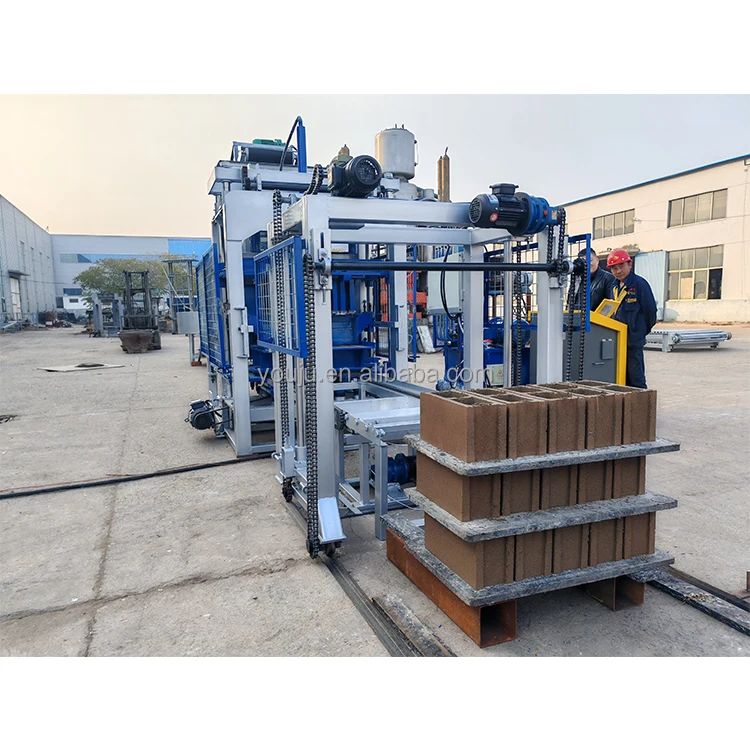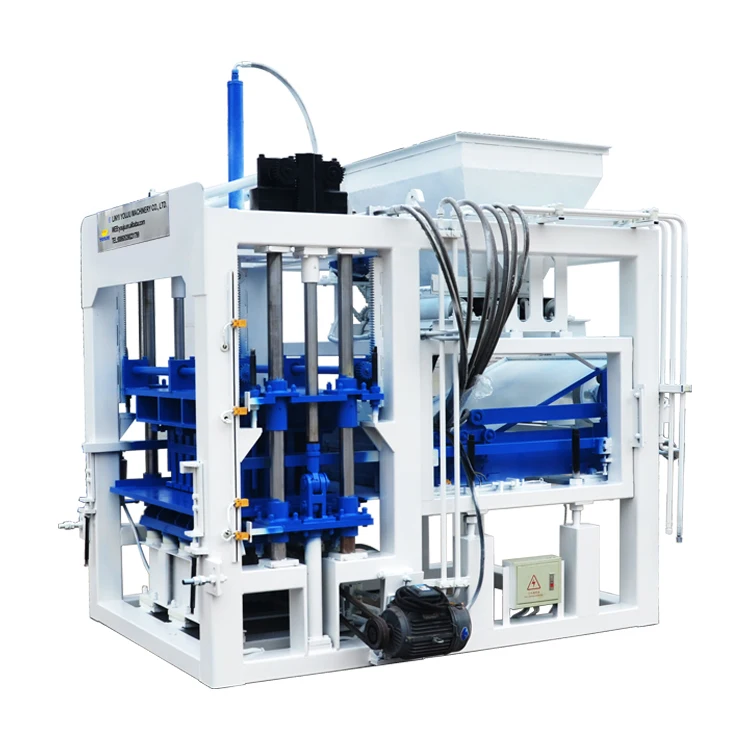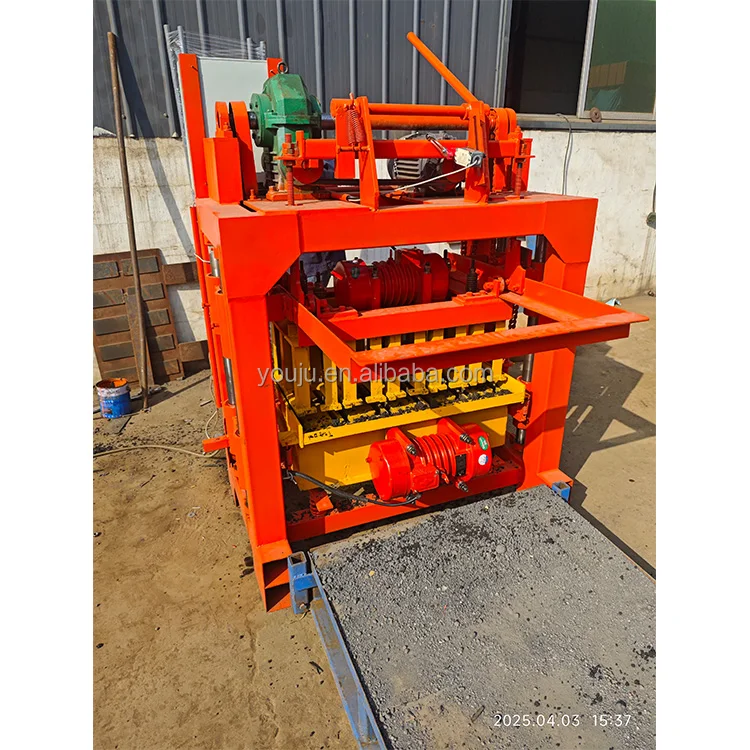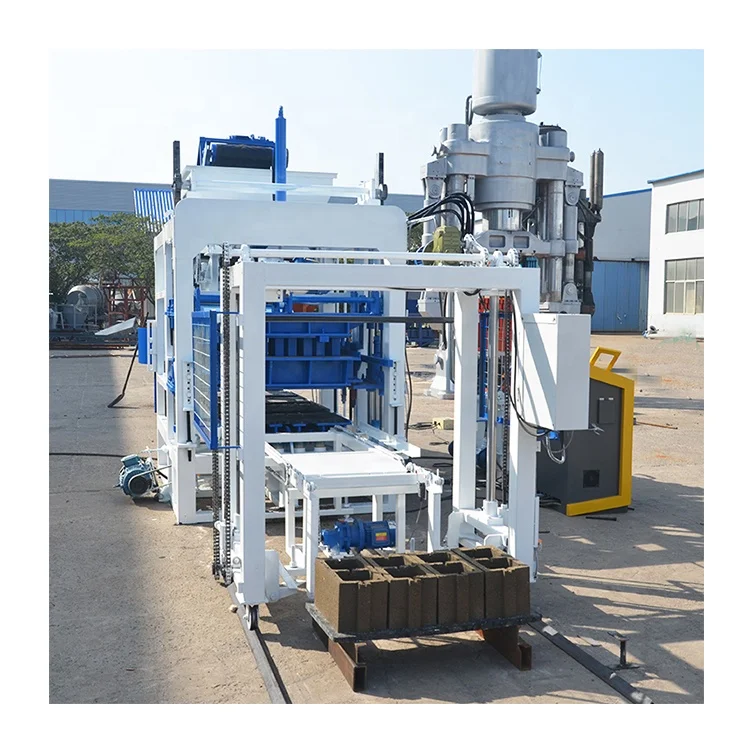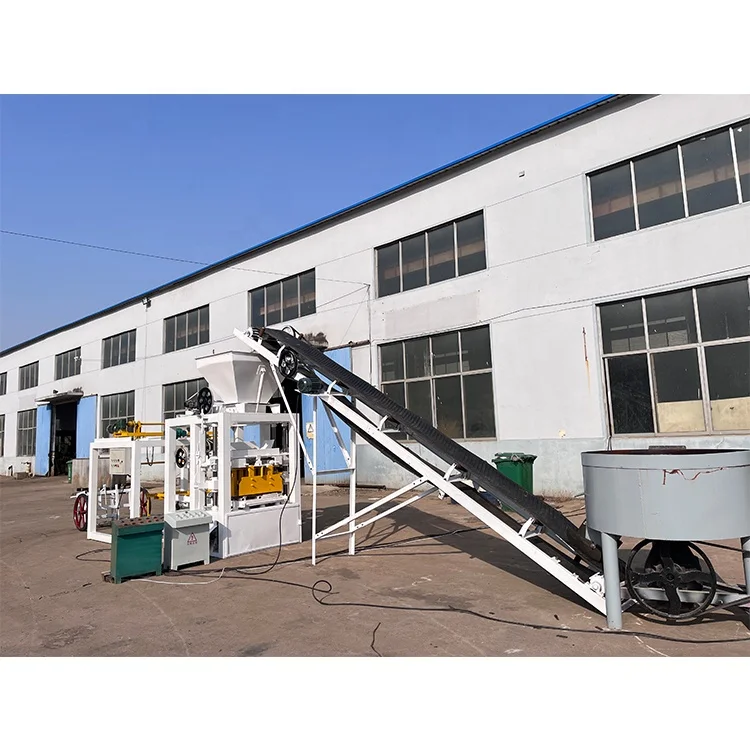
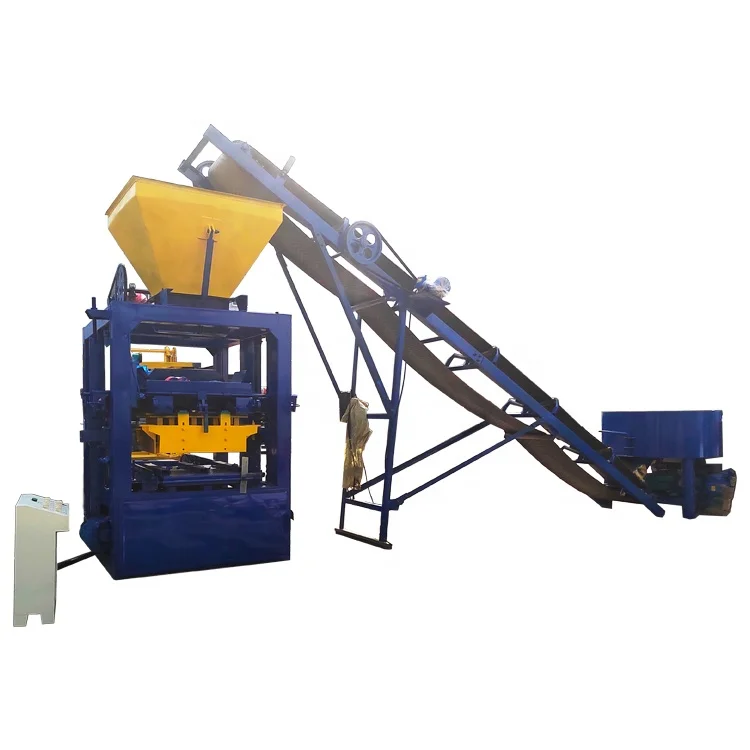
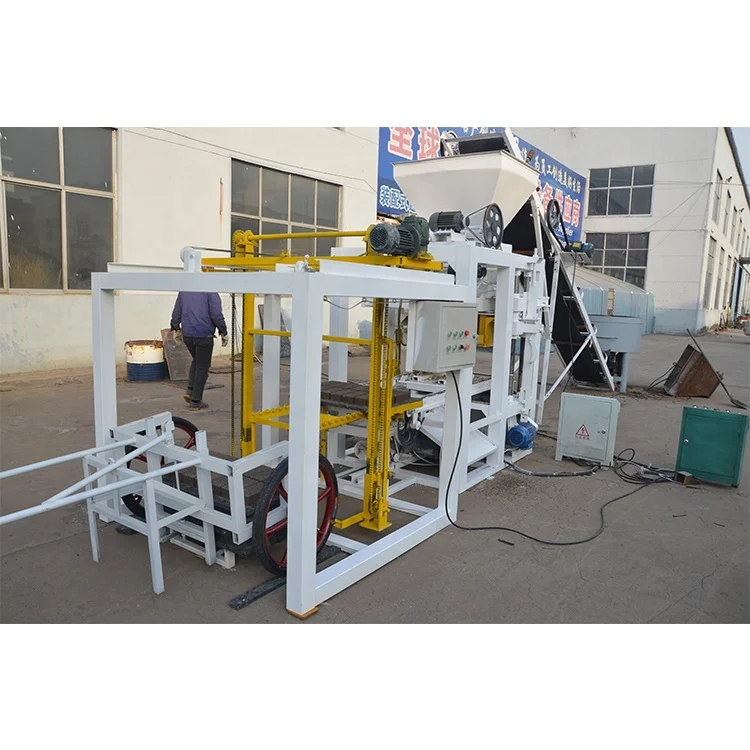
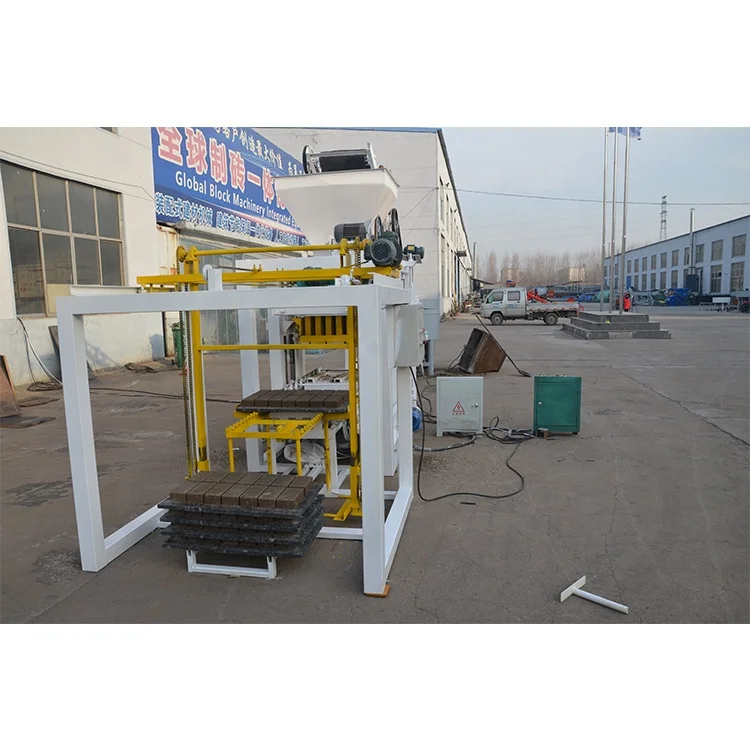
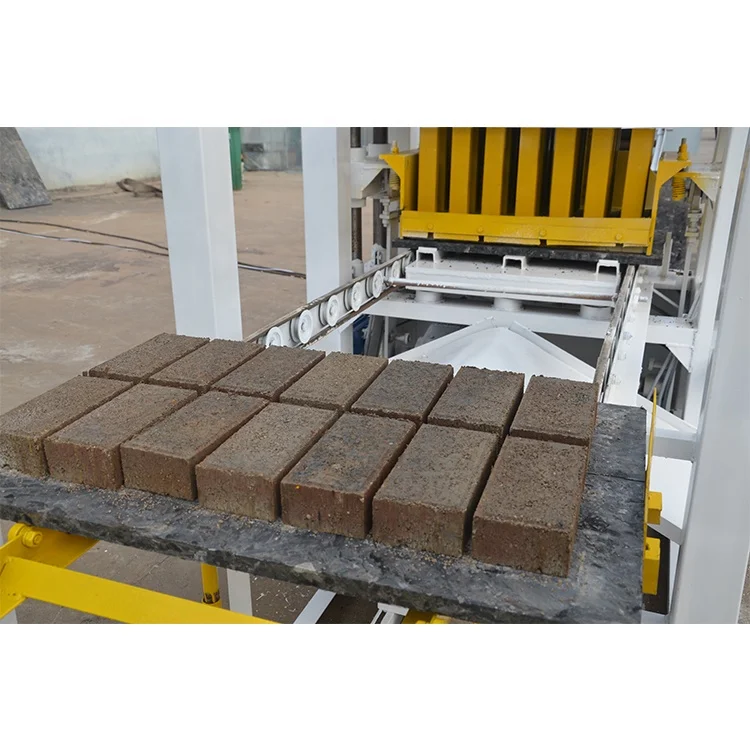
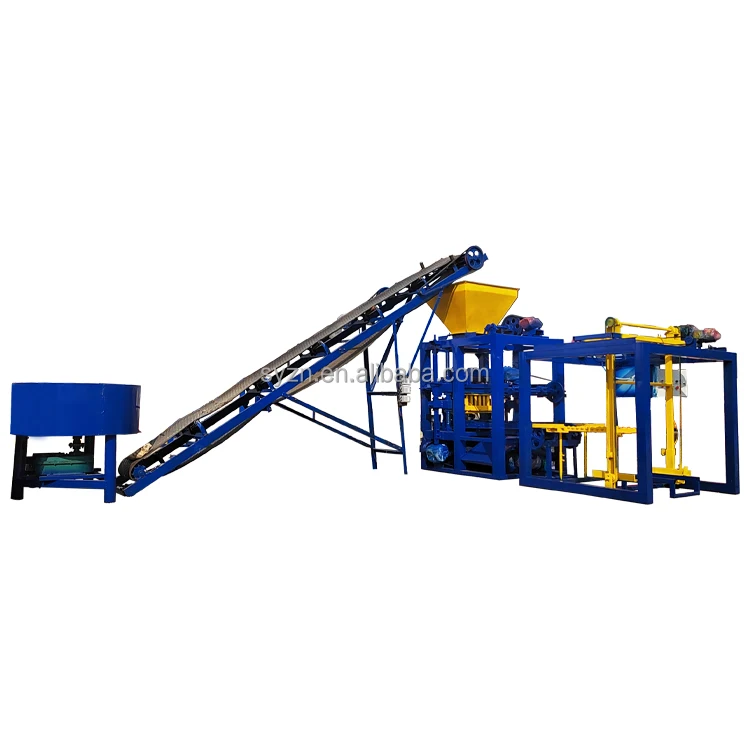
Description
Mould-matched capacity — Every cycle time and output figure for the QTJ4-24 is stated against a specific block format rather than a single catalogue claim, so the daily tonnage you plan on is the tonnage your line actually delivers.
Technical Specifications
| Parameter | Value |
|---|---|
| Model | QTJ4-24 |
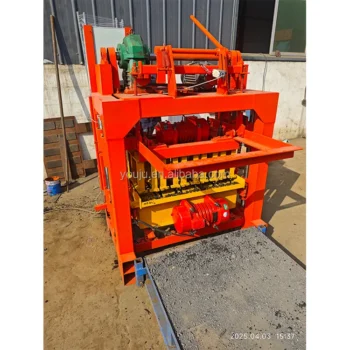
| Product Type | Stationary Block Making Machine |
| Overall Dimensions (L×W×H) | 3600×1700×2560 mm |
| Pallet Size | 850×450 mm |
| Molding Cycle | 24–26 s (basis not stated in source — confirm block format, material, and thickness before quoting capacity) |
| Overall Power | 11.95 kW |
| Vibration Force | 45 kN (2×3 kW lower vibrators + 2×1.5 kW upper vibrators) |
| Net Weight | 2 T |
| Molding Method | Mechanical (pressure + super vibration) |
| Material Distribution | Full-automatic spiral |
| Mold Lifting Reducer | 350-type |
| Compatible Materials | Cement, sand, stone |
| Automation Level | Semi-automatic (mechanical molding with automatic spiral feeding) |
| Mould Format Options | Interlocking bricks, hollow bricks, paving bricks, solid bricks |
| Hydraulic Pressure | Not applicable (mechanical type) |
| Warranty | 1 year for the whole machine (excluding spare parts) |
Application Suitability
| Application | Material or Output |
|---|---|
| Hollow concrete block production | Cement, sand, crushed stone mix — standard 400×200×200 mm and similar formats |
| Solid block manufacturing | Dense cement-aggregate blends for load-bearing masonry |
| Interlocking brick production | Graded stone and cement for mortarless wall systems |
| Paving block production | High-strength cement-sand mixes for walkways and light-traffic areas |
| Small-to-medium block plant operation | Semi-automatic output suited to regional building material supply |
| On-site construction block manufacturing | Stationary setup for contractors producing blocks at the project location |
What "24 Seconds Per Cycle" Actually Means for Your Block Format
A cycle time only matters when tied to the exact block you intend to sell.
Catalogue sheets often quote a single molding cycle without revealing which block format, wall thickness, or aggregate gradation that figure assumes. I have watched buyers in West Africa sign off on a QTJ4-24 block machine specifications sheet expecting a certain daily pallet count, then discover on commissioning that their local laterite sand required longer vibration to reach target density. The cycle stretched well beyond the printed number, and the shift output dropped accordingly. The machine was not at fault — the specification premise was simply never matched to the material [NEED_CITE: aggregate grading influence on vibration compaction time]. That is why the first step in any QTJ4-24 block machine specifications review here is to confirm your target format and send a raw material sample before we lock in a capacity figure.
Format-First Approach to QTJ4-24 Block Machine Specifications
The QTJ4-24 block machine specifications only become meaningful once the block format is fixed. A 400×200×200 mm hollow block requires a different vibration duration and amplitude balance than a 60 mm thick paving brick on the same pallet. We list cycle time and realistic daily output per format — hollow, solid, interlocking, and paving — so you can compare the machine against your actual product mix instead of an abstract best-case number.
Matching Vibration Force to Your Aggregate
The 45 kN total vibration force comes from four independently mounted vibrators — two 3 kW units below the mold and two 1.5 kW units above. This dual-layer arrangement compacts the mix from both directions, which matters when your aggregate contains fines or clay that resist consolidation. If your local sand carries high silt content, the upper vibrators help settle the top face of the block before the lower units finish densifying the body [NEED_CITE: vibration distribution and block face quality]. We adjust the vibration timing during commissioning to match whatever sample you provide, rather than shipping with a factory default that may not suit your mix.
Reading the Core Parameters in Context
The 11.95 kW total power draw covers the spiral feeder, vibration motors, and mold lifting reducer simultaneously, so no dedicated high-amperage start-up circuit is required beyond standard industrial supply. The 850×450 mm pallet size defines how many blocks are produced per cycle — four standard hollow blocks or a larger count of pavers — and must align with the curing rack spacing and forklift tine width already in your yard. The 350-type reducer governs how quickly the mold box lifts clear of the freshly compacted block; a smooth lift at the right speed prevents top-face cracking that would otherwise push rejects higher. Mechanical molding with automatic spiral feeding keeps the operator’s role limited to pallet handling and stacking, which defines the labor count you should plan for on each shift.
When the Wrong Pallet Size Costs You a Second Shift
A pallet that does not match your curing rack dimensions means blocks are restacked by hand before they can cure, adding a labor bottleneck that erases the cycle time advantage you paid for. I have seen plants where the QTJ4-24 block machine specifications listed the correct pallet, but the buyer’s existing racks were built for a different size from a previous machine. The result was a double-handling problem that effectively cut daily throughput in half until new racks were fabricated [NEED_CITE: pallet handling and curing area layout planning]. Confirming pallet size against your curing infrastructure is a checkpoint we include before the machine enters production.
Why Buyers Source This Machine Here
Block machinery is our single product focus, so the QTJ4-24 is quoted as a matched system — machine, mold, pallet, and handling — rather than assembled from separate suppliers who each optimize for their own scope. Every configuration is set against your actual mix design and local aggregate, not pulled from a default catalogue row. Mould design covers the formats your market sells, and custom mould drawings are available if your project specifies a non-standard profile. Automation level is selectable, meaning you can begin with the semi-automatic mechanical setup and add pallet handling upgrades later. Installation and commissioning include operator training on your specific material, so the team running the machine on day one already knows how to adjust cycle timing when the aggregate moisture shifts.
Documentation & Verification
- Line layout showing pallet flow from QTJ4-24 press through curing rack spacing
- Capacity calculation sheet with cycle time stated per target block format
- Mould drawing and format list confirming cavity count before order
- Pallet specification matched to your curing area and forklift dimensions
- Voltage and control language confirmation signed off before production
Installation, Commissioning & Support
- Foundation pad sized to 3600×1700 mm footprint with vibration isolation provisions
- 11.95 kW total draw confirmed against your site supply and breaker rating
- Machine arrives assembled; vibration table and feeder bolted on at placement
- Commissioning includes cycle tuning to your local aggregate and mix ratio
- Operator training covers mold change procedure for all specified formats
- Wear parts list covers vibration motor bearings and spiral feeder flighting
Requesting a Format-Matched Quotation
To size the QTJ4-24 accurately, we need your target block format and dimensions, the daily pallet count you are planning for, and a sample of your local sand and aggregate. Share your site voltage and frequency along with the pallet size your existing curing racks accept, and we will return a capacity calculation tied to each format on your product list.
Frequently Asked Questions
Q: What is the realistic daily output of the QTJ4-24 for my specific block format?
A: Daily output depends on the block format, wall thickness, and how your local aggregate responds to vibration. We calculate cycle time and pallet count per format — hollow, solid, interlocking, or paving — using your material sample, so the figure you receive reflects your actual production conditions rather than a generic catalogue claim.
Q: Which mould formats are available and how long does a mould change take?
A: Standard mould options cover hollow bricks, solid bricks, interlocking bricks, and paving bricks. Custom mould designs are available to buyer drawings. Mould change time depends on the format pair being switched; we confirm the expected changeover duration for your specific mould set before the order is finalized.
Q: How is the machine configured to match my local aggregate and mix design?
A: We request a raw material sample before configuration. Vibration timing and the balance between the upper and lower vibrator sets are adjusted to achieve target block density with your specific sand, stone, and cement proportions, rather than relying on a factory default setting.
Q: What pallet size does the QTJ4-24 use and will it fit my existing curing racks?
A: The standard pallet size is 850×450 mm. Before production, we confirm this dimension against your curing rack spacing and forklift capacity to ensure pallets move from press to curing area without double-handling or rack modification.
Q: What voltage, frequency, and control language will be confirmed before shipment?
A: Voltage and frequency are confirmed to match your site electrical supply before the machine enters production. Control panel labeling and any display language options are agreed in writing at the same stage, preventing commissioning delays when the machine arrives on site.