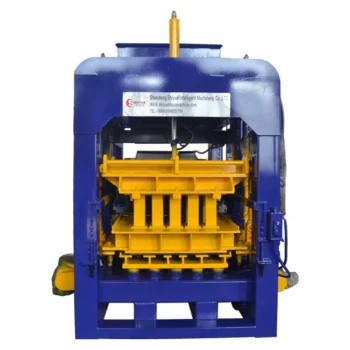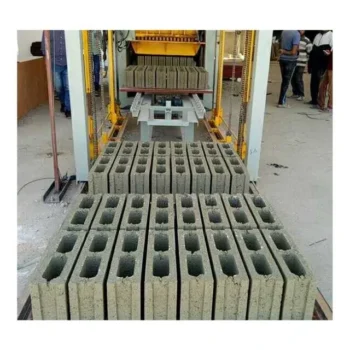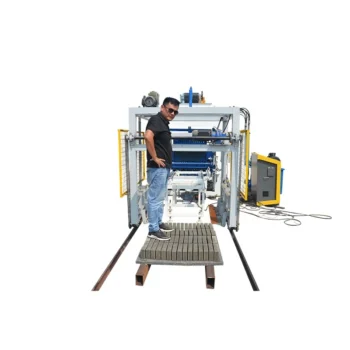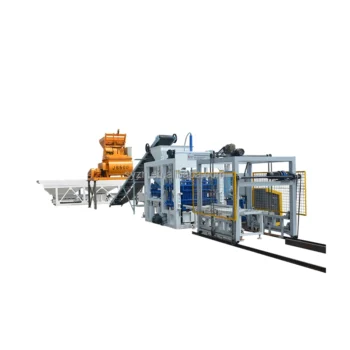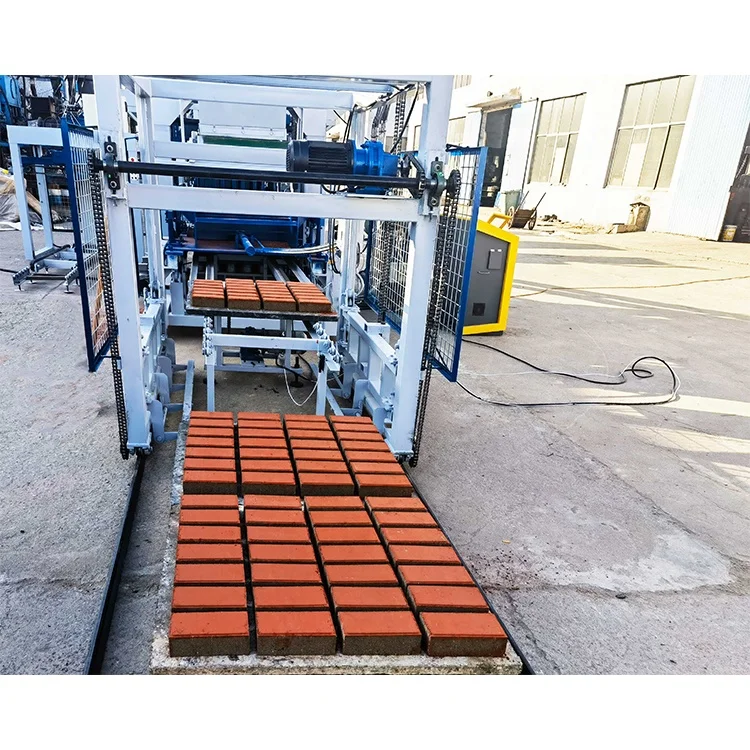
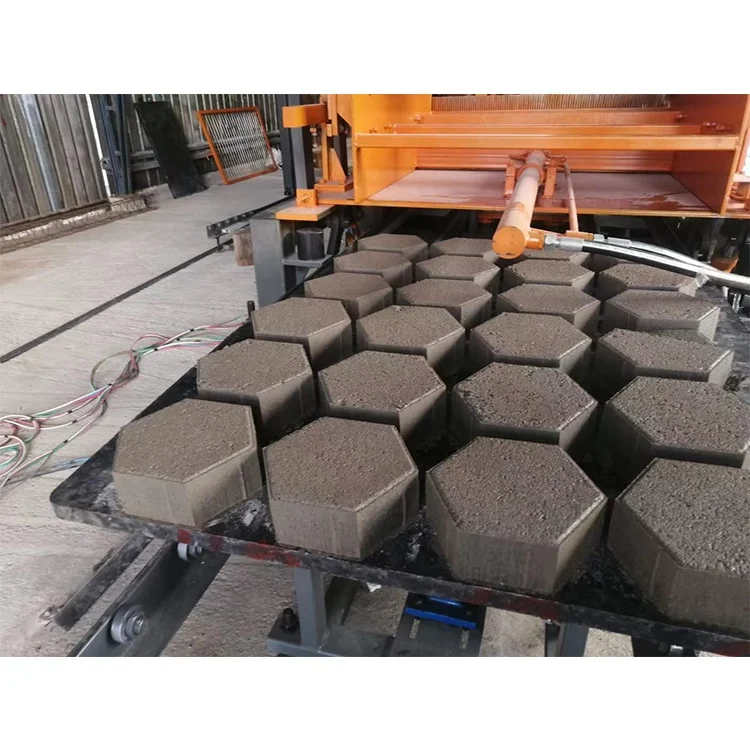
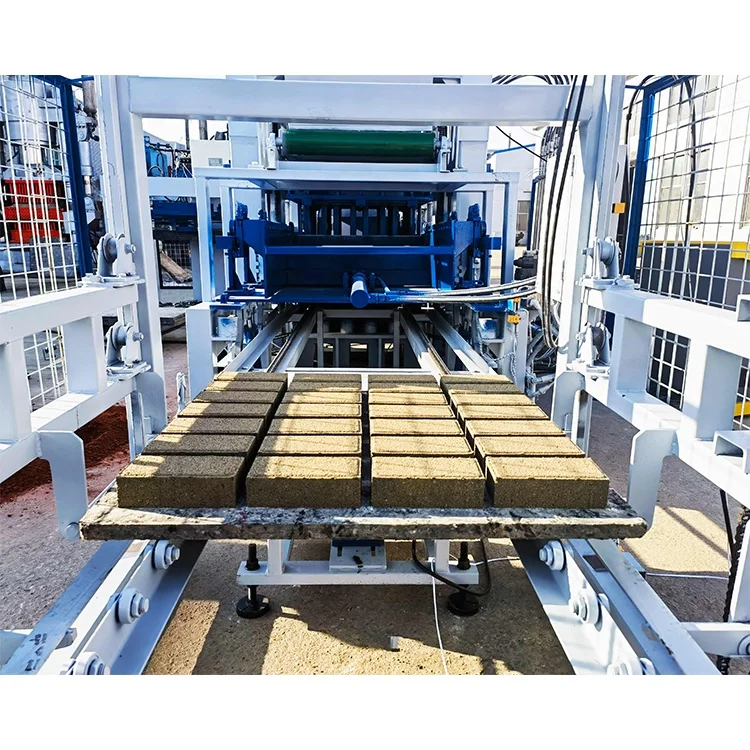
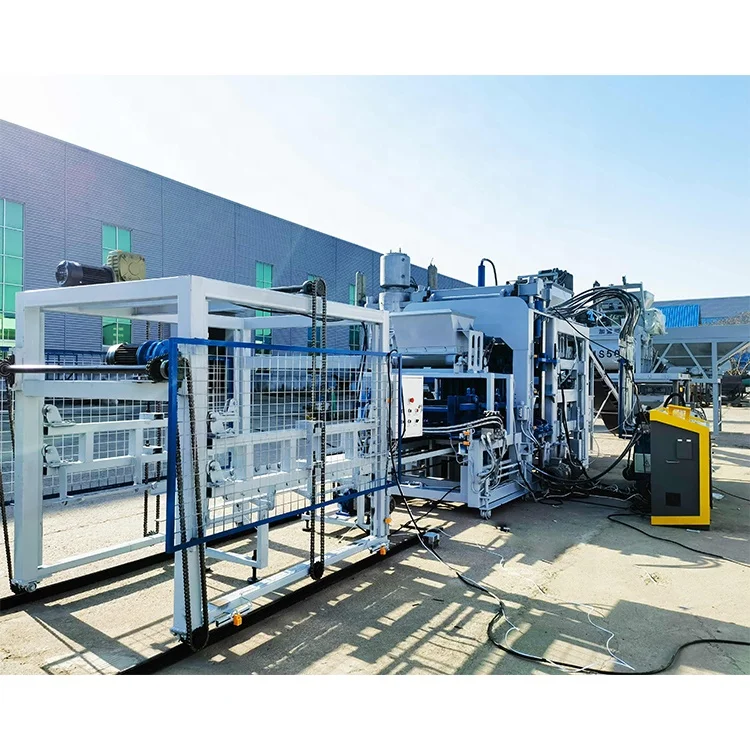
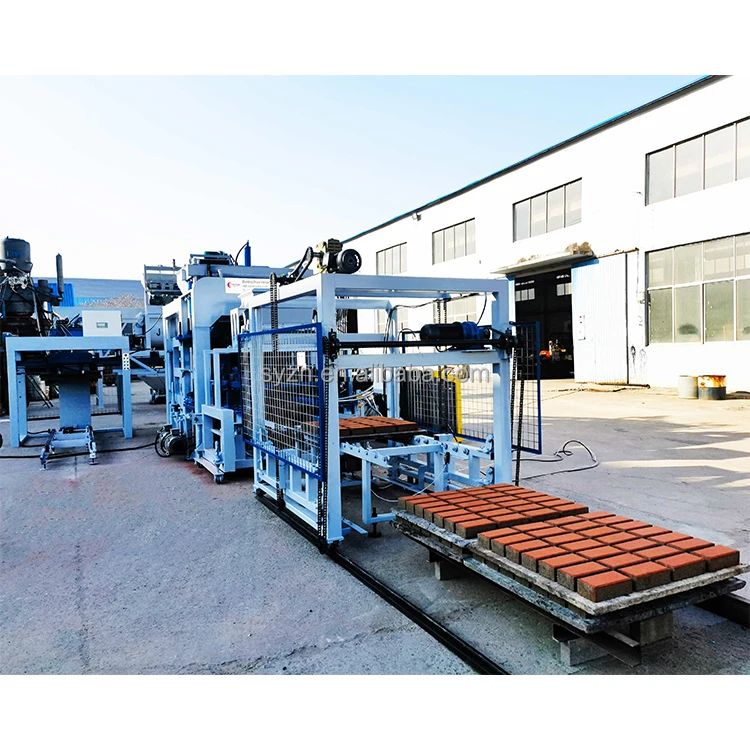
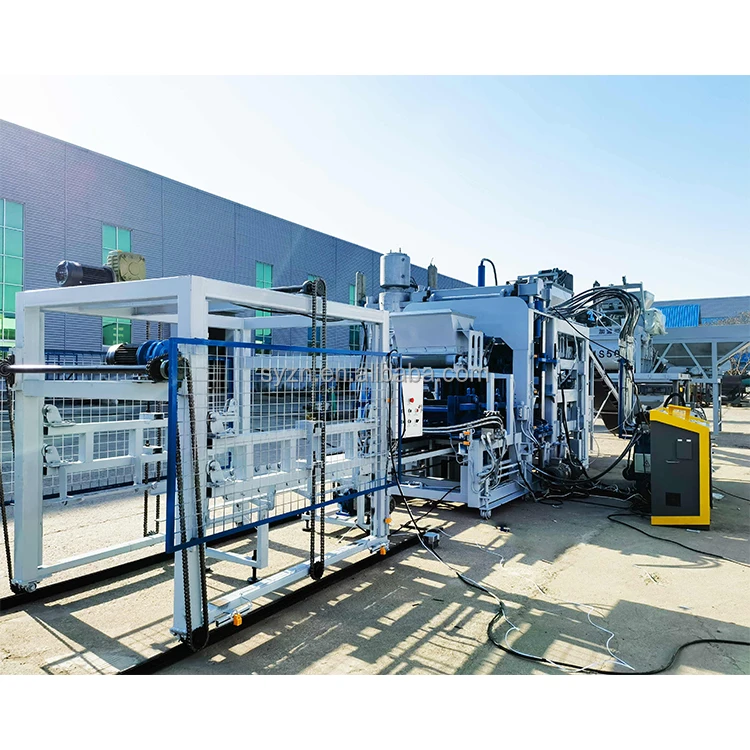
Description
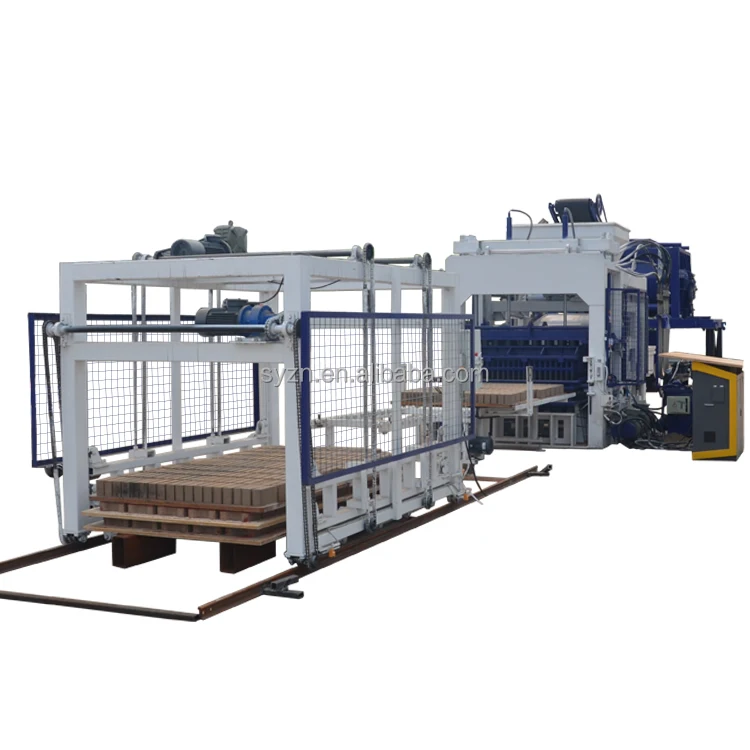
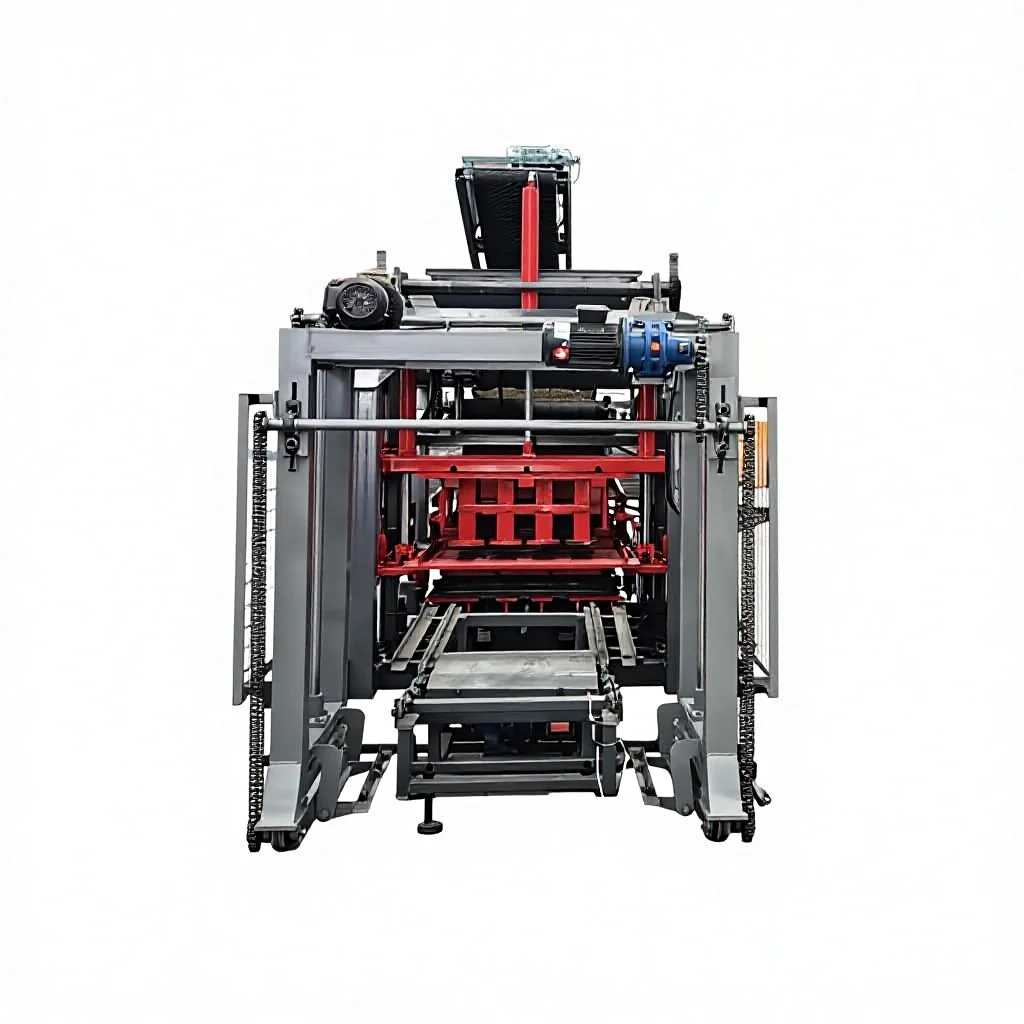
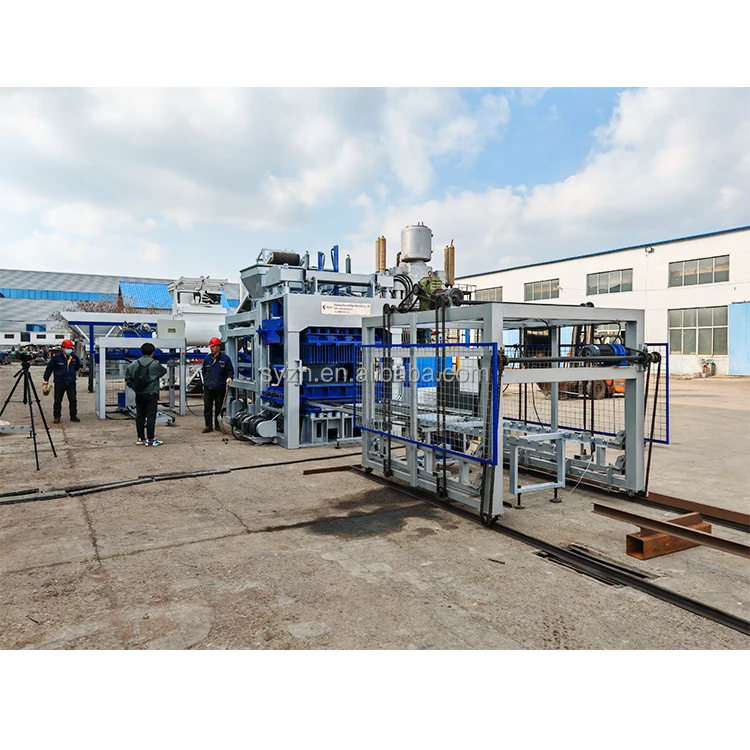
Block format dictates capacity — The QT8-15 is specified against the hollow block, paver or kerbstone you actually sell, with cycle time and pallet size confirmed per format before the machine is built, not quoted from a catalogue default.
Technical Specifications
| Parameter | Value |
|---|---|
| Model | QT8-15 |
| Product Type | Hydraulic Concrete Block Making Machine |
| Overall Dimensions (L×W×H) | 8300 × 1860 × 3000 mm |
| Rated Pressure | 21 MPa |
| Main Vibration Form | Platform Vibration |
| Vibration Frequency | 2800–4500 r/min |
| Vibration Force | 45 kN |
| Pallet Size | 950 × 900 mm |
| Molding Cycle | 15–20 s (basis not stated in source — confirm block format / material / thickness) |
| Overall Power | 55.5 kW |
| Total Mass | 8 T |
| Demolding Method | Hydraulic |
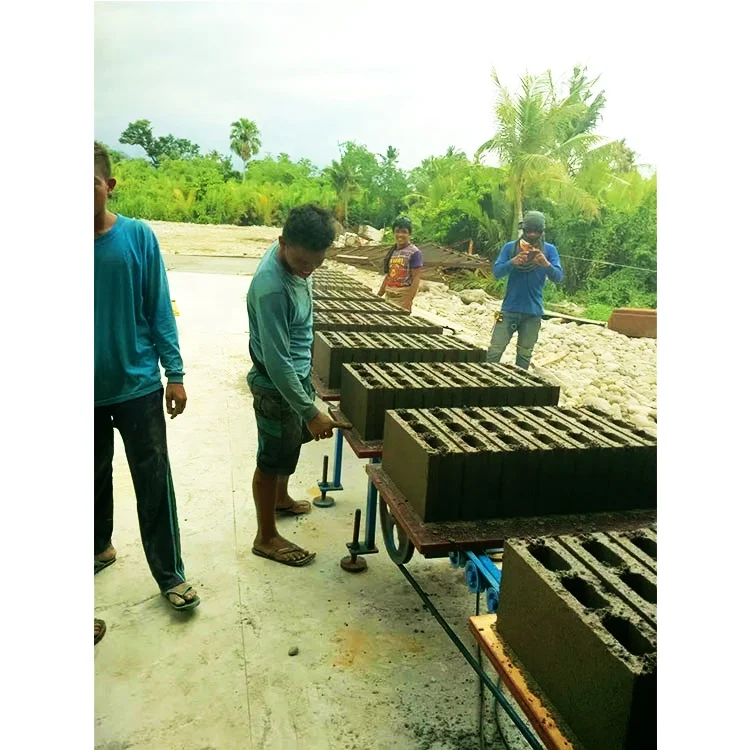
| Applied Products | Hollow blocks, solid blocks, pavers, interlocking blocks, curbstone, colored pavers |
| Raw Materials | Crushed stone, sand, cement, fly ash, gravel, slag |
Application Suitability
| Application | Material or Output |
|---|---|
| Hollow block production for load-bearing walls | Crushed stone, sand, cement, fly ash blends |
| Solid block manufacturing for foundation courses | Gravel, sand and cement with local aggregate |
| Interlocking paver runs for driveways and walkways | Fine aggregate, cement, pigment for colored faces |
| Kerbstone extrusion for road and curb edging | Coarse aggregate, slag, cement at high pressure |
| Porous brick for permeable paving systems | Graded aggregate with controlled cement ratio |
What "15-Second Cycle" Actually Means for Your Output
Cycle time only becomes daily capacity once the block format, mix design and pallet return loop are factored in.
Many QT8-15 block machine specifications quote a 15–20 second molding cycle without naming the format behind that number. A hollow block and a thin paver do not share the same vibration dwell or hydraulic hold, so the headline cycle rarely survives contact with your actual product mi*r a fast cycle only to discover the figure assumed a standard quartz sand blend while his site ran high-clay river sand — the vibration force and pressure had to be re-tuned, and the realistic cycle stretched accordingly. That mismatch is avoidable when the QT8-15 concrete block making machine capacity by format is calculated line by line before the order is placed. [NEED_CITE: aggregate moisture and clay content effects on vibration compaction]
Matching the Press to the Pallet Loop
The 950 × 900 mm pallet on the QT8-15 is the physical link between the press and your curing yard. If your existing forklift tines and rack spacing were sized for a different pallet, every pallet transfer becomes a manual intervention that erodes the cycle advantage the press itself offers. Confirming pallet dimensions against your curing area layout before shipment keeps the downstream handling from dictating the real output ceiling of the QT8-15 block machine specifications.
Vibration and Pressure as a Paired System
The 21 MPa hydraulic pressure and 2800–4500 r/min platform vibration must be balanced to the density your block format demands. A kerbstone needs sustained pressure through a longer hold, while a paver relies on high-frequency vibration to settle fine aggregate into the mould cavity. Treating either parameter in isolation leads to blocks that pass the press but fail the drop test at the curing rack, which is why both values are reviewed together against your target format. [NEED_CITE: hydraulic pressure and vibration frequency pairing in block compaction]
Reading the Spec Sheet Beyond Headline Numbers
The 55.5 kW overall power rating covers the main press motor, hydraulic pump, vibration motors and pallet feed drive together. On sites where voltage fluctuates or the supply transformer is shared with other heavy equipment, that total draw determines whether you need a dedicated feeder line. The 8 T total mass reflects a frame built to absorb repeated vibration loads without cracking at the weld seams, which matters when the machine runs multiple shifts across a curing season. The 8300 mm overall length includes the mould feed and demoulding travel; your workshop bay must clear that span plus operator walkway on both sides. [NEED_CITE: industrial power supply sizing for hydraulic block presses]
The Cost of Skipping Format-Level Capacity Work
When the QT8-15 is ordered against a single headline output number, the buyer often discovers on commissioning that the pallet return speed cannot keep up with the press cycle for their chosen format. Hand-stacking fills the gap temporarily but pulls labour from mixing and curing, creating a second bottleneck downstream. Mould changeovers then take longer than expected because the format list was never matched to the tooling actually shipped, and a full shift disappears into reconfiguration. [NEED_CITE: block plant throughput losses from unbalanced line stations]
Why Sourcing Through a Format-First Approach Matters
Every QT8-15 leaving the factory is configured against the buyer’s sample material, not a catalogue default — aggregate is tested, vibration and pressure are tuned, and the cycle per format is recorded in the factory test file. Mould drawings are issued before production so the buyer can verify cavity count and block dimensions against local building codes. Pallet size, voltage, frequency and PLC display language are confirmed in writing before the container is booked, avoiding weeks of idle time after arrival. Wear part and mould lists ship with the documentation pack so the first replacement order can be placed before the original parts reach end of life. Installation support covers foundation layout, first-run parameter tuning and operator training on the specific formats the buyer will produce.
Documentation & Verification
- Factory test record showing cycle time per named block format before dispatch
- Mould drawing and cavity layout matched to your market dimensions
- Pallet specification sheet confirming size, material and load rating
- Hydraulic and electrical schematic for on-site maintenance reference
- Voltage, frequency and PLC language confirmation issued before production
- Wear parts and mould list with part numbers for reorder planning
Installation, Commissioning & Support
- Foundation pad sized to the 8300 × 1860 mm footprint and 8 T static load
- Dedicated feeder circuit rated for the 55.5 kW total draw at confirmed voltage
- Press, hydraulic unit and pallet frame shipped in bolted sections for container loading
- Vibration frequency and hydraulic pressure tuned to your aggregate sample on first run
- Operator training covers mould change procedure and daily pallet inspection routine
- Spare mould cavities and hydraulic seals listed for first reorder cycle
Before You Request a Quote
Send a sample of your local aggregate along with the block formats your market moves in highest volume. Confirm the voltage and frequency at your site, the display language your operators need, and whether your existing forklift and curing racks can accept a 950 × 900 mm pallet. If you are adding formats to an existing line, list the upstream mixer capacity and downstream handling equipment so the QT8-15 can be positioned without creating a new bottleneck.
Frequently Asked Questions
Q: How is the QT8-15 daily output calculated, and which block format is each figure based on?
A: Output is stated per named format — for example, a 400 × 200 × 200 mm hollow block versus a 200 × 100 × 60 mm paver — because each format has a different molding cycle and pallet fill pattern. The capacity table issued with your proposal lists every format you intend to run, so the daily figure you plan against matches the block you actually sell.
Q: How do I match pallet size, vibration force and hydraulic pressure to my local aggregate?
A: Send a kilogram sample of your sand, crushed stone or fly ash blend. We run a compaction trial at several vibration frequencies within the 2800–4500 r/min range and record the pressure required to reach your target block density. The 950 × 900 mm pallet is then checked against your curing rack spacing to confirm fit.
Q: What is the realistic mould change time for the formats my market actually sells?
A: Changeover duration depends on mould weight and clamping style. During line layout we list every mould you will run and measure the physical swap on the QT8-15 platform, recording the time so you can plan format rotations within a single shift rather than losing production to unplanned reconfiguration.
Q: Which voltage, frequency and PLC language options are confirmed before shipment?
A: Your local supply voltage, frequency and the PLC display language are recorded in writing before the machine enters production. This avoids a situation where the QT8-15 arrives on site and waits for a transformer or a software reload before operators can begin commissioning.
Q: How do I verify that the QT8-15 cycle time per format matches my curing area and downstream handling?
A: We calculate the pallet departure rate for each format and compare it against your curing rack capacity and forklift cycle. If the press outpaces downstream movement, the pallet queue grows and the real cycle stretches — so the layout is adjusted before the machine ships, not after.