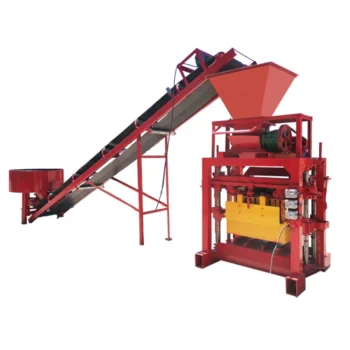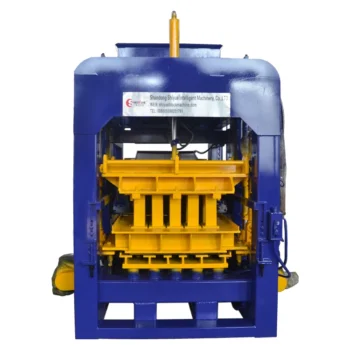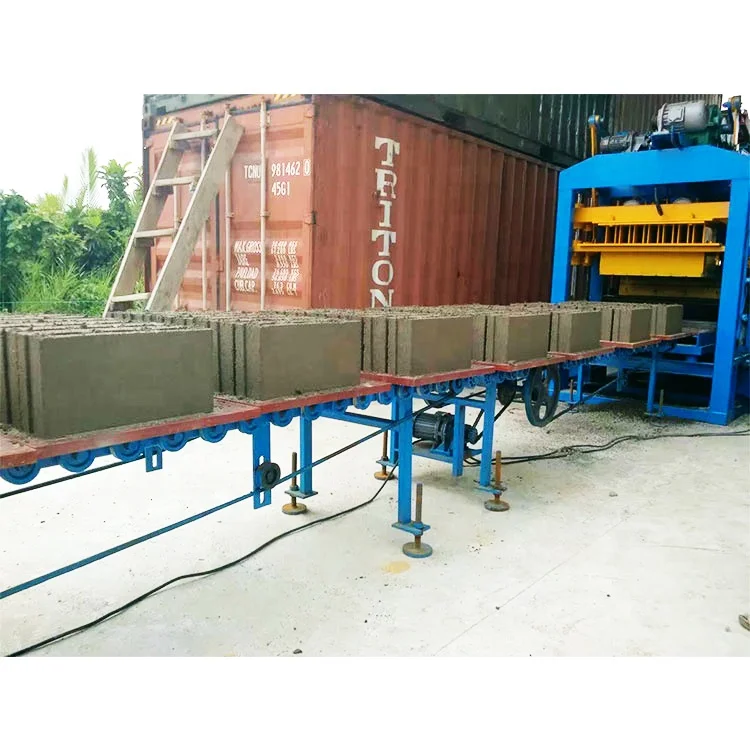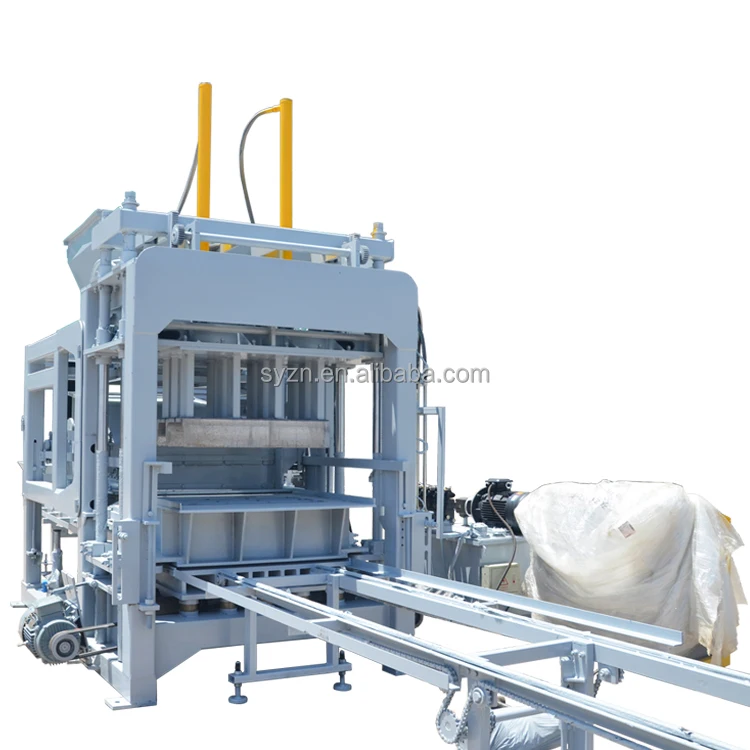


Description
Format-Verified Configuration — Every output figure for the QT8-15 is stated per block format and pallet load, not a single brochure claim.
Technical Specifications
| Parameter | Value |
|---|---|
| Model | QT8-15 |
| Product Type | Hydraulic Block Making Machine |
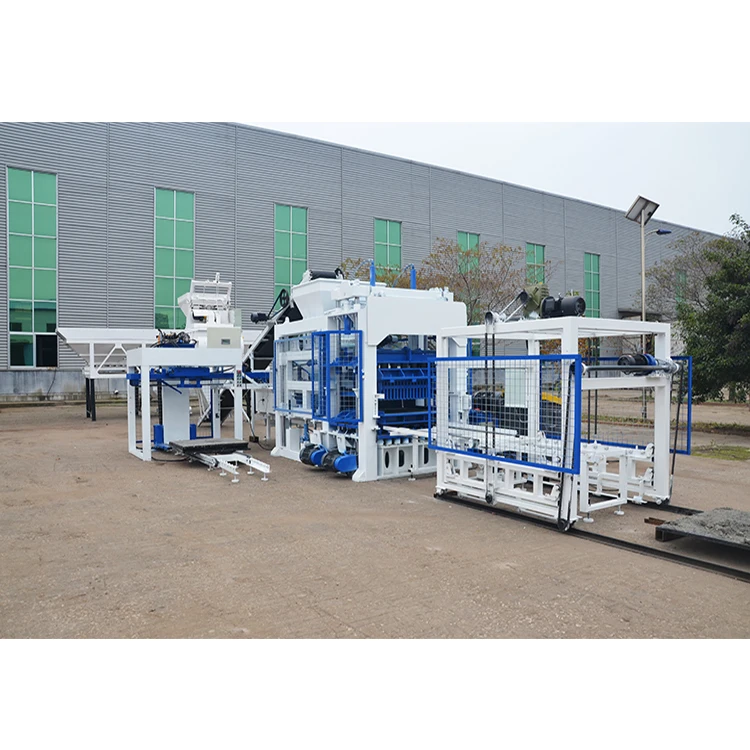
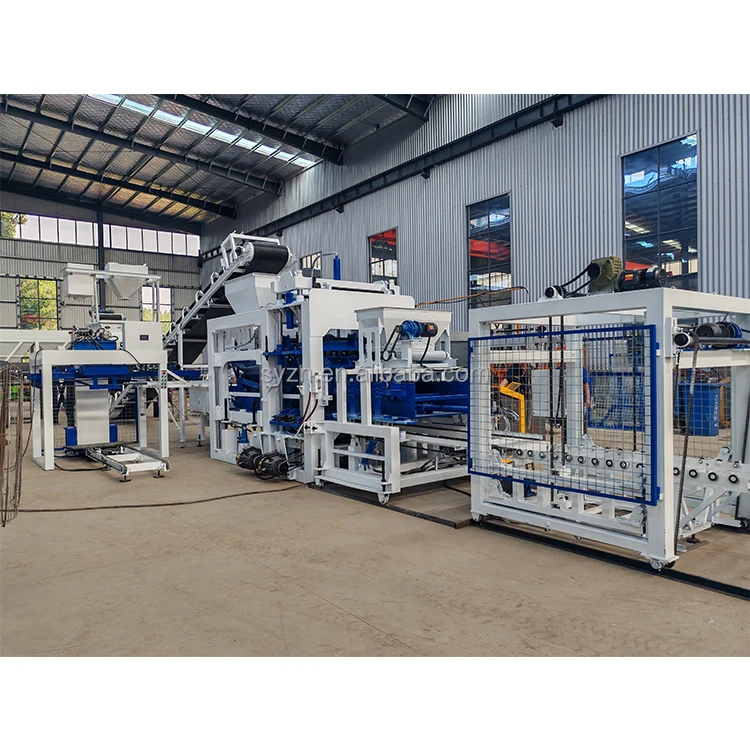
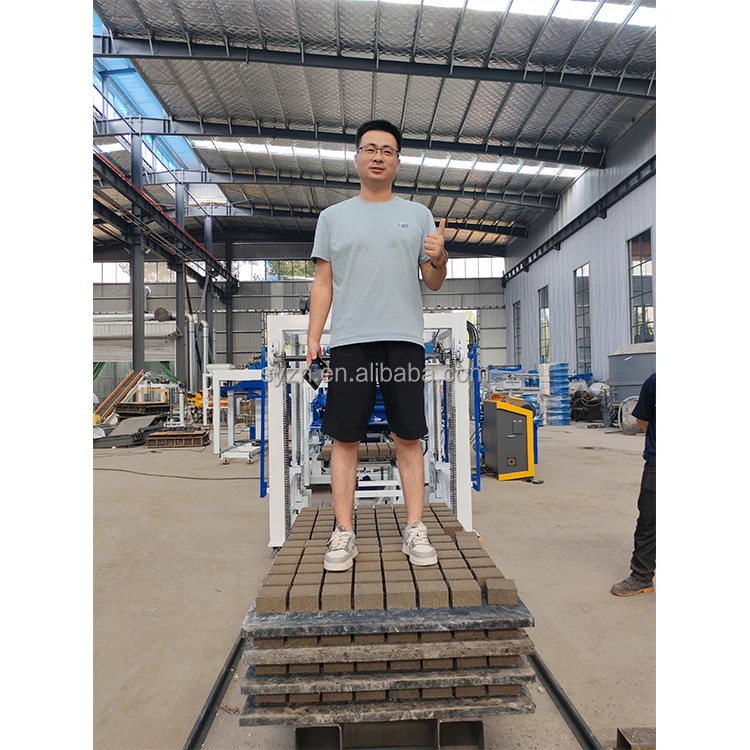
| Overall Dimensions (L×W×H) | 8300×1860×3000 mm |
| Rated Pressure | 21 MPa |
| Main Vibration Form | Platform Vibration |
| Vibration Frequency | 2800-4500 r/min |
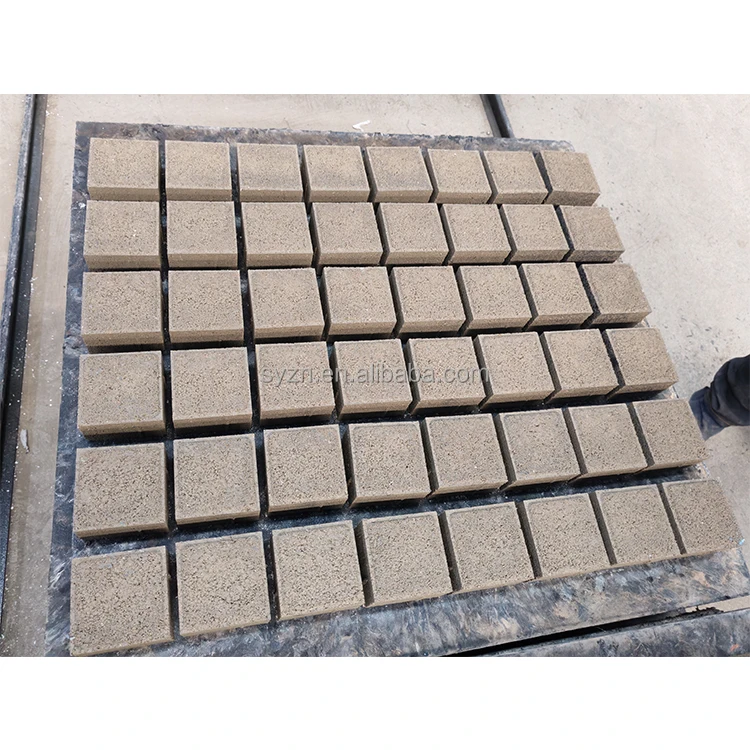
| Pallet Size | 950×900 mm |
| Molding Cycle | 15-20 s (basis to be confirmed per block format) |
| Overall Power | 55.5 kW |
| Vibration Force | 45 kN |
| Total Mass | 8 T |
| Demolding Method | Hydraulic |
| Factory Area | 300 m² |
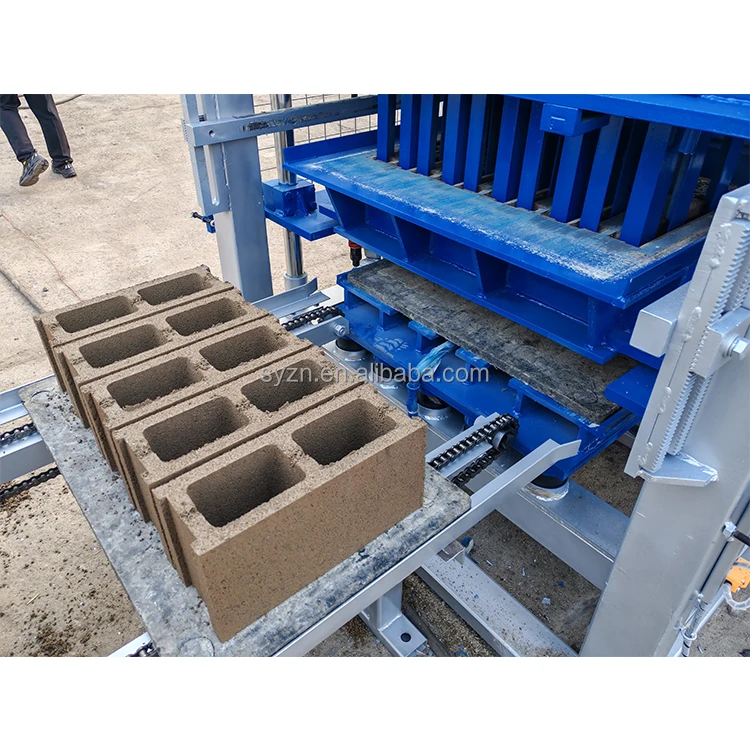
| Applied Products | Concrete blocks, hollow/solid blocks, pavers, interlocking blocks, curbstone, colored pavers |
| Raw Material | Crushed stone, sand, cement, dust, fly ash, gravel, slag |
| Capacity | Output values per block format not stated in source (basis to be confirmed) |
Application Suitability
| Application | Material or Output |
|---|---|
| Hollow block production for residential and commercial walls | Crushed stone, sand, cement, fly ash blends |
| Solid block manufacturing for load-bearing structures | Gravel, cement, slag mixtures |
| Interlocking paver production for driveways and walkways | Fine aggregate, cement, pigment additives |
| Curbstone forming for road and landscape edging | Coarse aggregate, cement, sand |
| Colored paver runs for architectural surfaces | Cement, sand, iron-oxide pigment |
Why "15-20 Seconds Cycle" Means Nothing Without a Block Format
The QT8-15 block machine specifications only translate to real daily output when tied to a specific block size, wall thickness, and pallet arrangement.
I have watched contractors in the Pearl River Delta order machines based on a single cycle-time headline, then discover on commissioning day that their primary hollow block format pushes the cycle well past the catalogue number. The vibration frequency range of 2800-4500 r/min and the 21 MPa hydraulic pressure behave very differently across a 100 mm solid block versus a 200 mm three-cavity hollow block [NEED_CITE: block format impact on vibration dampening and cycle extension]. Without a format-by-format capacity sheet, buyers plan curing racks, forklift shifts, and delivery schedules around numbers the machine cannot sustain.
Matching Vibration Force to Your Target Block Density
The 45 kN vibration force and platform vibration form on the QT8-15 are starting points, not guarantees. A lightweight aggregate mix with high fly-ash content absorbs vibration energy differently from a dense crushed-stone blend, meaning the same force setting produces different compaction results. Before the QT8-15 block machine specifications are locked, the mix design must be tested at the intended frequency to confirm that block strength meets local building codes.
Pallet Size and Curing Area Alignment
The 950×900 mm pallet determines how many blocks leave the press per cycle, but it also dictates curing-rack spacing and forklift tine width. A plant already running 850×680 mm pallets cannot simply adopt the QT8-15 pallet without reconfiguring rack slots or purchasing new handling equipment. Confirming pallet compatibility against the buyer’s existing curing footprint prevents costly mid-project changes [NEED_CITE: pallet standardisation across block plant handling systems].
Reading the Pressure and Vibration Numbers Together
Rated pressure at 21 MPa sets the upper hydraulic limit during compaction, while vibration frequency between 2800-4500 r/min controls how thoroughly the mix settles before that pressure is applied. In practice, a coarse gravel mix needs lower frequency and longer vibration to avoid segregation, whereas a fine sand-cement mix benefits from higher frequency for rapid densification. The interplay of these two parameters directly affects surface finish, dimensional tolerance, and demolding integrity on the QT8-15 hydraulic block making machine.
Mould Change Time and Format Flexibility
The QT8-15 covers hollow blocks, solid blocks, pavers, interlocking bricks, and curbstone through interchangeable moulds. However, the time required to swap a mould, recalibrate vibration amplitude, and run test blocks determines whether a plant can realistically switch formats within a single shift or needs to dedicate full days to one product. Buyers planning multi-format production should request documented change-over procedures before finalising the order.
The Hidden Cost of Skipping Format-Specific Validation
When capacity is accepted at face value, the consequences cascade through the entire operation. Pallets pile up faster than the curing area can absorb, forklift operators fall behind, and blocks moved too early crack under their own weight. Downstream, delivery trucks arrive for loads the plant cannot produce, eroding contractor trust. These losses are not visible in a quotation but surface within the first month of production [NEED_CITE: early-stage block plant output shortfalls due to unvalidated cycle assumptions].
Why Sourcing the QT8-15 Here Reduces Configuration Risk
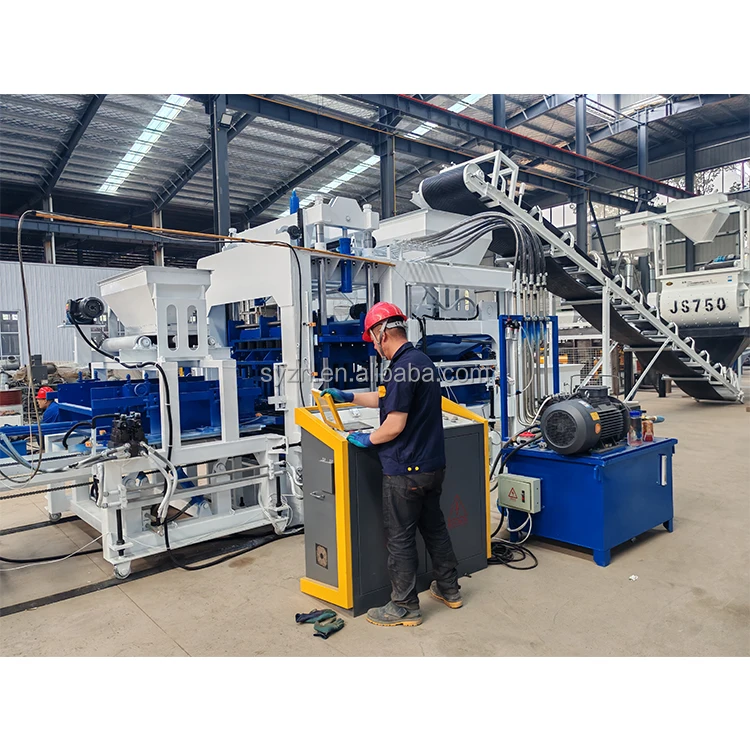
Block machinery is the single focus, so the QT8-15 press, mould, pallet, and handling equipment are specified as one matched set rather than assembled from unrelated suppliers. Configuration is built around the buyer’s actual mix design and local aggregate, not a default catalogue page. Mould design covers the exact formats the buyer’s market demands, including custom drawings where standard options do not apply. Automation level is selectable, allowing a semi-automatic start with a defined upgrade path. Installation support includes on-site commissioning and operator training tied to the buyer’s specific block formats.
Documentation & Verification
- Line layout and capacity sheet stating the block format assumed for every output figure
- Mould drawing pack listing each confirmed product format with dimensional tolerances
- Pallet specification document cross-checked against your curing rack and forklift dimensions
- Voltage, frequency, and PLC display language confirmation form signed before production
- Factory test record run on your target block format before dispatch
Installation, Commissioning & Support
- Foundation plan sized to the 8300×1860 mm footprint and 8 T operating mass of the QT8-15
- Dedicated power circuit matched to the 55.5 kW total load and local voltage confirmation
- Machine dismantled into container-load sections with reassembly sequence documented
- First-run commissioning on buyer’s own raw material with vibration frequency tuned per format
- Operator training covering hydraulic pressure adjustment, mould change procedure, and daily maintenance checkpoints
- Wear parts list covering hydraulic seals, vibration springs, and mould liner replacement intervals
What to Include in Your Enquiry
Provide the exact block formats you intend to produce, including wall thickness and target compressive strength. Share your local aggregate type, cement grade, and any industrial by-products such as fly ash or slag you plan to use. Confirm your plant voltage and frequency, the display language your operators need, and whether your existing curing racks and forklifts are sized for 950×900 mm pallets.
Frequently Asked Questions
Q: How is daily output calculated for each block format on the QT8-15?
A: Output is calculated per format by multiplying blocks per pallet, cycles achievable within the 15-20 s range for that specific block height, and effective operating hours. The capacity sheet provided with the quotation names the exact block dimensions and mix assumed, so there is no ambiguity between catalogue figures and your real production target.
Q: Which mould formats come with the QT8-15 and how long does a change-over take?
A: The mould package is built around the formats you confirm during enquiry — hollow blocks, solid blocks, pavers, interlocking bricks, or curbstone. Change-over involves releasing clamps, lifting the old mould, seating the new one, and recalibrating vibration. Exact time depends on mould size and whether quick-release fittings are specified.
Q: How are hydraulic pressure and vibration matched to my aggregate?
A: Your local aggregate sample and target block strength guide the initial pressure and frequency settings. The 21 MPa hydraulic system and 2800-4500 r/min vibration range are adjusted during commissioning, running test cycles until density and surface finish meet your specification.
Q: Will the 950×900 mm pallet fit my existing curing area and forklift?
A: Pallet compatibility depends on rack slot width, spacing, and forklift tine dimensions. Provide your current curing layout and forklift model during enquiry so the pallet specification can be cross-checked before the machine enters production.
Q: What electrical and control details are confirmed before the QT8-15 ships?
A: Voltage, frequency, plug type, and PLC display language are confirmed in writing before production starts. This prevents commissioning delays caused by mismatched power supply or an interface your operators cannot read.