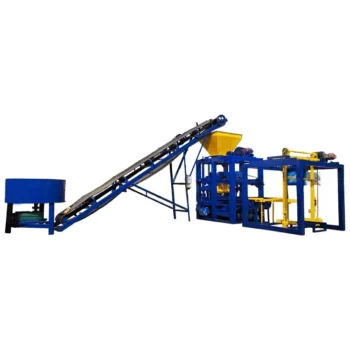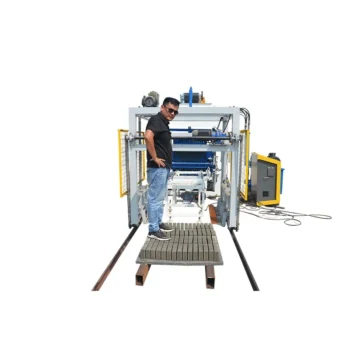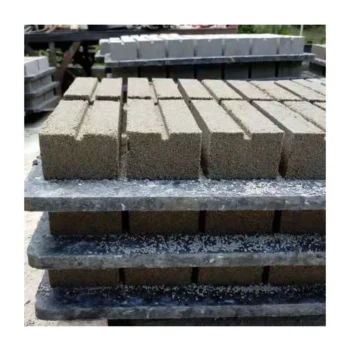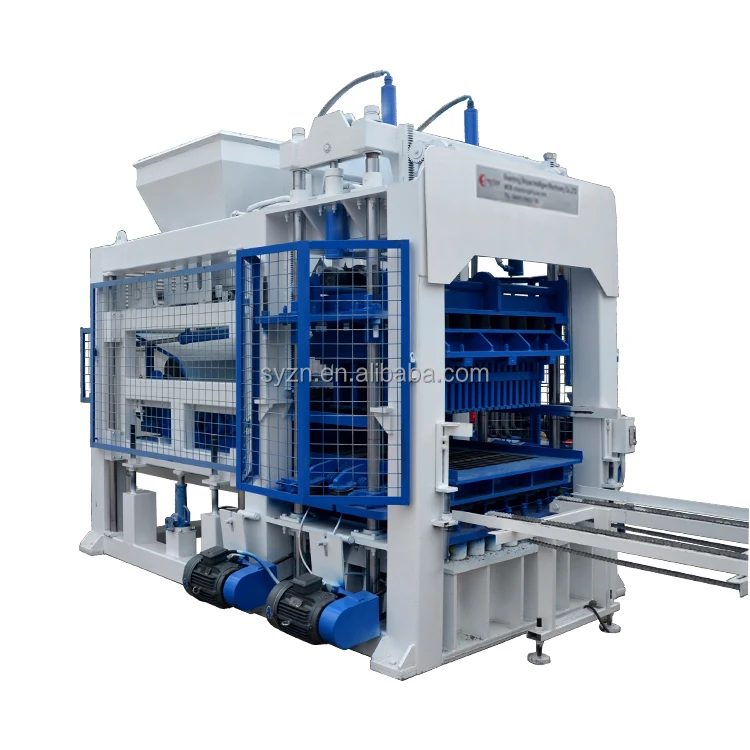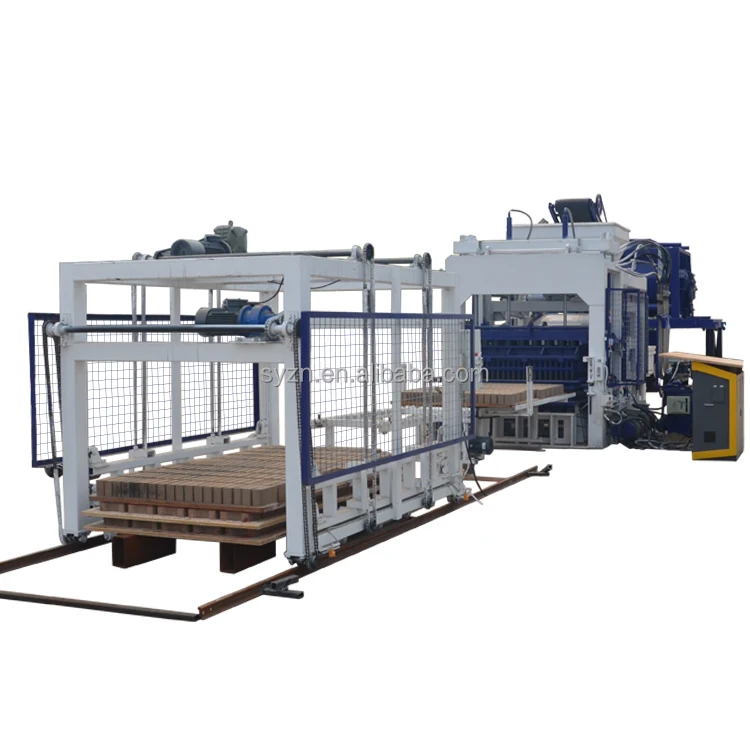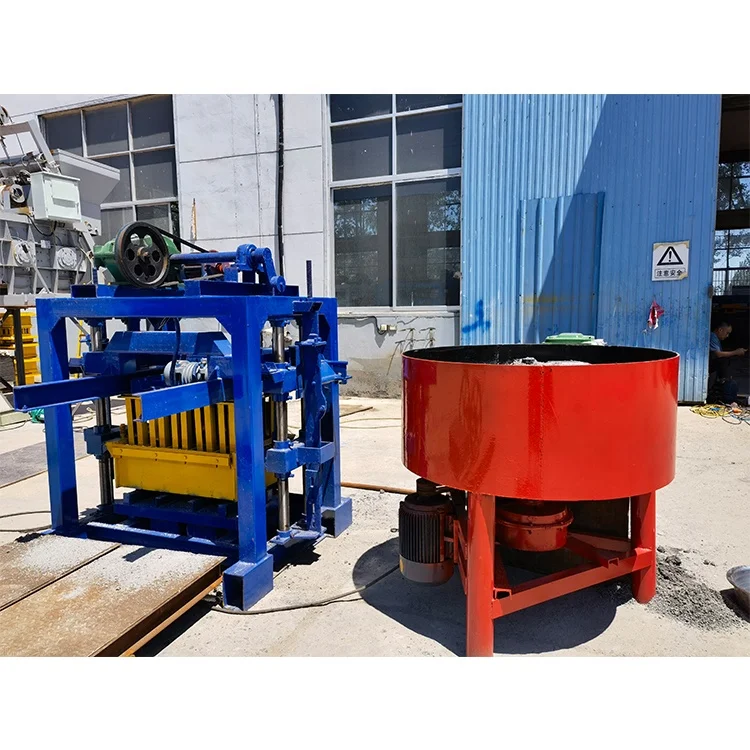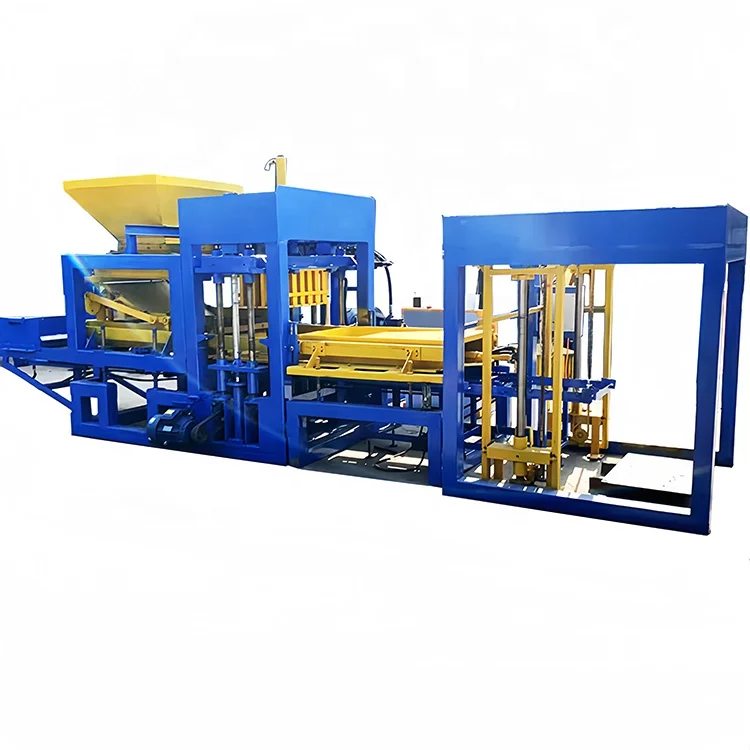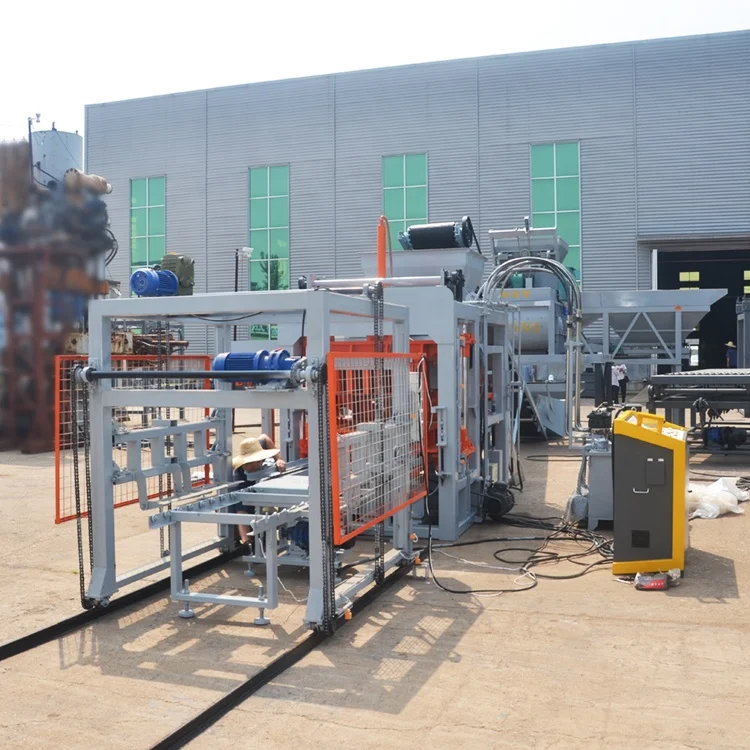


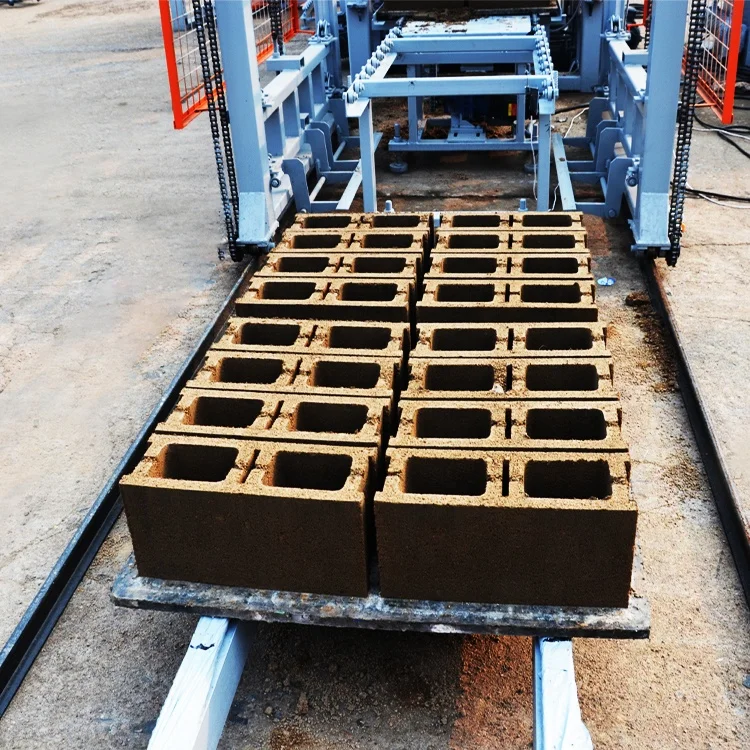
Description
Matched system, not a catalogue default — the QT6-15 is configured around the buyer’s actual block format, local aggregate and pallet handling setup rather than shipped as an off-the-shelf press with generic cycle figures.
Technical Specifications
| Parameter | Value |
|---|---|
| Model | QT6-15 |
| Product Type | Hydraulic Hollow Block Making Machine |
| Overall Dimensions (L×W×H) | 8200 × 1700 × 2950 mm |
| Total Mass | 7 T |
| Vibration Form | Platform Vibration |
| Vibration Frequency | 0–60 Hz |
| Vibration Force | 45 kN |
| Moulding Mode | Automatic loading with vibration moulding |
| Demolding Method | Hydraulic |
| Pallet Size | 880 × 850 mm |
| Molding Cycle | 15–20 s (basis to be confirmed per block format and material) |
| Overall Power | 37 kW |
| Control System | PLC with touch screen interface |
| Hydraulic System | Independent integrated hydraulic station |
| Factory Area Required | 1200 m² |
| Output (400×200×200 mm hollow block) | 6 pcs/mould, 1080–1440 pcs/hour (basis to be confirmed) |
| Output (400×150×200 mm hollow block) | 8 pcs/mould, 1440–1920 pcs/hour (basis to be confirmed) |
| Output (240×115×53 mm solid brick) | 32 pcs/mould, 5760–7680 pcs/hour (basis to be confirmed) |
| Output (200×100×60 mm rectangular paver) | 21 pcs/mould, 2160–2880 pcs/hour at 20–25 s cycle (basis to be confirmed) |
| Output (225×112.5×60 mm zigzag paver) | 15 pcs/mould, 2160–2880 pcs/hour at 20–25 s cycle (basis to be confirmed) |
| Compressive Strength of Blocks | More than 15 MPa |
| Raw Material Adaptability | Waste ash, slag, and various aggregates with reduced cement dosage |
| Fault Diagnosis | Integrated into PLC |
| Safety Logic | Action interlock circuit |
| Standards | CE (source value — verify against current certificate) |
Application Suitability
| Application | Material or Output |
|---|---|
| Hollow block production for load-bearing walls | Crushed stone, sand, cement with 400×200×200 mm and 400×150×200 mm format tooling |
| Solid brick production for masonry | Standard aggregate blends using 240×115×53 mm moulds |
| Rectangular paving block production | High-density concrete mixes for 200×100×60 mm pavers |
| Zigzag interlocking paver production | Fine aggregate surface mixes for 225×112.5×60 mm format |
| Multi-cellular block production | Lightweight ash and slag blends with adjusted vibration profiles |
What "Pieces per Hour" Leaves Out When You Size a QT6-15 Hollow Block Machine
A cycle time only means something when the block format and material behind it are stated in writing.
I have watched buyers sign contracts based on a single headline output number, only to arrive on site and discover that figure assumed a 400×150×200 mm hollow block running with optimal sand — while their actual daily run was 400×200×200 mm blocks with a local volcanic aggregate that demanded a slower vibration ramp. The QT6-15 hollow block machine specifications page you are reading breaks output down per format and per cycle range, so the number you plan around is the number you will produce. Capacity without a stated block format is not a capacity at all [NEED_CITE: block format influence on real daily output].
Matching Cycle Time to the Format Your Market Actually Buys
The QT6-15 hollow block machine is rated across four distinct product formats, each with its own mould cavity count and cycle window. Hollow blocks in the larger 400×200×200 mm size produce 6 pieces per mould, while stepping down to 400×150×200 mm raises that figure to 8 pieces per mould — but the cycle timing shifts as well. Paver formats operate on a 20–25 second cycle rather than the 15–20 second range quoted for hollow blocks, because the surface finish and compaction requirements are different.
Vibration Force and Hydraulic Pressure Work as a Pair
A 45 kN vibration force on its own tells only half the story. The independent integrated hydraulic station applies downward pressure during the vibration phase, and the combination of the two determines whether the block reaches the 15 MPa compressive threshold. On a recent project, a buyer using high-hardness volcanic aggregate found that standard vibration parameters produced blocks that crumbled at the edges during demolding. Adjusting the vibration frequency curve — available through the 0–60 Hz range on the PLC — while holding hydraulic pressure steady brought the density into specification. That adjustment is only possible when the control system lets you tune both variables independently [NEED_CITE: vibration and pressure matching for aggregate types].
Reading the Specs That Actually Affect Your Daily Operation
The 880×850 mm pallet size is fixed at the design stage, which means your curing racks, forklift fork spacing and stacking area must accommodate that dimension — not the other way around. The 37 kW overall power draw dictates the dedicated circuit and transformer capacity at your site, particularly in regions where three-phase supply at 50 Hz is standard but voltage fluctuates. The PLC touch screen interface supports configurable display language, and confirming that language before the machine enters production avoids a situation where your operator is reading fault codes in a script they cannot parse. The integrated fault diagnosis system flags issues through the same screen, and the action interlock safety logic prevents the mould from descending if a pallet is misaligned — a detail that matters when you are running multi-shift operations with less experienced operators.
The Cost of Skipping the Format Conversation Before You Order
Buyers who specify a machine based on total daily output without anchoring that figure to a specific block format often discover the gap after commissioning. The pallets arrive, the curing racks are already built to a different dimension, and the forklift cannot rotate the loaded pallet into the rack slots. The PLC boots up in a default language, and the first week is spent on phone calls instead of production. These are not machine defects — they are configuration oversights that could have been caught with a single layout drawing reviewed before the purchase order [NEED_CITE: pre-shipment configuration verification practices].
Why Buyers Source This QT6-15 Hollow Block Machine Through a Single-Format Supplier
Block machinery is the only product category here, which means the press, mould, pallet and handling equipment are specified as one matched set rather than assembled from separate vendors. The configuration is built against your actual mix design and target block format, not pulled from a catalogue default. Mould drawings are supplied for the formats your market sells, with custom tooling available from buyer-provided drawings. Automation level is selectable, so a plant can start with semi-automatic pallet handling and add automatic stacking later. Installation and commissioning support includes operator training on site, not just a manual left in a crate.
Documentation & Verification
- Line layout drawing with capacity calculation stated per block format and cycle assumption
- Mould drawing and format list confirming which tooling is included and which is separate
- Pallet specification sheet with size, material and load rating for curing rack compatibility check
- Voltage, frequency and PLC display language confirmation recorded before production begins
- Factory test record run on the buyer’s specified block format before dispatch
- Operation and maintenance manual with wear parts list and mould change procedure
Installation, Commissioning & Support
- 1200 m² factory area requirement confirmed against buyer’s site plan and pallet circulation layout
- 37 kW overall power draw mapped to dedicated three-phase circuit with voltage and frequency verification
- Machine shipped in dismantled state with reassembly supervised during on-site commissioning
- PLC touch screen configured to buyer’s language and fault diagnosis thresholds set before first run
- Operator training covers mould change procedure, vibration frequency adjustment and interlock logic
- Wear parts and hydraulic seals list provided with recommended replacement intervals
What We Need From You to Prepare a Configuration Proposal
Send us the block format or formats your market currently sells, along with the daily output target for each. Include a sample or description of your local aggregate — particle size, hardness and moisture content at the batching point — and your available supply voltage and frequency. Let us know what pallet handling and curing infrastructure you already have on site, so we can confirm whether the 880×850 mm pallet fits your existing racks and forklift.
Frequently Asked Questions
Q: How is output capacity verified per block format, and what cycle time applies to each?
A: The QT6-15 quotes separate output ranges for each format — 400×200×200 mm hollow blocks, 400×150×200 mm hollow blocks, 240×115×53 mm solid bricks, and two paver sizes. Each figure is paired with its corresponding mould cavity count and cycle window. We state the assumed format and cycle range on the layout document so you can calculate against your actual product mix.
Q: Which pallet size does the QT6-15 require, and can it be changed to match my existing curing area?
A: The standard pallet size is 880×850 mm, designed into the feeding and stacking mechanism. Changing pallet dimensions requires corresponding adjustments to the pallet feeder and mould positioning. We recommend confirming your curing rack spacing and forklift fork width against this pallet size before finalising the order.
Q: How do I match vibration force and hydraulic pressure to my local aggregate and mix design?
A: We request a material sample or detailed aggregate description before configuration. The 0–60 Hz vibration frequency range and the independent hydraulic station allow us to adjust the compaction profile to your specific mix. The target is consistent block density reaching the 15 MPa compressive strength threshold across production runs.
Q: What is the mould change procedure and how long does a format changeover take on the QT6-15?
A: The hydraulic demolding system allows mould removal without disconnecting the vibration platform. Changeover time depends on the format gap — switching between two hollow block sizes is faster than moving from hollow blocks to pavers, which involves different pallet surface preparation. We include the changeover procedure in the operator training session.
Q: Which voltage, frequency and PLC language options are available, and how are they confirmed before shipment?
A: The electrical system is configurable to the buyer’s local voltage and frequency standard. The PLC touch screen supports multiple display languages for operation and fault diagnosis. Both parameters are confirmed in writing during the sales process and recorded on the voltage and control confirmation document before the machine enters production.