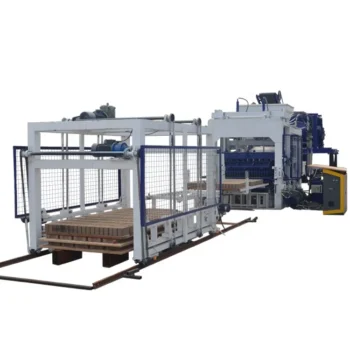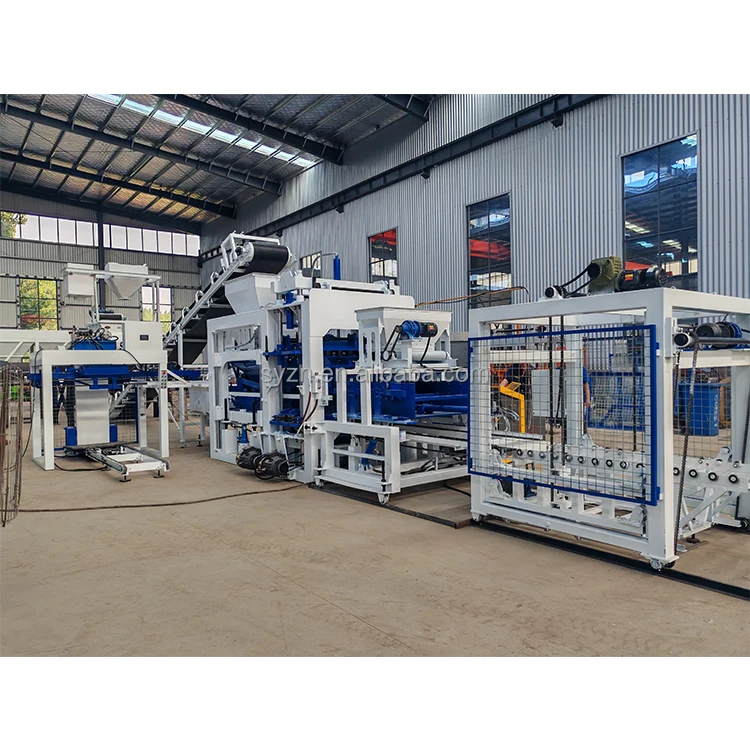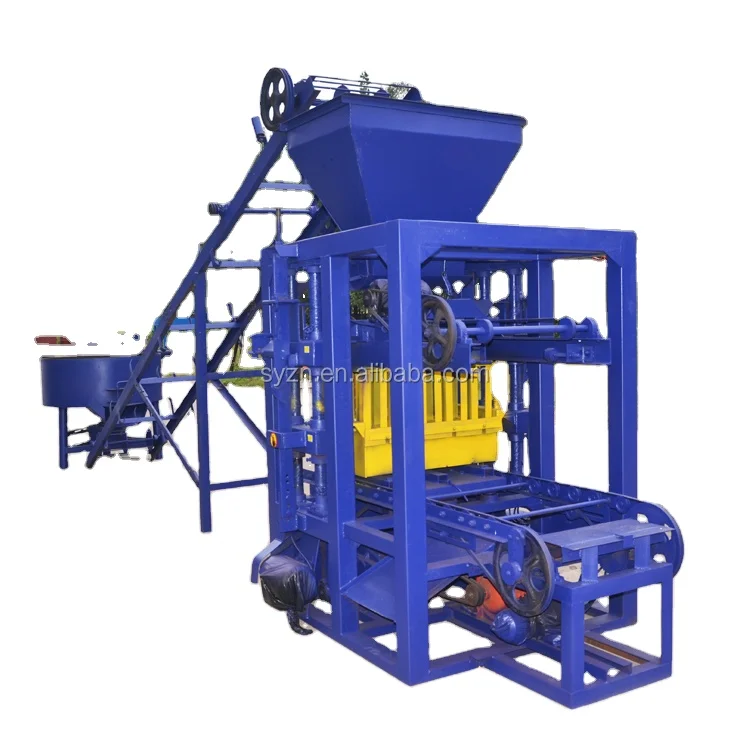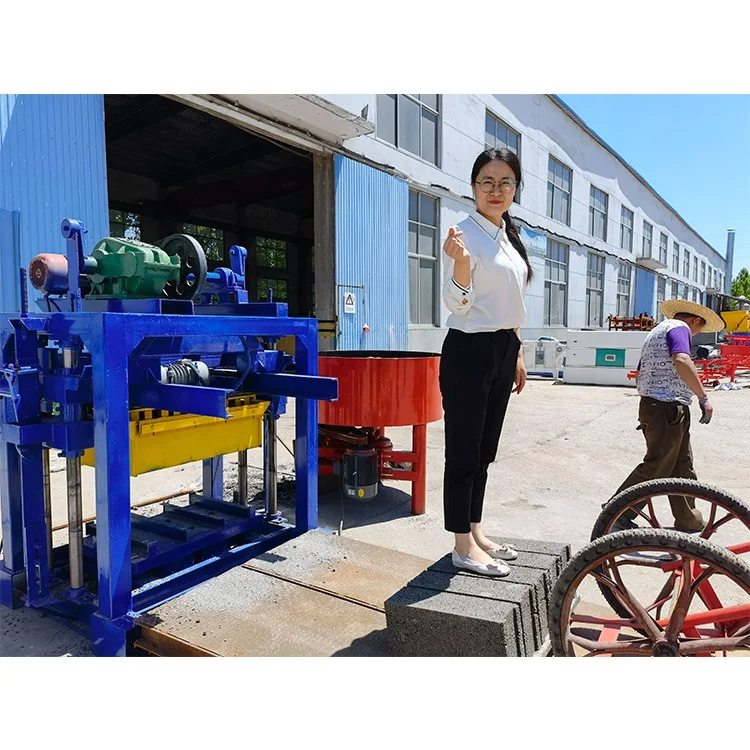

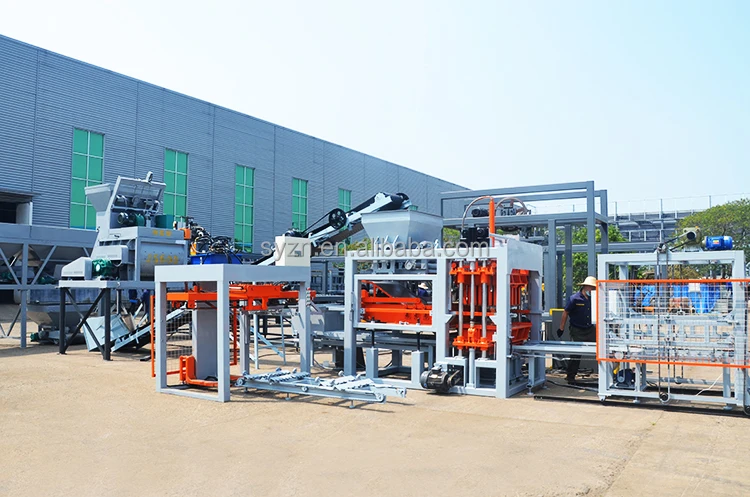
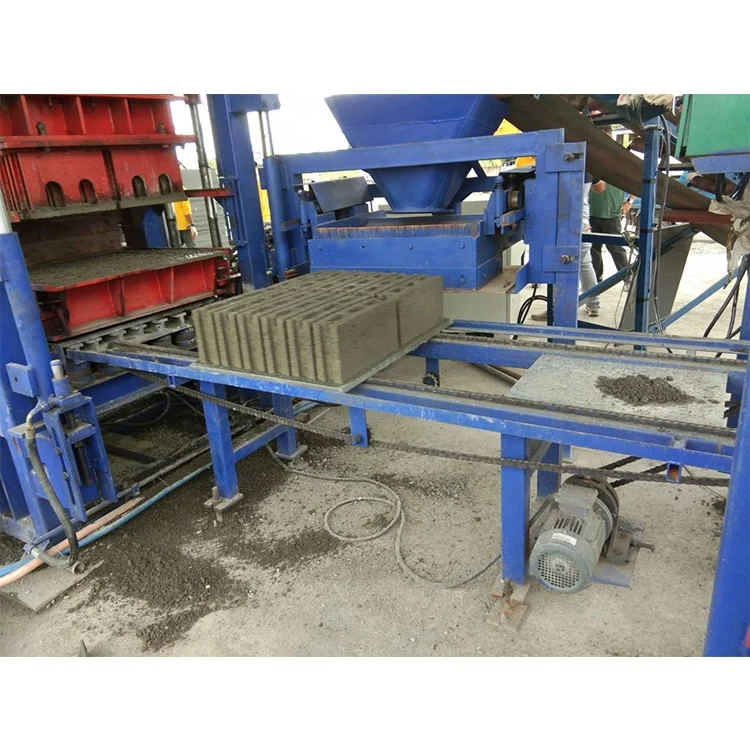
Description
Matched Mould Formats — capacity figures are tied to specific block sizes and cavity counts, not a single headline number pulled from a catalog.
Technical Specifications
| Parameter | Value |
|---|---|
| Model | QT6-15 |
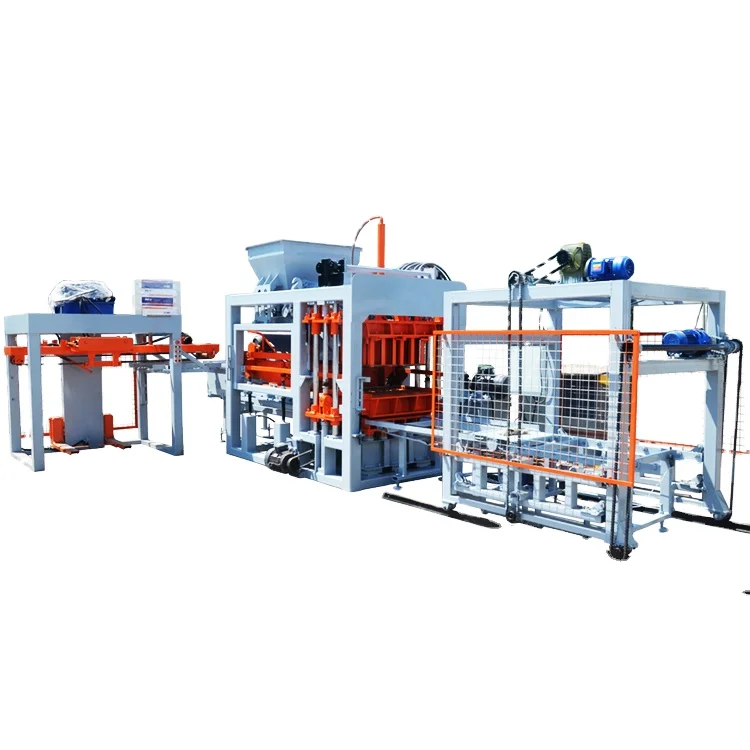
| Product Type | Concrete Block Making Machine |
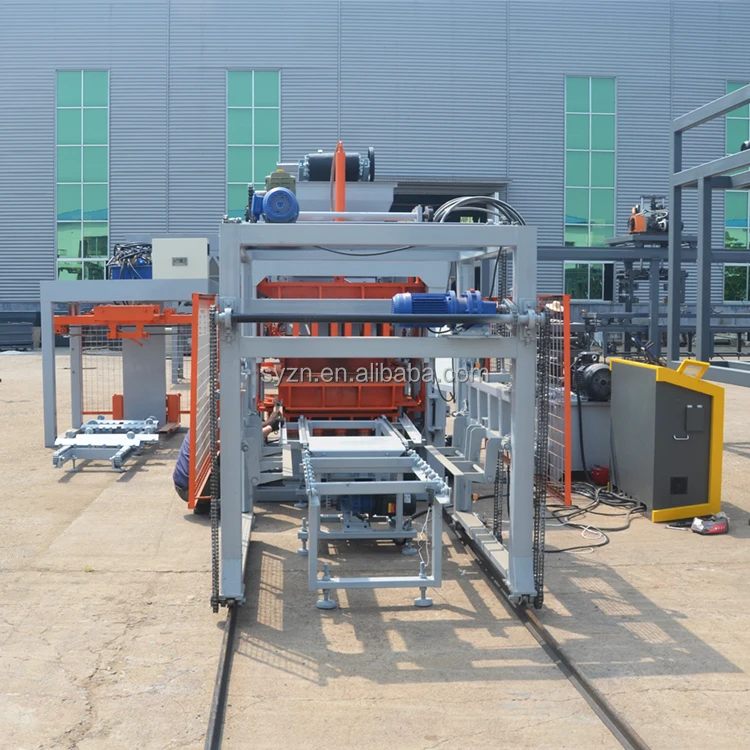
| Overall Dimensions (L×W×H) | 8200×1700×2950 mm |
| Vibration Frequency | 0-60 Hz |
| Vibration Form | Platform Vibration |
| Moulding Mode | Load automatically, vibration moulding |
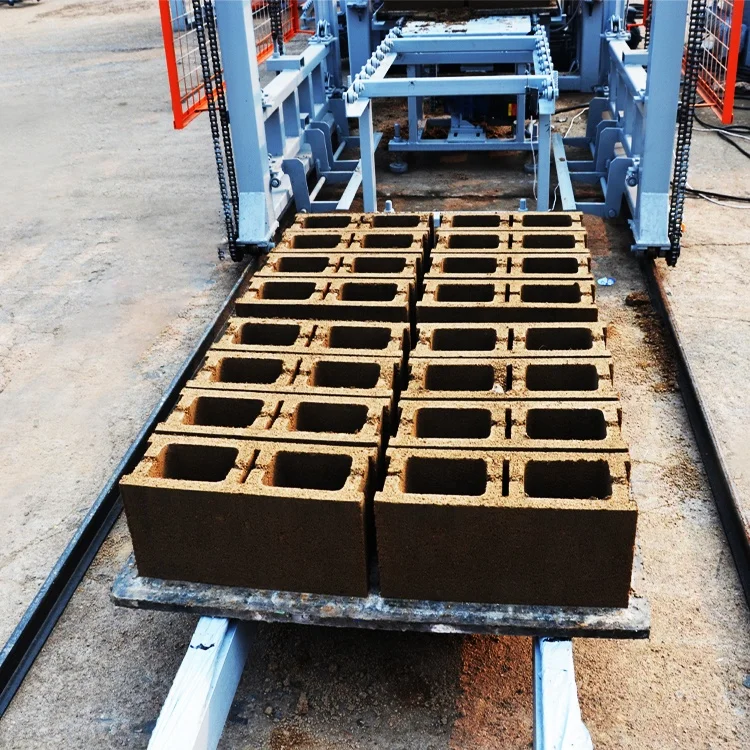
| Pallet Size | 880×850 mm |
| Molding Cycle | 15-20 s |
| Overall Power | 37 kW |
| Vibration Force | 45 kN |
| Total Mass | 7 T |
| Demolding Method | Hydraulic |
| Factory Area | 1200 m² |
| Control System | PLC (Programmable Controller) with touch screen |
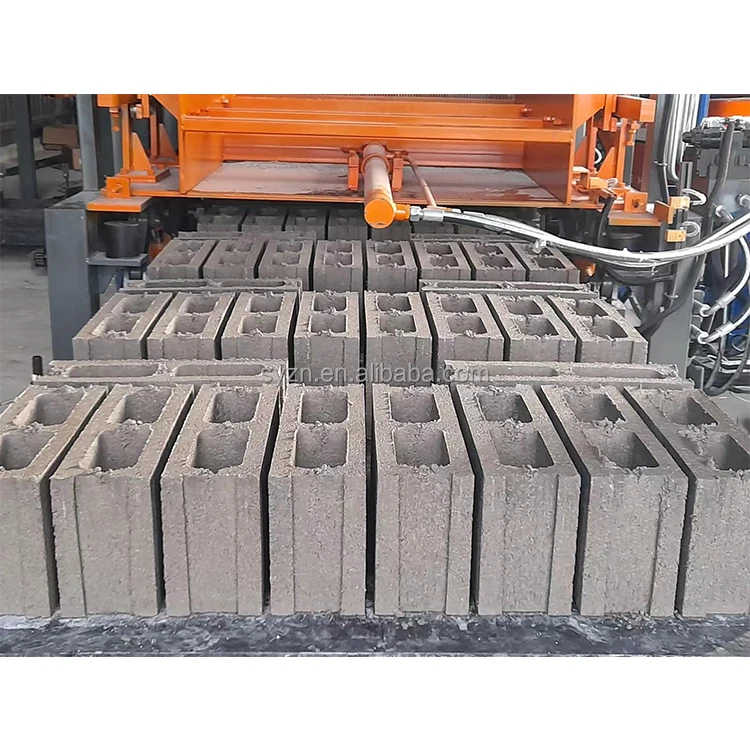
| Output Capacity (Hollow block 400×200×200 mm) | 1080-1440 pcs/hour, 8640-11520 pcs/8hr (basis: 6 pcs/mould, 15-20s cycle) |
| Output Capacity (Hollow block 400×150×200 mm) | 1440-1920 pcs/hour, 11520-15360 pcs/8hr (basis: 8 pcs/mould, 15-20s cycle) |
| Output Capacity (Solid brick 240×115×53 mm) | 5760-7680 pcs/hour, 46080-61440 pcs/8hr (basis: 32 pcs/mould, 15-20s cycle) |
| Output Capacity (Rectangular paver 200×100×60 mm) | 2160-2880 pcs/hour, 17280-23040 pcs/8hr (basis: 21 pcs/mould, 20-25s cycle) |
| Output Capacity (Zigzag paver 225×112.5×60 mm) | 2160-2880 pcs/hour, 17280-23040 pcs/8hr (basis: 15 pcs/mould, 20-25s cycle) |
| Block Compressive Strength | More than 15 MPa |
| Raw Material Adaptability | Waste ash, slag, cement, various aggregates |
| Hydraulic System | Independent integrated hydraulic station |
| Fault Diagnosis | Included in PLC system |
| Voltage & Frequency | Configurable (basis to be confirmed before production) |
| Warranty | 1 year (excluding spare parts) |
| Key Features | Automatic load, safe logic interlock circuit, touch screen interface |
Application Suitability
| Application | Material or Output |
|---|---|
| Hollow block production | Crushed stone, cement, and ash blends for 400×200×200 mm and 400×150×200 mm formats |
| Solid brick manufacturing | Cement and fine aggregate mixes for 240×115×53 mm standard bricks |
| Rectangular paving brick | Coarse aggregate and cement for 200×100×60 mm pavers |
| Zigzag interlocking paver | Graded aggregate and cement for 225×112.5×60 mm interlocking format |
What "Pieces per Hour" Leaves Out About Concrete Block Making Machine Specifications
The cycle time only holds if your mix design and local aggregate match the vibration force and hydraulic pressure settings.
When a supplier quotes a concrete block making machine based on cycles per hour without naming the block format, the daily tally rarely adds up on the shop floor. I saw this firsthand when an African client ordered a QT6-15 expecting the standard sand output we demonstrated at the factory. His plant ran volcanic slag — heavier, more abrasive — and the vibration parameters had to be entirely retuned. Mould wear doubled within the first season. That is why I now insist on testing the buyer’s actual aggregate before we lock in any capacity figure. [NEED_CITE: aggregate density and abrasion impact on mould lifespan]
Matching Vibration Force to Your Local Aggregate
Platform vibration on the QT6-15 runs from 0 to 60 Hz with 45 kN of force, adjustable to suit the density and particle shape of whatever aggregate you source nearby. Lightweight volcanic slag demands a different frequency curve than crushed granite or river gravel. Getting this right during commissioning keeps block compressive strength above 15 MPa across every batch, rather than producing strong blocks in the morning and crumbly ones by afternoon.
Cycle Time Reality Across Block Formats
A 15-20 second cycle applies to hollow and solid brick formats, while pavers need 20-25 seconds because of higher compaction requirements. The concrete block making machine specifications table above lists each format with its cavity count and cycle assumption so you can calculate realistic shift output. Mould change between formats takes planning — the faster your crew learns the procedure, the more flexible your production schedule becomes. [NEED_CITE: typical mould change procedures for hydraulic block presses]
Reading the Pallet Size Against Your Curing Layout
The 880×850 mm pallet is not arbitrary. It must clear your curing rack spacing, fit your forklift tine width, and stack within the height your yard allows. Before confirming an order, measure the rack slots and forklift capacity you already have. A pallet that is even a few centimeters off can force you to rebuild curing racks or rent different handling equipment.
The Hidden Cost of Skipping Format Verification
Buyers who order a machine based on a single headline capacity number often discover the block their market actually buys runs at a longer cycle with fewer cavities per mould. The result is a plant that cannot meet contract deadlines, overtime labour to compensate, and frustrated distributors waiting on back orders. None of this shows up in a glossy brochure. [NEED_CITE: common causes of output shortfall in block production plants]
Why Sourcing Through This Channel Matters
Every QT6-15 leaves the line with mould formats chosen for the blocks your market actually sells, not whatever happens to be in stock. Configuration is set against your real mix design and local aggregate, verified by a trial run before crating. Mould drawings and a format list ship with the machine, and custom mould designs are built to buyer drawings when the standard catalogue does not cover your region’s preferred dimensions. The PLC display language is confirmed before assembly so operators see instructions they can read from day one.
Documentation & Verification
- Line layout showing pallet flow, curing rack positions, and stacking zones for your QT6-15 site
- Capacity calculation per block format with cycle time and cavity count stated
- Mould drawing set and format list confirming included block sizes
- Factory test record run on your specified aggregate blend before dispatch
- Voltage, frequency, and PLC language confirmation document signed before production
- Hydraulic and electrical schematic with component part numbers for local sourcing
Installation, Commissioning & Support
- Foundation plan sized for the 8200×1700 mm footprint and 7 T operating mass
- Dedicated 37 kW power circuit with confirmed voltage and frequency for your grid
- Hydraulic station isolated from vibration during assembly to protect seals
- PLC touch screen calibrated with fault diagnosis parameters set to your language
- Operator training covering mould change procedure and cycle time adjustment
- Wear parts list with mould liner and hydraulic seal part numbers for reorder
What to Share Before Requesting a Quote
Tell me the exact block formats your market sells, the aggregate you can source locally, and your target daily output per format. Include your existing curing rack dimensions and forklift specs so I can confirm the 880×850 mm pallet fits your layout. If your site runs a non-standard voltage or frequency, note that early — it changes the motor and PLC specification before production begins.
Frequently Asked Questions
Q: How is capacity calculated for each block format on the QT6-15?
A: Each capacity line in the specifications ties a specific block dimension to its mould cavity count and cycle time. For instance, 400×200×200 mm hollow blocks run 6 cavities per mould at 15-20 seconds, giving 1080-1440 pieces per hour. This method lets you match the calculation to the format your market actually orders rather than relying on a single headline number.
Q: Which mould formats are available and how long does a change take?
A: Standard moulds cover hollow blocks, solid bricks, rectangular pavers, and zigzag interlocking pavers listed in the specification table. Custom moulds can be designed to buyer drawings for formats outside this range. Mould change time depends on crew familiarity — trained operators complete the swap faster, which keeps your schedule flexible when orders shift between formats.
Q: How do I confirm the pallet size matches my curing area?
A: Measure your curing rack slot width, depth, and maximum stack height, then compare against the 880×850 mm pallet dimension. Also check that your forklift tine spacing and load rating handle loaded pallets. Flagging mismatches before order confirmation avoids costly rack modifications or equipment swaps after the machine arrives.
Q: What voltage and PLC language options are available?
A: Voltage and frequency are configurable to match your local grid — this must be confirmed before production begins. The PLC touch screen display language is also set during build so operators see prompts and fault diagnosis messages they can read. Provide your grid specification and preferred language with the inquiry.
Q: How is vibration force matched to local aggregate?
A: The 0-60 Hz adjustable platform vibration and 45 kN force are tuned during commissioning based on your actual aggregate sample. Heavier or more abrasive materials like volcanic slag need different frequency curves than standard crushed stone. Testing before shipment ensures block compressive strength stays above 15 MPa on your specific mix.