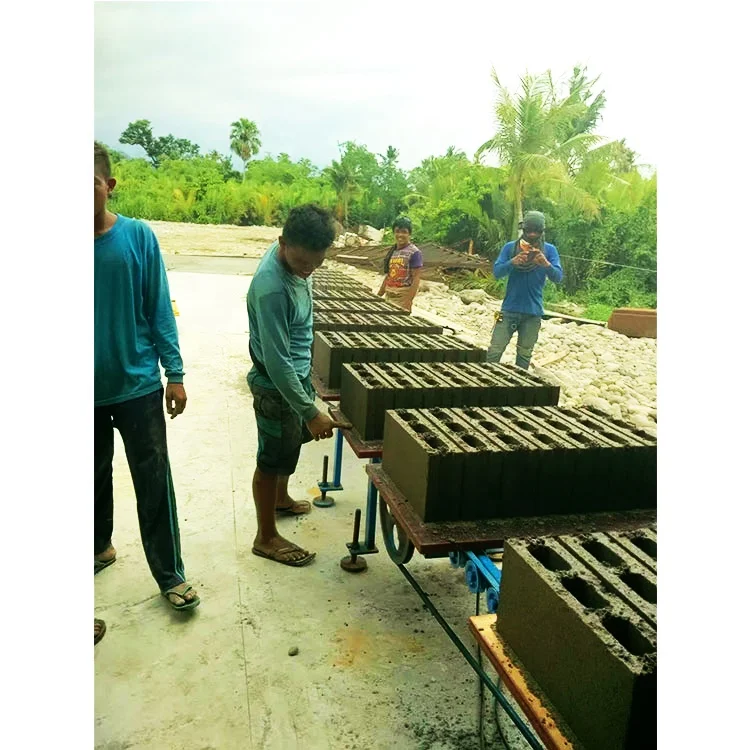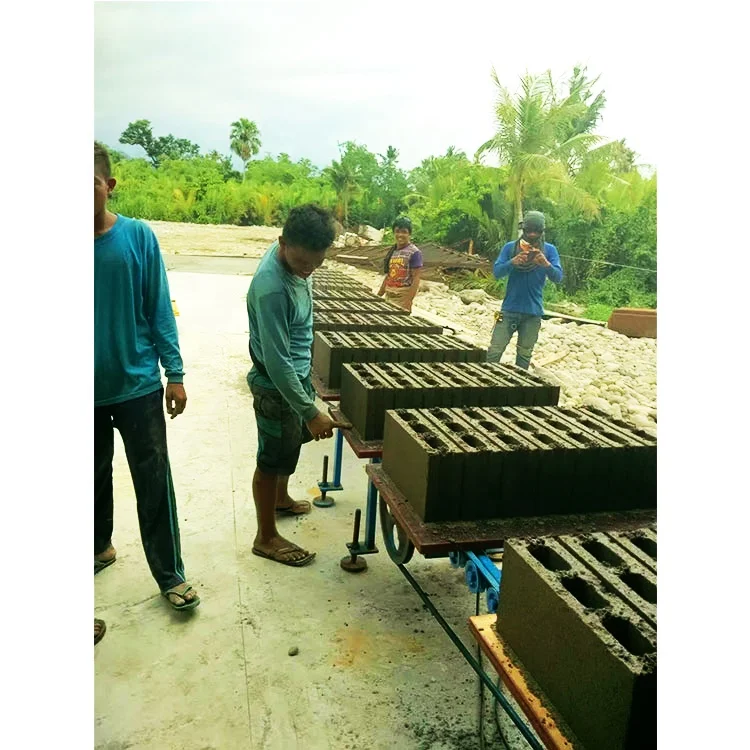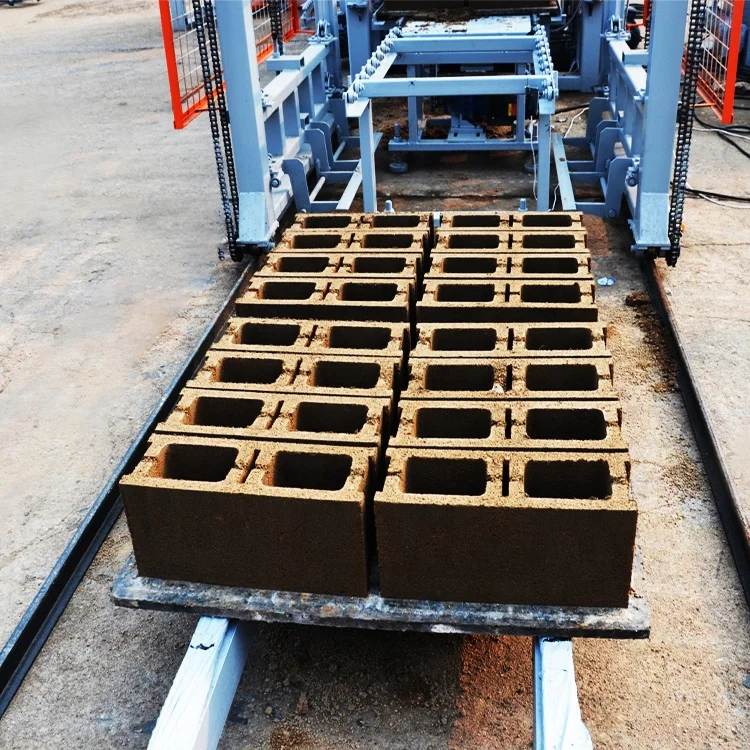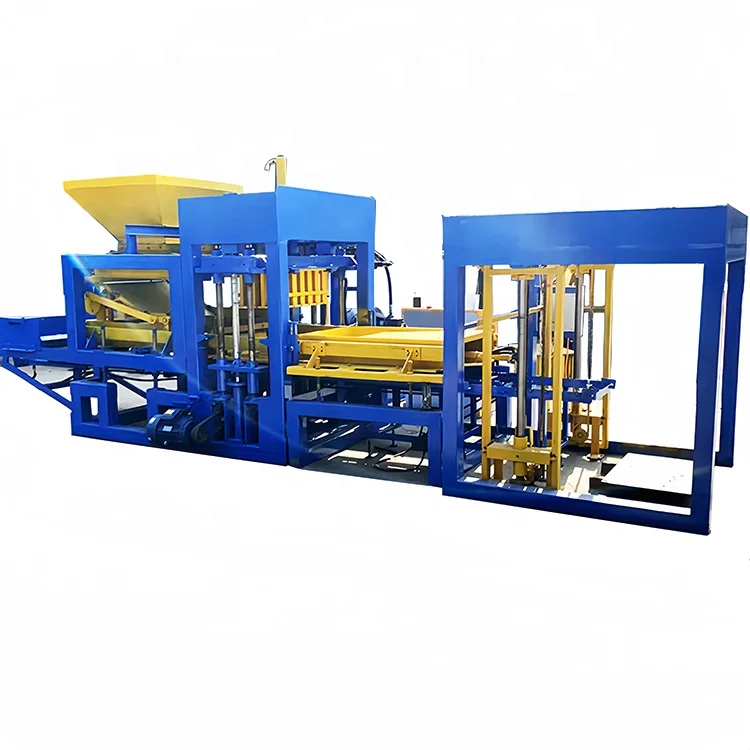
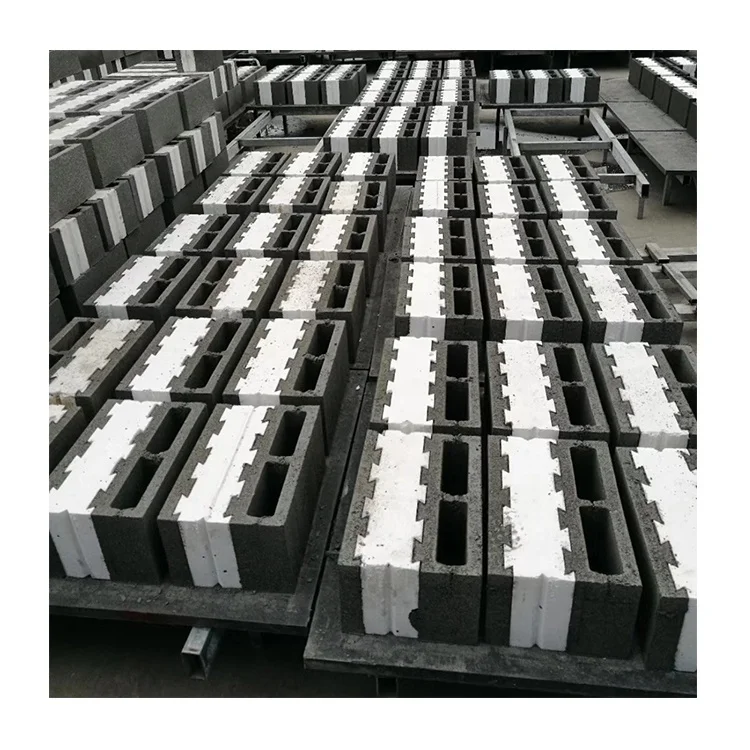
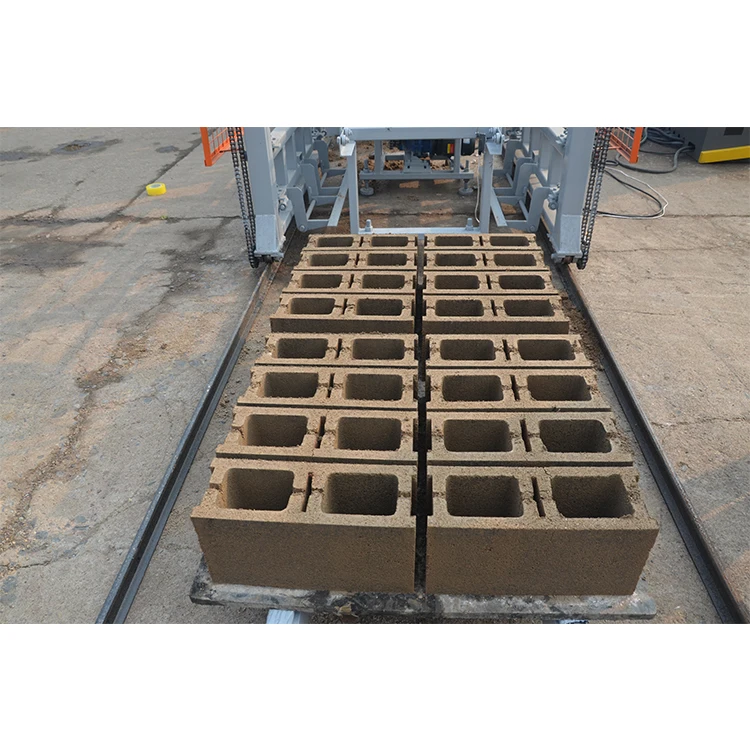
Description
Specified per format — capacity figures for the QT6-15 are calculated against your actual block dimensions and cycle time, not a single headline number.
Technical Specifications
| Parameter | Value |
|---|---|
| Model | QT6-15 |
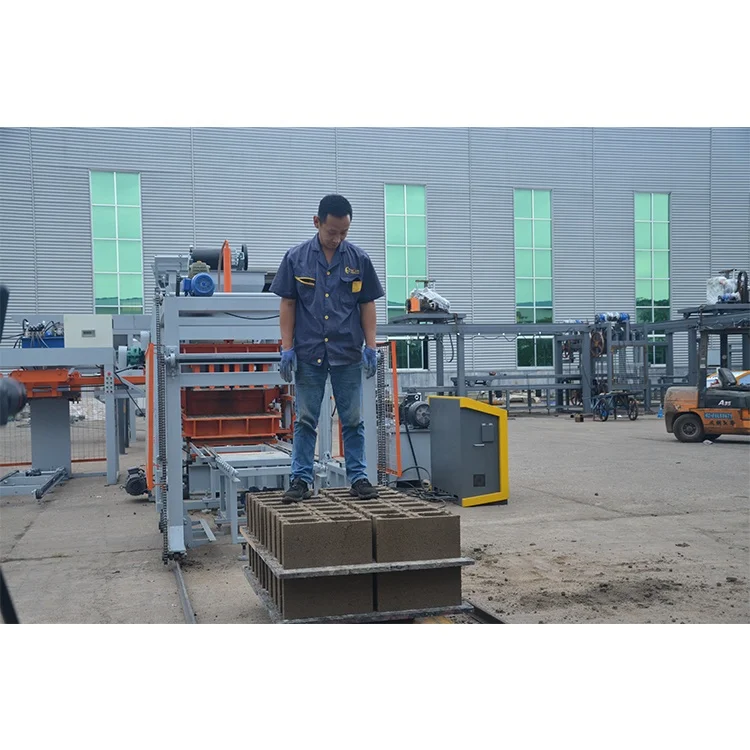
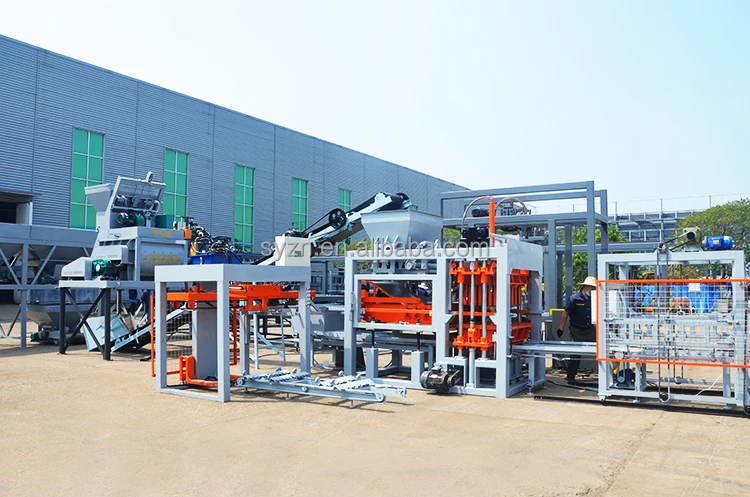
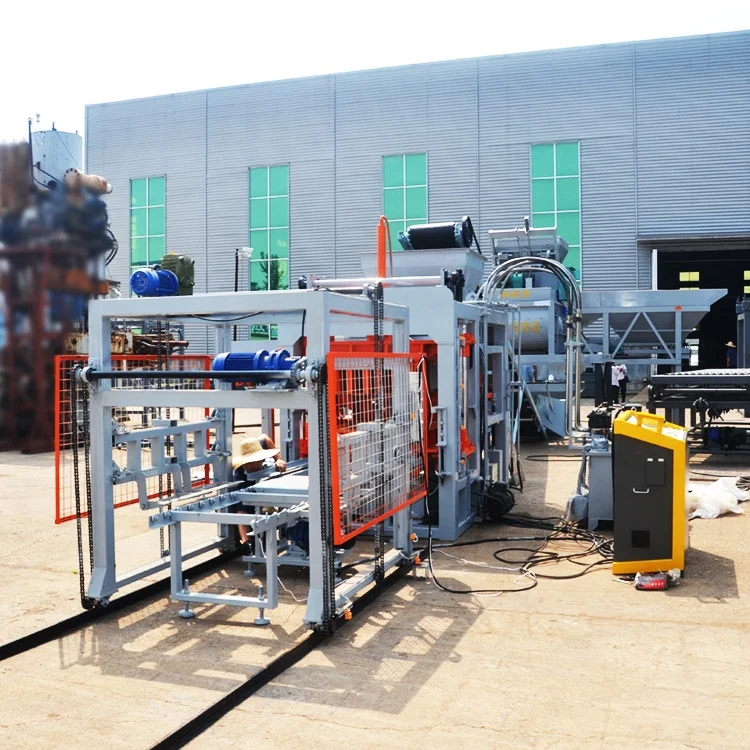
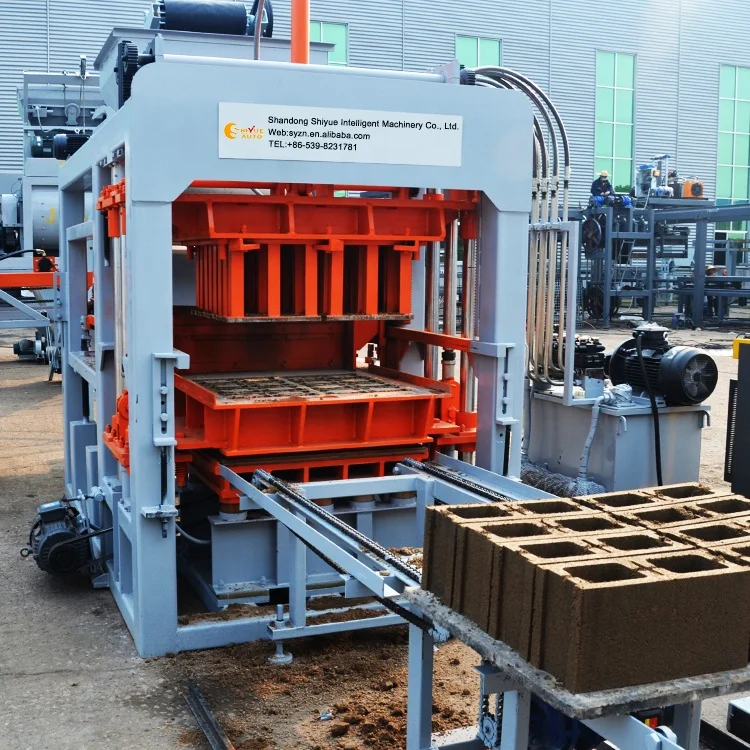
| Product Type | Automatic Hydraulic Concrete Block Making Machine |
| Overall Dimensions (L×W×H) | 8200×1700×2950 mm |
| Pallet Size | 880×850 mm |
| Vibration Form | Platform Vibration |
| Vibration Force | 45 kN |
| Vibration Frequency | 0-60 Hz (adjustable) |
| Moulding Mode | Automatic loading, vibration moulding |
| Demolding Method | Hydraulic |
| Hydraulic System | Independent integrated hydraulic station |
| Molding Cycle | 15-20 s (hollow block); 20-25 s (pavers) |
| Overall Power | 37 kW |
| Total Mass | 7 T |
| Control System | PLC with touch screen and fault diagnosis |
| Compressive Strength of Blocks | >15 MPa |
| Output: Hollow Block 400×200×200 mm | 1080-1440 pcs/hour, 8640-11520 pcs/8hr (6 pcs/mould, 15-20s cycle) |
| Output: Hollow Block 400×150×200 mm | 1440-1920 pcs/hour, 11520-15360 pcs/8hr (8 pcs/mould, 15-20s cycle) |
| Output: Solid Brick 240×115×53 mm | 5760-7680 pcs/hour, 46080-61440 pcs/8hr (32 pcs/mould, 15-20s cycle) |
| Output: Rectangular Paver 200×100×60 mm | 2160-2880 pcs/hour, 17280-23040 pcs/8hr (21 pcs/mould, 20-25s cycle) |
| Output: Zigzag Paver 225×112.5×60 mm | 2160-2880 pcs/hour, 17280-23040 pcs/8hr (15 pcs/mould, 20-25s cycle) |
| Raw Material Adaptability | Waste ash, slag, various aggregates |
| Factory Area | 1200 m² |
| Automation Level | Automatic (PLC controlled, intelligent electronic control) |
| Voltage & Frequency | Configurable (confirm with buyer market) |
| PLC Display Language | Configurable (confirm with buyer requirement) |
| Warranty | 1 year (whole machine, excluding spare parts) |
Application Suitability
| Application | Material or Output |
|---|---|
| Hollow block production for regional building supply | Crushed stone, sand, cement and waste ash blends on 400×200×200 mm or 400×150×200 mm formats |
| Solid brick manufacturing for masonry contractors | Fine aggregate and cement mixes producing 240×115×53 mm bricks |
| Rectangular paving block production for road and landscape projects | High-strength aggregate and cement blends on 200×100×60 mm format |
| Zigzag interlocking paver production for driveways and walkways | Graded aggregate with reduced cement dosage on 225×112.5×60 mm format |
| On-site block production for housing and development contractors | Local aggregate and site-sourced sand adapted through mix testing |
What "Blocks per Hour" Actually Means on the QT6-15 Block Machine Specifications
Every capacity figure here names the block format, cavity count and cycle time it depends on.
I once watched a block plant in West Africa sit idle for days because the quoted output assumed a hollow block format the buyer never intended to produce. The machine ran fine, but real daily tonnage was half the brochure number. That mismatch between catalogue capacity and actual product mix is the most common sizing mistake I see. The QT6-15 block machine specifications avoid this by tying each output number to a specific mould cavity count and molding cycle. [NEED_CITE: block machine capacity calculation standards by format]
Honest Capacity by Block Format
A machine quoted at a single "pieces per hour" figure hides the format assumption behind that number. The QT6-15 produces hollow blocks at 1080-1440 pieces per hour based on a 400×200×200 mm format with 6 cavities per mould, but switch to a 400×150×200 mm mould with 8 cavities and the figure changes to 1440-1920 pieces per hour under the same cycle conditions. Paver formats demand a longer 20-25 second cycle, which shifts the calculation again. This is why the QT6-15 block machine specifications list each format separately rather than collapsing them into one headline claim.
Matching Mould Selection to Your Market
The 880×850 mm pallet accommodates hollow block, solid brick, rectangular paver and zigzag paver moulds within one press footprint. Buyers expanding an existing product range can request custom mould drawings for formats their local market demands, and the hydraulic block making machine capacity by format is recalculated for each new mould before it ships. Mould change time varies by format and operator familiarity, which is why the sales process includes a format list and drawing confirmation step before production begins. [NEED_CITE: mould change procedures for hydraulic block presses]
How Vibration Force and Hydraulic Pressure Shape Block Density
Platform vibration at 45 kN force and an adjustable 0-60 Hz frequency compact the mix inside the mould cavity before hydraulic demolding lifts the finished block clear. The vibration frequency must match the particle size distribution of the local aggregate — too high a frequency on coarse crushed stone leaves voids, while too low a frequency on fine sand fails to consolidate the mix fully. The independent integrated hydraulic station sits isolated from the main press vibration, which protects seals and valve blocks across long production shifts. This separation matters because hydraulic pressure and vibration force together determine whether blocks reach the stated >15 MPa compressive strength, and the QT6-15 block machine specifications hold that target across hollow block, solid brick and paver formats when the mix design is correctly matched.
Pallet Size and the Curing Area It Demands
The 880×850 mm pallet size dictates how many blocks cure simultaneously and what forklift or handling equipment moves them. A buyer with a 1200 m² factory area must plan pallet circulation so the press is never waiting for a return pallet, which means pallet quantity, curing rack spacing and stacking method all tie back to this single dimension. The pallet specification — size, material and quantity — should appear in the quotation alongside the press itself, not as an afterthought that delays the first production run. [NEED_CITE: pallet circulation planning for concrete block plants]
When the Wrong Configuration Reaches the Site
A QT6-15 configured for clean washed aggregate will struggle when the buyer’s local quarry supplies material with high clay content. The vibration force and cycle time that work in the factory test produce weak blocks on site, forcing days of parameter adjustment while the construction schedule slips. Voltage mismatch is another silent delay — a press wired for 380V/50Hz arriving at a 440V/60Hz site cannot commission until transformers or motor replacements are sourced locally. These are not machine defects; they are configuration decisions that were not confirmed before the container was sealed.
Why Procurement Starts with the Mix, Not the Brochure
Block machinery is the single focus at Shiyue, so the QT6-15 is specified as one matched system — press, mould, pallet and handling — rather than assembled from separate suppliers. Machine configuration is set against the buyer’s actual mix design, local aggregate sample and target block format, not a catalogue default. Mould design covers the formats the buyer’s market actually sells, with custom drawings available for non-standard dimensions. Automation level is selectable, meaning a buyer can commission the QT6-15 in semi-automatic mode and add automatic stacking or cubing later as production volume justifies it. Installation and commissioning support includes operator training so the crew understands cycle adjustment, mould change and daily maintenance before the technician leaves site. [NEED_CITE: on-site commissioning practices for block making machinery]
Documentation & Verification
- Line layout and capacity calculation stating the block format assumed for each output figure
- Mould drawing and format list confirming included and available mould options
- Pallet specification covering size, material and quantity matched to curing area
- Hydraulic and electrical schematic for the 37 kW power system
- Voltage, frequency and PLC display language confirmation before production
- Factory test record on the buyer’s target block format prior to dispatch
Installation, Commissioning & Support
- 8200×1700×2950 mm overall footprint requires a level concrete foundation within the 1200 m² factory area
- 37 kW overall power demand needs a dedicated circuit matching confirmed voltage and frequency
- Machine ships dismantled for container loading with reassembly and alignment on site
- First production run validates molding cycle, vibration frequency and hydraulic pressure against target block format
- Operator training covers PLC touch screen interface, fault diagnosis system and mould change procedures
- Wear parts list and mould maintenance schedule provided for ongoing production continuity
What to Share Before Requesting a Quotation
Provide the block formats your market sells, along with target daily output for each format. Send a sample of your local aggregate so the mix design can be tested before the QT6-15 block machine specifications are locked. Confirm your site voltage, frequency and preferred PLC display language so commissioning proceeds without electrical delays on arrival.
Frequently Asked Questions
Q: How is the daily output of the QT6-15 calculated for my specific block format and what cycle time should I plan for?
A: Daily output depends on the block format, mould cavity count and molding cycle. Hollow blocks at 400×200×200 mm run 6 cavities per mould with a 15-20 second cycle, yielding 8640-11520 pieces per 8-hour shift. Paver formats require a 20-25 second cycle. Your quotation includes a capacity calculation tied to each format you plan to produce.
Q: Which mould formats are available for the 880×850 mm pallet and how long does a mould change take on site?
A: The pallet accommodates hollow block, solid brick, rectangular paver and zigzag paver moulds. Custom moulds can be designed from buyer drawings. Mould change time depends on format complexity and operator experience, and is confirmed during commissioning and operator training on your site.
Q: How is the vibration force and hydraulic pressure matched to my local aggregate and mix design to ensure block strength above 15 MPa?
A: The adjustable 0-60 Hz vibration frequency and 45 kN force are tuned during factory testing using your aggregate sample. The independent hydraulic station maintains consistent demolding pressure. If your mix design changes after delivery, the PLC parameters can be adjusted to maintain compressive strength targets.
Q: What voltage, frequency and PLC language options are confirmed before shipment, and what happens if my site power differs?
A: Voltage, frequency and PLC display language are confirmed in writing before production begins. The machine electrical system is then built to match your site supply. If your site power differs from what was confirmed, commissioning will be delayed until the mismatch is resolved locally.
Q: What pallet material and quantity are recommended for my curing area layout, and is pallet handling included in the line configuration?
A: Pallet material and quantity depend on your curing area size, climate and forklift capacity. The 880×850 mm pallet specification is included in your quotation alongside the press. Pallet feeding, stacking and handling equipment can be configured as part of the complete line or added as an upgrade later.