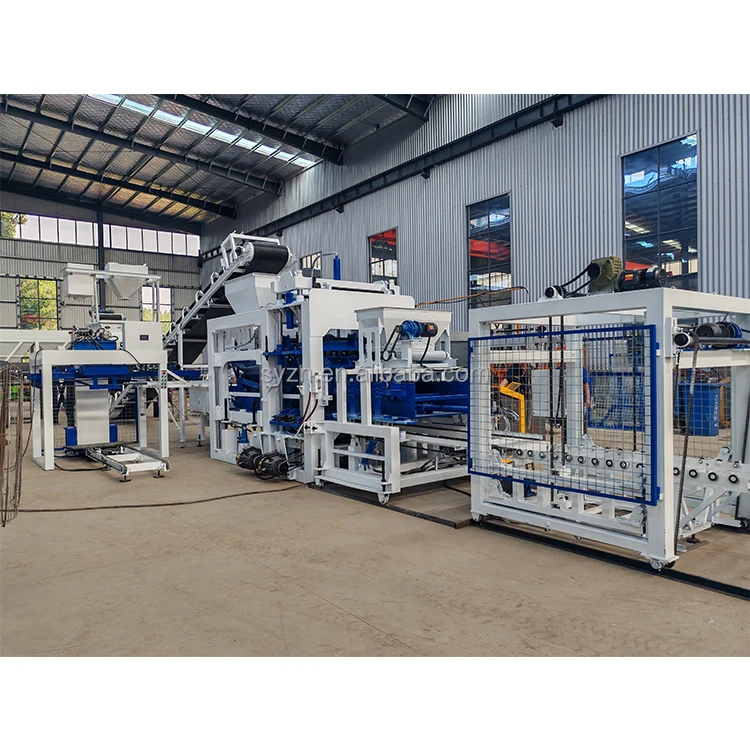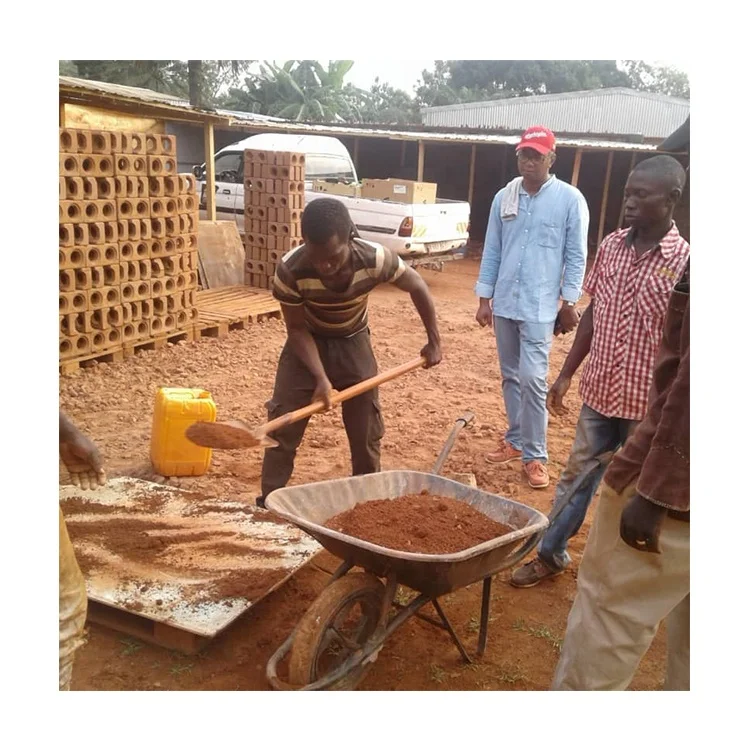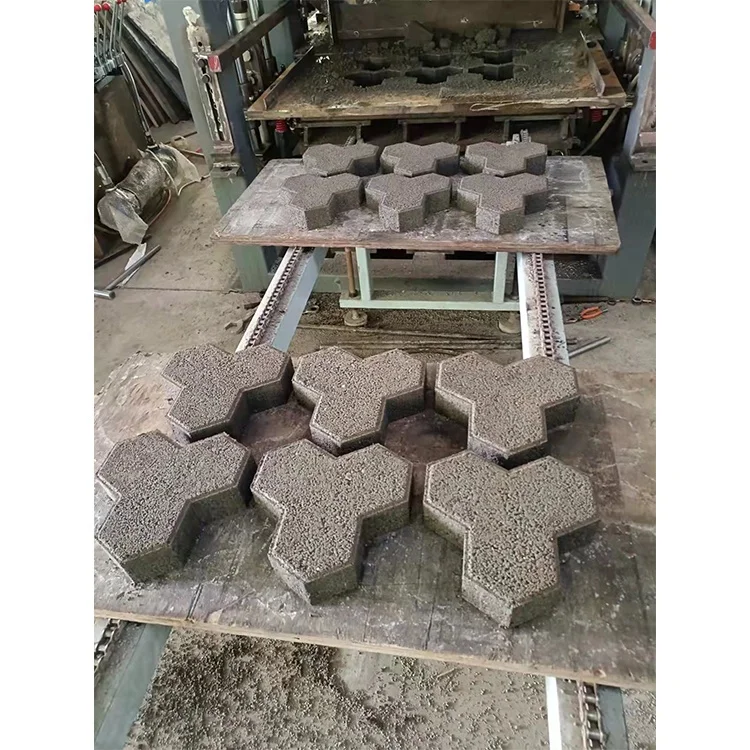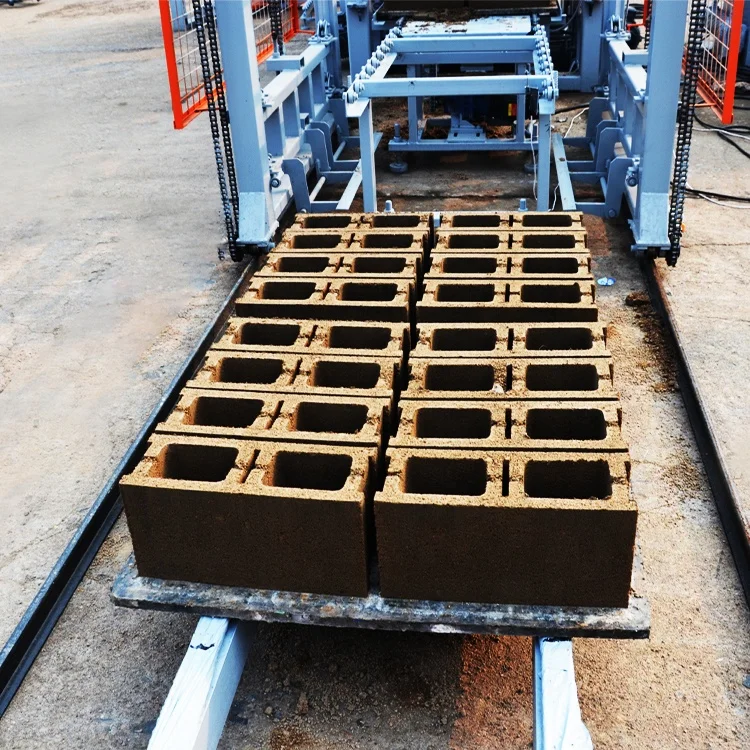
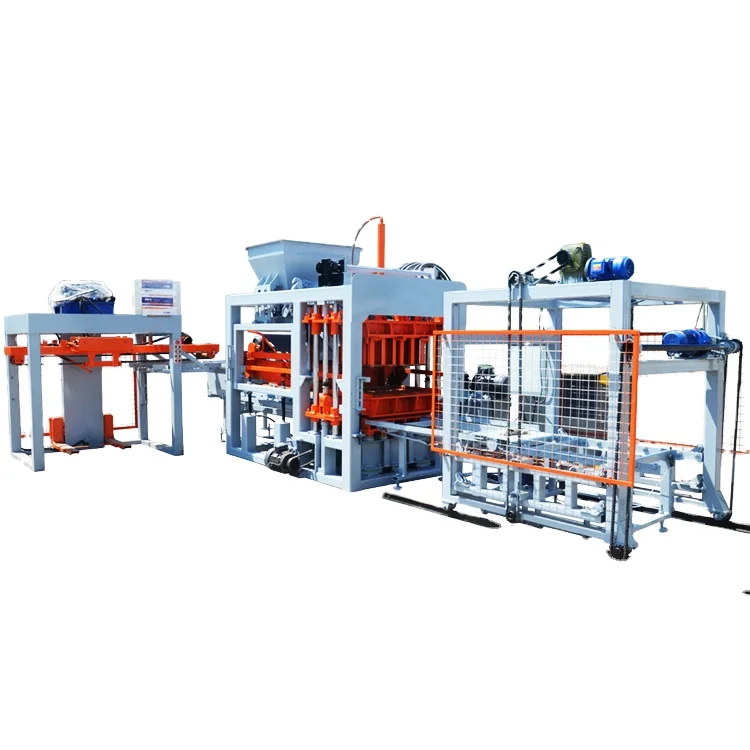
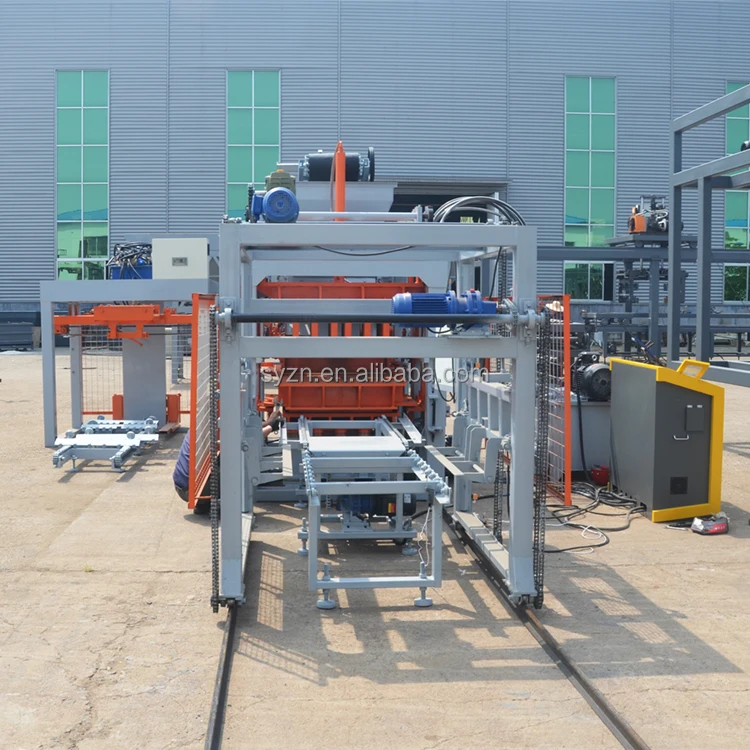
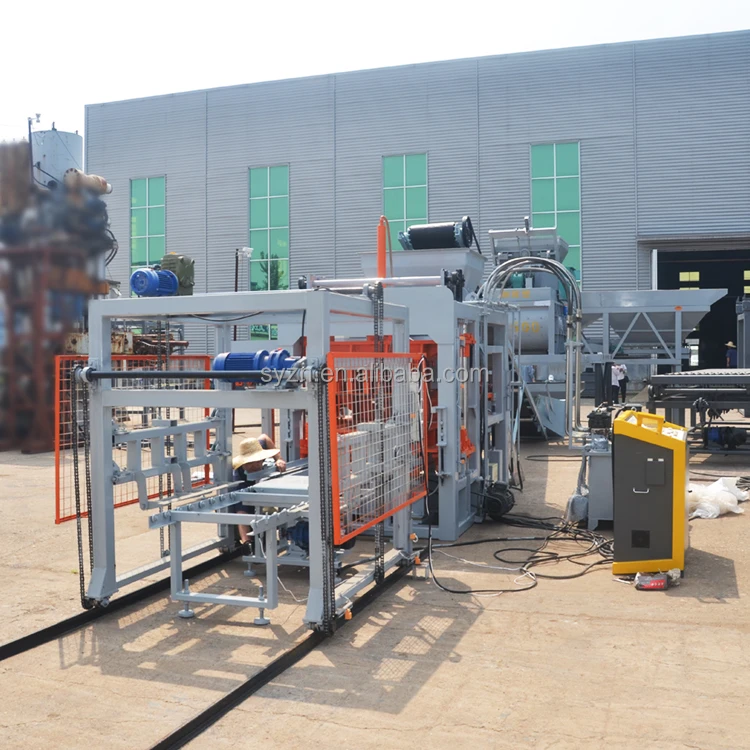
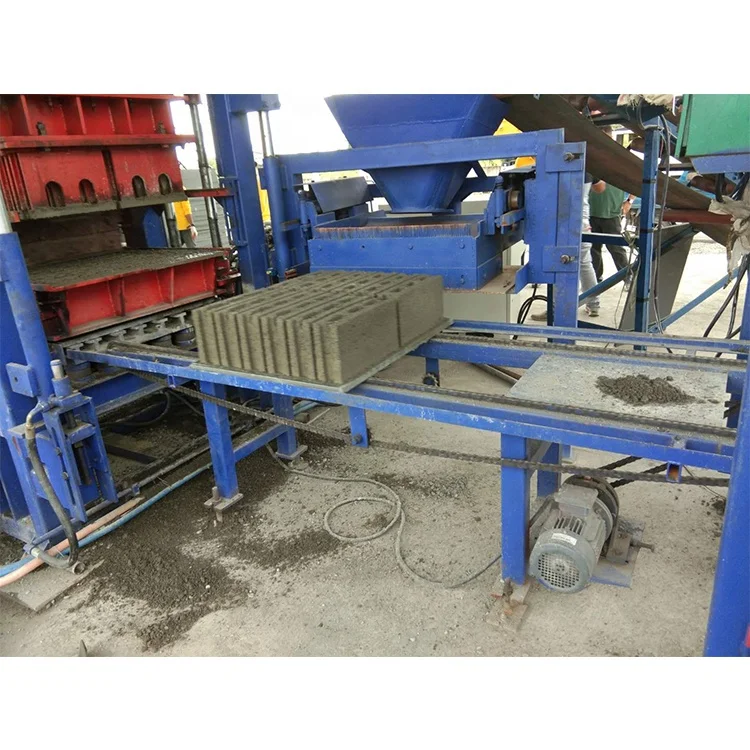
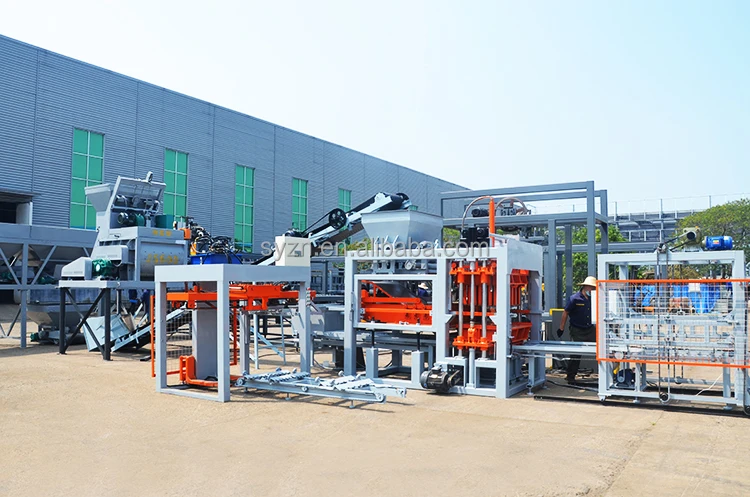
Description
Matched vibration and pressure to your actual mix — the QT6-15 block machine specifications are configured around your local aggregate and target format, not a generic catalog default.
Technical Specifications
| Parameter | Value |
|---|---|
| Product Type | Automatic Concrete Block Making Machine |
| Model | QT6-15 |
| Overall Dimensions (L×W×H) | 8200×1700×2950 mm |
| Vibration Frequency | 0-60 Hz (adjustable) |
| Vibration Form | Platform Vibration |
| Vibration Force | 45 kN |
| Moulding Mode | Automatic loading with vibration moulding |
| Pallet Size | 880×850 mm |
| Molding Cycle | 15-20 s (hollow/solid); 20-25 s (paver) |
| Total Power | 37 kW |
| Total Mass | 7 T |
| Demolding Method | Hydraulic |
| Required Factory Area | 1200 m² |
| Control System | PLC (Programmable Logic Controller) with touch screen interface |
| Hydraulic System | Independent integrated hydraulic station |
| Automation Level | High (automatic loading, PLC process control, fault diagnosis) |
| Raw Material Adaptability | Waste ash, slag, and various aggregates |
| Output: Hollow Block 400×200×200 mm | 1080-1440 pcs/hour (basis: 6 pcs/mould, 15-20s cycle) |
| Output: Hollow Block 400×150×200 mm | 1440-1920 pcs/hour (basis: 8 pcs/mould, 15-20s cycle) |
| Output: Solid Brick 240×115×53 mm | 5760-7680 pcs/hour (basis: 32 pcs/mould, 15-20s cycle) |
| Output: Rectangular Paver 200×100×60 mm | 2160-2880 pcs/hour (basis: 21 pcs/mould, 20-25s cycle) |
| Output: Zigzag Paver 225×112.5×60 mm | 2160-2880 pcs/hour (basis: 15 pcs/mould, 20-25s cycle) |
Application Suitability
| Application | Material or Output |
|---|---|
| Hollow concrete block production | Bearing and non-bearing blocks from crushed stone, sand, cement, and fly ash blends |
| Solid brick manufacturing | Dense solid bricks using local river sand, quarry dust, and cement |
| Rectangular paving block production | Heavy-duty pavers from fine aggregate and cement for driveways and walkways |
| Interlocking zigzag paver production | Interlocking format pavers using graded aggregate and pigment-integrated mixes |
| Industrial waste utilization | Blocks incorporating fly ash, slag, and other waste materials as partial aggregate replacement |
What "Pieces per Hour" Hides When Sizing the QT6-15 Block Machine
Capacity only means something when the block format, mould cavity count, and cycle time sit right next to the number.
I have stood beside block lines where the operator pointed at a stack of cracked hollow blocks and asked why the quoted output never materialized. The reason is usually simple: the sales sheet quoted a figure based on one format while the buyer’s market actually purchases another. A machine rated at a given number of cycles per hour on a small solid brick will produce considerably fewer units when switched to a large hollow block, simply because the mould holds fewer cavities and the vibration cycle runs longer to consolidate the larger format. The QT6-15 block machine specifications on this page list each capacity with the exact mould cavity count and cycle time behind it, so you can size the equipment against the product your market actually pays for. [NEED_CITE: mismatch between quoted cycle rate and actual block format output]
Mould Format Defines the Real Daily Output
When a technical buyer evaluates automatic hollow block making machine capacity by format, the first step is listing every block type the local market demands and the daily volume for each. The QT6-15 accommodates multiple mould formats on the same pallet size. A hollow block mould with six cavities completes a cycle in roughly 15-20 seconds, while a rectangular paver mould with twenty-one cavities needs 20-25 seconds because the thinner profile requires a different vibration profile to achieve surface finish quality. Switching between these formats means changing the mould, adjusting vibration parameters on the PLC, and verifying the new cycle produces acceptable block strength before full production resumes.
Vibration Matching Is Format-Specific
Platform vibration at 0-60 Hz with 45 kN force gives the operator a wide adjustment window, but each block format sits in a different part of that window. A hollow block with thin walls needs high-frequency, lower-amplitude vibration to consolidate the mix without collapsing the core voids. A solid brick, by contrast, needs sustained high-amplitude force to drive density throughout the full cross-section. If the vibration parameters are left at a default setting across formats, one product will be under-consolidated and another will show edge spalling on demolding. I once spent two days on a site where the operator had not changed vibration settings between a hollow block run and a paver run, and the pavers came out with surface pitting that only appeared after curing. [NEED_CITE: vibration frequency and amplitude matching to block geometry]
Reading the Specs That Actually Affect Your Line
The 880×850 mm pallet size determines how many blocks sit on each pallet and therefore how many pallets cycle through the system per hour. Before ordering, confirm that this pallet dimension fits your existing curing racks and that your forklift tines can handle the loaded pallet weight. The independent integrated hydraulic station sits apart from the main frame, which means vibration from the press does not transmit directly into hydraulic valves — a practical advantage when running high-frequency cycles over long shifts. The 37 kW total power draw requires a dedicated supply circuit; undersized cabling or shared circuits with other heavy equipment cause voltage dips that show up as inconsistent hydraulic pressure and uneven block density. The PLC touch screen interface controls the entire molding sequence, and specifying the display language before production avoids commissioning delays once the machine arrives on site.
The Cost of Skipping Format-Level Configuration
When a machine arrives configured for a mix the buyer cannot source locally, the choices are either to import material at considerable expense or to run with a substitute that produces inconsistent block strength. I have seen plants run for weeks with a local river sand that contained clay fractions far above what the original test assumed, resulting in blocks that passed visual inspection but failed compressive strength tests. Similarly, selecting a pallet material without considering the humidity and curing method leads to warped pallets that jam the feeding mechanism. These are not warranty issues — they are configuration oversights that surface only after installation. [NEED_CITE: impact of local aggregate variability on block compressive strength]
Why Buyers Source the QT6-15 Through This Channel
Block machinery is the single product focus here, which means the press, mould, pallet, and handling equipment are specified as one matched system rather than assembled from separate suppliers. Each configuration starts from the buyer’s actual mix design and target block format, not a catalog default. Mould design covers the formats the buyer’s market sells, including custom drawings when a local standard dimension does not match a catalog option. The automation level is selectable, so a buyer can begin with semi-automatic pallet handling and add automatic stacking later as volume grows. Installation includes operator training on the PLC interface and mould change procedure, reducing the ramp-up period after commissioning.
Documentation & Verification
- Line layout with capacity calculation stating the block format behind every output figure
- Mould drawing and format list confirming cavity count and cycle time for each product
- Pallet specification sheet checked against your curing rack dimensions and forklift capacity
- Hydraulic and electrical schematic matching the as-built machine configuration
- Voltage, frequency, and PLC display language confirmed in writing before production starts
- Factory test record on your specified block format before dispatch
Installation, Commissioning & Support
- Foundation plan based on 8200×1700 mm footprint and 7 T operating mass for level concrete pad
- Dedicated 37 kW power circuit with voltage and frequency confirmed to local grid standards
- Machine arrives in dismantled state for container loading; on-site reassembly with alignment verification
- First-run parameter tuning on your local aggregate and target block format with PLC adjustments
- Operator training on mould change procedure, PLC fault diagnosis, and daily maintenance checkpoints
- Wear parts and mould inventory list provided for first replacement planning
What to Include in Your Inquiry
Specify the block formats your market currently purchases and the daily volume target for each, along with the local aggregate types available and any industrial waste materials you plan to incorporate. Confirm the voltage, frequency, and PLC display language required at your site, and provide the dimensions of your existing curing area and pallet handling equipment so the 880×850 mm pallet compatibility can be verified before quotation.
Frequently Asked Questions
Q: How is QT6-15 capacity calculated for each block format, and what cycle time is assumed?
A: Every capacity figure on this page is tied to a specific mould cavity count and cycle time range. For example, the hollow block 400×200×200 mm output of 1080-1440 pieces per hour assumes six cavities per mould and a 15-20 second cycle. When you request a quotation, the capacity calculation document will list each format you plan to produce with the same level of detail.
Q: Which mould formats are available for the QT6-15, and how long does a mould change take?
A: Standard moulds cover hollow blocks, solid bricks, rectangular pavers, and zigzag pavers on the 880×850 mm pallet. Custom moulds can be designed to buyer drawings. Mould change time depends on the format and whether the hydraulic clamping system is in use; operators trained during commissioning typically complete the change within a portion of a single shift.
Q: How should the 880×850 mm pallet size be matched to my curing area and forklift?
A: Before order confirmation, provide your curing rack dimensions, rack spacing, and forklift tine length and capacity. This allows verification that loaded pallets fit your existing infrastructure. If your curing system uses different dimensions, the pallet specification can be adjusted during the configuration stage.
Q: How is vibration force matched to the buyer’s local aggregate and mix design?
A: The platform vibration system offers adjustable frequency from 0-60 Hz and 45 kN force. During commissioning, parameters are tuned on your actual mix to achieve target compressive strength without edge damage on demolding. Providing a sample of your local aggregate before production helps pre-set baseline values.
Q: What voltage, frequency, and PLC language options must be confirmed before shipment?
A: The QT6-15 requires voltage and frequency matching your site supply, and the PLC touch screen display language must be specified before the control panel is assembled. These details are confirmed in writing during the quotation stage to prevent commissioning delays after the machine arrives at your facility.