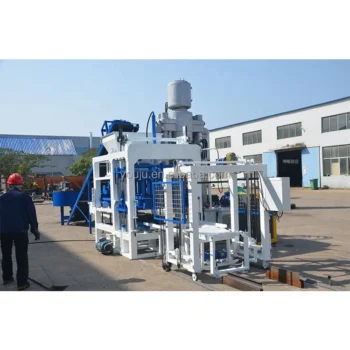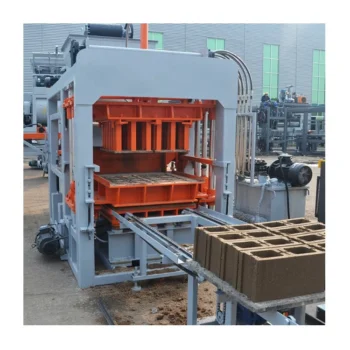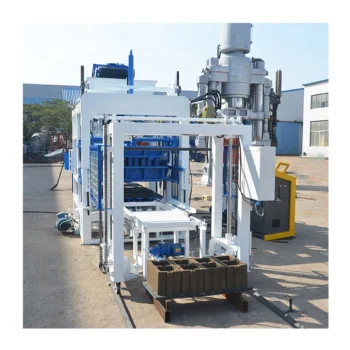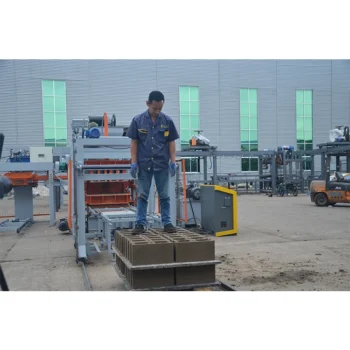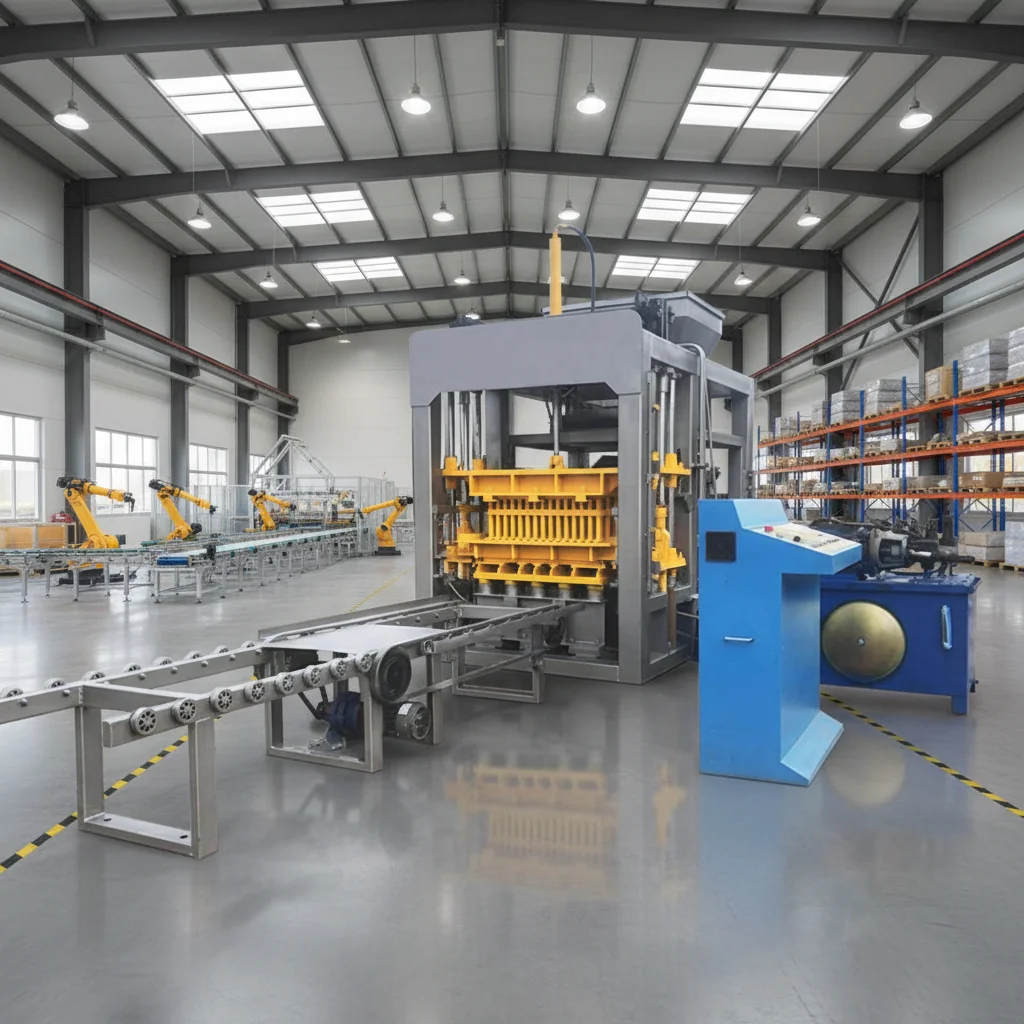
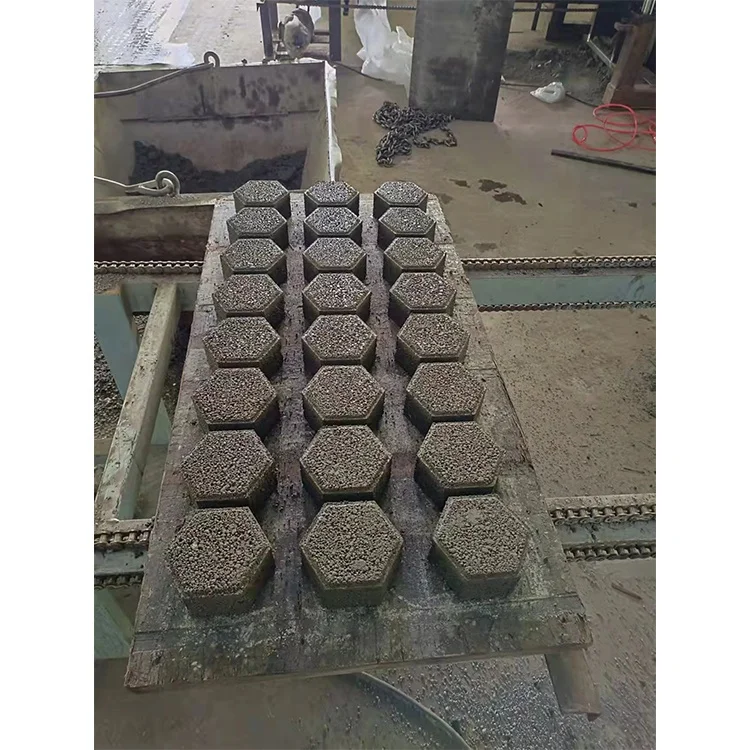
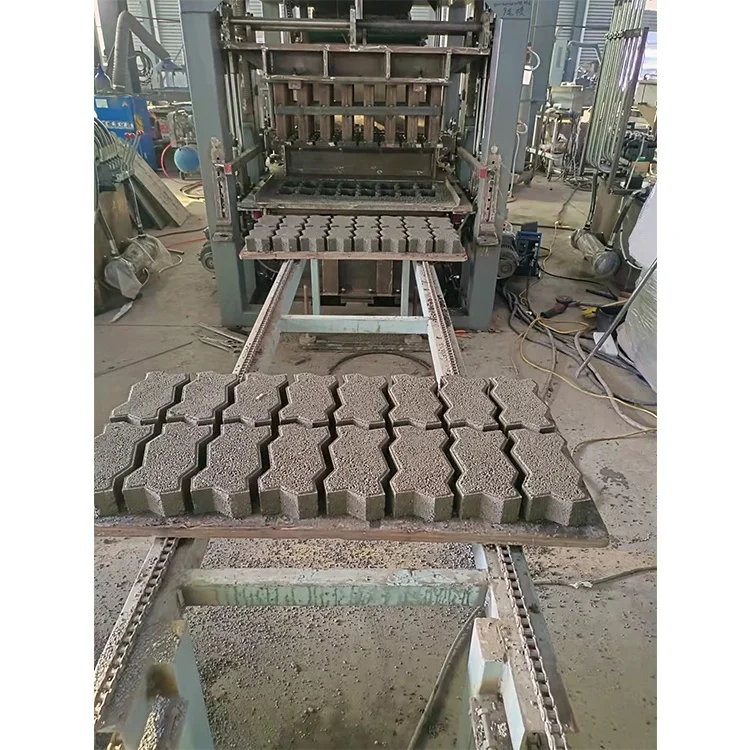

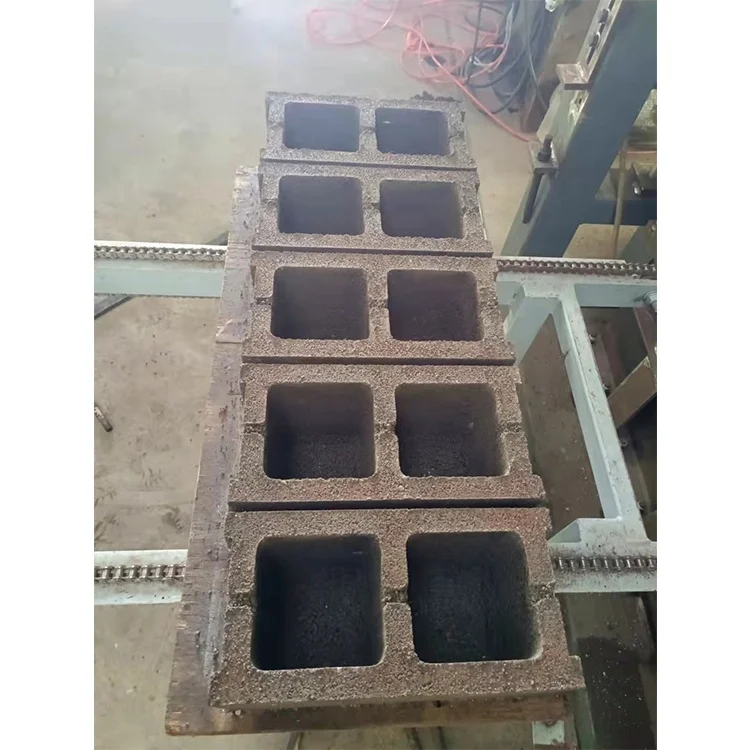
Description
Capacity Matched to Your Block Format — QT5-15 cycle times and output are documented per individual block dimension rather than a single blanket figure, so your daily yield reflects the format you actually produce.
Technical Specifications
| Parameter | Value |
|---|---|
| Model | QT5-15 |
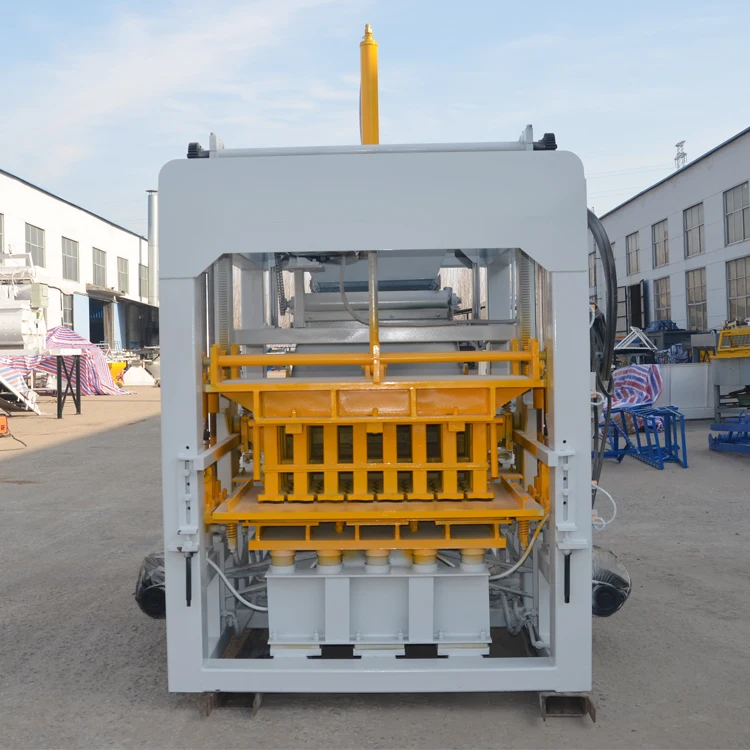
| Product Type | Automatic Concrete Block Making Machine |
| Overall Dimensions (L×W×H) | 7400 × 1950 × 2800 mm |
| Total Mass | 5000 kg |
| Vibration Form | Platform Vibration |
| Vibration Frequency | 0–60 Hz |
| Vibration Force | 80 kN |
| Moulding Mode | Automatic loading, vibration moulding |
| Demolding Method | Hydraulic |
| Hydraulic System | Independent integrated hydraulic station |
| Pallet Size | 1100 × 550 mm |
| Molding Cycle | 15–20 s (basis not stated in source — confirm block format, material, and thickness) |
| Overall Power | 32 kW |
| Control System | PLC with touch screen interface |
| Automation Level | Automatic (PLC-controlled pallet feeding, material feeding, vibrating, demoulding) |
| Fly Ash Tolerance in Mix | Up to 70% |
| Compressive Strength of Output Blocks | >15 MPa |
| Mould Change System | Quick-change via simple mould replacement |
| Recommended Factory Area | 1000 m² |
| Warranty | 1 year for whole machine (excluding spare parts) |
Application Suitability
| Application | Material or Output |
|---|---|
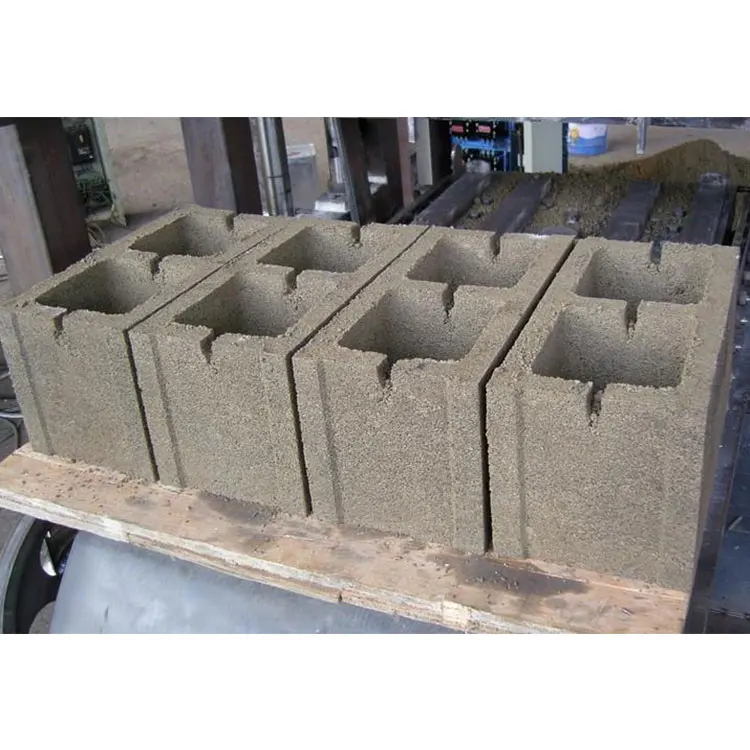
| Hollow block production (400×200×200 mm, 400×150×200 mm) | Crushed stone, sand, cement, water |
| Solid brick production (240×115×53 mm) | Sand, cement, fly ash blends |
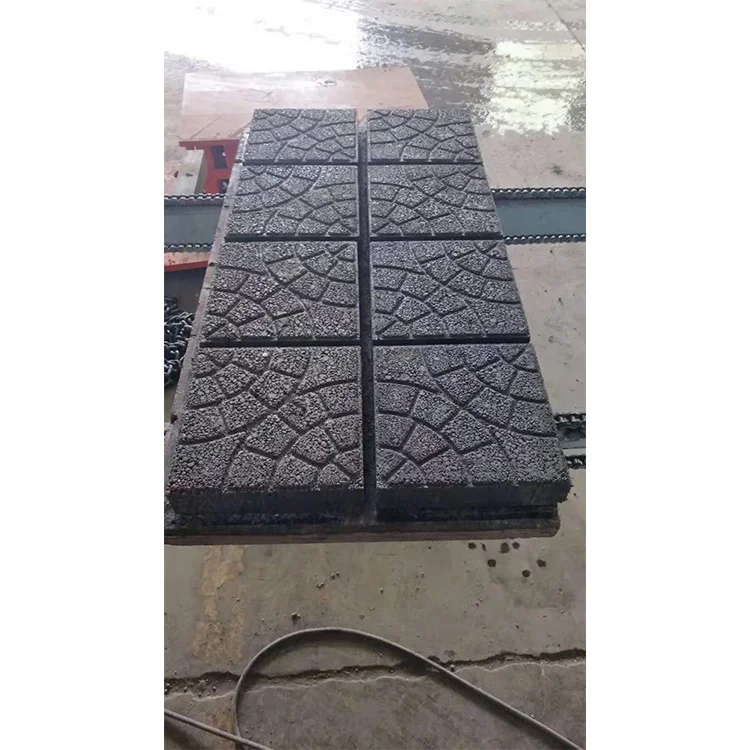
| Rectangular and zigzag paver production | Fine aggregate, cement, pigment |
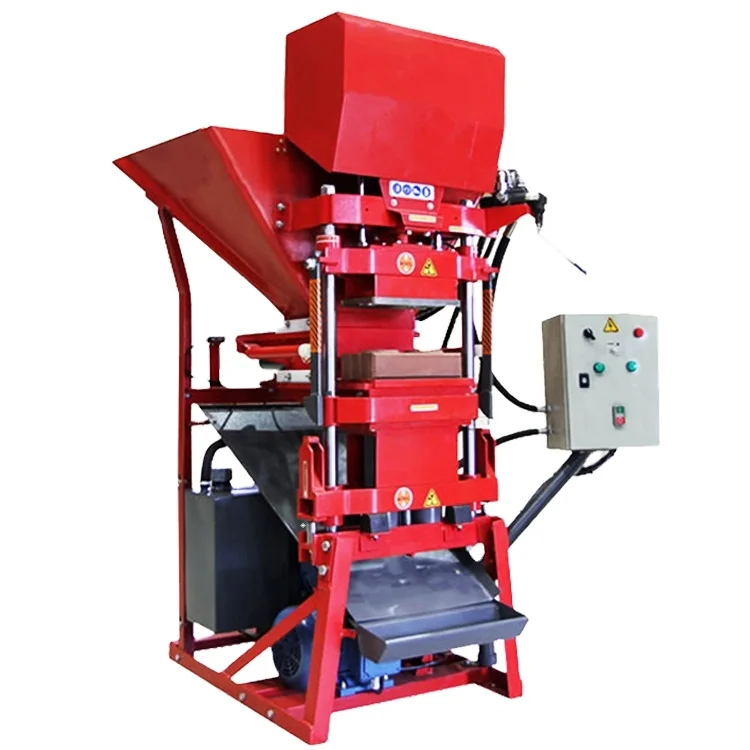
| Interlocking brick production | Local laterite, crushed stone, cement |
| Industrial residue utilisation | Fly ash (up to 70%), slag, gangue mixed with cement and aggregate |
What the QT5-15 Block Machine Specifications Don’t Tell You About Daily Output
Quoted cycle rates mean nothing unless tied to the exact block format you will run.
Sellers frequently advertise a single pieces-per-hour figure and leave buyers to discover, months after commissioning, that the number assumed a small solid brick rather than the hollow block or paver their market actually demands. When the real format enters the hopper, the molding cycle stretches and the shift output drops noticeably [NEED_CITE: honest capacity disclosure standards for block machinery]. A buyer who sized their curing racks, forklift fleet, and delivery schedule around the catalogue headline ends up short every day. The QT5-15 block machine specifications on this page separate each format so the gap between expectation and reality closes before the order is placed.
Capacity Stated Per Block Format, Not a Catalogue Average
When evaluating a concrete interlocking brick machine, how to choose starts with matching the press to the formats your market actually buys. The QT5-15 runs hollow blocks at 5 or 6 pieces per mould depending on the width, solid bricks at 32 per mould, and pavers at 16 to 25 per mould. Each format carries its own cycle window — hollow blocks typically mold within 15–20 seconds while pavers require 20–25 seconds due to denser compaction needs. Quoting a single hourly number erases these differences and misleads the buyer on what a shift will actually deliver.
Mould Selection Against Your Local Market Demand
Block plants succeed or fail based on whether the formats they produce match what local contractors and retailers stock. The QT5-15 accommodates hollow blocks in standard and narrow widths, solid bricks, rectangular and zigzag pavers, and interlocking bricks through quick-change mould replacement. A concrete product manufacturer adding pavers to an existing hollow block line swaps the mould rather than buying a second press. Custom mould design to buyer drawings is available, so the machine produces the exact dimensions your regional market requires rather than a default catalogue size [NEED_CITE: block format demand variations across African and South Asian construction markets].
How Vibration Force and Hydraulic Pressure Shape Block Density
The 80 kN vibration force works together with hydraulic demoulding to compact the mix into a consistent shape before release. Platform vibration distributes energy across the entire pallet area, which matters when the mould cavity is wide — uneven vibration causes one side of the block to be weaker, and cracked blocks at demoulding become the first sign. The independent hydraulic station sits isolated from the main vibration and dust, keeping pressure stable across thousands of cycles. Compressive strength above 15 MPa is achievable when the vibration force, hydraulic pressure, and mix design are aligned to the buyer’s local aggregate rather than a generic test sand.
The Cost of Skipping Format-Specific Capacity Checks
When a buyer orders based on an unqualified output number, the consequences cascade through the whole operation. Curing racks fill slower than planned, delivery trucks wait half-empty, and the contractor on the building site starts sourcing blocks from a competitor. If the pallet size was never checked against the existing forklift and curing area, blocks pile up on the floor and get damaged before they cure. Voltage and PLC language left unconfirmed mean the machine sits idle while an electrician re-wires the panel and the operator struggles with an interface they cannot read [NEED_CITE: commissioning delays caused by unconfirmed voltage and control language]. These are not manufacturing defects — they are specification gaps that a format-specific capacity document would have prevented.
Why Source This Machine Here
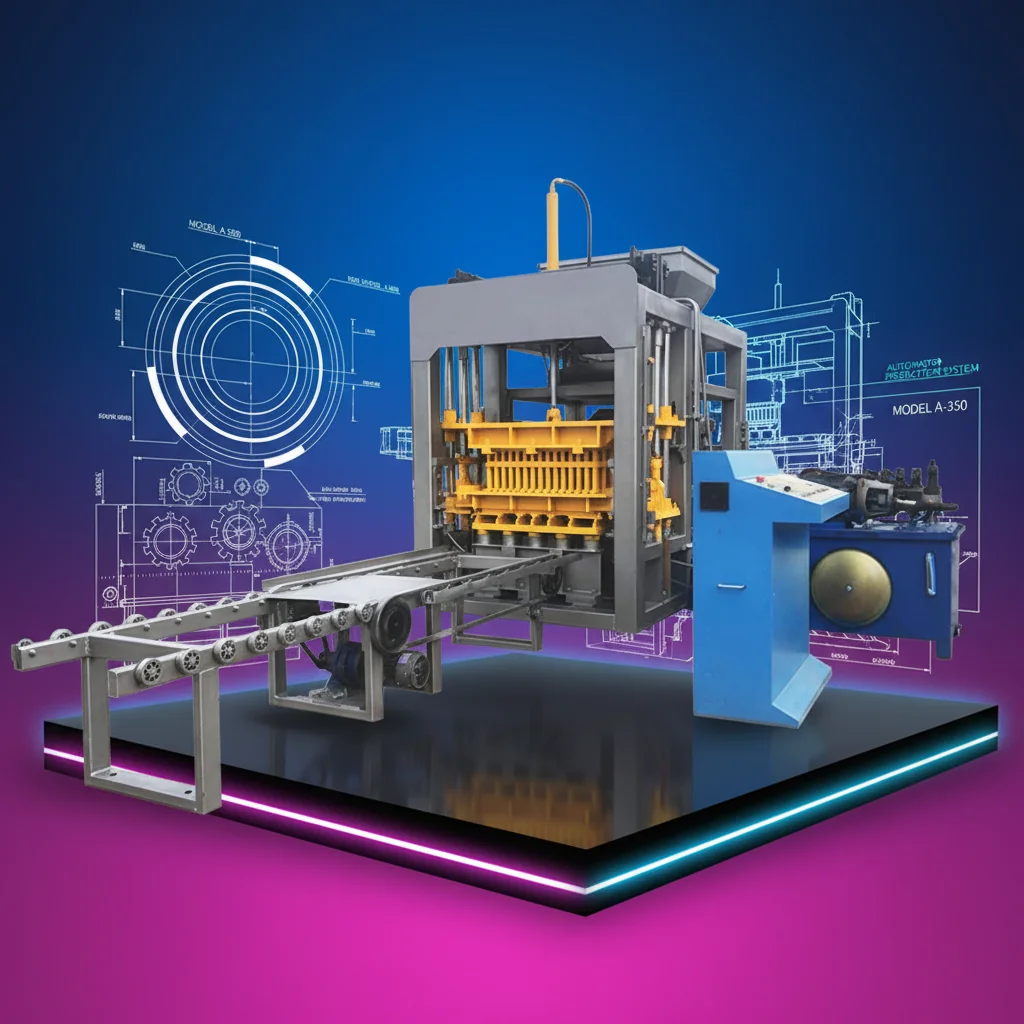
Block machinery is the single production focus, so the QT5-15 press, its moulds, pallets, and handling equipment are specified as one matched system rather than assembled from separate suppliers. The configuration is set against the buyer’s actual mix design, local aggregate, and target block format instead of a catalogue default. Moulds are designed for the formats the buyer’s market sells, including custom drawings when standard sizes do not match. Automation level is selectable, allowing a buyer to start with semi-automatic pallet handling and upgrade later. Installation support includes on-site commissioning and operator training so the crew can run the press confidently from day one.
Documentation & Verification
- Line layout and capacity calculation stating the block format assumed for each output figure
- Mould drawing and format list confirming exact block dimensions to be produced
- Pallet specification matched to buyer’s curing area and forklift capacity
- Voltage, frequency, and PLC display language confirmation before production
- Factory test record on the buyer’s chosen block format before dispatch
- Operation and maintenance manual with wear parts and mould replacement schedule
Installation, Commissioning & Support
- Foundation must support the 5000 kg total mass across the 7400 mm machine length
- 32 kW overall power requires a dedicated circuit matching confirmed voltage and frequency
- PLC touch screen interface language set to operator preference before arrival
- Independent hydraulic station bled and pressure-tested during on-site commissioning
- Quick-change mould replacement demonstrated with operator hands-on training
- Wear parts list provided with recommended reorder intervals based on local aggregate abrasiveness
What to Include in Your Inquiry
Send the exact block formats your market sells, the daily quantity needed per format, and the raw materials you can source locally — including the aggregate type and any industrial residues like fly ash or slag. Confirm your site voltage, frequency, and the language your operators need on the PLC touch screen. If you already have curing racks, forklifts, or a batching plant in place, share their specifications so the pallet size and line layout align with what is already on the ground.
Frequently Asked Questions
Q: How is QT5-15 capacity calculated per block format, and why does cycle time differ?
A: Each format has its own mould cavity count and compaction requirement. Hollow blocks at 400×200×200 mm produce 5 pieces per mould in a 15–20 second cycle, while pavers need 20–25 seconds for denser compaction. The hourly and shift outputs on this page reflect those individual cycle times so buyers can plan around the format they will actually run.
Q: How do I match the mould to my market and can I order custom moulds?
A: Start with the block dimensions your local contractors and retailers demand. The QT5-15 accepts standard moulds for hollow blocks, solid bricks, and pavers. Custom mould design to buyer drawings is available when your market requires non-standard dimensions, and the quick-change system keeps format swaps within the shift rather than consuming it.
Q: What pallet size does the QT5-15 require and how do I verify fit?
A: The pallet size is 1100 × 550 mm. Before ordering, measure your existing curing rack spacing and forklift fork width to confirm compatibility. If the pallets do not match your current handling equipment, blocks end up stacked manually on the floor, slowing curing and increasing breakage before delivery.
Q: How does my local aggregate affect block strength and machine configuration?
A: Laterite, crushed stone, and river sand all behave differently under vibration. The vibration force and hydraulic pressure must be tuned to the specific mix to reach the target compressive strength above 15 MPa. The machine is configured against the buyer’s actual mix design and aggregate sample rather than a generic test material used in catalogue testing.
Q: What is the realistic mould change time and how does it affect daily output?
A: The quick-change mould replacement system allows format swaps without dismantling the entire press. If you run multiple formats in one shift, each change consumes part of the production window, so realistic daily output must account for these intervals. Planning the shift schedule around format batches reduces changeover impact on total yield.