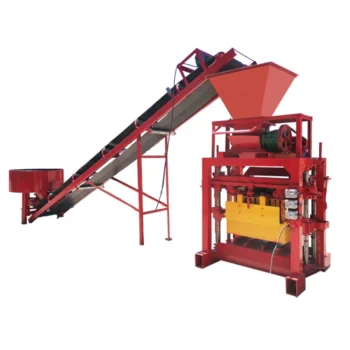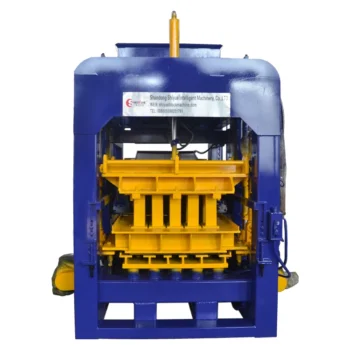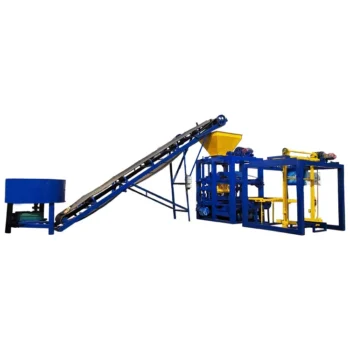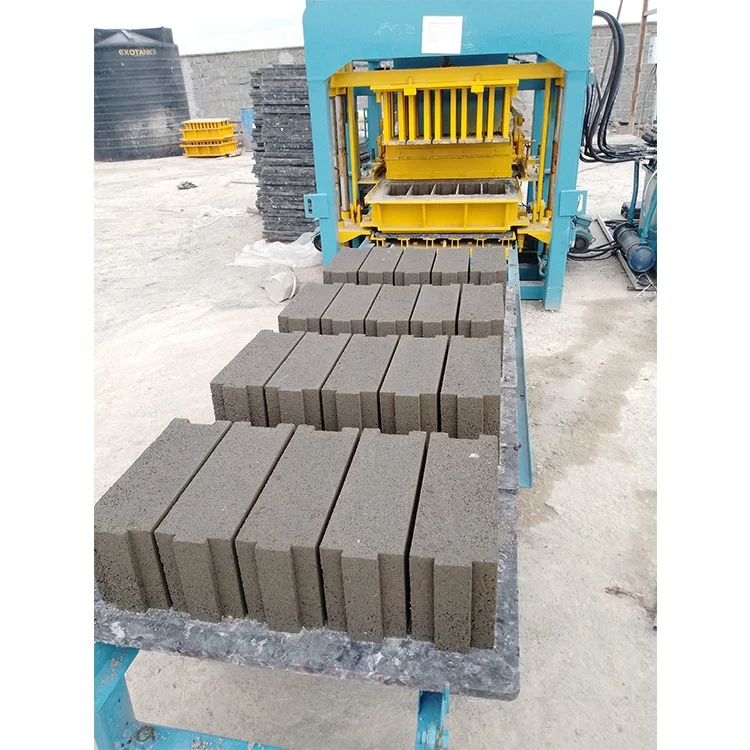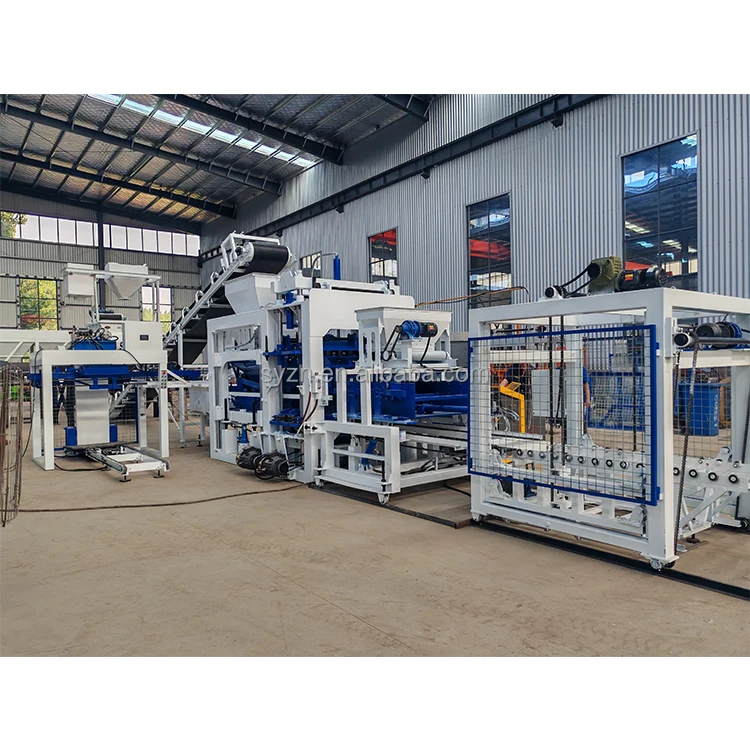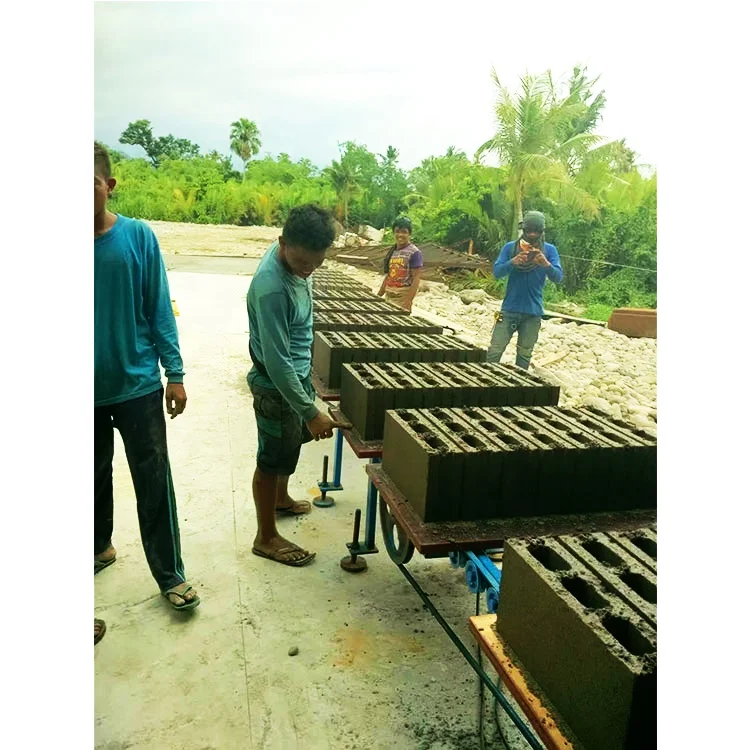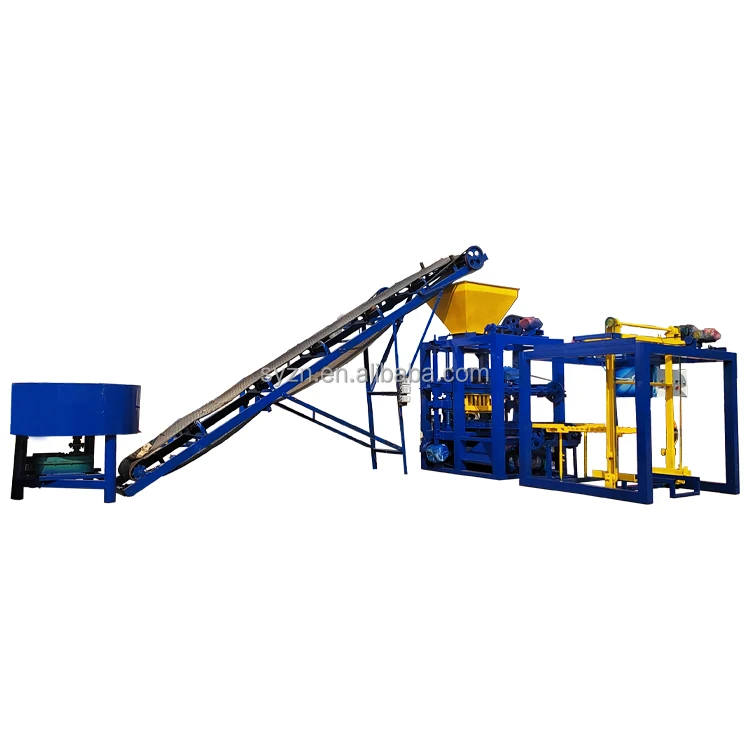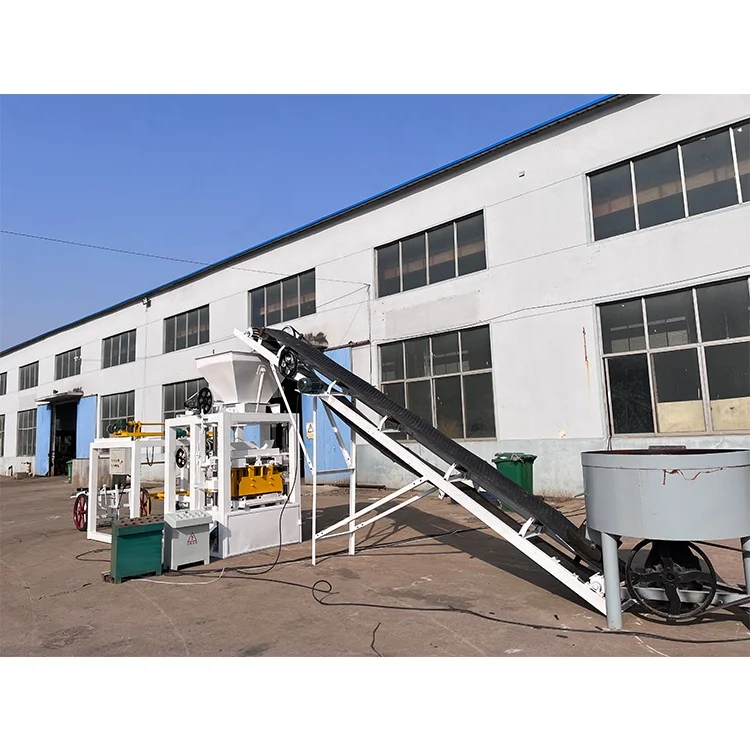
Description
Honest capacity by format — every QT4-24 output figure is tied to a specific block dimension, mould cavity count, and shift length, so your daily target is based on the product you actually sell.
Technical Specifications
| Parameter | Value |
|---|---|
| Model | QT4-24 (QTJ4-24) |
| Product Type | Semi-Automatic Concrete Block Making Machine |
| Overall Dimensions (L×W×H) | 2060 × 1730 × 2580 mm |
| Molding Cycle | 24 s |
| Vibration Frequency | 4200 r/min |
| Vibration Force | 35.5 kN |
| Rated Power | 14.25 kW |
| Mixer Model | JQ350 |
| Pallet Size | 850 × 450 × 20 mm |
| Pallet Material | Fiberglass (wooden pallet optional) |
| Net Weight | 1800 kg |
| Automation Level | Semi-automatic |
| Mould Format | Hollow block / Solid brick / Paver (mould change required) |
| Output Capacity | 480 pcs/h (basis: 390×190×190 mm hollow block, 4 pcs/mould) |
| Output Capacity | 600 pcs/h (basis: 400×150×200 mm hollow block, 5 pcs/mould) |
| Output Capacity | 2100 pcs/h (basis: 240×115×53 mm solid brick, 18 pcs/mould) |
| Daily Output (8 h) | 3800 pcs (390×190×190 mm) / 4800 pcs (400×150×200 mm) / 17000 pcs (240×115×53 mm) |
| Raw Materials | Crushed stone, sand, cement, dust, fly ash |
| Stacking Method | Manual (pallet + trolley) |
| Container Loading | Nude packing in 20GP, approx. 500 pcs pallets loaded |
| Standards | CE |
Application Suitability
| Application | Material or Output |
|---|---|
| Hollow block production for wall construction | Crushed stone, sand, cement — 390×190×190 mm or 400×150×200 mm formats |
| Solid brick production for infill and partition walls | Sand, cement, fly ash — 240×115×53 mm format |
| Paving block production for landscaping and walkways | Crushed stone, sand, cement — format depends on mould selected |
| On-site construction block production | Local aggregate and cement, semi-automatic operation for limited-space sites |
| First block plant for entrepreneurs | Low-investment semi-automatic line with future automation upgrade path |
What "480 Pieces per Hour" Leaves Out About QT4-24 Block Machine Specifications
The number only applies to one specific block format — and it probably is not the one your market buys most.
When I first started visiting block plants in Latin America, I kept seeing the same problem: buyers had chosen a QT4-24 block machine based on a headline capacity figure, only to discover that number assumed a mould they rarely used. The 480 pcs/h rating for the QT4-24 is based on a 390×190×190 mm hollow block with 4 cavities per mould. If your local demand runs toward the 400×150×200 mm format with 5 cavities, your realistic output sits at 600 pcs/h. Switch to 240×115×53 mm solid bricks with 18 cavities and the figure jumps to 2100 pcs/h. These are not optional extras — they are fundamentally different production scenarios [NEED_CITE: block format demand varies by regional construction code].
A buyer who does not match the machine to the format they actually sell ends up planning a plant around a number that never materializes on the curing yard.
How the Mould Decides Your Real Daily Output
The QT4-24 semi-automatic block machine runs a 24-second molding cycle across all formats. That cycle time is fixed by the machine’s vibration and compression sequence, so what changes your throughput is the number of blocks per mould. Four cavities for 8-inch hollow blocks, five for an alternative hollow format, eighteen for standard solid bricks. Before committing to a production target, ask for a capacity calculation that states the assumed block format, cavity count, and shift hours.
The QT4-24 block machine specifications only become meaningful when paired with the mould you will actually run eight hours a day. A machine quoted with a single headline figure hides the format mismatch that causes the most disappointment at commissioning [NEED_CITE: common causes of block plant output shortfall].
Matching Vibration Force to Your Local Aggregate
The QT4-24 delivers 35.5 kN of vibration force at 4200 r/min through a bed mould vertical vibration combined with upper mould compression vibration. This dual-vibration approach produces blocks with more uniform density across the height of the mould. But vibration force does not work in isolation — it must be matched to the mix design and the local aggregate available at your site.
I have seen machines arrive in regions where the sand carries a high clay content, and the standard vibration settings could not compact the mix properly. Blocks came out with weak edges and inconsistent weight. The fix was not more vibration — it was adjusting the mix ratio and confirming the QT4-24 block machine specifications against a sample of the actual material the buyer would feed into the JQ350 mixer. That confirmation step takes time before the order, but it prevents weeks of wasted material after arrival [NEED_CITE: effect of aggregate clay content on block compressive strength].
Why Pallet Size Matters More Than You Think
The QT4-24 uses an 850 × 450 × 20 mm pallet, available in fiberglass with wooden pallets as an option. This dimension is not arbitrary — it determines how many pallets fit in your curing area, whether your existing forklift can handle the loaded pallet weight, and how many blocks cure per square meter of yard space. A pallet chosen without regard to the curing layout forces the buyer into manual rehandling or requires a forklift upgrade they did not budget for.
Confirm pallet material and load rating against your curing conditions before production starts. Fiberglass pallets resist moisture warping in humid climates, while wooden pallets suit drier environments where cost is the primary concern.
What Happens When Format and Capacity Are Left Unmatched
The consequences show up gradually. A plant planned around a single capacity number starts missing delivery commitments. The owner adds overtime shifts to compensate, increasing labour cost without addressing the root cause. Mould changes between formats consume part of the shift because the semi-automatic configuration requires manual pallet handling and trolley movement. Over time, the buyer concludes the machine is underpowered, when in fact the mismatch was in the specification stage. Honest QT4-24 block machine specifications — stated per format, per mould, per shift — prevent this cycle entirely [NEED_CITE: block plant operational losses from specification mismatch].
Why Buyers Source the QT4-24 Through This Configuration Approach
The QT4-24 is specified as a matched system — machine, mould, pallet, and handling equipment are selected together against the buyer’s actual block format and local raw material. Mould design covers the formats the buyer’s market demands, including custom drawings for non-standard dimensions. The semi-automatic configuration keeps the initial investment accessible while preserving a path to higher automation as production volume grows. Voltage, frequency, and control display language are confirmed before production begins, not discovered during commissioning. Factory testing runs the exact mould and mix design the buyer will use, so the test record reflects real conditions rather than catalogue defaults.
Documentation & Verification
- Line layout and capacity calculation stating the block format assumed for every output figure
- Mould drawing and format list confirming cavity count, block dimensions, and cycle time per format
- Pallet specification sheet covering material, dimensions, and load rating matched to your curing area
- Voltage, frequency, and control language confirmation document signed before production
- Factory test record run on your selected mould and mix design before dispatch
- Operation and maintenance manual with wear parts list and mould replacement schedule
Installation, Commissioning & Support
- Foundation plan sized to the QT4-24 footprint of 2060 × 1730 mm with vibration isolation requirements
- Electrical supply matching the 14.25 kW rated power with dedicated circuit breaker specification
- Machine arrives in nude packing inside a 20GP container with pallets loaded separately
- On-site commissioning includes vibration force adjustment to your confirmed mix design
- Operator training covers mould change procedure and manual pallet handling workflow
- Wear parts list with recommended replacement intervals for vibration components and mould surfaces
Before You Request a Quote
To configure the QT4-24 for your plant, share the block format your local market purchases most, your target daily output based on an 8-hour shift, and a sample or description of your available aggregate and sand. Include your site voltage and frequency, the control display language your operators need, and the dimensions of your existing curing area and forklift capacity so the pallet specification aligns with your handling setup.
Frequently Asked Questions
Q: How is the output capacity of the QT4-24 verified, and which block format is each figure based on?
A: Every capacity figure is tied to a specific block dimension and mould cavity count. The 480 pcs/h rating assumes a 390×190×190 mm hollow block with 4 cavities, the 600 pcs/h rating assumes a 400×150×200 mm hollow block with 5 cavities, and the 2100 pcs/h rating assumes a 240×115×53 mm solid brick with 18 cavities, all based on a 24-second molding cycle.
Q: How do I match the pallet size and material to my existing curing area and forklift?
A: The QT4-24 uses an 850 × 450 × 20 mm pallet in fiberglass or optional wood. Provide your curing yard dimensions and forklift load rating so the pallet material and load specification are confirmed against your actual handling equipment and yard layout before production begins.
Q: What is the realistic mould change time on this semi-automatic machine?
A: The QT4-24 is configured for mould changes between hollow block, solid brick, and paver formats. Mould change time depends on operator familiarity and whether the change is planned or ad-hoc. Request the documented procedure and expected duration for your specific format combination so you can plan shift scheduling around format transitions.
Q: Which raw material mix works with the QT4-24 vibration force and how is it confirmed?
A: The 35.5 kN vibration force at 4200 r/min must be matched to your local aggregate and mix design. Send a sample of your sand and crushed stone so the mix ratio is tested and the vibration parameters are adjusted before the machine ships, preventing weak blocks caused by untested material assumptions.
Q: What voltage, frequency, and control language options are available for the QT4-24?
A: Voltage and frequency are configured to your site supply and confirmed in writing before production. The control display language is specified at the order stage so operators can read the interface from day one, avoiding commissioning delays caused by language mismatches discovered after arrival.