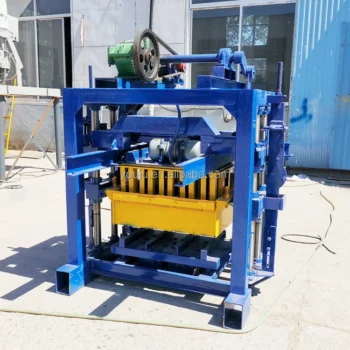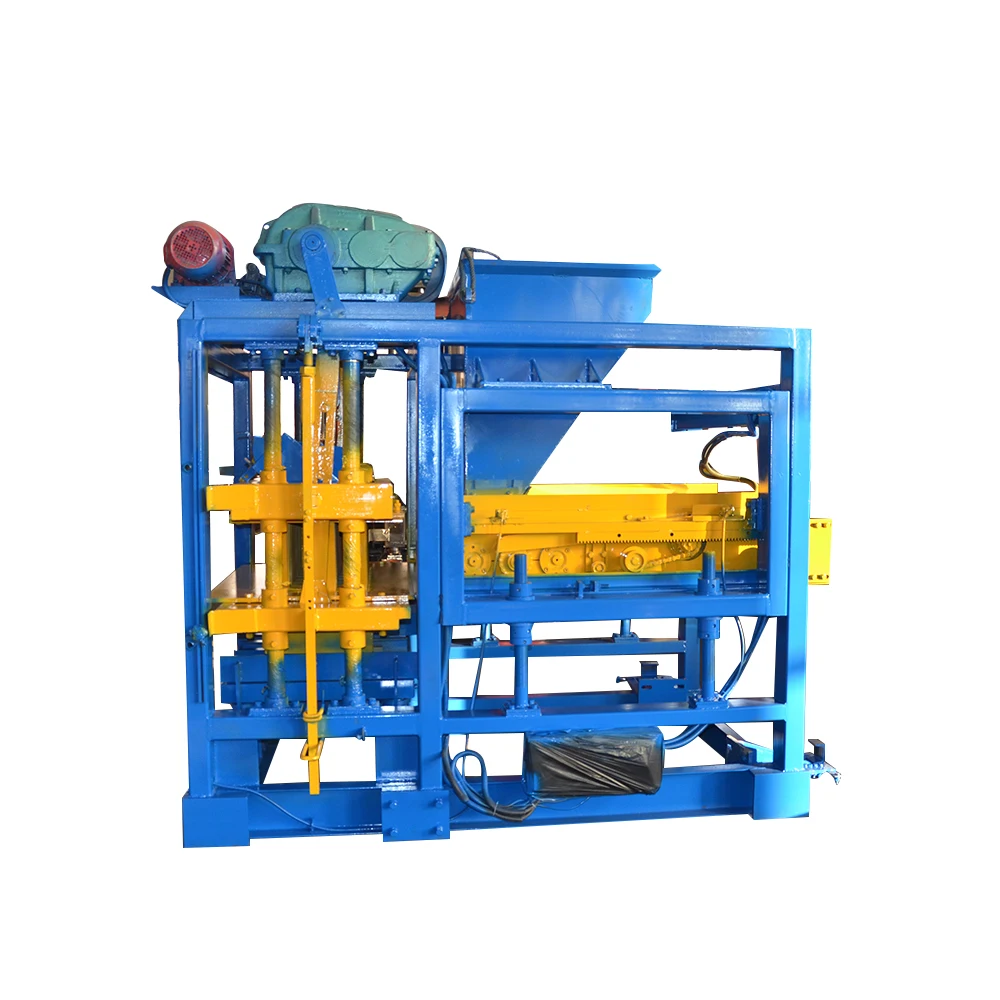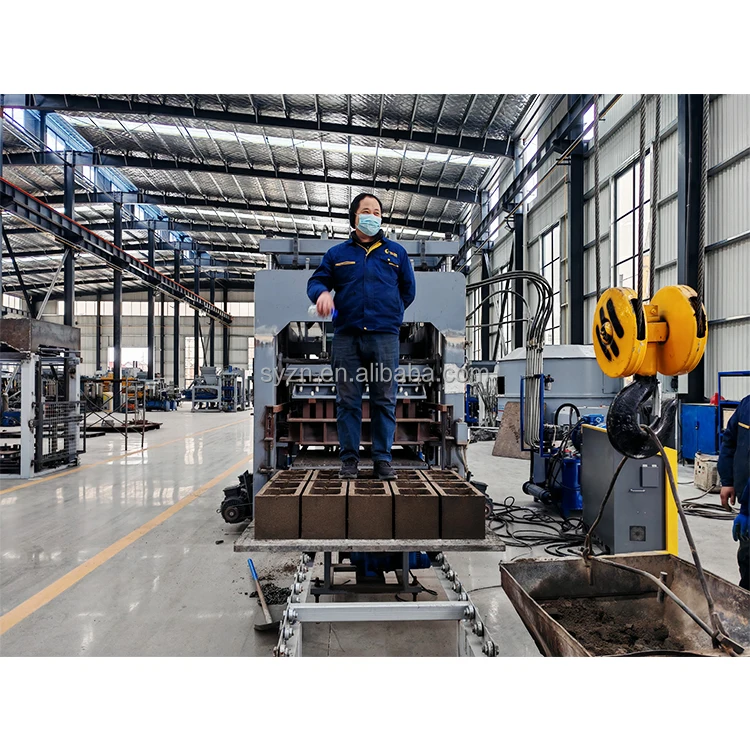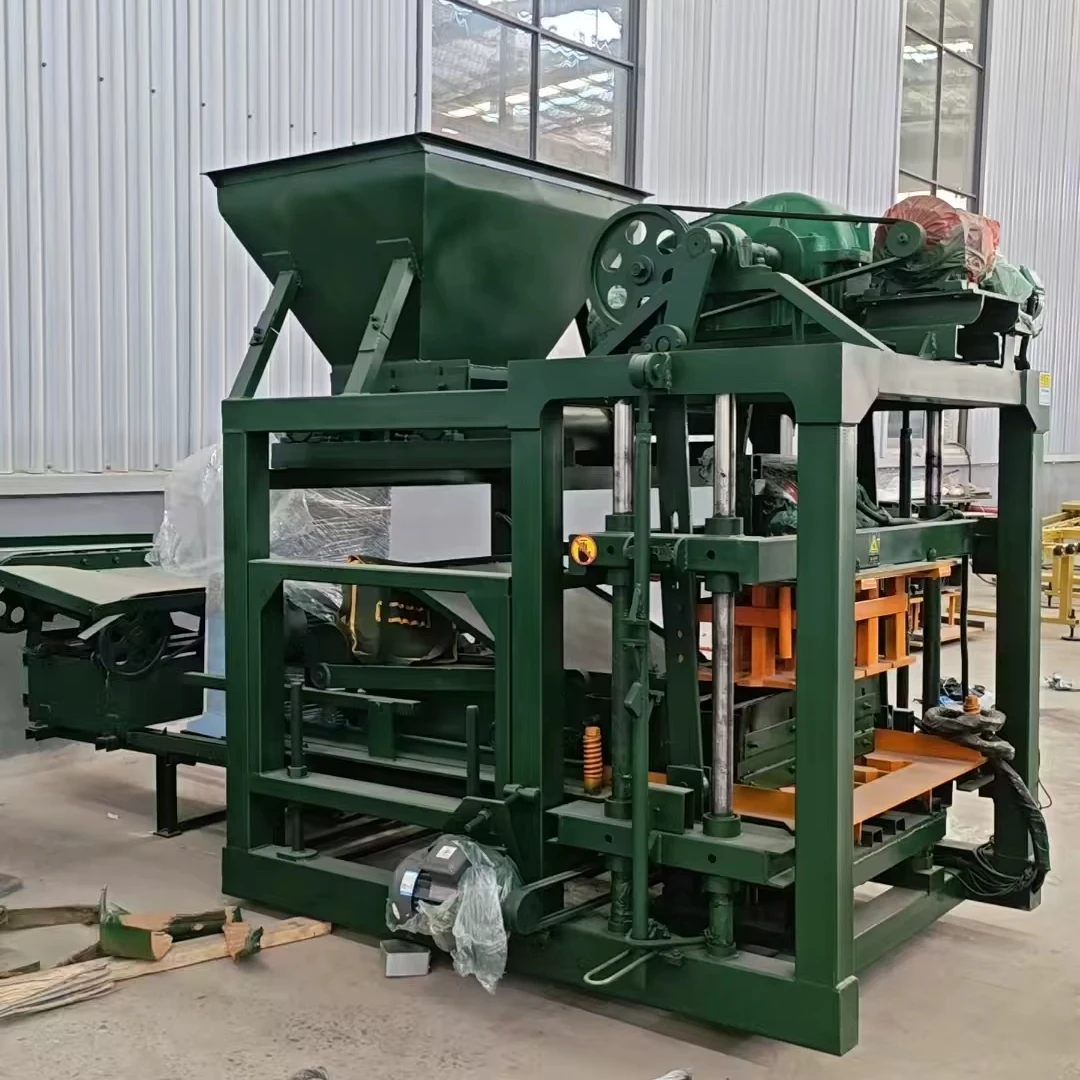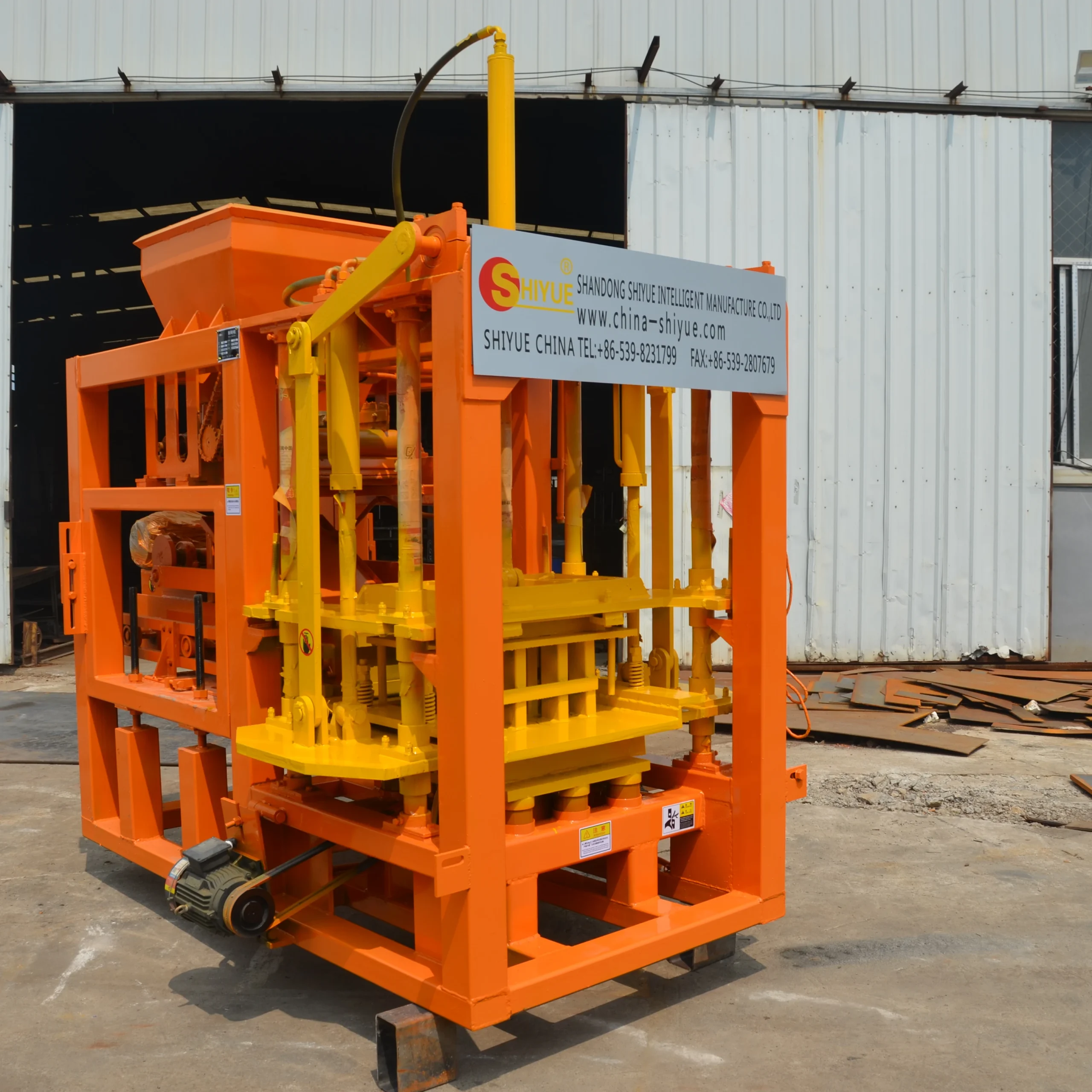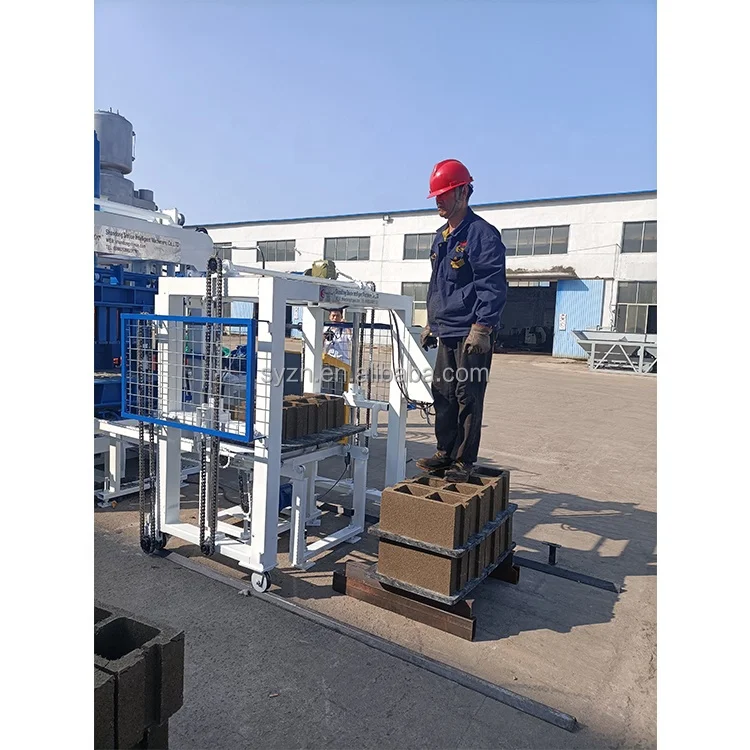
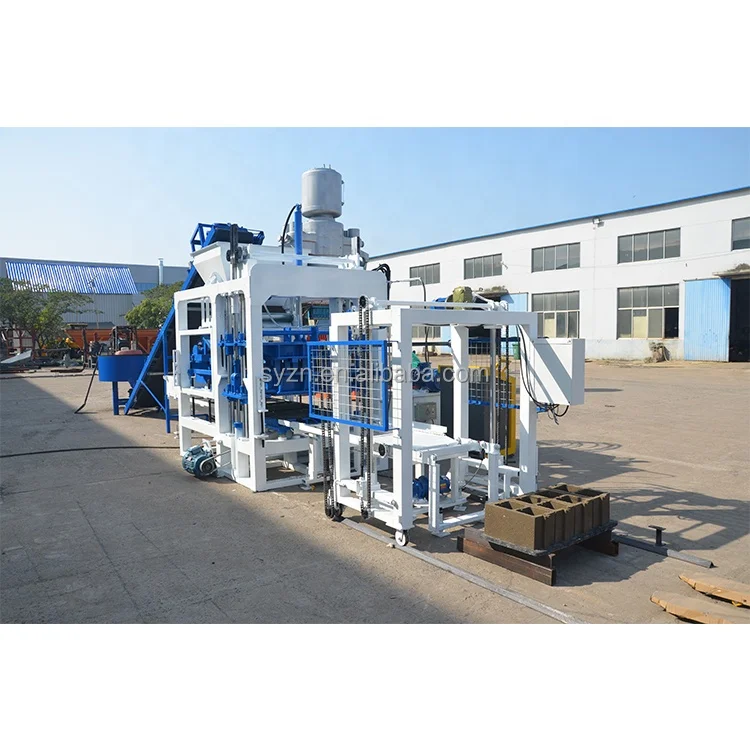
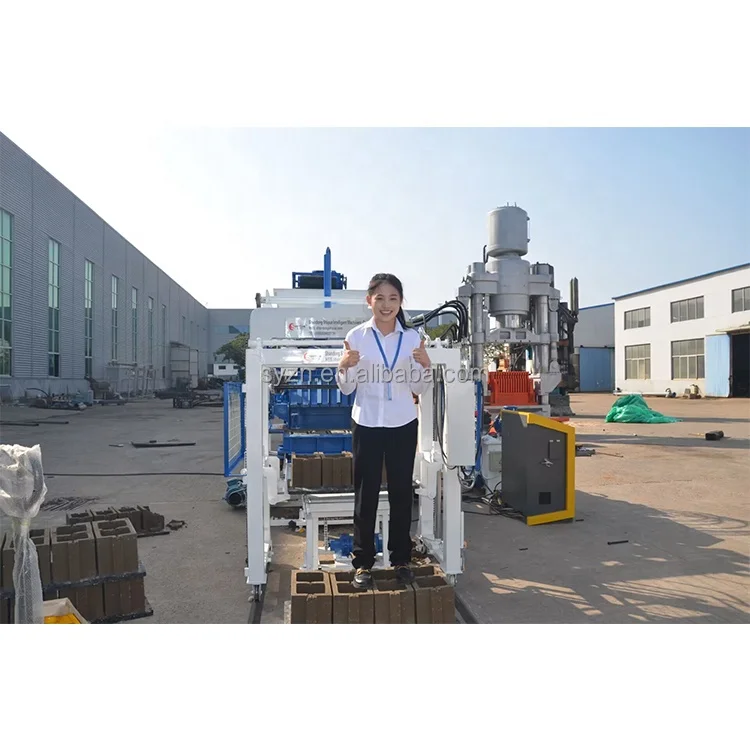
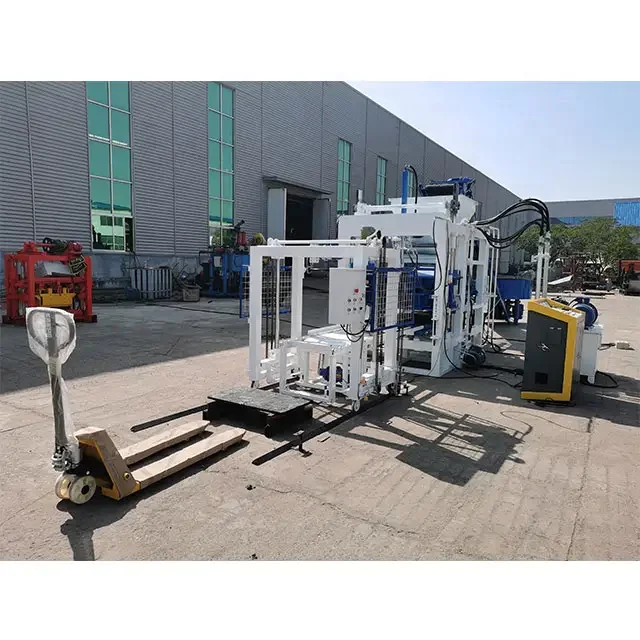
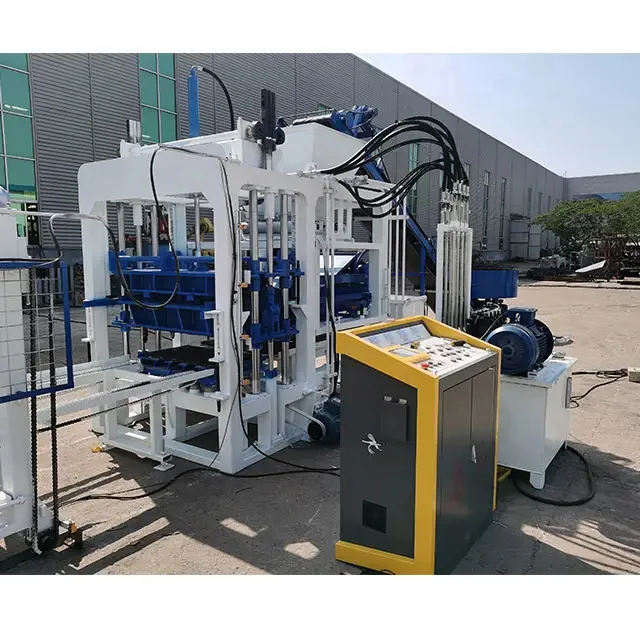
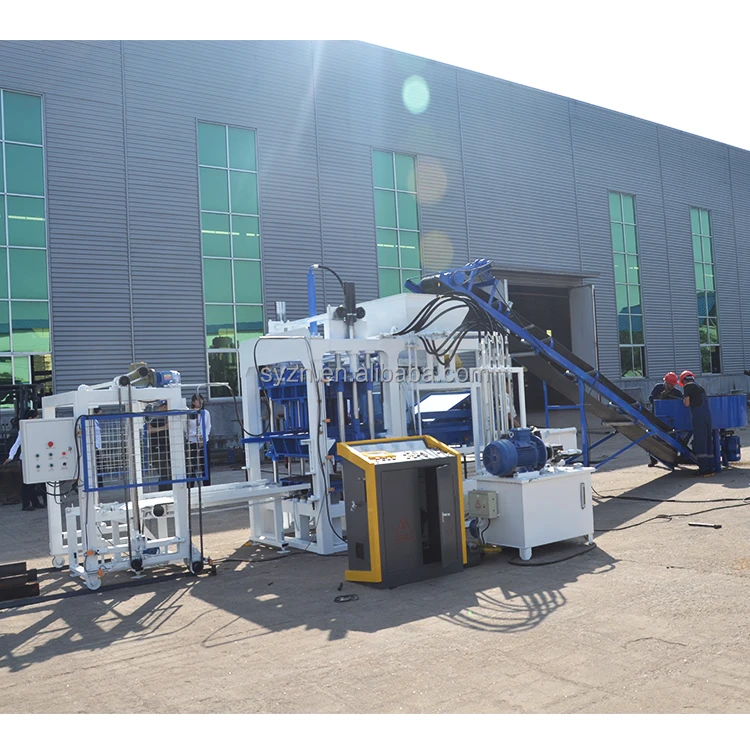
Description
Honest capacity by format — we specify the QT4-18 block making machine against your actual target block, local aggregate and curing layout, so the output you plan for is the output you run.
Technical Specifications
| Parameter | Value |
|---|---|
| Model | QT4-18 |
| Product Type | Hydraulic Vibration Concrete Block Making Machine |
| Overall Dimensions | 3900 × 1600 × 2300 mm |
| Net Weight | 3 T |
| Molding Cycle | 15–25 s |
| Vibration Force (Exciting Power) | 40–50 kN |
| Rated Power | 24 kW |
| Mixer Model | JQ350 |
| Pallet Size | 850 × 550 × 25 mm |
| Hydraulic Station | High-pressure hydraulic station equipped |
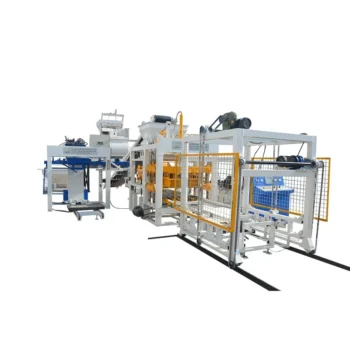
| Automation Level | Semi-automatic (automatic stacker included in line) |
| Output Capacity (400×200×200 mm hollow block) | 1200–1680 pcs/hr · 9600–13440 pcs/8 hr |
| Output Capacity (400×150×200 mm hollow block) | 1800–2400 pcs/hr · 14400–19200 pcs/8 hr |
| Output Capacity (240×115×53 mm solid brick) | 3240 pcs/hr · 16200–19440 pcs/8 hr |
| Pcs/Mould (400×200×200 mm hollow) | 4 pcs/mould |
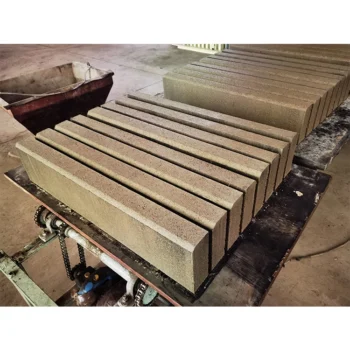
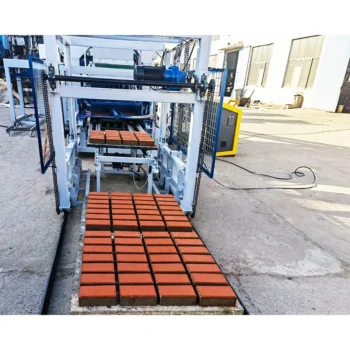
| Applied Products | Paver, solid block, hollow block, curbstone |
| Raw Materials | Crushed stone, sand, cement, fly ash, stone dust |
| Mould Change | Supported — change mould to switch formats |
| Control System | Basis not stated in source — confirm PLC brand and language |
| Voltage & Frequency | Basis not stated in source — confirm with manufacturer |
Application Suitability
| Application | Material or Output |
|---|---|
| Hollow block production (400×200×200 mm, 400×150×200 mm and other sizes) | Crushed stone, sand, cement, fly ash, stone dust |
| Solid brick production (240×115×53 mm) | Cement, sand, fine aggregate |
| Paver and curbstone production | Cement, stone dust, crushed stone, pigment |
| Small-to-medium block plant startup | First-plant entrepreneurs sizing capacity per format |
| On-site production for construction contractors | Job-site block making with semi-automatic handling |
| Format expansion for existing concrete product manufacturers | Additional hollow, solid or paver formats on one press |
What "15–25 Second Cycle" Actually Means for Your Shift
The QT4-18 block making machine specifications only hold when the cycle time is matched to a specific block format and mix design.
Catalogue sheets often quote a single cycle time or a single hourly number without stating which block size or mould configuration produced it. On site, a thicker-walled hollow block requires a longer vibration phase and a different hydraulic pressure profile than a solid brick. If your operator runs the QT4-18 at a default cycle that does not suit the block you sell, density drops and rejection rates climb — sometimes only surfacing after the first full curing cycle. That is why the output figures above are tied to specific block dimensions: 400×200×200 mm hollow, 400×150×200 mm hollow, and 240×115×53 mm solid brick, each producing different pieces per mould and per hour [NEED_CITE: block format impact on cycle time and daily output].
Mould-Format Output Instead of a Single Catalogue Number
The QT4-18 block making machine is quoted with distinct production rates for each block format it runs. A 400×200×200 mm hollow block yields 4 pieces per mould and 9600–13440 pieces across an 8-hour shift. The smaller 400×150×200 mm hollow block produces 14400–19200 pieces per 8-hour shift under the same cycle range. Solid brick at 240×115×53 mm reaches 16200–19440 pieces in that window. These are not optimistic upper bounds — they are calculated from the 15–25 second moulding cycle and the number of cavities per mould for each format.
Matching the Vibration Force to Your Aggregate
The 40–50 kN vibration force on the QT4-18 is generated by a bed mould vertical vibration system combined with upper mould compression vibration. This dual approach consolidates the mix from both directions, which matters when your local aggregate is lighter volcanic ash or heavier river gravel. I once worked on a project in Peru where a machine with a fixed-frequency vibrator could not compact volcanic pumice aggregate properly — the blocks came out under-dense and an entire batch was scrapped. The vibration force must be tuned to the specific weight and particle shape of the material you actually source locally, not a generic setting [NEED_CITE: vibration frequency tuning for lightweight aggregate block production].
Reading the Specs That Matter Beyond the Brochure
The 850 × 550 × 25 mm pallet size determines how many blocks fit per cycle and how your curing yard is laid out. If your forklift is rated for a smaller pallet, or your curing racks are built to a different dimension, the mismatch delays handling and creates breakage during transport. The 24 kW rated power tells you the electrical load to plan for — confirm your site voltage and frequency before the machine enters production, because rewiring a hydraulic station after arrival adds weeks to commissioning. The high-pressure hydraulic station drives the press force and mould clamping; consistent hydraulic pressure across every stroke is what keeps block density uniform from the first piece to the last of a shift. Semi-automatic operation means pallet feeding and product removal involve manual steps, while the included automatic stacker reduces the labour needed at the end of the line. Mould change is supported, but the time it takes on site depends on how well the bolts, guides and hydraulic connections are standardised across your format set [NEED_CITE: hydraulic pressure stability and block density consistency].
The Hidden Cost of Skipping Format-Level Configuration
When a block machine arrives configured for a mix design the buyer cannot source locally, the first weeks of production become a costly experiment. Operators adjust water ratios, swap sand grades and change vibration times without a stable baseline. Block strength varies from batch to batch, and the market rejects the inconsistency. I have seen plants run for months before someone realised the machine was set up for a crusher dust ratio that local quarries simply do not supply. The QT4-18 block making machine should be specified against your confirmed raw material profile, not a catalogue default [NEED_CITE: mix design mismatch consequences in block production].
Why Source This Machine Here
The QT4-18 is configured around the block format your market actually buys, with capacity stated per format rather than buried in a single brochure figure. Machine, mould, pallet and handling equipment are specified as one matched system — the 850 × 550 × 25 mm pallet and the automatic stacker are sized to the press output so the line does not bottleneck at the curing end. Mould design covers the formats you need, including custom drawings if your market demands a non-standard block or paver. The automation level is selectable: you can start with the semi-automatic QT4-18 and add automatic pallet feeding or cubing as your volume grows. Installation support includes operator training so your crew understands mould change procedure and cycle adjustment from day one.
Documentation & Verification
- Line layout and capacity calculation stating the block format assumed for each output figure
- Mould drawing and format list confirming which block sizes your quotation covers
- Pallet specification sheet matching 850 × 550 × 25 mm size, material and quantity to your curing area
- Voltage, frequency and PLC display language confirmed in writing before production begins
- Factory test record on your target block format before dispatch
- Operation and maintenance manual with hydraulic and electrical schematics
Installation, Commissioning & Support
- Site foundation must accommodate the QT4-18 footprint of 3900 × 1600 mm plus pallet circulation space
- Dedicated electrical circuit rated for 24 kW load with voltage and frequency confirmed before wiring
- Machine shipped in dismantled modules for container loading — reassembly sequence covered in manual
- First-run commissioning includes cycle time calibration for your specific block format and mix
- Operator training covers mould change procedure and vibration force adjustment on the QT4-18
- Wear parts list identifies hydraulic seals and vibration components for your first reorder cycle
What to Prepare Before Your Inquiry
To size the QT4-18 correctly for your operation, share the block formats you intend to sell, the raw materials available at your local quarries, and your target daily output per format. Include your site voltage and frequency, the dimensions of your curing area, and the forklift or handling equipment you already have on site. If you are adding this machine to an existing line, describe your current mixer and material feeding setup so the QT4-18 block making machine specifications align with the rest of your plant.
Frequently Asked Questions
Q: How is QT4-18 output verified per block format, and what is the cycle time for my specific block?
A: The output figures published here are calculated from the 15–25 second moulding cycle and the cavity count for each format. Your actual cycle time depends on the block wall thickness, mix design and target strength. We confirm the cycle time and shift output for your specific block during the configuration stage, and validate it during the factory test before shipment.
Q: Which mould formats are available for the QT4-18, and how long does a mould change take?
A: The QT4-18 supports hollow block, solid brick, paver and curbstone moulds, with custom designs available to buyer drawings. Mould change involves removing the bolt set, lifting the current mould, seating the new one and reconnecting vibration and hydraulic links. Change time varies with format complexity and operator familiarity, and we cover the procedure during on-site training.
Q: How is the machine configured to my local aggregate rather than a catalogue default?
A: Before production begins, we review your local raw material profile — aggregate type, particle size, cement grade and available additives. Vibration force, hydraulic pressure and cycle timing are then adjusted to match. The factory test runs your confirmed mix design, so the QT4-18 block making machine arrives pre-tuned to the materials you can actually source.
Q: What pallet size and material should I choose for my curing setup?
A: The standard 850 × 550 × 25 mm pallet fits the QT4-18 mould area. Material choice — bamboo, PVC or steel — depends on your curing environment humidity, expected pallet lifespan and the forklift capacity in your yard. We confirm pallet specification alongside the machine order so handling and curing are planned together.
Q: Which voltage, frequency and control language options are confirmed before shipment?
A: Voltage and frequency must match your site supply to avoid rewiring after arrival. PLC display language is confirmed during the order process so operators can read fault codes and cycle settings in their working language. All three are documented in writing before the QT4-18 enters production.