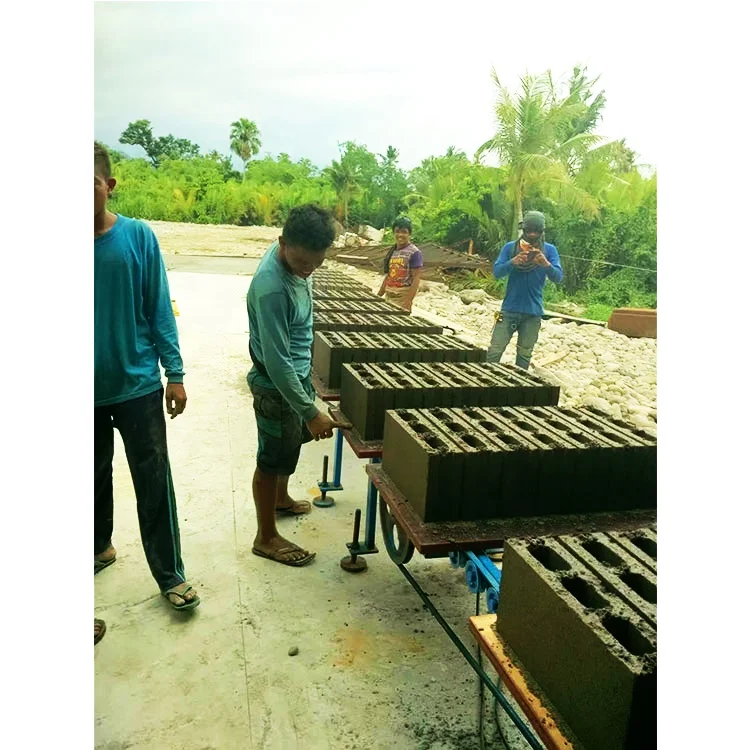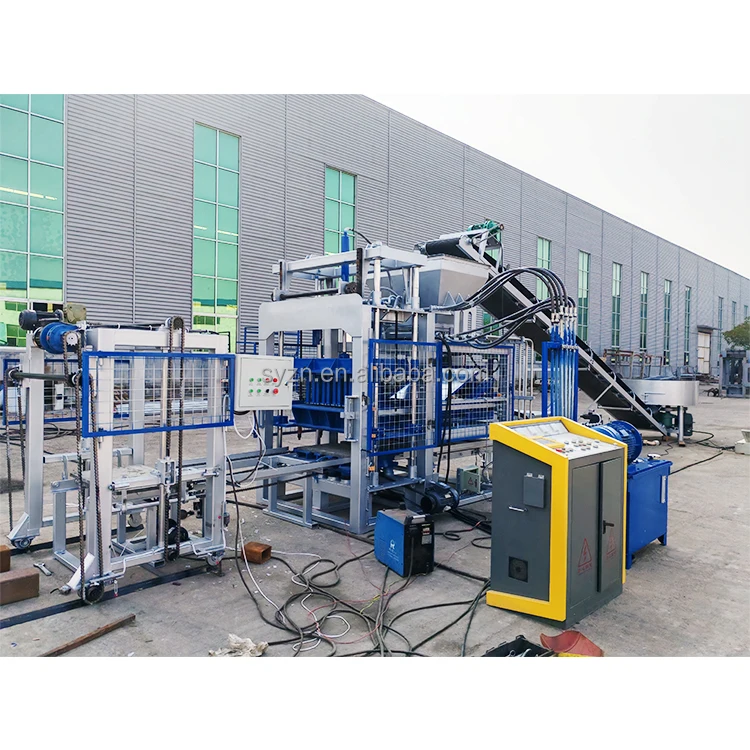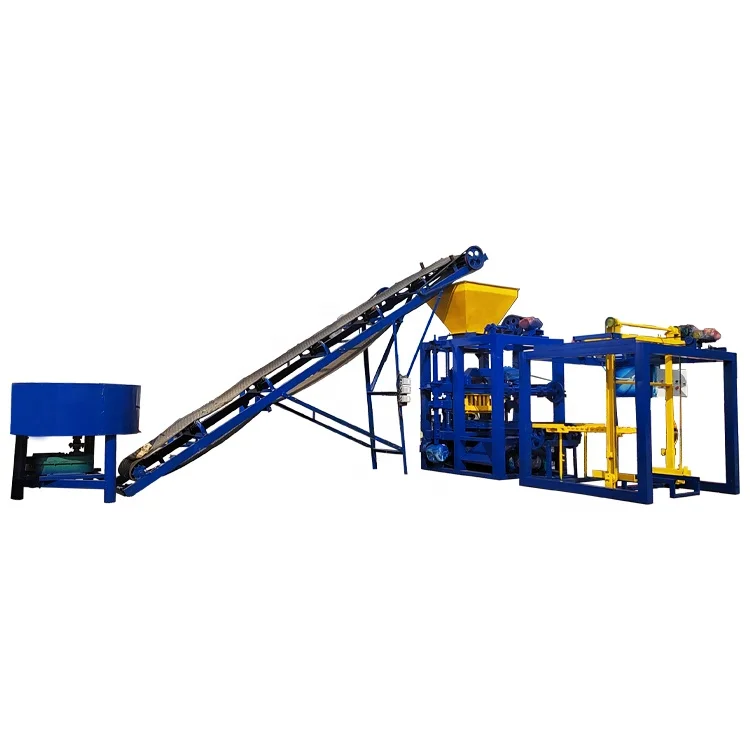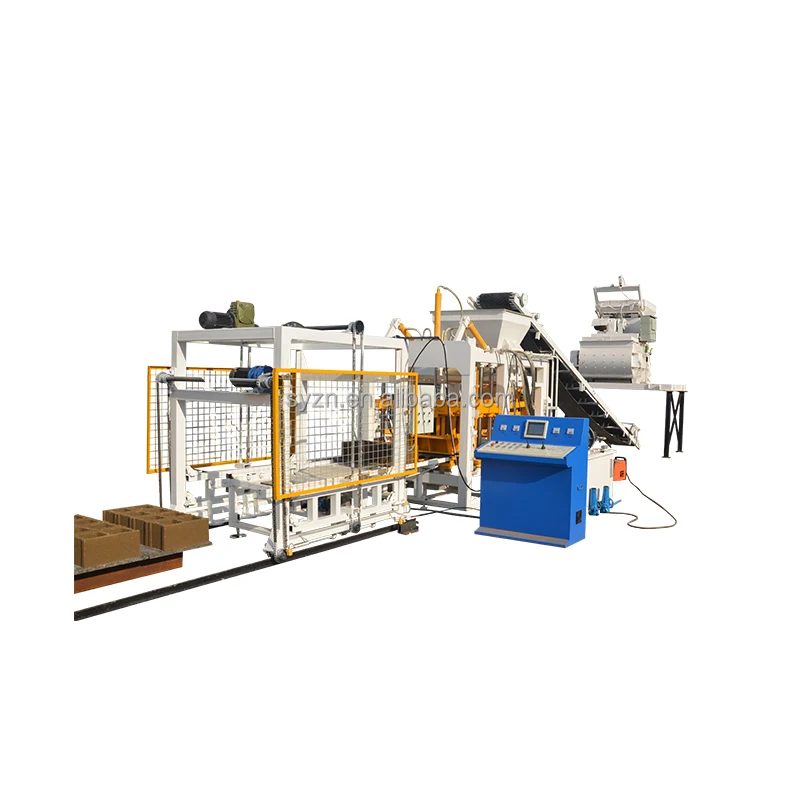


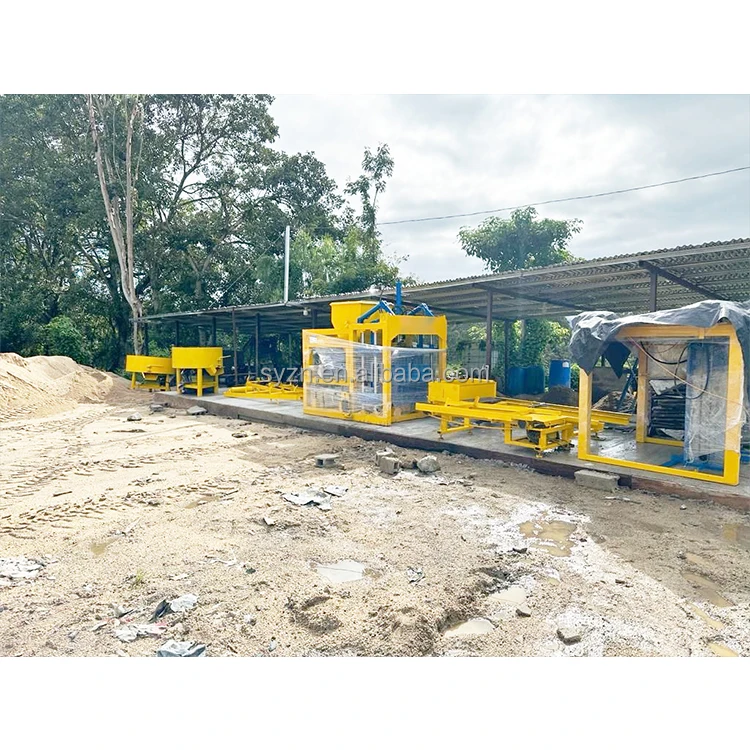

Description
Matched system configuration — every QT4-15A line ships with mould, pallet, and handling sized to your target block format and local aggregate, not pulled from a catalogue default.
Technical Specifications
| Parameter | Value |
|---|---|
| Model | QT4-15A |
| Product Type | Fully Automatic Hydraulic Block Making Machine |
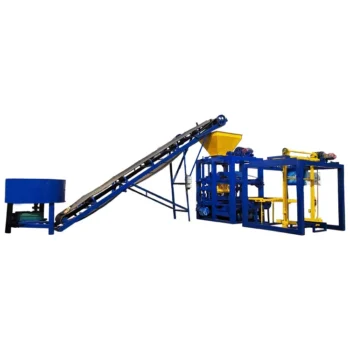
| Overall Dimensions (L×W×H) | 7100×1600×2610 mm |
| Molding Cycle | 15-25 s |
| Vibration Frequency | 4600 r/min |
| Vibration Force (Exciting Power) | 40-50 KN |
| Total Power | 18.45 kW |
| Mixer Model | JQ350 |
| Pallet Size | 850×550×25 mm |
| Total Weight | 3 T |
| Control System | PLC control system |
| Hydraulic Station | Included |
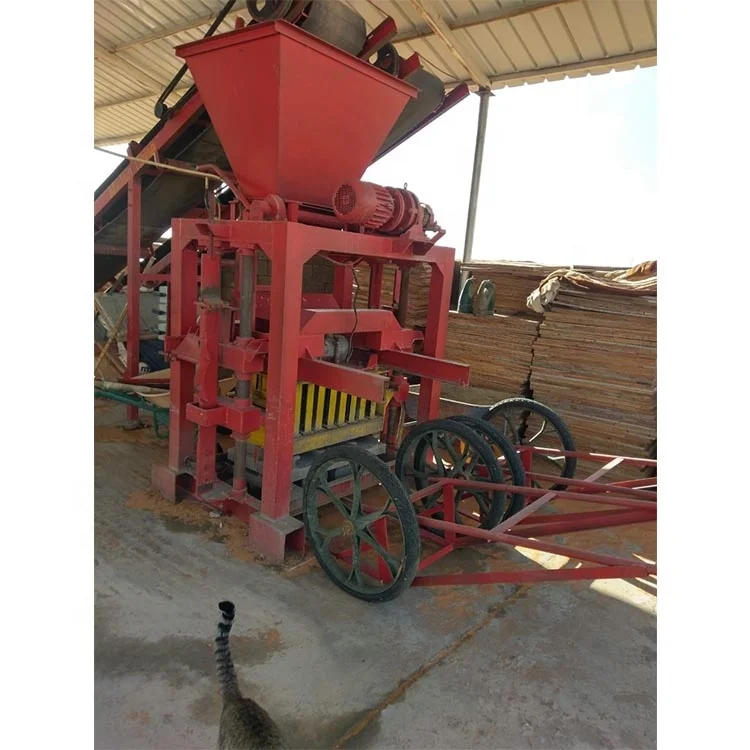
| Included Equipment | Block making machine, hydraulic station, PLC control system, pallet feeder, brick conveyor, block sweeper |
| Free Spare Parts | Manual hydraulic trolley, spare parts and tools |
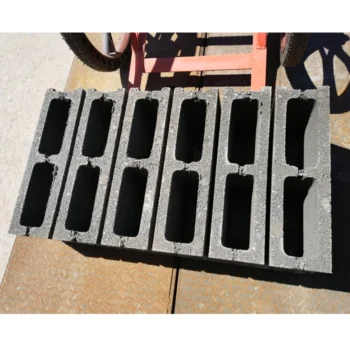
| Output Capacity (400×200×200 mm hollow block) | 408 pcs/hr, 3264 pcs/8hr |
| Output Capacity (400×150×200 mm hollow block) | 510 pcs/hr, 4080 pcs/8hr |
| Output Capacity (240×115×53 mm solid brick) | 2100 pcs/hr, 17000 pcs/8hr |
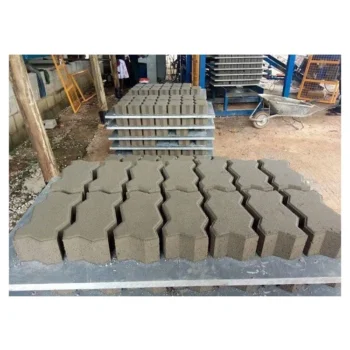
| Applied Products | Paver, solid block, hollow block, curbstone |
| Raw Materials | Crushed stones, sand, cement, dust, fly ash |
| Automation Level | Fully automatic |
| Mould Change | Supported across formats |
| Voltage & Frequency | (basis not stated in source — confirm before production) |
| PLC Display Language | (basis not stated in source — confirm before production) |
| Hydraulic Pressure | (basis not stated in source — confirm block format and mix) |
| Mould Change Time | (basis not stated in source — confirm with supplier) |
| Standards | CE (certificate availability to be confirmed per order) |
Application Suitability
| Application | Material or Output |
|---|---|
| Hollow block production for wall construction | Crushed stone, sand, cement, fly ash — 400×200×200 mm or 400×150×200 mm formats |
| Solid brick manufacturing for load-bearing structures | Cement, sand, dust — 240×115×53 mm format |
| Paver production for walkways and parking areas | Crushed stones, sand, cement with pigment options |
| Curbstone forming for road and drainage edging | High-density concrete mix with coarse aggregate |
| On-site block production for housing projects | Locally sourced sand and cement, semi-processed aggregate |
What "Pieces per Hour" Leaves Out About Block Machine Capacity
A cycle time means nothing until you know which block format and mould size it was measured on.
I have watched contractors in the Middle East sign for a machine rated at several thousand pieces per shift, only to find the number assumed a small solid brick while their market buys hollow blocks. The real daily output dropped to less than half. The QT4-15A block making machine specifications on this page list output per format — 408 pieces per hour for 400×200×200 mm hollow blocks, 510 for the 150 mm variant, and 2100 for solid bricks — so you can calculate against the product you actually sell. [NEED_CITE: common discrepancy between quoted and actual block plant output]

Mould, Format, and Cycle Time Alignment
Choosing a block machine starts with the format your market demands, not the headline tonnage. The QT4-15A supports mould changes across pavers, solid blocks, hollow blocks, and curbstones, with a molding cycle between 15 and 25 seconds depending on the block geometry and mix stiffness. A deeper hollow block requires longer vibration and higher hydraulic pressure to consolidate the walls, which extends the cycle and lowers hourly output. Confirming the exact mould drawing against your local block standard before production prevents a machine that is technically capable but commercially misaligned.
Pallet Size and Curing Logistics
The 850×550×25 mm pallet on the QT4-15A determines how many blocks cure per rack tier and which forklift can handle the loaded weight. If your existing curing area uses a different pallet dimension, every loaded board becomes a manual reshuffling task. We confirm pallet size against your curing rack spacing and forklift capacity before the machine enters production, because changing pallet size after delivery means replacing the entire pallet feeder and return system. [NEED_CITE: pallet handling mismatch in block production lines]
Vibration Force, Hydraulic Pressure, and Mix Design
The 40-50 KN vibration force at 4600 r/min works together with the hydraulic station to compact concrete into the mould. Vibration alone cannot produce a dense block — hydraulic pressure holds the mould halves closed and forces the mix into corners. When local aggregate is desert sand with high fines content, as I have seen on sites across the Gulf, the standard pressure setting leaves blocks crumbly. We run your aggregate sample through a lab mix trial and adjust the hydraulic pressure and vibration duration so that the QT4-15A block making machine specifications translate into consistent block strength on your floor.

When a Wrong Specification Costs More Than the Machine
Selecting a voltage or PLC language after the machine is built means rewiring cabinets and re-flashing controllers on site, sometimes delaying commissioning by weeks. A pallet material chosen without considering the humidity in your curing zone leads to warping within months, and warped pallets produce uneven blocks that fail compression tests. These are not theoretical problems — they are the calls I receive from buyers who skipped the confirmation stage. The QT4-15A ships with voltage, frequency, and control language locked in before the electrical cabinet is wired. [NEED_CITE: commissioning delays from unconfirmed electrical specifications]
Why Buyers Specify Their Line Here
Block machinery is the only product category we build, so the press, mould, pallet, and handling equipment arrive as one matched system rather than separate purchases bolted together. Every QT4-15A configuration is set against your target block format and the aggregate you can actually source, not a default catalogue setting. Mould design covers the dimensions your market sells, including custom drawings when local standards differ from common sizes. Automation is selectable — a buyer can start with the included pallet feeder and conveyor, then add automatic stacking later without replacing the press. Installation support includes operator training on mould changeover and daily maintenance routines specific to the 18.45 kW power package and JQ350 mixer.
Documentation & Verification
- Line layout drawing with per-format capacity calculation for the QT4-15A
- Mould drawing and format list matching your local block dimensions
- Pallet specification sheet confirming 850×550×25 mm board and material grade
- Hydraulic and electrical schematic with confirmed voltage and frequency
- Factory test record showing cycle times on your specified block format
- Operation and maintenance manual in the confirmed PLC display language
Installation, Commissioning & Support
- Foundation plan based on 7100×1600 mm footprint and 3 T operating weight
- Dedicated power circuit sized for 18.45 kW total draw plus mixer startup surge
- Machine shipped with hydraulic station and PLC cabinet pre-wired for confirmed voltage
- On-site commissioning includes first-run mould adjustment and cycle time verification
- Operator training covers mould change procedure and daily vibration motor inspection
- Wear parts list identifies hydraulic seals, vibration springs, and pallet guide rollers
Before You Request a Quote
Share the block formats your market sells, the daily volume you need per format, and the raw materials available within hauling distance of your site. Include your local voltage and frequency, the language your operators read, and whether you already have curing racks and forklifts so the pallet system can be matched. The more specific the input, the more accurate the QT4-15A block making machine specifications we return.
Frequently Asked Questions
Q: How is output capacity calculated per block format, and what mould size is assumed?
A: Each capacity figure on this page is tied to a specific mould — 408 pieces per hour assumes a 400×200×200 mm hollow block mould, 510 assumes 400×150×200 mm, and 2100 assumes a 240×115×53 mm solid brick mould. The molding cycle varies between 15 and 25 seconds depending on mix stiffness and block geometry. We provide a per-format output sheet with every proposal so your daily target is based on the product you actually sell.
Q: What pallet size does the QT4-15A use, and how does it relate to my curing area?
A: The standard pallet is 850×550×25 mm. This dimension determines how many boards fit per curing rack tier and which forklift tine length is needed. We confirm the pallet size against your existing rack spacing and handling equipment before production. If your curing zone uses a different dimension, we adjust the pallet feeder and conveyor to match, avoiding manual reshuffling after the press discharges.
Q: How long does a mould change take, and what tools are included?
A: Mould change time depends on the format difference and operator familiarity. The QT4-15A ships with a manual hydraulic trolley and dedicated tools in the spare parts kit to speed the swap. We train your operators during commissioning so that a full change, including vibration plate alignment, can be completed within a single shift break once the crew has repeated the procedure a few times.
Q: Can the machine be configured for my local aggregate and mix design?
A: Yes. We request a sample of your local sand or crushed stone and run a lab mix trial before the machine enters production. The vibration force of 40-50 KN and the hydraulic pressure are then adjusted to match the density your mix can achieve. This step prevents the common situation where a machine set for river sand underperforms on desert fines.
Q: What voltage, frequency, and PLC language options are available before shipment?
A: Voltage and frequency are confirmed during the proposal stage based on your site supply, and the PLC display language is set before the electrical cabinet is wired. This avoids post-arrival rewiring and controller reprogramming. The QT4-15A block making machine specifications sheet you receive with the quotation lists the exact electrical and language configuration locked in for your order.