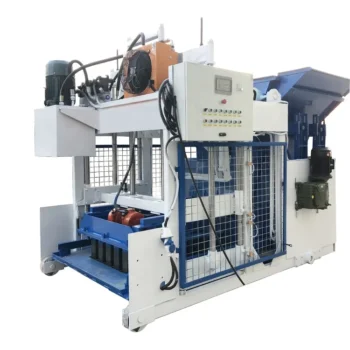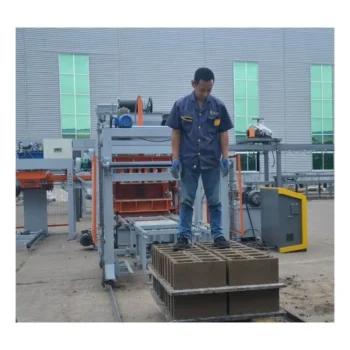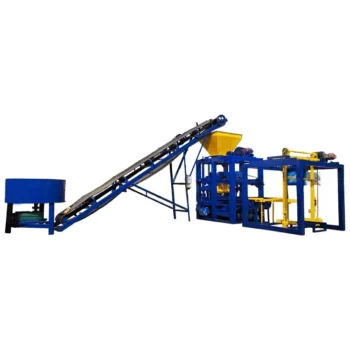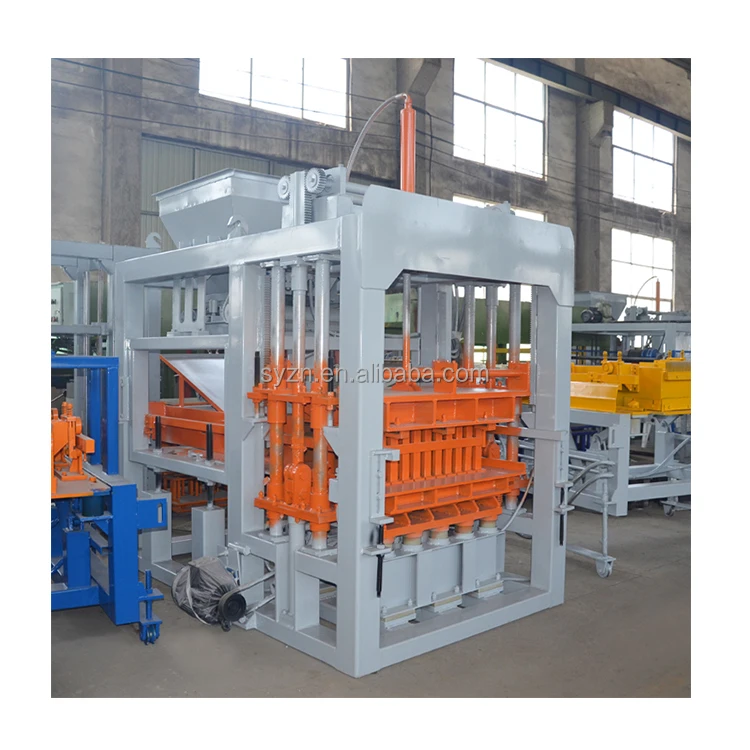


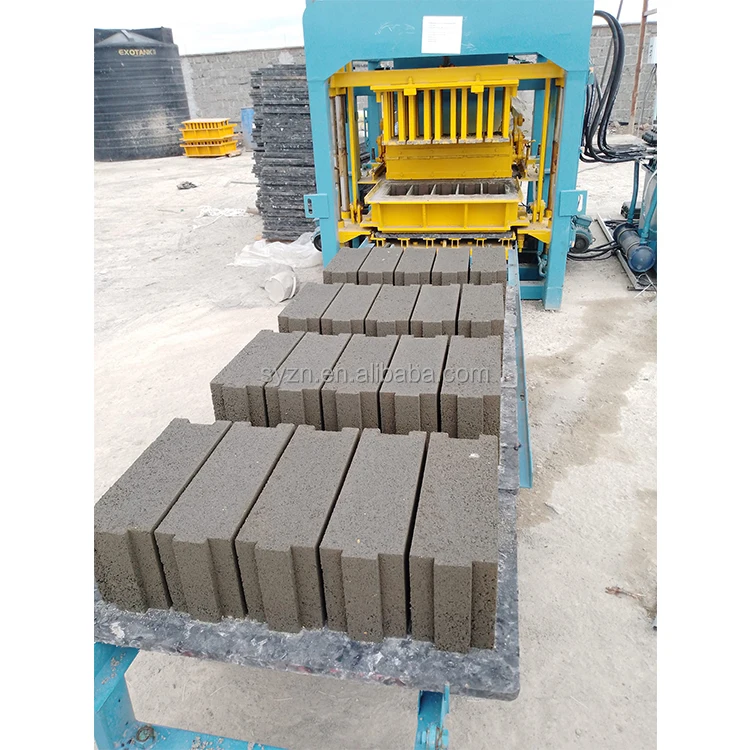


Description
Matched System Sizing — Every QT4-15A proposal starts from your target block format and local mix, not a catalogue default.
Technical Specifications
| Parameter | Value |
|---|---|
| Model | QT4-15A |
| Product Type | Hydraulic Block Making Machine |
| Overall Dimensions (L×W×H) | 7100 × 1600 × 2610 mm |
| Molding Cycle | 15–25 s (basis not stated in source) |
| Vibration Frequency | 4600 r/min |
| Vibration Force | 40–50 kN |
| Rated Power | 18.45 kW |
| Mixer Model | JQ350 |
| Pallet Size | 850 × 550 × 25 mm |
| Total Weight | 3 T |
| Control System | PLC control system (language options to be confirmed) |
| Hydraulic Station | Included (pressure rating to be confirmed) |
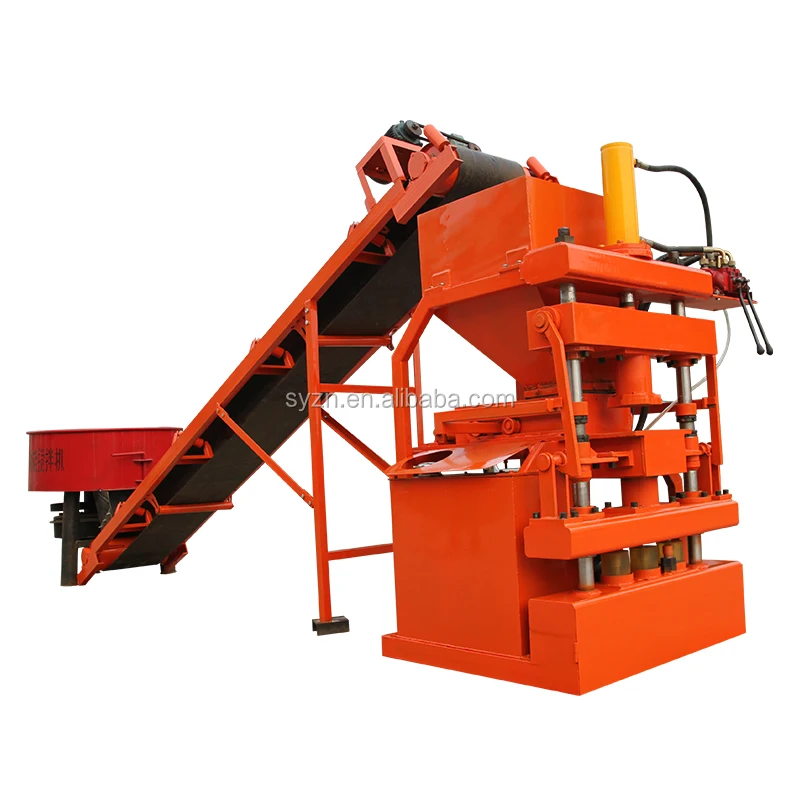
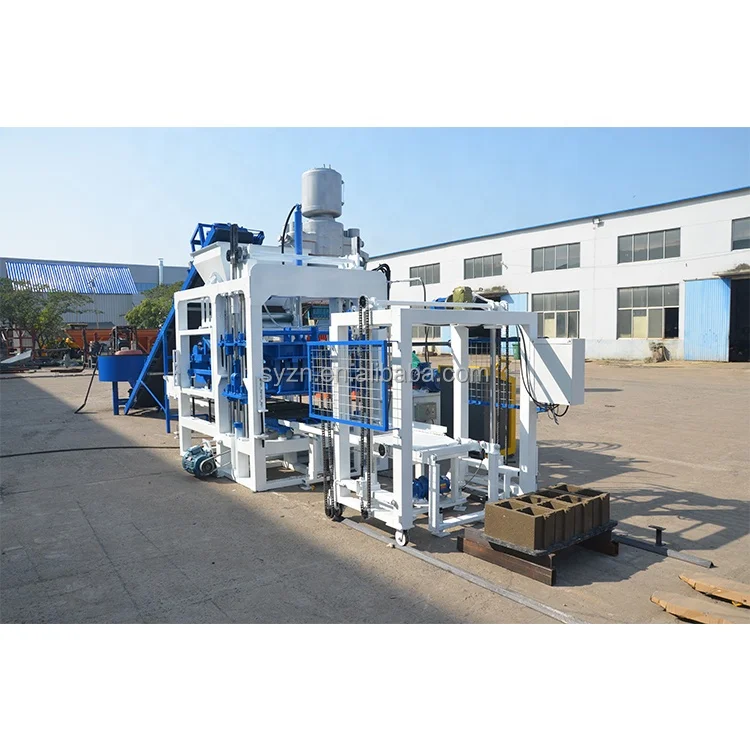
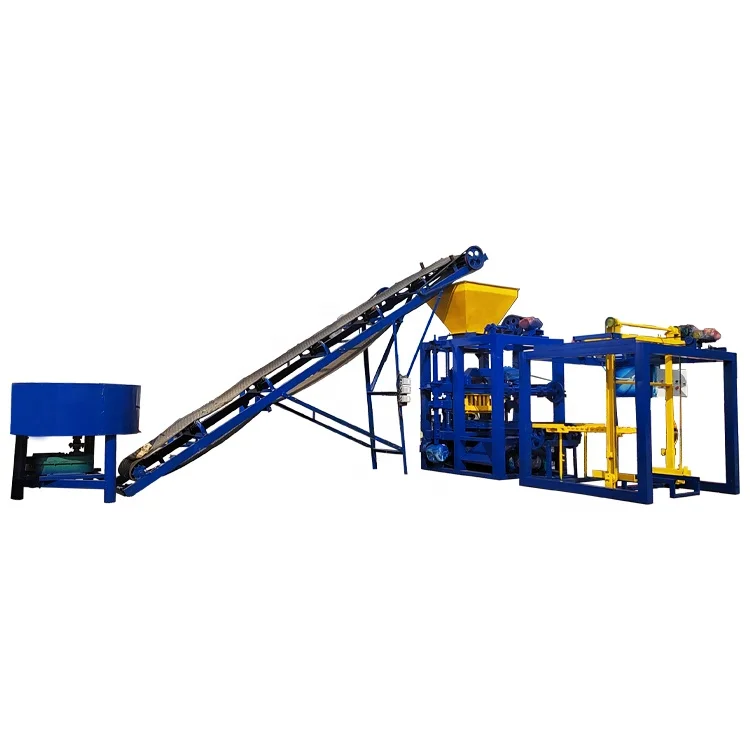
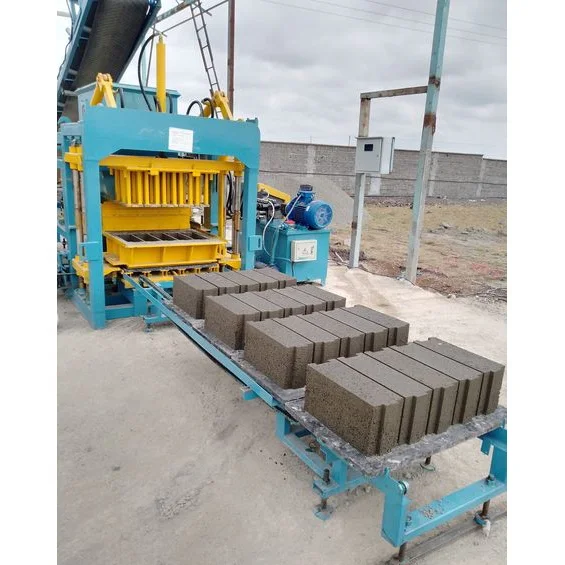
| Included Equipment | Block making machine, hydraulic station, PLC control system, pallet feeder, brick conveyor, block sweeper |
| Free Accessories | Manual hydraulic trolley, spare parts and tools |
| Output Capacity | 408 pcs/hr hollow block 400×200×200 mm (4 pcs/mould); 510 pcs/hr hollow block 400×150×200 mm (5 pcs/mould); 2100 pcs/hr solid brick 240×115×53 mm (18 pcs/mould) |
| Output per 8 hr Shift | 3264 pcs hollow block 400×200×200 mm; 4080 pcs hollow block 400×150×200 mm; 17000 pcs solid brick 240×115×53 mm |
| Applied Products | Hollow block, solid brick, paver, curbstone |
| Raw Materials | Crushed stone, sand, cement, dust, fly ash |
| Automation Level | Semi-automatic with PLC and pallet feeder |
Application Suitability
| Application | Material or Output |
|---|---|
| Hollow block production for residential walls | Crushed stone, sand, cement and fly ash mixes; 400×200×200 mm or 400×150×200 mm formats at 4 or 5 pcs per mould |
| Solid brick manufacturing for load-bearing structures | Cement and sand blends; 240×115×53 mm format at 18 pcs per mould |
| Paver production for walkways and driveways | Aggregate and cement mixes with colour oxide additives |
| Curbstone forming for road and infrastructure projects | High-cement-content mixes requiring higher hydraulic pressure and vibration force |
Why "Pieces per Hour" Means Nothing Without the Block Format
Capacity numbers must always name the block format, mould cavity count, and cycle assumption — otherwise they are marketing fiction.
When a quotation simply says "1200 pieces per hour," the buyer has no way to know whether that figure assumes a small solid brick or a large hollow block. I once worked on a site where the owner signed for a quoted output based on a solid brick cycle, only to find his primary product was a 400×200×200 mm hollow block that required longer vibration and curing time. His actual daily throughput dropped to nearly half the contracted number. The QT4-15A block machine specifications here list three distinct output figures, each tied to a specific block format and mould cavity count, so you can size the press to the product your market actually buys. [NEED_CITE: common buyer complaints in block machinery procurement]
How the Vibration and Hydraulic System Work Together
The QT4-15A hydraulic block making machine uses a combination of 40–50 kN vibration force and hydraulic pressure to compact the mix inside the mould. Vibration frequency at 4600 r/min ensures the aggregate settles densely before the hydraulic head applies final compression. If the hydraulic pressure is too low relative to vibration, the block surface may appear acceptable but internal density will be uneven, leading to inconsistent compressive strength across the batch.
Matching Pallet Size to Your Curing Area
The standard pallet size of 850 × 550 × 25 mm determines how many blocks you can cure per square metre and which forklift or hand trolley you need to move them. A pallet dimension chosen without considering your e*te floor space or reconfigure your entire yard. Before production begins, the pallet specification should be confirmed against the buyer’s current curing setup and material handling equipment. [NEED_CITE: pallet handling best practices in concrete block production]
Reading the QT4-15A Block Machine Specifications for Real Output
Cycle Time and Mould Cavity Count: What Actually Determines Daily Volume
The molding cycle of 15–25 seconds is the starting point, but the real daily output depends on how many blocks each mould cavity produces. With the 400×200×200 mm hollow block at 4 pcs per mould, the press delivers 408 pieces per hour, translating to 3264 pieces across an 8-hour shift. Switch to the 240×115×53 mm solid brick mould with 18 cavities, and the same press yields 2100 pieces per hour or 17000 per shift. This is why the QT4-15A block machine specifications list each format separately — a single averaged number would mislead any buyer planning a production schedule. The vibration force and hydraulic pressure settings may also need adjustment between formats to maintain block strength, especially when switching between lightweight fly ash mixes and dense crushed stone blends.
The Hidden Cost of Ignoring Format-Specific Capacity
A buyer who selects a machine based on an unspecified capacity figure often discovers that the format his market demands produces far fewer blocks than the quoted number suggested. The result is missed delivery deadlines, overtime labour costs, and pressure to run the press faster than the mix design allows — which in turn causes cracking and rejects. When pallet handling, stacking, and curing are not included in the quotation, output ends up stacked by hand, further reducing effective throughput. [NEED_CITE: production losses from mismatched block machine configuration]
What SHIYUE Brings to This Purchase
Every QT4-15A hydraulic block making machine is configured around the buyer’s actual block format, local aggregate, and target daily output rather than a generic catalogue setting. Mould design covers the formats your market sells, with custom drawings available for non-standard shapes. The pallet size, feeder, conveyor, and sweeper are specified as one matched line so the press is never waiting on upstream or downstream stations. Voltage, frequency, and PLC display language are confirmed before production begins, eliminating commissioning delays after arrival.
Documentation & Verification
- Line layout drawing showing QT4-15A station positions and pallet flow direction
- Capacity calculation sheet listing output per block format with mould cavity count
- Mould drawing and format list confirming included and custom mould designs
- Pallet specification matched to buyer’s curing rack dimensions and forklift capacity
- Hydraulic and electrical schematic with confirmed voltage and frequency
- Factory test record on buyer’s target block format before dispatch
Installation, Commissioning & Support
- Foundation plan based on QT4-15A footprint of 7100 × 1600 mm and 3 T operating weight
- Electrical connection to 18.45 kW rated power with dedicated circuit breaker sizing
- Assembly and alignment of hydraulic station, pallet feeder, brick conveyor, and block sweeper on site
- PLC control system parameter setup including cycle timing for each block format
- Operator training covering mould change procedure and vibration force adjustment
- Wear parts list with recommended first-order quantities for hydraulic seals and mould liners
Before You Request a Quote
Tell us the block formats your market currently sells and which ones you plan to add. Share your local raw material source — specifically the aggregate type, gradation, and any fly ash or dust content — along with your available curing area dimensions and existing forklift or trolley equipment. Confirm your site voltage, frequency, and preferred PLC display language so the QT4-15A hydraulic block making machine arrives ready for commissioning.
Frequently Asked Questions
Q: How is output capacity calculated, and which block format does each figure assume?
A: Each output figure in the QT4-15A block machine specifications is tied to a specific block format and mould cavity count. For example, 408 pieces per hour assumes a 400×200×200 mm hollow block with 4 cavities per mould, while 2100 pieces per hour assumes a 240×115×53 mm solid brick with 18 cavities. The capacity calculation sheet provided with your quotation will state the format and cycle time used for every figure.
Q: What mould formats are available, and how long does a mould change take?
A: Standard mould formats include hollow block, solid brick, paver, and curbstone in common dimensions. Custom moulds can be designed to buyer drawings. Mould change time depends on the specific change system fitted and operator familiarity. We recommend confirming your required formats early so the quotation includes the correct mould set and any necessary adapter plates.
Q: How are vibration force and hydraulic pressure matched to my local aggregate?
A: The vibration force range of 40–50 kN and the hydraulic station pressure are adjusted based on your mix design and aggregate type. Dense crushed stone requires higher vibration energy to compact fully, while fly ash mixes may need lower vibration with sustained hydraulic pressure. A sample mix test before final configuration ensures consistent block strength across formats.
Q: What pallet size does the QT4-15A require, and how does it relate to my curing setup?
A: The standard pallet dimension is 850 × 550 × 25 mm. This size should align with your existing curing rack spacing and forklift or hand trolley capacity. If your curing area uses a different pallet format, we can evaluate whether an adjustment is feasible or whether your handling equipment should be adapted to match. [NEED_CITE: pallet and curing coordination in block plants]
Q: What voltage, frequency, and PLC language options are available?
A: Voltage and frequency are configured to match your site supply before production begins. The PLC control system language is confirmed at the quotation stage so operators can read instructions and fault messages in their working language. These details are documented in the electrical schematic and confirmed again during the factory test.