

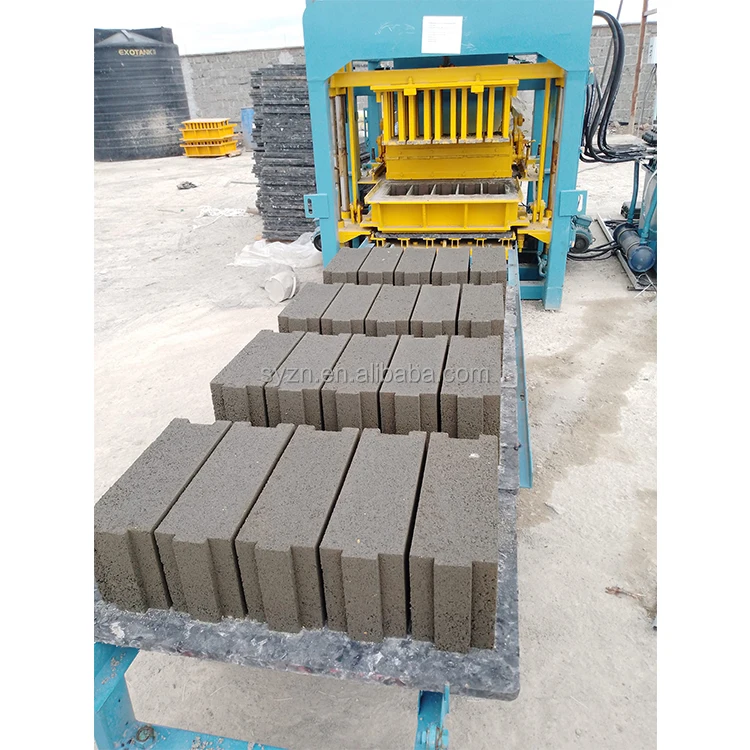


Description
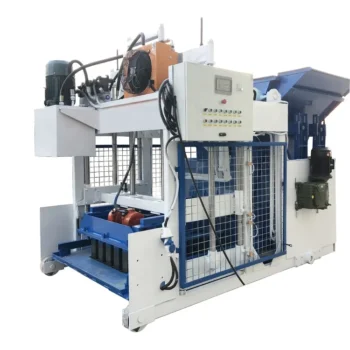
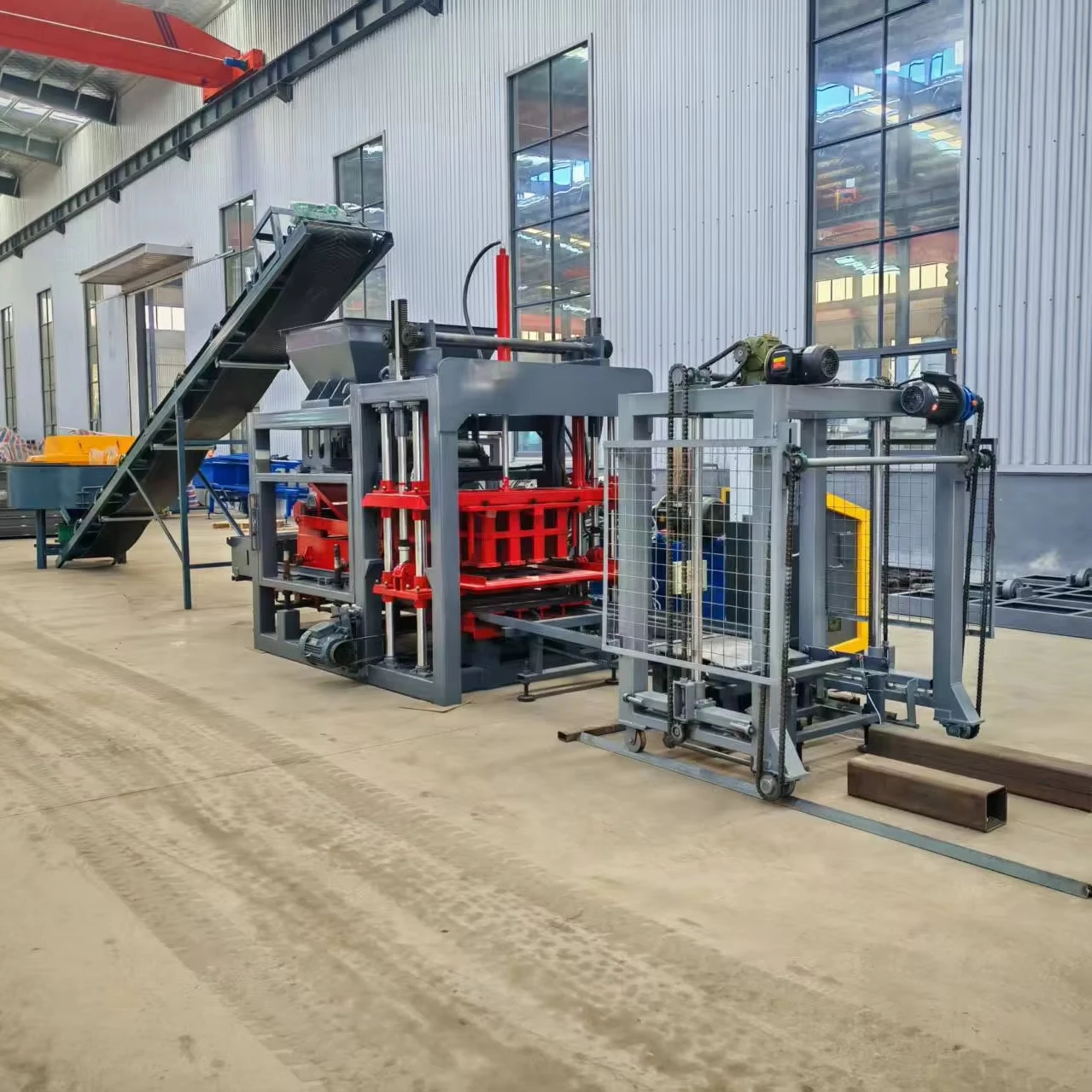
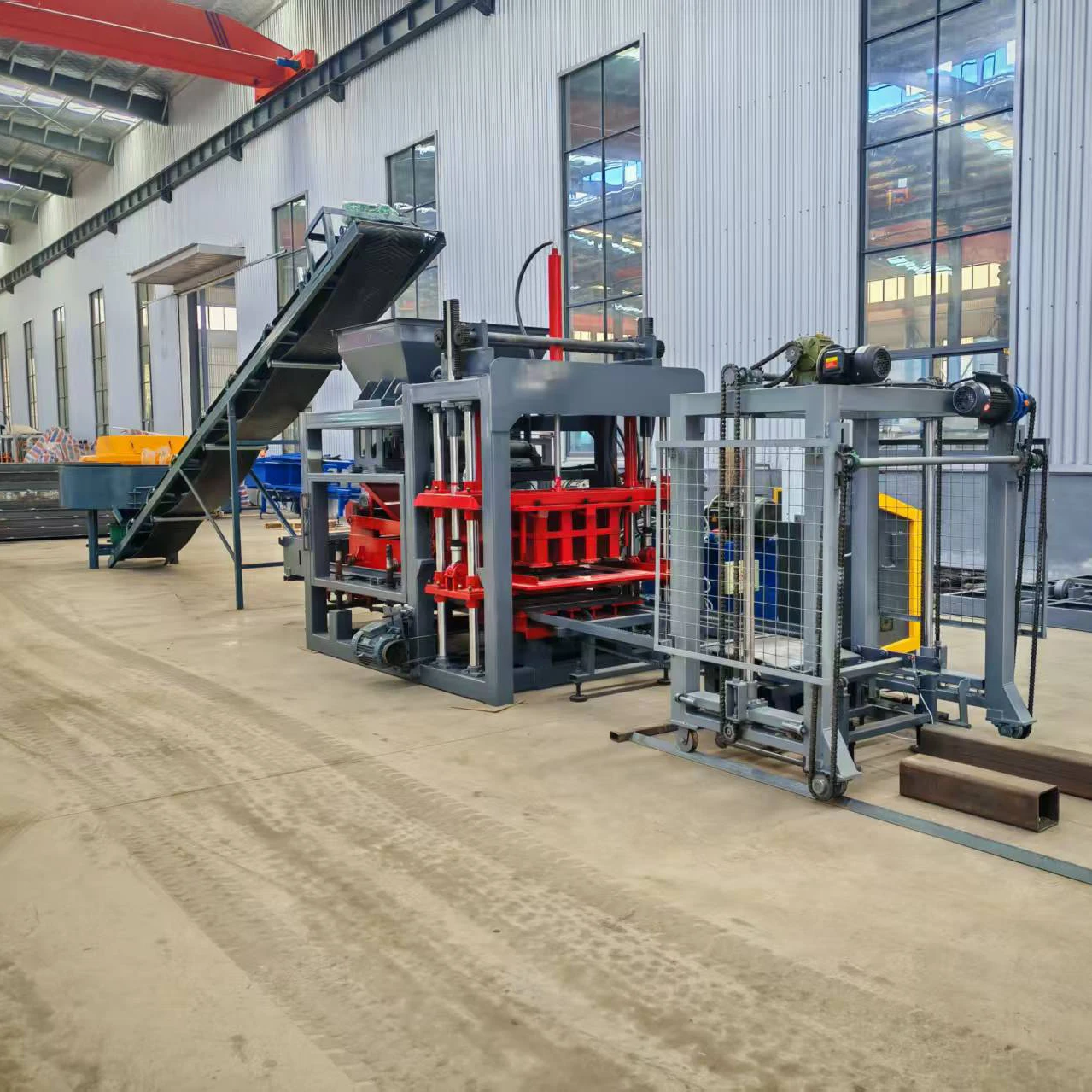
Matched System Specification — The QT4-15A hydraulic block making machine is configured as one integrated press, mould, pallet and control package rather than assembled from mismatched components, so cycle times, vibration force and output figures all refer to the same verified setup.
Technical Specifications
| Parameter | Value |
|---|---|
| Model | QT4-15A |
| Product Type | Hydraulic Block Making Machine |
| Overall Dimensions (L×W×H) | 7100×1600×2610 mm |
| Total Weight | 3 T |
| Molding Cycle | 15–25 s |
| Vibration Frequency | 4600 r/min |
| Vibration Force (Exciting Power) | 40–50 kN |
| Total Power | 18.45 kW |
| Mixer Model | JQ350 |
| Pallet Size | 850×550×25 mm |
| Control System | PLC control system |
| Hydraulic Station | Included |
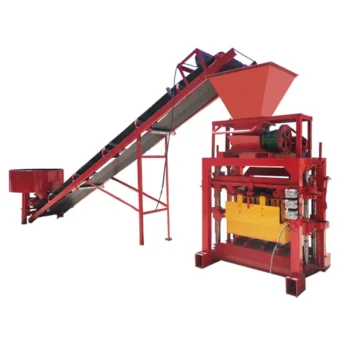
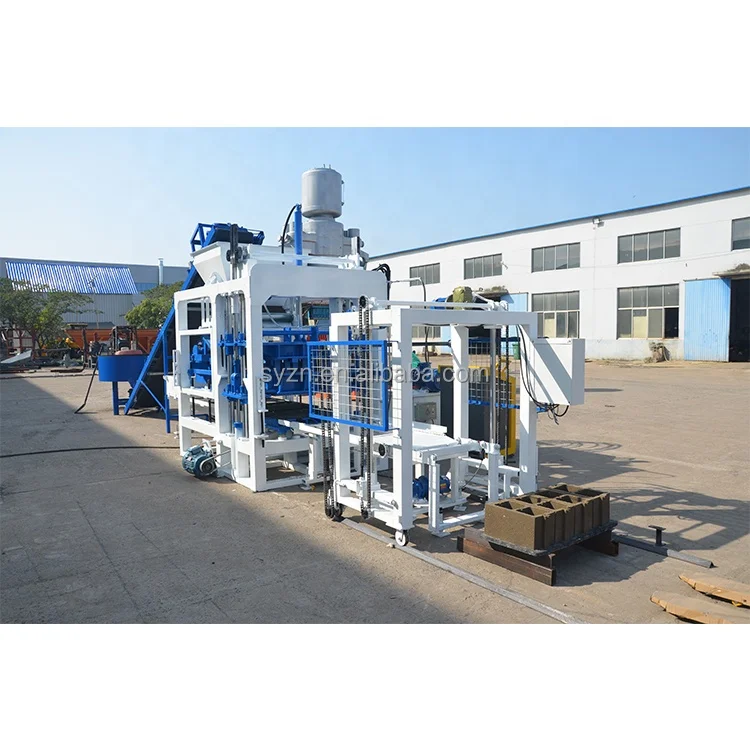
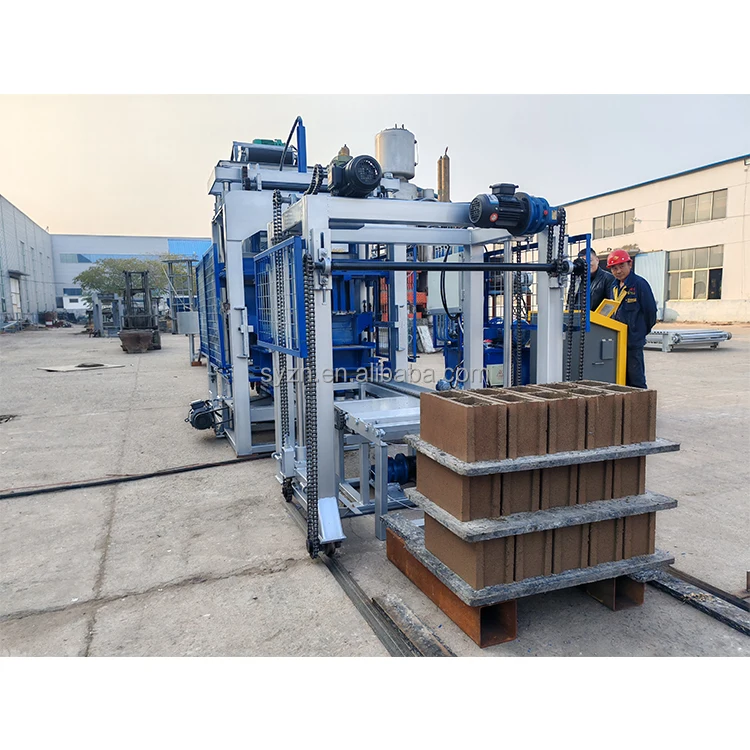
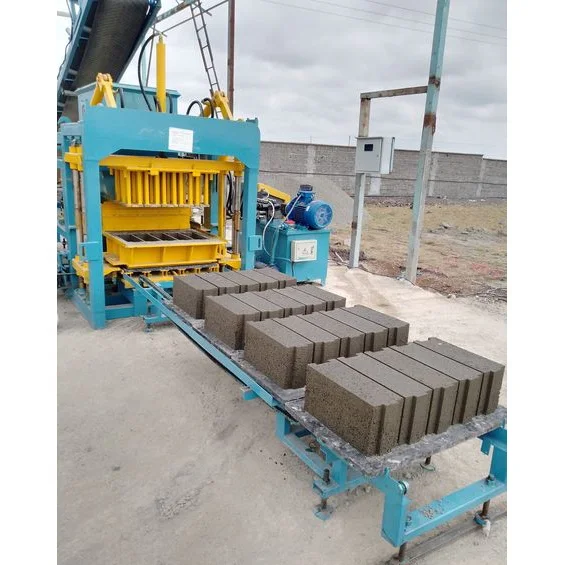
| Included Equipment | Block making machine, hydraulic station, PLC control system, pallet feeder, brick conveyor, block sweeper |
| Free Accessories | Manual hydraulic trolley, spare parts and tools |
| Output Capacity | 408 pcs/h (based on 400×200×200 mm hollow block, 4 pcs/mould) |
| Output Capacity | 510 pcs/h (based on 400×150×200 mm hollow block, 5 pcs/mould) |
| Output Capacity | 2100 pcs/h (based on 240×115×53 mm solid brick, 18 pcs/mould) |
| Daily Output (8 hr) | 3264 pcs (400×200×200 mm hollow block) |
| Daily Output (8 hr) | 4080 pcs (400×150×200 mm hollow block) |
| Daily Output (8 hr) | 17000 pcs (240×115×53 mm solid brick) |
| Voltage & Frequency | Configurable to buyer’s local standard (basis to be confirmed) |
| PLC Display Language | Selectable (basis to be confirmed) |
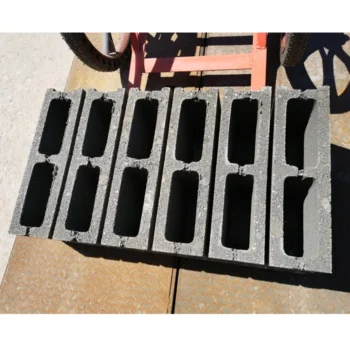
| Applied Products | Paver, solid block, hollow block, curbstone |
| Raw Materials | Crushed stone, sand, cement, dust, fly ash |
Application Suitability
| Application | Material or Output |
|---|---|
| Medium-scale hollow block plant | 400×200×200 mm and 400×150×200 mm hollow blocks from crushed stone, sand and cement |
| Solid brick production line | 240×115×53 mm solid bricks using fly ash, dust and cement mixes |
| On-site contractor block yard | Interchangeable mould production of hollow blocks, pavers and kerbstones for housing projects |
| Paver and curbstone manufacturing | Format-specific moulds for landscaping and infrastructure paving products |
What "Pieces per Hour" Actually Means for the QT4-15A Block Machine
Every QT4-15A block machine specifications sheet must state which block format the capacity figure assumes, because the difference between a hollow block cycle and a solid brick cycle changes daily output by a factor of five.
Catalogue brochures frequently quote a single peak number without revealing the mould behind it. A buyer planning a hollow block plant may arrive expecting one throughput, only to discover the figure was based on a smaller solid brick format that their market does not purchase. I have watched project timelines slip because the daily target was built on a capacity number that never matched the buyer’s actual product. The QT4-15A hydraulic block making machine capacity by format is stated with the exact mould, dimensions and pieces-per-mould count so your line calculation starts from reality, not an assumption [NEED_CITE: block machine capacity verification standards].
Format-Specific Output Eliminates Guesswork
The QT4-15A block machine specifications list three verified output tiers, each tied to a specific mould configuration. At 408 pieces per hour on a 400×200×200 mm hollow block with four cavities per mould, a standard eight-hour shift yields 3,264 blocks. Switch the mould to a 400×150×200 mm hollow block with five cavities and output rises to 510 pieces per hour. For solid brick production at 240×115×53 mm with eighteen cavities, the same machine delivers 2,100 pieces per hour. These are not interchangeable claims — each figure exists only with its stated mould and cycle time.
Mould, Pallet and Press as One Verified Assembly
A block machine is only as productive as its slowest station. The QT4-15A ships with a matched pallet feeder, brick conveyor and block sweeper so the press cycle is not interrupted by manual handling upstream or downstream. The 850×550×25 mm pallet dimension is fixed for this machine tier, and it must align with your existing curing rack spacing and forklift tine width before the order is finalized. Mismatched pallets create a bottleneck that no amount of press speed can overcome [NEED_CITE: pallet handling integration in block production lines].
How Vibration and Pressure Shape Block Density
The QT4-15A delivers vibration at 4,600 r/min with an exciting force of 40–50 kN, working in tandem with the hydraulic station to compact the mix into the mould cavity. Vibration frequency determines how thoroughly the aggregate particles settle, while hydraulic pressure locks them in place before the mould lifts. If the vibration force is too low for a coarse crushed-stone mix, the block emerges with voids and low compressive strength. If the pressure is excessive for a fly-ash-heavy mix, the block cracks on demoulding. The QT4-15A block machine specifications include both values so your mix design can be validated against them before production begins.
The Cost of Skipping Configuration Verification
When a block machine arrives with voltage and frequency set to a default that does not match the local grid, commissioning stalls until a transformer is sourced or the motor is rewound. The PLC display language, if not confirmed beforehand, leaves operators navigating menus they cannot read, increasing mould-change errors and cycle inconsistencies. I have seen plants sit idle for weeks because a 50 Hz motor was shipped to a 60 Hz market, and the resulting speed mismatch threw off the vibration frequency enough to compromise block strength across every batch [NEED_CITE: voltage and frequency standards by export market].
Why Sizing Starts With Your Local Aggregate
The QT4-15A is configured around the raw materials you can actually source — whether that is crushed stone and sand, fly ash and dust, or a blend of both. The 15–25 second molding cycle range reflects the adjustment needed when switching between a fast-draining coarse mix and a slower-compacting fine aggregate. A machine tuned for one material profile will underperform on another, so the mix design confirmation happens before the hydraulic pressure and vibration settings are locked in at the factory, not after the machine is bolted to your floor.
Documentation & Verification
- Line layout drawing showing QT4-15A station spacing and pallet flow path
- Capacity calculation sheet stating block format assumed for each output figure
- Mould drawing and format list confirming included and optional custom moulds
- Pallet specification sheet for cross-checking against curing rack and forklift dimensions
- Voltage, frequency and PLC language confirmation record before production release
- Factory test record on your specified block format before dispatch
Installation, Commissioning & Support
- Foundation pad must accommodate 7100×1600 mm footprint plus pallet feeder clearance
- Dedicated circuit required for 18.45 kW total power draw at confirmed local voltage
- Hydraulic station arrives pre-filled; hoses connect to press on-site during assembly
- PLC parameters calibrated to your confirmed block format and cycle time at first run
- Operator training covers mould change procedure and pallet feeder adjustment
- Wear parts list identifies hydraulic seals and vibration motor bearings for first reorder
Before You Request a Quote
To size the QT4-15A hydraulic block making machine to your plant, share your target block formats with dimensions, the daily output you need per format, and the raw materials available locally including aggregate gradation. Confirm your site voltage, frequency and preferred PLC display language so the electrical package is built correctly from the start. If you already have curing racks or forklifts on site, provide their dimensions so the 850×550×25 mm pallet can be verified against your handling infrastructure.
Frequently Asked Questions
Q: How is the QT4-15A output verified per block format, and what cycle time applies to my specific mould?
A: Each output figure in the QT4-15A block machine specifications is tied to a named block format, mould cavity count and the 15–25 second molding cycle range. When you confirm your target format, the factory runs a test cycle on that exact mould and documents the verified pieces-per-hour before shipment, so your capacity calculation matches the machine you receive.
Q: Which pallet size does the QT4-15A use, and how do I confirm it fits my curing area?
A: The QT4-15A uses an 850×550×25 mm pallet. Before order confirmation, compare this dimension against your curing rack shelf width, rack spacing and forklift tine length. A pallet specification sheet is provided so you can verify clearances and avoid handling bottlenecks once production starts.
Q: What voltage, frequency and PLC language options are available, and when must they be confirmed?
A: Voltage and frequency are configurable to your local grid standard, and the PLC display language is selectable. These must be confirmed before production begins — not at shipment — because the motor winding, transformer sizing and control panel labels are all built to your specification during assembly [NEED_CITE: industrial equipment electrical configuration standards].
Q: How is vibration force and hydraulic pressure matched to my local aggregate and mix design?
A: The QT4-15A delivers 40–50 kN exciting force at 4,600 r/min, paired with the hydraulic station. Before the machine is finalized, your local aggregate sample and mix proportions are reviewed so the vibration amplitude and hydraulic pressure are set to achieve consistent block density without cracking or voiding on demoulding.