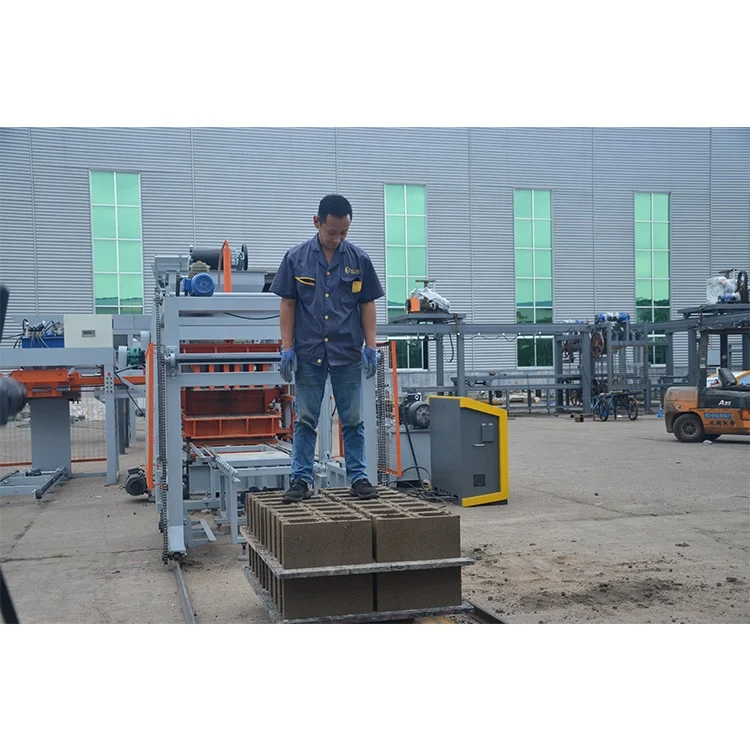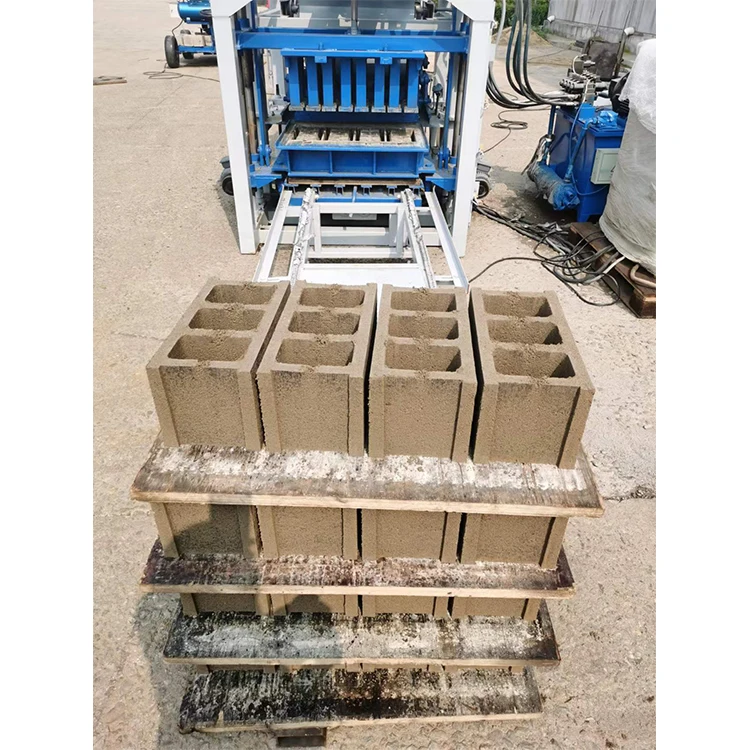

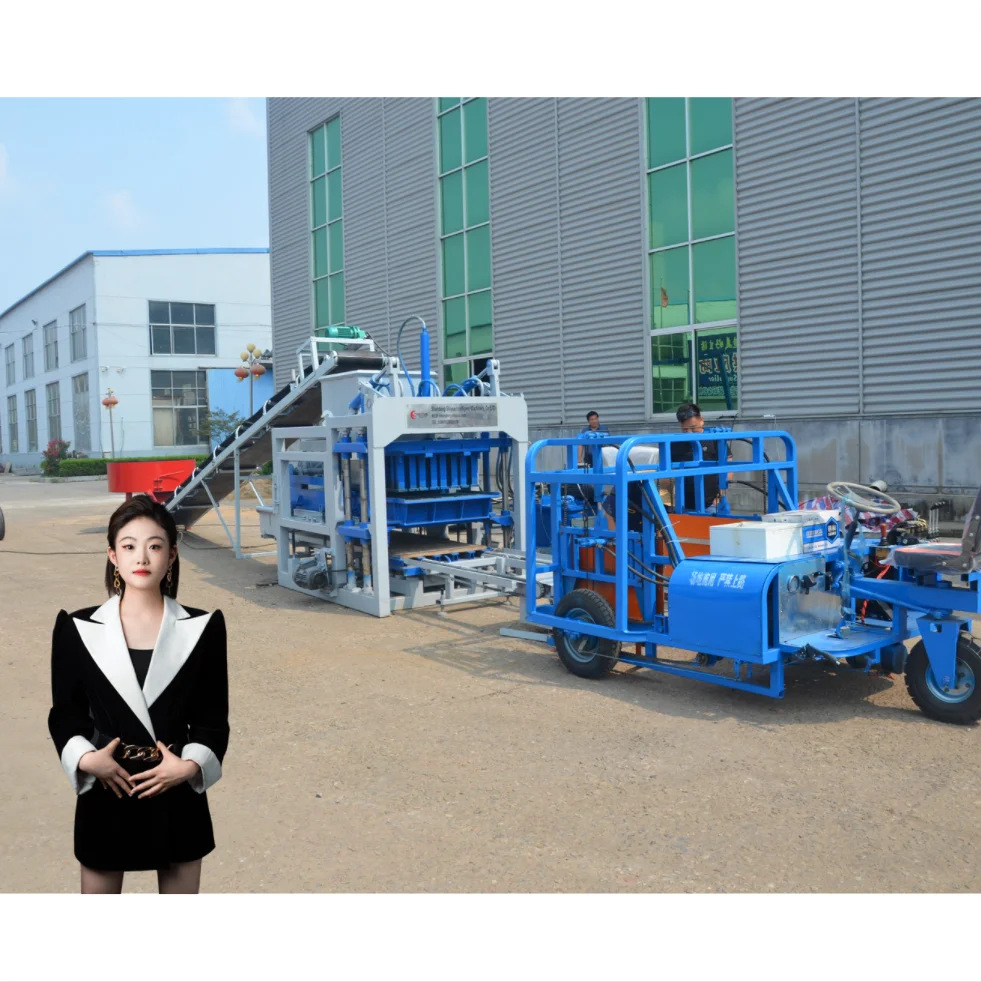


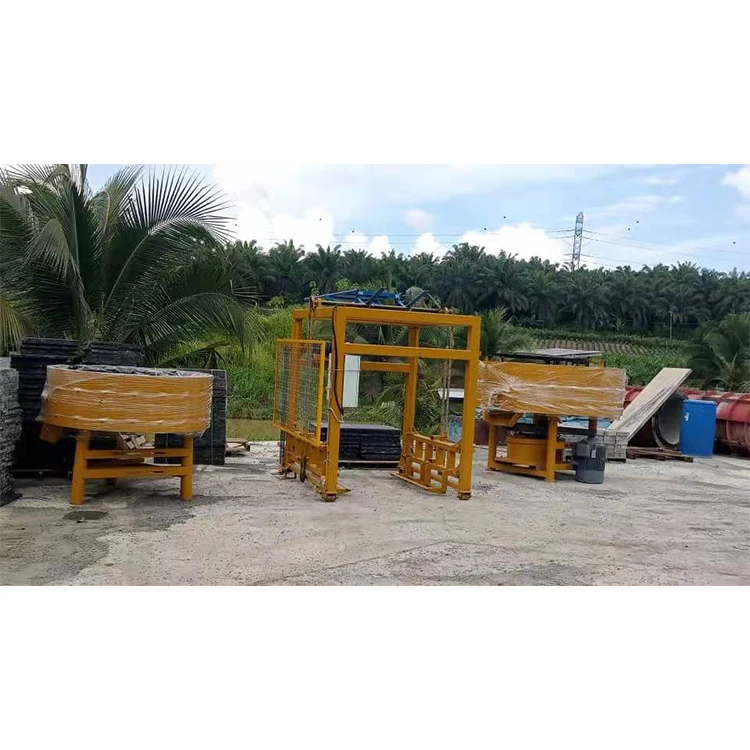
Description
Format-Specific Capacity Sizing — every QT4-15A output figure is stated against the exact block dimensions and mould cavity count, so daily throughput is calculated before the order is placed, not after commissioning.
Technical Specifications
| Parameter | Value |
|---|---|
| Model | QT4-15A |
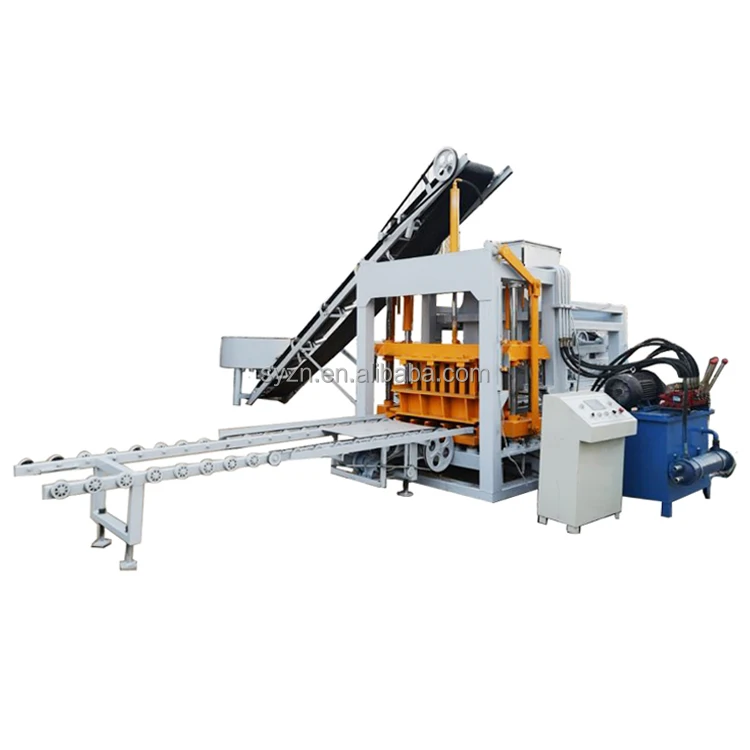
| Product Type | Automatic Hydraulic Block Making Machine |
| Overall Dimensions | 7100 × 1600 × 2610 mm |
| Molding Cycle | 15–25 s |
| Vibration Frequency | 4600 r/min |
| Vibration Force | 40–50 kN |
| Total Power | 18.45 kW |
| Mixer Model | JQ350 |
| Pallet Size | 850 × 550 × 25 mm |
| Total Weight | 3 T |
| Control System | PLC control system |
| Hydraulic Station | Included |
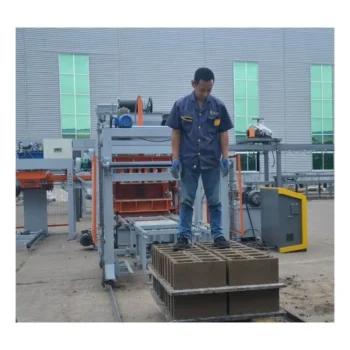
| Included Equipment | Block making machine, hydraulic station, PLC control system, pallet feeder, brick conveyor, block sweeper |
| Free Spare Parts | Manual hydraulic trolley, spare parts and tools |
| Output Capacity (Hollow Block 400×200×200 mm) | 408 pcs/hr, 3264 pcs/8hr (4 pcs/mould) |
| Output Capacity (Hollow Block 400×150×200 mm) | 510 pcs/hr, 4080 pcs/8hr (5 pcs/mould) |
| Output Capacity (Solid Brick 240×115×53 mm) | 2100 pcs/hr, 17000 pcs/8hr (18 pcs/mould) |
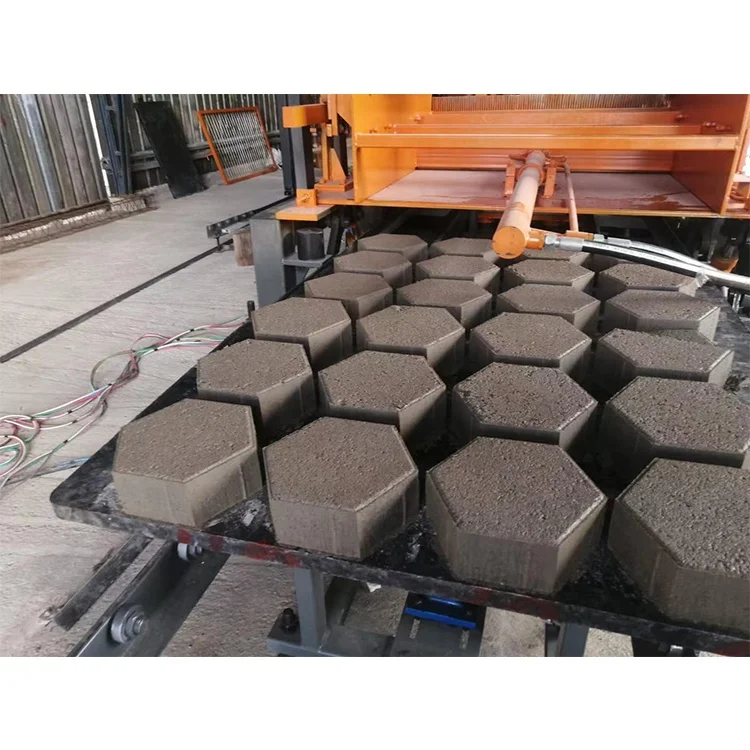
| Applied Products | Paver, solid brick, hollow block, curbstone (basis not stated in source — confirm block format / material / thickness for each) |
| Raw Materials | Crushed stone, sand, cement, dust, fly ash |
| Automation Level | Automatic with PLC |
| Voltage & Frequency | Configurable to target market (to be confirmed before order) |
| Mould Change System | Format-switchable (quick-change mechanism and changeover time to be confirmed) |
Application Suitability
| Application | Material or Output |
|---|---|
| Hollow block production for masonry walls | Crushed stone, sand, cement, fly ash — 400×200×200 mm or 400×150×200 mm formats |
| Solid brick manufacturing for load-bearing structures | Cement, sand, stone dust — 240×115×53 mm standard brick format |
| Paver and curbstone production for infrastructure | Crushed stone, cement, sand — format and thickness confirmed per mould drawing |
| On-site block production for housing projects | Fly ash, local aggregate, cement — single-machine operation with pallet feeder and brick conveyor |
| Regional block plant selling multiple formats | All listed formats on one QT4-15A block machine with mould changeover between runs |
What "408 Pieces per Hour" Actually Means on the QT4-15A Block Machine
Capacity only matters when the block format, mould cavity count, and cycle time are named together.
I once watched a contractor in the Middle East take delivery of an automatic hydraulic block making machine rated at a headline cycle figure. The quotation never specified which block format that number assumed. On site, the contractor’s best-selling hollow block was a different dimension, and the real output dropped noticeably because the mould cavity count and vibration tuning were wrong for that format [NEED_CITE: block format assumptions in capacity quotations]. The QT4-15A block machine specifications on this page avoid that trap: every output line states the exact block dimensions, the number of cavities per mould, and the resulting hourly and eight-hour figures. This means a buyer comparing the QT4-15A against other machines can line up capacity on the same format rather than comparing a hollow block number against a solid brick number.
Mould Cavity Count and the Format-Specific Output Chain
The QT4-15A block machine specifications list three verified output tiers: four cavities for the 400×200×200 mm hollow block, five cavities for the 400×150×200 mm hollow block, and eighteen cavities for the 240×115×53 mm solid brick. Each tier carries its own cycle window of 15–25 seconds, and the actual position within that window depends on the mix design and vibration response of the local aggregate. A buyer whose market moves mostly hollow blocks will spend most production hours on the four- or five-cavity mould, while a plant supplying solid face brick will run the eighteen-cavity mould. The automatic hydraulic block making machine delivers format flexibility, but the real planning value lies in knowing which format dominates the schedule and sizing raw material delivery and curing space around that format’s actual throughput.
Pallet Sizing Against the Curing Area You Already Have
The standard pallet dimension of 850 × 550 × 25 mm is not an arbitrary choice — it dictates the spacing of curing rack slots, the fork dimensions of the loader, and the floor area needed for green-block storage [NEED_CITE: pallet sizing and curing rack compatibility in block plants]. If a buyer’s existing curing racks were built for a different pallet size, every pallet coming off the QT4-15A will need re-slotting or the racks will need modification. Confirming pallet size against the curing area before the order is placed eliminates a problem that otherwise surfaces only after the first production run, when hundreds of loaded pallets have nowhere to go.
How Vibration Force and Hydraulic Pressure Shape Block Density
The 40–50 kN vibration force at 4600 r/min works together with hydraulic pressure to compact the mix into the mould cavity. Higher vibration frequency liquefies the cement paste around the aggregate particles, while hydraulic pressure from above closes voids and increases green strength. When the local aggregate contains a high percentage of fines or clay — something I encountered on a fly ash block project where the sand source varied by season — the vibration parameters need adjustment to avoid weak edges and inconsistent density across the pallet [NEED_CITE: vibration tuning for variable aggregate gradation]. The QT4-15A’s PLC control system stores parameter sets, allowing the operator to recall the correct vibration duration and pressure profile for each mix without manual trial and error on every shift.
The Hidden Cost of Skipping Format-Level Capacity Verification
When a quotation lists only a single output number without naming the block format, the buyer plans raw material procurement, labour shifts, and delivery schedules around a figure that may apply to a format the plant rarely produces. The consequence is a daily shortfall that compounds over weeks: trucks arrive for loads that are not ready, curing racks sit half-empty, and the contractor either adds overtime or misses project deadlines [NEED_CITE: capacity shortfall consequences in block production contracts]. This problem is not a machine defect — it is a specification gap that could have been closed before the purchase order was signed.
Why Sourcing the QT4-15A Through a Format-Matched Approach Matters
Block machinery is the sole product focus at Shandong Shiyue Intelligent Machinery, which means the QT4-15A is specified as a matched system of press, mould, pallet, and handling equipment rather than assembled from unrelated suppliers. Mould design covers the formats the buyer’s regional market actually demands, including custom drawings when a non-standard paver or kerbstone is required. The automation level is selectable — a buyer can start with semi-automatic pallet handling and upgrade the stacking and cubing sections later without replacing the press. Every configuration is set against the buyer’s actual mix design and local aggregate, not a catalogue default, and installation support includes operator training on the specific moulds and PLC parameters delivered with the machine.
Documentation & Verification
- Line layout showing QT4-15A footprint with pallet flow path from feeder to stacking zone
- Capacity calculation sheet naming each block format and its mould cavity count
- Mould drawing package covering hollow block, solid brick, paver, and curbstone formats
- Hydraulic and electrical schematics matched to confirmed voltage and frequency
- Factory test record run on buyer-specified block format before dispatch
- Pallet specification sheet listing dimensions, material grade, and load rating
Installation, Commissioning & Support
- Foundation slab sized for 7100 × 1600 mm footprint with vibration isolation provisions
- Dedicated power circuit rated for 18.45 kW total draw at confirmed voltage and frequency
- Machine shipped with hydraulic station and PLC panel pre-wired for on-site connection
- First-run commissioning includes vibration parameter tuning against delivered aggregate sample
- Operator training covers mould changeover procedure and PLC parameter recall by block format
- Wear parts list with reorder codes for vibration springs, hydraulic seals, and mould liners
Preparing a Format-Accurate Inquiry
To size the QT4-15A correctly, share the block formats your market sells most, the target daily output per format, and the local raw materials available including aggregate gradation reports. Specify your existing pallet size if you plan to reuse curing racks, and confirm the voltage and frequency at the installation site along with the preferred PLC display language. If you are producing on a construction site rather than a fixed plant, note the available floor area and any height restrictions so the line layout accounts for pallet circulation and curing rack placement.
Frequently Asked Questions
Q: How is QT4-15A capacity verified per block format, and what mould cavity count does each figure assume?
A: Each output line in the QT4-15A block machine specifications names the exact block dimensions, the mould cavity count, and the cycle time window. For example, the 400×200×200 mm hollow block uses a four-cavity mould, while the 240×115×53 mm solid brick uses eighteen cavities. Buyers receive a capacity calculation sheet matching their dominant format before the order is confirmed.
Q: Which mould formats are available and what is the changeover time between formats?
A: The QT4-15A supports hollow block, solid brick, paver, and curbstone moulds, with custom mould design available to buyer drawings. Changeover time depends on the quick-change mechanism fitted and the operator’s familiarity with the procedure — confirm the specific mechanism and expected changeover duration during the quotation stage.
Q: How do I match vibration force and hydraulic pressure to local aggregate for consistent block strength?
A: The 40–50 kN vibration force at 4600 r/min is tuned against the buyer’s aggregate gradation and mix design during commissioning. The PLC control system stores parameter sets for each mix, so operators recall the correct profile without manual adjustment. Providing an aggregate sample and mix report before shipment allows pre-tuning at the factory.
Q: What pallet size is standard, and can it be configured to match existing curing racks and forklifts?
A: The standard pallet size is 850 × 550 × 25 mm. Before ordering, share your curing rack slot spacing and forklift fork dimensions so the pallet specification is confirmed against your existing infrastructure, avoiding re-slotting costs after the first production run.
Q: What voltage, frequency, and PLC language options are confirmed before shipment?
A: Voltage and frequency are configured to the target market’s electrical standard and confirmed before production begins. The PLC display language is also agreed at the quotation stage to ensure the operator interface is readable on arrival, preventing commissioning delays caused by language mismatches.