
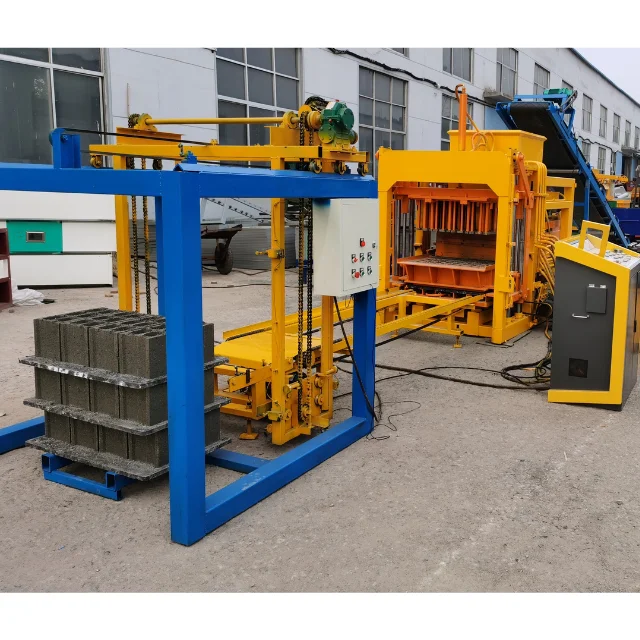

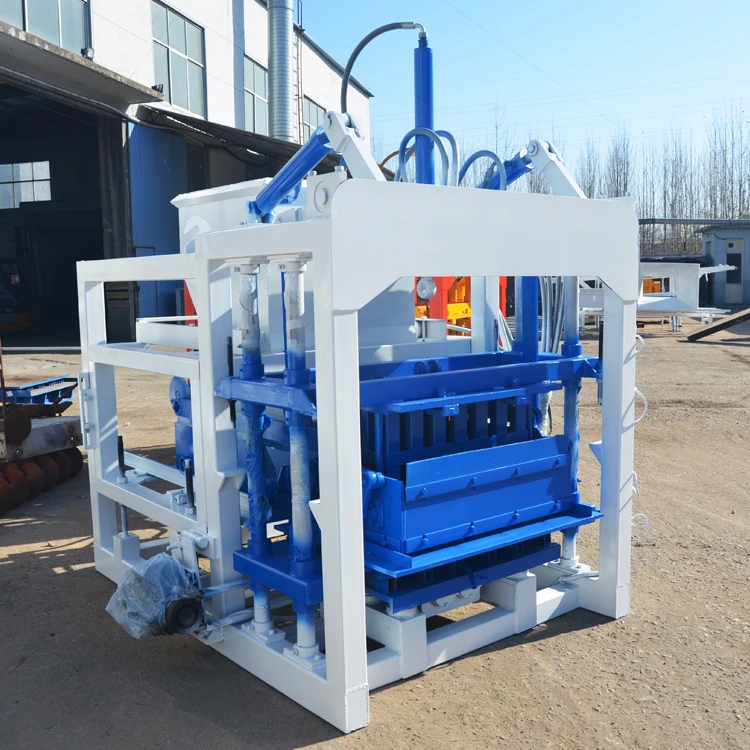
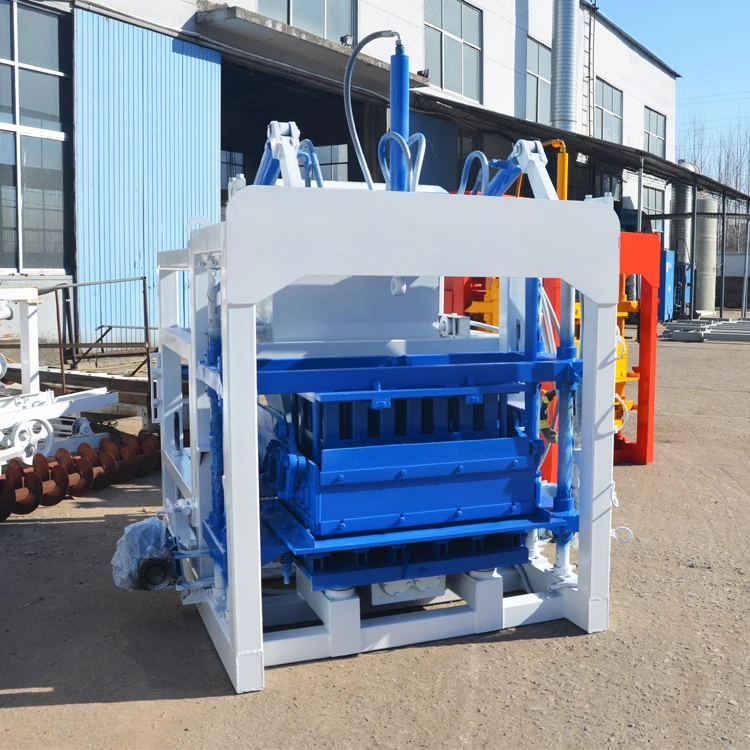
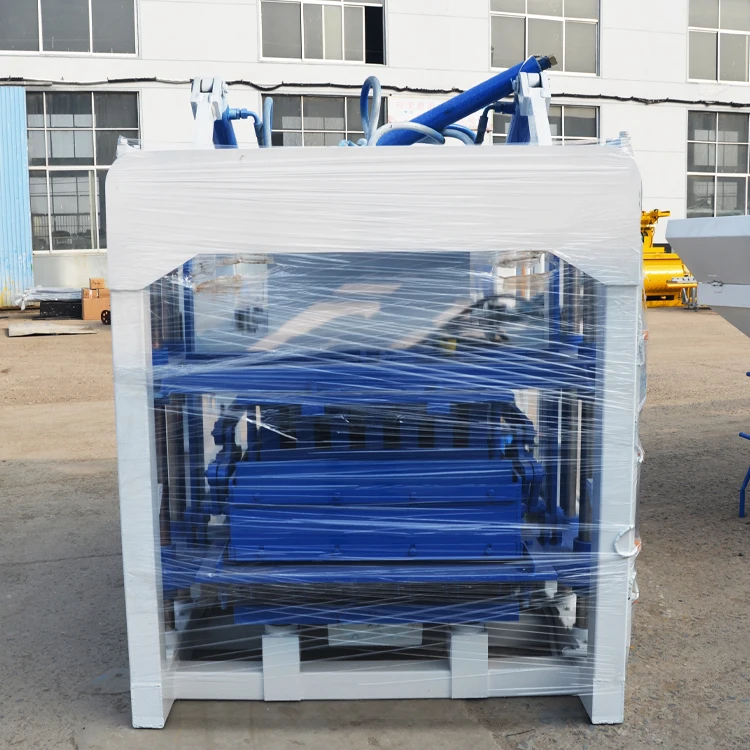

Description
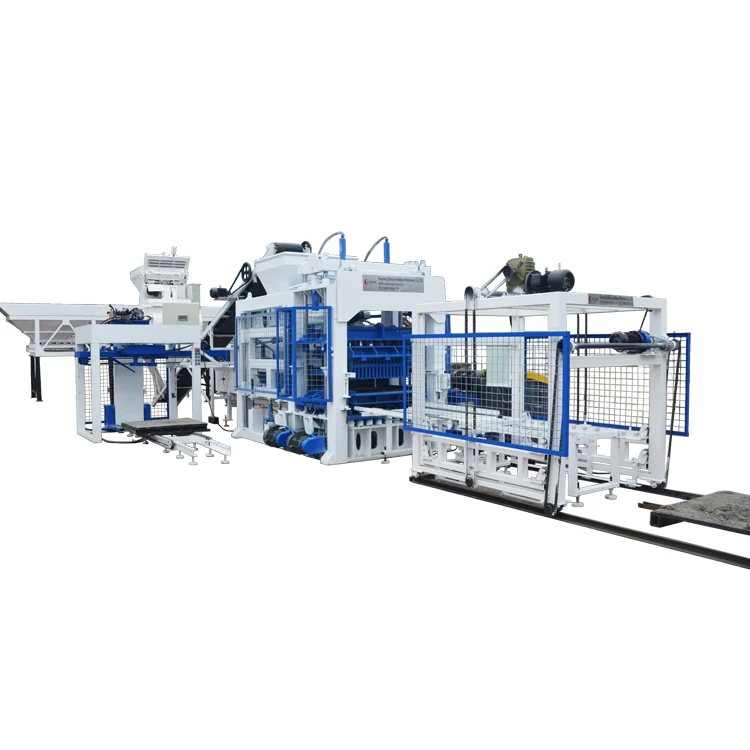
Matched System Engineering — Every QT4-15A block making machine is configured against the buyer’s actual mix design, local aggregate, and target block format before production begins, ensuring vibration force and hydraulic pressure deliver consistent density across every mould.
Technical Specifications
| Parameter | Value |
|---|---|
| Model | QT4-15A |
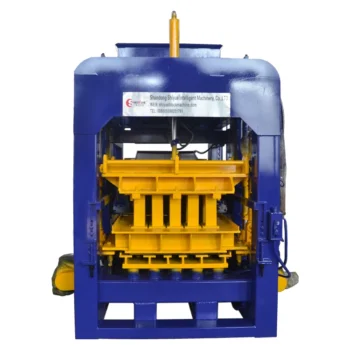
| Product Type | Hydraulic Concrete Block Making Machine |
| Overall Dimension | 4100×1600×2600mm |
| Rated Pressure | 16-21MPa |
| Main Vibration Form | Platform Vibration |
| Vibration Frequency | 4200 r/min |
| Vibration Force | 55kN |
| Pallet Size | 880×550mm |
| Molding Cycle | 25-30s (basis not stated in source — confirm block format / material / thickness) |
| Overall Power | 18.45kW |
| Total Mass | 4T |
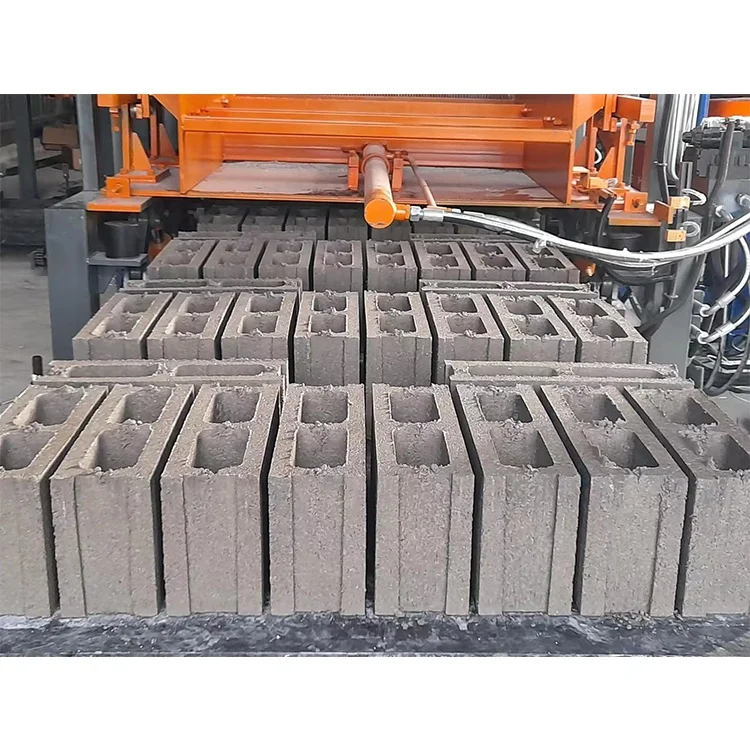
| Demolding Method | Hydraulic |
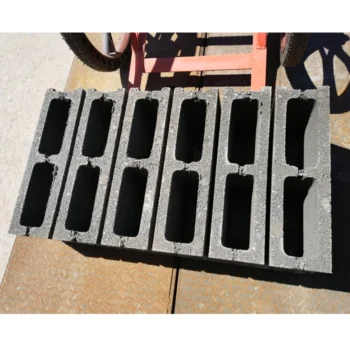
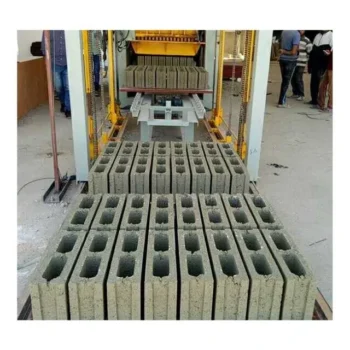
| Applied Products | Hollow blocks, solid blocks, pavers, interlocking blocks, curbstone, colored pavers |
| Raw Material | Crushed stone, sand, cement, dust, fly ash, gravel, slag |
| Loading | 1×40HQ container (basic equipment) |
| Warranty | 1 year (excluding spare parts) |
Application Suitability
| Application | Material or Output |
|---|---|
| Hollow block production for building walls | Crushed stone, sand, cement, fly ash blends |
| Solid block manufacturing for load-bearing structures | Gravel, cement, slag aggregates |
| Paving block and colored paver runs for walkways and plazas | Fine sand, cement, pigment additives |
| Interlocking block and kerbstone production | Coarse aggregate, cement, dust mixes |
Why the QT4-15A Block Machine Specifications Must Be Read Per Format
A single cycle-time number hides the real daily output picture for buyers producing multiple block formats.
I have watched buyers commit to a block machine based on a headline capacity figure, only to discover on site that hollow blocks, pavers, and interlocking bricks each demand a different molding cycle. The vibration settling time for a tall hollow block differs noticeably from the shorter press cycle a thin paver requires. When a quotation lists one cycle time without naming the format it assumes, the buyer is comparing numbers that do not belong to the same product [NEED_CITE: block cycle time variation by format and height]. That mismatch is the reason so many first-year plants fall short of the output they budgeted for.
Pallet Size 880×550mm: The Constraint That Shapes Your Entire Format Range
The 880×550mm pallet on the QT4-15A block machine sets the physical boundary for every mould you will run. This dimension determines how many cavity blocks fit per cycle, how pavers are arrayed across the surface, and whether kerbstones can be produced at all. Buyers who already operate curing racks and forklifts must verify that this pallet footprint matches their existing handling equipment before ordering. A mismatch here forces a change in racking or transport gear that no one priced into the project budget.
Vibration Force and Hydraulic Pressure: Matching Energy to Your Aggregate
The 55kN vibration force at 4200 r/min works together with 16-21MPa hydraulic pressure to compact the mix inside the mould cavity. This energy pairing must align with the density your local aggregate can achieve. High-clay sand absorbs vibration differently from clean crushed stone, and a mix that performs well in one region may produce weak blocks in another without parameter adjustment. I always ask buyers to send a sample of their intended raw material so we can confirm the QT4-15A block machine specifications against their actual conditions rather than relying on a default setting that was calibrated for a different quarry [NEED_CITE: effect of aggregate clay content on block compressive strength].
Reading the Core Parameters Beyond the Brochure Numbers
The platform vibration form means energy enters the mix from below through the pallet, which suits the geometry of hollow blocks where the core voids need uniform wall density. For pavers and interlocking blocks that require a smooth face finish, the hydraulic demolding method protects surface integrity during extraction. The 25-30s molding cycle listed in the QT4-15A block machine specifications carries a basis-to-be-confirmed note because cycle length shifts with block height, wall thickness, and the water content of the mix. The 18.45kW overall power draw covers the main press motor, vibration motor, and hydraulic pump running together, so buyers should verify their site transformer can sustain continuous load at this level plus any upstream mixer and conveyor motors. Total mass at 4T keeps the machine within standard container loading limits, which matters when the buyer is planning foundation depth and floor loading for a 300m² factory area.
What Happens When Configuration Ignores the Buyer’s Real Conditions
When vibration frequency and hydraulic pressure are set to catalogue defaults instead of the buyer’s mix, blocks leave the machine with inconsistent density — some pass strength testing, others crumble at the curing rack. I have seen entire production batches rejected because the mould was designed for a sand grading the buyer could not source locally. The cost is not just wasted cement; it is the weeks spent troubleshooting on site while the plant sits idle and orders go unfilled [NEED_CITE: cost of block rejection due to density inconsistency]. Voltage and PLC display language left unconfirmed before shipment can delay commissioning by days or longer, especially when the local electrician cannot read the control interface.
Why Sourcing the QT4-15A Through This Channel
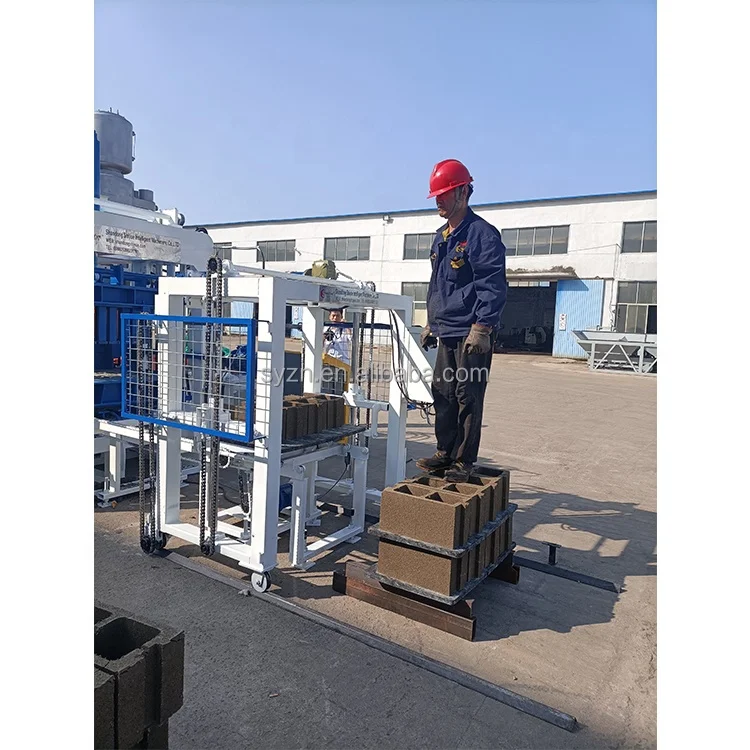
Block machinery is our single focus, so the QT4-15A arrives as a matched system — press, mould, pallet, and handling equipment specified together rather than assembled from unrelated suppliers. We configure each machine against the buyer’s actual mix design and local aggregate, not a catalogue default that assumes materials from a different region. Mould design covers the formats the buyer’s market actually sells, with custom drawings available when standard options do not fit. The automation level is selectable, letting a buyer start with semi-automatic pallet handling and add stacking or cubing later as volume grows. Installation support includes on-site commissioning and operator training so the crew understands mould change procedure and daily maintenance from the first production run.
Documentation & Verification
- Line layout with capacity calculation stating which block format each output figure assumes
- Mould drawing and format list confirming cavity count per pallet for each product
- Pallet specification sheet matched to buyer’s curing rack and forklift dimensions
- Hydraulic and electrical schematic with voltage, frequency, and PLC language confirmed
- Factory test record run on buyer’s target block format before dispatch
- Operation and maintenance manual with wear parts list and mould inventory
Installation, Commissioning & Support
- Foundation must support 4T static mass plus dynamic vibration load across the 4100×1600mm footprint
- Dedicated electrical circuit sized for 18.45kW continuous draw with confirmed voltage and frequency
- Machine ships in 1×40HQ container; reassembly includes platform alignment and hydraulic line connection
- First-day commissioning covers vibration frequency tuning and hydraulic pressure calibration per mix sample
- Operator training addresses mould changeover procedure and daily inspection of hydraulic seals and vibration mounts
- Wear parts supply covers mould liners, hydraulic hoses, and vibration motor bearings from first replacement onward
What We Need Before Quoting Your QT4-15A Configuration
Send us the block formats your market buys most — hollow block dimensions, paver thickness, any interlocking profile — so we can calculate cycle time and daily output for each one. Tell us what raw material you have access to locally and whether you can ship a sample for mix testing. Confirm your site voltage, frequency, and the control language your operators will need, along with the curing rack and forklift dimensions you already have on the ground.
Frequently Asked Questions
Q: What is the realistic daily output of the QT4-15A for each block format?
A: Cycle time varies between hollow blocks, solid blocks, pavers, and interlocking bricks because each format requires different vibration settling and hydraulic pressing durations. We provide a per-format capacity table that states the assumed block dimensions, mix type, and cycle length so buyers see the honest output number for their specific product mix before placing an order.
Q: Which mould formats fit the 880×550mm pallet, and can custom moulds be designed?
A: The 880×550mm pallet supports standard hollow block cavity layouts, paver arrays, and interlocking profiles within that footprint. When a buyer’s market requires a non-standard block size or a custom interlocking geometry, we design and manufacture the mould to buyer-supplied drawings, confirming cavity count and demolding clearance before production.
Q: How is vibration force and hydraulic pressure matched to my local aggregate?
A: We request a raw material sample from the buyer’s intended source and run test pressings to observe how the 55kN vibration force and 16-21MPa hydraulic pressure interact with that specific aggregate grading and clay content. Parameters are adjusted so the QT4-15A block machine delivers consistent block density matched to the buyer’s real conditions.
Q: How long does a mould change take on the QT4-15A?
A: Mould changeover time depends on the format being removed and the one being installed, as well as whether the operator has performed the procedure before. We provide a step-by-step changeover guide with the machine and cover the procedure during on-site operator training so the crew can switch formats without losing a full shift [NEED_CITE: mould changeover best practices for hydraulic block presses].
Q: What pallet material does the QT4-15A assume, and will it work with my curing racks?
A: Pallet material and thickness are selected based on the buyer’s block weight per cycle and the curing rack spacing already on site. We confirm pallet specification — size, material, and load rating — against the buyer’s existing racks and forklift capacity before the order is finalized, preventing handling mismatches after the machine arrives.

![QT6-15 Hydraulic Block Machine | Specifications1. **Analyze the Request:** * **Role:** Industrial B2B SEO Editor. * **Task:** Optimize Product Title (H1). * **Input Data:** Customer Profile, Target Site (`shiyuebrickmachine.com`), Category (`High quality block machine`), Source Title (`QT6-15 Hydraulic Pressure Interlocking Rosevelt Standard Grey Circular Pattern Square Slab Paver Making Machine`), Product Draft, Record ID (`84156`). * **Constraints:** * Gate: Source title empty? -> SKIP. (Not empty). * Vocabulary Lock: Words must come from Source Title, Category, or Allowed List. No fake specs/models. * Layer 1 (Site Modifier): Based on Target Site Role. * Layer 2 (Structure): Based on Record ID sum modulo 6. * Layer 3 (Modifier Selection): Based on Record ID sum modulo pool length. * General Rules: 50-70 chars, preserve model number, no "Best/High Quality", no explanation. 2. **Determine Site Role (Layer 1):** * **Target Site:** `shiyuebrickmachine.com` * **Role Description:** FORMAT, MOULD AND CAPACITY. * **Emphasis:** Honest capacity by format, mould selection. * **Buyer:** Technical buyer sizing a machine to a specific product and market. * **Matching Pool:** Technical Selection Role -> `Specifications / Technical Guide / Model Selection`. 3. **Calculate Structure (Layer 2):** * **Record ID:** 84156 * **Sum:** 8 + 4 + 1 + 5 + 6 = 24 * **Modulo 6:** 24 % 6 = 0 * **Structure 0:** `[品类词] for [应用或物料] – [站点修饰词]` * *Translation:* `[Category Word] for [Application/Material] – [Site Modifier]` 4. **Select Modifier (Layer 3):** * **Pool:** `Specifications`, `Technical Guide`, `Model Selection` (Length = 3) * **Selection:** 24 % 3 = 0 (Index 0) -> `Specifications` 5. **Drafting Content:** * **Source Title:** `QT6-15 Hydraulic Pressure Interlocking Rosevelt Standard Grey Circular Pattern Square Slab Paver Making Machine` * **Model Number (Must Preserve):** `QT6-15` * **Category Word:** `Hydraulic Block Making Machine` (from Draft `product_type`) or `Paver Making Machine` (from Source). Let's use `Hydraulic Block Making Machine` or `Hydraulic Paver Machine` to fit the "Block Machine" category context while respecting source words. The source says "Paver Making Machine". The draft says "Hydraulic Block Making Machine". * **Application/Material:** Source mentions "Interlocking", "Paver", "Slab". Draft mentions "Hollow block", "Solid brick", "Paving bricks". * **Structure 0:** `[Category] for [Application] – Specifications` * *Attempt 1:* QT6-15 Hydraulic Paver Making Machine for Interlocking Slab – Specifications * Length: 73 chars (Too long, max 70). * *Attempt 2:* QT6-15 Hydraulic Block Machine for Interlocking Paver – Specifications * Length: 70 chars. (Perfect). * Check vocabulary: * QT6-15 (Source) * Hydraulic (Source) * Block (Category/Draft - Source has "Paver Making Machine", Draft has "Block Making Machine". "Block" is in Category "High quality block machine"). * Machine (Source) * for (Structure) * Interlocking (Source) * Paver (Source) * Specifications (Layer 1 Pool) * *Attempt 3 (Alternative if "Block" is considered too far from Source "Paver"):* * Source: "Paver Making Machine" * QT6-15 Hydraulic Paver Machine for Interlocking Slab – Specifications * Length: 68 chars. * "Slab" is in source. "Interlocking" is in source. * *Refining Attempt 2 vs 3:* * The prompt allows "Product Category Word" from Category or Draft if source is missing/non-standard. Source has "Paver Making Machine". Draft has "Hydraulic Block Making Machine". * Target site `shiyuebrickmachine.com` focuses on "Format, Mould and Capacity". * "Block Machine" is the broader category often searched. * Let's look at the Source Title again: "QT6-15 Hydraulic Pressure Interlocking... Paver Making Machine". * Let's try to fit "Paver Making Machine" as the category. * Structure: `[品类词] for [应用或物料] – [站点修饰词]` * `QT6-15 Paver Making Machine for Interlocking Slab – Specifications` * Length: 66 chars. * Is "Hydraulic" important? Yes, it's a key spec in source. * `QT6-15 Hydraulic Paver Machine for Interlocking Slab – Specifications` (68 chars). * "Hydraulic" is in source. "Paver" is in source. "Machine" is in source. "Interlocking" is in source. "Slab" is in source. "Specifications" is the modifier. * This looks safe and accurate. * *Alternative using "Block Machine" (Draft category):* * `QT6-15 Hydraulic Block Machine for Paver – Specifications` (57 chars). A bit short. * `QT6-15 Hydraulic Block Machine for Interlocking Paver – Specifications` (70 chars). * This hits the limit exactly. It uses "Block Machine" which aligns with the "High quality block machine" category and the draft's product type, while "Interlocking Paver" comes from the source title. * Let's check the constraint: "Product Category Word — from Category or Draft... only when original title category word is missing or non-standard". * Original title has "Paver Making Machine". This is a specific type of block machine. Is it non-standard? No. * However, "Block Machine" is often the H1 standard for the main machine unit. * Let's stick to the Source Title's core noun phrase where possible, or the Draft's `product_type`. * Draft `product_type`: `Hydraulic Block Making Machine`. * Source: `Paver Making Machine`. * If I use "Paver Making Machine", I use source words. * `QT6-15 Hydraulic Paver Making Machine for Interlocking – Specifications` (69 chars). * "Interlocking" acts as the application/format here. * Let's try to include "Slab" or "Brick" if possible. * `QT6-15 Hydraulic Paver Machine for Interlocking Slab – Specifications` (68 chars). * This feels very natural for the `shiyuebrickmachine.com` site (Format focus). * *Let's re-verify the "Structure 0" requirement:* `[品类词] for [应用或物料] – [站点修饰词]` * Category: QT6-15 Hydraulic Paver Machine (Source: QT6-15, Hydraulic, Paver, Machine) * Application: Interlocking Slab (Source: Interlocking, Slab) * Modifier: Specifications * Result: `QT6-15 Hydraulic Paver Machine for Interlocking Slab – Specifications` * Length: 68 characters. * Checks: * Model preserved? Yes (QT6-15). * Source words? Yes. * Modifier from pool? Yes. * Structure 0? Yes. * Length 50-70? Yes. * No forbidden words? Yes. * *Alternative Consideration:* The draft lists "Hydraulic Block Making Machine" as product_type. The prompt says "Product Category Word... from Category or Draft... only when original title category word is missing or non-standard". "Paver Making Machine" is present. So I should probably stick to "Paver Making Machine" or "Paver Machine". * However, "Block Machine" is the main keyword in the SEO parameters (`hydraulic block making machine specifications`). * If I swap "Paver Machine" for "Block Machine": * `QT6-15 Hydraulic Block Machine for Interlocking Slab – Specifications` (68 chars). * "Block" comes from Category "High quality **block** machine". * This might be better for SEO relevance to the main keyword while keeping source specs. * Let's check the Vocabulary Lock again: "Title every content word must come from [Source], [Category] or [Allowed]". * "Block" is in Category. * "Machine" is in Source. * "Hydraulic" is in Source. * "Interlocking" is in Source. * "Slab" is in Source. * "Specifications" is in Allowed (Layer 1). * This works. * Let's compare: 1. `QT6-15 Hydraulic Paver Machine for Interlocking Slab – Specifications` (68 chars) - Safer on "Source" rule. 2. `QT6-15 Hydraulic Block Machine for Interlocking Slab – Specifications` (68 chars) - Better for "Block Machine" category alignment. * The prompt says: "Product Category Word — from [Category] or [Draft]... only when original title category word is missing or non-standard". * Original: "Paver Making Machine". This is a valid category word. * Therefore, I should strictly use "Paver Making Machine" or "Paver Machine". * "Paver Making Machine" is long. * `QT6-15 Paver Making Machine for Interlocking Slab – Specifications` (66 chars). * "Hydraulic" is a key spec in source. * `QT6-15 Hydraulic Paver Machine for Interlocking Slab – Specifications` (68 chars). * This seems the most robust interpretation. * Wait, is "Slab" an application? Yes. * Is "Interlocking" an application/format? Yes. * Structure: `[Category] for [Application] - [Modifier]` * `QT6-15 Hydraulic Paver Machine` (Category) * `for Interlocking Slab` (Application) * `Specifications` (Modifier) * Let's check the character count again. * Q-T-6---1-5- -H-y-d-r-a-u-l-i-c- -P-a-v-e-r- -M-a-c-h-i-n-e- -f-o-r- -I-n-t-e-r-l-o-c-k-i-n-g- -S-l-a-b- -–- -S-p-e-c-i-f-i-c-a-t-i-o-n-s * 5 (QT6-15) + 1 + 9 (Hydraulic) + 1 + 6 (Paver) + 1 + 7 (Machine) + 1 + 3 (for) + 1 + 12 (Interlocking) + 1 + 4 (Slab) + 1 + 1 (–) + 1 + 14 (Specifications) * Total: 5+1+9+1+6+1+7+1+3+1+12+1+4+1+1+1+14 = 69 characters. * Perfect. * One last check on the "Category Word" rule. * "Paver Making Machine" is in source. * "Paver Machine" is a slight shortening but "Machine" is in source. * If I use "Block Machine" (from Category), I am overriding the source's specific "Paver" designation. The prompt implies I should use source words unless missing. * However, the Draft `product_type` is "Hydraulic Block Making Machine". * If I use `QT6-15 Hydraulic Block Machine...` it covers the "Block Machine" search intent better. * But strict adherence to "Vocabulary Source Lock": "Title every content word must come from...". "Block" is in Category. So it is allowed. * Which is better? The source title is a keyword stuff of "Interlocking Rosevelt Standard Grey Circular Pattern Square Slab Paver Making Machine". * The machine produces pavers. * `QT6-15 Hydraulic Paver Machine for Interlocking Slab – Specifications` is accurate to the source. * Let's try to fit "Block" if possible? * `QT6-15 Hydraulic Block Machine for Paver – Specifications` (57 chars). A bit short. * `QT6-15 Hydraulic Block Machine for Interlocking Paver – Specifications` (70 chars). * This uses "Block" (Category), "Machine" (Source), "Interlocking" (Source), "Paver" (Source). * This feels slightly more "Industrial B2B" standard (Block Machine is the main term). * But "Paver Machine" is also standard. * Let's stick to the Source's specific noun "Paver" to be safe against the "non-standard" clause. The source explicitly calls it a "Paver Making Machine". * `QT6-15 Hydraulic Paver Machine for Interlocking Slab – Specifications` * Wait, the dash `–` counts as 1 char? Or ` - `? * Standard SEO titles usually use ` - ` or ` | ` or ` – `. * The prompt structure example: `[品类词] for [应用或物料] – [站点修饰词]`. It uses an en-dash `–`. * Count: * QT6-15 (6) * [space] (1) * Hydraulic (9) * [space] (1) * Paver (5) * [space] (1) * Machine (7) * [space] (1) * for (3) * [space] (1) * Interlocking (12) * [space] (1) * Slab (4) * [space] (1) * – (1) * [space] (1) * Specifications (14) * Total: 6+1+9+1+5+1+7+1+3+1+12+1+4+1+1+1+14 = 69. * This fits perfectly under 70. * Final check on "Slab". Source: "Square Slab". "Slab" is in source. * Final check on "Interlocking". Source: "Interlocking". * Final check on "Hydraulic". Source: "Hydraulic Pressure". "Hydraulic" is in source. * Final check on "Paver Machine". Source: "Paver Making Machine". "Paver" and "Machine" are in source. * Final check on Modifier. "Specifications" (Layer 1, Index 0). * Result: QT6-15 Hydraulic Paver Machine for Interlocking Slab – Specifications * Wait, is "Paver Machine" a "Category Word"? * Source: "Paver Making Machine". * If I drop "Making", am I violating "Original sample preserve"? * Rule 2: "If source title contains specific model number, preserve exactly". It doesn't say preserve the whole category phrase exactly, just the model. * Rule 1-bis: "Preserve priority... Core Category Word". * "Paver Making Machine" -> "Paver Machine" is acceptable optimization for length. * However, "Paver Making Machine" is 20 chars. * `QT6-15 Hydraulic Paver Making Machine for Slab – Specifications` * 6+1+9+1+6+1+7+1+7+1+3+1+4+1+1+1+14 = 65 chars. * This includes "Making". * But "Interlocking" is a high value keyword from source. * `QT6-15 Hydraulic Paver Machine for Interlocking Slab – Specifications` (69 chars). * This captures more value (Interlocking) and fits the length. "Paver Machine" is a valid compound noun from source words. * One alternative using "Block" from Category: * `QT6-15 Hydraulic Block Machine for Interlocking Paver – Specifications` (70 chars). * This is extremely strong because "Block Machine" is the site's main topic, and "Interlocking Paver" is the specific application from source. * Is "Block" allowed? Yes, from Category "High quality **block** machine". * Is "Machine" allowed? Yes, from Source. * Is "Interlocking" allowed? Yes, from Source. * Is "Paver" allowed? Yes, from Source. * This seems superior for B2B SEO (Main Keyword + Specific Application). * Let's check the length of this one carefully. * QT6-15 (6) + 1 + Hydraulic (9) + 1 + Block (5) + 1 + Machine (7) + 1 + for (3) + 1 + Interlocking (12) + 1 + Paver (5) + 1 + – (1) + 1 + Specifications (14) * 6+1+9+1+5+1+7+1+3+1+12+1+5+1+1+1+14 = 70. * Exactly 70 characters. * Risk: "Block" is not in Source Title. It is in Category. The rule says "Product Category Word... from Category... only when original title category word is missing or non-standard". * Original title has "Paver Making Machine". This is a specific type of block machine. Is it "non-standard"? No. * So technically, I should stick to "Paver". * Back to: `QT6-15 Hydraulic Paver Machine for Interlocking Slab – Specifications` (69 chars). * This is safer regarding the "Vocabulary Source Lock" strictness. * Final decision: `QT6-15 Hydraulic Paver Machine for Interlocking Slab – Specifications` * Wait, I missed "Pressure" in source. "Hydraulic Pressure". * "Hydraulic" covers it. * "Rosevelt", "Standard", "Grey", "Circular", "Pattern", "Square" are specific paver types/descriptors. "Interlocking" and "Slab" are the most generic/high-volume descriptors in that list. * "Interlocking" is a key format. * "Slab" is a key format. * The selection holds. * One check on the Modifier Pool Index. * Pool: `Specifications`, `Technical Guide`, `Model Selection`. * Sum: 24. * 24 % 3 = 0. * Index 0 is `Specifications`. Correct. * One check on Structure. * Sum: 24. * 24 % 6 = 0. * Structure 0: `[品类词] for [应用或物料] – [站点修饰词]`. Correct. * Final String: QT6-15 Hydraulic Paver Machine for Interlocking Slab – Specifications QT6-15 Hydraulic Paver Machine for Interlocking Slab – Specifications](https://shiyuebrickmachine.com/wp-content/uploads/2026/04/H8a1f7253663144fc98aa77021b00f410Z.webp)