
Description
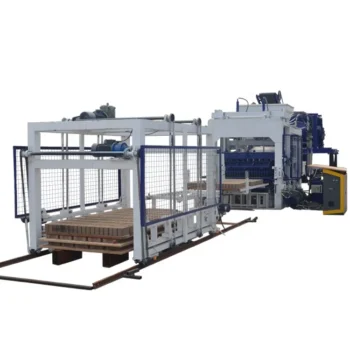
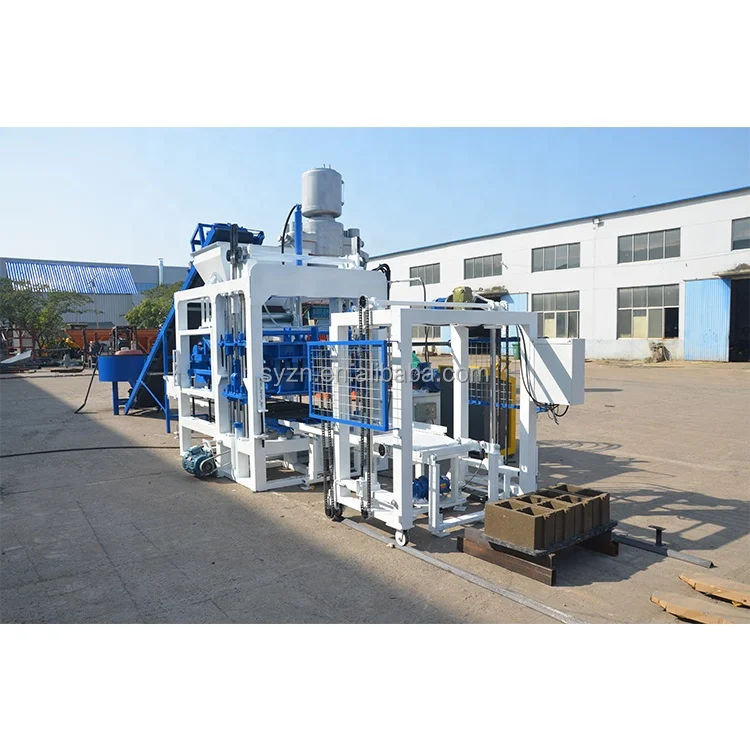
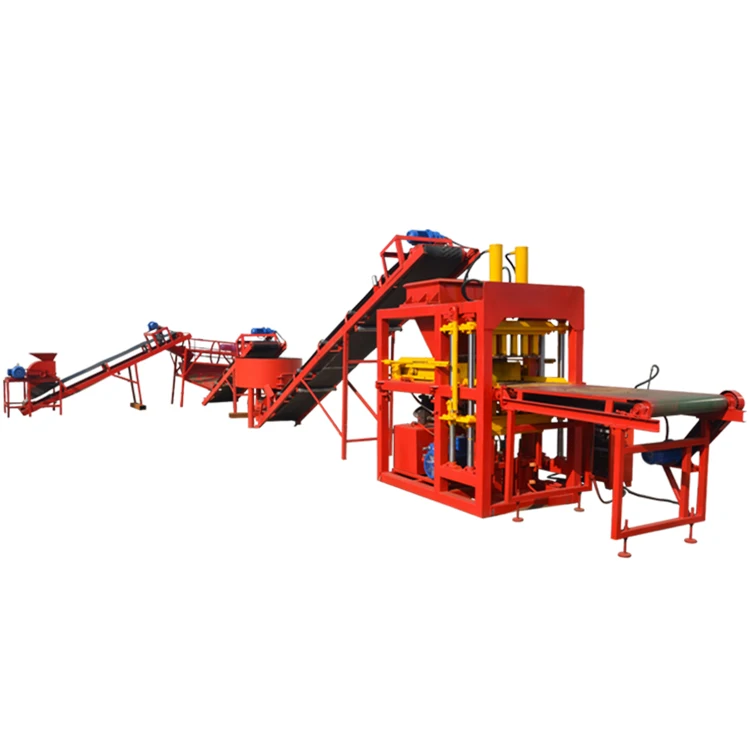
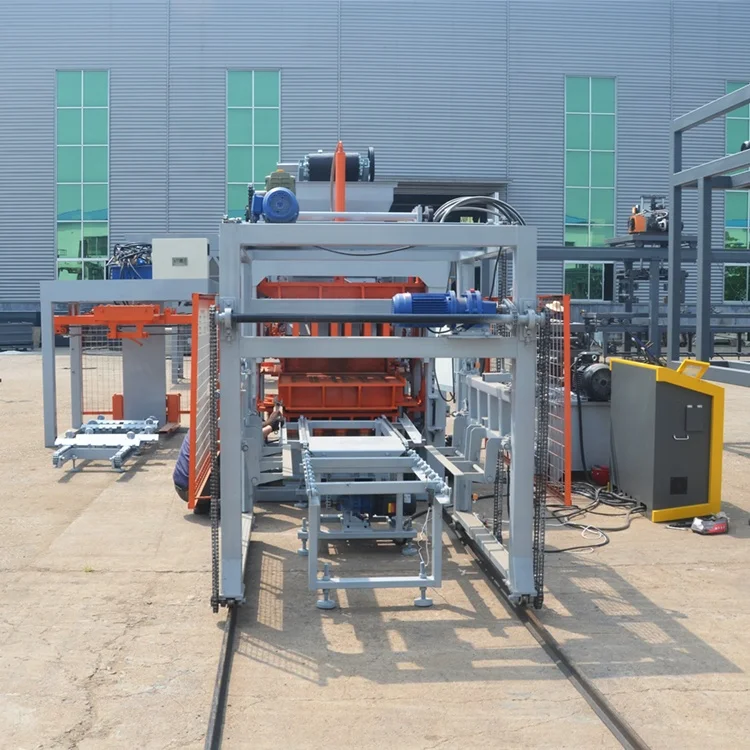
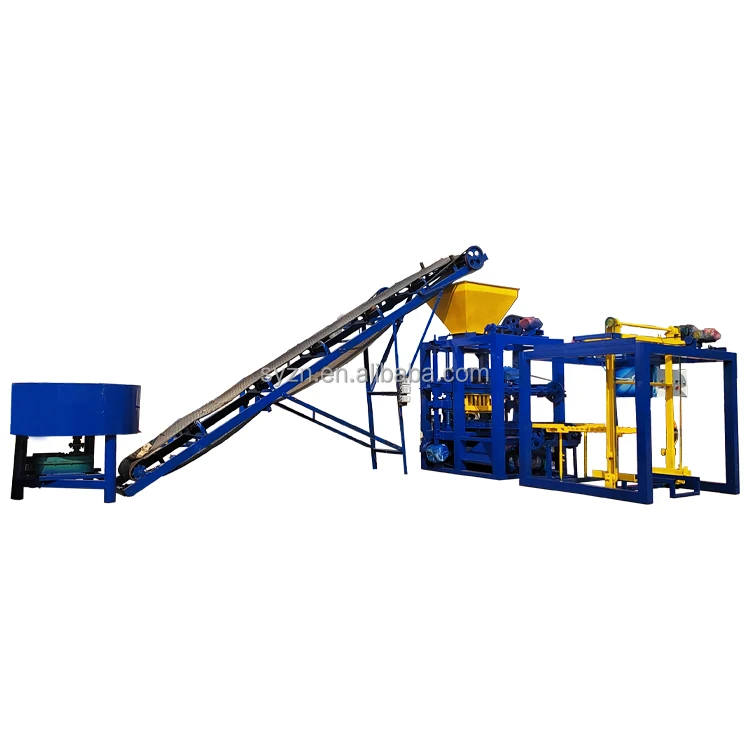
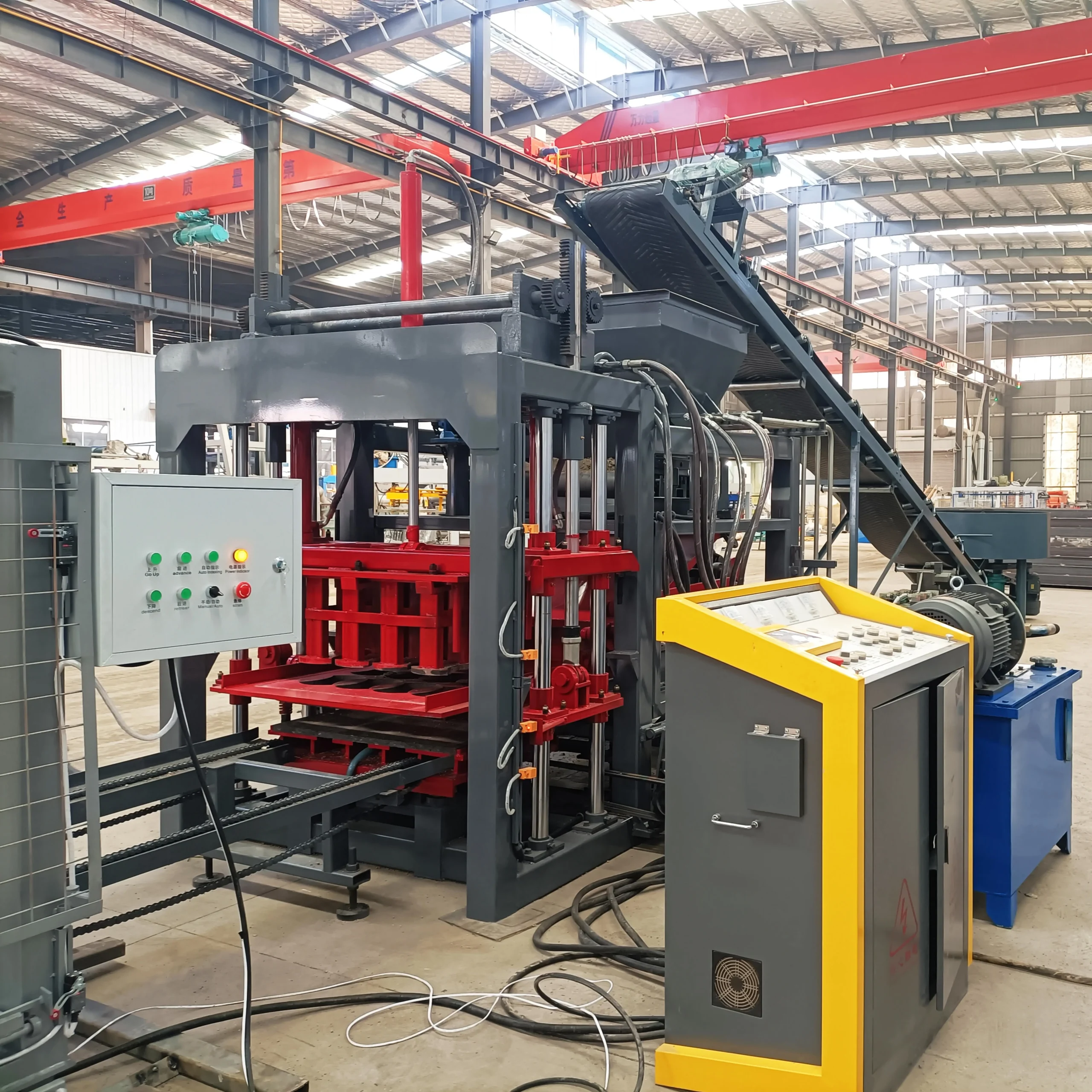
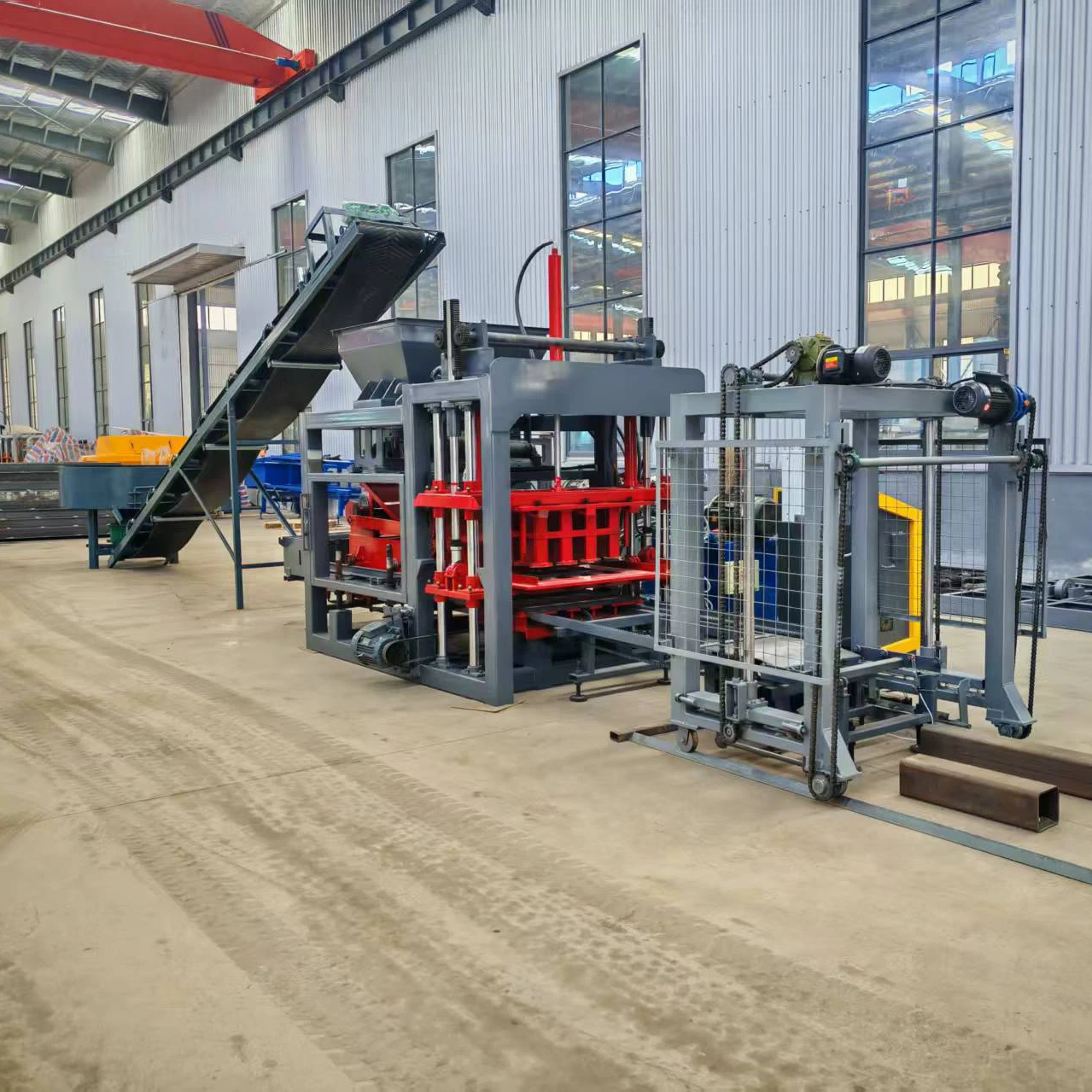
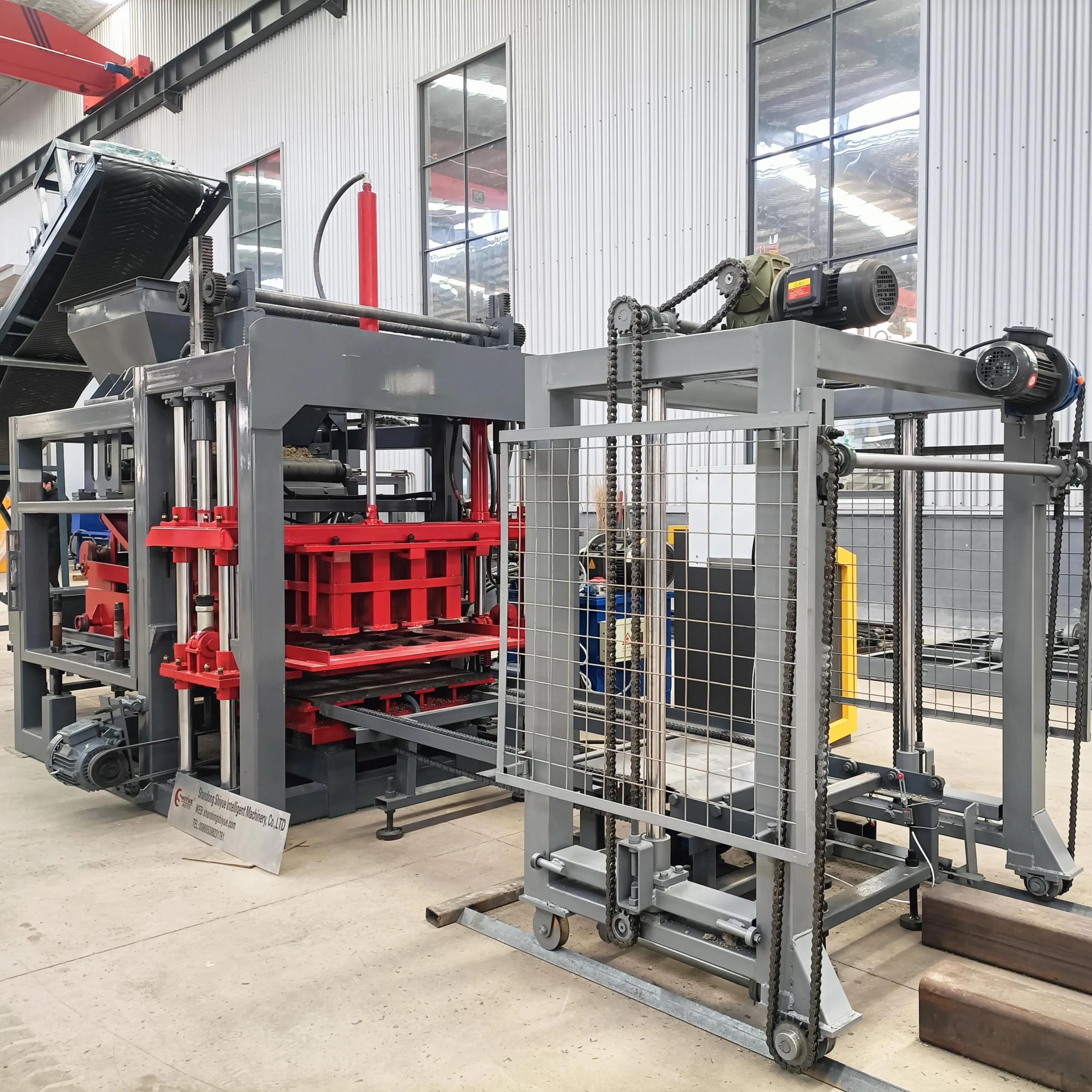
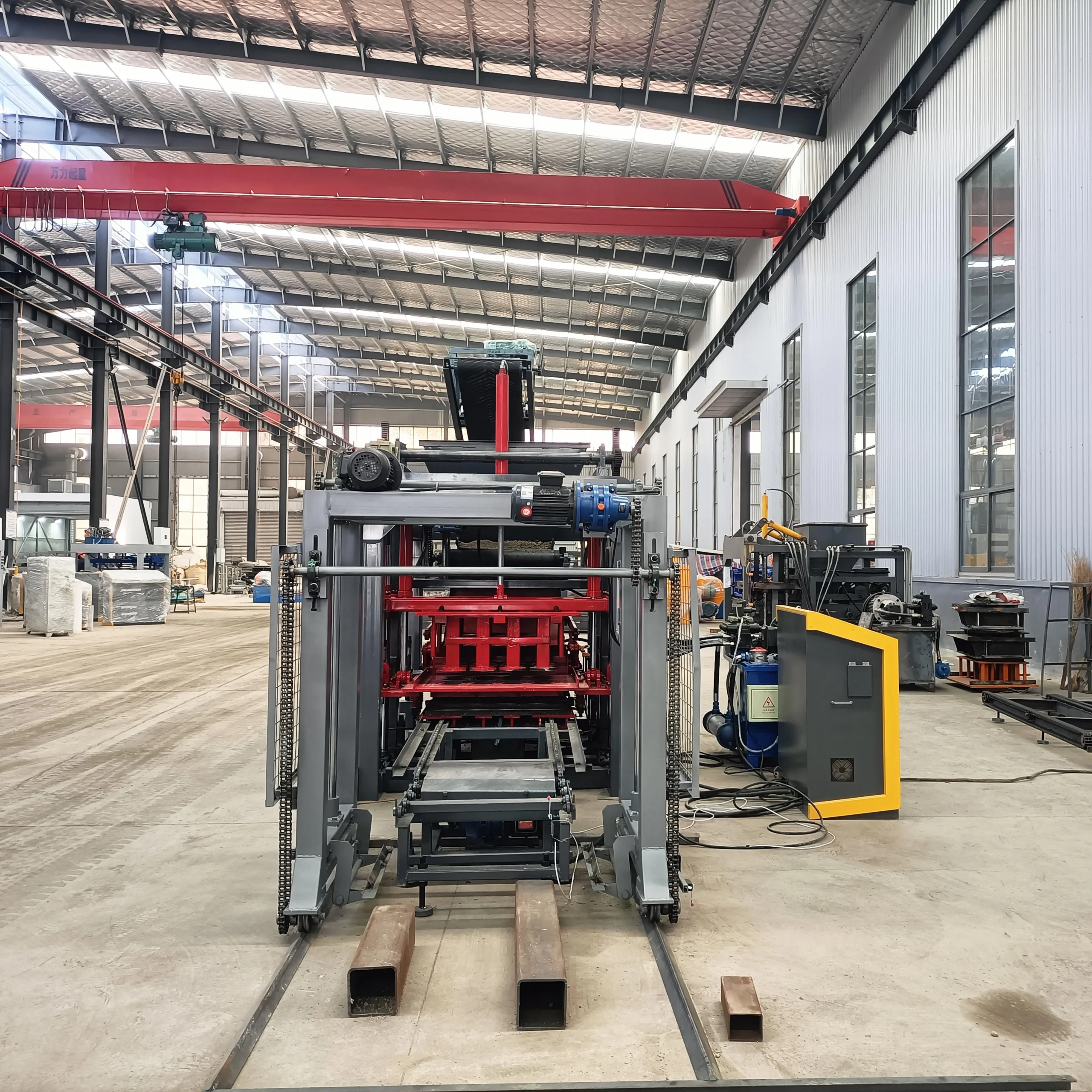
Matched System Configuration — Machine, mould and pallet specified as one integrated unit for the QT4-15A block making machine, sized to the buyer’s actual format and local aggregate rather than a default catalogue build.
Technical Specifications
| Parameter | Value |
|---|---|
| Model | QT4-15A |
| Product Type | Fully Automatic Concrete Block Making Machine |
| Overall Dimensions (L×W×H) | 4100×1600×2600 mm |
| Total Mass | 4 T |
| Rated Pressure | 16–21 MPa |
| Main Vibration Form | Platform Vibration |
| Vibration Frequency | 4200 r/min |
| Vibration Force | 55 kN |
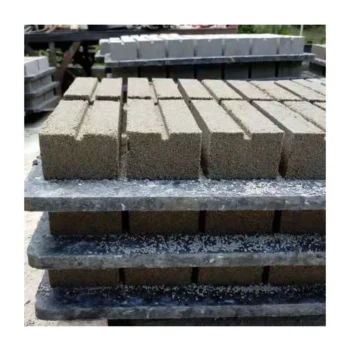
| Pallet Size | 880×550 mm |
| Molding Cycle | 25–30 s (basis not stated in source — confirm block format / material / thickness) |
| Overall Power | 18.45 kW (source value listed as 18.45W — verify against manufacturer catalog) |
| Demolding Method | Hydraulic |
| Factory Area Required | 300 m² |
| Automation Level | Fully automatic |
| Control System | PLC (inferred from fully automatic designation — verify) |
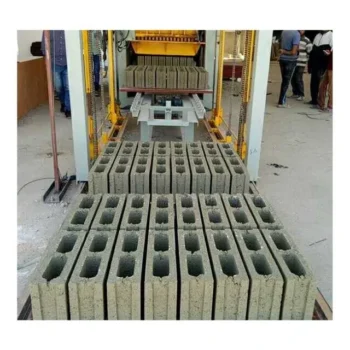
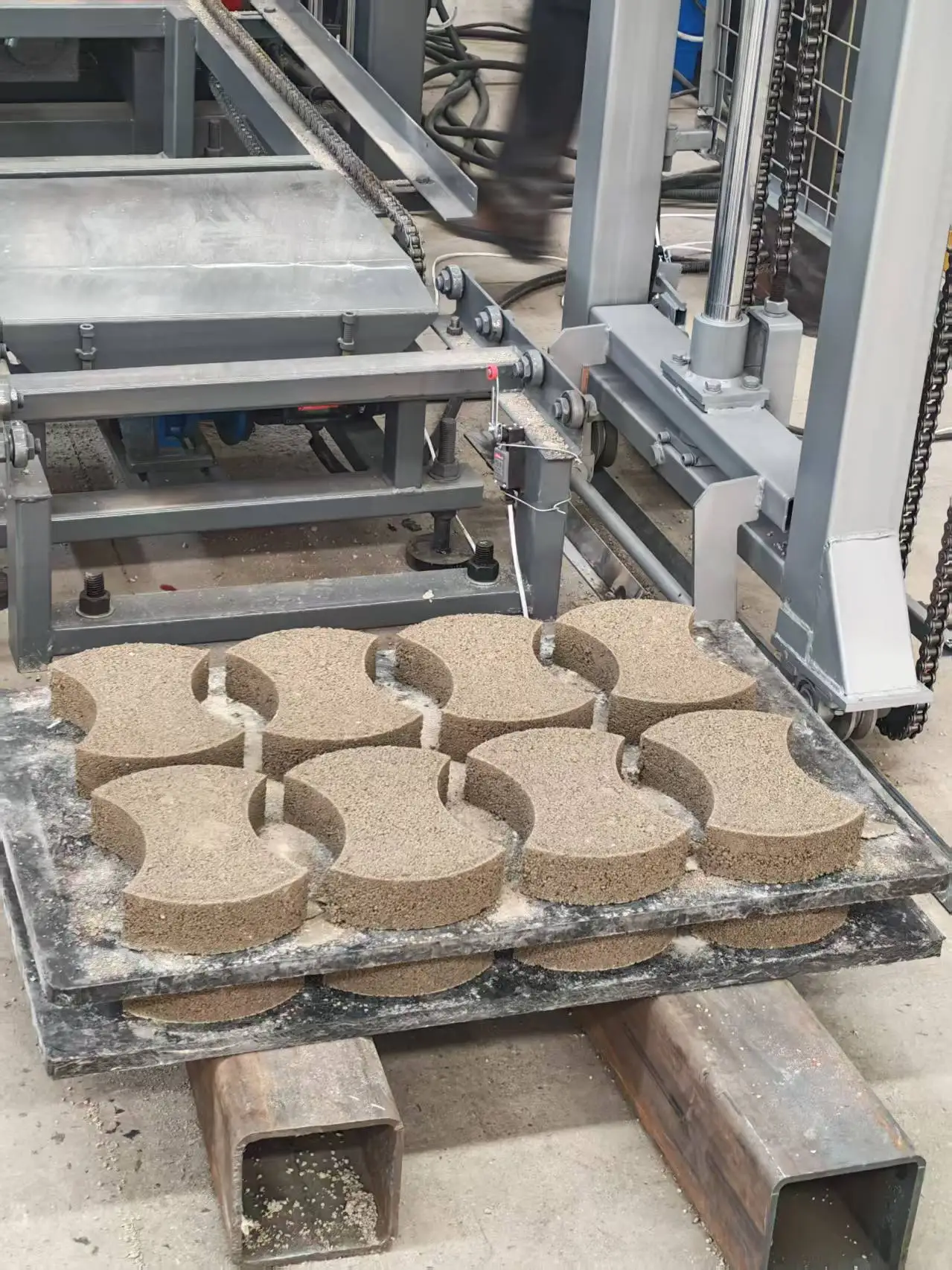
| Applied Products | Concrete hollow blocks, solid blocks, pavers, interlocking blocks, curbstone, colored pavers |
| Raw Materials | Crushed stone, sand, cement, fly ash, gravel, slag, stone dust |
Application Suitability
| Application | Material or Output |
|---|---|
| Hollow block production for masonry walls | Crushed stone, sand, cement, fly ash |
| Solid block manufacturing for load-bearing structures | Gravel, sand, cement, stone dust |
| Paving block production for walkways and driveways | Crushed stone, sand, cement, colored pigments |
| Interlocking brick manufacturing for retaining walls | Slag, sand, cement, gravel |
| Kerbstone production for road edges | Crushed stone, sand, cement |
What the QT4-15A Block Machine Specifications Actually Mean for Daily Output
Cycle time only matters when tied to the specific block format you plan to produce.
Catalogue sheets often quote a single cycles-per-hour figure that assumes an ideal, small-format block, leaving buyers with unrealistic expectations when they switch to the 200 mm hollow block their market actually demands. The QT4-15A block making machine lists a 25–30 second molding cycle, but that number shifts depending on whether you are pressing a 60 mm paver or a deep-core hollow block. I have walked onto sites where the owner calculated daily output from the fastest quoted cycle, only to find their actual production falling well short once the mould for their primary product was installed [NEED_CITE: realistic block machine output calculation methods]. The honest approach is to request a capacity calculation that states the assumed format, wall thickness and mix design for every output figure in the proposal.
Matching Vibration Force and Hydraulic Pressure to Your Mix
The QT4-15A block making machine delivers 55 kN of vibration force paired with 16–21 MPa rated hydraulic pressure, and those two numbers must work together with your specific raw material blend. A mix high in fine sand requires different vibration characteristics than one dominated by coarse crushed stone, and getting the balance wrong produces blocks that either crack during demolding or fail compressive strength tests. The platform vibration system transmits energy through the pallet, and the hydraulic pressure compacts the material from above; if your local aggregate has a different particle size distribution than the default test mix, the pressure and vibration settings need adjustment before you commit to a production run [NEED_CITE: concrete mix design for block making machines].
Pallet Size and Your Existing Curing Infrastructure
The 880×550 mm pallet dimension on the QT4-15A is not an arbitrary choice — it determines how many blocks fit on your curing racks, whether your existing forklift can handle loaded pallets safely, and how much floor space the wet blocks occupy during the curing period. I have seen buyers receive machines with pallets sized to a manufacturer default, only to discover their curing area was designed for a different pallet footprint, forcing them to rebuild racks or handle pallets manually. Before confirming the order, the pallet specification should be checked against your actual curing layout and material handling equipment so the line runs smoothly from press to stack.
Reading the Core Specifications for Production Impact
The 4200 r/min vibration frequency and 55 kN vibration force together determine how densely the concrete consolidates inside the mould cavity, which directly affects block strength and surface finish. The 16–21 MPa hydraulic pressure range gives operators room to adjust compaction force when switching between a lightweight hollow block and a dense paving block. The 4100×1600×2600 mm overall dimensions and 4 T total mass tell you what foundation load and ceiling clearance the machine needs — a 300 m² factory area is quoted, but that must include raw material storage, curing space and finished product staging, not just the press footprint. The fully automatic control system with PLC manages the molding cycle, but the 18.45 kW overall power rating means you need to confirm your site electrical supply can deliver stable voltage and frequency before the machine arrives [NEED_CITE: industrial machinery electrical supply requirements].
The Cost of Skipping Configuration Verification
When voltage, frequency and PLC display language are not confirmed in writing before production, the machine can arrive on site and sit idle while transformers are sourced or control panels are reprogrammed. I have worked on installations where the control interface arrived in a language the operators could not read, and production training had to be postponed until a local translator could be found. The mould change procedure is another area where assumptions create downtime — if the time to swap from hollow block to paver format takes most of a shift, the format flexibility you paid for effectively disappears [NEED_CITE: block machine mould change procedures and downtime].
Why Source the QT4-15A Through This Configuration Approach
Block machinery is the single focus here, so the QT4-15A arrives with machine, mould, pallet and handling specified as one matched system rather than assembled from separate suppliers who each optimize for their own product. Configuration is set against your actual mix design and local aggregate, not a catalogue default that may not match what you can source economically. Mould design covers the specific formats your market sells, including custom drawings if you need a block profile that is not in the standard range. The automation level is selectable, so you can start with the fully automatic QT4-15A and plan for future line expansion. Installation support includes operator training so your team understands mould change procedures, PLC parameters and daily maintenance from the first production day.
Documentation & Verification
- Line layout stating the block format assumed for each output figure on the QT4-15A
- Mould drawing and format list confirming every block type planned for production
- Pallet specification matched to your curing rack dimensions and forklift capacity
- Voltage, frequency and PLC language confirmation documented before production
- Factory test record on your specified block format before dispatch
- Hydraulic and electrical schematic for the QT4-15A control and pressure systems
Installation, Commissioning & Support
- 300 m² factory area must include curing space for 880×550 mm pallets and raw material staging
- 18.45 kW power draw requires dedicated circuit with confirmed voltage and frequency before arrival
- Machine arrives dismantled for container shipment; on-site assembly aligns platform vibration system
- PLC control parameters set during commissioning to match your specific mix design and block format
- Operator training covers mould change procedure, hydraulic pressure adjustment and daily maintenance
- Wear parts and mould list provided so first replacement can be ordered before stock runs out
Preparing Your QT4-15A Inquiry
To get a configuration that matches your production reality, share the specific block format and dimensions your market sells most, along with the daily output target for that format. Include details on your local raw materials — the type of aggregate, sand source and cement grade available — so the vibration and pressure settings can be matched before the machine is built. State your site voltage, frequency and preferred PLC display language so electrical and control systems are configured correctly for your region.
Frequently Asked Questions
Q: How is daily output calculated for different block formats on the QT4-15A?
A: Daily output depends on the specific block format, wall thickness and mix design, not a single catalogue number. The 25–30 second molding cycle quoted applies to a specific configuration that must be confirmed with your target block dimensions. A proper capacity calculation states the assumed format for every output figure so you can plan production accurately.
Q: How do I match vibration force and hydraulic pressure to my local aggregate?
A: The 55 kN vibration force and 16–21 MPa hydraulic pressure need to be balanced against your specific mix design and aggregate particle size. A mix with coarse crushed stone behaves differently than one with fine sand, and the settings must be adjusted during commissioning to achieve consistent block strength without cracking during demolding.
Q: What is involved in changing moulds between hollow block and paver formats?
A: Mould change on the QT4-15A involves releasing the current mould, installing the new one and adjusting PLC parameters for the different cycle time and pressure requirements. The procedure should be covered during operator training so your team can switch formats without extended downtime disrupting daily production targets.
Q: Which pallet size should I choose for the QT4-15A given my existing setup?
A: The 880×550 mm pallet must be checked against your curing rack dimensions and forklift capacity before the order is confirmed. If your existing curing area was designed for a different pallet footprint, the mismatch will create handling problems from the moment production starts, so this verification is part of the configuration process.
Q: What electrical details must be confirmed before the QT4-15A ships?
A: Voltage, frequency and PLC display language must all be documented in writing before production begins. The 18.45 kW power rating requires a stable electrical supply, and arriving on site with the wrong voltage configuration or an unreadable control interface will delay commissioning until the issue is resolved.