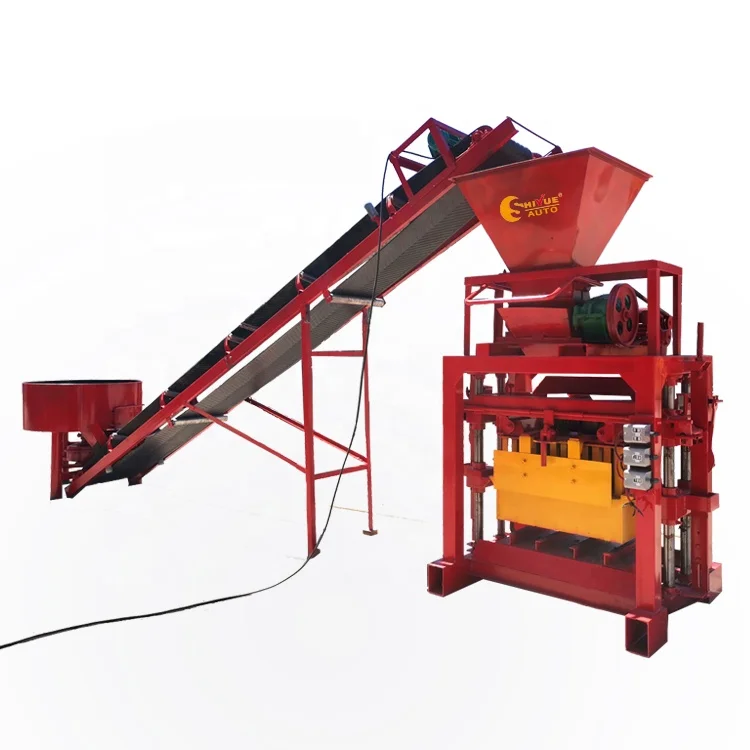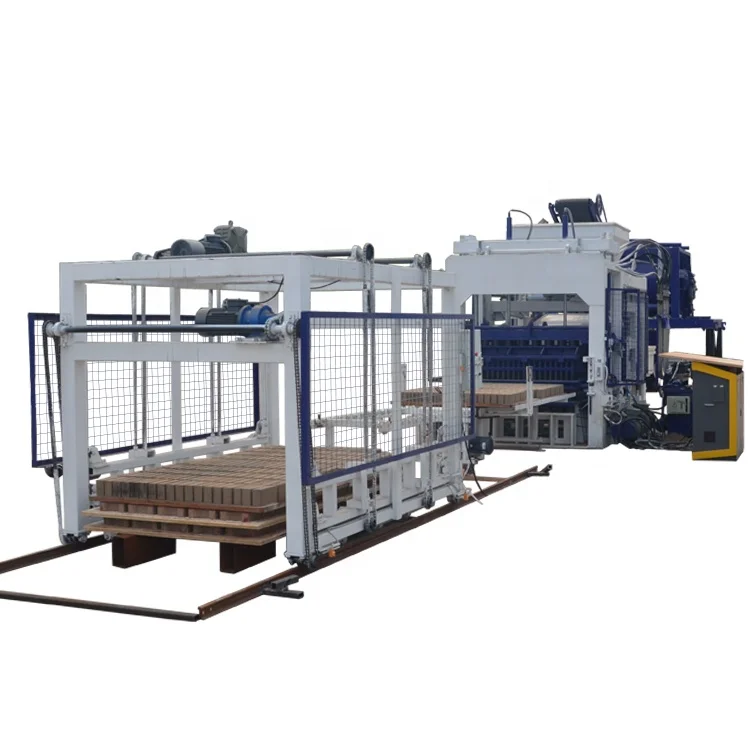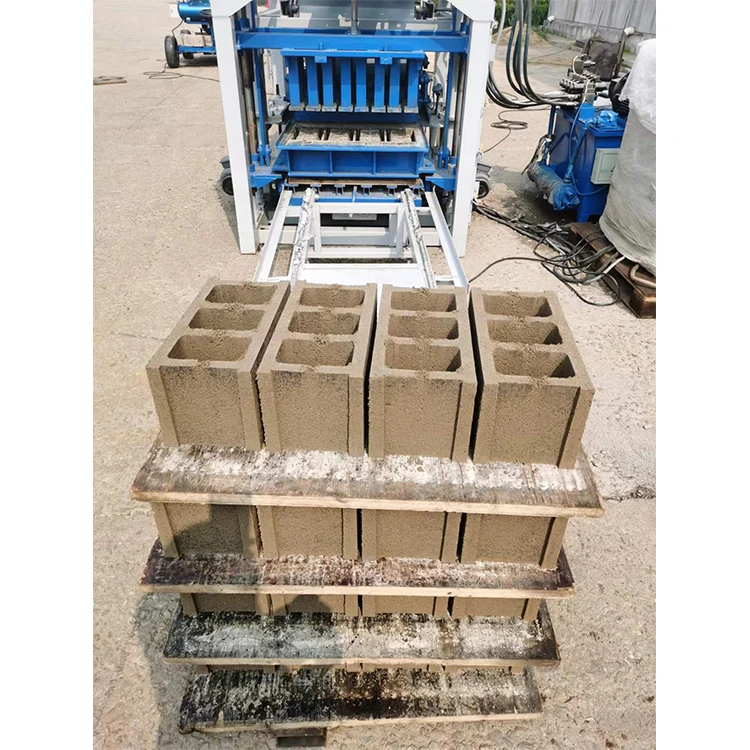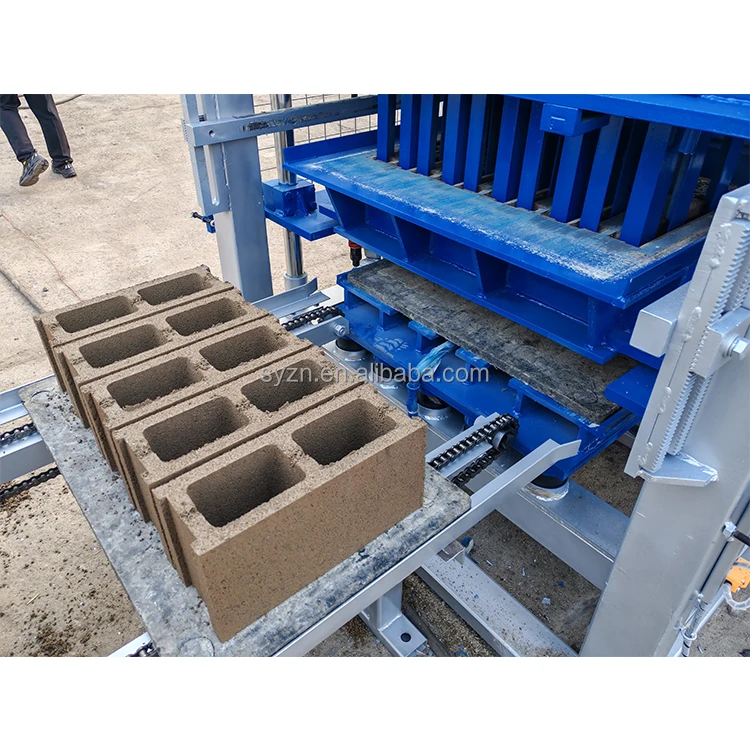
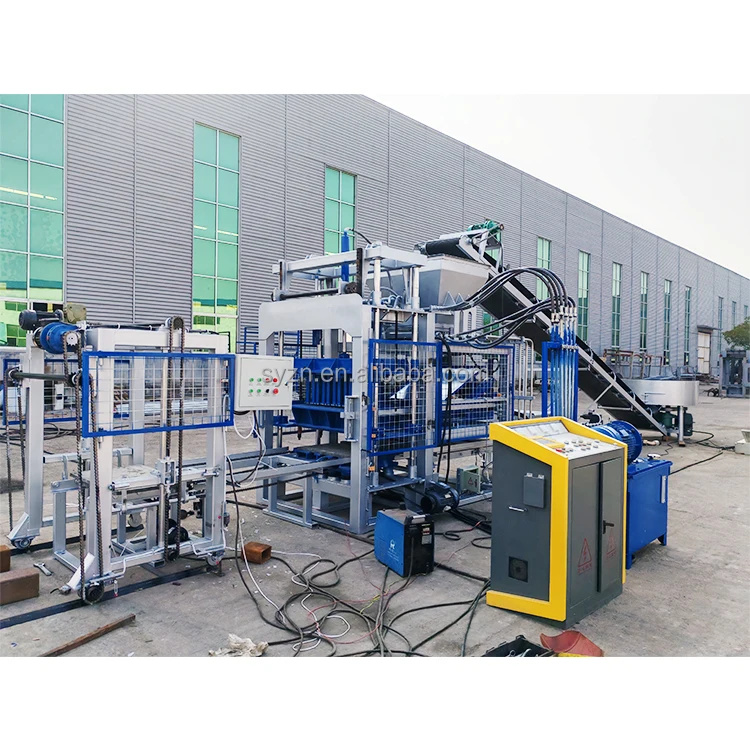


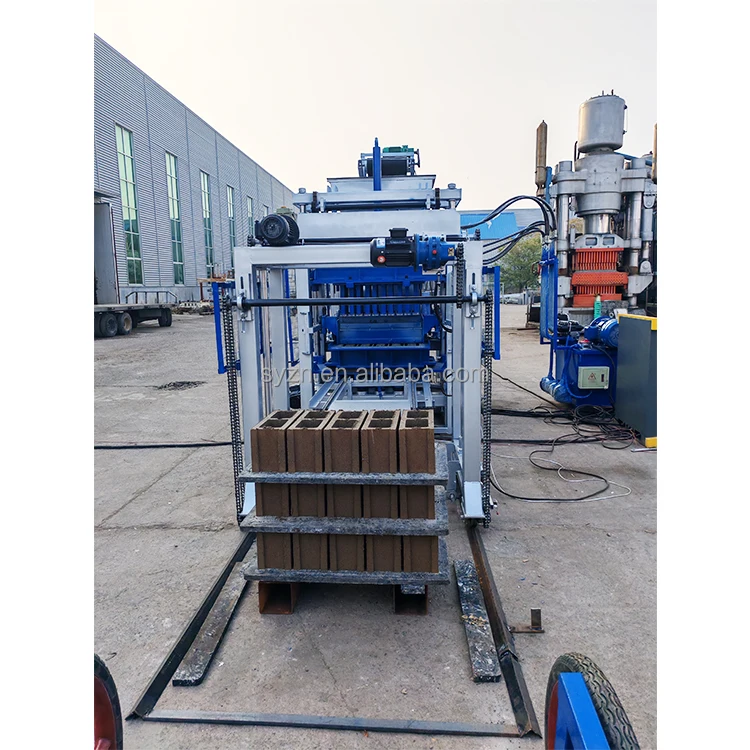
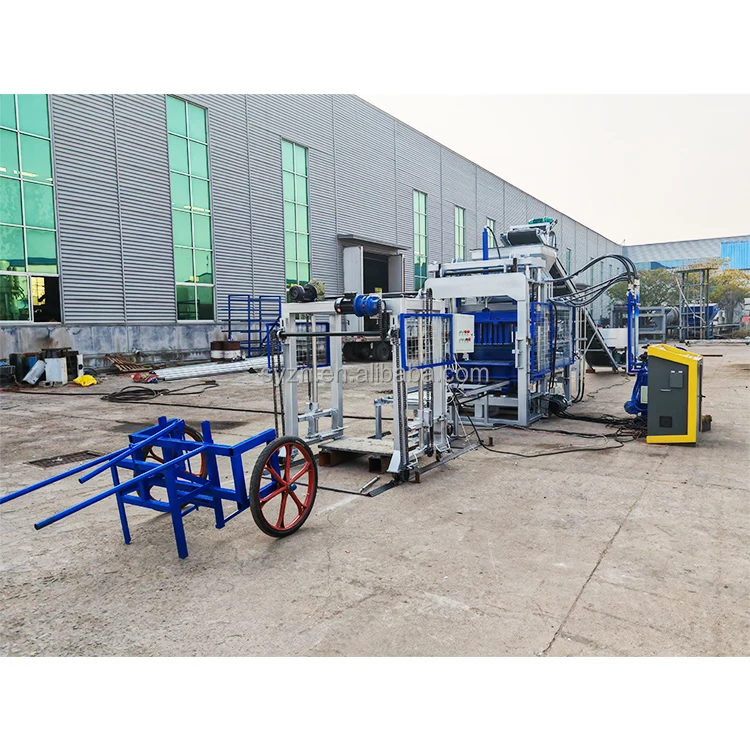
Description
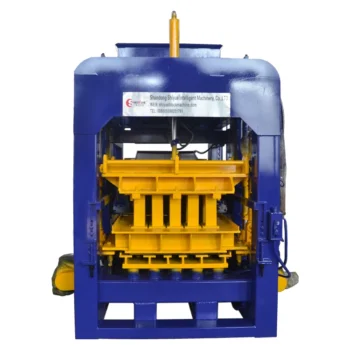
Vibration-matched hydraulic pressure — QT4-15A block machine specifications set vibration force and rated pressure against your actual mix design, not a catalogue default.
Technical Specifications
| Parameter | Value |
|---|---|
| Model | QT4-15A |
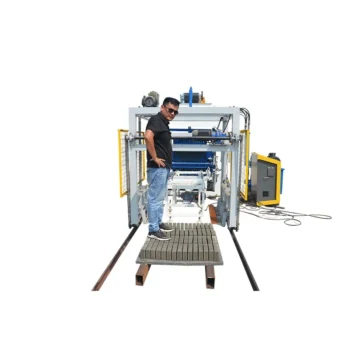
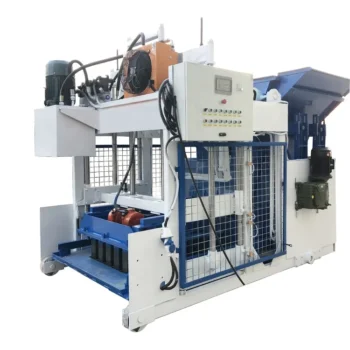
| Product Type | Fully Automatic Concrete Block Making Machine |
| Overall Dimensions (L×W×H) | 4100×1600×2600 mm |
| Rated Pressure | 16–21 MPa |
| Main Vibration Form | Platform Vibration |
| Vibration Frequency | 4200 r/min |
| Vibration Force | 55 kN |
| Pallet Size | 880×550 mm |
| Molding Cycle | 25–30 s (basis not stated in source — confirm block format / material / thickness) |
| Overall Power | 18.45 kW |
| Total Mass | 4 T |
| Demolding Method | Hydraulic |
| Recommended Factory Area | 300 m² |
| Raw Materials | Crushed stone, sand, cement, dust, fly ash, gravel, slag |
| Control System | PLC (language options to be confirmed) |
| Automation Level | Fully automatic |
| Voltage & Frequency | To be confirmed before production |
Application Suitability
| Application | Material or Output |
|---|---|
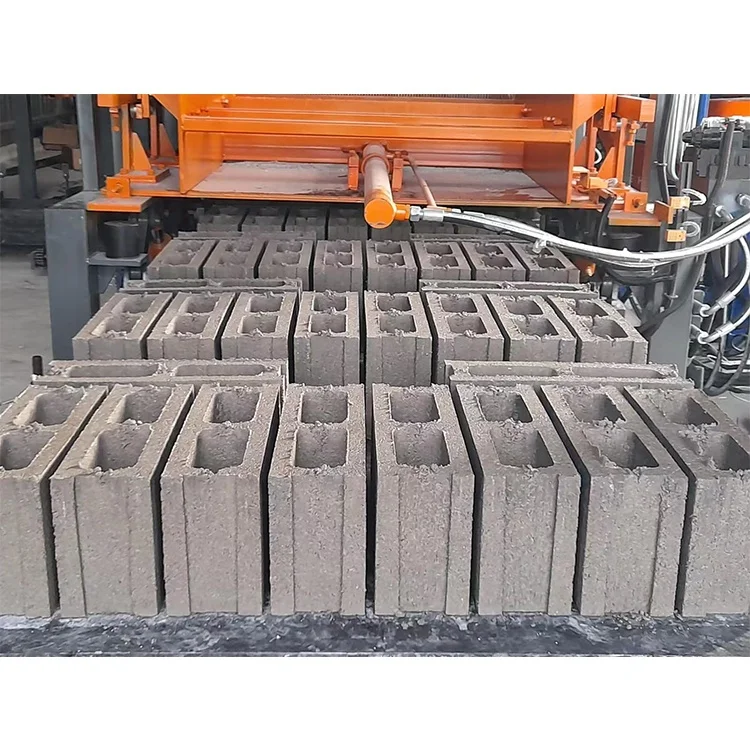
| Hollow block production | Crushed stone, sand, cement, fly ash blends |
| Solid block manufacturing | Gravel, sand, cement mixes for load-bearing walls |
| Paving block and colored paver runs | Fine aggregate with cement and pigment additives |
| Interlocking brick production | Slag, dust, cement combinations for dry-stack formats |
| Kerbstone and curb units | Coarse aggregate mixes requiring high compaction force |
What "25-Second Cycle Time" Actually Means for Your Daily Output
The QT4-15A block machine specifications list a 25–30 s molding cycle, but that figure only holds true for the block format and mix assumed during testing.
Most block machine quotations state cycles per hour without naming the reference block. A hollow block with deep cores takes longer to fill and compact than a thin paving stone, so daily output shifts dramatically between formats. I once watched a plant owner in East Africa plan a two-shift schedule around a catalogue number, only to find his real output on 200 mm hollow blocks was less than half. [NEED_CITE: block cycle time variance by format and mix design] The QT4-15A fully automatic block making machine must be evaluated against your specific block drawing before any capacity promise is taken seriously.
Matching Vibration Force to Your Local Aggregate
Platform vibration at 4200 r/min delivers 55 kN of compaction force through the mold table. That figure is meaningful only when paired with the hydraulic pressure range of 16–21 MPa pressing from above. If your local crushed stone runs coarse or your sand has high fines content, the balance between vibration amplitude and top pressure determines whether blocks leave the mold with clean edges or micro-cracks. The QT4-15A block machine specifications give you the envelope; dialing in the exact settings requires a sample of your raw material.
Pallet Sizing Beyond the Press Itself
The 880×550 mm pallet dimension drives more than just mold layout. It dictates the turning radius your forklift needs in the curing yard, the spacing between curing rack uprights, and how many pallets fit in a standard curing chamber. When I visited a block plant where the owner had already built curing racks for 900×600 mm pallets, the mismatch meant every pallet had to be re-stacked by hand before curing. [NEED_CITE: pallet size compatibility with curing infrastructure] Confirming pallet size against your existing yard layout avoids that kind of costly rework after the QT4-15A fully automatic concrete block making machine arrives.
Reading the Numbers That Matter for Block Density
Hydraulic pressure between 16 and 21 MPa provides the top compaction needed for load-bearing hollow blocks, while the 55 kN vibration force consolidates the mix from below. Together, these two forces determine block density and compressive strength. The 18.45 kW overall power rating covers the hydraulic pump, vibration motor, and conveyor drives operating simultaneously — undersizing your site transformer below this total draw will cause voltage sag during peak compaction. At 4 T total mass, the machine frame absorbs vibration internally rather than transmitting it to the foundation, which matters when the press sits near other equipment. Molding cycle of 25–30 s is achievable on standard hollow blocks; thinner pavers may cycle faster while tall kerbstones require longer fill times.
The Cost of Ignoring Format-Specific Capacity Data
When a buyer purchases based on a single cycles-per-hour number, the first sign of trouble is missed delivery deadlines. Contractors waiting for block deliveries begin sourcing from competitors, and the plant owner discovers the shortfall only after penalties accrue. Mould changes also compound the problem: if the machine was not specified with quick-change hardware for the formats you actually rotate between, a swap that should take minutes can consume most of a shift. [NEED_CITE: production losses from unplanned mould change downtime] These are the hidden costs that never appear in a quotation but show up in monthly output reports.
Why Buyers Specify Through This Channel
Every QT4-15A quotation starts with your target block format, local aggregate sample, and site conditions before any configuration is proposed. Mould designs are produced for the formats your market actually sells, including custom drawings when standard molds do not match local building codes. The pallet size is confirmed against your curing area dimensions and forklift capacity, not picked from a default list. Voltage, frequency, and PLC display language are locked in before production begins, eliminating commissioning delays. Line layout drawings state the block format assumed for each output figure so there is no ambiguity at delivery.
Documentation & Verification
- Line layout showing capacity per block format with assumed mix proportions
- Mould drawings covering every block type in your product range
- Pallet specification matched to your curing rack and forklift dimensions
- Voltage, frequency, and PLC language confirmation signed before production
- Factory test record on your specified block format before dispatch
- Hydraulic and electrical schematic for on-site troubleshooting
Installation, Commissioning & Support
- Foundation pad sized to the 4100×1600 mm footprint with vibration isolation considerations
- Dedicated power circuit rated for the 18.45 kW total draw at confirmed voltage and frequency
- Machine arrives with hydraulic and electrical connections pre-wired for faster field hookup
- First-run commissioning includes parameter tuning against your local aggregate and mix design
- Operator training covers PLC navigation, mould change procedure, and daily maintenance checkpoints
- Wear parts list identifies hydraulic seals, vibration springs, and mould liners with reorder codes
Before You Request a Quotation
Send your target block formats with dimensional drawings, the daily output you need per format, and a sample or lab report of your local aggregate. Include your site voltage and frequency, the language your operators read, and the dimensions of any existing curing racks or forklifts. This information lets the configuration start from your actual conditions rather than a generic template.
Frequently Asked Questions
Q: What is the realistic daily output of the QT4-15A for my specific block format?
A: Output depends on the block dimensions, wall thickness, and your mix design. The 25–30 s molding cycle applies to a reference format that must be confirmed. Submit your block drawing and target mix so a format-specific capacity calculation can be prepared before any commitment is made.
Q: How do I match pallet size to my existing curing racks and forklift?
A: The standard 880×550 mm pallet must align with your curing rack spacing and forklift tine width. Measure your rack upright clearance and forklift capacity before confirming the order so pallets move from press to curing area without manual re-stacking.
Q: Can the mould be custom-designed to my market’s block drawings?
A: Yes. Mould design covers every format your market requires, including interlocking profiles, kerbstones, and non-standard hollow blocks. Provide dimensional drawings or physical samples and the mould will be engineered to match, with cycle time re-verified for each custom format.
Q: What raw material mix does this machine require, and can it use my local aggregate?
A: The QT4-15A handles crushed stone, sand, cement, fly ash, gravel, slag, and stone dust. Your local aggregate particle size and gradation affect vibration settings and hydraulic pressure tuning. A sample of your material allows the configuration to be matched before production begins.
Q: How long does a mould change take, and what formats are compatible?
A: Mould change time depends on the quick-release hardware specified at order stage. The machine supports hollow, solid, paving, interlocking, and kerbstone formats on the same 880×550 mm pallet envelope. Confirm your full format list during inquiry so the mould mounting system is specified accordingly.