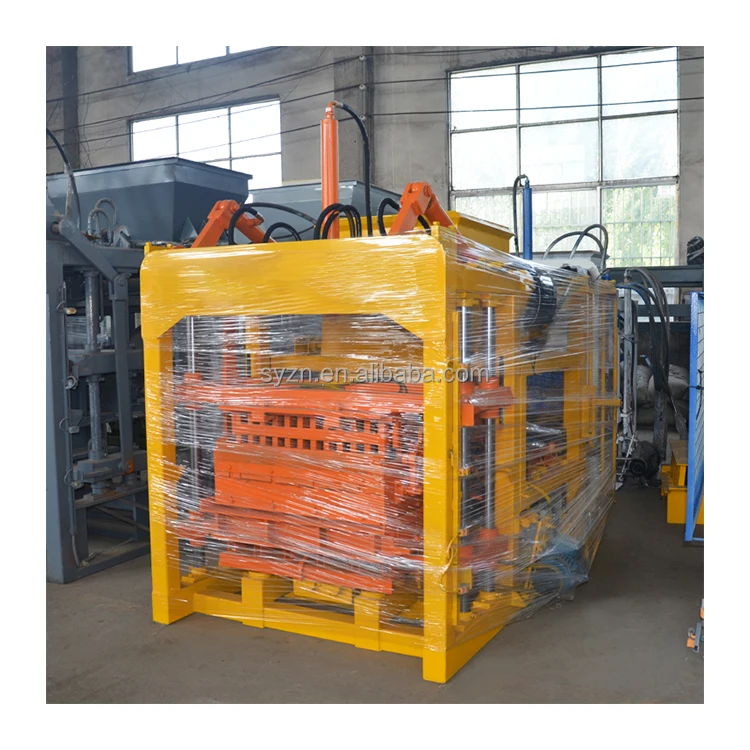
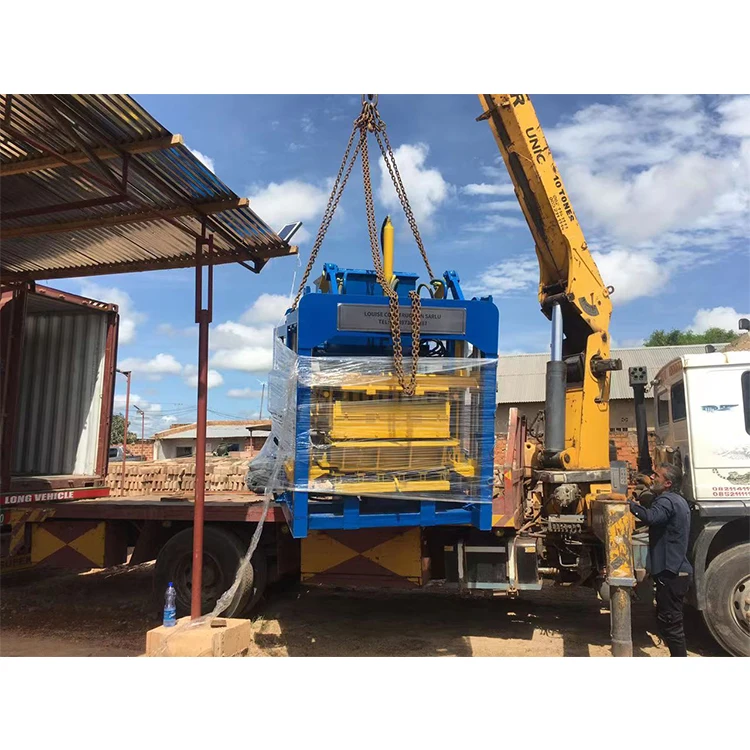
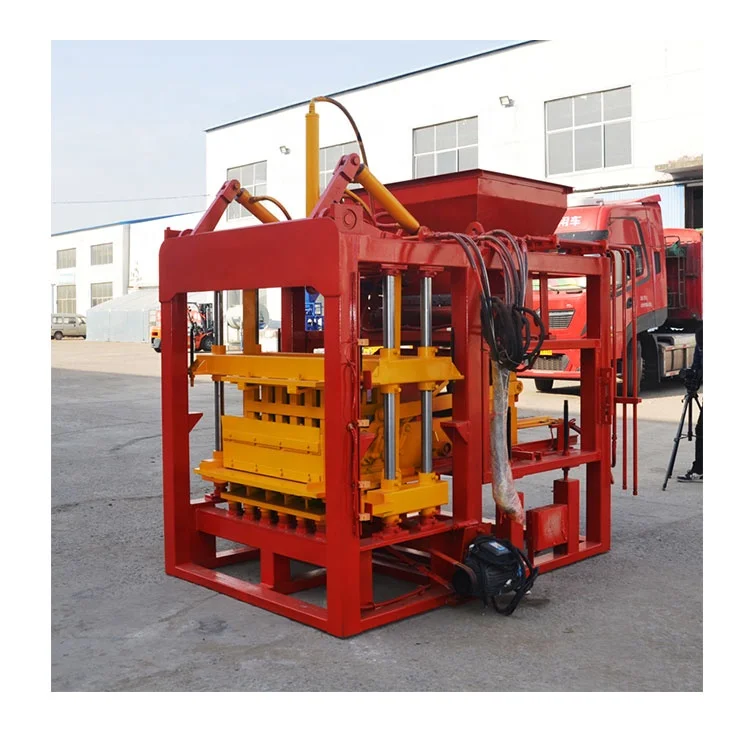

Description
Format-Matched Output — every QT4-15A capacity figure is tied to a named block dimension, so daily output holds up when you switch from hollow block to paver on the shop floor.
Technical Specifications
| Parameter | Value |
|---|---|
| Model | QT4-15A |
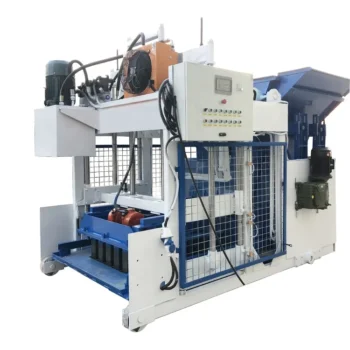
| Product Type | Hydraulic Concrete Block Making Machine |
| Overall Dimensions (L×W×H) | 7100×1600×2610 mm |
| Total Weight | 3 T |
| Molding Cycle | 15–25 s |
| Vibration Frequency | 4600 r/min |
| Vibration Force | 40–50 kN |
| Total Power | 18.45 kW |
| Mixer Model | JQ350 |
| Pallet Size | 850×550×25 mm |
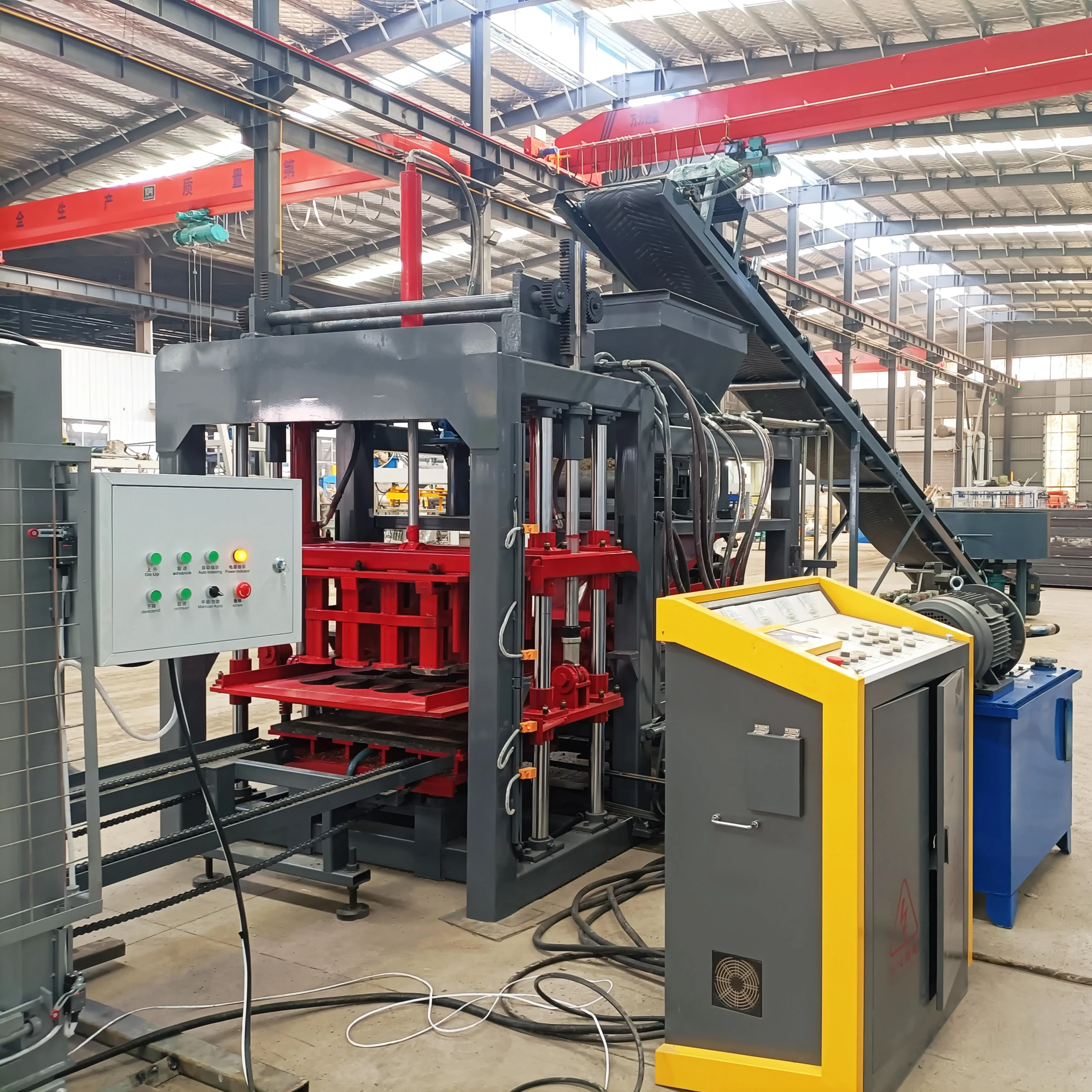
| Control System | PLC control system |
| Hydraulic Station | High-pressure hydraulic system, included |
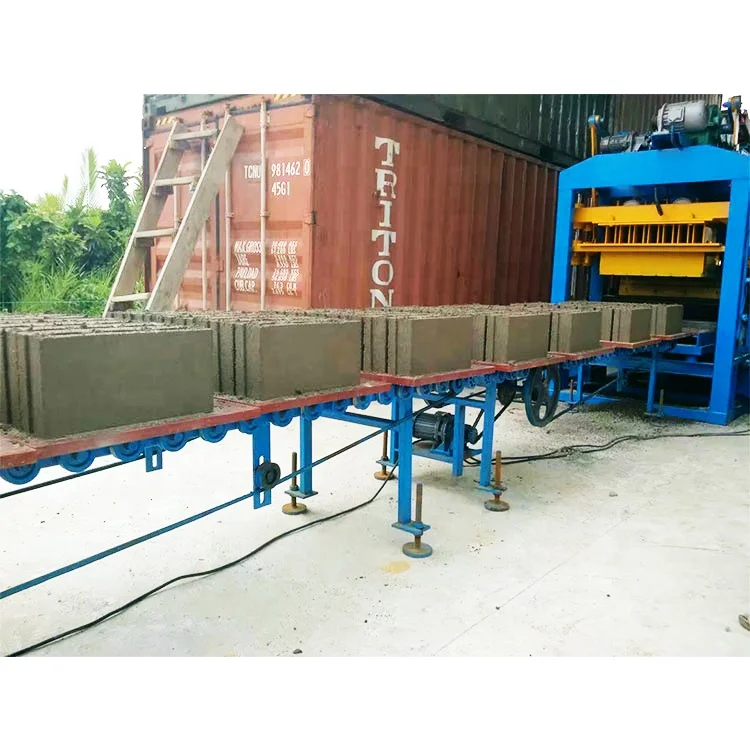
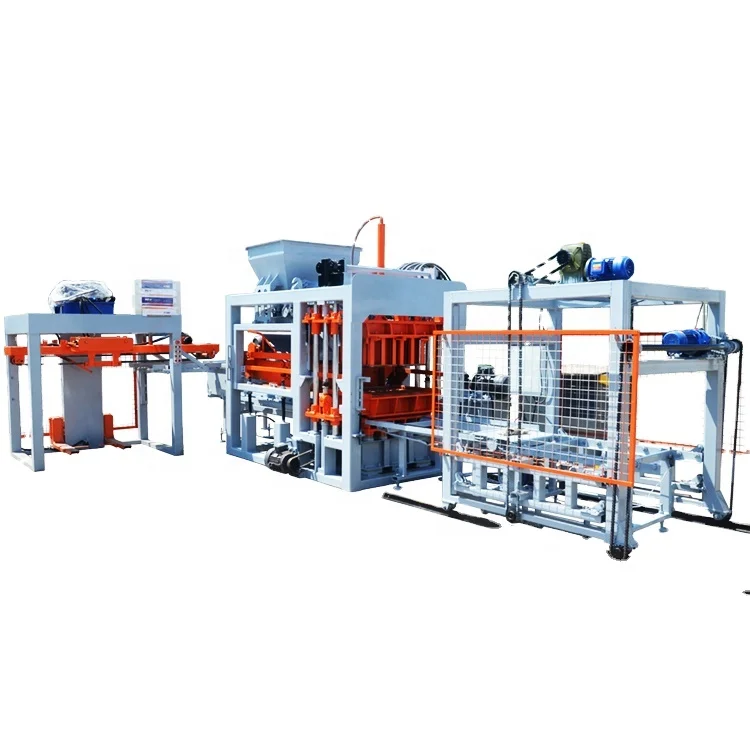
| Included Equipment | Block making machine, hydraulic station, PLC control system, pallet feeder, brick conveyor, block sweeper |
| Free Accessories | Manual hydraulic trolley, spare parts and tools |
| Output — Hollow Block 400×200×200 mm | 4 pcs/mould, 408 pcs/hr, 3264 pcs/8hr (basis: stated format) |
| Output — Hollow Block 400×150×200 mm | 5 pcs/mould, 510 pcs/hr, 4080 pcs/8hr (basis: stated format) |
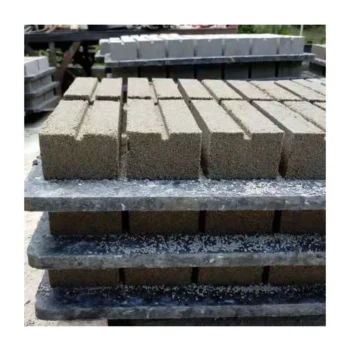
| Output — Solid Brick 240×115×53 mm | 18 pcs/mould, 2100 pcs/hr, 17000 pcs/8hr (basis: stated format) |
| Applied Products | Paver, solid block, hollow block, curbstone |
| Raw Materials | Crushed stone, sand, cement, dust, fly ash |
| Voltage & Frequency | To be confirmed before production |
| PLC Display Language | To be confirmed before production |
| Automation Level | Semi-automatic (manual pallet handling via hydraulic trolley) |
Application Suitability
| Application | Material or Output |
|---|---|
| Hollow block production for building construction | Crushed stone, sand, cement, fly ash; 400×200×200 mm and 400×150×200 mm formats |
| Solid brick production for masonry | Sand, cement, dust; 240×115×53 mm standard brick format |
| Paver production for landscaping and roadways | Crushed stone, sand, cement with fine aggregate face mix |
| Curbstone production for infrastructure | Coarse aggregate and cement; heavier mix designs requiring full vibration force |
| Small-to-medium block plant setup | Semi-automatic operation with manual hydraulic trolley for pallet handling |
| On-site contractor production | Portable pallet system aligned with standard curing rack dimensions |
What "Cycles per Hour" Leaves Out When Sizing a QT4-15A Block Making Machine
A cycle time only matters when the block format, mix design, and curing logistics are named alongside it.
Many quotations list a single cycles-per-hour figure and leave the buyer to assume it applies across every mould they intend to run. In practice, a hollow block cycle and a solid brick cycle demand different vibration durations and feed sequences. On a site in South Asia, I watched a crew lose half a shift because the quoted capacity assumed a lightweight hollow block, while their market required dense interlocking pavers that needed longer press times. The difference between a realistic output plan and a disappointing first week often comes down to whether the supplier stated the format behind each number. [NEED_CITE: block format effect on cycle time and daily output]
Mould-to-Format Matching for Local Markets
The QT4-15A block making machine specifications list three output tiers, each tied to a specific block dimension. When a buyer’s local market runs a non-standard hollow block size — common across West Africa where 450×200×200 mm is preferred over the 400 mm length — the mould must be redesigned, and cycle times recalculated. This machine’s PLC control system allows operators to store multiple press programs, so switching between a hollow block mould and a paver mould does not require manual timer resets. The vibration force range of 40–50 kN gives enough headroom to handle both lightweight hollow blocks and denser curbstone mixes without changing the hydraulic station.
Pallet Sizing Against the Curing Yard
The 850×550×25 mm pallet dimension was chosen to match standard curing rack spacing in small-to-medium plants. When a buyer’s existing forklift has narrow tines or the curing yard uses a different rack pitch, pallets can jam during manual transport — a bottleneck that has nothing to do with the press itself. Before confirming the QT4-15A configuration, the pallet specification must be checked against the buyer’s actual handling equipment. On one East African project, we swapped to a slightly narrower pallet board to match the curing racks already welded on-site, and the crew avoided weeks of manual re-stacking. [NEED_CITE: pallet and curing rack alignment in block plant logistics]
Reading the Specs That Actually Shape Output
The 4600 r/min vibration frequency and 40–50 kN exciting force work together to compact the concrete mix during the molding cycle. Higher frequency with lower force suits fine-aggregate paver mixes, while coarser hollow block mixes need the upper end of the force range to achieve consistent density. The 15–25 second molding cycle is adjustable within the PLC, allowing operators to extend press time for denser curbstone or shorten it for high-volume solid brick runs. The JQ350 mixer feeds material at a rate matched to this cycle window, so the press does not idle between batches. The 18.45 kW total power covers the hydraulic station, vibration motors, and conveyor — a figure that must align with the site’s available transformer capacity before the machine ships.
When the Wrong Configuration Costs a Shift
Specifying the QT4-15A without confirming the buyer’s local aggregate leads to a common failure: the machine arrives, the crew loads river sand with a different grading curve than the factory test assumed, and block strength falls below the local standard. The mould may produce dimensionally correct blocks that crumble under load. Another hidden cost appears when voltage and frequency are not locked in before production — a 50 Hz motor running on a 60 Hz supply spins faster, altering vibration characteristics and shortening bearing life. These mismatches do not show up in the quotation but surface within the first week of operation, sometimes destroying an entire batch of moulds before the root cause is identified. [NEED_CITE: voltage frequency mismatch effects on industrial vibration motors]
Why This Sourcing Path Holds Up
Block machinery is the single focus here, so the QT4-15A press, its mould, pallet, and handling equipment are specified as one matched set rather than assembled from separate suppliers. Each configuration is built around the buyer’s actual mix design and target block format, not pulled from a catalogue default. Moulds are designed for the formats the buyer’s market actually sells, including custom drawings when local standards demand non-standard dimensions. The semi-automatic setup allows a buyer to start with manual pallet handling via the included hydraulic trolley and add automation later. Installation support includes operator training on the PLC interface, and mould and wear parts availability is confirmed before the first production run.
Documentation & Verification
- Line layout and capacity calculation stating which block format each QT4-15A output figure assumes
- Mould drawing and format list confirming every block dimension intended for production
- Pallet specification sheet matched to buyer’s existing curing rack spacing and forklift tine width
- Voltage, frequency, and PLC display language confirmation document issued before production starts
- Factory test record run on the buyer’s target block format, not a generic demonstration cycle
- Hydraulic and electrical schematic for the 18.45 kW power configuration as shipped
Installation, Commissioning & Support
- Foundation must support the 3 T machine weight plus dynamic vibration loads across the 7100×1600 mm footprint
- Dedicated power circuit required for the 18.45 kW total load; voltage and frequency confirmed before wiring
- Hydraulic station arrives pre-connected; commissioning includes pressure calibration against the buyer’s mix
- PLC display language set to operator preference before first mould cycle
- Manual hydraulic trolley training covers pallet loading sequence and curing rack placement
- Wear parts list and mould inventory reviewed on-site to confirm first replacement availability
Before You Request a Quote
To size the QT4-15A accurately, share the exact block formats your market demands — including dimensions and target daily output per format. Confirm your local aggregate type and any available test reports on sand or crushed stone grading. State the site voltage, frequency, and preferred PLC display language so the electrical package is built correctly before the machine leaves the factory.
Frequently Asked Questions
Q: How is the QT4-15A daily output calculated, and which block format does each figure assume?
A: Each output figure is tied to a specific block dimension — 3264 pieces per 8-hour shift for 400×200×200 mm hollow blocks, 4080 for 400×150×200 mm hollow blocks, and 17000 for 240×115×53 mm solid bricks. These figures assume the stated molding cycle and do not transfer to other formats without recalculation based on the actual mould and mix design.
Q: What is the mould change time, and can it be completed within a single shift?
A: Mould change time depends on the mould clamping arrangement and operator familiarity. For plants running two or three formats daily, the change procedure should be rehearsed during commissioning so the crew can complete it without losing a full shift. The PLC stores separate press programs per mould, reducing adjustment time after the physical swap.
Q: Is the vibration force matched to my local aggregate and mix design?
A: The 40–50 kN range covers most standard concrete block mixes, but local aggregate grading and moisture content affect the optimal setting. Before shipment, a mix sample or aggregate test report allows the vibration parameters to be tuned so the QT4-15A produces consistent block density with the materials actually available at the site.
Q: What pallet size does the QT4-15A use, and will it fit my existing curing setup?
A: The standard pallet is 850×550×25 mm. Before production, this dimension is checked against the buyer’s curing rack spacing and forklift tine width. If the existing infrastructure uses a different pitch, pallet size can be adjusted during configuration to avoid handling bottlenecks after the machine arrives.
Q: Which voltage, frequency, and PLC language options are available before shipment?
A: Voltage and frequency are configured to match the buyer’s site supply, and the PLC display language is set to the operator’s preference. These three items are confirmed in writing before the QT4-15A block making machine enters production, preventing commissioning delays caused by electrical or interface mismatches after delivery.