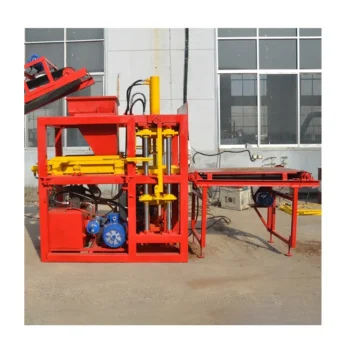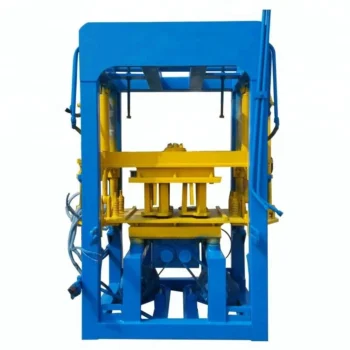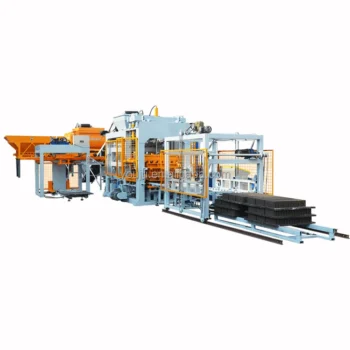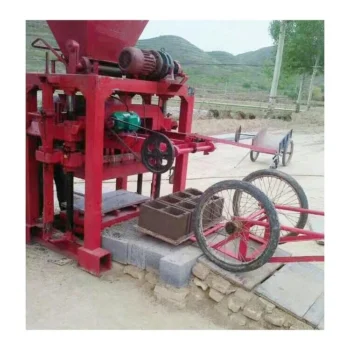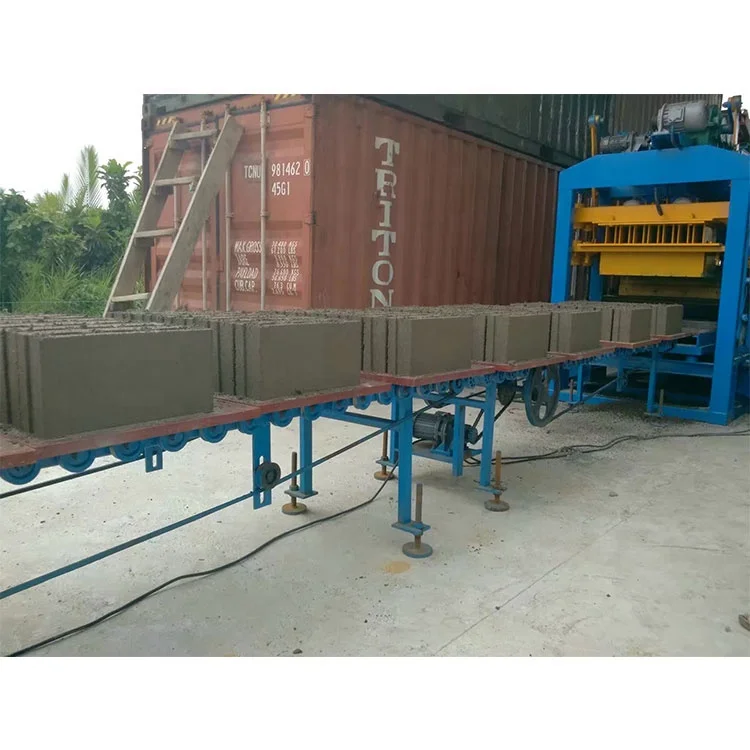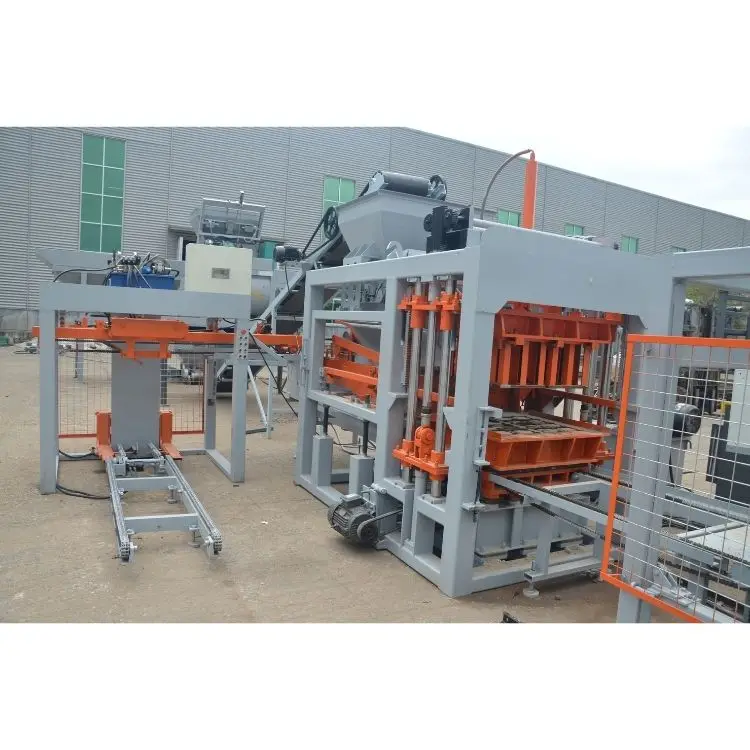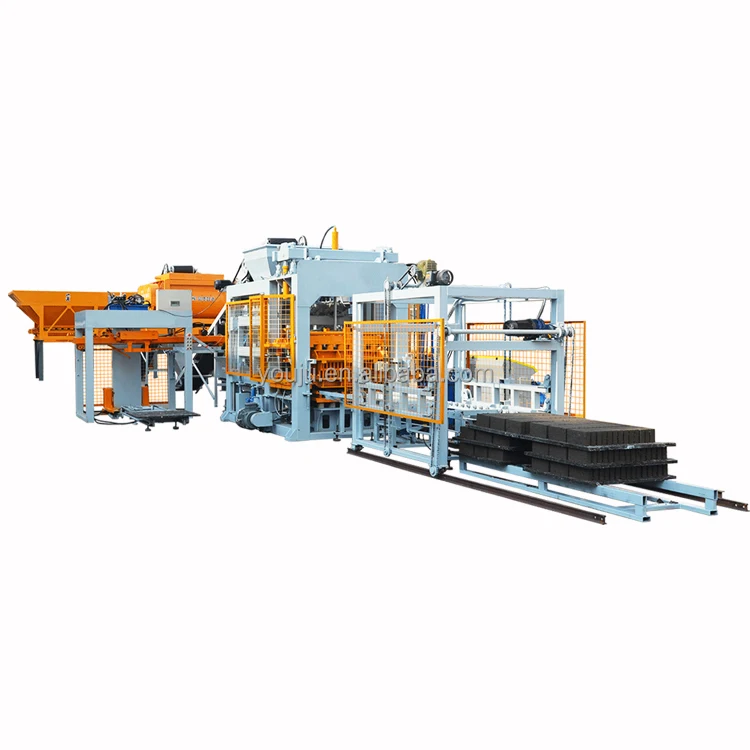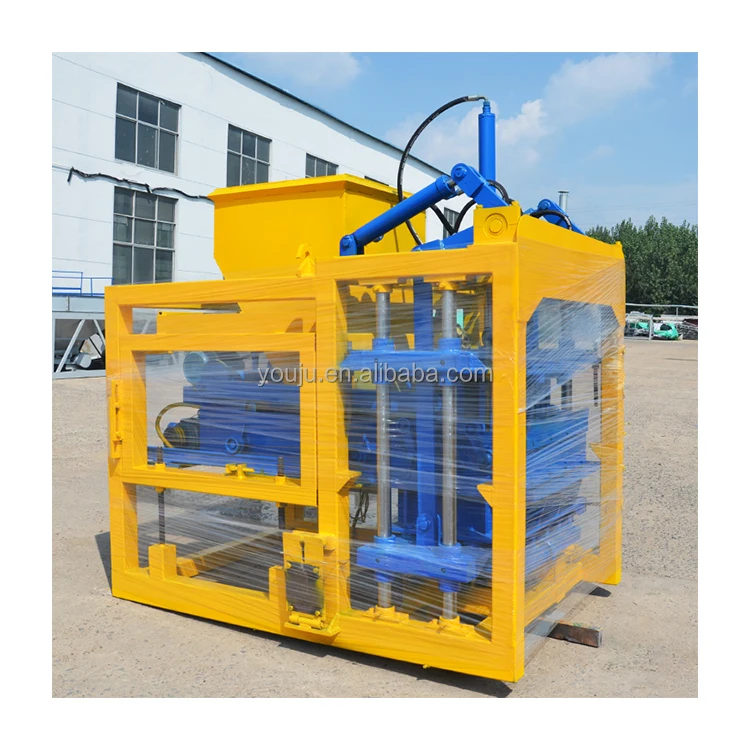
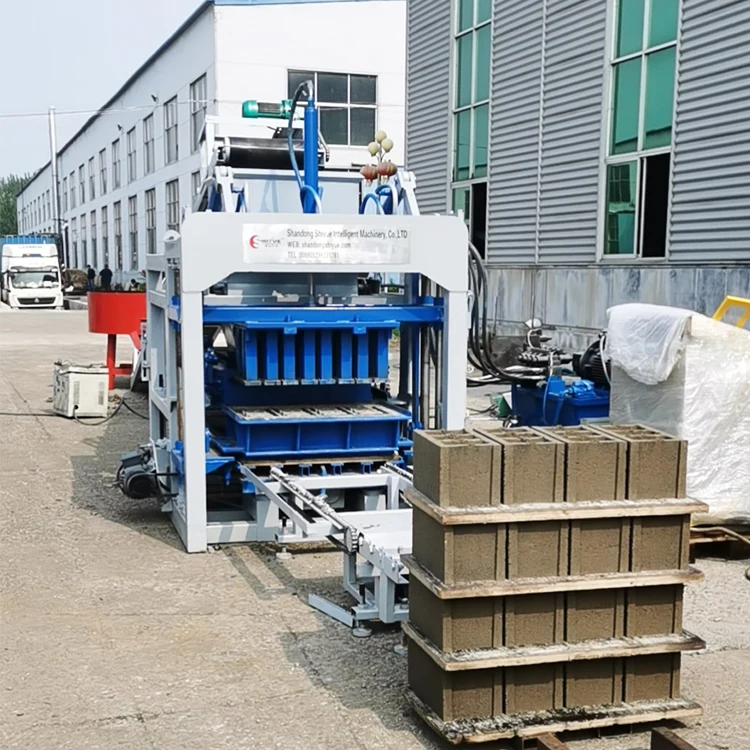
Description
Matched Mould and Line Output — every cycle time and pallet dimension is confirmed against your block format and curing yard before the QT4-15A leaves the factory.
Technical Specifications
| Parameter | Value |
|---|---|
| Model | QT4-15A |
| Product Type | Automatic Concrete Block Making Machine |
| Overall Dimension | 7100 x 1600 x 2610 mm |
| Rated Pressure | 16 MPa |
| Vibration Form | Platform Vibration |
| Pallet Size | 1020 x 570 mm |
| Molding Cycle | 15–25 s (varies by block format) |
| Overall Power | 27.5 kW |
| Control System | Electronic console (PLC) |
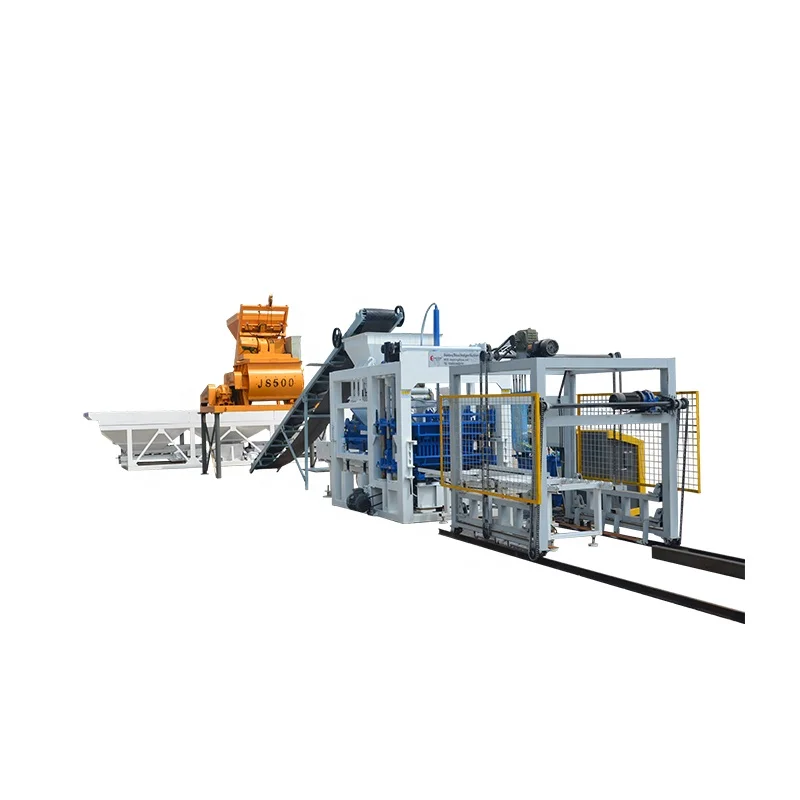
| Mixer | JQ500 concrete pan mixer |
| Belt Conveyor | 8 m standard (6 m optional) |
| Material Feeder | Hopper, feeding box, feeding platform, conveyor |
| Block Receiver | Frame, conveyor system, idler wheels |
| Stacker | Included for layer-by-layer handling |
| Block Clamper | Available for dry block removal |
| Cement Silo | Optional |
| Batching Plant | Available with multiple hoppers |
| Moulds Included | One free hollow mould; additional formats customizable |
| Standards | CE declaration where applicable (basis to be confirmed) |
Application Suitability
| Application | Material or Output |
|---|---|
| Hollow block production plant | Crushed stone, sand, cement, fly ash blends |
| Solid block manufacturing | Dense aggregate and cement mixes |
| Paving block and kerbstone yard | Fine aggregate with pigment and cement |
| Interlocking brick facility | Laterite, quarry dust, cement composites |
| On-site construction production | Locally sourced sand and gravel with cement |
| First block plant startup | Versatile raw material range with mixer included |
What "15–25 Seconds per Cycle" Actually Means for Your Daily Output
Cycle time changes with every mould you put on the QT4-15 block machine specifications platform.
A 15-second cycle on a hollow block does not translate to the same tempo on a dense interlocking paver that needs longer vibration and higher compaction. Sellers often quote the fastest format and let buyers discover the rest on their own production floor. That gap between brochure output and actual daily yield is the single most common dispute I see in this equipment class [NEED_CITE: common capacity misrepresentation disputes in block machinery trade].
Matching Mould Format to Your Market Before the Order
The QT4-15A comes with one hollow mould, but the machine accepts custom mould designs built to buyer drawings. If your local market moves paving blocks and kerbstones more than hollow blocks, the configuration conversation starts there — not with a catalogue default. I always ask for the block formats that actually sell in the buyer’s region before I size the line.
Pallet Size, Curing Yard, and Forklift Alignment
The 1020 x 570 mm pallet is not arbitrary. It must fit the curing racks you already have or plan to build, and the forklift tines must clear the pallet width with room to spare. Sending a machine with pallets that your yard cannot handle means blocks stacked by hand from day one. We confirm pallet dimensions against your site layout before production begins [NEED_CITE: pallet handling misalignment causes in block plant downtime].
How Pressure, Vibration, and Mix Design Intersect
The 16 MPa rated pressure works together with platform vibration to compact the mix inside the mould. But compaction only holds if the mix design matches the vibration frequency and amplitude. A sandy mix with low cohesion needs different vibration settings than a stiff aggregate blend with high cement content. This is why I request a raw material sample before finalizing parameters — a lesson learned the hard way when a high-clay aggregate cut a client’s daily yield in half on an earlier installation. The JQ500 pan mixer included in the line gives consistent blending, but the ratio and moisture content still need local testing.
The Hidden Cost of Skipping Format and Voltage Confirmation
When voltage, frequency, and PLC display language are not locked down before the machine enters production, commissioning stalls the day the container opens. A 380 V / 50 Hz machine arriving at a 440 V / 60 Hz site needs a transformer or a motor swap before anyone can press start. I have watched weeks disappear while electricians sourced local components that should have been specified at the order stage [NEED_CITE: electrical specification mismatch delays in exported industrial machinery]. The same applies to mould change tooling — if the bolts and lifting points are not standard for your maintenance crew, a format swap that should take an hour stretches across an entire shift.
Why Buyers Source This Configuration Here
Block machinery is our single focus, so the press, mould, pallet, and handling equipment are specified as one matched system rather than assembled from unrelated suppliers. Every QT4-15A line layout states which block format each output figure assumes, so there is no ambiguity at delivery. Mould design covers the formats your market actually sells, and custom drawings are welcome. Automation level is selectable — start with the included stacker and add full cubing later. Installation support includes operator training on the PLC console and mould changeover sequence.
Documentation & Verification
- Line layout with capacity calculation stating block format per output figure
- Mould drawing and format list covering hollow, solid, paving, and interlocking types
- Pallet specification matched to your curing yard and forklift dimensions
- Voltage, frequency, and PLC language confirmation sheet signed before production
- Factory test record on your target block format before dispatch
- Operation and maintenance manual with wear parts and mould replacement list
Installation, Commissioning & Support
- Foundation pad sized to the 7100 x 1600 mm footprint with vibration isolation
- Dedicated circuit rated for 27.5 kW total draw at confirmed voltage and frequency
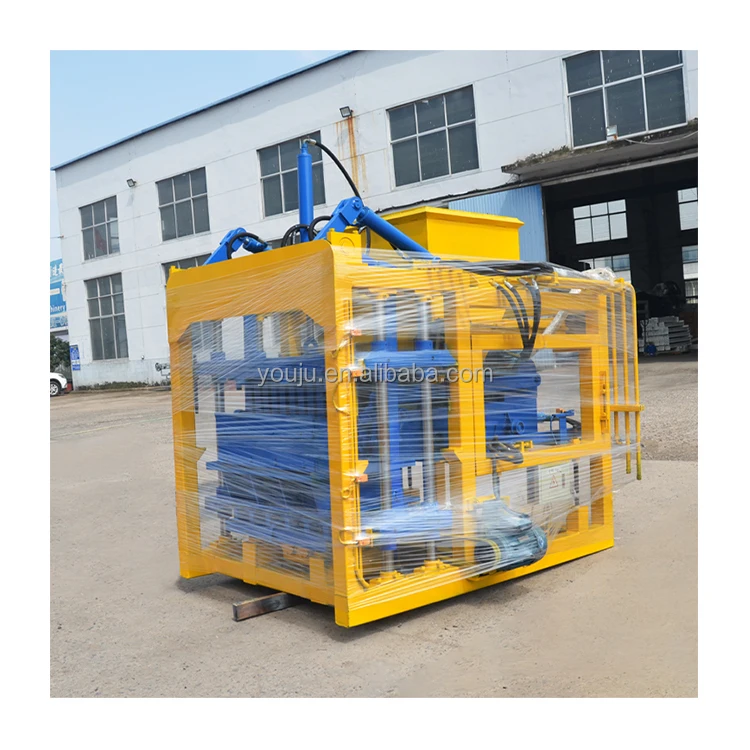
- Machine ships dismantled for container loading; reassembly supervised on site
- First production run supervised with PLC parameter tuning for your mix
- Operator training on mould change procedure and daily maintenance checkpoints
- Wear parts list with hydraulic seal and vibration motor replacement intervals
What We Need to Configure Your Line
Send the block formats your market sells, your target daily output per format, and a sample of your local sand and aggregate. Include your workshop dimensions, curing yard layout, and existing forklift capacity. Confirm your local voltage, frequency, and the language you need on the PLC display. With that information, the QT4-15 block machine specifications proposal can carry realistic numbers tied to your actual products.
Frequently Asked Questions
Q: How is daily output calculated and which block format does each number assume?
A: Every output figure on the line layout states the exact block format, mould cavity count, and cycle time it assumes. A hollow block at 15 seconds per cycle produces a different daily total than a dense paver at 25 seconds. We calculate per format so there is no single inflated catalogue number.
Q: Which moulds are included and how are custom moulds designed?
A: One hollow mould ships with the QT4-15A at no extra charge. Additional formats — solid, paving, kerbstone, interlocking — are built to your drawings or designed from your sample blocks. Mould cavity count and dimensions are confirmed against your target pallet size before machining.
Q: How long does a mould change actually take?
A: With the documented step-by-step discharge and installation procedure, a trained two-person crew can complete a format change in a predictable timeframe. Required tools are listed in the maintenance manual. We walk your team through the sequence during commissioning so it does not consume a full shift.
Q: How are vibration force and pressure matched to my local aggregate?
A: We request a raw material sample and your proposed mix design before finalizing vibration amplitude and hydraulic pressure settings. This ensures the 16 MPa platform vibration compacts your specific aggregate to target block strength rather than relying on a factory default tuned for different material.