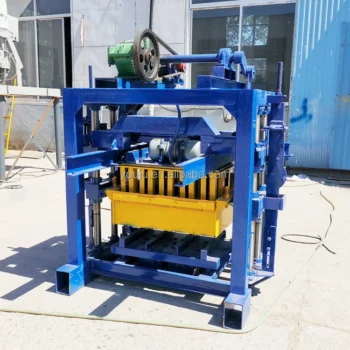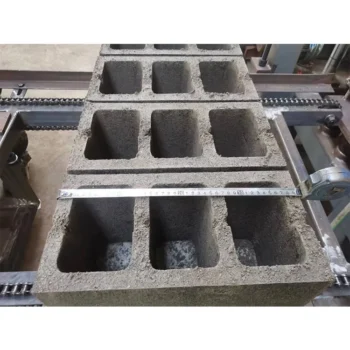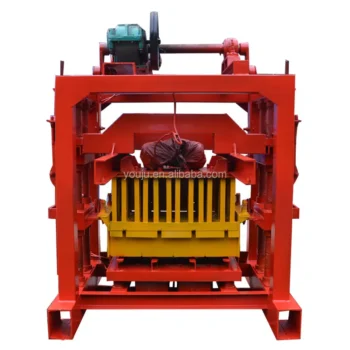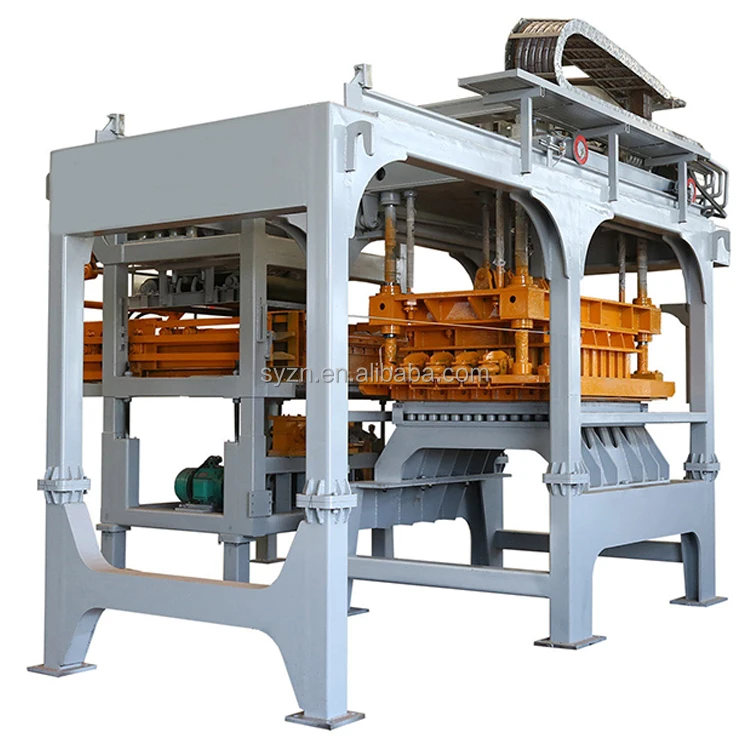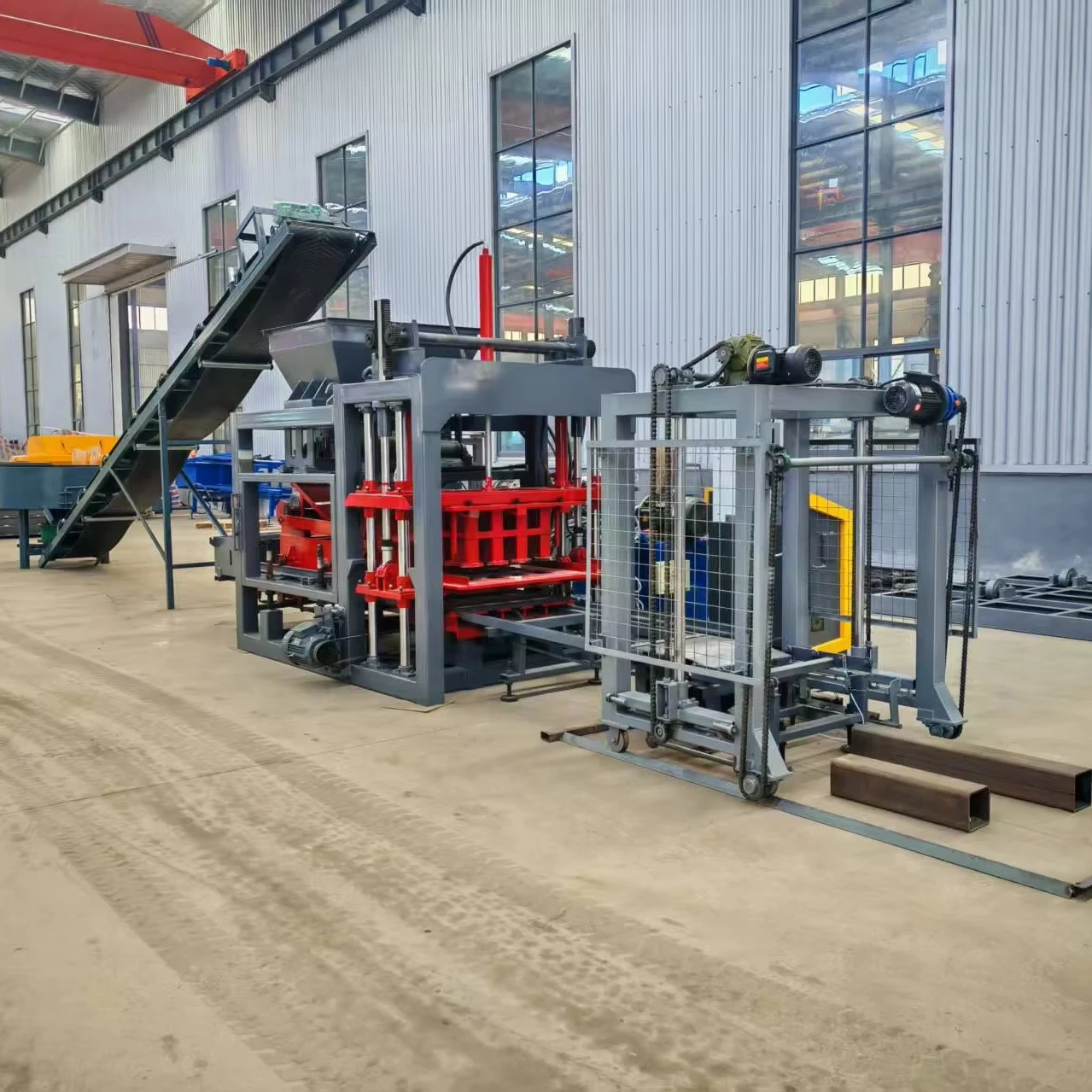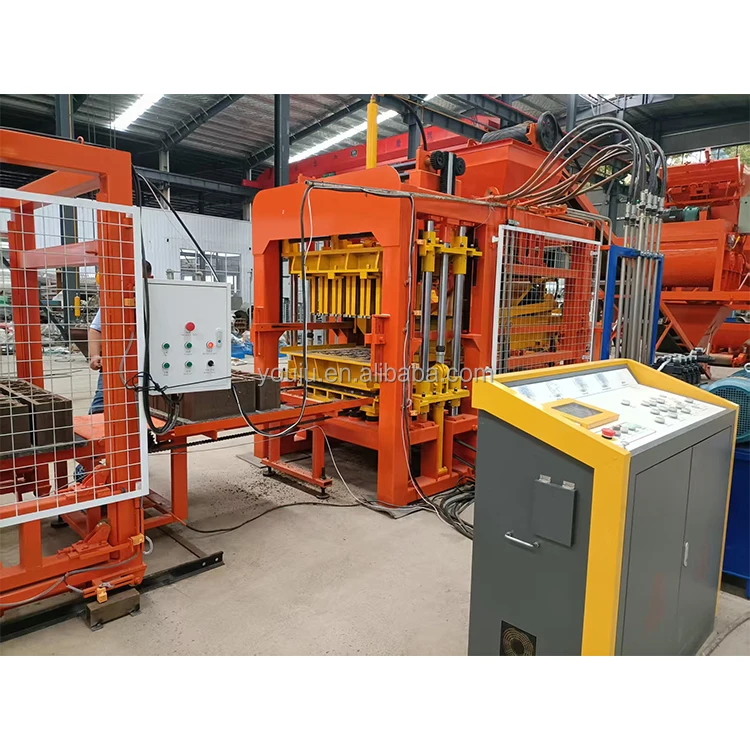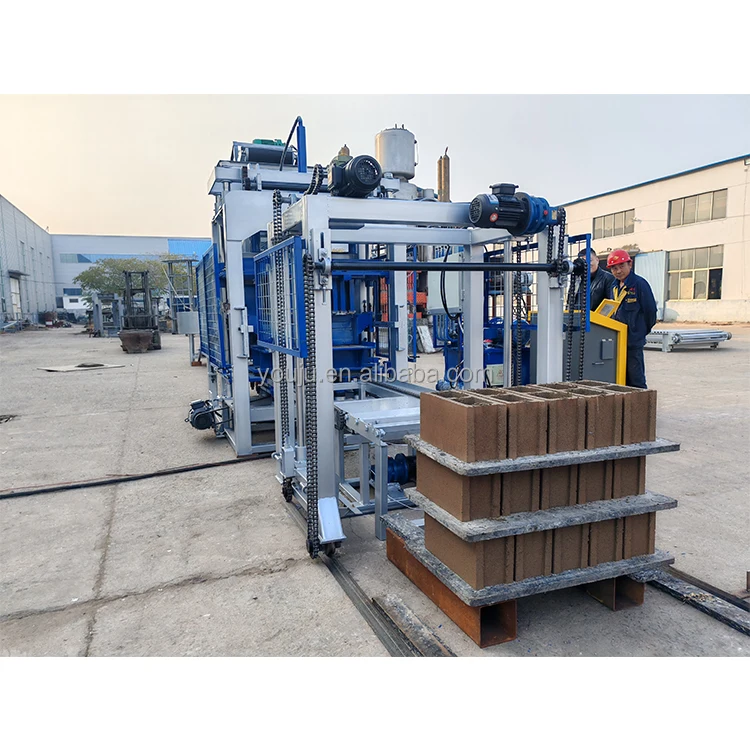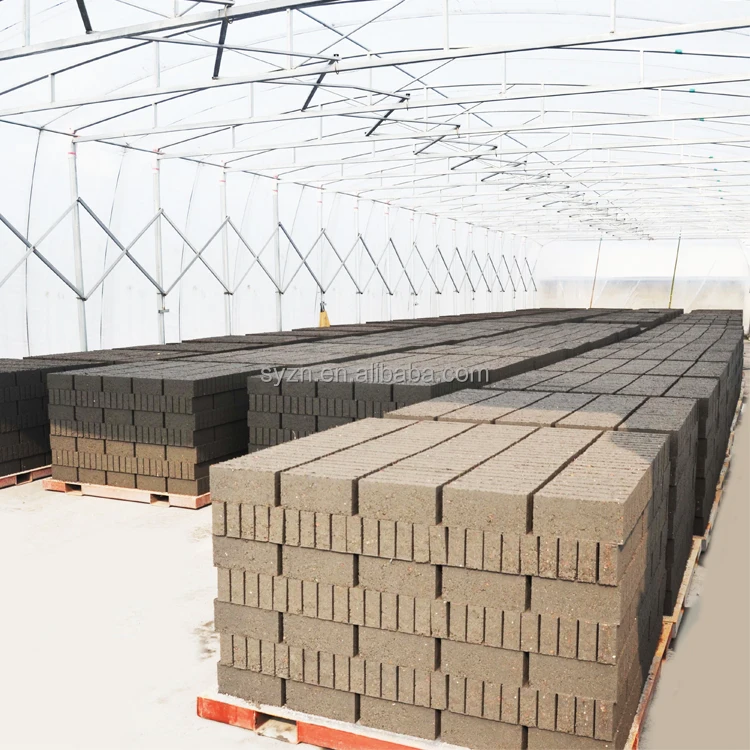

Description
Matched System Sizing — QT18-25 block making machine specifications and cycle times are quoted per actual block format and your local aggregate, not as a single unqualified cycles-per-hour figure.
Technical Specifications
| Parameter | Value |
|---|---|
| Model | QT18-25 |
| Product Type | Fully Automatic Pallet-Free Block Making Machine |
| Brick Height Range | 50–300 mm |
| Stacking Height | 0–1200 mm |
| Main Vibration Form | Platform Vibration |
| Vibration Frequency | 2800–4500 r/min |
| Vibration Power | 60 kW |
| Hydraulic System Power | 59 kW |
| Driving Method | Hydraulic |
| Demolding Method | Vibration and Hydraulic |
| Molding Cycle | 15–25 s (basis to be confirmed per block format and mix) |
| Control System | PLC with person-machine conversation interface |
| Applied Products | Hollow blocks, solid blocks, pavers, interlocking blocks, curbstone, colored pavers |
| General Water Consumption | 8 T/Day |
| Factory Area Required | 2000 m² |
Application Suitability
| Application | Material or Output |
|---|---|
| Hollow block production for building walls | Crushed stone, sand, cement, fly ash |
| Solid block production for load-bearing structures | Gravel, sand, cement, slag |
| Paving block and colored paver production | Fine aggregates, cement, pigment |
| Interlocking brick production | Sand, dust, cement, fly ash |
| Curbstone production for road projects | Coarse aggregate, cement, sand |
What the QT18-25 Block Making Machine Specifications Don’t Tell You About Daily Output
Capacity is meaningless unless the block format, mix design, and local aggregate are stated alongside it.
A machine rated for a certain number of cycles per hour on a standard 400×200×200 mm hollow block will behave differently when producing 60 mm paving blocks or 300 mm tall curbstones. The QT18-25 block making machine specifications list a molding cycle of 15–25 seconds, but that range exists precisely because different formats demand different vibration durations and hydraulic hold times. Buyers who order based on a single output number often find their actual daily production falls far short once the machine is running their local mix. I have walked exhibition floors where three booths quoted the same machine class at wildly different outputs — none of them had asked what block the buyer actually sold [NEED_CITE: format-dependent cycle time variation in stationary block presses].
Cycle Time by Format, Not by Catalogue Default
The vibration frequency on this machine is adjustable between 2800 and 4500 r/min, and the QT18-25 block making machine specifications pair 60 kW of vibration power with 59 kW of hydraulic system power. That balance matters because hollow blocks need strong vibration to consolidate thin walls, while solid blocks and curbstones rely more on sustained hydraulic pressure to achieve density. Setting both forces correctly for your target format is the difference between blocks that pass a strength test and blocks that crumble on the curing rack.
Pallet-Free Stacking and What It Demands from Your Curing Area
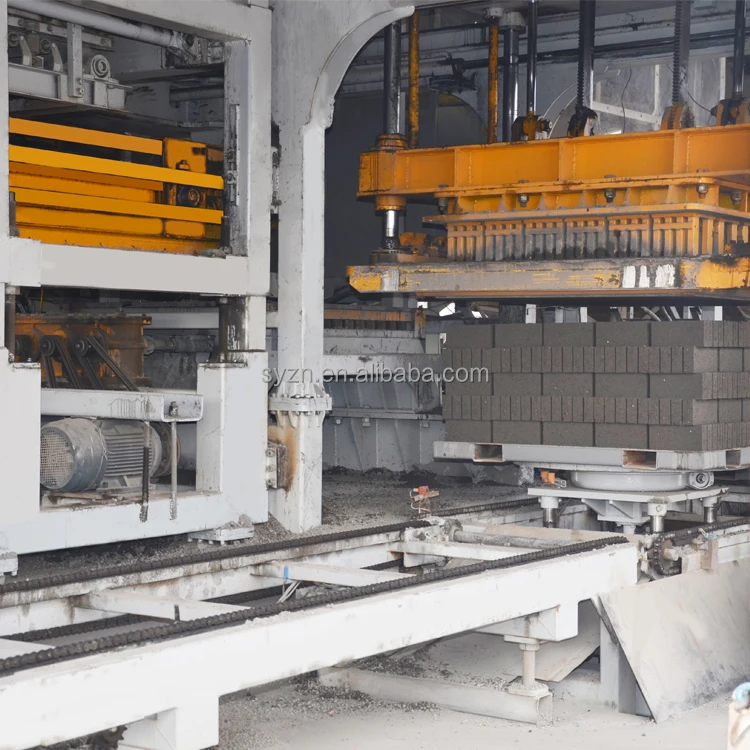
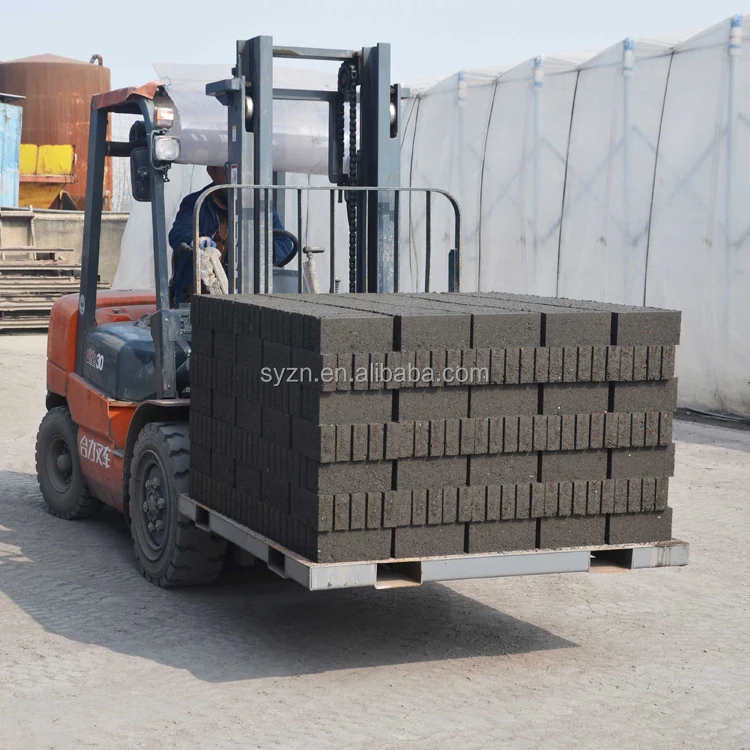
The pallet-free design stacks blocks directly after moulding to a height of 0–1200 mm, eliminating the investment in pallets and the labour of pallet return systems. This works well when the curing area has a flat, level concrete floor and enough space for forklifts to move stacked cubes without disturbing fresh product. If your site has uneven ground or limited curing space, the stacking height must be reduced, which changes how you plan daily output [NEED_CITE: curing area requirements for pallet-free block production lines].
Vibration, Pressure, and the Mix They Must Match
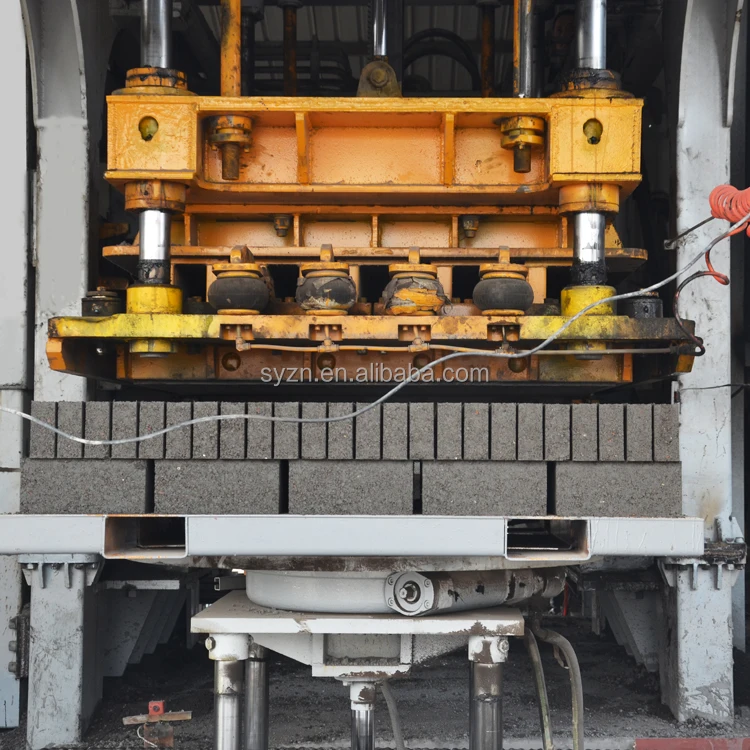
Platform vibration transmits energy through the mould table rather than through individual mould walls, giving more uniform compaction across the full mould area. The 2800–4500 r/min adjustable range lets the operator tune frequency to the aggregate grading — coarser mixes generally respond to lower frequency with longer duration, while fine sand and fly ash blends compact faster at higher frequency. The hydraulic system provides the counter-pressure that holds the mix in place during vibration; without sufficient hydraulic force, the vibration simply fluidises the mix rather than compacting it. This is why the QT18-25 block making machine specifications list both values side by side rather than highlighting one at the expense of the other.
Mould Change Flexibility and Format Range
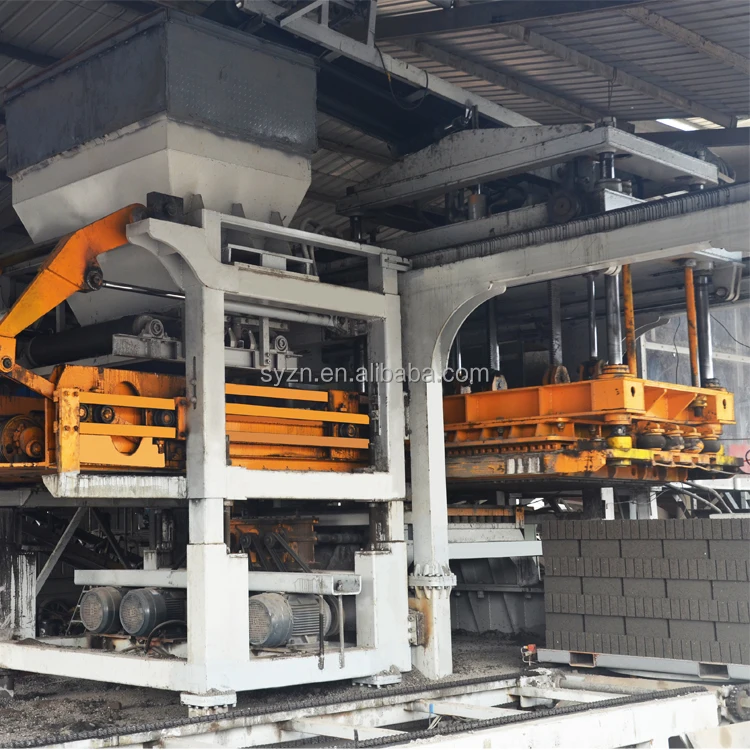
With a brick height range of 50–300 mm, one machine can produce everything from thin pavers to tall hollow blocks, provided the moulds are available and the changeover procedure is followed. The PLC interface stores parameters for each mould, so once a format is tuned, switching back does not require re-calibration from scratch. Mould change time depends on the format jump — moving between similar hollow block sizes is faster than switching from a hollow block mould to a paver mould with a completely different cavity layout.
When the Wrong Configuration Costs You Weeks on Site
A buyer who selects vibration and hydraulic settings without testing their local aggregate will spend the first weeks after commissioning adjusting parameters while production sits idle. If the aggregate has higher clay content or a different particle size distribution than assumed, the standard cycle time will not produce adequate strength, and the demolding step may damage block edges. Voltage and frequency mismatches between the machine electrical system and the local supply can delay commissioning further, because the PLC and hydraulic pump motor must be matched before the machine can even run a test cycle [NEED_CITE: impact of aggregate variation on block pressing cycle parameters].
Why Buyers Come Back for a Second Line
We configure the QT18-25 around the block format you actually sell, running a capacity calculation per format rather than quoting one optimistic number. Mould design and supply are included for the formats your market demands, with custom drawings when standard moulds do not cover your specification. The pallet-free stacking system is specified against your actual curing area dimensions and the forklift equipment you already have on site. Automation level is selectable — the PLC-controlled system can run fully automatic, and the line can be expanded as production volume grows. Voltage, frequency, and PLC display language are confirmed before production starts, so the machine is ready to run when it arrives [NEED_CITE: pre-shipment electrical and control language confirmation for export block machinery].
Documentation & Verification
- Line layout showing block format assumed for each capacity calculation
- Machine specification sheet with vibration and hydraulic parameters matched to your mix
- Mould drawing and format list for every cavity included in the order
- Hydraulic and electrical schematic with confirmed voltage and frequency
- Factory test record on your target block format before dispatch
- Operation and maintenance manual with wear parts list
Installation, Commissioning & Support
- Foundation plan matched to the 60 kW vibration and 59 kW hydraulic power loads
- Electrical connection confirmed for your local voltage and frequency before production
- PLC interface configured in your operator language prior to shipment
- On-site commissioning with test runs on your actual raw material mix
- Operator training covering mould change procedure and parameter storage
- Wear parts and mould replacement list supplied with the machine
What to Share Before Requesting a Quotation
To size the QT18-25 correctly, tell us which block formats you sell today and which you plan to add, along with your target daily output per format. Share a sample or lab analysis of your local aggregate — particle size distribution, clay content, and moisture range — so we can match vibration and hydraulic parameters to your actual mix rather than a catalogue default. Confirm your site voltage, frequency, and preferred PLC display language so the electrical system is built right the first time.
Frequently Asked Questions
Q: How is output capacity calculated for the QT18-25, and which block format does it assume?
A: Output is calculated per block format using the molding cycle time range of 15–25 seconds, adjusted for the specific mould cavity count and block dimensions. A hollow block and a paving block of different sizes will have different cycle times on the same machine, so capacity must be stated per format, not as a single number.
Q: What vibration and hydraulic settings are needed for my local aggregate?
A: The vibration frequency range of 2800–4500 r/min and the 60 kW vibration power are tuned against your aggregate grading and mix design. Coarser materials typically need lower frequency with longer hold time, while fine sand and fly ash blends compact at higher frequency. A sample of your raw material allows us to confirm settings before shipment.
Q: How long does a mould change take, and what formats can one QT18-25 produce?
A: The machine covers a brick height range of 50–300 mm, supporting hollow blocks, solid blocks, pavers, interlocking bricks, and curbstones. Mould change time depends on how different the new format is from the current one; the PLC stores parameters per mould so repeat changeovers are faster than the first setup.
Q: What does the curing area need to look like for pallet-free stacking?
A: The pallet-free system stacks blocks to 0–1200 mm directly on a flat, level concrete floor. Forklift access must be planned so stacked cubes can be moved without disturbing fresh blocks. If curing space is limited, stacking height can be reduced, which should be factored into daily output planning.